
The best lead generation software for SaaS depends on your go-to-market motion. Product-led teams need tools that qualify signups at the moment of capture. Sales-led teams need prospecting data and instant meeting scheduling. Enterprise teams selling six-figure contracts need account-level intent data. No single platform does all three well, which is why most SaaS companies end up running three to five tools that all feed one CRM.
This guide compares eleven platforms across those jobs: intelligent form capture, visitor identification, conversational engagement, data enrichment, landing pages, scheduling, and ABM. Published pricing is included wherever the vendor actually publishes it — and several don't, which tells you something about the sales process you're signing up for.
1. OrbitForms
Best for: qualifying inbound leads at the point of capture, before they ever hit your CRM
OrbitForms is a form builder with lead qualification built in. You get standard and conversational forms, and behind them AI qualification agents that read each submission, ask relevant follow-up questions, and score the lead before routing it.
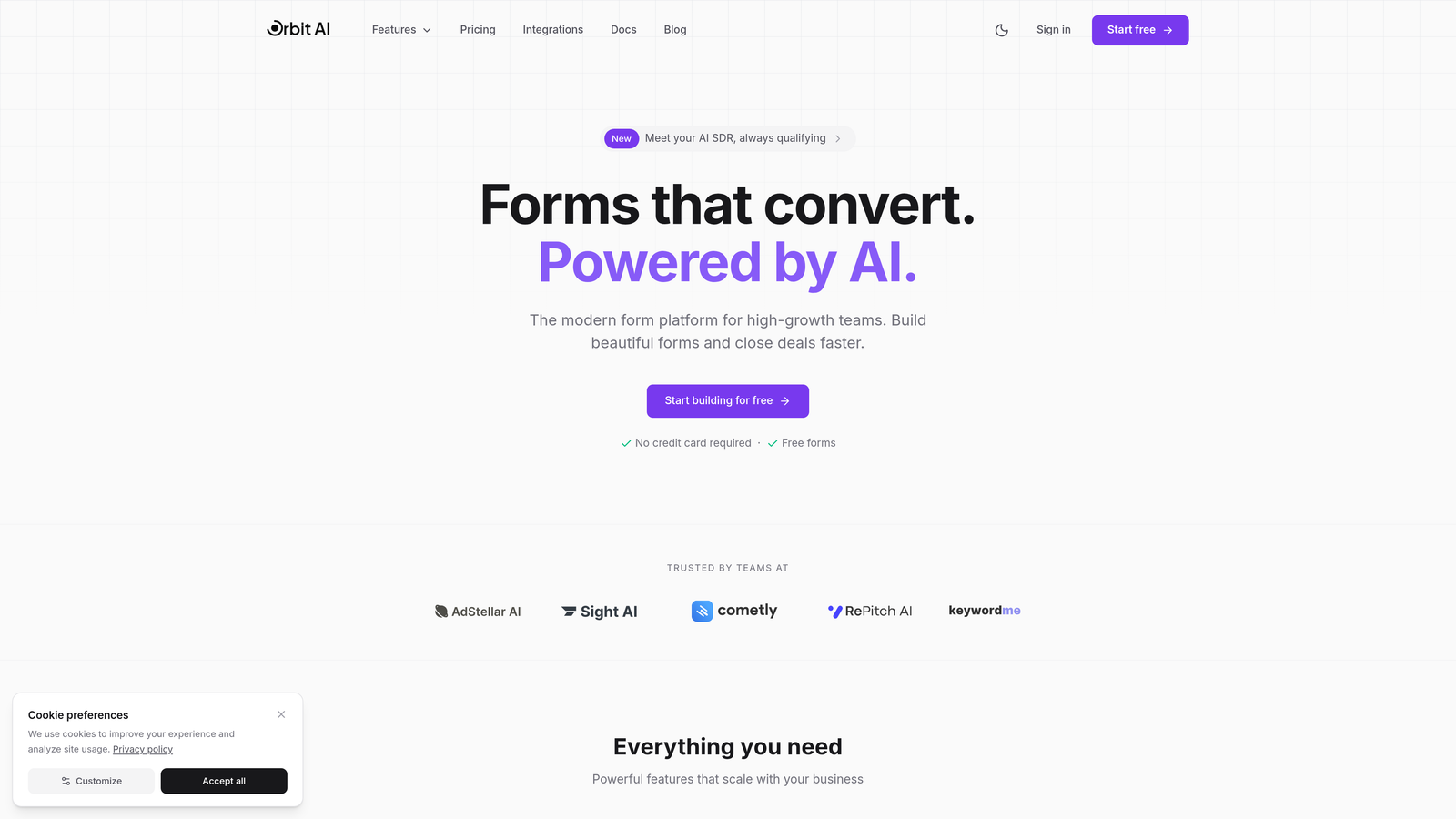
The practical difference from a plain form builder: a demo request from a 200-person company and a student poking around get different treatment automatically. Conditional logic adapts the questions mid-form, qualified leads route to the right rep or straight to a booked meeting via the built-in scheduler, and everything syncs to your CRM — there are integrations with roughly 30 of them, including Salesforce, HubSpot, Pipedrive, and Zoho. Workflows and email sequences handle the leads that aren't ready yet.
Know what it isn't: OrbitForms works on leads who show up and engage. It won't build outbound lists or identify anonymous visitors, so pair it with a prospecting or visitor-ID tool if those are gaps.
Pricing: No free plan. Every plan starts with a 7-day free trial (card required); Pro runs $29/month, or $23/month billed annually. Details on the pricing page.
2. HubSpot Marketing Hub
Best for: teams that want capture, nurture, and CRM in one platform
HubSpot Marketing Hub covers the whole inbound funnel — forms, landing pages, email, lead scoring — all wired into HubSpot's free CRM.
The real argument for HubSpot is that you're not stitching five tools together and praying the integrations hold. A prospect's journey from first content download through trial to closed deal lives in one record. Lifecycle stages matter more for SaaS than most buyers realize: you can distinguish marketing-qualified, product-qualified, and sales-qualified leads in the same system, so marketing and sales argue less about definitions. The app marketplace has over 1,400 integrations if you do need to bolt things on.
The catch is cost gravity. Free tools exist, but the features you actually want live in the Professional tier at $800/month, and the platform gets more expensive the more contacts you accumulate. Budget for that curve, not the entry price.
Pricing: Free tools for basics; Professional from $800/month; Enterprise above that.
3. Intercom
Best for: converting high-intent visitors into conversations while they're still on the page
Intercom uses AI chatbots to engage visitors, answer questions, and route qualified prospects to sales in real time.
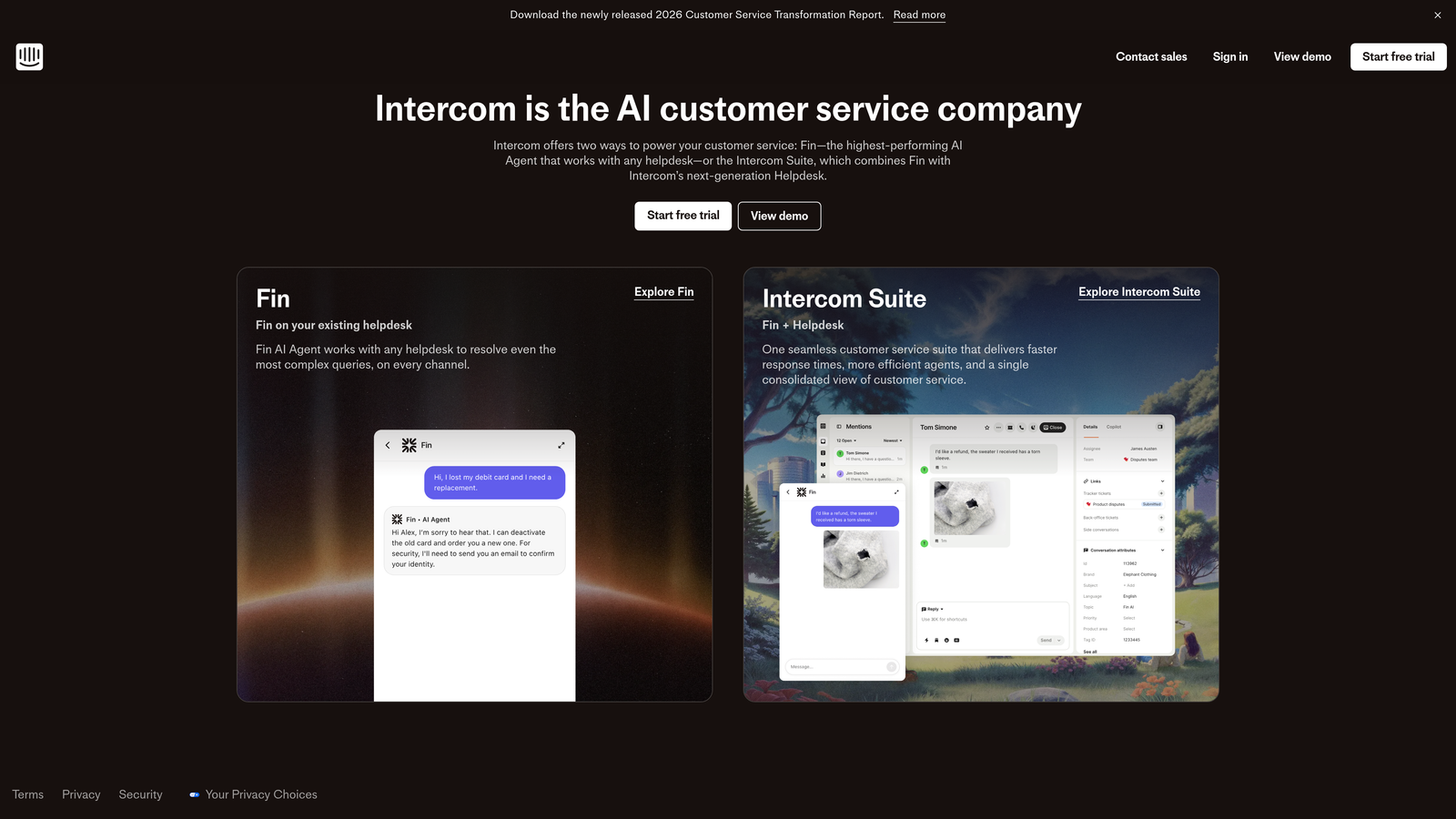
Intercom catches people at the moment of highest intent — actively reading your pricing page — instead of hoping they fill out a form before leaving. Custom bots qualify with targeted questions and hand high-value conversations to humans, with chat, email, and social threads landing in one shared inbox. It also stretches past lead gen: the same tool runs product tours, trial onboarding, and support, which is genuinely useful continuity if you'd otherwise buy three point solutions.
Pricing: From $39 per seat/month; custom pricing for larger teams needing advanced automation.
4. Clearbit
Best for: enriching partial lead data and revealing which companies visit your site
Clearbit appends company, role, and intent data to leads in real time, and its Reveal product identifies the companies behind anonymous traffic via IP matching.
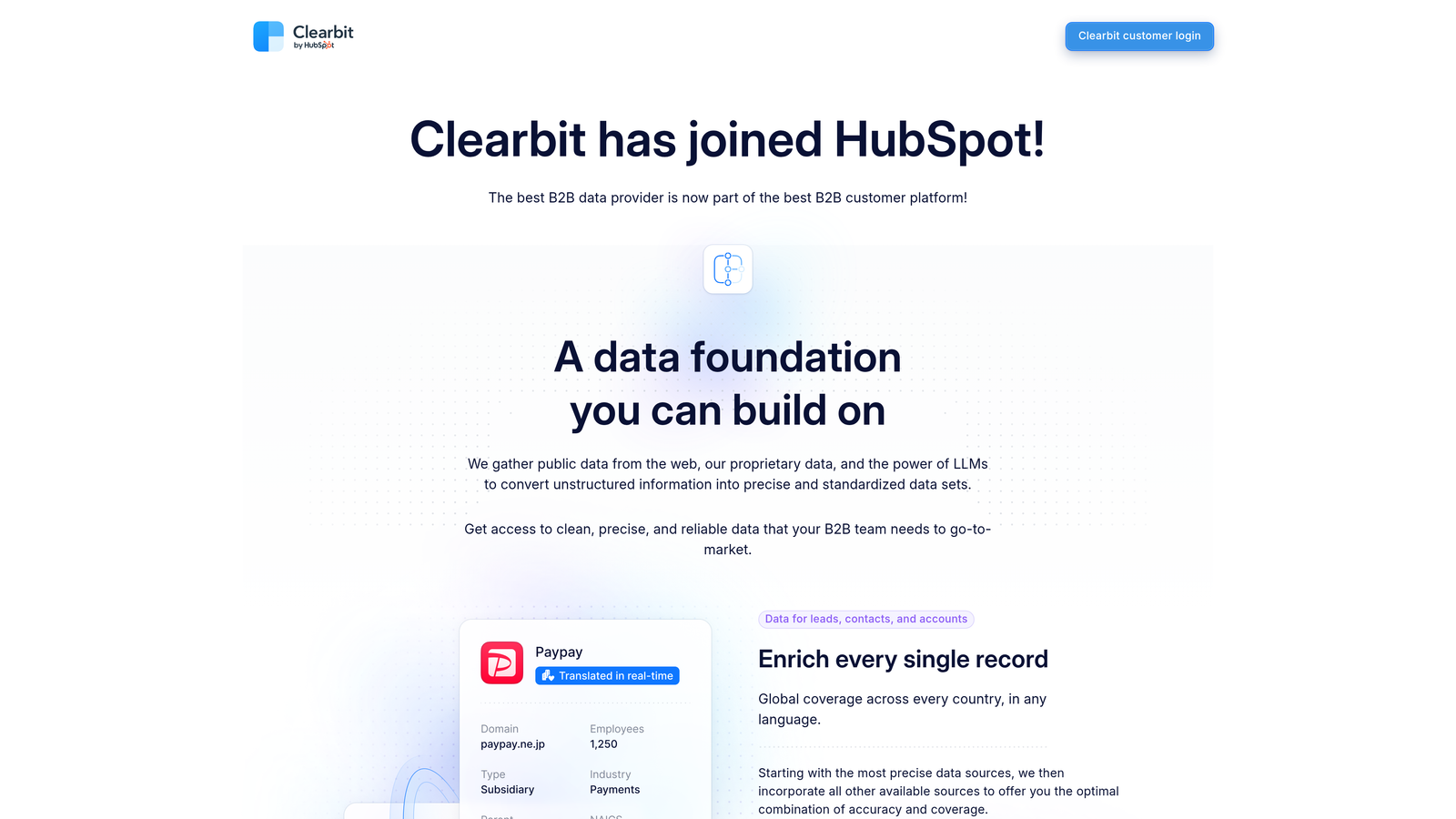
The most underrated use: form shortening. Ask for an email address only, and Clearbit fills in company name, size, industry, and title behind the scenes. Shorter forms convert better, and you still get the data you need to route and score. Reveal is the other half — seeing which target accounts are researching you before anyone raises a hand, which matters if you sell to mid-market and enterprise. Prospector rounds it out, letting you search the database directly to build lists of companies matching your ICP.
Pricing: Custom, based on API volume and enrichment needs; enterprise features typically require annual commitments.
5. Drift
Best for: conversational ABM for sales-led teams with higher contract values
Drift combines chat, email, video, and automation to engage buyers when they're showing active interest — and to roll out the red carpet for named accounts.
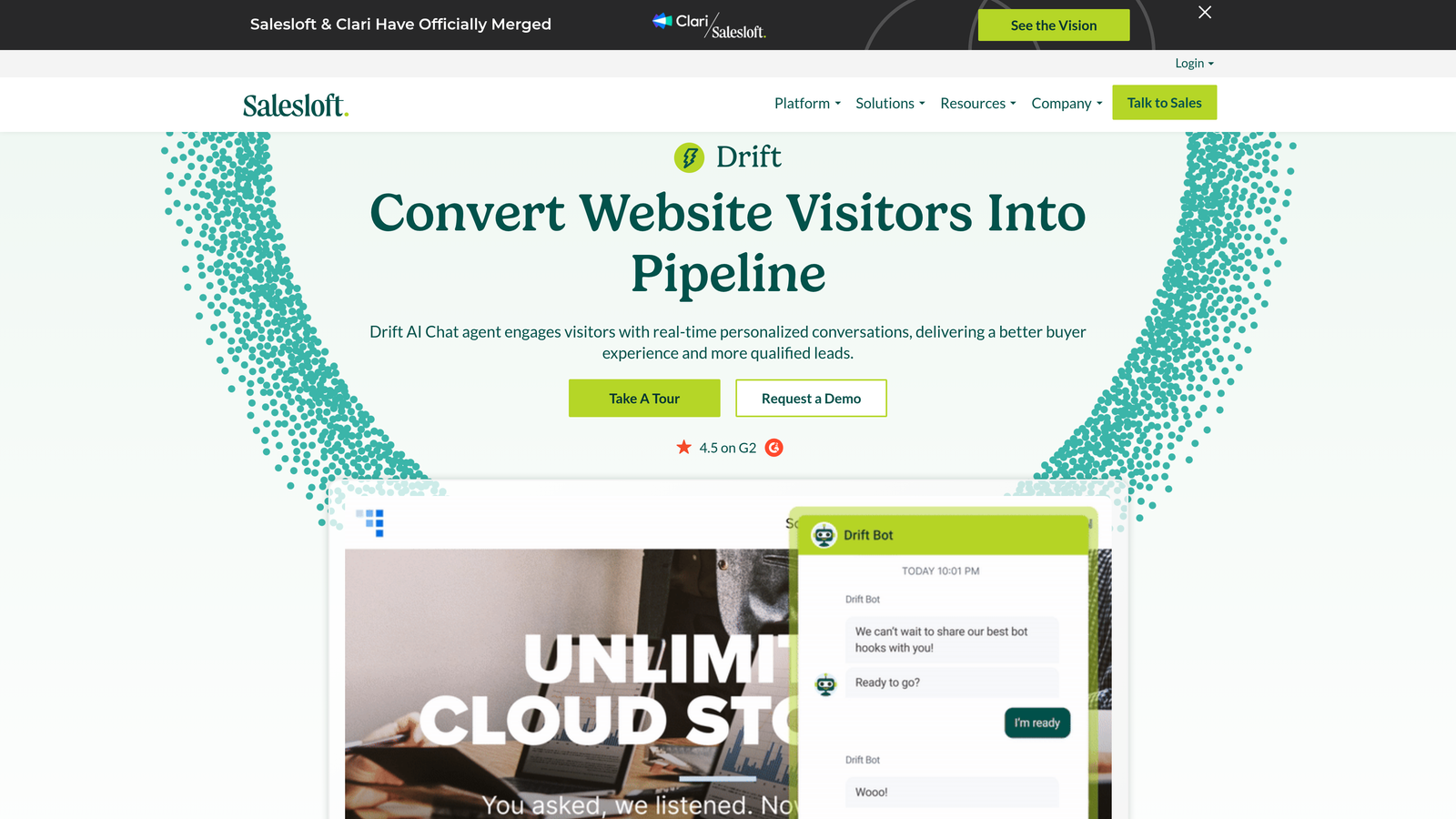
Drift's strength is proactive targeting: custom chat experiences for specific accounts, AI routing to the right rep, and meeting booking inside the chat window so a qualified prospect never hits the email-scheduling dance. Speed-to-lead wins deals in crowded SaaS categories, and this is Drift's whole pitch. It only pencils out at real deal sizes, though — think average contract values above $10K with a dedicated SDR team.
Pricing: Premium from $2,500/month; enterprise pricing is custom. Not a starter tool.
6. Apollo.io
Best for: outbound prospecting with a database and sequencing in one product
Apollo.io pairs a database of 270M+ contacts and 60M+ companies with email sequencing, call recording, and intent signals.
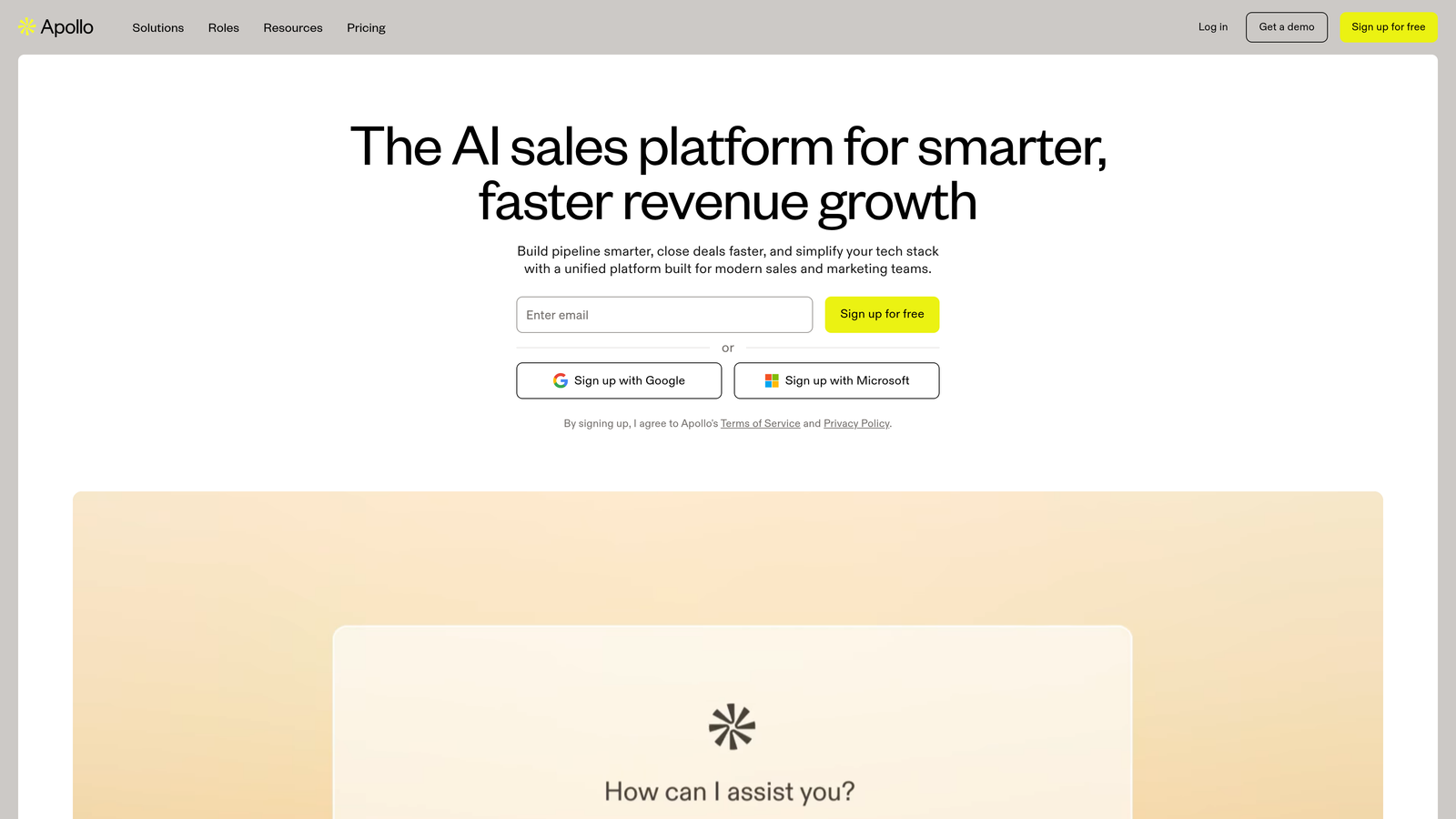
If inbound alone won't fill pipeline — true for most SaaS companies before they have brand — Apollo is the pragmatic pick because list building and outreach live in one tool. The Chrome extension surfaces contact info directly on LinkedIn profiles, so reps build targeted lists while researching instead of round-tripping through a separate data vendor. Intent signals like technology changes and job postings help you time the outreach, and call recording closes the loop on what messaging actually works.
Pricing: Free tier with limits; paid from $49 per user/month.
7. Leadfeeder
Best for: turning anonymous website traffic into a warm outbound list
Leadfeeder identifies companies visiting your site by IP address and shows what they looked at, how long, and how often.
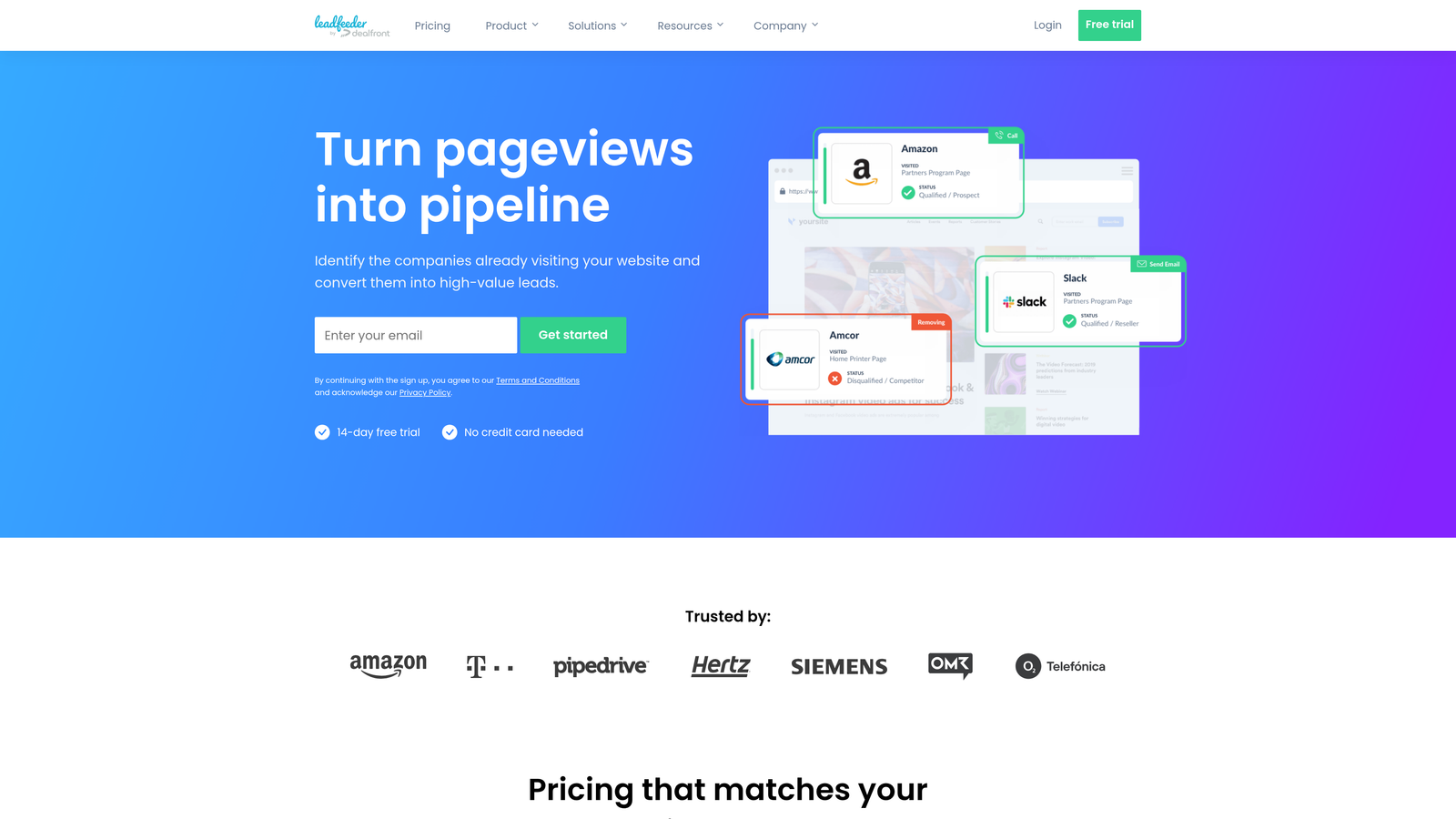
Most visitors never convert on visit one, two, or three. Leadfeeder makes that invisible traffic actionable: it syncs identified companies to Salesforce, HubSpot, or Pipedrive, filters them against your ICP, and alerts you when a target account hits your pricing page. Outreach that references what a company actually researched lands very differently from a cold email.
Pricing: Free lite version; paid from $99/month with more reveals and filtering.
8. OptinMonster
Best for: squeezing more conversions out of traffic you already have
OptinMonster runs behavior-triggered pop-ups, slide-ins, floating bars, and inline campaigns.
Its exit-intent detection fires a targeted offer at the moment someone's about to leave — a last shot at capturing a trial signup or content download. Page-level targeting keeps it from feeling spammy: pricing-page visitors see a different message than blog readers, automatically. A/B testing is built in. For content-heavy SaaS sites converting readers into trials, it's cheap enough to be a no-brainer experiment.
Pricing: From $9/month billed annually; higher tiers add targeting rules and campaign volume.
9. Unbounce
Best for: landing pages for paid campaigns, without waiting on developers
Unbounce is a drag-and-drop landing page builder with AI optimization layered on top.
The standout is Smart Traffic: instead of a classic A/B test that takes weeks to reach significance, machine learning routes each visitor to the page variant most likely to convert them, from early on. Smart Copy generates headline and CTA variations when you need to ship a campaign this week. Dynamic text replacement matches page copy to the visitor's search keyword — a small thing that reliably helps paid search quality scores and conversion.
Pricing: Launch plan from $74/month; A/B testing and Smart Traffic sit in higher tiers.
10. Chili Piper
Best for: collapsing the gap between form submission and a booked meeting
Chili Piper turns qualified form fills into instantly booked meetings, routed to the right rep.
The problem it kills: a prospect requests a demo, then waits two days for someone to email back, and by then they've booked with a competitor. With Chili Piper, qualified leads pick a time while they're still on your site. Routing handles territories, round-robin, and product lines without a human dispatcher. If you run a sales-led motion with SDRs on inbound, this is one of the highest-ROI line items in the stack.
Pricing: Instant Booker from $15 per user/month; Concierge and Handoff priced separately.
11. Demandbase
Best for: enterprise ABM with intent data and account-level personalization
Demandbase works at the account level: identifying target accounts on your site, monitoring their research activity across the web, and coordinating ads, personalization, and sales outreach against that signal.
For complex deals with real buying committees, this orchestration is the point — serve tailored ads to a named account, swap your homepage messaging when they visit, and hand sales a dashboard of engagement signals. It only makes sense with a defined target account list, mature sales-marketing alignment, and enterprise contract values to justify it.
Pricing: Custom enterprise pricing; annual commitments typically start around $25,000.
Building your SaaS lead generation stack
Match the tool to the motion, not the other way around.
Early-stage and product-led? Start with qualification at the point of capture — a form layer that separates serious buyers from casual signups without adding headcount, plus a chat tool like Intercom if your traffic justifies it. Sales-led with outbound? Apollo for prospecting, Chili Piper for instant scheduling, Leadfeeder to warm up the list with companies already researching you. Enterprise ABM? Demandbase for orchestration, Clearbit for enrichment, and a marketing automation platform to run the long nurture cycles those deals demand. For the strategy side of this, see our guide to lead generation strategies for SaaS.
Two rules hold regardless of stage. First, every tool must sync bidirectionally with your CRM — a lead gen tool that creates data silos costs more than it generates. Second, agree on what a qualified lead actually is before buying software to find more of them. I've seen teams spend five figures on tooling to accelerate a pipeline full of leads sales never wanted in the first place.
If inbound qualification is the gap you're solving first, OrbitForms handles capture, AI qualification, and CRM routing in one tool — start your 7-day free trial and see what your form traffic actually contains.
Frequently Asked Questions
What is lead generation software for SaaS?
Lead generation software for SaaS captures, qualifies, and routes potential customers — through forms, chat, landing pages, visitor identification, or prospecting databases. SaaS-specific tools go beyond email capture to handle trial signups, product-qualified leads, and multi-stakeholder sales cycles, syncing everything into a CRM.
How many lead generation tools does a SaaS company need?
Most SaaS teams run three to five: a capture and qualification layer (forms or chat), a data source (enrichment or prospecting database), and scheduling or routing to get qualified leads in front of sales fast. Buy for your current motion and add tools as gaps appear — an early-stage team does not need an ABM platform.
What is a product-qualified lead (PQL)?
A product-qualified lead is someone whose behavior inside your product — features used, frequency, team invites — signals they're ready to buy or upgrade, as opposed to a marketing-qualified lead identified by content engagement. PQLs matter most for freemium and free-trial SaaS models, where usage predicts conversion better than form answers do.
How much does SaaS lead generation software cost?
The range is enormous: entry tools like OptinMonster start around $9/month, mid-market platforms run $29–$800/month, and enterprise ABM platforms like Demandbase start around $25,000/year. Price the whole stack including your CRM tier, and watch per-contact and per-seat pricing — that's where costs compound as you grow.
If inbound qualification is the gap you're solving first, OrbitForms handles capture, AI qualification, and CRM routing in one tool — start your 7-day free trial and see what your form traffic actually contains.