

Your sales team is drowning in leads, but conversions remain flat. The problem isn't volume—it's quality. Lead quality optimization software uses AI scoring, behavioral analysis, and enrichment data to separate high-intent buyers from tire-kickers before they ever reach your pipeline. The right tool can cut wasted sales hours by routing only qualified prospects to your team while nurturing the rest automatically.
We evaluated dozens of platforms based on scoring accuracy, integration depth, ease of setup, and real-world ROI potential. Here are the top tools that actually move the needle on lead quality in 2026.
1. Orbit AI
Best for: Teams wanting to qualify leads during capture, not after they're already in the CRM
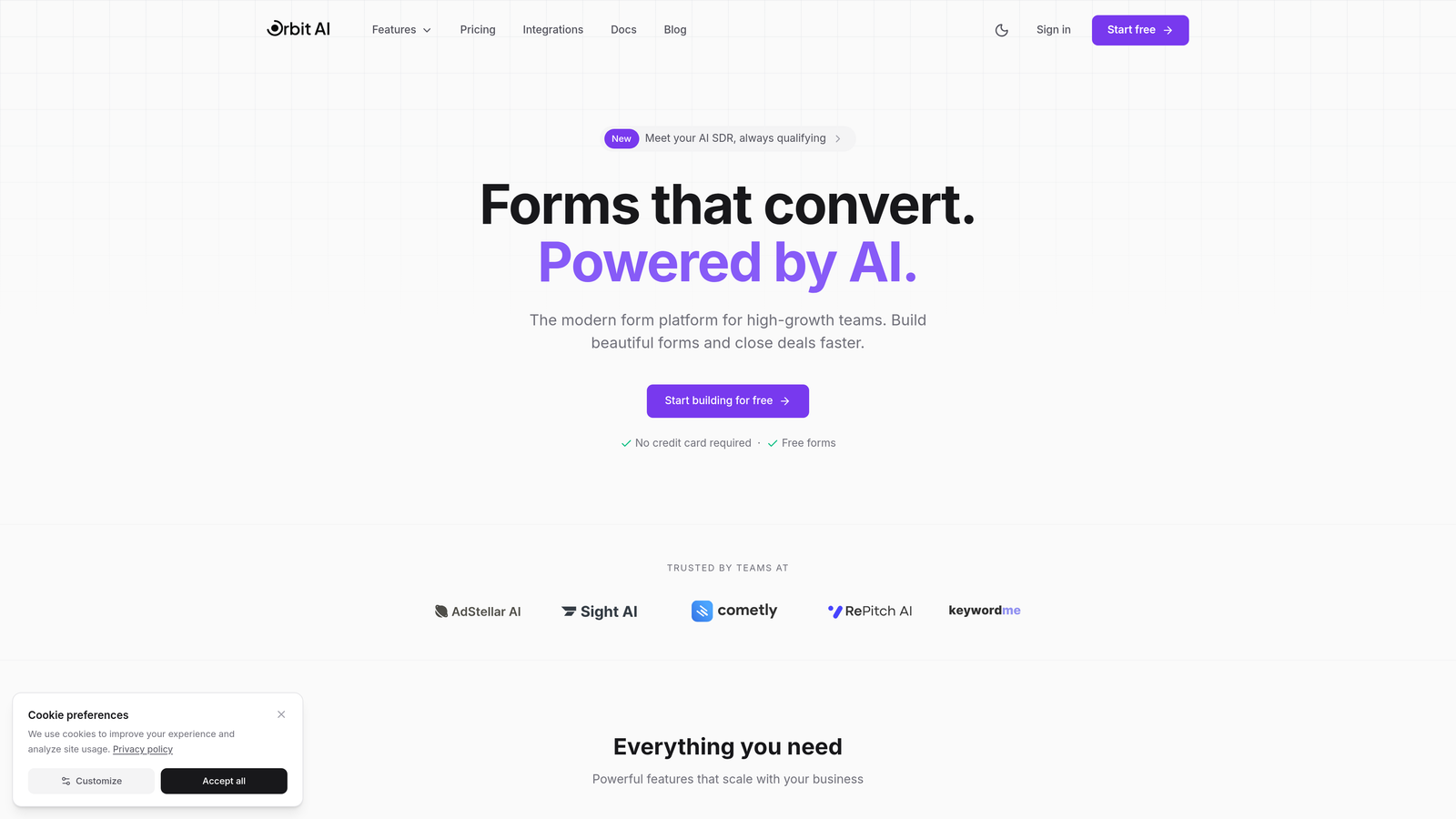
Orbit AI is an AI-powered form builder that qualifies leads at the moment of submission, scoring prospects before they hit your pipeline.
Where This Tool Shines
Most qualification happens after leads enter your CRM, meaning your team wastes time on unqualified prospects who should never have made it through. Orbit AI flips this model by scoring leads during form submission, using AI to analyze responses in real-time and route only qualified prospects to sales.
The platform combines conversion-optimized form design with intelligent qualification logic, so you're not sacrificing form completion rates to gather qualifying data. Your forms stay clean and modern while the AI works behind the scenes to evaluate lead quality.
Key Features
AI Lead Qualification: Scores prospects automatically based on form responses, behavioral signals, and custom criteria you define.
Conversion-Optimized Templates: Pre-built form designs tested for maximum completion rates across industries and use cases.
Real-Time Routing: Sends high-quality leads directly to sales while lower-scoring prospects enter nurture sequences automatically.
Native CRM Integrations: Connects seamlessly with major CRMs to pass scored leads with enrichment data intact.
Custom Scoring Models: Build qualification rules that match your specific ICP without needing technical resources.
Best For
High-growth teams that want to eliminate unqualified leads before they consume sales resources. Particularly valuable for companies running paid acquisition campaigns where lead volume is high but quality varies dramatically. Marketing teams that need to prove ROI by improving lead-to-opportunity conversion rates will find the pre-CRM qualification approach transformative.
Pricing
See pricing page for current plans with free tier available for teams getting started.
2. HubSpot Lead Scoring
Best for: HubSpot users who want native scoring without adding another platform to their stack
HubSpot Lead Scoring combines predictive AI with manual attribute-based rules inside the HubSpot CRM ecosystem.
Where This Tool Shines
If you're already invested in HubSpot, adding external scoring tools creates data sync headaches and integration complexity. HubSpot's native scoring eliminates these issues by living directly inside your existing workflows, using the contact and company data you've already collected.
The predictive scoring feature uses machine learning trained on your historical conversion patterns, automatically identifying which attributes correlate with closed deals. You can layer manual scoring rules on top for attributes the AI might miss.
Key Features
Predictive Lead Scoring: ML models analyze your historical data to predict conversion likelihood without manual rule configuration.
Custom Score Properties: Create unlimited scoring models for different products, regions, or buyer personas.
Behavioral and Demographic Criteria: Combine website activity, email engagement, and firmographic data into unified scores.
Automatic Score Updates: Scores recalculate in real-time as contacts take actions or attributes change.
Workflow Integration: Trigger automated actions based on score thresholds without leaving HubSpot.
Best For
Companies already using HubSpot Marketing Hub who want to add qualification without platform sprawl. Best suited for mid-market B2B teams with enough historical conversion data to train predictive models effectively.
Pricing
Included in Marketing Hub Professional at $800/month and above. Predictive scoring requires Sales Hub Professional or Enterprise.
3. Clearbit
Best for: Enriching lean form data with firmographic and technographic intelligence for instant qualification
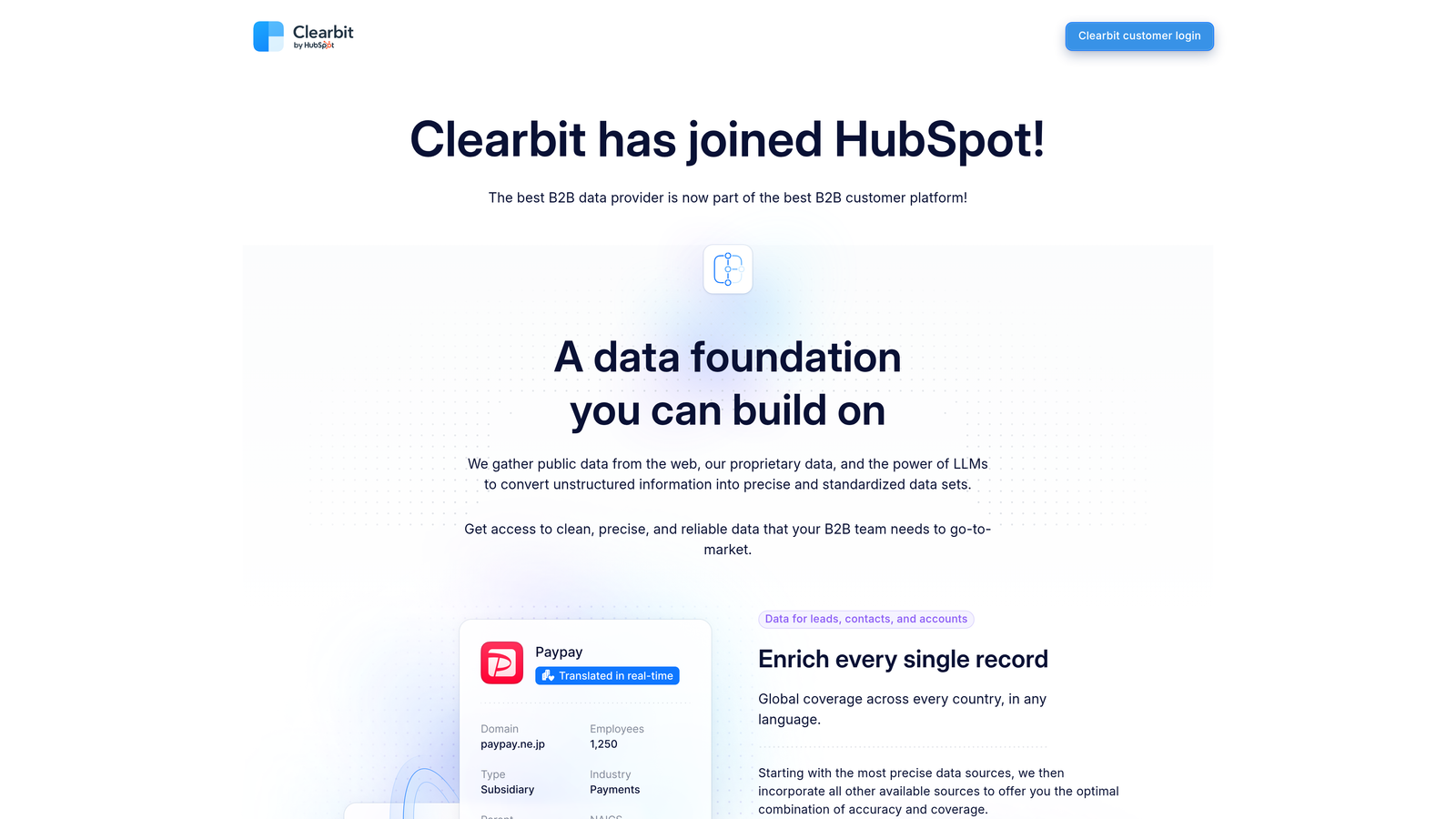
Clearbit appends over 100 data attributes to every lead in real-time, transforming minimal form inputs into comprehensive buyer profiles.
Where This Tool Shines
Short forms convert better, but they leave you with incomplete data for qualification. Clearbit solves this by enriching every submission with company size, industry, technology stack, funding status, and dozens of other signals—all from just an email address.
The platform also reveals anonymous website visitors by matching IP addresses to companies, letting you identify high-value accounts browsing your site even if they never fill out a form. This turns passive traffic into actionable pipeline opportunities.
Key Features
100+ Data Attributes: Appends employee count, revenue estimates, tech stack, social profiles, and more to every contact.
Real-Time Form Enrichment: Enriches leads instantly as forms submit, so scoring happens with complete data.
Reveal Anonymous Visitors: Identifies companies visiting your website without form submissions using IP intelligence.
ICP Scoring Models: Automatically scores leads against your ideal customer profile using enriched firmographic data.
CRM Enrichment: Backfills existing database contacts with missing attributes to improve historical scoring accuracy.
Best For
B2B companies with high form volume who need rich firmographic data for accurate qualification. Particularly valuable for ABM programs where account-level intelligence drives targeting and prioritization decisions.
Pricing
Custom pricing based on enrichment volume and feature requirements. Typically starts around $10,000 annually for mid-market implementations.
4. MadKudu
Best for: Product-led growth companies that need to score leads based on product usage signals
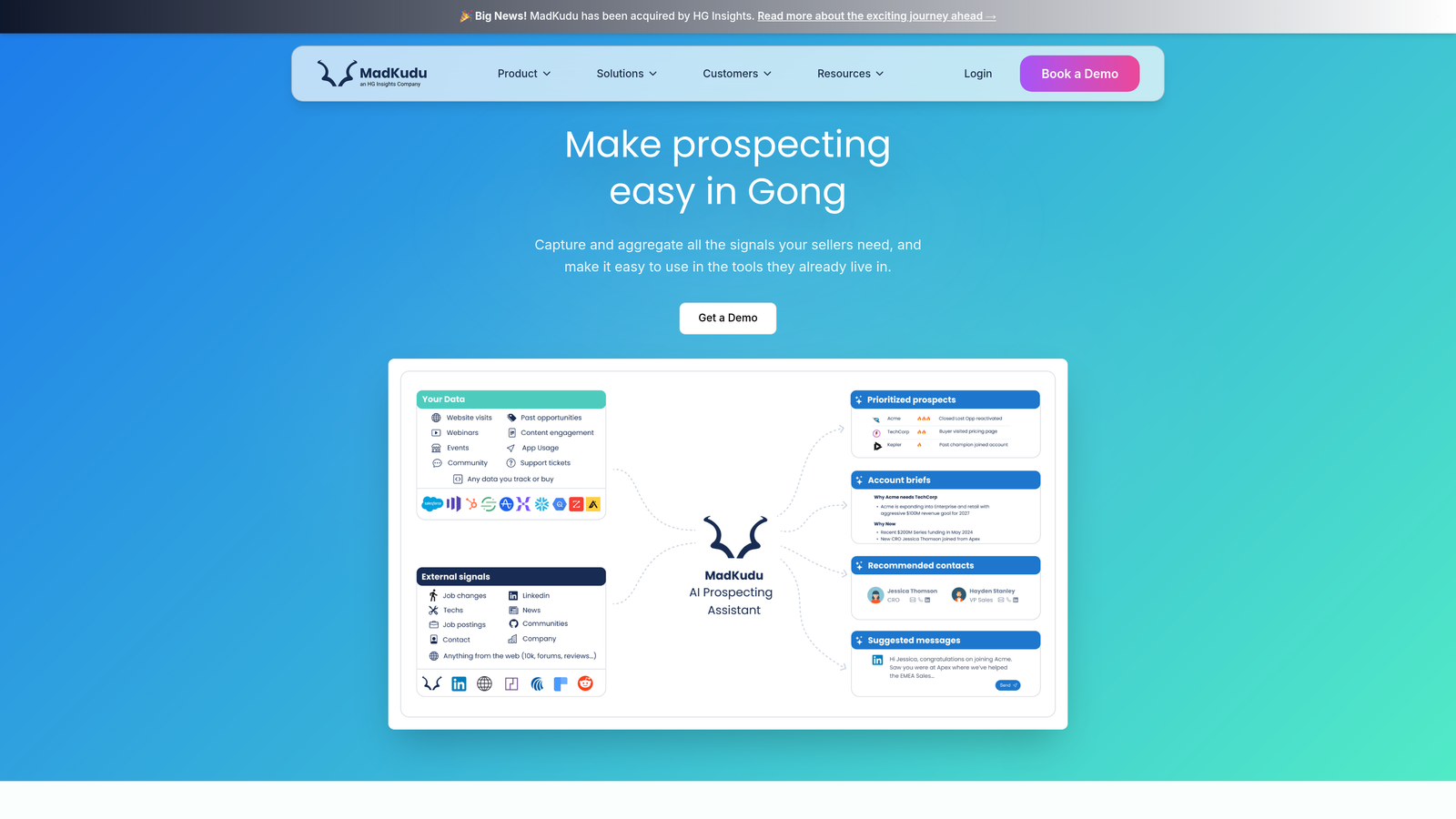
MadKudu builds predictive scoring models that incorporate how prospects actually use your product, not just demographic attributes.
Where This Tool Shines
Traditional scoring focuses on who someone is—their company size, industry, job title. MadKudu adds what they do, analyzing product engagement patterns to identify users showing high-intent behaviors. This matters enormously for freemium and trial-based models where usage signals predict conversion better than firmographics.
The platform separates fit scoring from behavior scoring, letting you identify prospects who match your ICP and are actively engaging with your product. This dual-model approach prevents sales from chasing well-qualified companies that aren't actually interested.
Key Features
Product Usage Scoring: Tracks feature adoption, session frequency, and engagement depth to predict conversion likelihood.
Fit and Behavior Models: Separates demographic qualification from behavioral intent for more nuanced prioritization.
PQL Identification: Flags product-qualified leads showing high-intent usage patterns worthy of sales outreach.
Self-Serve Model Building: RevOps teams can build and adjust scoring models without data science resources.
Multi-Touch Attribution: Understands which combination of product actions correlate with conversion.
Best For
SaaS companies with product-led growth motions where free trials or freemium tiers generate high lead volume. Most effective when you have at least six months of product usage data to train accurate behavioral models.
Pricing
Starts around $1,999/month for mid-market implementations. Enterprise pricing scales with contact volume and feature requirements.
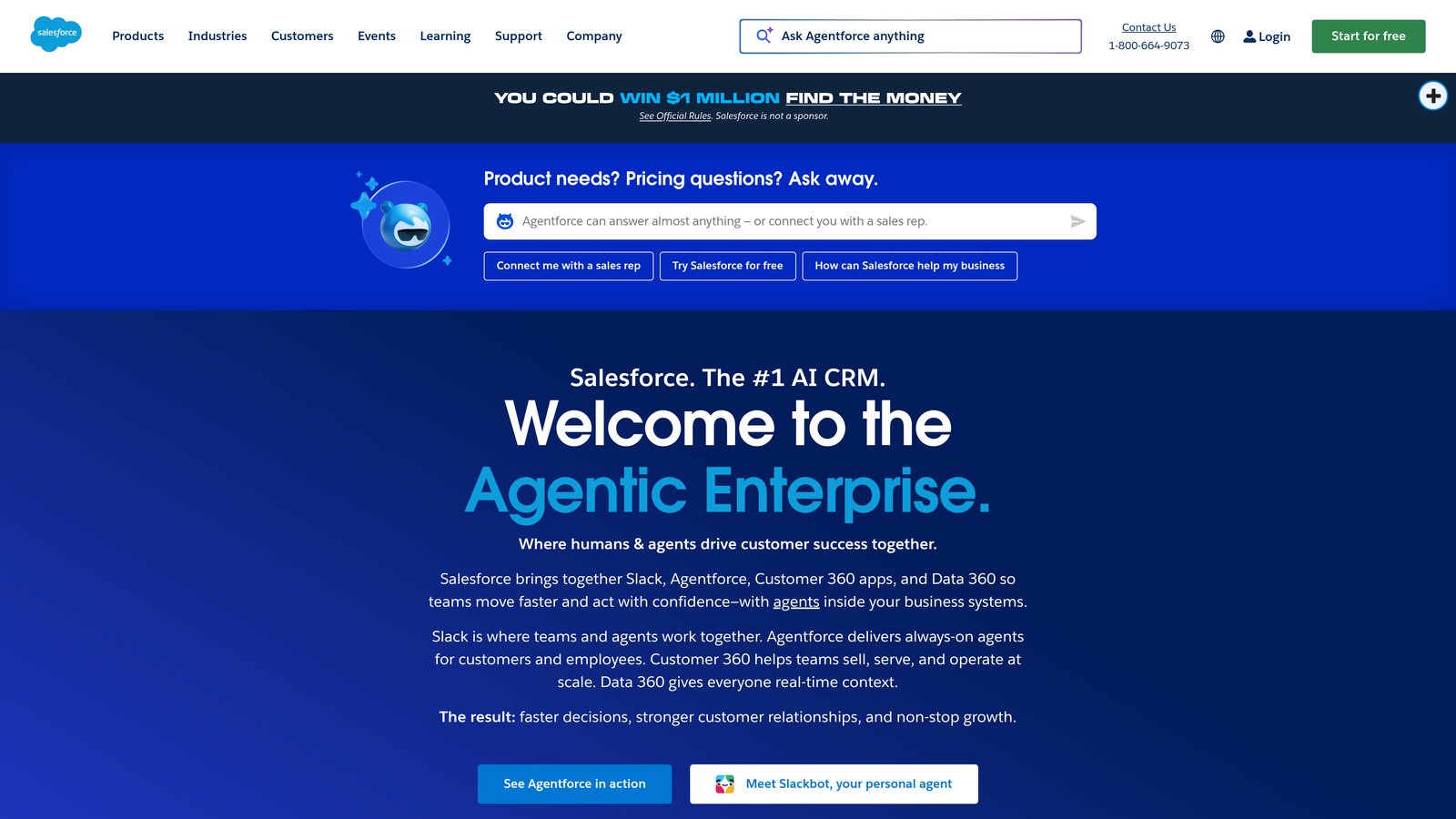
5. Salesforce Einstein Lead Scoring
Best for: Salesforce customers wanting AI-powered scoring without leaving their CRM ecosystem
Salesforce Einstein Lead Scoring uses machine learning to predict conversion likelihood based on your historical win patterns.
Where This Tool Shines
Einstein analyzes your closed/won and closed/lost opportunities to identify which lead attributes correlate with success. The system trains automatically on your data, building custom models that reflect your unique sales process rather than generic industry assumptions.
Score explanations show exactly why each lead received its score, helping sales teams understand prioritization logic and trust the AI recommendations. The model continuously improves as you close more deals, adapting to changing buyer patterns over time.
Key Features
Automated ML Model Training: Builds predictive models from your Salesforce data without manual configuration or data science expertise.
Score Explanations: Shows which factors contributed most to each lead's score for transparency and trust.
Native Salesforce Integration: Scores appear directly in lead records and can trigger Process Builder or Flow automations.
Continuous Model Improvement: Retrains automatically as new conversion data accumulates, staying current with market changes.
Minimum Data Requirements: Works with as few as 200 converted leads, though accuracy improves with larger datasets.
Best For
Enterprise Salesforce customers with established sales processes and sufficient historical data to train accurate models. Most valuable for organizations where sales cycles are long enough that predictive prioritization significantly impacts pipeline efficiency.
Pricing
Included in Sales Cloud Einstein add-on at $50/user/month. Requires Sales Cloud Professional or higher as the base subscription.
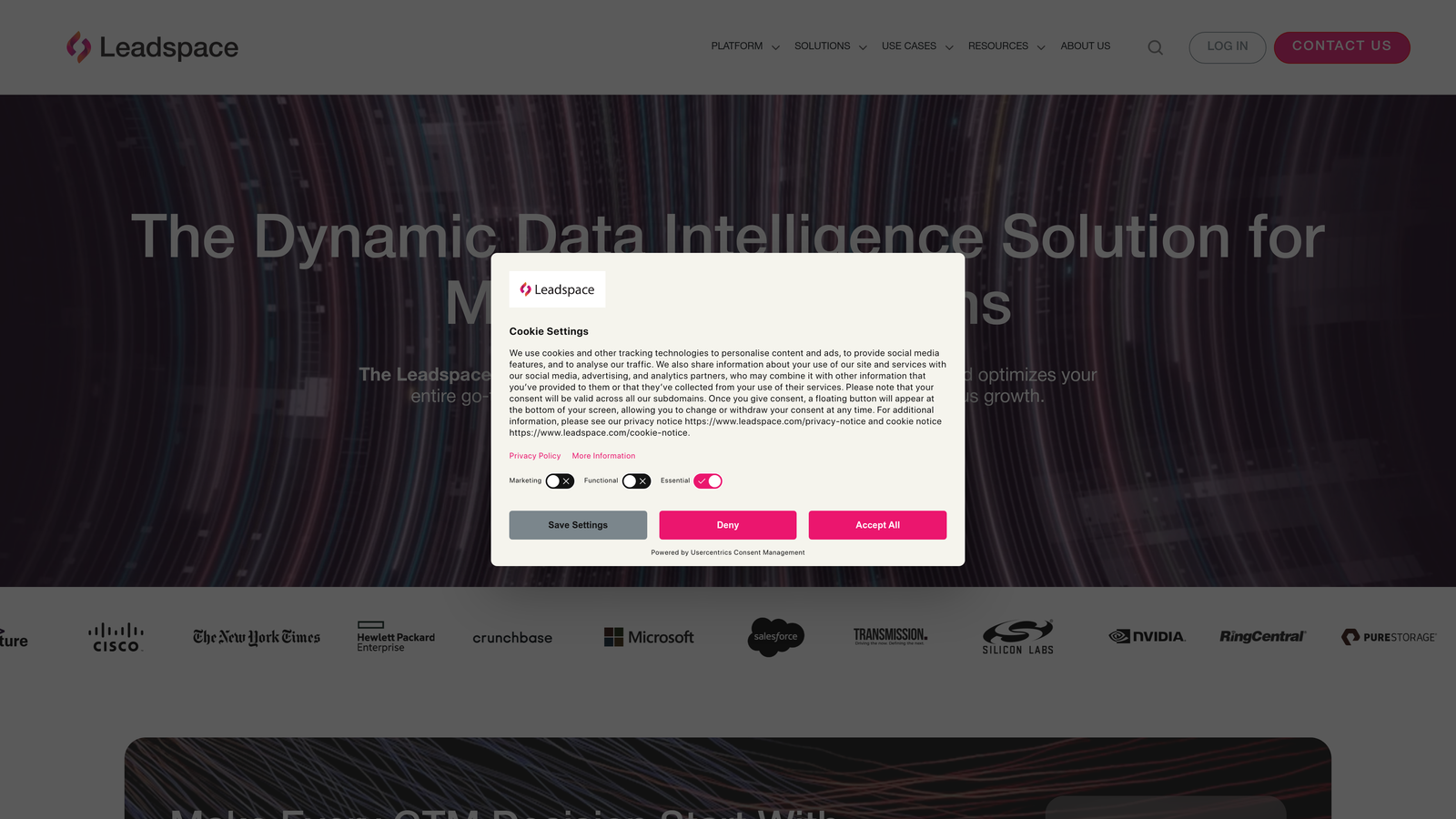
6. Leadspace
Best for: Enterprise B2B teams needing unified enrichment, scoring, and audience management in one platform
Leadspace combines customer data platform capabilities with predictive scoring and account-based orchestration.
Where This Tool Shines
Most companies cobble together separate tools for enrichment, scoring, and segmentation, creating data sync issues and fragmented workflows. Leadspace unifies these functions into a single B2B buyer graph that connects contacts to accounts, enriches with third-party data, and scores for both fit and intent.
The platform excels at account-level intelligence, aggregating contact scores into account scores and identifying buying committee members across complex organizations. This makes it particularly powerful for enterprise sales where multiple stakeholders influence decisions.
Key Features
B2B Buyer Graph: Maps relationships between contacts, accounts, and buying groups for comprehensive account intelligence.
Intent Signal Integration: Incorporates third-party intent data showing active research behaviors across the web.
Account and Contact Scoring: Scores both individual leads and entire accounts for multi-threaded sales approaches.
Data Unification: Consolidates data from CRM, marketing automation, web analytics, and external sources into unified profiles.
Audience Segmentation: Builds dynamic segments based on scores, attributes, and intent signals for targeted campaigns.
Best For
Enterprise B2B organizations with complex, multi-stakeholder sales processes. Companies running account-based marketing programs will find the account-level scoring and buying group identification especially valuable.
Pricing
Enterprise pricing on request, typically starting in the mid-five figures annually for implementations with substantial contact volumes.
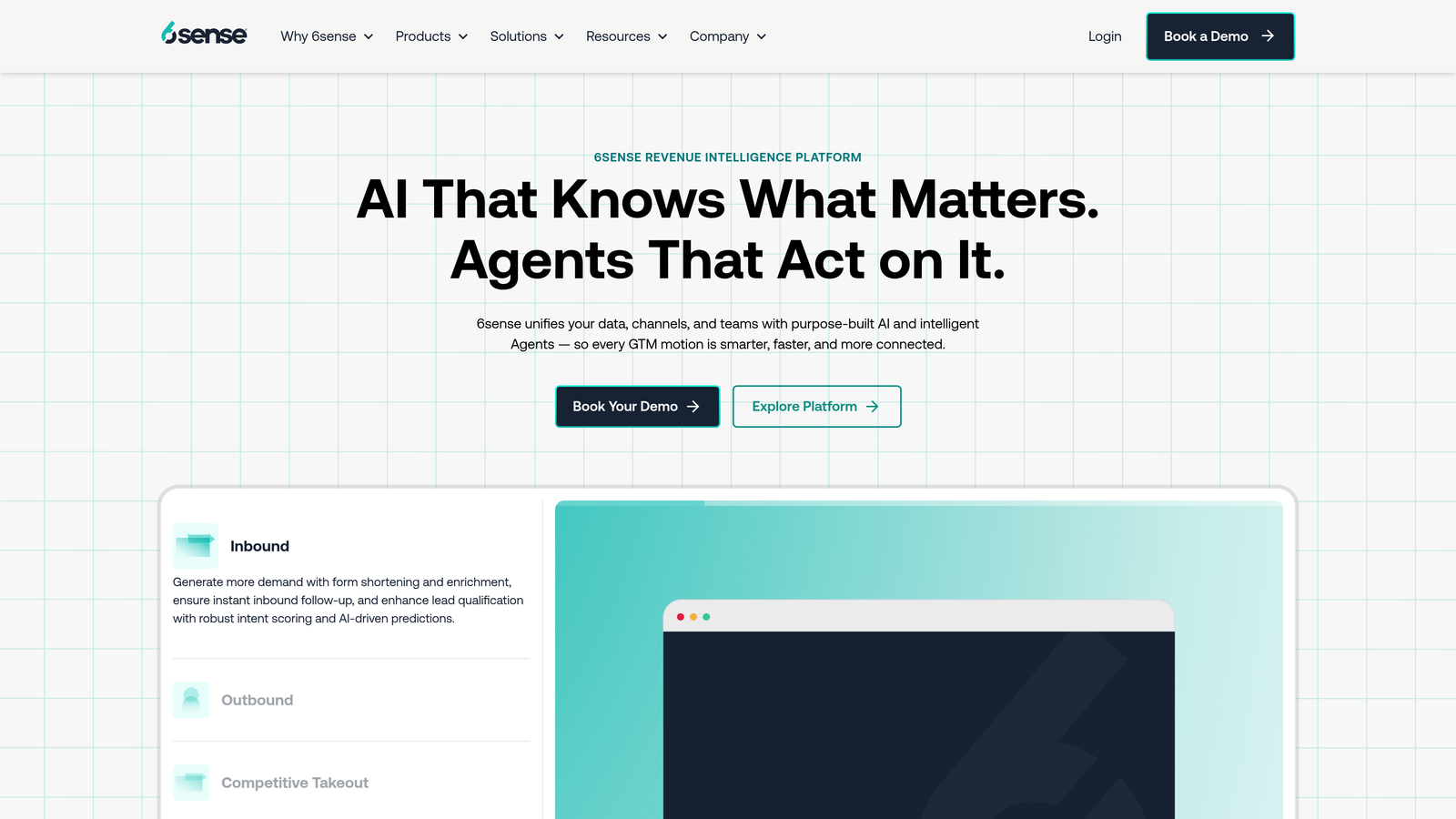
7. 6sense
Best for: Account-based strategies requiring intent data and buying stage predictions
6sense identifies in-market accounts using AI that analyzes anonymous buying behaviors across millions of web properties.
Where This Tool Shines
Traditional lead scoring only works after someone identifies themselves by filling out a form. 6sense flips this by identifying accounts showing buying intent before any direct engagement, analyzing anonymous research patterns to predict which companies are actively evaluating solutions in your category.
The platform maps buying stages from awareness through decision, helping marketing time campaigns and sales prioritize outreach based on where accounts sit in their journey. This prevents wasted effort on accounts not yet ready to buy.
Key Features
Buying Stage Predictions: Classifies accounts into awareness, consideration, decision, or purchase stages based on behavioral signals.
Anonymous Buyer Identification: Reveals companies researching your category even before they visit your website or engage directly.
Intent Data Aggregation: Combines first-party website behavior with third-party research signals from across the web.
Account Prioritization: Scores and ranks accounts by conversion likelihood and buying stage for focused sales efforts.
Predictive Audiences: Builds lookalike segments of accounts showing similar intent patterns to your best customers.
Best For
Enterprise B2B companies with account-based sales and marketing strategies. Most effective for organizations with defined target account lists where identifying early buying signals creates competitive advantage.
Pricing
Enterprise pricing starting around $50,000+ annually depending on account volume and feature configuration. Requires significant investment in ABM infrastructure to maximize value.
8. Infer (Ignite)
Best for: Mid-market companies wanting predictive scoring without enterprise complexity or cost
Infer uses machine learning trained on your historical conversion data to predict which leads will close.
Where This Tool Shines
Infer automates the model-building process that typically requires data science teams, analyzing your CRM history to identify patterns between lead attributes and successful conversions. The platform builds custom models specific to your business rather than applying generic industry templates.
Score delivery happens in real-time as leads enter your system, updating continuously as behavioral data accumulates. This means sales teams always work from current scores reflecting the latest engagement signals.
Key Features
Automated Model Building: Creates custom predictive models from your CRM data without manual feature engineering or data science expertise.
Behavioral Scoring: Incorporates website visits, email engagement, and content downloads into conversion predictions.
CRM Integrations: Connects with Salesforce, HubSpot, Marketo, and other platforms to access training data and deliver scores.
Real-Time Score Delivery: Updates scores as new behavioral data arrives, keeping prioritization current.
Score Explanations: Shows which factors drove each score for transparency and sales team trust.
Best For
Mid-market B2B companies with at least 500 historical conversions to train accurate models. Teams wanting predictive scoring capabilities without the complexity and cost of enterprise platforms.
Pricing
Contact for pricing based on lead volume and integration requirements. Typically positioned as a mid-market alternative to enterprise platforms.
9. Breadcrumbs
Best for: RevOps teams wanting full control over scoring models without engineering dependencies
Breadcrumbs provides a no-code visual builder for creating and testing custom lead qualification models.
Where This Tool Shines
Most scoring platforms force you to choose between simple rule-based systems or black-box AI models you can't customize. Breadcrumbs gives RevOps teams a middle path—visual model building with sophisticated logic including recency weighting, frequency analysis, and multi-attribute combinations.
The platform's co-dynamic scoring approach combines fit and activity scores into unified prioritization, while A/B testing capabilities let you compare model performance before rolling changes to your entire database. This experimental approach prevents scoring changes from disrupting successful sales processes.
Key Features
Visual Model Builder: Drag-and-drop interface for creating scoring rules without SQL or coding knowledge.
Co-Dynamic Scoring: Combines demographic fit scores with behavioral activity scores for comprehensive qualification.
A/B Testing for Models: Test new scoring approaches against existing models to measure impact before full deployment.
Recency and Frequency Weighting: Automatically adjusts scores based on how recently and how often actions occurred.
Multi-Model Management: Run different scoring models for different products, regions, or customer segments simultaneously.
Best For
RevOps and marketing operations teams that want scoring flexibility without depending on data science or engineering resources. Particularly valuable for companies with complex qualification criteria that change frequently based on market conditions.
Pricing
Free tier available with limited contacts and features. Paid plans start at $400/month with pricing scaling based on contact volume and advanced features.
Making the Right Choice
For high-growth teams wanting qualification built into lead capture, Orbit AI delivers the fastest path to better leads by scoring prospects before they ever hit your CRM. This pre-pipeline approach eliminates wasted sales time on leads that should never have made it through in the first place.
Enterprise Salesforce shops should lean into Einstein for native scoring that leverages existing CRM data without platform sprawl. HubSpot users will find native scoring sufficient for most needs, especially when combined with workflow automation already in their stack.
PLG companies benefit most from MadKudu's product behavior analysis, which identifies high-intent users based on how they actually engage with your product rather than just demographic attributes. ABM-focused organizations should evaluate 6sense for intent-driven prioritization that identifies in-market accounts before direct engagement.
Clearbit remains the gold standard for enrichment-first approaches, transforming minimal form data into comprehensive buyer profiles that enable accurate qualification. Teams wanting full control over scoring logic without engineering dependencies will appreciate Breadcrumbs' visual model builder and A/B testing capabilities.
Whatever you choose, the goal is the same: stop wasting sales time on leads that were never going to convert. Start with one tool, measure the impact on conversion rates and sales efficiency, and expand from there. The best lead quality optimization strategy combines the right technology with clear qualification criteria that reflect your actual ideal customer profile.
Transform your lead generation with AI-powered forms that qualify prospects automatically while delivering the modern, conversion-optimized experience your high-growth team needs. Start building free forms today and see how intelligent form design can elevate your conversion strategy.


