

Not all form builders are built for lead qualification. Most are designed to collect data, not evaluate it. If your team is spending hours manually sorting through submissions to find sales-ready leads, your form software is working against you.
The best form software for lead qualification goes further: it scores responses in real time, routes high-intent leads automatically, and helps you focus on the prospects most likely to convert. Whether you're a SaaS startup scaling fast or an enterprise team optimizing a complex pipeline, the right tool can transform your top-of-funnel.
This guide covers the top options available in 2026, evaluated on lead qualification depth, form design quality, integrations, and pricing. We've included Orbit AI at the top because it's purpose-built for this use case, but every tool on this list has genuine strengths worth knowing about.
1. Orbit AI
Best for: High-growth SaaS and B2B teams that need native AI-powered lead qualification built directly into their forms.
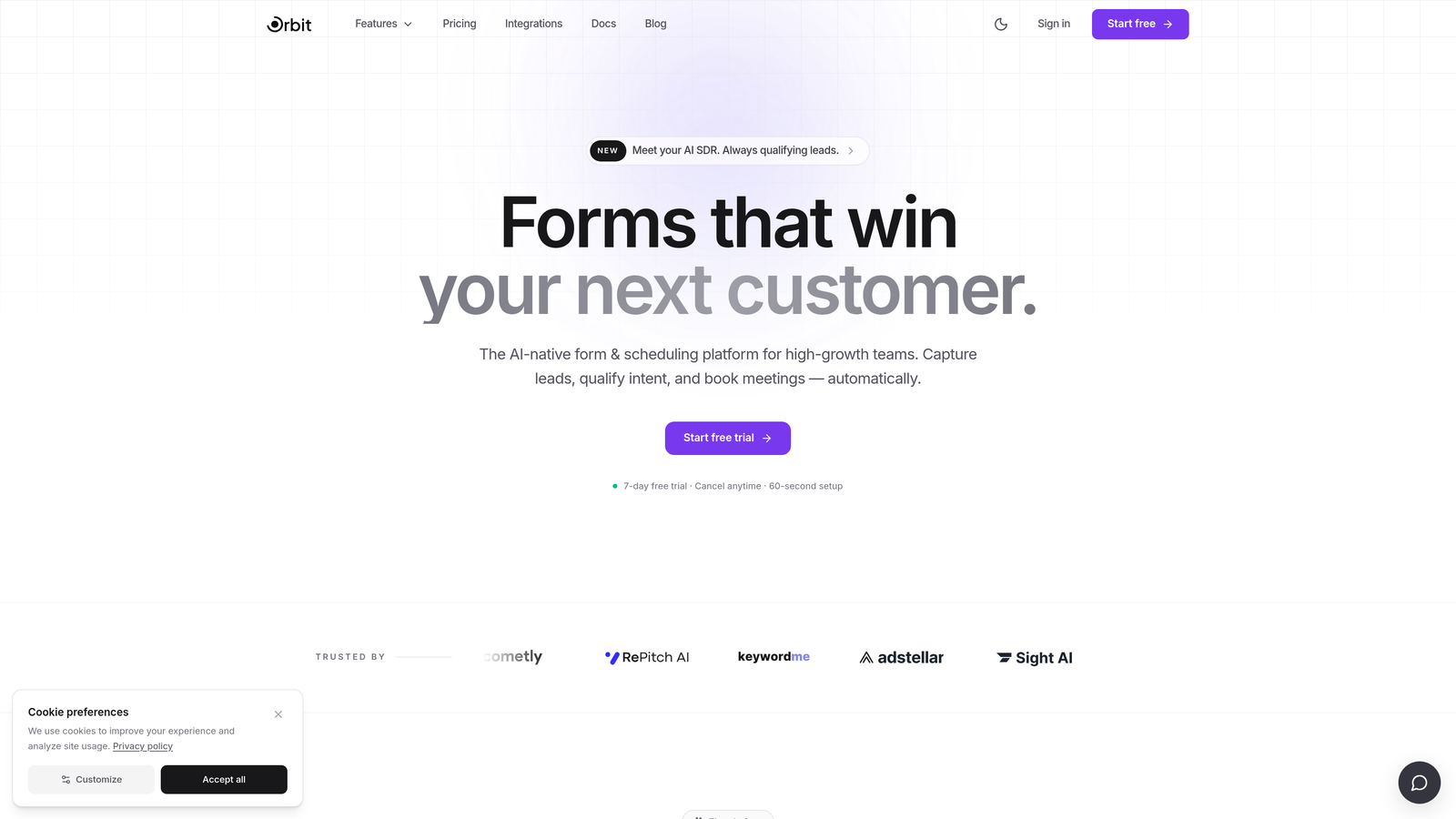
Orbit AI is an AI-powered form builder designed specifically for lead qualification, combining conversion-optimized form design with a native AI engine that scores and routes leads in real time.
Where This Tool Shines
Most form tools treat qualification as an afterthought, something you bolt on downstream through CRM rules or Zapier automations. Orbit AI flips that model. The qualification logic lives inside the form layer itself, which means leads are evaluated the moment they submit, not hours later when a workflow finally fires.
For revenue teams tired of manually reviewing submissions or building elaborate integration stacks just to separate good leads from noise, that distinction matters. You get a purpose-built system rather than a general-purpose tool you've had to hack into shape.
Key Features
Native AI Lead Qualification: Scores responses as they're submitted, without requiring external CRM rules or third-party automation tools.
Real-Time Lead Routing: Automatically routes leads based on their qualification score, so your sales team sees high-intent prospects immediately.
Conversion-Optimized Form Design: Forms are built with completion rates in mind, clean layouts, smart field ordering, and mobile-first design that reduces drop-off.
Adaptive Conditional Logic: Adjusts the form experience dynamically based on how respondents answer, creating a personalized path through the form.
CRM and Marketing Automation Integrations: Connects with the tools your revenue team already uses, so qualified leads flow directly into your existing pipeline.
Best For
Orbit AI is the strongest fit for SaaS companies, B2B demand gen teams, and growth-focused marketers who want lead qualification to happen at the form level, not three steps downstream. If your team is scaling fast and needs a system that surfaces sales-ready leads without manual triage, this is built for that exact problem.
Pricing
Visit orbitforms.ai for current pricing details and free trial options. Plans are designed to scale with high-growth teams.
2. Typeform
Best for: Teams that want a polished, conversational form experience that reduces friction in lead capture flows.
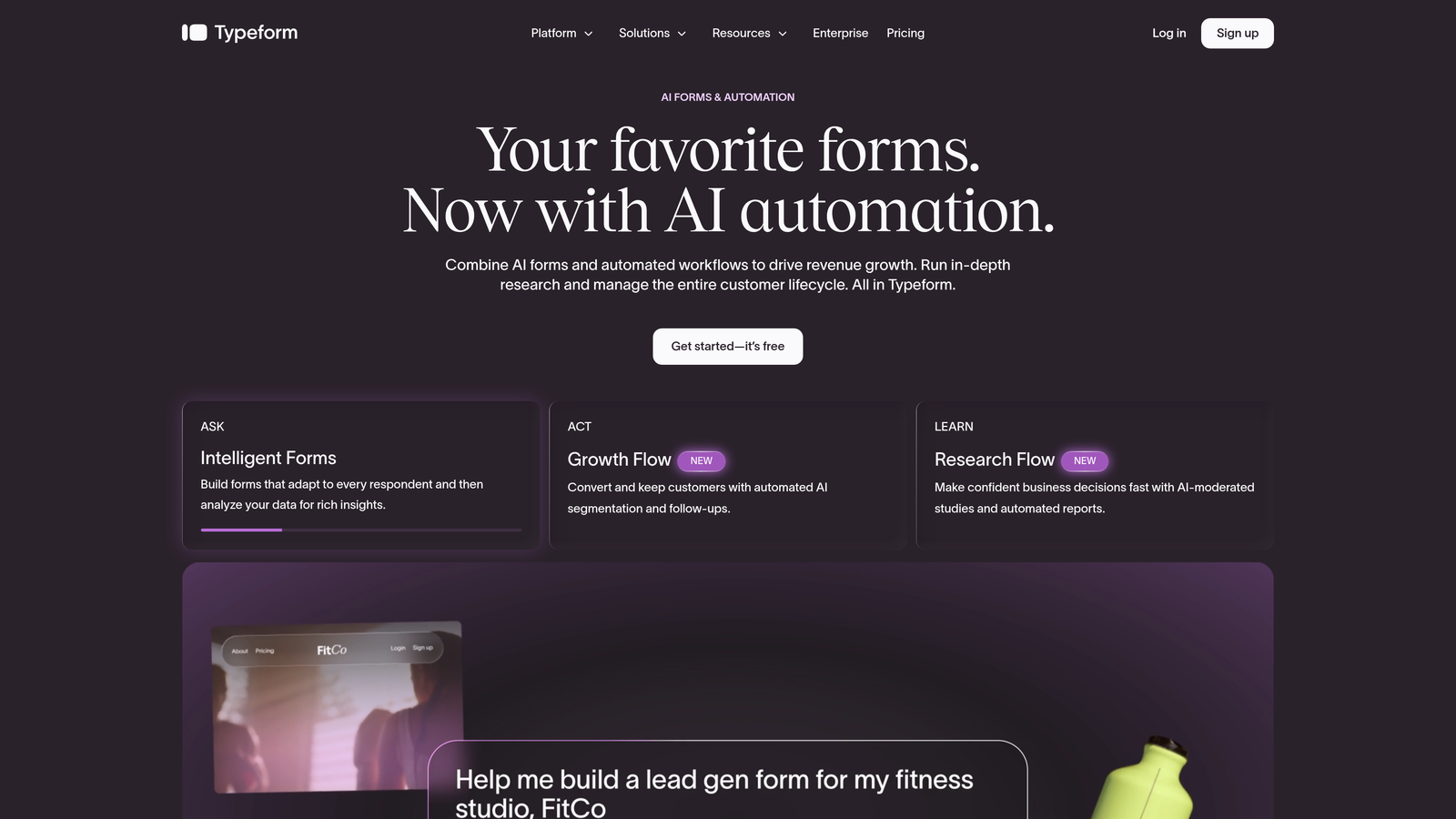
Typeform is a well-established conversational form builder known for its one-question-at-a-time interface, which creates a more engaging experience than traditional multi-field forms.
Where This Tool Shines
Typeform's core strength is UX. The single-question format keeps respondents focused and tends to reduce abandonment in longer forms, which matters when you're asking qualification questions that go beyond name and email. For marketing and demand gen teams, that completion rate improvement can meaningfully increase the volume of usable leads.
That said, lead qualification in Typeform is largely a manual or integration-dependent process. Logic Jumps let you branch the form based on answers, but scoring and routing qualified leads still requires connecting to a CRM or automation tool like Zapier. It's capable, but it takes more setup than a purpose-built qualification tool.
Key Features
Conversational One-Question UX: Presents questions one at a time to reduce cognitive load and improve completion rates.
Logic Jumps: Conditional branching that adapts the form path based on how respondents answer earlier questions.
Integration Ecosystem: Connects with HubSpot, Salesforce, Zapier, and a wide range of marketing tools.
Video and Image Embeds: Supports rich media inside form questions, useful for product demos or branded experiences.
Analytics Dashboard: Tracks drop-off rates, completion rates, and response data to help optimize form performance.
Best For
Typeform works well for marketing teams that prioritize form aesthetics and completion rates, and are comfortable using integrations to handle downstream qualification logic. It's a strong choice when brand experience matters as much as data capture, and less ideal if you need qualification to happen natively without building an integration stack.
Pricing
Free plan available with limited responses. Paid plans start at $25/month billed annually, with higher tiers unlocking more responses and advanced logic features.
3. Jotform
Best for: Operations-heavy teams that need forms to connect to many different systems with minimal custom development.
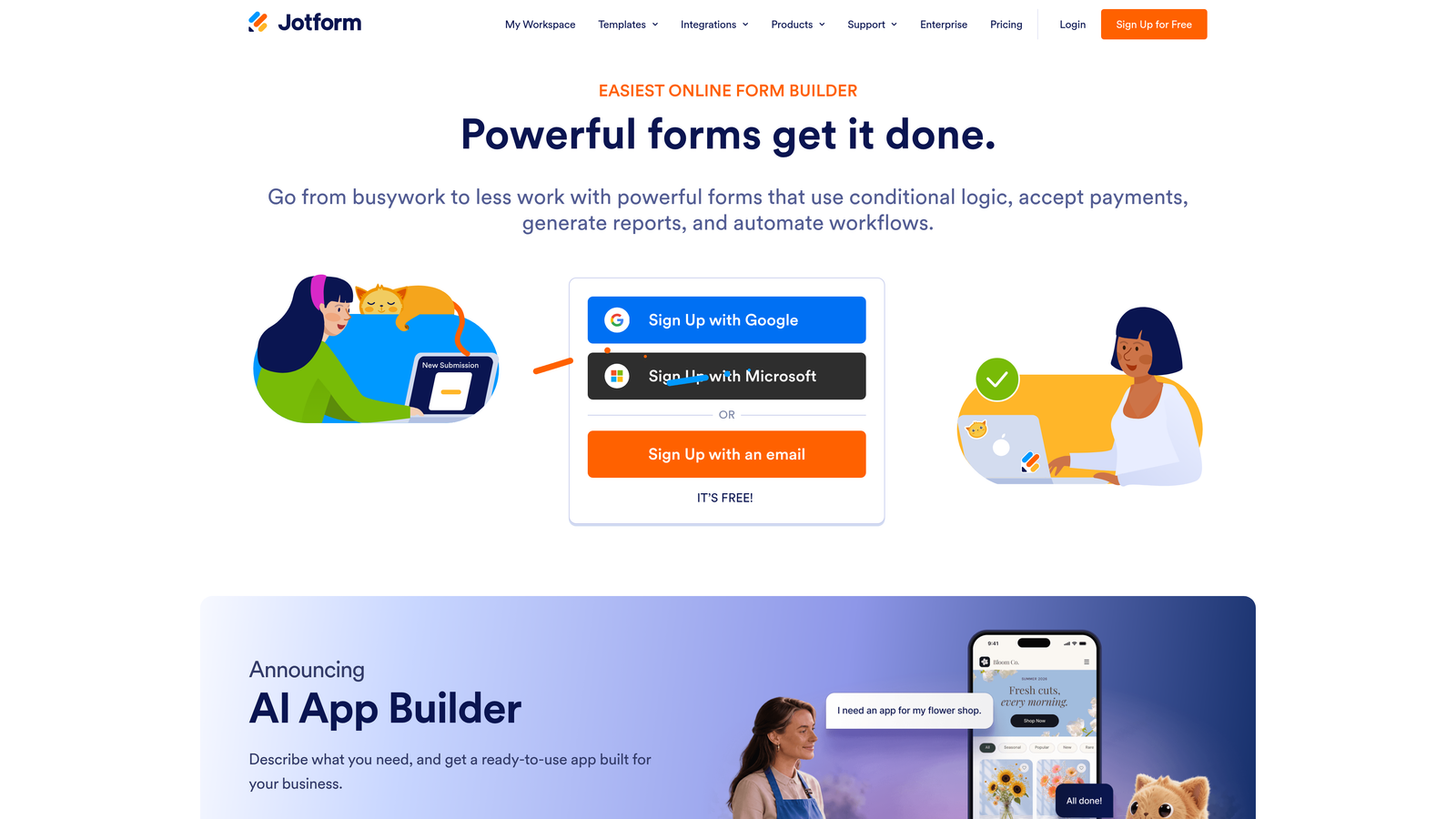
Jotform is one of the most feature-rich form builders available, offering an enormous template library, robust workflow automation, and an integration list that covers nearly every tool a modern team might use.
Where This Tool Shines
Jotform's breadth is genuinely impressive. With over 10,000 templates and more than 400 integrations, it's the kind of tool that can slot into almost any workflow without requiring much configuration from scratch. Approval workflows and team collaboration features make it particularly useful for organizations where form submissions need to pass through multiple reviewers before action is taken.
For lead qualification specifically, Jotform relies on its conditional logic and integration connections rather than a native scoring engine. Teams typically route submissions into a CRM and apply qualification rules there. It works, but it requires more moving parts than a tool with qualification built in at the form level.
Key Features
10,000+ Templates: One of the largest template libraries available, covering industries from healthcare to e-commerce to SaaS.
Conditional Logic and Multi-Page Forms: Supports complex form structures with branching paths based on respondent answers.
Approval Workflows: Routes submissions through team-based review processes before triggering next steps.
400+ Integrations: Connects with CRMs, payment processors, project management tools, and marketing platforms.
HIPAA-Compliant Plans: Available for healthcare and regulated industries that need stricter data handling standards.
Best For
Jotform suits teams that need maximum flexibility and integration coverage, particularly in operations, HR, or compliance-heavy environments. It's less optimized for pure lead qualification than tools built specifically for that use case, but its depth makes it a reliable choice when forms need to serve many different functions across an organization.
Pricing
Free plan available with up to five forms and 100 monthly submissions. Paid plans start at $34/month billed annually, with higher tiers for larger teams and more submissions.
4. Paperform
Best for: Design-conscious brands that want forms to feel like branded landing pages rather than standard data-entry fields.
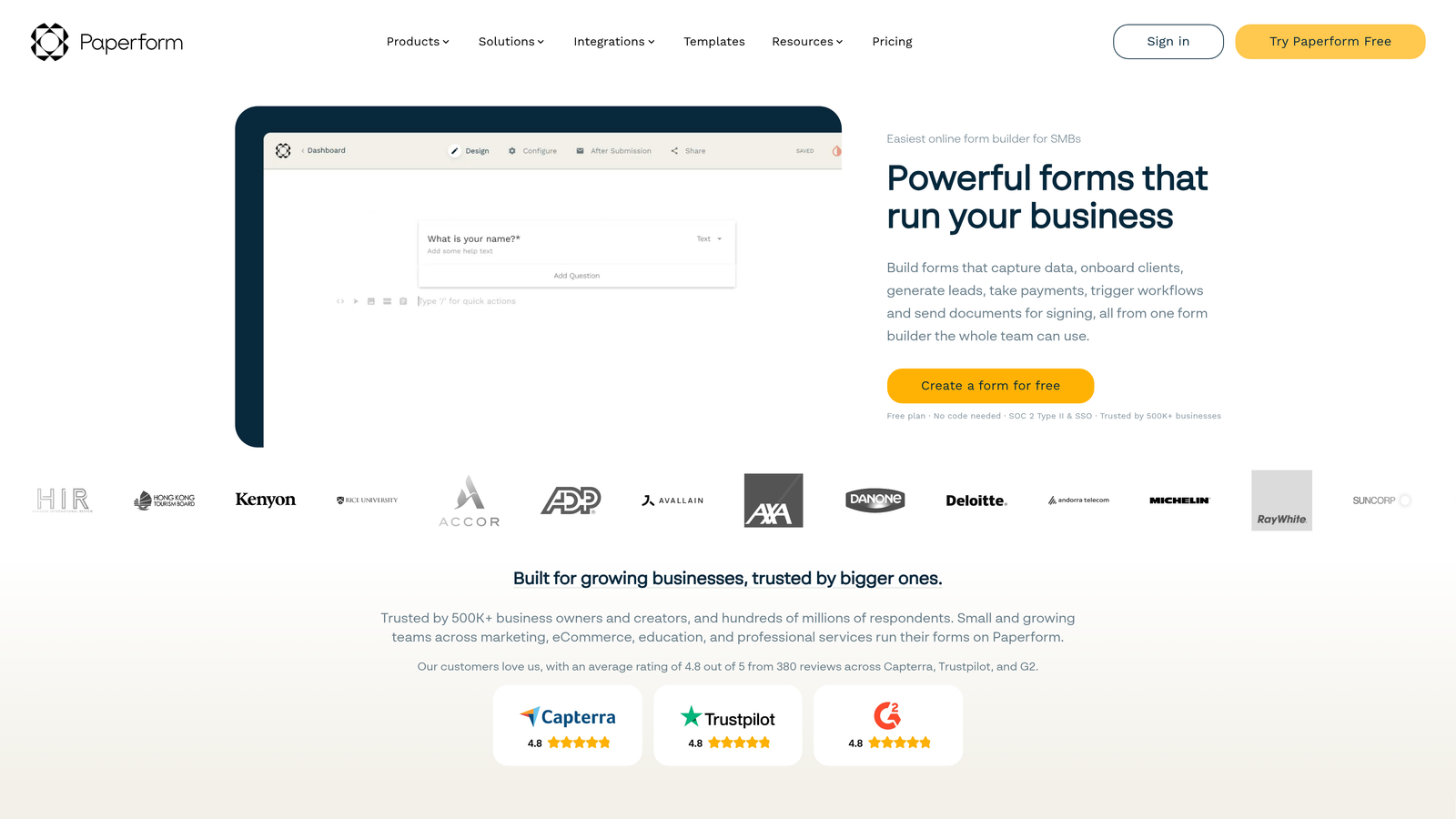
Paperform is a design-forward form builder that lets teams embed rich content, including text blocks, images, and video, directly alongside form questions, creating experiences that feel more like interactive documents than traditional forms.
Where This Tool Shines
Paperform's differentiator is creative flexibility without needing a developer. You can build forms that look genuinely polished and on-brand, mixing question fields with explanatory content, product images, or video context in a way that most form builders don't support. For companies where the form itself is part of the brand experience, that matters.
On the qualification side, Paperform offers conditional logic and calculation fields that can support some scoring logic, but native lead qualification isn't a core feature. Teams typically integrate with Zapier or HubSpot to handle routing and scoring downstream. It's a capable workaround, though it adds complexity for teams that want a simpler setup.
Key Features
Rich Content Embedding: Add text, images, and video directly within form fields to create context-rich, branded experiences.
Highly Customizable Design: Full control over fonts, colors, layouts, and page structure without writing code.
Conditional Logic and Calculation Fields: Supports branching paths and basic scoring through calculation logic.
Built-In Payment Collection: Accept payments directly through forms without a separate payment tool.
Zapier and HubSpot Integrations: Connects to automation and CRM tools for downstream lead management.
Best For
Paperform is a strong fit for content-led companies, agencies, and design-conscious brands that want their forms to reflect their visual identity. It's less suited to teams whose primary goal is automated lead qualification at scale, but excellent when form aesthetics and rich content presentation are priorities.
Pricing
Plans start at $29/month billed annually. There is no permanent free plan, though a trial is available to test the platform before committing.
5. Formstack
Best for: Enterprise teams that need forms to connect with document generation, e-signatures, and compliance-grade workflow automation.
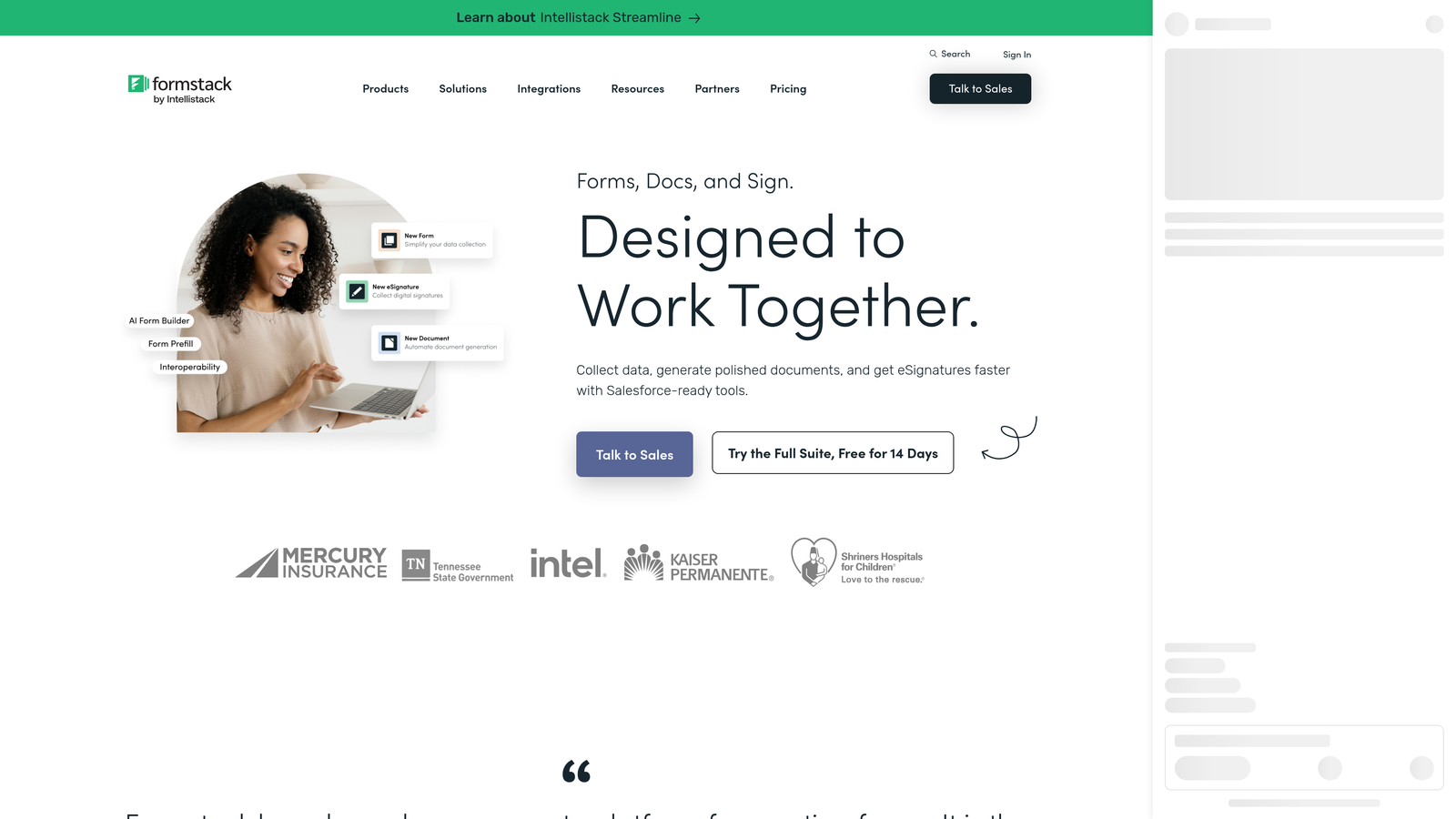
Formstack is an enterprise-grade platform that extends beyond form building into a broader suite covering document generation, electronic signatures, and structured workflow automation.
Where This Tool Shines
Formstack's value proposition is end-to-end process automation rather than just data capture. A form submission can trigger a document to be generated, routed for signature, and logged in Salesforce, all within the same platform. For organizations managing complex, multi-step workflows that happen to start with a form, that level of integration is genuinely useful.
For lead qualification specifically, Formstack offers conditional logic and advanced field types that can support qualification routing, but the platform's real strength is in structured enterprise processes rather than agile marketing use cases. Teams focused purely on lead qualification may find the platform more powerful than they need, and priced accordingly.
Key Features
End-to-End Workflow Automation: Connects form submissions to multi-step processes including approvals, document creation, and data routing.
Document Generation and E-Signatures: Create and send documents for signature directly from form data, without switching platforms.
Conditional Logic and Advanced Field Types: Supports complex form structures with branching and specialized input fields.
HIPAA and GDPR Compliance Features: Built-in compliance controls for regulated industries handling sensitive data.
Salesforce-Native Integration: Deep Salesforce connectivity for organizations running their revenue operations on that CRM.
Best For
Formstack is best suited for enterprise teams in regulated industries, legal, healthcare, financial services, and large-scale operations where forms are one part of a broader compliance and document workflow. It's a significant investment, and teams whose primary need is lead qualification alone will likely find better value elsewhere on this list.
Pricing
Plans start at $83/month billed annually. Enterprise pricing is available for larger organizations with more complex requirements.
6. Tally
Best for: Early-stage startups and lean teams that need functional, unbranded forms without a budget commitment.
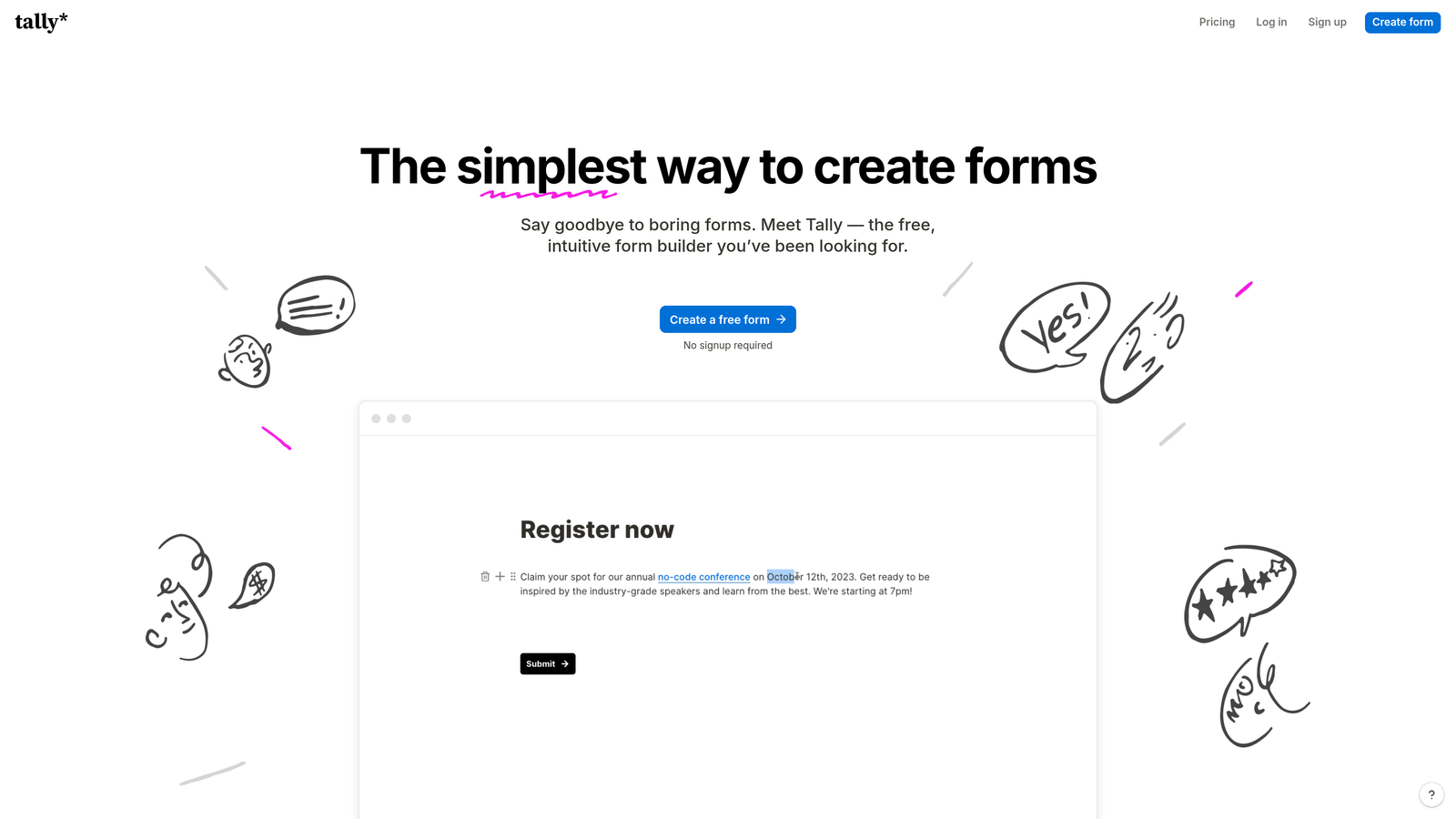
Tally is a clean, minimal form builder with a genuinely generous free tier, including no Tally branding on free forms, making it one of the most accessible options for teams just getting started.
Where This Tool Shines
Tally's free plan is unusually strong compared to most competitors. You get unlimited forms, unlimited responses, and no forced branding, which is rare at the free tier and makes it a legitimate option for bootstrapped teams or individuals who need working forms immediately. The Notion-like block editor is intuitive and fast, with a low learning curve even for non-technical users.
For lead qualification, Tally keeps things simple. Conditional logic is available on both free and paid plans, which allows for basic branching, but there's no native scoring or routing engine. Qualification typically happens manually after submission, or through Zapier integrations that connect Tally to downstream tools. It works for early-stage teams with low submission volume, but it doesn't scale well as qualification complexity grows.
Key Features
Free Plan with No Forced Branding: Unlike most competitors, Tally's free tier doesn't add branding to your published forms.
Notion-Like Block Editor: Intuitive drag-and-drop building experience that's fast to learn and use without training.
Conditional Logic on Free and Paid Plans: Basic branching available across all tiers, not locked behind a paywall.
Unlimited Forms and Responses on Free Tier: No artificial caps on form count or submission volume at the free level.
Zapier and Native Integrations: Connect to automation tools and other platforms for downstream data handling.
Best For
Tally is the right choice for early-stage founders, solo marketers, or lean teams that need clean, functional forms without spending anything. As a long-term lead qualification solution for a scaling team, it has real limitations, but as a starting point or lightweight tool for simple use cases, it's hard to beat at the price.
Pricing
Free plan available with no branding restrictions. Tally Pro is $29/month billed annually, adding features like custom domains, file uploads, and priority support.
Which Tool Is Right for Your Team
The right choice here depends on what your team actually needs from a form tool, not just what sounds good in a feature list.
If lead qualification is your primary goal, Orbit AI is the only tool on this list that handles scoring and routing natively at the form layer. You don't need to build an integration stack or rely on downstream CRM rules to know which leads are worth pursuing. For high-growth SaaS teams and B2B revenue teams in particular, that's a meaningful operational advantage.
If you prioritize form experience and completion rates, Typeform is the strongest alternative. Its conversational UX is well-suited to longer qualification flows, and its integration ecosystem covers most CRM and automation needs. Just expect to do more configuration work to get qualification logic in place.
For teams that need maximum template variety and integration breadth, Jotform offers the most flexibility. Paperform is the pick for design-led brands that want forms to feel like branded content. Formstack belongs in the conversation for enterprise teams with compliance requirements and complex document workflows. And Tally is the clear winner for anyone who needs functional, unbranded forms without spending a dollar.
The pattern is clear: most of these tools can approximate lead qualification with enough configuration. Only one was designed to do it out of the box.
Transform your lead generation with AI-powered forms that qualify prospects automatically while delivering the modern, conversion-optimized experience your high-growth team needs. Start building free forms today and see how intelligent form design can elevate your conversion strategy.


