

Feedback forms are only as powerful as the tool behind them. A clunky builder means abandoned forms, low response rates, and data you can't act on. The right feedback form builder should make it easy to create beautiful, high-converting forms and even easier to turn responses into real decisions.
This list covers the six best feedback form builder tools available in 2026. We evaluated each one on ease of use, design flexibility, conditional logic, integrations, and how well it supports teams focused on growth and conversion. Whether you're collecting NPS scores, post-purchase feedback, or onboarding insights, there's a tool here that fits your workflow.
1. Orbit AI
Best for: High-growth SaaS and B2B teams that want feedback forms to qualify and prioritize responses automatically.
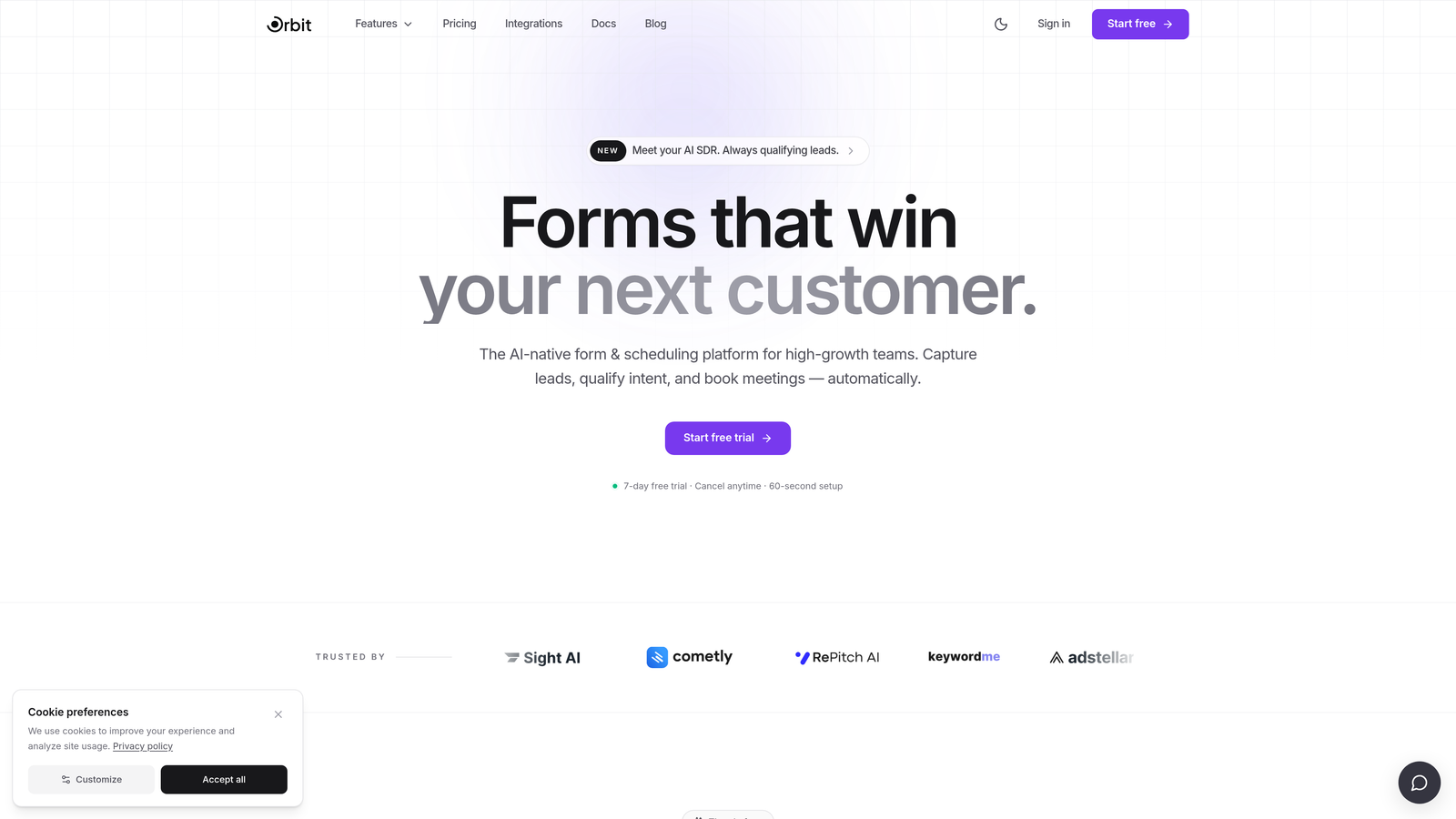
Orbit AI is an AI-powered form builder designed for teams that treat feedback as a growth asset, not just a data collection exercise.
Where This Tool Shines
Most feedback form builders stop at collecting responses. Orbit AI goes a step further by layering AI-powered lead qualification directly into the form experience. That means when a response comes in, it doesn't just sit in a spreadsheet waiting to be sorted. The platform helps you understand which responses signal high-priority action, which is especially valuable for SaaS teams running onboarding surveys or product feedback loops at scale.
The form design itself is built around conversion. Clean, modern UI with dynamic form flows means respondents are more likely to complete what they start. For teams where form completion rate is a metric that actually matters, that distinction is worth paying attention to.
Key Features
AI-Powered Lead Qualification: Automatically surfaces high-priority responses based on user input, so your team can act on what matters most without manual triage.
Conversion-Optimized Design: Modern, polished form UI built to reduce friction and improve completion rates across feedback and lead generation flows.
Conditional Logic and Dynamic Flows: Build branching form paths that adapt based on how respondents answer, keeping the experience relevant and concise.
CRM and Marketing Integrations: Connect form responses directly to your existing stack, including CRM and marketing automation tools, so feedback flows into your pipeline without manual work.
Built for SaaS and B2B Teams: The platform is designed with growth-focused use cases in mind, from product feedback to customer satisfaction and onboarding surveys.
Best For
Orbit AI is the strongest fit for SaaS companies and B2B growth teams that need feedback forms to do more than collect data. If you're running NPS campaigns, product discovery surveys, or onboarding flows where response quality and prioritization matter, this platform is built with those workflows in mind.
Pricing
Visit orbitforms.ai for current plan pricing. A free starting option is available to get you building right away.
2. Typeform
Best for: Teams that want a conversational feedback experience with strong design and a broad integration ecosystem.
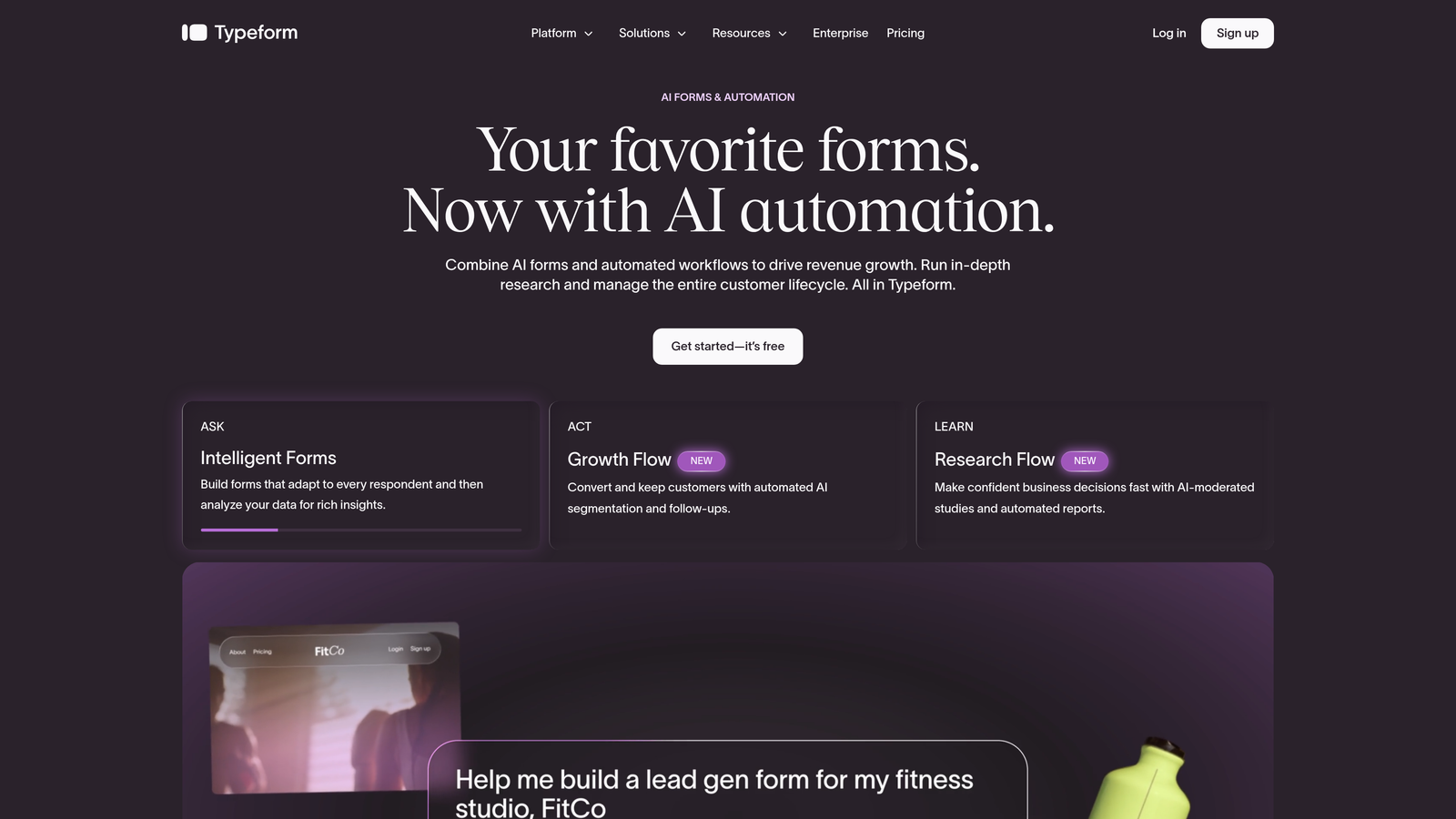
Typeform is a conversational form builder known for its one-question-at-a-time format that creates engaging, low-friction feedback experiences.
Where This Tool Shines
Typeform's core strength is its format. By presenting one question at a time, it creates a more focused experience for respondents, which many teams find leads to higher completion rates on longer surveys. For feedback use cases like NPS, CSAT, or post-purchase surveys, that format translates well into more thoughtful, complete responses.
The integration ecosystem is also a genuine strength. Typeform connects cleanly with HubSpot, Salesforce, Slack, and dozens of other tools, making it relatively straightforward to route feedback into wherever your team already works.
Key Features
Conversational One-Question Format: Guides respondents through feedback forms one step at a time, reducing overwhelm and improving completion.
Logic Jumps: Personalizes the feedback path based on previous answers, so respondents only see questions relevant to their experience.
Template Library: Includes ready-to-use templates for NPS, CSAT, product feedback, and more, making it fast to launch a polished survey.
Branded Themes: Custom color schemes, fonts, and imagery let you align forms with your brand identity.
Broad Integration Support: Connects with HubSpot, Salesforce, Slack, Google Sheets, and many other platforms via native integrations and Zapier.
Best For
Typeform suits marketing and product teams that prioritize the respondent experience and need strong integrations with existing tools. It's a particularly good fit for customer-facing feedback surveys where brand presentation matters. Teams that only need basic forms may find the pricing steeper than necessary for their use case.
Pricing
A free plan is available with limited responses. Paid plans unlock higher response limits, logic jumps, and integrations. See typeform.com for current pricing tiers.
3. Tally
Best for: Startups and small teams that need a capable, no-cost feedback form builder without branding restrictions.
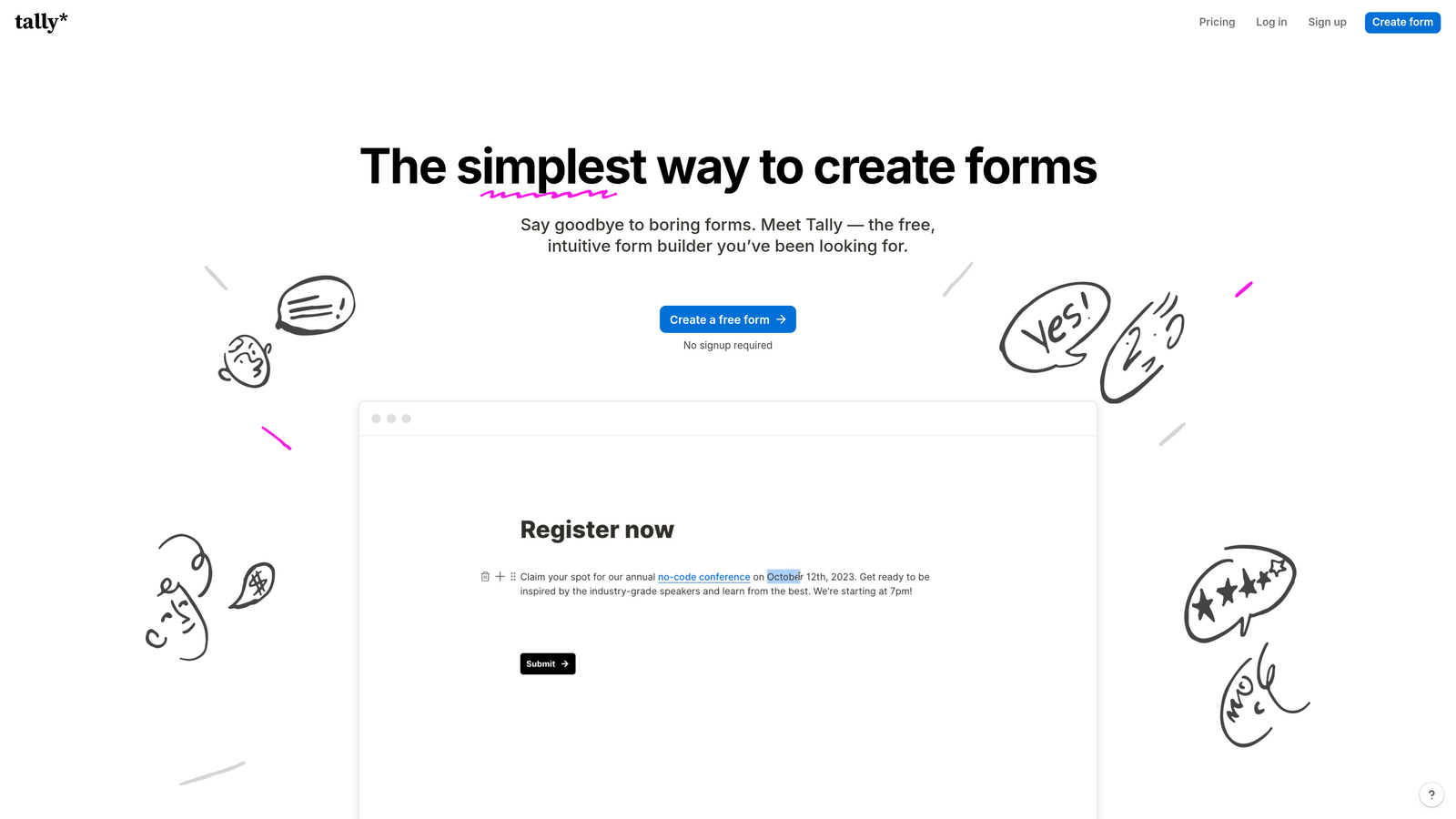
Tally is a free-first form builder with a clean, Notion-like editor and one of the most generous free tiers in the category.
Where This Tool Shines
Tally's free plan is genuinely useful. Unlimited forms, unlimited responses, and no forced branding on the free tier means small teams and indie makers can run real feedback operations without paying anything. That's a meaningful differentiator in a space where most tools restrict response volumes or watermark your forms until you upgrade.
The editing experience is intuitive for anyone familiar with Notion. Building a feedback form feels less like configuring a tool and more like writing a document, which lowers the barrier for non-technical team members to create and iterate on forms quickly.
Key Features
Unlimited Free Forms and Responses: No response caps or form limits on the free plan, making it genuinely viable for ongoing feedback collection without a budget.
No Forced Branding on Free Tier: Your forms stay clean and professional without Tally's logo attached unless you choose otherwise.
Conditional Logic: Supports branching paths and conditional questions so feedback flows adapt to respondent answers.
File Upload Support: Respondents can attach files directly within form submissions, useful for richer feedback scenarios.
Pro Plan for Advanced Needs: Unlocks features like custom domains, priority support, and additional customization options for teams that need more.
Best For
Tally is the go-to choice for bootstrapped startups, indie makers, and small teams running lean. If your priority is getting functional, unbranded feedback forms live without spending anything, Tally is hard to beat. Teams that need deep visual customization or enterprise-grade features will likely need to look elsewhere.
Pricing
Free plan is robust and genuinely usable long-term. Pro plan is available for advanced features. See tally.so for current Pro pricing.
4. Paperform
Best for: Brand-conscious teams that need rich design control and a document-style form experience.
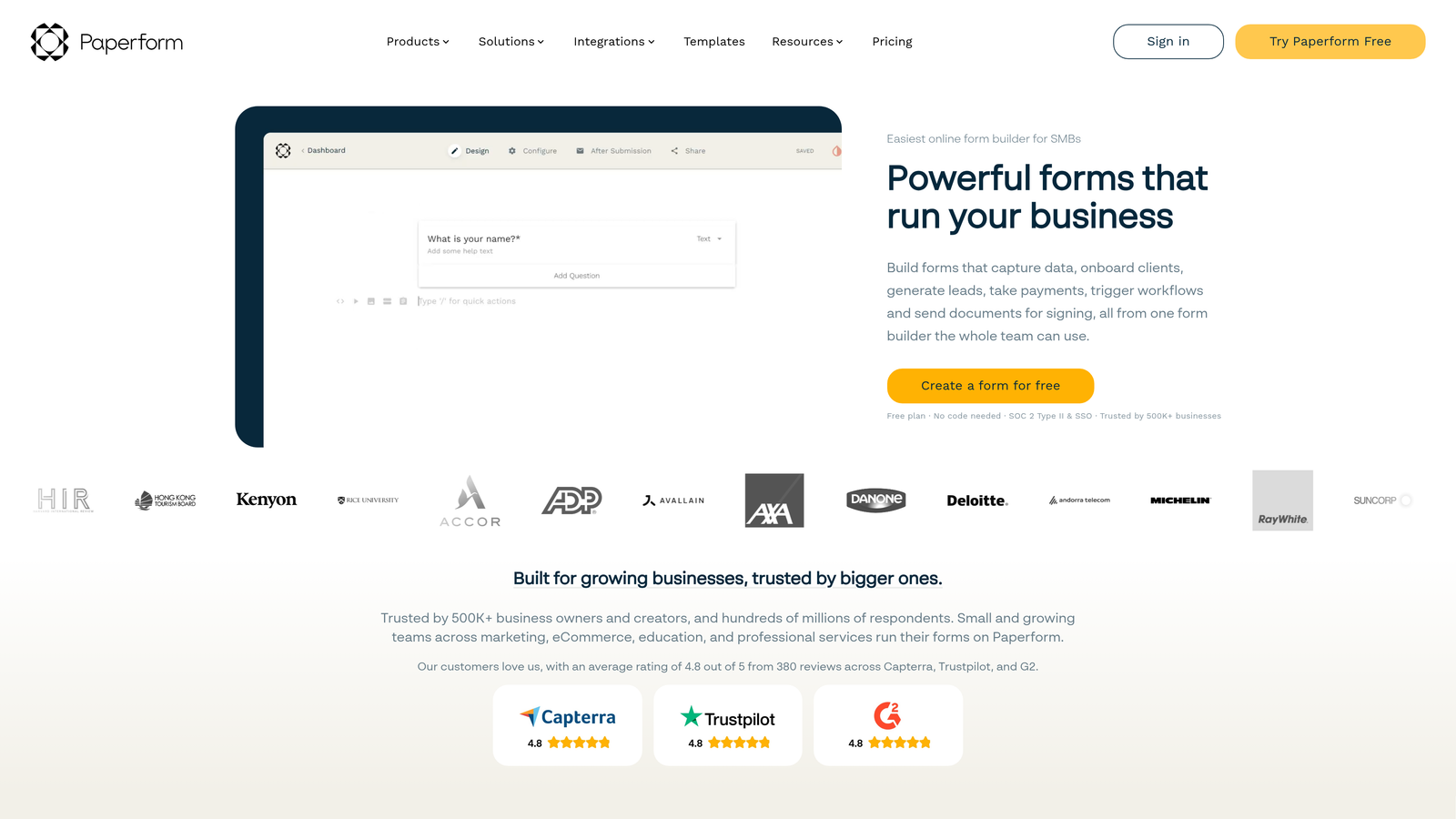
Paperform is a document-style form builder that feels more like building a landing page than filling out a traditional form.
Where This Tool Shines
Paperform's biggest differentiator is its visual flexibility. Where most form builders give you a form, Paperform gives you a canvas. You can embed videos, images, and custom CSS alongside your questions, which makes it a strong choice for feedback experiences where brand presentation is a priority. The result can look significantly more polished than a standard form.
It also handles more than just feedback. Payments, bookings, and quizzes are all supported within the same platform, which makes it useful for teams that want a single tool covering multiple form-based workflows rather than stitching together separate tools.
Key Features
Document-Style Editor: Build forms that look and feel like branded landing pages, with rich media support including video and images embedded alongside questions.
Custom CSS and Full Visual Control: Go beyond theme options with direct CSS customization for teams with specific brand requirements.
Conditional Logic and Calculation Fields: Supports branching paths and calculated outputs, useful for scored feedback forms or product fit assessments.
Payments, Bookings, and Quizzes: Handles use cases beyond feedback collection, reducing the need for additional tools in your stack.
Strong Branding Flexibility: Custom fonts, colors, and layouts let you create feedback forms that feel like a natural extension of your product or website.
Best For
Paperform is best suited for design-focused teams and agencies where visual identity matters as much as functionality. It's a strong pick for customer feedback surveys that need to reflect a premium brand experience. Teams on tight budgets may find the absence of a free plan a limiting factor.
Pricing
No free plan is available. Paid tiers offer increasing features and submission limits. See paperform.co for current pricing.
5. Jotform
Best for: Larger organizations that need extensive templates, compliance features, and complex workflow support.
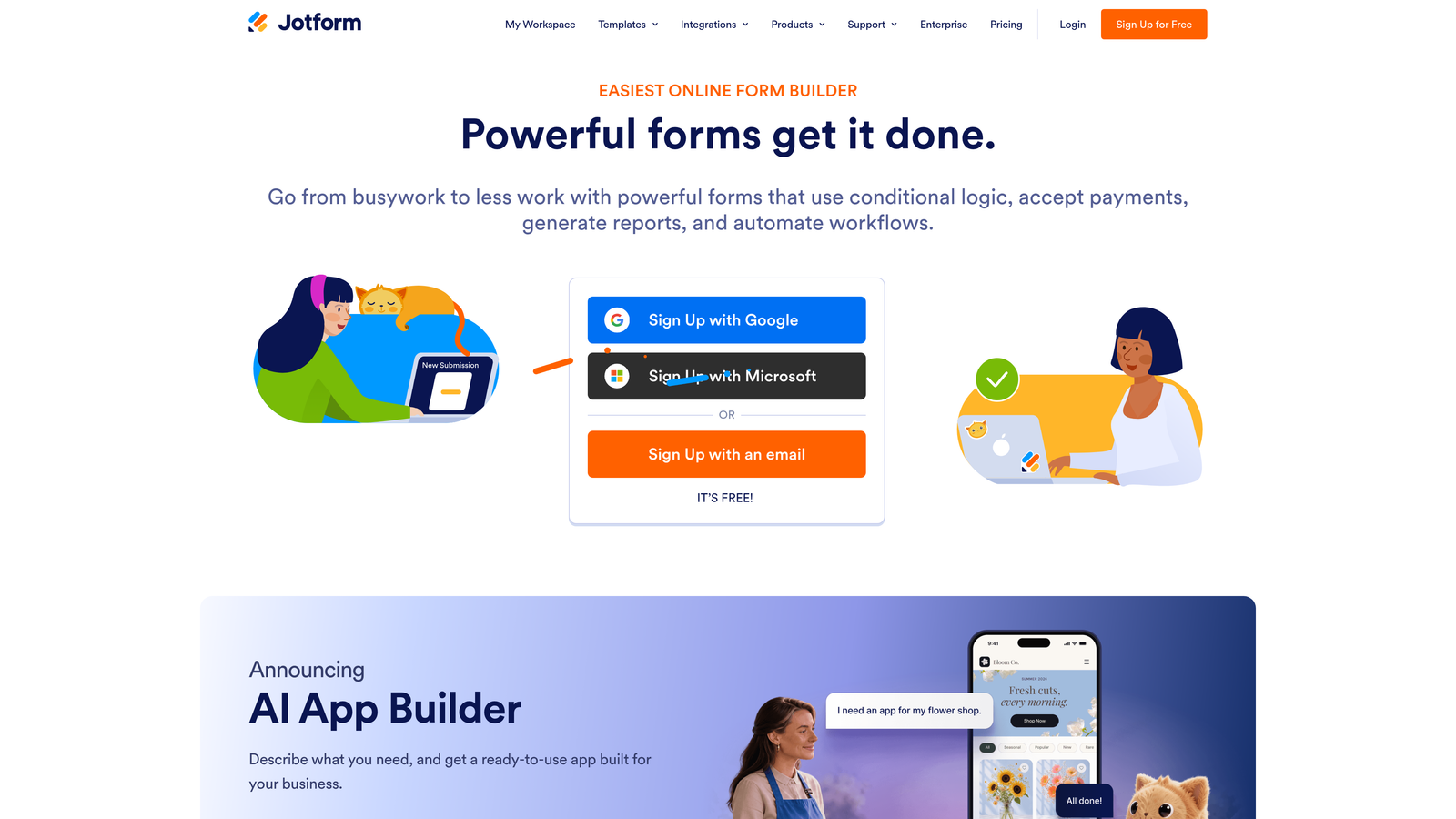
Jotform is one of the most feature-rich form builders available, with thousands of templates and enterprise-grade compliance capabilities.
Where This Tool Shines
Jotform's template library is genuinely impressive. If you need a feedback form for a specific use case, there's almost certainly a template for it already built. That breadth makes it fast to get started, particularly for teams managing multiple feedback programs across different departments or products.
The compliance coverage is also a real differentiator for regulated industries. HIPAA and GDPR compliance features are built in, which matters for healthcare organizations, financial services teams, or any company operating under strict data handling requirements. For enterprises, the combination of scale, compliance, and integration depth is hard to match.
Key Features
Thousands of Templates: Extensive library covering NPS, CSAT, employee feedback, event surveys, and many other feedback-specific formats.
HIPAA and GDPR Compliance: Built-in compliance features for organizations with strict data privacy and security requirements.
Approval Workflows and E-Signatures: Supports multi-step approval chains and digital signatures within the form platform.
Hundreds of Integrations: Connects with a broad range of CRMs, project management tools, payment processors, and marketing platforms.
Scalable Plans for Large Organizations: Pricing and feature tiers designed to accommodate high-volume feedback collection across large teams.
Best For
Jotform is the strongest fit for mid-size to enterprise organizations that need compliance coverage, complex workflows, and a wide template library. Smaller teams or those looking for a clean, simple feedback experience may find the interface more complex than their use case requires.
Pricing
Free plan available with submission and storage limits. Paid plans scale for higher volumes and team features. See jotform.com for current pricing tiers.
6. Formstack
Best for: Operations-heavy teams that need feedback collection connected to automated business workflows and document generation.
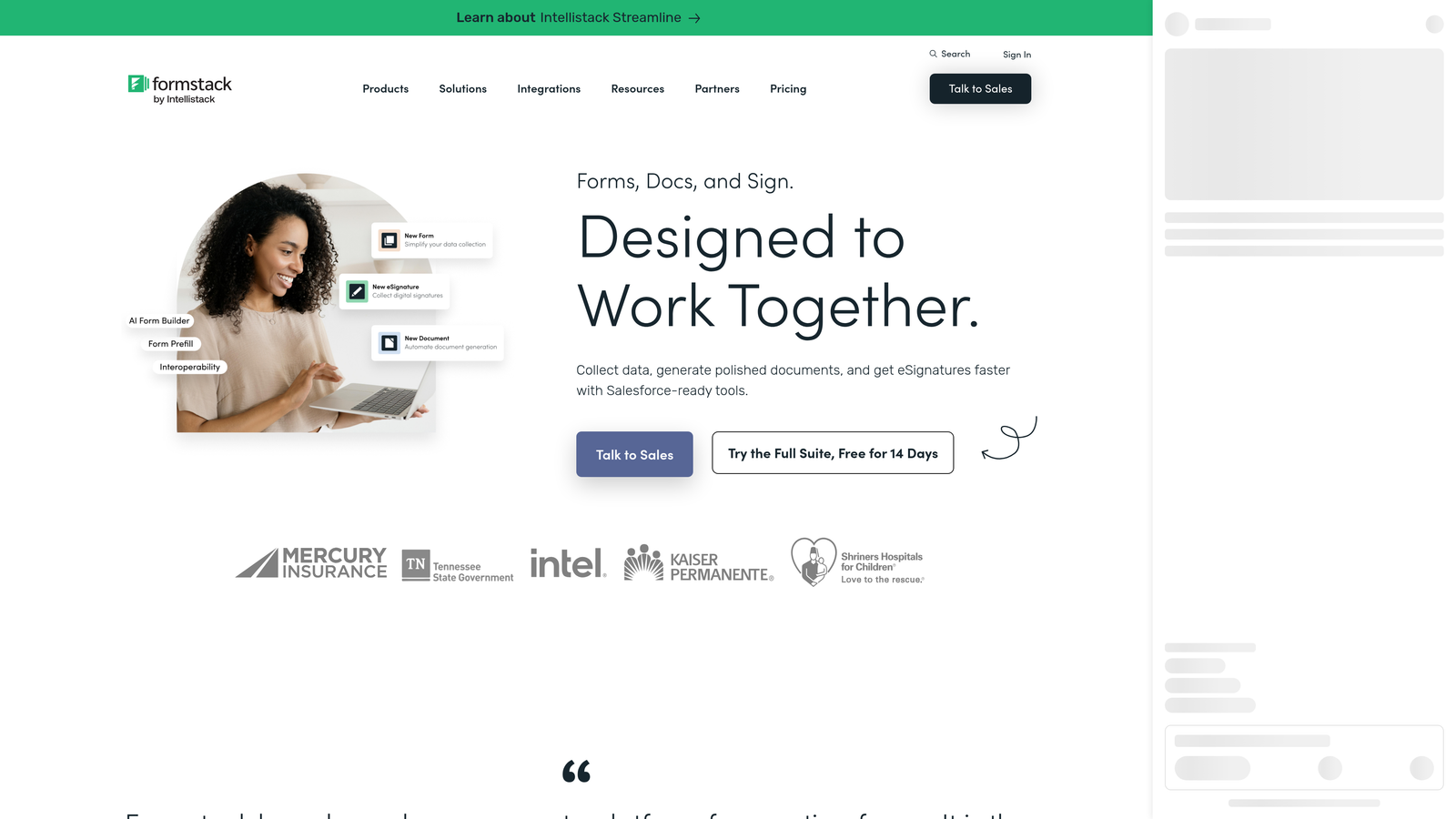
Formstack is a workflow-focused form platform that connects feedback collection to automated business processes rather than treating forms as a standalone tool.
Where This Tool Shines
Formstack is less about the form itself and more about what happens after a response is submitted. The platform is built to trigger automated workflows from form submissions, route responses to the right people, update records in connected systems, and even generate documents or collect e-signatures as part of the same flow. For teams running complex operations, that kind of automation depth is genuinely valuable.
It integrates well with CRM and sales tools, which makes it a practical choice for revenue operations teams that want feedback collection wired directly into their pipeline management processes rather than sitting in a separate silo.
Key Features
Workflow Automation: Triggers automated business processes from form submissions, including response routing, record updates, and team notifications.
Document Generation and E-Signatures: Creates documents and collects signatures as part of the same form-based workflow, reducing tool fragmentation.
CRM and Sales Tool Integrations: Connects feedback and form data directly into CRM systems and sales platforms for seamless pipeline visibility.
Conditional Logic and Multi-Step Forms: Supports branching logic and multi-page forms for more complex feedback and data collection scenarios.
Enterprise-Grade Security: Security and compliance features suited for mid-market and enterprise environments with data governance requirements.
Best For
Formstack is the right choice for operations teams, sales organizations, and enterprises that need feedback collection embedded in broader automated workflows. Teams looking for a straightforward feedback form experience without complex automation will likely find it more platform than they need, and the pricing reflects that positioning.
Pricing
Higher price point aimed at mid-market and enterprise buyers. See formstack.com for current plan details.
Which Feedback Form Builder Is Right for You?
Each of these tools serves a genuinely different type of team, and the best choice comes down to what you actually need feedback forms to do.
If your team is growth-focused and you want feedback forms that don't just collect data but help you qualify and prioritize responses automatically, Orbit AI is the standout choice. It's built specifically for SaaS and B2B teams where conversion and lead quality matter alongside the feedback itself.
For conversational engagement and a polished respondent experience, Typeform remains a strong, well-established option. Tally wins on accessibility: it's the best free-first choice for startups and small teams that need functional, unbranded forms without a budget. Paperform suits brand-driven teams that want their feedback forms to look like a natural extension of their product or website. Jotform handles enterprise scale with compliance coverage and a massive template library. Formstack excels when feedback collection needs to connect to complex automated workflows and document generation.
The common thread across all six tools is that modern feedback forms are no longer passive data collectors. The best builders today help you design experiences that respondents actually complete and give you the structure to act on what comes back.
If you're ready to build feedback forms that work harder for your team, start building free forms today and see how AI-powered form design can sharpen your feedback strategy from the first response.


