

High-growth teams don't just work harder. They work with better tools. When you're scaling fast, the difference between hitting your pipeline targets and missing them often comes down to whether your stack is built for speed, qualification, and conversion — or just activity.
This list covers the tools that consistently show up in the stacks of teams growing at pace: from capturing and qualifying leads at the top of funnel, to closing deals, retaining customers, and keeping everyone aligned. We've focused on tools genuinely built for growth, not legacy platforms retrofitted with AI badges. Whether you're a 10-person startup pushing toward Series A or a 200-person SaaS team scaling into new markets, these tools are worth a serious look.
1. Orbit AI
Best for: High-growth SaaS and B2B teams that need to capture and qualify leads at the point of form submission.
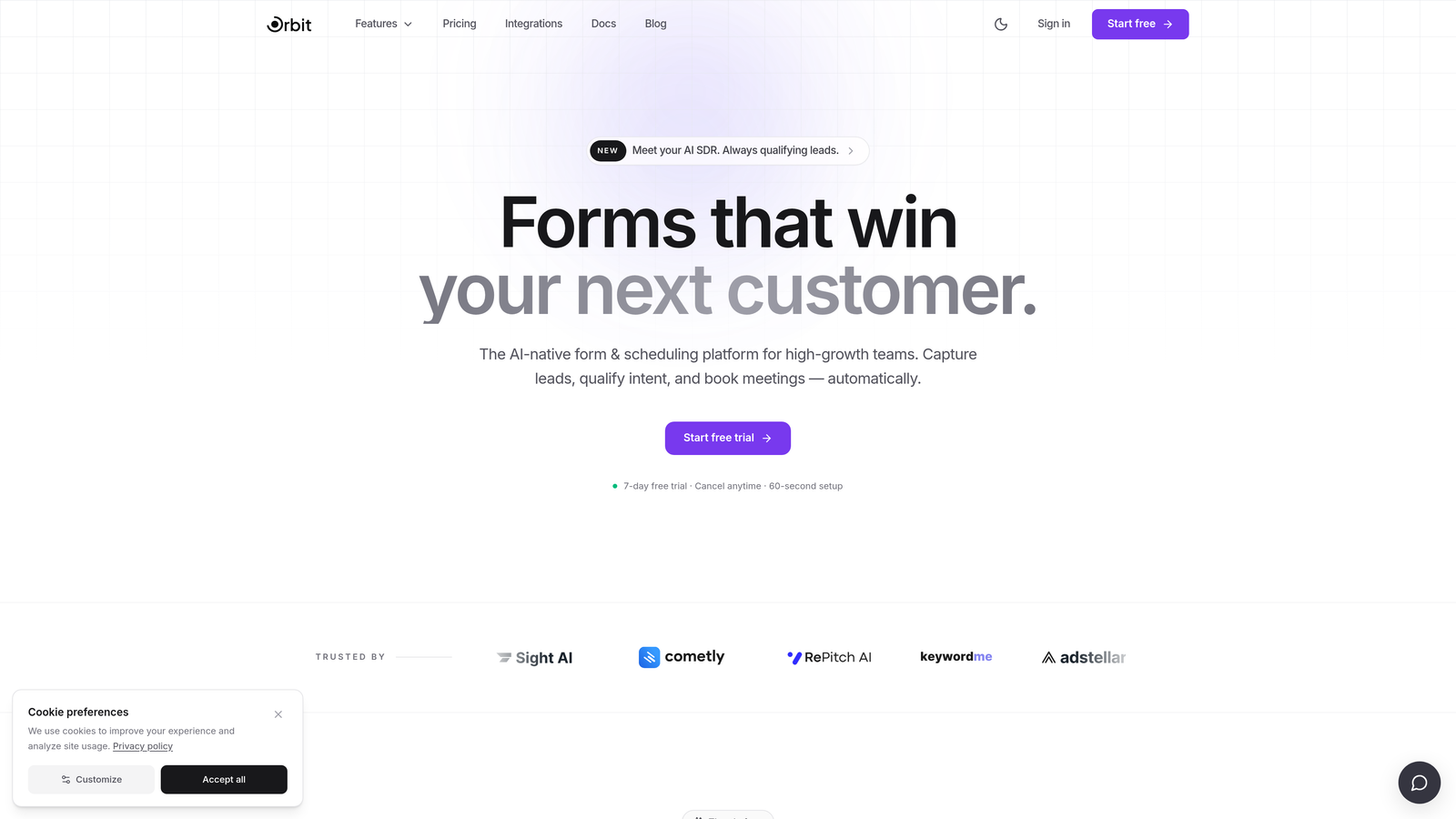
Orbit AI is an AI-powered form builder with built-in lead qualification, designed to score and route leads in real time — not after the fact.
Where This Tool Shines
Most form builders do one thing: collect data. Orbit AI goes further by qualifying that data the moment a prospect submits a form. Instead of dumping raw leads into your CRM for manual review, Orbit AI scores and routes them based on their responses — so your sales team spends time on the leads that actually fit.
For high-growth teams where every rep's time is a constrained resource, that distinction matters. The platform combines conversion-optimized form design with smart logic, meaning you're not choosing between a beautiful form and an intelligent one.
Key Features
AI-Powered Lead Qualification: Scores and routes leads at the point of form capture, before they ever reach your CRM queue.
Conversion-Optimized Templates: Modern, beautiful form designs built to maximize submission rates without sacrificing data quality.
Smart Lead Scoring and Routing: Automatically directs leads to the right rep, sequence, or workflow based on form responses.
Multi-Step and Conditional Logic Forms: Progressive profiling that adapts based on what a prospect answers, reducing friction and improving data depth.
Fast Setup, No Engineering Required: Built for growth teams who need to move fast without waiting on developer resources.
Best For
SaaS and B2B companies running inbound lead generation who want to qualify prospects automatically rather than manually. Particularly valuable for teams with high form submission volume where manual lead review creates bottlenecks, or for any team tired of chasing leads that were never a fit.
Pricing
Free trial available. Check orbitforms.ai for current pricing plans and options.
2. HubSpot CRM
Best for: Scaling B2B teams that need a connected CRM, marketing automation, and sales pipeline in one place.
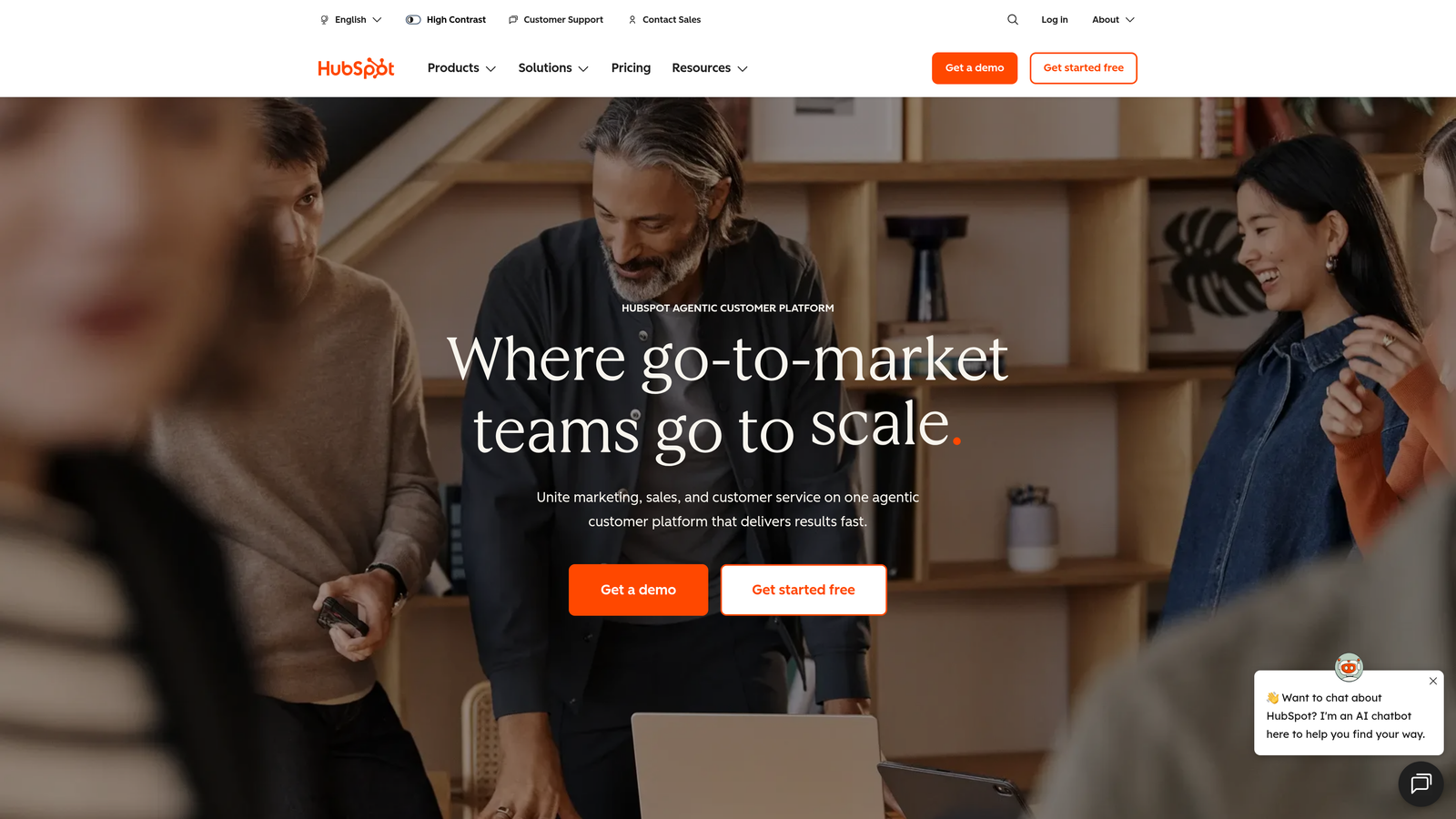
HubSpot is an all-in-one platform combining CRM, marketing automation, and sales tooling widely adopted by SaaS and B2B scaleups.
Where This Tool Shines
HubSpot's strength is its connected ecosystem. Marketing, sales, and service teams all work from the same data, which means lead handoffs are cleaner, attribution is more reliable, and reporting actually reflects the full customer journey. For teams that have struggled with disconnected point solutions, that coherence is genuinely valuable.
The free CRM tier makes it accessible early, but be aware that costs can escalate quickly as you unlock advanced features across the Marketing, Sales, and Service Hubs. That said, for teams at the right stage, the consolidation often justifies the investment.
Key Features
Connected Platform: CRM, marketing hub, and sales pipeline share a single data layer, reducing tool fragmentation.
Lead Nurturing Workflows: Email marketing, landing pages, and automated sequences for moving leads through the funnel.
Revenue Attribution Reporting: Native reporting that connects marketing activity to closed revenue.
Integration Marketplace: Extensive library of native integrations with most tools in a modern SaaS stack.
Free CRM Tier: Core CRM functionality available at no cost, with paid hubs layered on top for advanced capabilities.
Best For
B2B and SaaS companies at the growth or scale stage that want to consolidate their GTM stack. Especially strong for teams running both inbound marketing and outbound sales motions from the same platform.
Pricing
Free CRM available. Paid hubs vary in price — check hubspot.com for current pricing across tiers.
3. Apollo.io
Best for: SDR teams and sales-led growth companies running high-volume outbound prospecting.
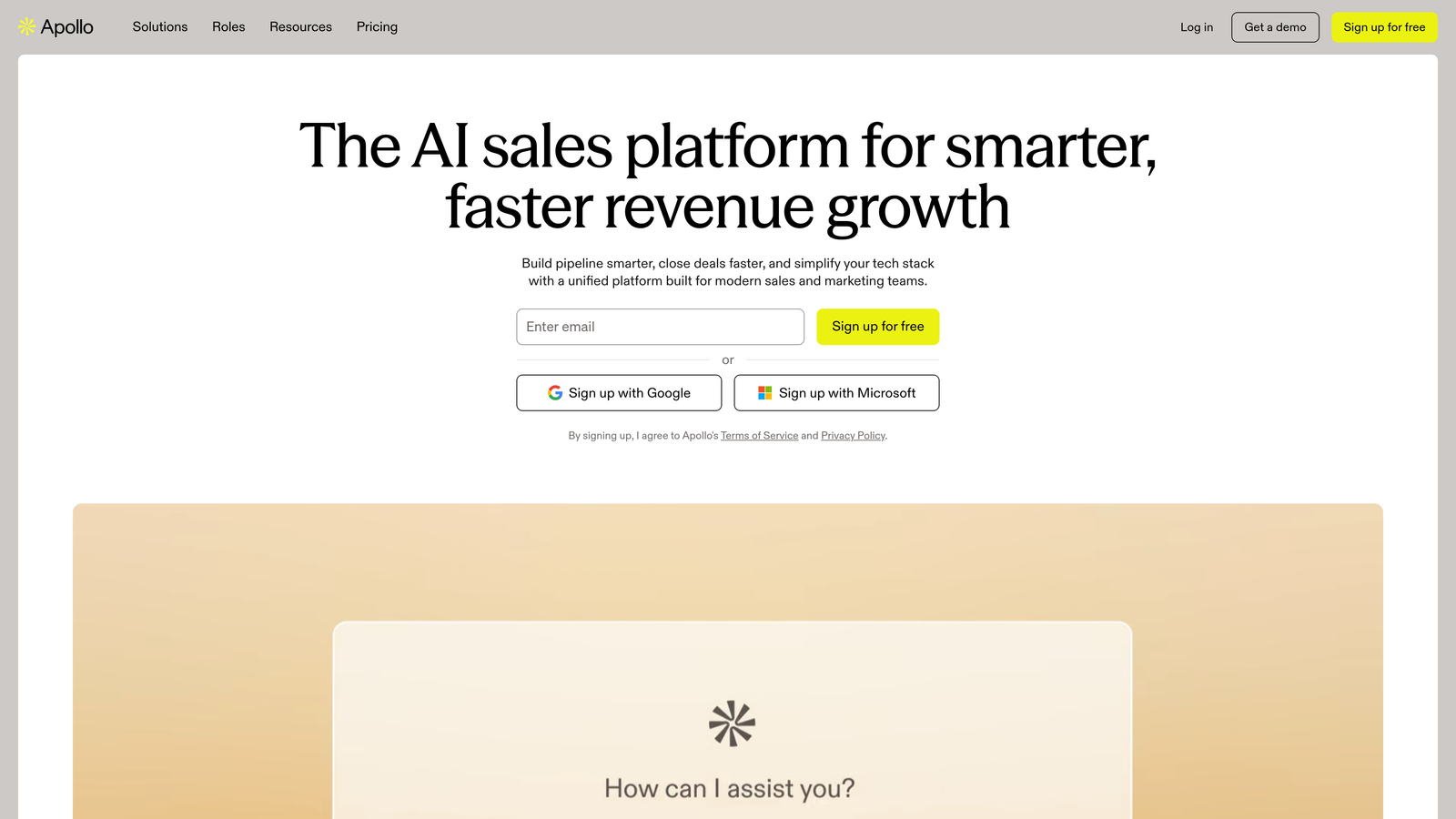
Apollo.io is a B2B sales intelligence and outbound sequencing platform that combines a large prospect database with built-in email automation.
Where This Tool Shines
Apollo.io solves a real problem for outbound teams: finding the right contacts and reaching them efficiently, without juggling three separate tools. The platform combines prospecting data, email sequencing, and CRM sync in one workflow. For SDR teams, that consolidation reduces friction and keeps reps focused on conversations rather than data entry.
The intent data signals are worth highlighting. Rather than blasting a static list, teams can prioritize outreach to companies that are showing active buying signals — which tends to improve connection rates and response quality.
Key Features
B2B Contact Database: Large, regularly updated database of contacts and company records for prospecting.
Email Sequencing: Outbound automation with multi-step email sequences and follow-up logic.
CRM Sync: Two-way sync with major CRMs to keep contact records and activity data current.
Intent Data Signals: Prioritize outreach based on companies showing active research or buying behavior.
Free Tier Available: Entry-level access for smaller teams or those testing the platform before committing.
Best For
Sales-led growth companies with dedicated SDR or BDR functions running outbound prospecting at scale. Also useful for founder-led sales teams at earlier stages who need to build pipeline without a large research budget.
Pricing
Free tier available. Paid plans for higher volume — check apollo.io for current pricing.
4. Notion
Best for: Product, ops, and marketing teams that need a flexible, centralized workspace for docs, wikis, and projects.
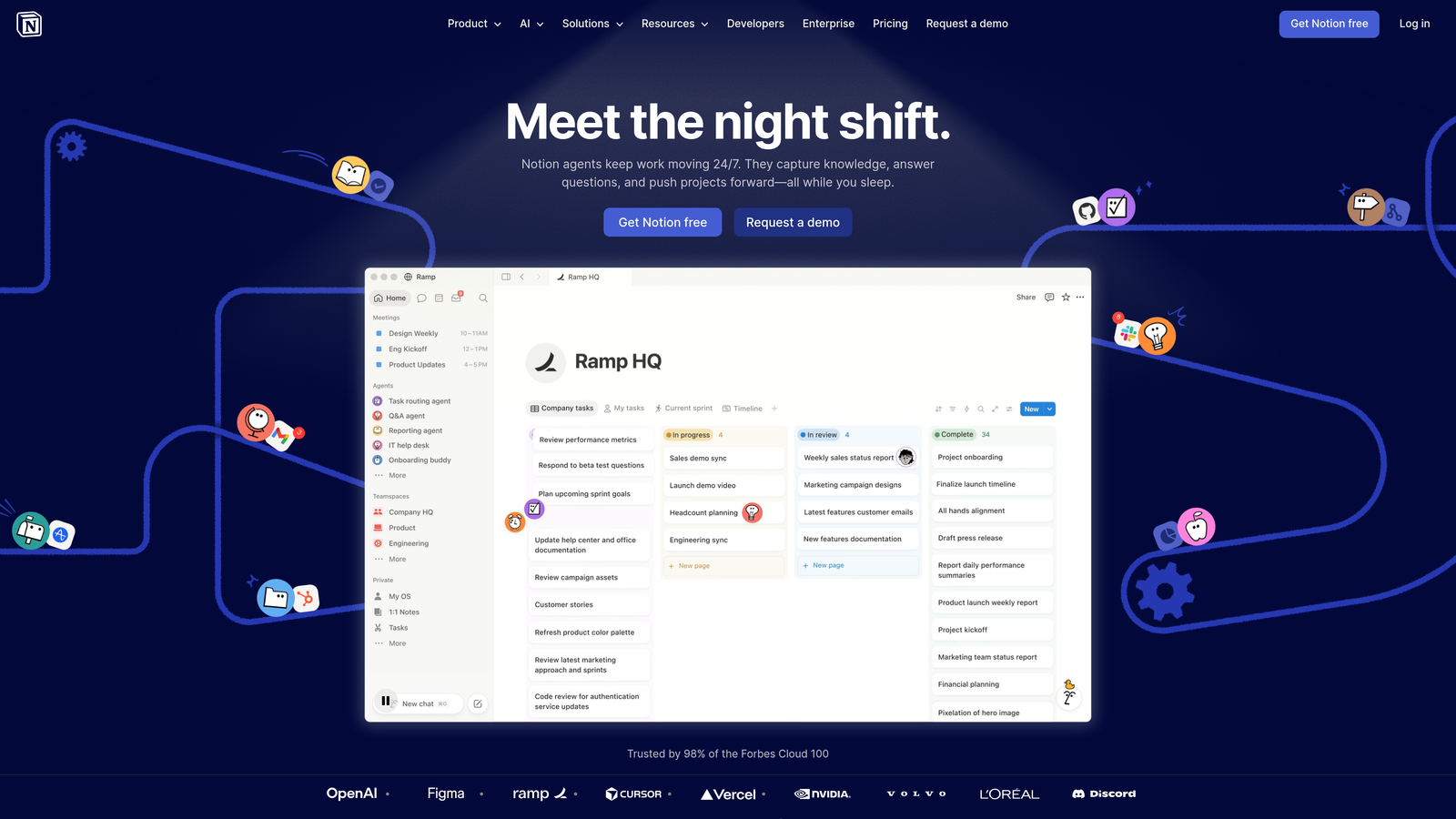
Notion is an all-in-one team workspace combining documentation, wikis, databases, and project management in a single, highly customizable environment.
Where This Tool Shines
Fast-moving teams accumulate knowledge quickly. Notion's value is in giving that knowledge a home that's actually searchable, structured, and usable — without requiring a dedicated IT team to maintain it. For startups and scaleups that have outgrown Google Docs but don't want the overhead of Confluence, Notion hits a productive middle ground.
Notion AI extends this further by helping teams draft, summarize, and surface information faster. It's a practical addition for teams generating a lot of internal content across functions.
Key Features
Unified Workspace: Docs, wikis, databases, and project boards all live in one place, reducing tool sprawl.
Notion AI: Built-in AI for drafting content, summarizing pages, and automating repetitive documentation tasks.
Highly Customizable Templates: Adaptable page structures that teams can tailor to their specific workflows.
Permissions and Sharing Controls: Granular access settings that work as teams grow and add external collaborators.
Free Plan for Individuals: Full access for solo users; team plans add collaboration and admin features.
Best For
Startups and scaleups across product, ops, marketing, and customer success that want a lightweight, flexible knowledge hub. Strong fit for remote and hybrid teams that rely heavily on async documentation.
Pricing
Free for individuals. Team plans available — check notion.so for current pricing.
5. Slack
Best for: Distributed and hybrid teams that need organized, real-time communication across functions and tools.
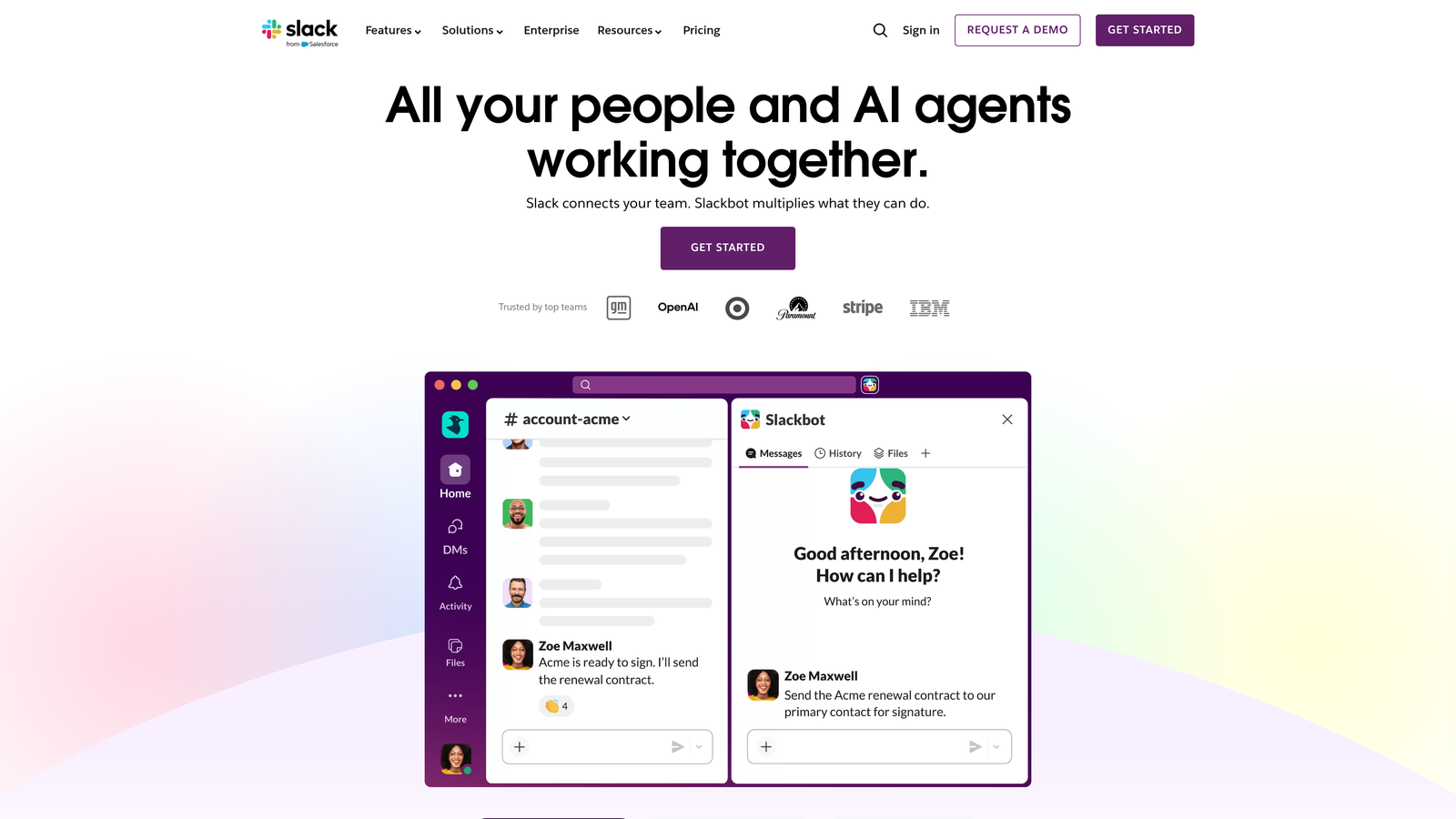
Slack is the industry-standard messaging platform for tech and SaaS teams, built around channel-based communication and deep integrations with the broader software stack.
Where This Tool Shines
Slack's real value isn't just messaging — it's the way it connects your entire stack. Notifications from your CRM, alerts from your analytics tools, deal updates from your pipeline: all of it can flow into the right channels so teams stay informed without having to log into five different dashboards. For high-growth teams moving fast, that ambient awareness matters.
Huddles add a lightweight layer for quick audio and video conversations without the overhead of a scheduled meeting. It's a small feature with an outsized impact on teams that want to reduce calendar bloat.
Key Features
Channel-Based Messaging: Organized communication by team, project, or topic — keeping conversations findable and contextual.
Extensive App Integrations: Connects with most tools in a modern SaaS stack, centralizing notifications and workflows.
Huddles: Lightweight audio and video calls that start instantly without scheduling overhead.
Workflow Builder: Automate routine notifications and approvals directly within Slack.
Salesforce Ecosystem: Native connectivity with Salesforce CRM for sales teams already in that ecosystem.
Best For
Essentially any tech or SaaS team. Slack is particularly strong for distributed and hybrid organizations where real-time coordination across time zones and functions is a daily requirement.
Pricing
Free plan available with limitations. Paid plans for full features — check slack.com for current pricing.
6. Loom
Best for: Remote and hybrid teams looking to replace unnecessary meetings with fast, async video communication.
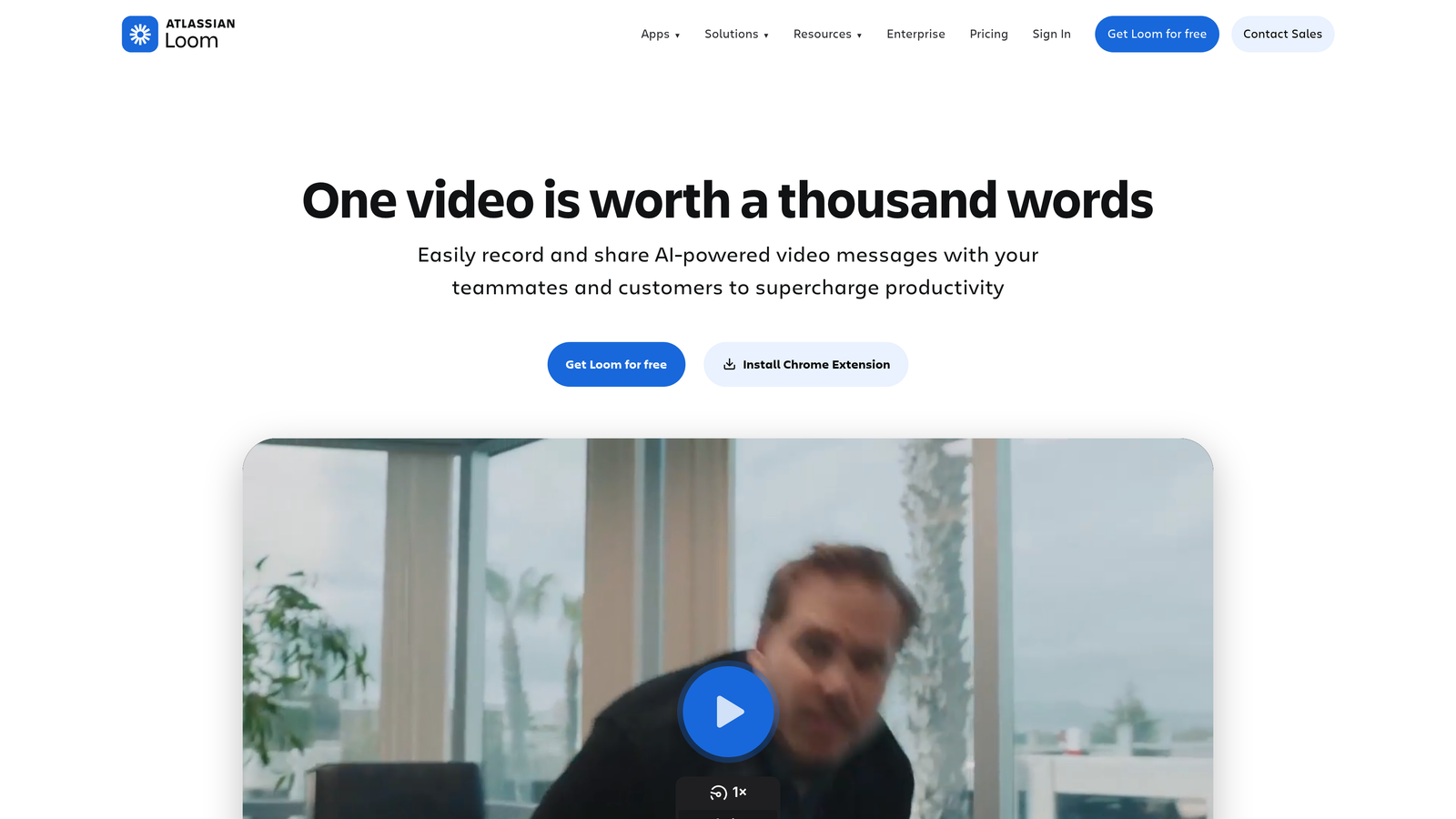
Loom is an async video messaging tool that lets you record screen and camera videos instantly and share them with a link — no scheduling required.
Where This Tool Shines
Think of Loom as a replacement for the meeting you were about to schedule to explain something that could have been a three-minute video. For customer success teams walking clients through a feature, sales reps sending personalized video follow-ups, or product managers explaining a spec to engineering — Loom cuts the friction dramatically.
The viewer engagement analytics are a useful bonus. Knowing whether a prospect or stakeholder actually watched your video (and how much of it) gives you meaningful signal that a sent email simply can't provide.
Key Features
Instant Screen and Webcam Recording: Record and share videos in seconds with a shareable link — no file uploads or exports needed.
Viewer Engagement Analytics: See watch time, reactions, and comments to understand how your video landed.
AI Transcripts and Summaries: Automatically generated transcripts and summaries make videos searchable and skimmable.
Tool Integrations: Works with Notion, Slack, Confluence, and Jira for embedded async communication across your stack.
Free Plan Available: Core recording features available at no cost; paid plans unlock advanced analytics and team features.
Best For
Remote-first and hybrid teams across sales, customer success, product, and ops who want to reduce meeting load without losing communication quality. Acquired by Atlassian in 2023, making it an especially natural fit for teams already using Confluence or Jira.
Pricing
Free plan available. Paid plans for teams — check loom.com for current pricing.
7. Linear
Best for: Software engineering and product teams that want fast, opinionated issue tracking without the overhead of Jira.
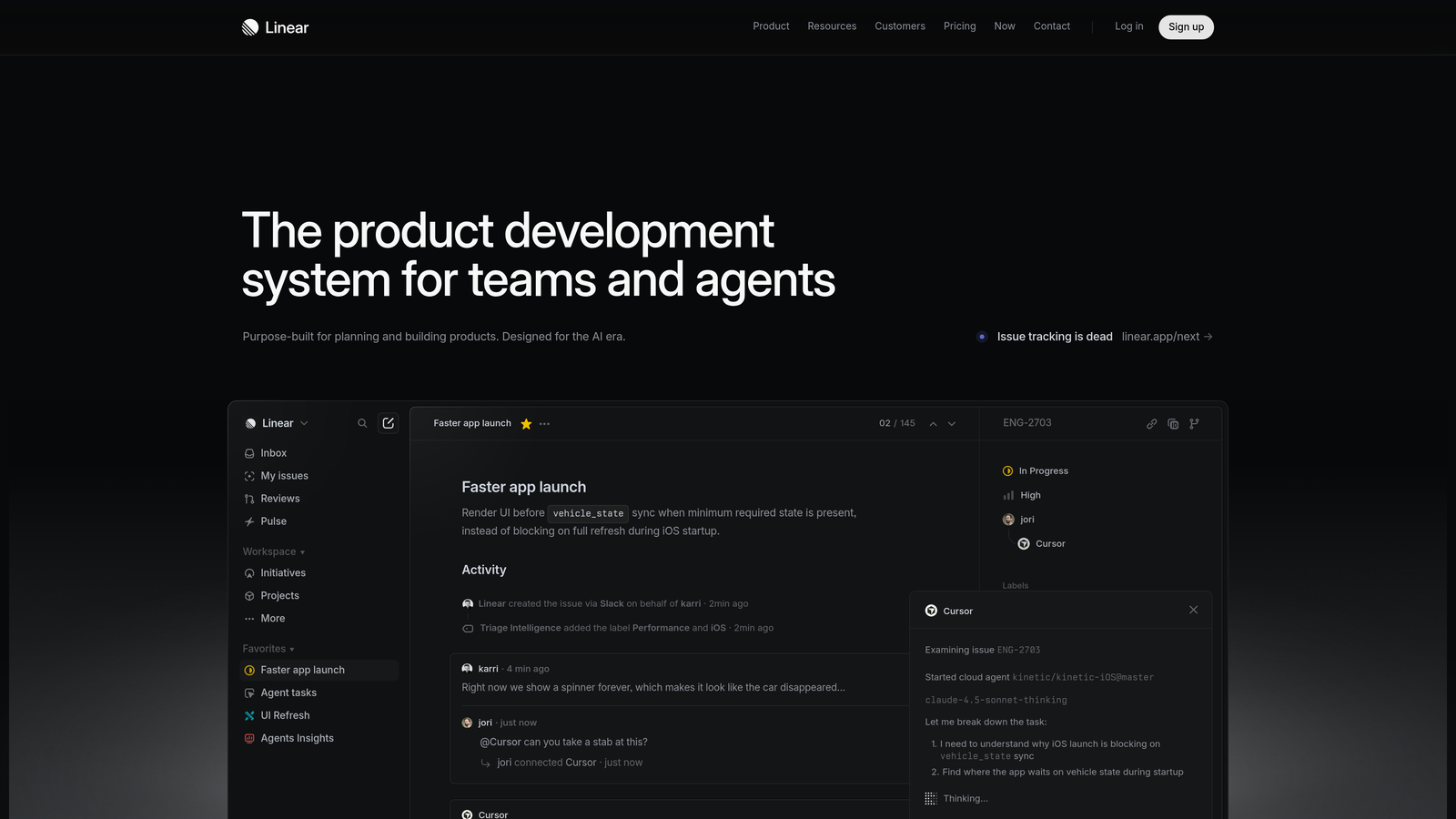
Linear is a project management and issue tracking tool built specifically for software teams, known for its speed and keyboard-first interface.
Where This Tool Shines
Linear's reputation in high-growth startup circles is built almost entirely on one thing: it's fast. Not just performant — the entire design philosophy is built around minimizing the time between thinking of a task and capturing it. For engineering teams who've spent time wrestling with slow, over-configured Jira instances, the contrast is immediate.
The opinionated workflow is a feature, not a limitation. Linear makes deliberate choices about how teams should work — cycles, projects, priorities — and that structure tends to create better delivery habits for teams that are scaling quickly.
Key Features
Keyboard-First Interface: Extremely fast, shortcut-driven UI designed to minimize friction for developers and product managers.
Sprint Planning and Roadmaps: Cycles and project views for structured delivery planning at any team size.
Developer Tool Integrations: Native integrations with GitHub, GitLab, and Figma keep engineering and design workflows connected.
Backlog Management: Clean, prioritized backlog views that make triage and planning meetings faster.
Free for Small Teams: Full-featured access for small engineering teams; paid plans for larger organizations.
Best For
Software engineering and product teams at high-growth startups and scaleups, particularly those who have outgrown simple task lists but want something leaner and faster than enterprise project management tools.
Pricing
Free for small teams. Paid plans for larger organizations — check linear.app for current pricing.
8. Intercom
Best for: SaaS companies focused on user activation, onboarding, and customer retention through in-app messaging and AI support.
Intercom is a customer messaging platform combining live chat, in-app messaging, AI-powered support, and product tours in a single customer engagement layer.
Where This Tool Shines
For SaaS teams, the moments right after signup are often where growth is won or lost. Intercom's strength is in making those moments intentional: product tours that guide new users to activation, in-app messages triggered by behavior, and a help center that answers questions before they become support tickets. That combination directly supports retention metrics that matter to growth-stage companies.
The Fin AI agent has become a significant differentiator. For teams with high support volume, Fin can handle a meaningful portion of routine queries automatically — reducing support costs while maintaining response quality.
Key Features
In-App Messaging and Live Chat: Engage users at the right moment inside your product, not just via email.
Fin AI Agent: AI-powered support bot that handles common queries automatically, reducing ticket volume.
Product Tours and Onboarding Checklists: Guide new users to activation with in-product walkthroughs and task checklists.
Help Center Builder: Create and maintain a self-serve knowledge base directly within the platform.
Customer Data Platform: Segment and target users based on behavioral data for more relevant messaging.
Best For
SaaS companies with a self-serve or product-led growth motion where user activation and retention are primary metrics. Worth noting: Intercom pricing is on the higher end, making it a better fit for teams with established revenue than very early-stage startups.
Pricing
Usage-based pricing on the higher end — check intercom.com for current plans and pricing details.
9. Mixpanel
Best for: Product and growth teams that need granular, event-based analytics to understand user behavior and improve retention.
Mixpanel is an event-based product analytics platform built for understanding what users actually do inside your product — and where they drop off.
Where This Tool Shines
Standard web analytics tell you who visited your site. Mixpanel tells you what users did inside your product, which features they engaged with, where they abandoned an onboarding flow, and which cohorts retained over time. For product-led growth teams, that level of behavioral insight is the foundation of every meaningful product decision.
The funnel analysis capabilities are particularly strong. Rather than guessing where users are dropping off between signup and activation, Mixpanel makes those drop-off points visible and measurable — which is the starting point for actually fixing them.
Key Features
Event-Based Tracking: Granular tracking of user actions inside your product, not just page views.
Funnel Analysis: Visualize conversion rates at every step between signup and key activation milestones.
Cohort Analysis and Retention Reports: Understand which user segments retain over time and what drives long-term engagement.
A/B Testing and Experiment Tracking: Measure the impact of product changes with built-in experimentation tools.
Free Plan Available: Generous free tier for teams getting started; paid plans scale with event volume.
Best For
Product and growth teams at SaaS companies running product-led growth motions where in-product behavior directly drives revenue. Strong alternative to Google Analytics for teams that need depth on user behavior rather than just traffic metrics.
Pricing
Free plan available. Paid plans scale with event volume — check mixpanel.com for current pricing.
10. Gong
Best for: Mid-market and enterprise sales teams that want to improve rep performance and deal outcomes through conversation intelligence.
Gong is a revenue intelligence platform that records, transcribes, and analyzes sales calls to surface coaching insights, deal risks, and pipeline health signals.
Where This Tool Shines
Most sales coaching is based on gut feel and manager observation. Gong replaces that with data. By analyzing patterns across hundreds of recorded calls, it can identify what top performers do differently, which deal conversations are trending toward risk, and where reps consistently lose momentum. For sales leaders trying to scale a repeatable motion, that visibility is hard to replicate manually.
The pipeline health alerts are particularly valuable in fast-moving sales environments. Rather than discovering a deal is at risk during a forecast review, Gong surfaces those signals earlier — when there's still time to act.
Key Features
AI Call Recording and Transcription: Automatically records, transcribes, and analyzes every sales conversation.
Deal Risk Signals: Flags pipeline deals showing warning signs based on conversation patterns and engagement data.
Rep Coaching Insights: Identifies specific behaviors and talk patterns that correlate with winning outcomes.
Forecast Accuracy: Improves pipeline forecasting by grounding predictions in actual conversation data, not just CRM fields.
CRM Integrations: Native integrations with Salesforce, HubSpot, and other major CRM platforms.
Best For
Mid-market and enterprise SaaS sales teams with established sales motions and enough call volume to generate meaningful patterns. Best suited for organizations with sales managers actively invested in rep development and forecast accuracy.
Pricing
Enterprise pricing model — contact Gong directly at gong.io for a quote.
Which Tool Is Right for Your Team?
The best growth stack isn't the biggest one. It's the leanest, most integrated set of tools that matches how your team actually operates. Here's a quick guide to cutting through the list based on where your biggest leverage points are.
For lead generation and qualification teams: Start with Orbit AI to capture and qualify inbound leads at the point of submission, then layer in HubSpot for pipeline management and Apollo.io if you're running an outbound motion alongside inbound. These three tools cover most of the top-of-funnel workflow for a modern SaaS GTM team.
For sales teams: HubSpot or Apollo.io as your CRM and sequencing foundation, with Gong added once you have enough call volume to make conversation intelligence worthwhile. Gong is an investment that pays off at scale — don't rush it before you have the rep volume to justify it.
For product and growth teams: Mixpanel for behavioral analytics, Intercom for in-product engagement and activation, and Linear for engineering execution. These three tools cover the full loop from understanding user behavior, to acting on it, to shipping improvements.
For ops and async collaboration: Notion as your knowledge hub, Slack for real-time coordination, and Loom for async communication that would otherwise become a meeting. This combination works particularly well for distributed and hybrid teams managing complexity across time zones.
The through-line across all of these: every tool on this list is genuinely built for teams moving fast. None of them require months of implementation or a dedicated admin to maintain. That matters when your team's bandwidth is already stretched toward growth.
If lead capture and qualification is your current bottleneck, that's the right place to start. Start building free forms today and see how intelligent form design can transform the quality of leads hitting your pipeline — before they ever reach a rep.


