Your sales team is drowning in leads, but only a fraction will ever convert. The difference between hitting quota and missing it often comes down to knowing which prospects deserve immediate attention—and traditional manual scoring can't keep up with the volume modern teams face.
Predictive lead scoring tools use machine learning and behavioral data to automatically rank leads by their likelihood to convert, eliminating guesswork and helping your team focus on opportunities that actually close. Instead of relying on outdated point systems or gut feelings, these platforms analyze thousands of signals to surface your best prospects in real time.
We evaluated dozens of platforms based on AI sophistication, integration capabilities, ease of implementation, and real-world accuracy. Here are the top tools that stand out for teams serious about conversion optimization.
1. Orbit AI
Best for: Teams that want to score and qualify leads at the moment of capture
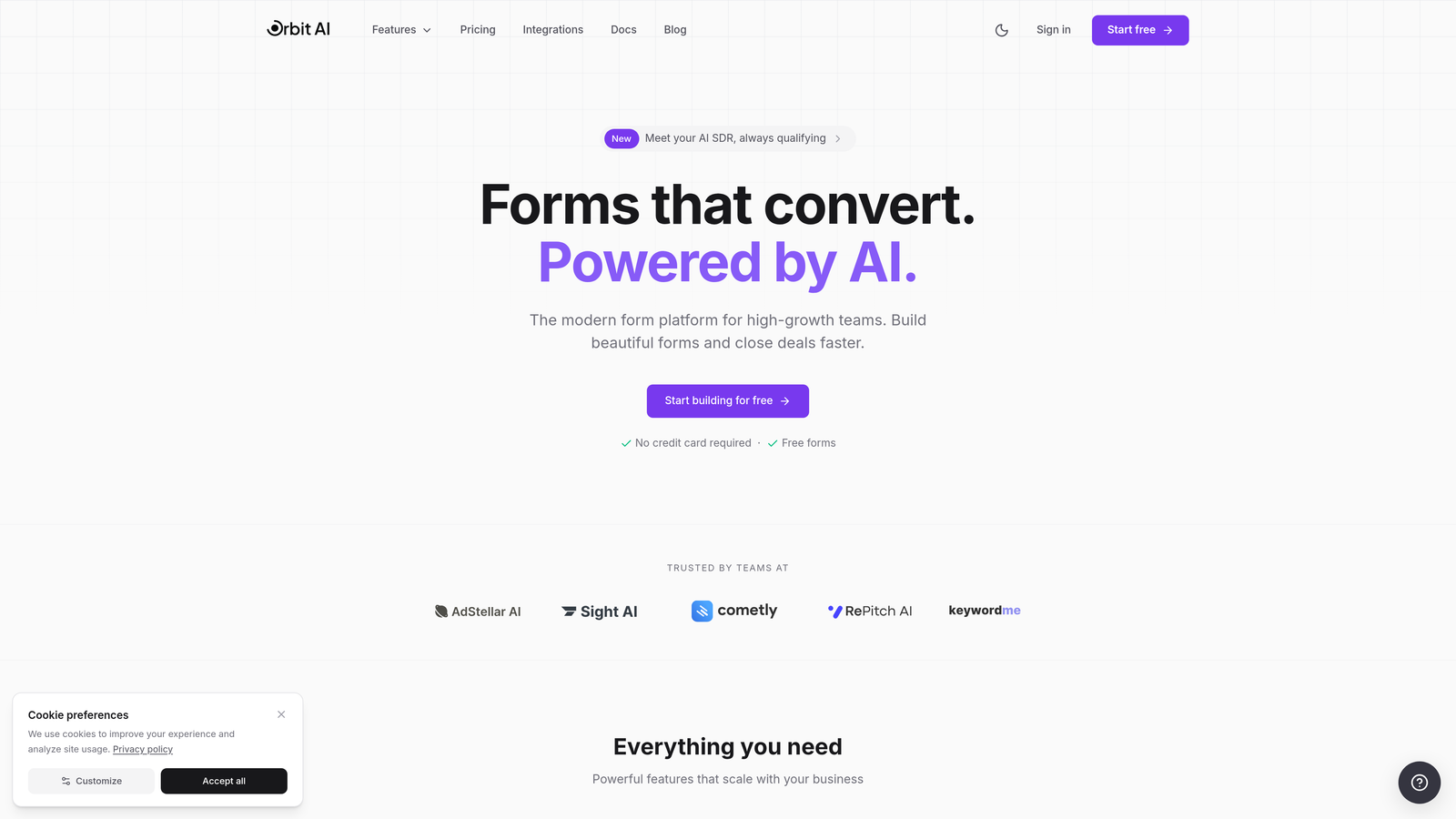
Orbit AI is an AI-powered form builder that qualifies leads the instant they submit—routing high-value prospects to sales before they cool off.
Where This Tool Shines
Most lead scoring happens after the fact, when prospects are already sitting in your CRM waiting to be contacted. Orbit AI flips this model by scoring leads in real time during form submission, instantly routing qualified prospects to the right team member while they're still engaged.
The platform combines conversion-optimized form design with intelligent qualification, so you're not just capturing more leads—you're capturing better ones and acting on them faster. This speed-to-lead advantage can be the difference between connecting with a hot prospect and losing them to a competitor.
Key Features
Real-Time AI Qualification: Scores leads during form submission based on responses and behavioral signals, not hours later in batch processing.
Automated Workflow Routing: Instantly sends high-scoring leads to sales while routing lower-priority prospects to nurture sequences.
Native CRM Integration: Syncs seamlessly with major CRMs and sales tools, pushing scored leads directly into your existing workflows.
Conversion-Optimized Templates: Pre-built form designs engineered for maximum completion rates, so you capture more data to score against.
No-Code Builder: Marketing teams can build and iterate on forms without engineering dependencies or technical expertise.
Best For
High-growth teams that need to move fast on inbound leads, particularly those running paid acquisition campaigns where speed-to-lead directly impacts ROI. Ideal for companies that want predictive scoring without the complexity of enterprise platforms.
Pricing
Free tier available for getting started; paid plans begin at $29/month with expanded features and higher submission volumes.
2. HubSpot Predictive Lead Scoring
Best for: HubSpot users who want native predictive scoring built into their existing workflow
HubSpot Predictive Lead Scoring automatically analyzes thousands of data points across your CRM to prioritize leads without manual rule-building.
Where This Tool Shines
If you're already invested in the HubSpot ecosystem, this native scoring capability eliminates the integration headaches that come with third-party tools. The machine learning model trains on your actual conversion history, learning which combinations of attributes and behaviors predict closed deals.
The automatic model updates mean you're not maintaining static scoring rules that become outdated as your business evolves. As your ideal customer profile shifts or new conversion patterns emerge, the algorithm adapts without requiring manual reconfiguration.
Key Features
Historical Pattern Analysis: Trains machine learning models on your past conversions to identify which leads look like your best customers.
Automatic Model Refresh: Continuously updates predictions as new data flows in, keeping scores current without manual intervention.
Deep CRM Integration: Leverages all contact properties, engagement data, and lifecycle stage information already in HubSpot.
Contact and Company Scoring: Provides predictions at both individual and account levels for comprehensive prioritization.
Marketing Hub Sync: Scores automatically feed into email workflows, list segmentation, and campaign targeting.
Best For
Mid-market to enterprise companies already using HubSpot Marketing Hub who want predictive capabilities without adding another platform to their stack. Particularly valuable for teams with large contact databases where manual scoring becomes unmanageable.
Pricing
Included with Marketing Hub Professional ($800/month) and Enterprise tiers—no separate fee for the predictive scoring feature itself.
3. Salesforce Einstein Lead Scoring
Best for: Salesforce customers seeking AI-powered scoring that leverages their CRM data natively
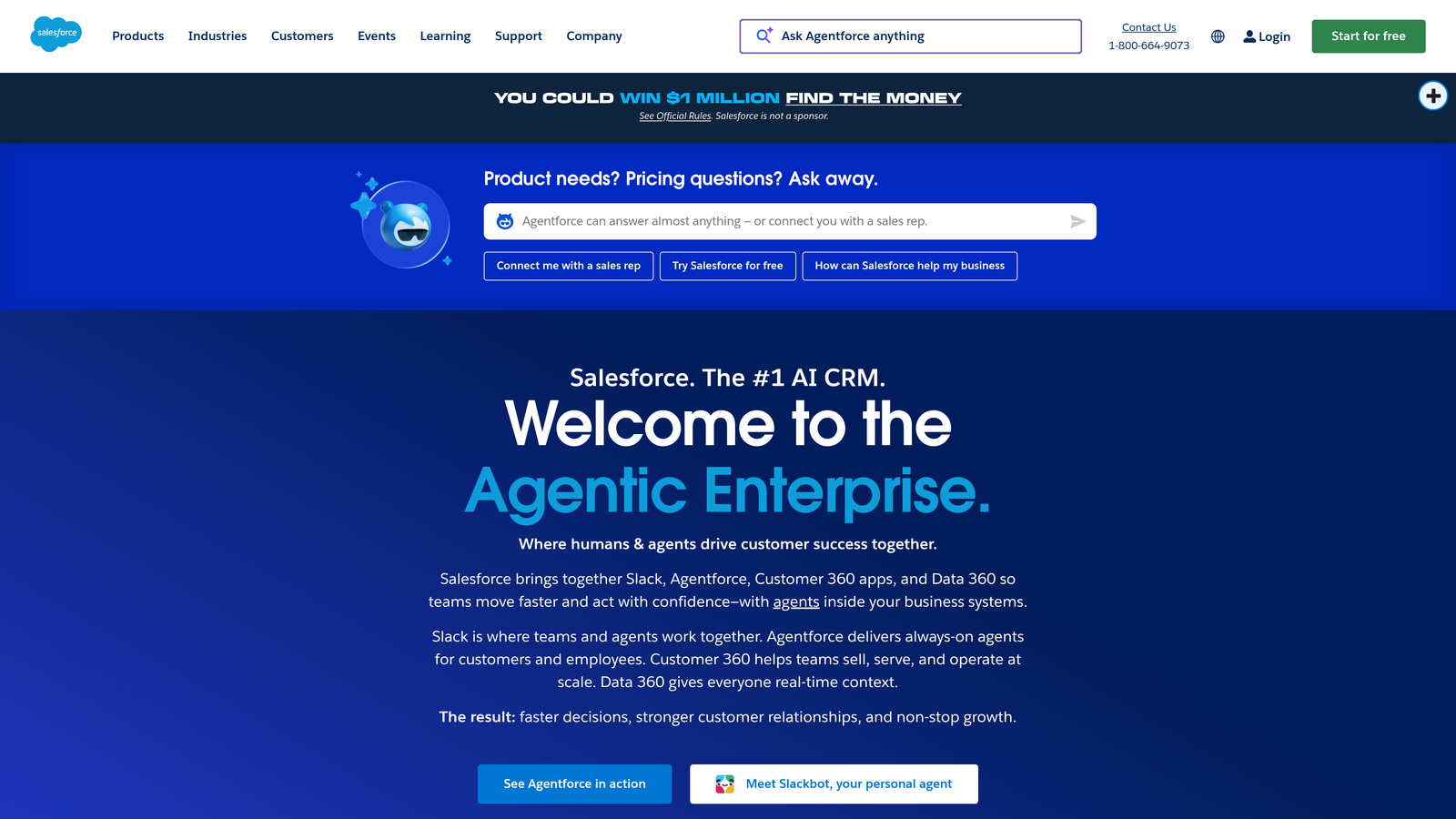
Salesforce Einstein Lead Scoring uses artificial intelligence to predict which leads are most likely to convert based on your Salesforce data.
Where This Tool Shines
Einstein's deep integration with the Salesforce data model means it can analyze relationships and patterns that external tools might miss. The platform considers not just individual lead attributes but also how those leads interact with your content, campaigns, and sales team over time.
One standout feature is the transparency around scoring factors. Rather than producing black-box predictions, Einstein shows you which specific attributes and behaviors are driving each lead's score, helping sales teams understand why they should prioritize certain prospects.
Key Features
Native Salesforce Integration: Analyzes all standard and custom fields, activity history, and campaign engagement without data export.
Scoring Factor Transparency: Explains which attributes contribute most to each lead's score, building trust in the predictions.
Continuous Learning Loop: Updates models based on actual conversion outcomes, improving accuracy as your team closes more deals.
Account-Level Predictions: Scores both individual leads and entire accounts for comprehensive opportunity prioritization.
Workflow Integration: Triggers automated actions based on score thresholds, routing hot leads to appropriate team members.
Best For
Enterprise sales organizations with complex Salesforce implementations who need predictive scoring that respects their custom data architecture. Best suited for teams with sufficient historical conversion data to train accurate models.
Pricing
Available as a Sales Cloud Einstein add-on at $50 per user per month, requiring an existing Sales Cloud license.
4. MadKudu
Best for: Product-led growth companies that need to incorporate product usage signals into scoring
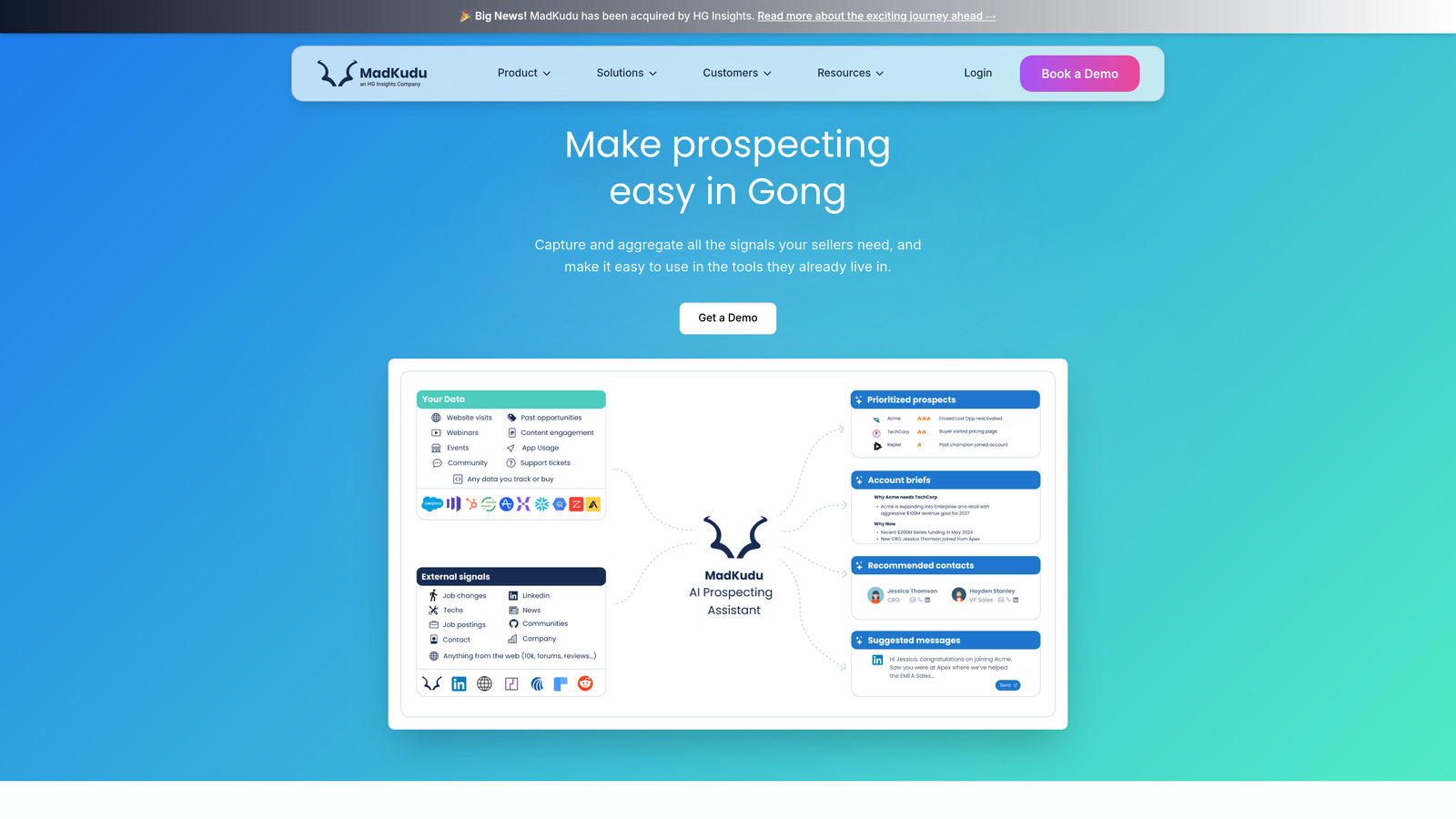
MadKudu combines behavioral signals with firmographic data to identify which free trial users or freemium customers are most likely to convert to paid.
Where This Tool Shines
Traditional lead scoring focuses on demographics and marketing engagement, but product-led companies need to understand how prospects actually use the product. MadKudu excels at integrating product usage data—feature adoption, frequency of use, depth of engagement—into scoring models.
The real-time scoring API enables in-app triggers based on lead scores, so you can surface upgrade prompts or sales outreach exactly when a user demonstrates high intent. This tight feedback loop between product behavior and go-to-market actions is what makes MadKudu particularly powerful for PLG motions.
Key Features
Product Usage Integration: Connects directly to your product analytics to score based on actual feature usage and engagement patterns.
Real-Time Scoring API: Provides instant score updates that can trigger in-app messages, sales alerts, or automated workflows.
Dual Scoring Models: Separates customer fit (firmographic quality) from behavioral intent for more nuanced prioritization.
PQL Identification: Specifically designed to surface product-qualified leads who show strong usage signals alongside good fit.
Segment Integration: Syncs scores across your entire customer data infrastructure for consistent prioritization.
Best For
SaaS companies with freemium models or free trial offerings where product engagement is the strongest predictor of conversion. Particularly valuable for teams running product-led growth strategies.
Pricing
Custom pricing based on lead volume and integration requirements; typically starts around $1,000 per month for mid-market implementations.
5. 6sense
Best for: Enterprise teams that want to combine predictive scoring with intent data and account intelligence
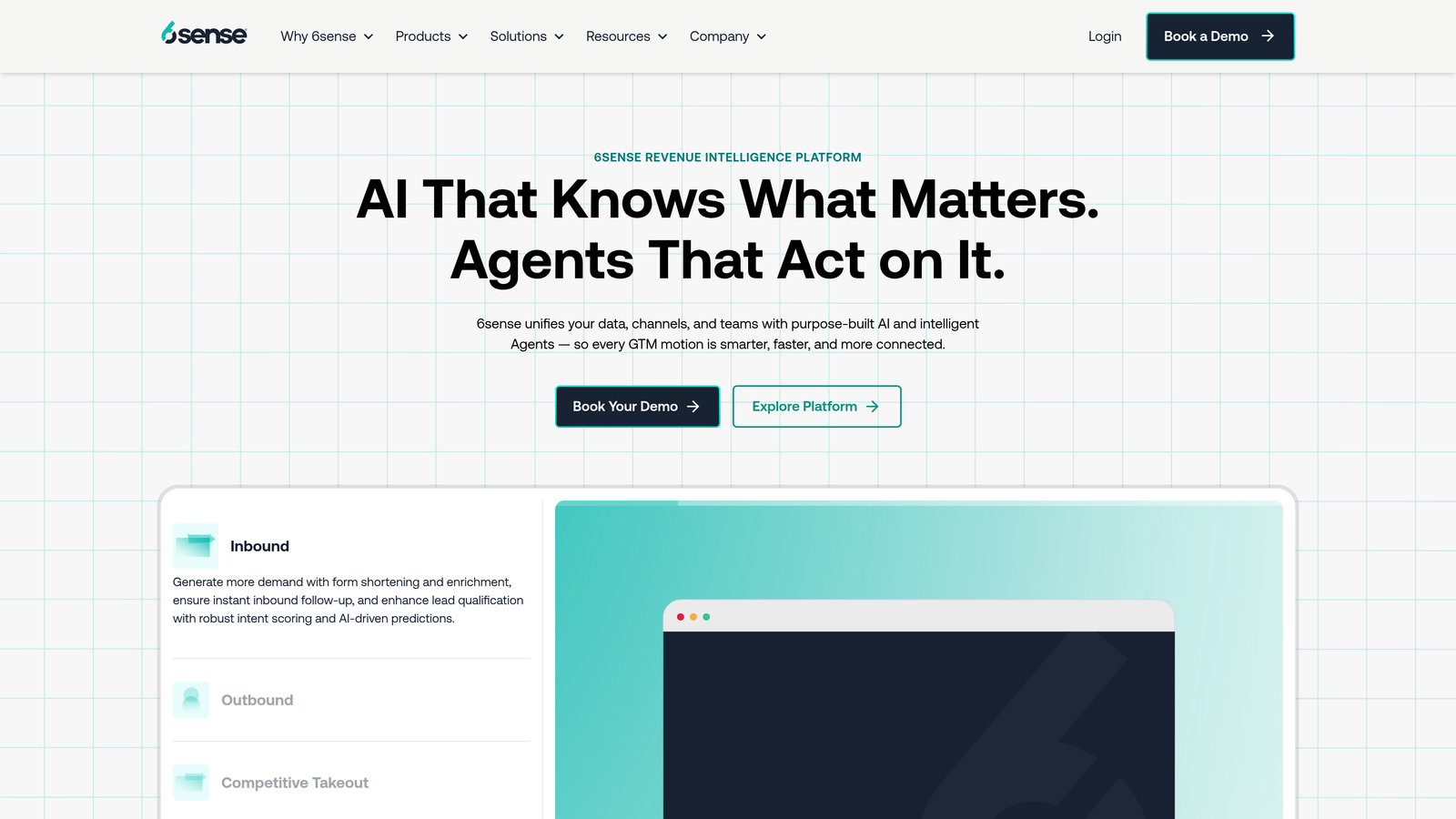
6sense is a revenue AI platform that identifies accounts actively researching solutions by analyzing third-party intent signals alongside your first-party data.
Where This Tool Shines
While most scoring tools focus on known leads, 6sense excels at surfacing accounts that are in-market but haven't yet engaged with your brand. By monitoring content consumption, search behavior, and competitive research across the web, it identifies buying signals long before prospects fill out a form.
The buying stage predictions go beyond simple lead scores to tell you where accounts are in their journey—from awareness through evaluation to decision. This context helps sales teams tailor their approach based on readiness rather than just score magnitude.
Key Features
Intent Data Integration: Monitors third-party signals across publisher networks to identify accounts researching relevant topics.
Buying Stage Prediction: Maps accounts to specific stages in the buyer journey, not just hot/warm/cold categories.
Account-Level Scoring: Prioritizes entire buying committees rather than individual leads, crucial for complex B2B sales.
Dark Funnel Visibility: Reveals anonymous research activity happening outside your owned channels.
Orchestration Engine: Coordinates marketing and sales plays across channels based on account scores and buying stage.
Best For
Enterprise B2B companies with long sales cycles and complex buying committees where account-based strategies drive revenue. Most valuable for organizations selling solutions with significant consideration periods.
Pricing
Enterprise-level pricing with custom quotes based on company size and feature requirements; expect significant investment for full platform access.
6. Clearbit
Best for: Teams that need instant data enrichment and fit scoring at the point of lead capture
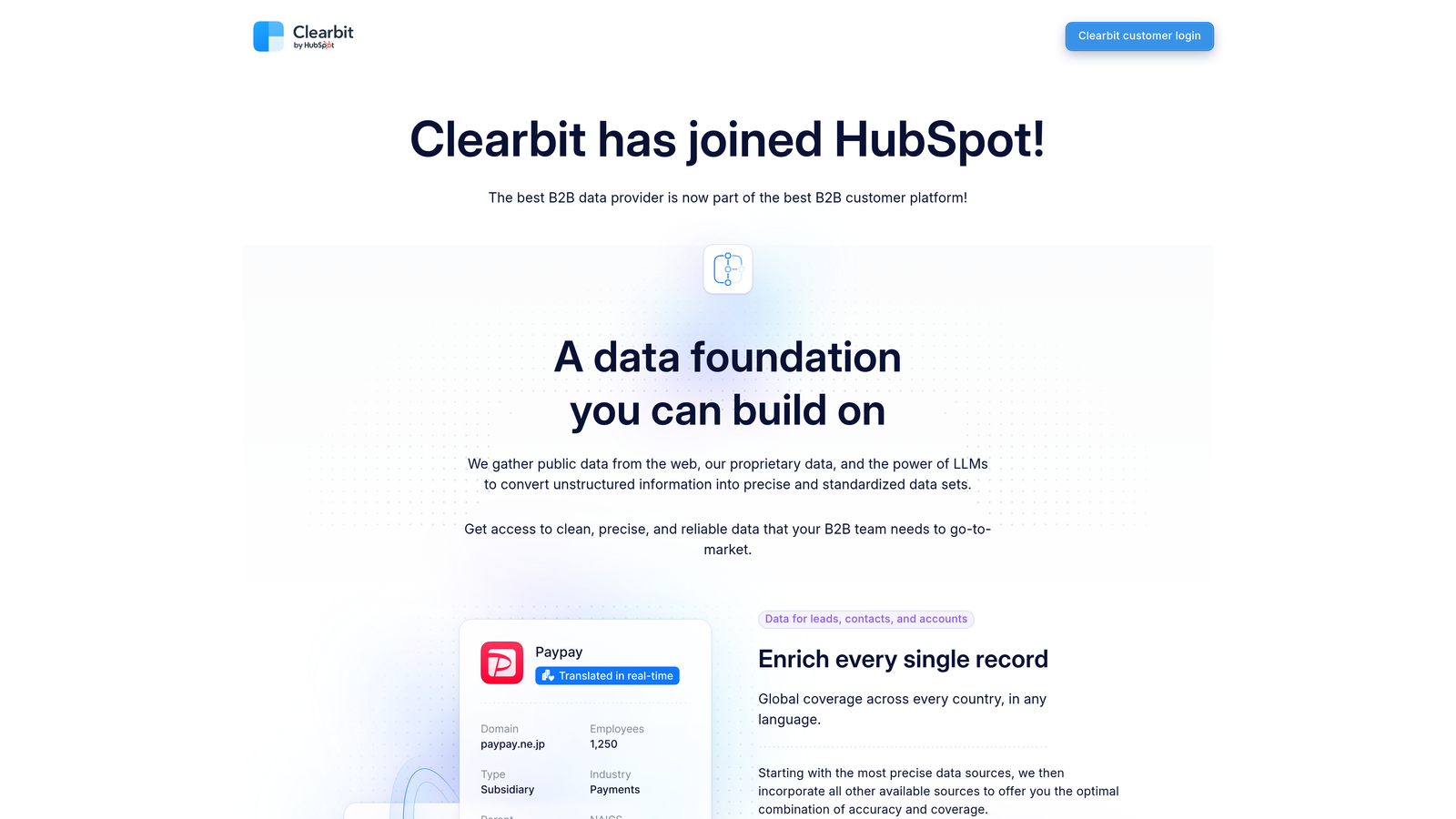
Clearbit appends firmographic data to leads in real time and scores them against your ideal customer profile the moment they submit a form.
Where This Tool Shines
The power of Clearbit lies in its enrichment speed and data quality. When a prospect submits a form with just an email address, Clearbit instantly appends company size, industry, technology stack, funding status, and dozens of other attributes—then immediately scores that lead against your ICP criteria.
The Reveal feature identifies anonymous website visitors by matching IP addresses to companies, giving you visibility into accounts researching your solution before they convert. This early awareness lets you prioritize outbound efforts toward companies already showing interest.
Key Features
Real-Time Enrichment: Appends 100+ firmographic and technographic attributes to leads instantly upon form submission.
ICP Fit Scoring: Automatically scores leads against your ideal customer profile criteria without manual rule configuration.
Reveal Anonymous Visitors: Identifies companies browsing your website before they fill out forms, enabling proactive outreach.
Native Integrations: Syncs enriched data and scores directly into Salesforce, HubSpot, and other major platforms.
Data Quality Monitoring: Continuously validates and updates contact information to maintain database hygiene.
Best For
B2B companies that need to quickly qualify inbound leads based on firmographic fit, particularly those with clearly defined ideal customer profiles around company size, industry, or technology usage.
Pricing
Free tier available for basic enrichment; Growth plans start at $99 per month with higher enrichment volumes and additional features.
7. Leadspace
Best for: Organizations with fragmented data across multiple systems who need unified account and lead scoring
Leadspace is a B2B customer data platform that resolves identity across sources and builds comprehensive scoring models from unified data.
Where This Tool Shines
Most companies have lead and account data scattered across CRM, marketing automation, product analytics, support systems, and third-party sources. Leadspace's graph-based identity resolution connects these fragmented records into unified profiles, ensuring your scoring models work from complete information rather than partial snapshots.
The platform goes beyond simple data matching to understand relationships between contacts, accounts, and buying groups. This network perspective enables more sophisticated scoring that considers not just individual attributes but also organizational dynamics and multi-threaded engagement.
Key Features
Graph-Based Identity Resolution: Connects disparate data points across systems into unified customer profiles using relationship mapping.
Multi-Source Data Unification: Aggregates first-party data from CRM, MAP, product, and support alongside third-party enrichment.
Persona and Account Models: Builds separate scoring models for different buyer personas and account segments.
Intent Signal Integration: Incorporates behavioral intent data from multiple providers into unified scoring.
Data Quality Management: Continuously validates, deduplicates, and standardizes data to maintain model accuracy.
Best For
Enterprise organizations with complex tech stacks and data silos who need to unify information before they can effectively score leads. Particularly valuable for companies with multiple product lines or business units.
Pricing
Enterprise pricing model with custom quotes based on data volume, sources, and integration requirements; contact vendor for specific pricing.
8. Infer (Ignite)
Best for: Mid-market teams that want sophisticated predictive models without requiring data science expertise
Infer delivers pre-built predictive analytics models that integrate natively with Salesforce and Marketo, making advanced scoring accessible without in-house ML capabilities.
Where This Tool Shines
Many predictive scoring platforms require data science teams to build and maintain models, putting them out of reach for mid-market companies. Infer removes this barrier with pre-configured models that work out of the box, learning from your data without requiring manual feature engineering or algorithm selection.
The platform separates fit scoring (does this lead match our ICP?) from behavior scoring (is this lead showing buying intent?), giving sales teams more nuanced prioritization. A lead might have perfect fit but low engagement, suggesting a different approach than a highly engaged prospect from a less-ideal company.
Key Features
Pre-Built Predictive Models: Includes ready-to-use algorithms that start generating scores without custom development work.
Native Platform Integration: Deploys directly within Salesforce and Marketo interfaces rather than requiring separate logins.
Fit and Behavior Separation: Provides distinct scores for demographic quality versus engagement level for more strategic prioritization.
Model Performance Dashboards: Shows accuracy metrics and conversion lift to validate that predictions are improving outcomes.
Automated Model Refresh: Continuously retrains on new conversion data without manual intervention.
Best For
Mid-market B2B companies using Salesforce or Marketo who want predictive scoring benefits without building an internal data science function. Ideal for teams with 6-12 month sales cycles where early prioritization drives efficiency.
Pricing
Mid-market pricing with custom quotes based on lead volume and CRM size; contact vendor for specific pricing details.
9. Zoho CRM Zia
Best for: Zoho CRM users who want AI-powered scoring included in their existing subscription
Zoho CRM Zia is an AI assistant built directly into Zoho CRM that provides predictive lead and deal scoring alongside intelligent automation.
Where This Tool Shines
If you're already using Zoho CRM, Zia delivers predictive capabilities without adding another vendor or integration to manage. Beyond lead scoring, the AI assistant provides anomaly detection that alerts you to unusual patterns—like a normally engaged lead going quiet or a deal stalling longer than typical.
The best time to contact predictions analyze your historical engagement patterns to suggest optimal outreach timing for each lead. This goes beyond generic "call on Tuesday mornings" advice to provide personalized recommendations based on when specific prospects have been most responsive in the past.
Key Features
Predictive Lead and Deal Scoring: Analyzes both early-stage leads and active opportunities to prioritize across the entire pipeline.
Anomaly Detection Alerts: Flags unusual patterns in lead behavior or deal progression that warrant attention.
Best Time to Contact: Recommends optimal outreach timing based on individual prospect engagement history.
Workflow Automation Triggers: Initiates automated actions based on score changes or anomaly detection.
Natural Language Queries: Lets users ask questions about their pipeline in plain language and receive AI-generated insights.
Best For
Small to mid-size businesses already using Zoho CRM who want to add predictive intelligence without significant additional investment. Particularly valuable for teams that need scoring plus broader AI assistance.
Pricing
Included with Zoho CRM Enterprise plan at $40 per user per month; no separate charge for Zia AI features.
10. Breadcrumbs
Best for: RevOps teams that want to build and iterate on scoring models without engineering dependencies
Breadcrumbs is a no-code lead scoring platform that lets operations teams design, test, and refine predictive models through a visual interface.
Where This Tool Shines
Traditional predictive scoring often requires either accepting black-box algorithms you can't modify or building custom models that need data science expertise. Breadcrumbs splits the difference with a visual builder that gives RevOps teams full control over scoring logic without writing code.
The model backtesting feature is particularly valuable—you can test new scoring approaches against historical data to see how they would have performed before deploying them live. This lets you iterate confidently, knowing changes will improve prioritization rather than making it worse.
Key Features
Visual No-Code Builder: Drag-and-drop interface for creating scoring models without SQL or programming knowledge.
Fit and Activity Scoring: Combines demographic quality assessment with behavioral engagement tracking in unified models.
Historical Backtesting: Tests new scoring approaches against past data to validate improvements before going live.
Bi-Directional CRM Sync: Pushes scores to HubSpot and Salesforce while pulling in updated data for continuous scoring.
Score Decay Configuration: Automatically reduces scores over time for leads that haven't engaged recently.
Best For
Revenue operations teams that want flexibility to experiment with different scoring approaches without depending on engineering resources. Ideal for companies where scoring criteria evolve frequently as ICP and go-to-market strategy shift.
Pricing
Free tier available for basic scoring; paid plans start at $400 per month with advanced features and higher contact volumes.
11. Marketo Engage
Best for: Enterprise marketing teams that need sophisticated scoring integrated with complex nurture campaigns
Marketo Engage is an enterprise marketing automation platform with advanced behavior-based scoring and deep campaign integration.
Where This Tool Shines
Marketo's scoring capabilities go beyond simple point accumulation to enable sophisticated multi-dimensional models. You can build separate behavior and demographic scores, then use combinations of both to trigger different nurture tracks—for example, routing high-fit, low-engagement leads to educational content while fast-tracking high-fit, high-engagement prospects to sales.
The score degradation feature automatically reduces lead scores over time when engagement drops off, ensuring your sales team doesn't waste time on prospects who were hot six months ago but have since gone cold. This temporal awareness keeps prioritization current rather than rewarding past engagement indefinitely.
Key Features
Multi-Dimensional Scoring: Maintains separate behavior and demographic scores that can be combined into complex prioritization logic.
Automatic Score Decay: Reduces scores over time for inactive leads, keeping prioritization focused on current engagement.
Attribution Integration: Connects scores to multi-touch attribution models to understand which channels drive high-quality leads.
Advanced Nurture Triggers: Uses score changes and thresholds to automatically move leads between campaign tracks.
Program Success Tracking: Measures how scoring impacts conversion rates across different marketing programs.
Best For
Enterprise marketing organizations with complex, multi-stage nurture programs where scoring needs to integrate tightly with campaign orchestration. Most valuable for companies with long sales cycles requiring sustained engagement.
Pricing
Enterprise pricing starting around $895 per month for basic packages; costs increase significantly with contact database size and feature requirements.
Making the Right Choice
The right predictive lead scoring tool depends on where you are in your growth journey and how you capture leads today. If you're looking for the fastest time-to-value, platforms that score leads at the point of capture—like Orbit AI—eliminate the lag between form submission and prioritization. For teams already invested in a CRM ecosystem, native options like HubSpot Predictive Lead Scoring or Salesforce Einstein offer seamless integration without adding complexity.
Product-led growth companies should prioritize tools like MadKudu that incorporate product usage signals, since traditional demographic scoring misses the most important conversion predictor: how prospects actually use your product. Enterprise organizations with complex buying committees benefit from account-level platforms like 6sense that surface intent signals across entire organizations rather than scoring individual contacts in isolation.
Consider your team's technical capabilities when evaluating options. No-code platforms like Breadcrumbs empower RevOps teams to iterate on scoring models independently, while enterprise solutions like Leadspace may require more implementation support but deliver sophisticated multi-source data unification. The key is matching tool complexity to your actual needs—don't pay for enterprise features if mid-market functionality will serve you better.
Implementation speed matters more than most teams realize. A sophisticated model that takes six months to deploy delivers zero value during that period, while a simpler approach that's live in weeks starts improving prioritization immediately. Look for platforms that can generate initial scores quickly using pre-built models, then refine over time as they learn from your specific conversion patterns.
Transform your lead generation with AI-powered forms that qualify prospects automatically while delivering the modern, conversion-optimized experience your high-growth team needs. Start your free trial today and see how intelligent form design can elevate your conversion strategy.