

Healthcare organizations collect some of the most sensitive data imaginable. Patient intake details, insurance information, appointment requests, and medical histories all fall under strict regulatory requirements that most standard form tools simply aren't built to handle.
A form builder that works perfectly for a marketing team can become a serious compliance liability the moment it touches Protected Health Information (PHI). You need tools that are HIPAA-compliant, encrypt data in transit and at rest, offer Business Associate Agreements (BAAs), and still deliver a smooth experience for patients who are often already stressed or unwell.
This guide covers the best secure form builders suited for healthcare use cases in 2026, evaluated on compliance features, ease of use, and how well they handle sensitive data collection. Whether you're a growing telehealth startup, a multi-location clinic, or a healthcare SaaS platform, there's an option here for your workflow.
Quick compliance note: Always consult your legal or compliance team before selecting any form builder for PHI collection. Compliance features and BAA availability change over time, so verify current details directly with each vendor.
1. Orbit AI
Best for: Telehealth platforms and healthcare SaaS teams that need to qualify and route patient leads, not just collect data.
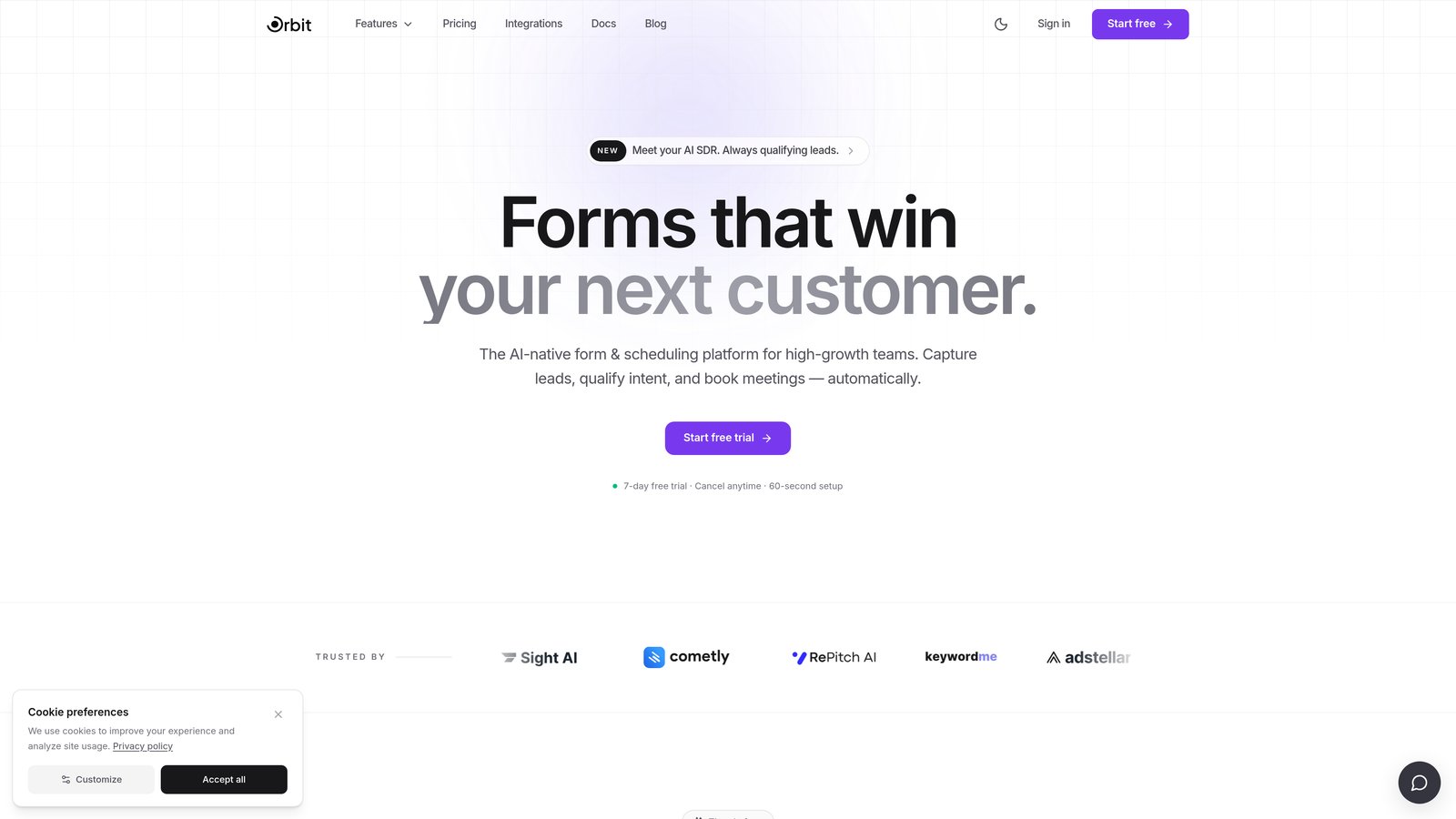
Orbit AI is an AI-powered form builder with lead qualification capabilities designed for high-growth teams who need both compliance-ready data collection and intelligent patient routing in a single platform.
Where This Tool Shines
Most secure form builders in healthcare are built purely around compliance. They check the right boxes for HIPAA, offer a BAA, and encrypt your data. What they often don't do is help you act on the information you collect. Orbit AI fills that gap by layering AI-powered lead qualification on top of a modern, conversion-optimized form experience.
For telehealth platforms and healthcare SaaS companies managing high inbound volume, this matters. Instead of dumping every patient inquiry into a flat queue, Orbit AI can score and route inbound patient leads based on the responses they provide, helping your team prioritize the right cases faster. That's a capability most pure-compliance tools don't offer.
Key Features
AI-Powered Lead Qualification: Automatically scores and routes patient inquiries based on form responses, helping healthcare teams prioritize high-intent or urgent cases.
Conditional Logic for Personalized Flows: Build intake experiences that adapt in real time based on patient answers, reducing irrelevant questions and improving completion rates.
Conversion-Optimized Form Design: Modern, clean form interfaces designed to reduce drop-off, particularly important for patient-facing digital experiences where first impressions count.
Secure Data Handling: Encryption in transit and at rest to protect sensitive patient information throughout the collection process.
Built for High-Growth Teams: The platform is designed for teams scaling their patient acquisition and intake operations, not just managing static form libraries.
Best For
Orbit AI is the strongest fit for telehealth startups, healthcare SaaS platforms, and digital health companies that are actively growing their patient base and need forms that do more than collect, they need forms that qualify. It's particularly valuable for teams where patient lead volume is high enough that manual triage becomes a bottleneck.
Pricing
Check current plan details and pricing at orbitforms.ai. Verify BAA availability and compliance features directly with the Orbit AI team before deploying for PHI collection.
2. Jotform
Best for: Medical practices and healthcare administrators who need out-of-the-box HIPAA compliance with minimal setup.
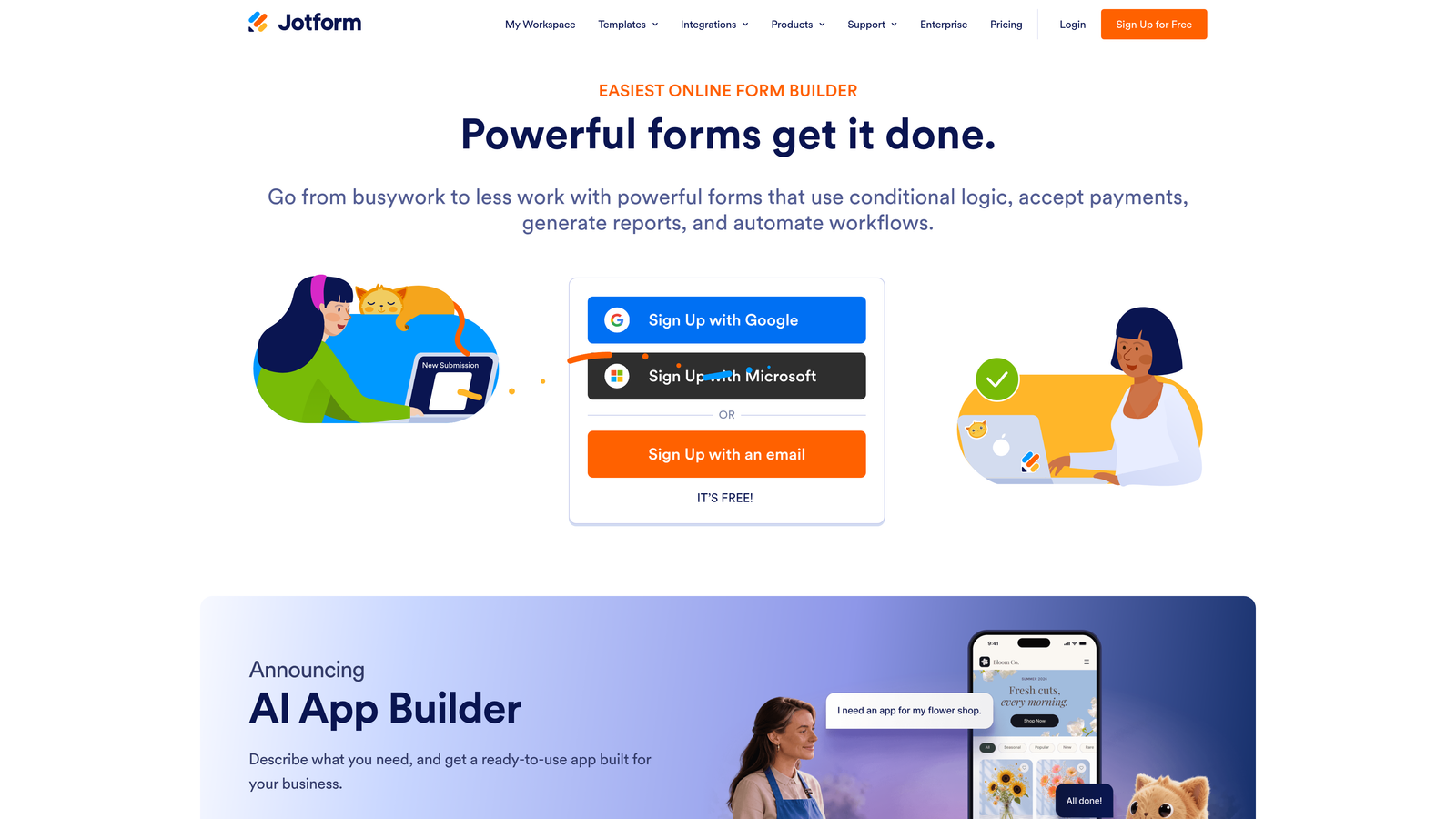
Jotform is one of the most widely adopted HIPAA-compliant form builders on the market, with a dedicated compliance plan, BAA availability, and an extensive library of healthcare-specific templates ready to deploy.
Where This Tool Shines
Jotform's strength is its breadth. The platform has been used in healthcare settings long enough that its template library reflects real-world clinical needs, covering patient intake, medical consent forms, insurance verification, appointment requests, and more. For a practice that needs to get compliant forms live quickly, the starting point is already built.
The HIPAA compliance plan is a dedicated offering, not a checkbox bolted onto a general product. That distinction matters when you're evaluating vendors for a BAA. Jotform provides BAAs to eligible customers on its HIPAA-tier plans, and the platform handles encryption in transit and at rest as standard on those tiers.
Key Features
Dedicated HIPAA Compliance Plan: A purpose-built compliance tier with BAA availability, separate from standard paid plans.
Healthcare Template Library: Hundreds of pre-built templates for patient intake, consent, medical history, and clinical workflows.
Encryption in Transit and at Rest: Standard on HIPAA-tier plans, protecting PHI throughout the data lifecycle.
Conditional Logic and Multi-Page Forms: Build branching intake flows that adapt to patient responses without overwhelming them with irrelevant fields.
EHR and Practice Management Integrations: Native and third-party integrations that connect form data to downstream clinical and administrative tools.
Best For
Jotform is an excellent fit for established medical practices, clinics, and healthcare administrators who need a proven, compliant solution with minimal configuration overhead. It's also a solid choice for healthcare teams that want a large template library to work from rather than building from scratch.
Pricing
HIPAA compliance is available on paid tiers, not the free plan. Check current plan pricing and HIPAA tier details at jotform.com.
3. Formstack
Best for: Enterprise healthcare organizations managing complex, multi-step workflows that go beyond data collection into document generation and approvals.
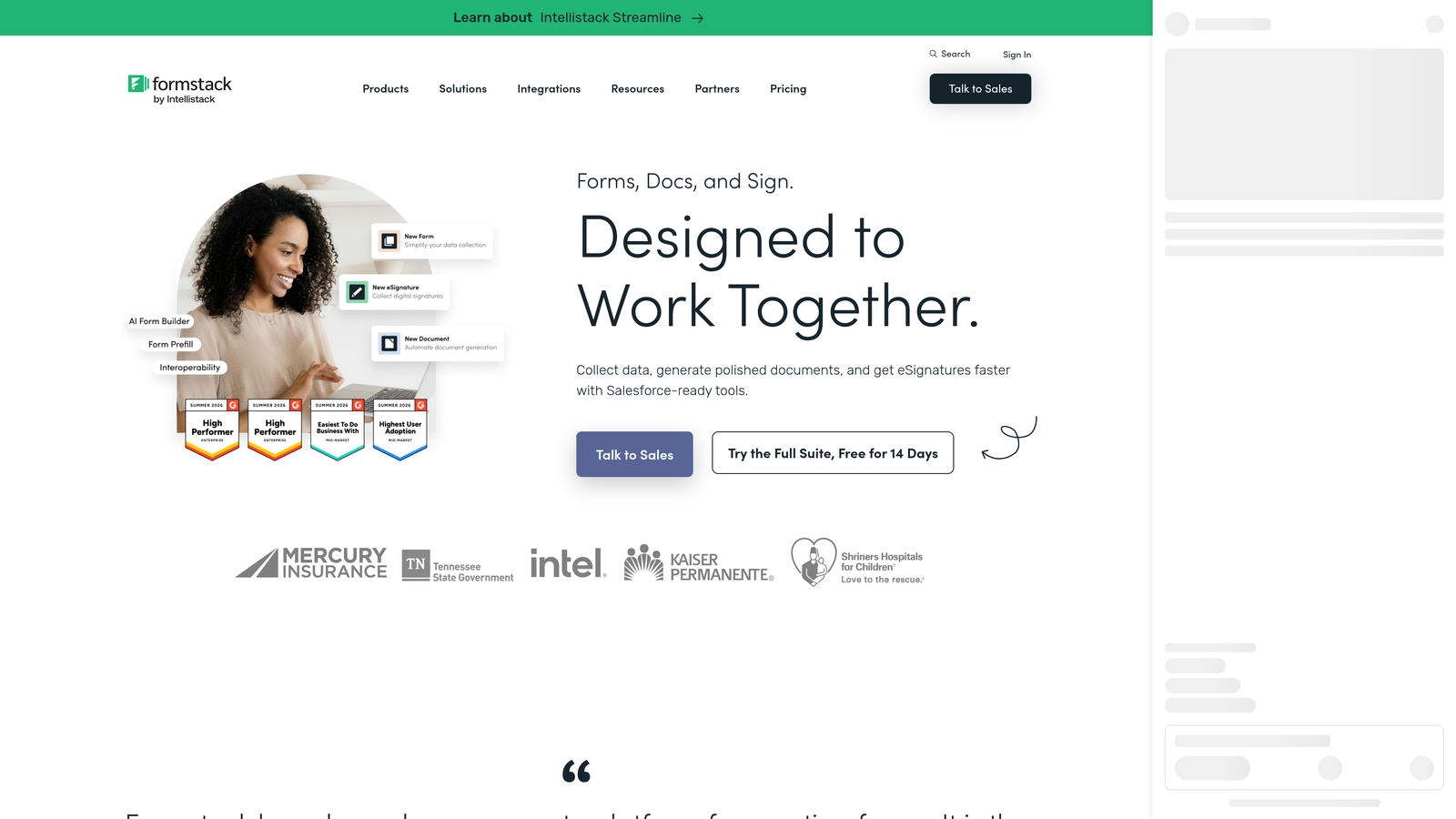
Formstack is an enterprise-grade form and workflow platform with HIPAA compliance, BAA availability, and native integrations for document generation and e-signatures, making it well-suited for complex healthcare operational workflows.
Where This Tool Shines
Formstack thinks beyond the form. Where many tools stop at collecting a patient's information and delivering it to an inbox, Formstack is designed to route that data through structured workflows, trigger document generation, collect e-signatures, and maintain audit trails throughout. For healthcare organizations managing consent management, patient onboarding, or internal HR compliance, that end-to-end capability is genuinely useful.
The platform's native products, Formstack Documents and Formstack Sign, integrate directly with its form builder to create complete healthcare document workflows without stitching together multiple vendors. That reduces the number of BAAs you need to manage and simplifies your overall compliance posture.
Key Features
HIPAA Compliance with BAA: Enterprise-level compliance posture with BAA available for covered entities and business associates.
Workflow Automation: Route form submissions through approval chains, data routing rules, and conditional workflows without manual intervention.
Native Document Generation and E-Signatures: Formstack Documents and Formstack Sign integrate natively for end-to-end healthcare document workflows in a single platform.
Role-Based Access Controls and Audit Logs: Granular permission settings and full activity tracking to support compliance audits and internal governance.
Enterprise Security Posture: Built for organizations with serious compliance requirements and IT oversight expectations.
Best For
Formstack is best suited for mid-to-large healthcare organizations, hospital systems, and healthcare operations teams that need workflow automation alongside secure data collection. It's a strong fit when your requirements extend beyond intake forms into consent management, credentialing, or complex multi-department workflows.
Pricing
Formstack is enterprise-oriented in its pricing structure. Check current plan details at formstack.com and confirm BAA terms directly with their sales team.
4. Typeform
Best for: Telehealth and wellness brands that prioritize patient experience and want a conversational intake format that reduces form fatigue.
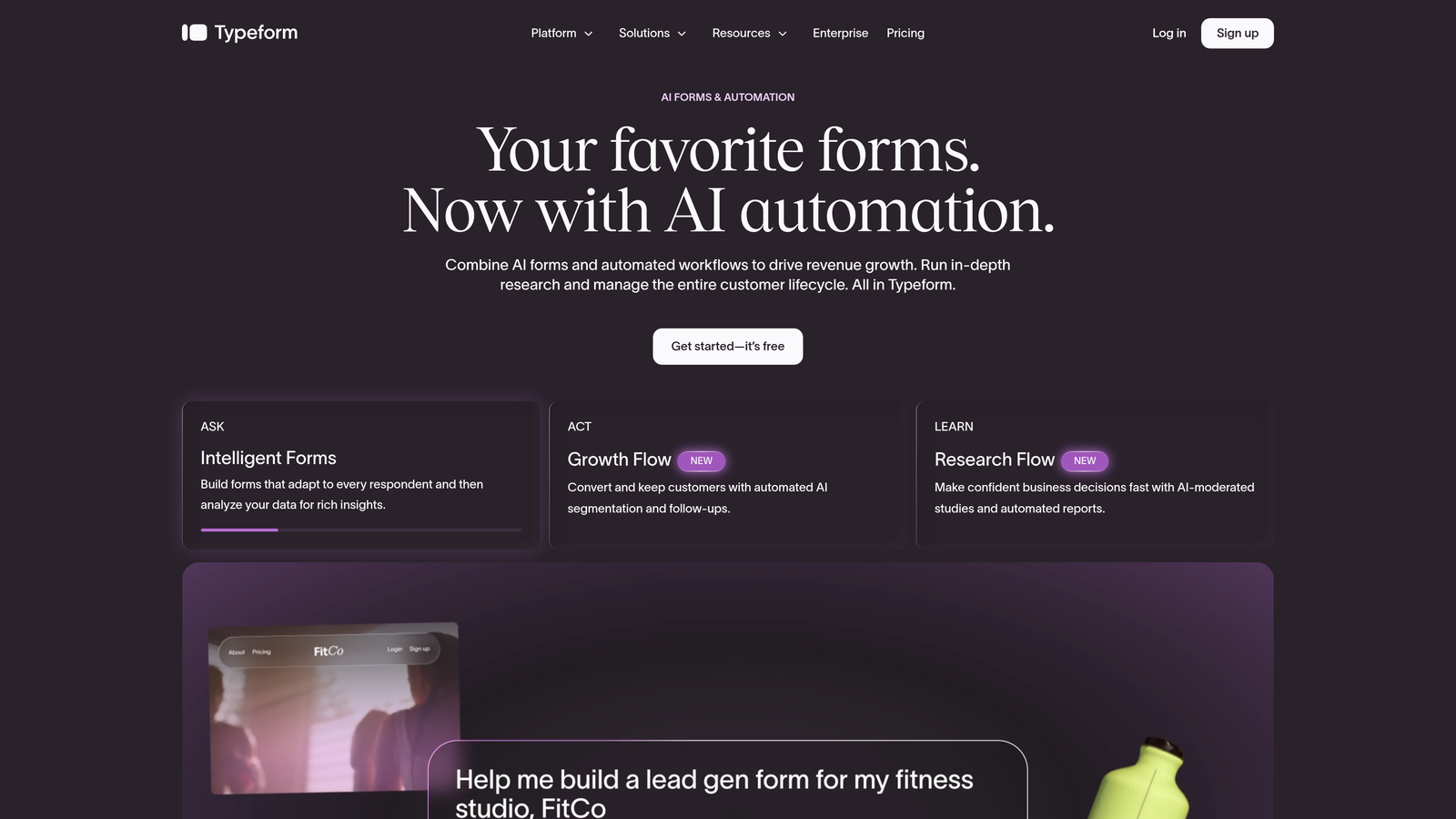
Typeform is a conversational form builder known for its one-question-at-a-time format, with HIPAA compliance available on higher-tier plans and a strong following among telehealth and wellness brands.
Where This Tool Shines
Patient experience is often an afterthought in healthcare form design. Typeform flips that assumption. Its conversational, single-question interface is designed to feel less like filling out a government form and more like a guided conversation, which can meaningfully improve completion rates for patient-facing intake flows.
For telehealth platforms competing on user experience, that distinction matters. Patients who abandon intake forms mid-way represent lost appointments and revenue. Typeform's format, combined with conditional logic that personalizes the journey based on each patient's answers, creates a noticeably smoother experience than a traditional multi-field form.
Key Features
Conversational One-Question Interface: Reduces cognitive load and form fatigue by presenting one question at a time in a guided, dialogue-style format.
HIPAA Compliance and BAA on Higher Plans: Available on Business and Enterprise tiers for organizations collecting PHI.
Conditional Logic for Personalized Journeys: Logic jumps and branching paths create intake flows that adapt to each patient's specific situation.
Branded Design Options: Clean, customizable aesthetics that fit the visual identity of telehealth and wellness brands.
CRM and Scheduling Integrations: Connect form responses to downstream tools including CRMs, appointment scheduling platforms, and analytics.
Best For
Typeform is an excellent choice for telehealth platforms, digital health apps, and wellness brands where patient experience is a core differentiator. It's particularly effective for new patient intake, health assessments, and symptom collection flows where reducing friction is a priority.
Pricing
HIPAA features are available on Business and Enterprise plans. Verify current plan structure and BAA terms at typeform.com before deploying for PHI collection.
5. Paperform
Best for: Health coaches, wellness practitioners, and small practices that want branded, content-rich intake experiences beyond a standard form layout.
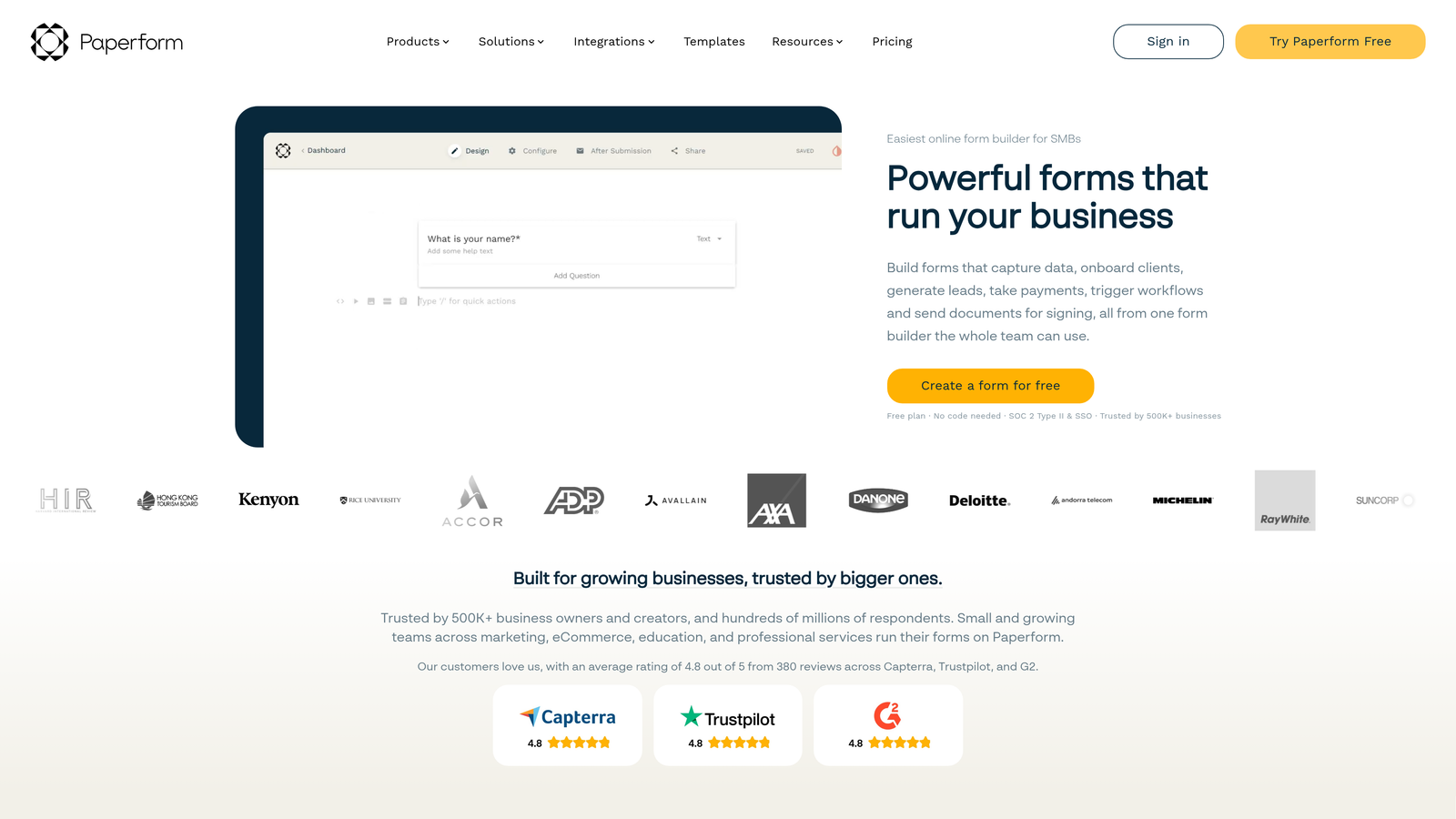
Paperform is a hybrid document-form builder that lets healthcare teams blend rich written content with secure form fields, creating intake experiences that feel more like a curated document than a clinical questionnaire.
Where This Tool Shines
Paperform occupies a unique space in the form builder landscape. Rather than presenting a form as a series of disconnected fields, it lets you weave form inputs into a page that reads like a document, with explanatory text, images, and context sitting alongside the questions. For health coaches and wellness practitioners, this creates intake forms that feel warm and informative rather than clinical and transactional.
The platform supports conditional logic, multi-step flows, payment collection, and scheduling integrations, giving smaller practices a reasonably complete toolkit without needing to stitch together multiple tools. HIPAA-compatible data handling options are available on higher plans, though you should verify BAA availability directly with Paperform before deploying for PHI collection, as their compliance posture has evolved over time.
Key Features
Document-Style Form Design: Blend rich written content, images, and form fields in a single page layout that reads naturally rather than feeling like a standard form.
HIPAA-Compatible Data Handling: Available on higher-tier plans, with BAA availability to be confirmed directly with Paperform.
Conditional Logic and Multi-Step Flows: Personalize the intake experience based on patient responses without overwhelming them with irrelevant sections.
Payment Collection and Scheduling Integrations: Useful for practices that handle booking and payment directly through their intake process.
Flexible Branding: Strong customization options for practices that want patient-facing forms to match their brand identity.
Best For
Paperform is best suited for health coaches, integrative wellness practitioners, nutritionists, and small independent practices that want intake forms to feel like a reflection of their brand, not a generic clinical document. It's less suited for high-volume enterprise healthcare workflows.
Pricing
Multiple tiers are available. Check current pricing and confirm BAA availability at paperform.co before using for any PHI collection.
6. Tally
Best for: Non-PHI healthcare data collection such as wellness surveys, research opt-ins, or general health content engagement where budget is a constraint.
Tally is a free-first form builder with a clean, minimal interface that works well for low-stakes healthcare data collection, with one critical caveat that every healthcare team must understand before using it.
Where This Tool Shines
Tally's appeal is its simplicity and generous free tier. The Notion-inspired interface is intuitive enough that non-technical team members can build and deploy forms quickly, and the free plan includes unlimited forms and responses, which is rare in the form builder space.
For healthcare organizations that need to collect non-PHI data, such as wellness program survey responses, research study opt-ins, general health newsletter signups, or patient satisfaction feedback that doesn't include identifying information, Tally can be a practical, cost-effective option.
Key Features
Generous Free Tier: Unlimited forms and responses on the free plan, making it accessible for teams with limited budgets.
Clean, Minimal Interface: Notion-inspired design that's easy for non-technical users to navigate and build with quickly.
Conditional Logic on Free Plan: Basic branching logic available without requiring a paid upgrade.
Clean Website Embedding: Embeds neatly into websites and landing pages without requiring technical configuration.
⚠️ Critical Compliance Note: Tally does NOT currently offer a HIPAA-compliant plan or BAA. It must not be used for collecting Protected Health Information. This is a hard limit, not a workaround-able limitation.
Best For
Tally is appropriate for healthcare-adjacent use cases that do not involve PHI. Think wellness content teams, public health researchers collecting anonymized survey data, or health brands running general audience engagement campaigns. If there is any possibility that PHI will be collected, choose a different tool from this list.
Pricing
Free tier available with generous limits. Paid plans unlock advanced features. Check current details at tally.so.
Choosing the Right Tool for Your Healthcare Use Case
The right secure form builder for your organization depends on what you're actually trying to accomplish, and who your patients are.
If you're a telehealth platform or healthcare SaaS company dealing with high inbound patient volume and need forms that qualify and route leads intelligently, not just collect them, Orbit AI is the standout choice. It's the only tool on this list that combines compliance-ready data collection with AI-powered lead qualification, giving your team a genuine operational edge.
For out-of-the-box HIPAA compliance with minimal configuration, Jotform is the most practical starting point, with its dedicated HIPAA plan, BAA availability, and extensive healthcare template library. If your workflows extend into document generation and e-signatures at an enterprise scale, Formstack is the more complete platform.
Telehealth brands competing on patient experience should look closely at Typeform, whose conversational format meaningfully reduces intake form fatigue. Small practices and wellness practitioners who want branded, content-rich intake forms will find Paperform a natural fit. And for non-PHI use cases on a tight budget, Tally offers a clean, capable free tier, provided you stay well clear of any PHI collection.
Whichever tool you choose, confirm BAA availability and current compliance features directly with the vendor before going live. Compliance requirements evolve, and vendor documentation is always the most reliable source of truth.
If you're building patient intake flows or healthcare lead qualification systems that need to perform at scale, explore what AI-powered form design can do for your team. Start building free forms today and see how intelligent form design can elevate your conversion strategy while keeping your data collection secure.


