

Static forms are conversion killers. When every respondent sees the same fields regardless of their answers, you end up with frustrated users, abandoned submissions, and data that tells you very little about what actually matters. Conditional form logic changes that equation entirely: show only relevant fields, skip irrelevant sections, and branch users down paths that match their specific situation.
The result is a dramatically better experience for respondents and far more qualified data for your team. If you want to go deeper on the mechanics, our guide on how to reduce form field friction and dynamic form fields based on user input cover the underlying principles in detail.
Choosing the right conditional logic tool comes down to a few key factors: how deep the logic capabilities go (basic show/hide vs. multi-layer branching), how easy the rule builder is to use, what integrations are available, and whether the pricing fits your team's stage. Here are the top conditional form logic software tools worth considering in 2026.
1. Orbit AI
Best for: High-growth teams that need AI-powered lead qualification built directly into form logic.
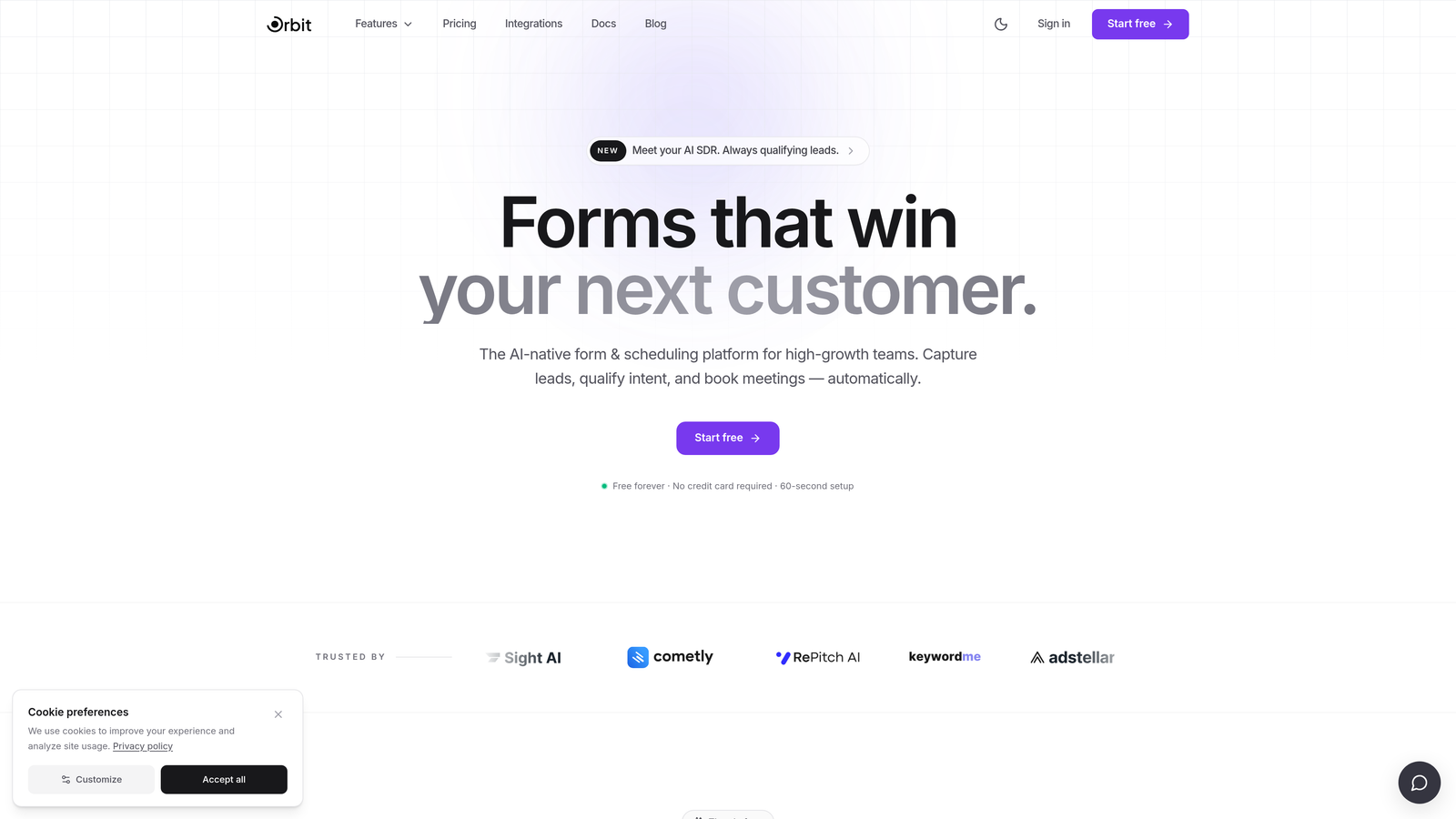
Orbit AI is an AI-powered form builder that combines intelligent conditional logic with built-in lead qualification, designed specifically for conversion-focused teams.
Where This Tool Shines
Most form builders treat conditional logic as a manual configuration task: you define the rules, you build the branches, you maintain them as your strategy evolves. Orbit AI takes a different approach by using AI to suggest conditional logic paths based on your actual conversion goals, which is a meaningful shift for teams who want to move fast without sacrificing sophistication.
The built-in lead qualification and scoring layer is what sets it apart from general-purpose form builders. Rather than collecting responses and then routing leads through a separate tool, Orbit AI lets you qualify and score prospects within the form logic itself, creating a tighter, faster pipeline for high-growth teams.
Key Features
AI-Suggested Logic Paths: The platform analyzes your conversion goals and recommends conditional branching structures, reducing setup time significantly.
Built-In Lead Qualification and Scoring: Score and qualify leads directly within the form flow without needing a separate CRM rule or automation layer.
Modern, Polished Form Design: Dynamic field behavior is paired with visually refined templates built for high-converting landing pages and product funnels.
Smart Branching Based on Response Patterns: Logic adapts as response data accumulates, helping you refine paths over time rather than setting and forgetting.
Conversion-Optimized Architecture: Every design and logic decision in the platform is oriented around improving completion rates and lead quality, not just form functionality.
Best For
Orbit AI is the natural fit for SaaS teams, growth marketers, and demand generation professionals who need forms that do more than collect data. If lead qualification is a core part of your funnel and you want AI assistance in building logic that actually converts, this is the tool built for that job.
Pricing
Visit orbitforms.ai for current plan details. A free starting option is available for teams ready to explore the platform.
2. Typeform
Best for: Teams that want a conversational, one-question-at-a-time form experience with intuitive branching.
Typeform is a conversational form builder that uses logic jumps and branching to guide respondents through personalized question sequences.

Where This Tool Shines
Typeform's core strength is making complex conditional flows feel effortless to the respondent. Because questions appear one at a time, branching and skipping happen invisibly. Users never see a wall of conditional fields toggling on and off; they simply move through a conversation that feels tailored to them.
The calculator variable feature adds a useful dimension for teams that want to score respondents or calculate outputs mid-form, which pairs well with lead qualification use cases even if it requires more manual setup than a dedicated qualification tool.
Key Features
Logic Jumps: Route respondents to different questions or endings based on any previous answer, creating genuinely branched experiences.
Calculator Variables: Assign numeric values to responses and build scoring or calculation logic directly into the form.
Conversational UI: The one-at-a-time format naturally conceals branching complexity from respondents, keeping the experience clean.
Hidden Fields and URL Parameters: Pre-populate fields and trigger conditional logic based on where a respondent came from, enabling smart personalization.
Best For
Typeform works particularly well for brand-forward teams, agencies, and companies running surveys or lead capture where the respondent experience is a priority. It's less suited for deeply technical or enterprise-scale conditional logic needs.
Pricing
A free plan is available with limited responses. Paid plans start around $25 per month, with higher tiers unlocking more logic and response volume.
3. Jotform
Best for: Teams that need a versatile all-rounder with a visual logic builder and massive template library.
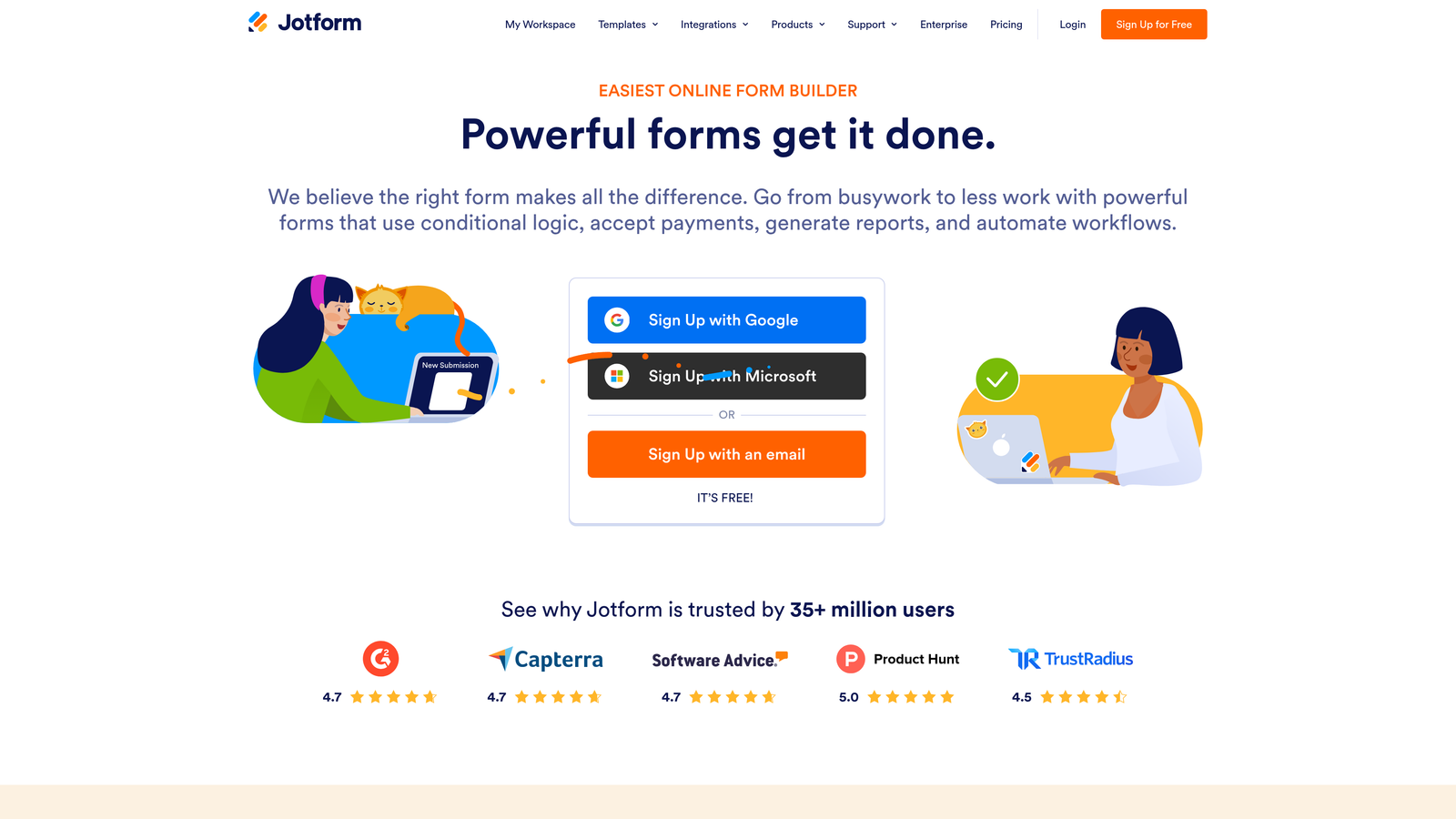
Jotform is a feature-rich form builder with a visual conditional logic interface, thousands of templates, and broad integration support across virtually every category.
Where This Tool Shines
Jotform's visual condition builder is genuinely accessible. You can configure show/hide rules, required field logic, calculation triggers, and page-skip behavior through a clean interface without touching any code. For teams that need to build sophisticated forms quickly, the 10,000-plus template library with pre-built conditional workflows is a real time-saver.
Multi-page forms with page-level conditional navigation make Jotform a strong choice for longer intake forms, applications, and onboarding flows where different respondent types need to see entirely different sections.
Key Features
Visual Condition Builder: Configure show/hide, require, calculate, and skip actions through a drag-and-drop interface with no coding required.
10,000+ Templates: A massive library with pre-built conditional logic workflows across dozens of industries and use cases.
Multi-Page Conditional Navigation: Route respondents to different pages based on their answers, not just different fields.
Conditional Notifications and Autoresponders: Send different confirmation emails or internal alerts depending on how a form was completed.
Best For
Jotform suits small to mid-sized businesses, nonprofits, and operations teams that need a broad feature set without enterprise pricing. It handles everything from simple contact forms to complex multi-step workflows.
Pricing
Free plan supports up to five forms. Paid plans start around $34 per month with higher form counts, submission limits, and storage.
4. Formstack
Best for: Enterprise teams that need compliance-grade conditional logic with workflow and document automation.
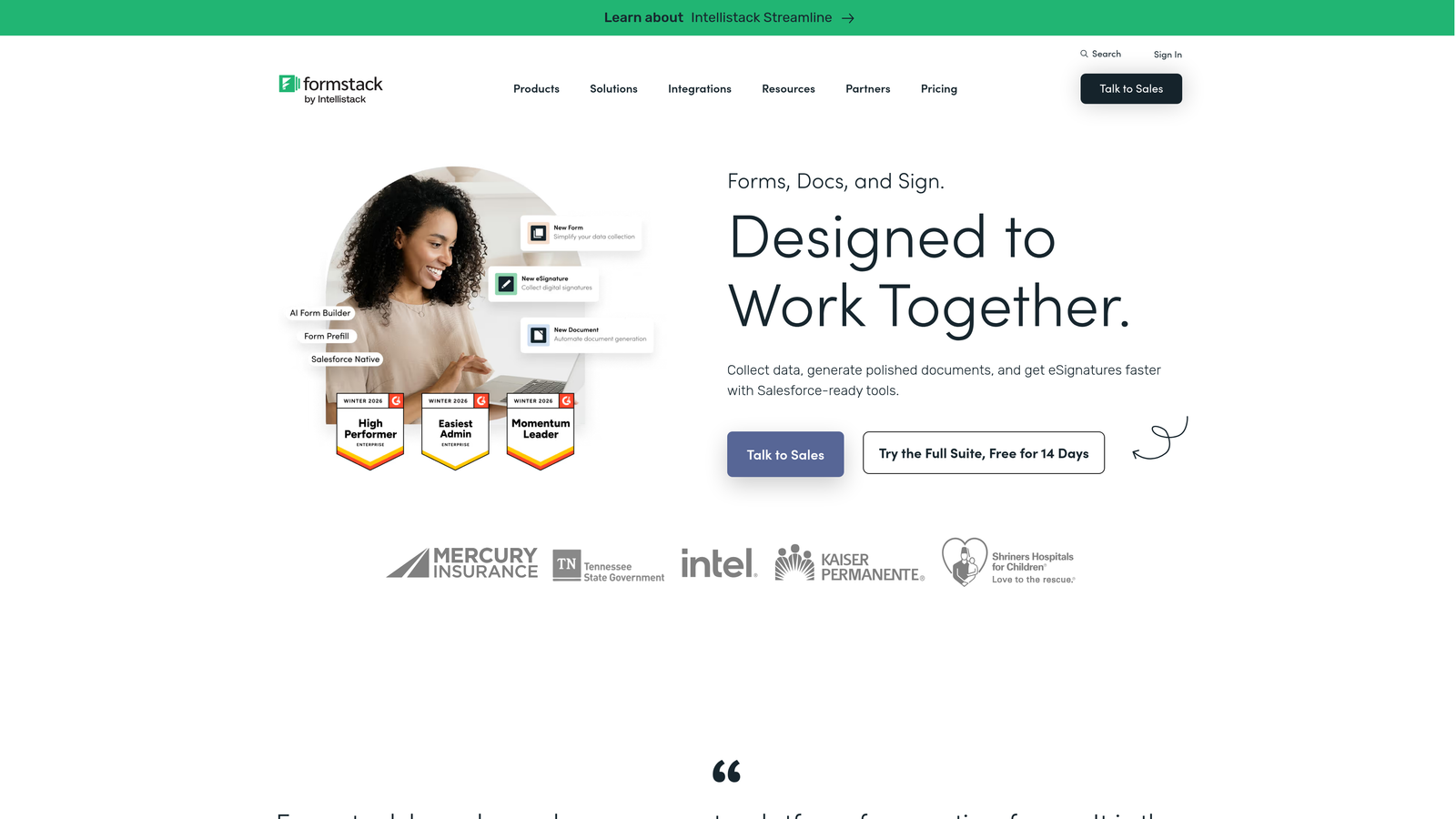
Formstack is an enterprise-focused form and workflow platform built for organizations that need advanced conditional logic alongside compliance, document generation, and e-signature capabilities.
Where This Tool Shines
Formstack goes well beyond basic show/hide logic. Its multi-layer conditional rules with nested conditions allow for genuinely complex routing scenarios, which matters for healthcare, legal, and financial services teams where form logic has real compliance implications. HIPAA-compliant conditional data routing is a differentiator that most form builders simply can't match.
The integration with document generation and e-signature workflows means conditional form responses can trigger entire downstream processes automatically, not just send a notification email.
Key Features
Multi-Layer Nested Conditional Logic: Build complex rule stacks where conditions depend on multiple prior answers simultaneously.
Workflow Automation: Trigger multi-step approval or review workflows based on conditional form responses.
HIPAA-Compliant Data Routing: Route sensitive data conditionally while maintaining compliance requirements for regulated industries.
Conditional Document Generation: Auto-generate customized documents and contracts based on form responses.
CRM Prefill and Conditional Population: Pull CRM data into forms and use it to pre-set conditional field states before a respondent even starts.
Best For
Formstack is built for enterprise and mid-market teams in regulated industries: healthcare, financial services, legal, and operations-heavy organizations that need forms to drive entire workflows, not just collect data.
Pricing
Plans start around $50 per month. Enterprise pricing is available for larger organizations with more complex needs.
5. Gravity Forms
Best for: WordPress sites that need deep native conditional logic across every field type.
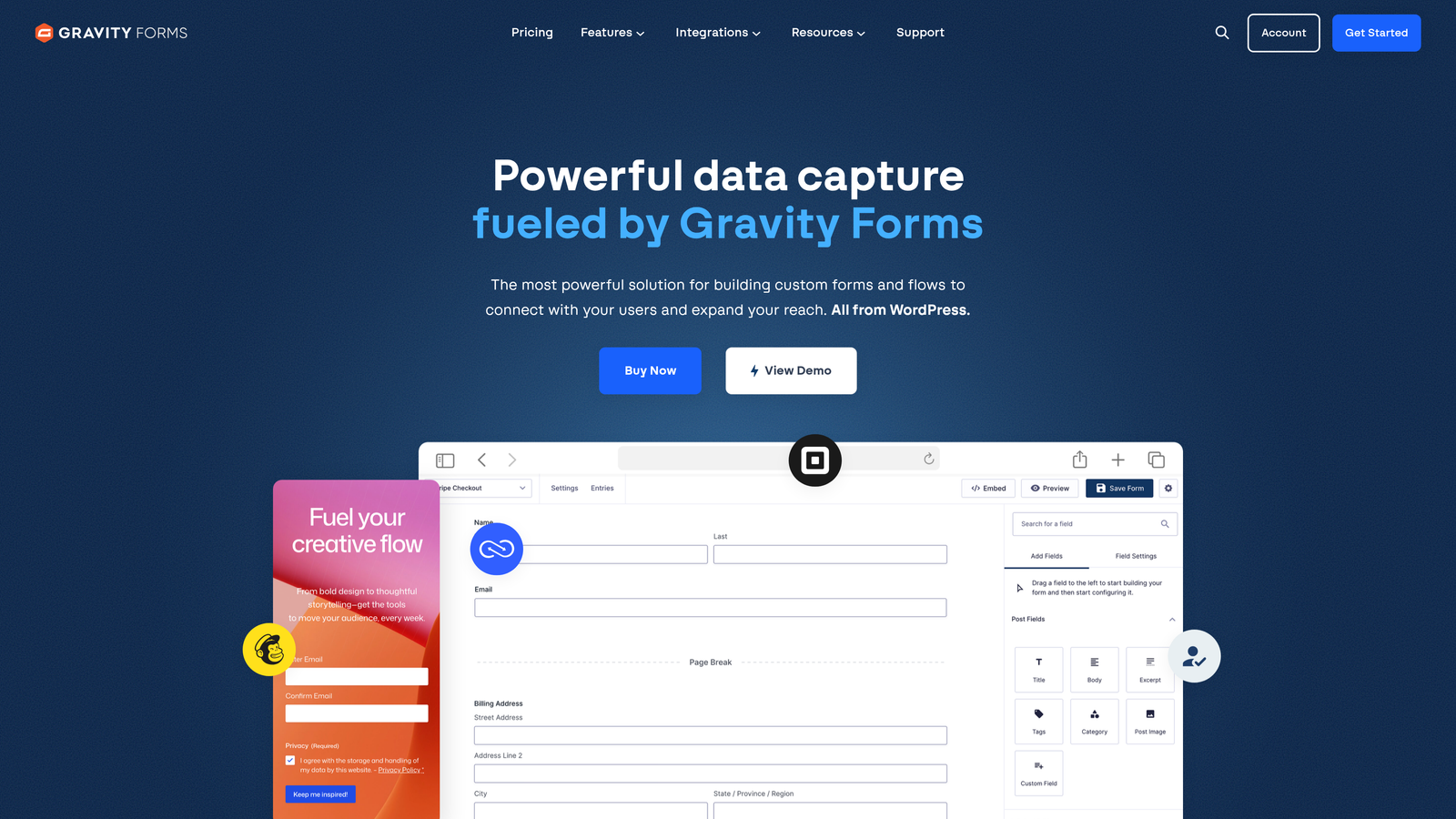
Gravity Forms is a WordPress-native form plugin with conditional logic built into every field type, backed by one of the largest add-on ecosystems in the WordPress space.
Where This Tool Shines
If your site runs on WordPress, Gravity Forms is the most deeply integrated conditional logic option available. Logic rules apply at the field level, the page level, the confirmation message level, and the notification level, giving you granular control over every aspect of the form experience based on respondent answers.
The add-on ecosystem extends this further. Third-party extensions add conditional logic for payments, subscriptions, CRM routing, and more, making it possible to build genuinely sophisticated workflows without leaving the WordPress environment.
Key Features
Field-Level and Page-Level Conditional Logic: Apply conditions to individual fields or entire form pages based on any prior answer.
Conditional Confirmations and Notifications: Show different thank-you messages or send different emails based on how the form was completed.
Conditional Pricing and Product Fields: Build e-commerce and order forms where pricing options appear or disappear based on respondent selections.
Extensive Add-On Ecosystem: Hundreds of official and community add-ons extend conditional logic into payments, CRM integrations, and custom workflows.
Best For
Gravity Forms is the go-to for WordPress developers, agencies managing client sites, and businesses that run their entire web presence on WordPress and need forms that integrate deeply with the CMS.
Pricing
Starts at $59 per year for a Basic license. Higher tiers unlock more add-ons and priority support.
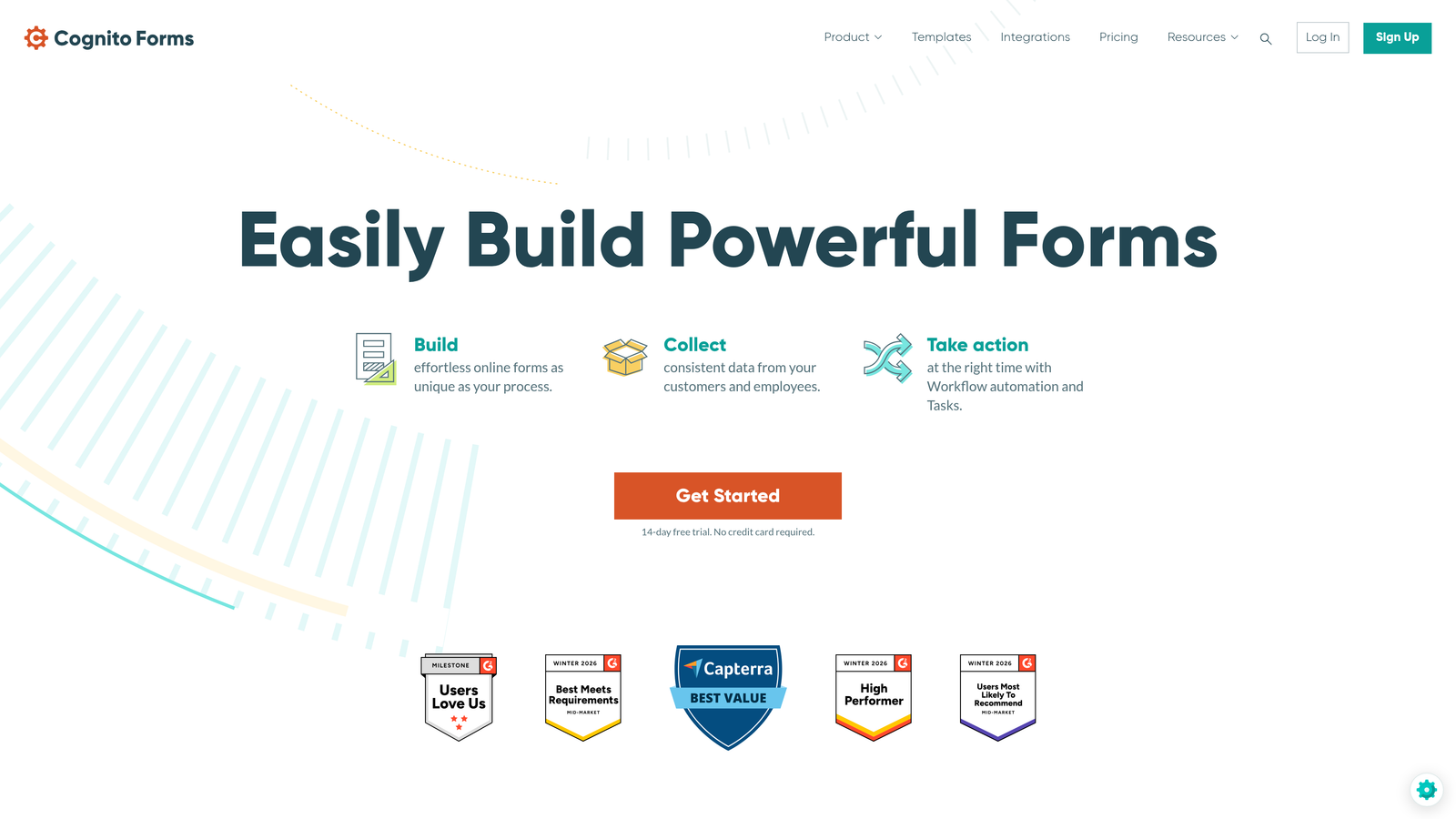
6. Cognito Forms
Best for: Budget-conscious teams that need powerful conditional logic and calculation fields without a high price tag.
Cognito Forms is a form builder that punches above its price point with formula-based conditional logic, advanced calculation fields, and a genuinely useful free tier.
Where This Tool Shines
Cognito Forms stands out for its calculation and formula capabilities. Most budget-tier form builders offer basic show/hide logic; Cognito adds conditional outputs driven by formulas, which opens up use cases like dynamic pricing, quote calculators, and scored assessments without needing a separate tool.
Repeating sections with conditional visibility are another differentiator. If you're building forms where respondents need to add multiple entries (line items, dependents, locations) and each entry needs its own conditional logic, Cognito handles this cleanly.
Key Features
Formula-Based Show/Hide Logic: Write conditions using formulas rather than just simple if/then dropdowns, enabling more nuanced rule-building.
Advanced Calculation Fields: Build fields that calculate outputs conditionally based on other responses, ideal for pricing and scoring.
Repeating Sections with Conditional Visibility: Apply conditional logic within repeating field groups for complex, multi-entry forms.
Conditional Payment Logic: Show different payment options or totals based on form selections, useful for order and registration forms.
Best For
Cognito Forms is ideal for small businesses, nonprofits, and solo operators who need more logic depth than basic free tools offer but can't justify enterprise pricing. It's also a smart pick for teams building quote or calculator-style forms.
Pricing
Free plan available with solid functionality. Paid plans start around $15 per month, making it one of the most affordable options on this list.
7. Fillout
Best for: Teams that want conditional logic driven by live data from Airtable, Notion, or other databases.
Fillout is a modern form builder whose native database integrations enable a type of conditional logic most tools can't offer: branching based on live records, not just prior responses.

Where This Tool Shines
Fillout's key differentiator is that conditional logic can reference live data from connected sources like Airtable, Notion, Supabase, and Google Sheets. This means a form can show or hide fields based on whether a record already exists, what a respondent's account status is, or what inventory is currently available, which is a fundamentally different capability than standard response-based logic.
For teams running operations on Airtable or Notion in particular, Fillout removes a lot of the friction of building forms that stay in sync with their actual data layer.
Key Features
Database-Referenced Conditional Logic: Trigger show/hide and branching rules based on live records from connected databases, not just form responses.
Native Integrations with Airtable, Notion, Supabase, and Google Sheets: Two-way data connections that keep forms synchronized with your existing data sources.
Page-Level and Field-Level Branching: Standard conditional logic capabilities applied across both individual fields and entire form pages.
Conditional Logic in Scheduling and Payment Forms: Apply branching to booking and payment flows, not just standard data collection forms.
Best For
Fillout is purpose-built for product and operations teams that use Airtable or Notion as their primary data layer and want forms that respond to what's actually in those databases rather than operating in isolation.
Pricing
Free plan available. Paid plans start around $19 per month, scaling with response volume and advanced features.
8. Feathery
Best for: Developers building complex conditional flows that require custom code, API calls, or React embedding.
Feathery is a developer-oriented form builder with a React-based architecture that supports both visual logic building and programmatic conditional rules for teams that need maximum flexibility.
Where This Tool Shines
Feathery is the tool for teams whose conditional logic requirements outgrow what any visual builder can handle. The ability to call external APIs mid-form and use the response to drive branching decisions opens up use cases that are genuinely difficult to achieve elsewhere: real-time eligibility checks, live data lookups, and identity verification flows that adapt based on external system responses.
The React SDK makes it practical to embed fully conditional forms directly inside product interfaces, which is a significant advantage for SaaS teams building onboarding, KYC, or multi-step activation flows within their app.
Key Features
Visual Logic Builder Plus Custom Code Rules: Start with the visual builder and extend with custom JavaScript logic where the visual layer isn't sufficient.
API-Driven Conditional Branching: Call external services mid-form and use their responses to determine which path a user follows next.
React SDK: Embed fully conditional forms directly into React applications with programmatic control over every behavior.
Onboarding, KYC, and Multi-Step Flow Support: Pre-built patterns for common developer use cases where conditional logic is mission-critical.
Best For
Feathery is for engineering teams and technical product managers building forms that are part of a larger application architecture. If you need forms that talk to external APIs and live inside your product, not just on a landing page, Feathery is the right fit.
Pricing
Free tier available for initial development and testing. Paid plans start around $49 per month for production use cases.
9. SurveySparrow
Best for: CX and research teams running NPS, CSAT, and recurring feedback surveys with display and skip logic.
SurveySparrow is a survey platform optimized for customer experience workflows, with display logic, skip logic, and question piping built for teams running structured feedback programs.
Where This Tool Shines
SurveySparrow's conditional logic is purpose-built for survey use cases rather than general form collection. Display logic and skip logic work alongside question piping to create surveys where the language itself adapts to prior answers, not just which questions appear. For CX teams running NPS or CSAT programs, this level of personalization meaningfully improves response quality.
The recurring survey automation with conditional triggers is a standout for teams that run ongoing feedback loops. You can set conditions that determine when a follow-up survey fires, not just what it contains, which adds a layer of intelligence to longitudinal feedback programs.
Key Features
Display Logic and Skip Logic: Show or skip questions based on any prior answer, with clean visual rule-building for survey-specific scenarios.
Question Piping and Conditional Text Personalization: Pull previous answers into later question text dynamically, making surveys feel genuinely tailored.
Recurring Survey Automation with Conditional Triggers: Automate when follow-up surveys go out based on prior response conditions, not just a fixed schedule.
Conditional Thank-You Pages and Follow-Up Actions: Show different closing experiences or trigger different follow-up sequences based on how a survey was completed.
Best For
SurveySparrow is the right choice for customer success, CX, and research teams running structured feedback programs where conditional logic needs to serve survey-specific patterns rather than general lead capture or data collection.
Pricing
Free plan available. Paid plans start around $19 per month, with higher tiers for larger response volumes and team features.
Choosing the Right Tool for Your Stack and Growth Stage
The right conditional form logic software depends heavily on what you're building, who's building it, and where these forms live in your broader workflow. Here's a quick orientation to help you narrow it down.
Best for AI-powered lead qualification: Orbit AI is the clear choice if your primary goal is converting form responses into qualified pipeline. The built-in scoring and AI-suggested logic paths are purpose-built for growth teams.
Best conversational experience: Typeform remains the benchmark for making branching logic feel invisible to respondents. If brand experience is a top priority, it's hard to beat.
Best all-rounder: Jotform covers the widest range of use cases at a reasonable price point, making it a reliable default for teams that need versatility without deep specialization.
Best for WordPress: Gravity Forms integrates more deeply with WordPress than any alternative. If your site runs on WordPress, it's the natural starting point.
Best for enterprise compliance: Formstack is the only tool on this list built specifically for regulated industries where conditional data routing has legal and compliance implications.
Best free tier: Cognito Forms offers the strongest conditional logic capabilities at the free and near-free price points, particularly for teams that need calculation-based conditions.
Best for developers: Feathery's API-driven branching and React SDK put it in a different category from visual builders. If your team writes code, this is the most powerful option available.
Best for database-connected workflows: Fillout's native Airtable and Notion integrations make it the right pick for operations teams whose forms need to respond to live data.
Best for surveys and feedback programs: SurveySparrow's CX-oriented conditional logic, piping, and recurring automation are optimized specifically for structured feedback workflows.
If you want to go deeper on applying these tools effectively, our guides on how to improve form conversion rates and how to qualify leads with forms cover the strategic layer behind the technology choices.
For high-growth teams that want forms to actively drive pipeline rather than passively collect data, Orbit AI brings together intelligent conditional logic and lead qualification in a single platform. Start building free forms today and see how AI-powered form design can transform the quality of leads coming through your funnel.


