

Choosing the right conversion tool is rarely just about features. It's about finding a pricing model that scales with your growth without punishing you for success. Whether you're a lean startup capturing your first leads or a high-growth SaaS team optimizing a multi-step funnel, the wrong pricing tier can quietly erode your ROI before you even notice.
This guide breaks down nine of the most effective conversion tools on the market today, with a clear-eyed look at what each one actually costs, what you get at each tier, and which teams they're built for. We've evaluated each tool on pricing transparency, feature-to-cost ratio, and how well the model fits teams focused on lead generation and conversion optimization.
If you're also thinking about how your forms fit into the broader conversion picture, our guides on lead capture forms and how to increase form submissions are worth reading alongside this one.
1. Orbit AI
Best for: High-growth B2B and SaaS teams that want lead qualification built directly into their forms.
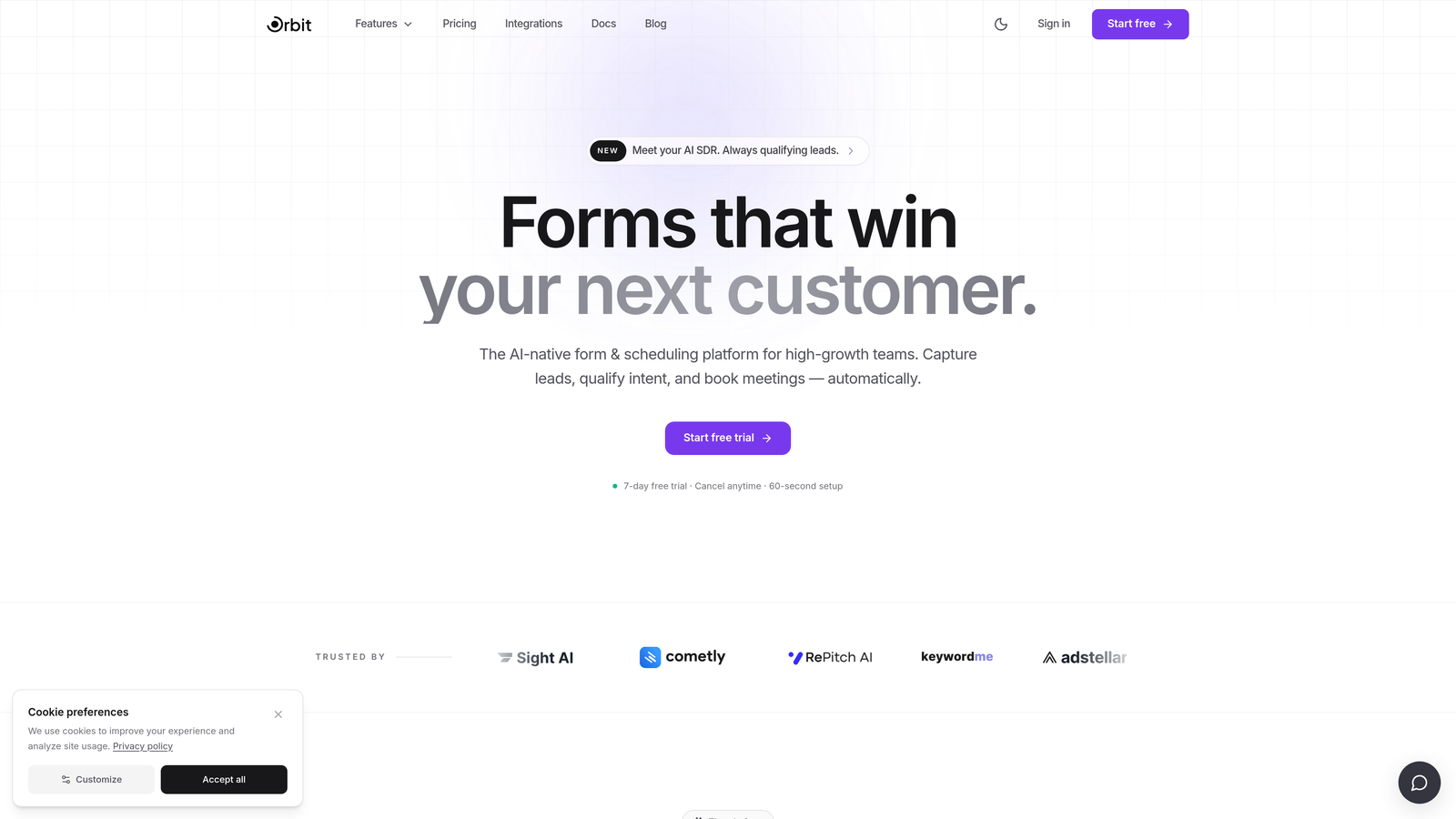
Orbit AI is an AI-powered form builder with native lead qualification designed for teams where every lead counts.
Where This Tool Shines
Most form tools capture data and hand it off. Orbit AI does something different: it qualifies leads at the point of capture, surfacing qualification signals in real time so your sales team isn't wading through unscored submissions. The AI layer is built into the form itself, not bolted on through a third-party integration that breaks every time something updates.
For B2B and SaaS teams running multi-step funnels, this matters. Conditional logic routes respondents based on their lead score, meaning the form experience adapts to the prospect rather than treating everyone identically. The result is a smarter top-of-funnel that does more work before a human ever gets involved.
Key Features
AI-Native Lead Qualification: Lead scoring is embedded directly in the form layer, not added via integration, so qualification happens at the moment of submission.
Conversion-Optimized Templates: Pre-built templates designed specifically for B2B and SaaS use cases, built around high-completion UX principles.
Conditional Logic and Smart Routing: Forms adapt dynamically based on lead score and respondent inputs, routing high-value leads to the right follow-up path automatically.
Clean, Modern Form Design: Purpose-built for completion rates, with a design language that doesn't feel like a generic form builder from five years ago.
Real-Time Lead Data: Qualification signals surface instantly, giving sales and marketing teams actionable data without waiting for CRM sync delays.
Best For
Orbit AI is the right fit for SaaS and B2B growth teams that are tired of paying for a separate form tool and a separate lead scoring tool. If your current setup requires a Zapier chain just to get a qualified lead into your CRM, this consolidates that stack meaningfully.
Pricing
Pricing is available at orbitforms.ai. Check the current plans page for free trial availability and tier details, as pricing is updated regularly.
2. Unbounce
Best for: Marketing teams that want AI-optimized landing page traffic routing without manual A/B test management.
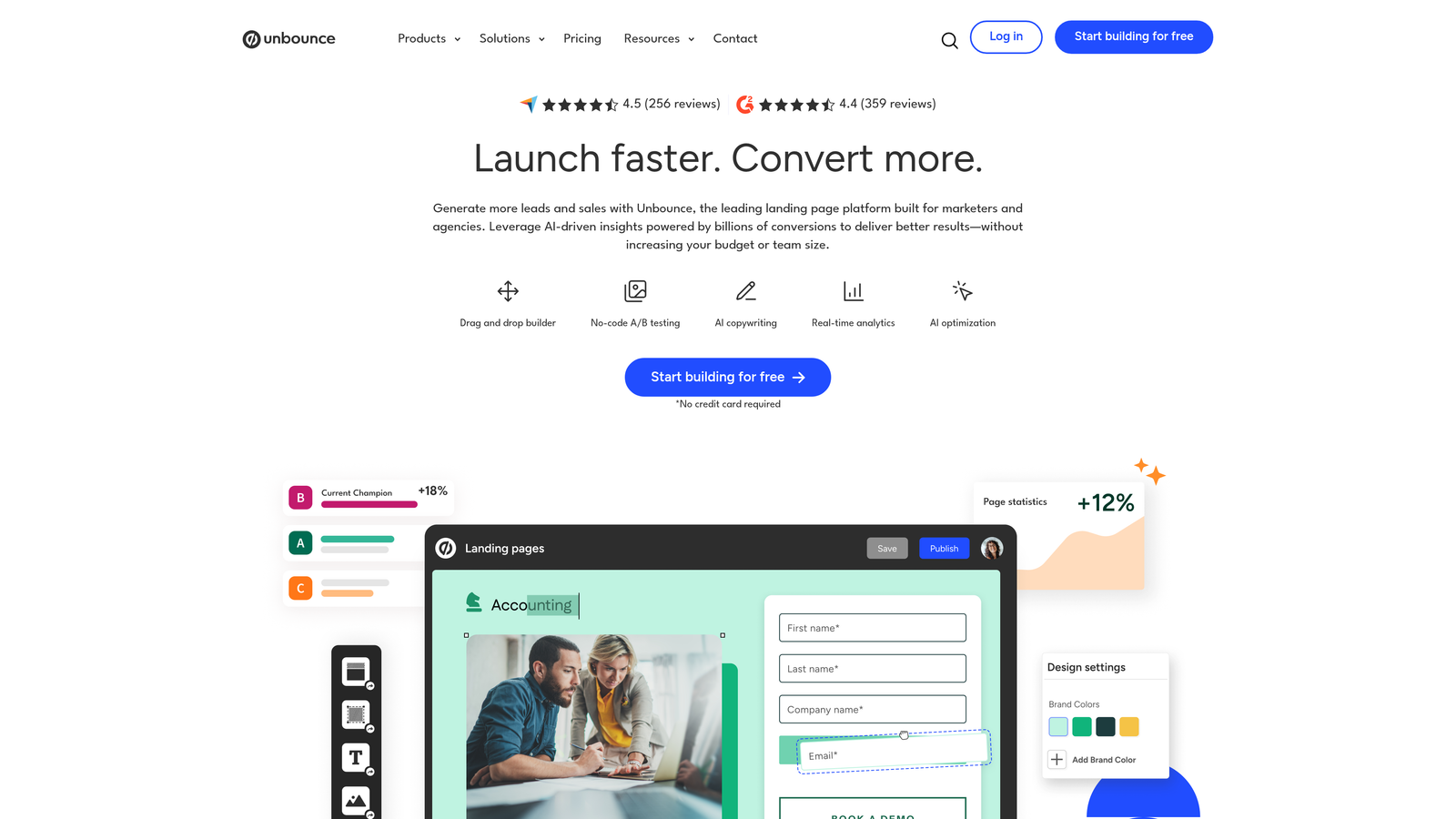
Unbounce is a landing page builder with Smart Traffic AI that automatically routes visitors to the variant most likely to convert.
Where This Tool Shines
Unbounce's Smart Traffic feature is genuinely useful for teams running multiple landing page variants. Rather than waiting for statistical significance in a traditional A/B test, Smart Traffic learns from visitor behavior and starts routing traffic toward better-performing variants early. This is particularly valuable for campaigns with moderate traffic volumes where traditional testing takes weeks to reach confidence.
The drag-and-drop builder is mature and polished, with a template library that covers most standard campaign types. Popups and sticky bars extend the conversion toolkit beyond just landing pages, making Unbounce a reasonable choice for teams that want more than a basic page builder.
Key Features
Smart Traffic AI: Automatically splits and routes test traffic to higher-converting variants, reducing the time needed to see meaningful results.
Drag-and-Drop Builder: Over 100 templates with a visual editor that doesn't require developer involvement for most customizations.
Popups and Sticky Bars: On-site conversion tools that extend beyond the landing page itself.
A/B Testing with Confidence Reporting: Statistical significance reporting helps teams make informed decisions about winning variants.
CRM and Email Integrations: Native connectors to major platforms, reducing friction between lead capture and follow-up.
Best For
Paid media teams and performance marketers running multiple campaign variants simultaneously. Particularly strong for teams that want AI-assisted optimization without a dedicated CRO specialist managing tests manually.
Pricing
Plans are tiered by conversions per month, starting around $99/month billed annually. This model means costs scale with campaign performance, which is worth modeling before committing. Check unbounce.com/pricing for current rates.
3. Typeform
Best for: Teams prioritizing form completion rates through conversational, one-question-at-a-time UX.
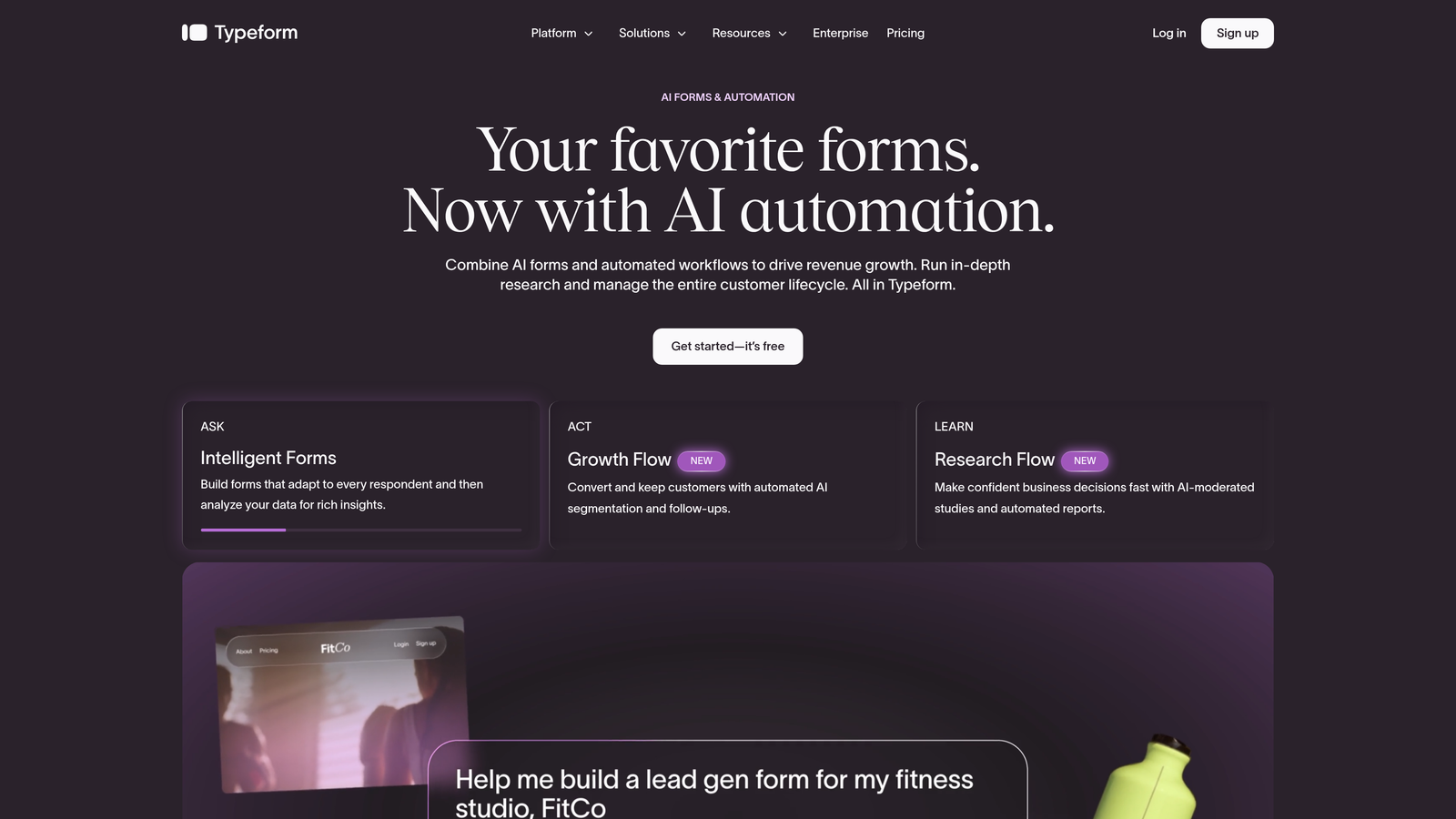
Typeform is a conversational form and survey tool known for its distinctive single-question flow that consistently drives higher completion rates than traditional multi-field forms.
Where This Tool Shines
The core insight behind Typeform is simple: showing someone one question at a time feels less overwhelming than presenting a wall of fields. That UX philosophy genuinely works, particularly for longer surveys, research forms, and lead capture flows where respondent fatigue is a real drop-off driver.
Logic jumps and branching paths allow for personalized form experiences without requiring developer work. Video questions and rich media embeds add engagement options that most form builders don't offer. The integration library is extensive, connecting to most major marketing and CRM platforms either natively or via Zapier.
Key Features
Conversational Single-Question Flow: Reduces abandonment by presenting one question at a time rather than a traditional multi-field layout.
Logic Jumps and Branching: Respondents see different questions based on previous answers, creating personalized paths through the form.
Video Questions and Rich Media: Embed video or images directly into questions for richer, more engaging form experiences.
Extensive Integration Library: Native connectors and Zapier support cover most major platforms in the marketing and sales stack.
Free Plan Available: Entry-level access with response limits, making it accessible for early-stage testing.
Best For
Research teams, product teams running NPS or feedback surveys, and marketers who need higher completion rates on longer lead capture forms. Less ideal for teams that need built-in lead scoring or qualification logic.
Pricing
Response-based pricing is the key consideration here. Free plans include limited responses per month, and paid plans start around $25/month. The response cap is the main scaling pain point: high-volume teams can hit limits quickly. Check typeform.com for current tier details.
4. HubSpot Marketing Hub
Best for: Teams that want forms, landing pages, email automation, and CRM in a single connected platform.
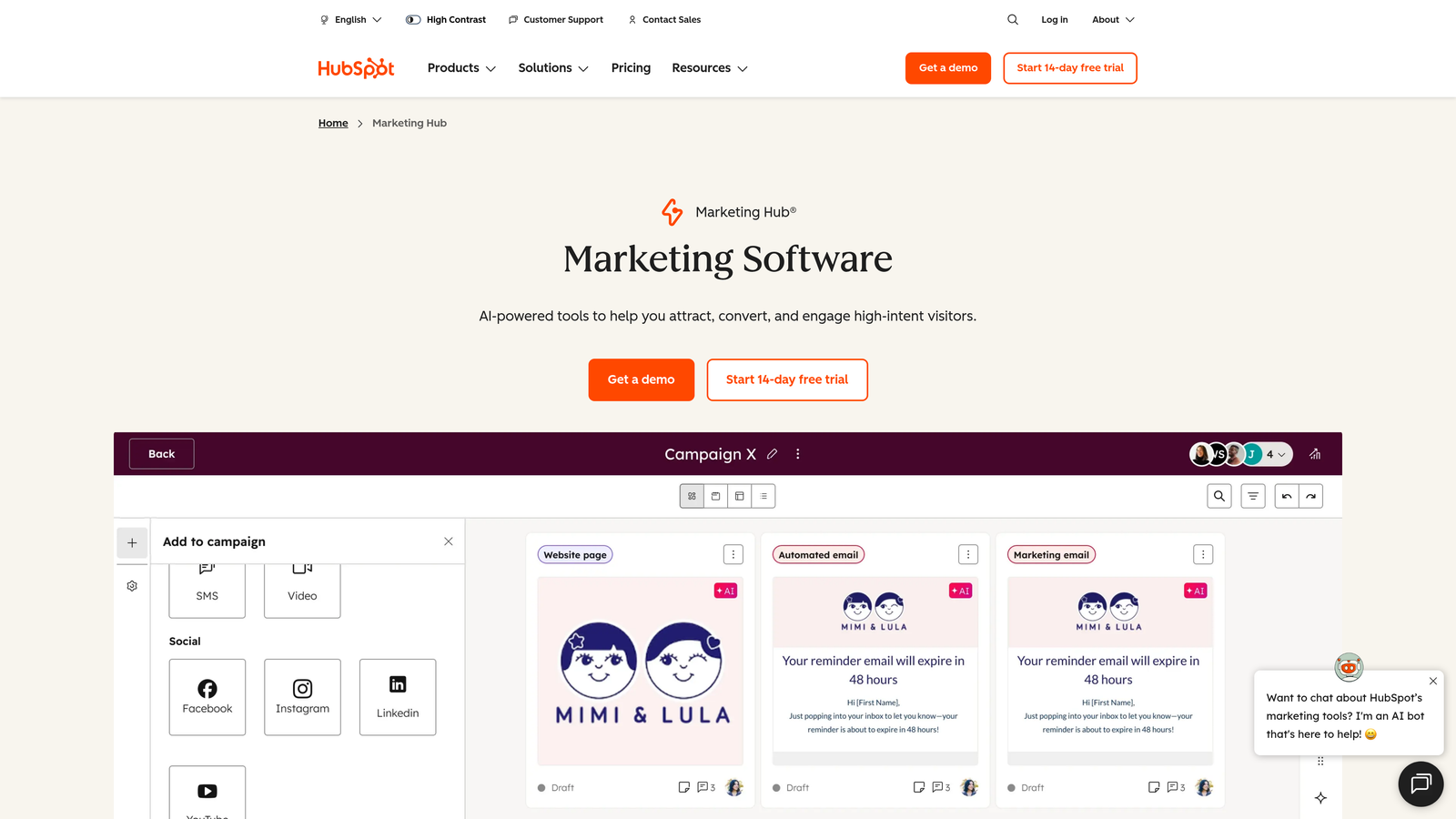
HubSpot Marketing Hub is an all-in-one marketing platform with native CRM, forms, landing pages, email automation, and lead scoring built into a single ecosystem.
Where This Tool Shines
HubSpot's primary advantage is the absence of data gaps. When a lead submits a form, that data flows directly into the CRM without a Zapier chain or manual export. Smart forms adapt based on known contact data, so returning visitors don't see fields they've already filled out. For teams that have dealt with the friction of stitching together separate tools, this native integration is genuinely valuable.
The trade-off is that most of the conversion-focused features sit behind the Professional tier, which represents a significant pricing jump. Free and Starter tiers are useful for basic use cases, but A/B testing, lead scoring, and advanced automation require Professional or above.
Key Features
Native CRM Integration: Zero data loss between form submission and contact record creation, with no third-party sync required.
Smart Forms: Forms adapt based on known contact data, reducing friction for returning visitors and improving data completeness.
Landing Page Builder with A/B Testing: Available on Professional and above, with conversion reporting built in.
Lead Scoring and Lifecycle Automation: Rule-based lead scoring with automated lifecycle stage updates based on behavior and form data.
Free Tier Available: Basic forms and CRM access at no cost, with conversion features gated behind paid tiers.
Best For
Growing companies that want to consolidate their marketing stack and are prepared to invest in a platform that scales with them. Less suitable for teams that only need a form tool and don't want to pay for a full marketing suite.
Pricing
Free CRM and basic forms are included. Starter plans begin around $20/month per seat. Professional, which unlocks most conversion features, starts around $890/month. This pricing jump is the most important consideration for teams evaluating HubSpot. Check hubspot.com for current pricing.
5. Hotjar
Best for: CRO teams and UX researchers who need behavioral data to understand why visitors aren't converting.
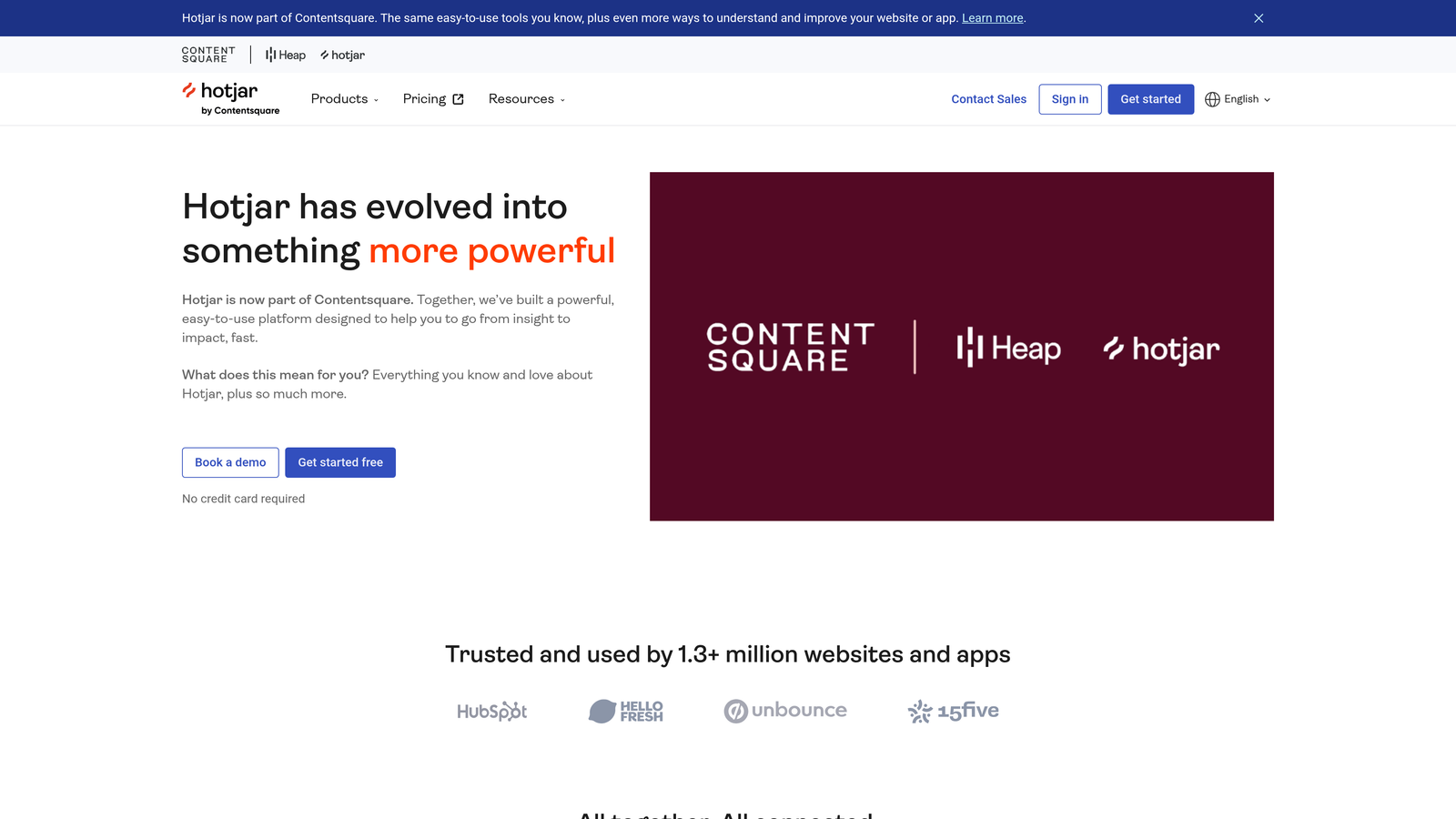
Hotjar is a behavioral analytics platform combining heatmaps, session recordings, and user surveys to reveal where and why visitors drop off.
Where This Tool Shines
Hotjar answers questions that quantitative analytics tools can't. Google Analytics tells you that a page has a high exit rate. Hotjar shows you that visitors are rage-clicking a broken button or scrolling past your CTA entirely. That qualitative layer is invaluable for diagnosing conversion problems before you start running tests.
The combination of heatmaps, session recordings, and on-site surveys in a single tool creates a feedback loop that's hard to replicate with separate tools. Conversion funnel analysis lets you pinpoint exactly which step in a multi-page flow is causing the most drop-off, which is particularly useful for teams running complex lead capture sequences.
Key Features
Heatmaps: Visual overlays showing click, scroll, and mouse movement behavior across any page on your site.
Session Recordings: Anonymized recordings of individual user sessions for qualitative conversion analysis.
Conversion Funnel Analysis: Step-by-step funnel visualization that identifies the highest drop-off points in multi-page flows.
On-Site Surveys and Feedback Widgets: Collect qualitative feedback directly from visitors at key moments in their journey.
Free Plan Available: Accessible for lower-traffic sites, with session volume limits that scale on paid plans.
Best For
CRO specialists, UX researchers, and product teams that need to understand user behavior before making optimization decisions. Works best as a complement to a testing tool rather than a standalone conversion platform.
Pricing
Session-based pricing with a free plan available. Paid plans start around $32/month, scaling with daily session volume. Teams with high-traffic sites should model costs carefully before committing. Check hotjar.com for current tiers.
6. Optimizely
Best for: Enterprise teams running sophisticated full-stack experimentation programs at scale.
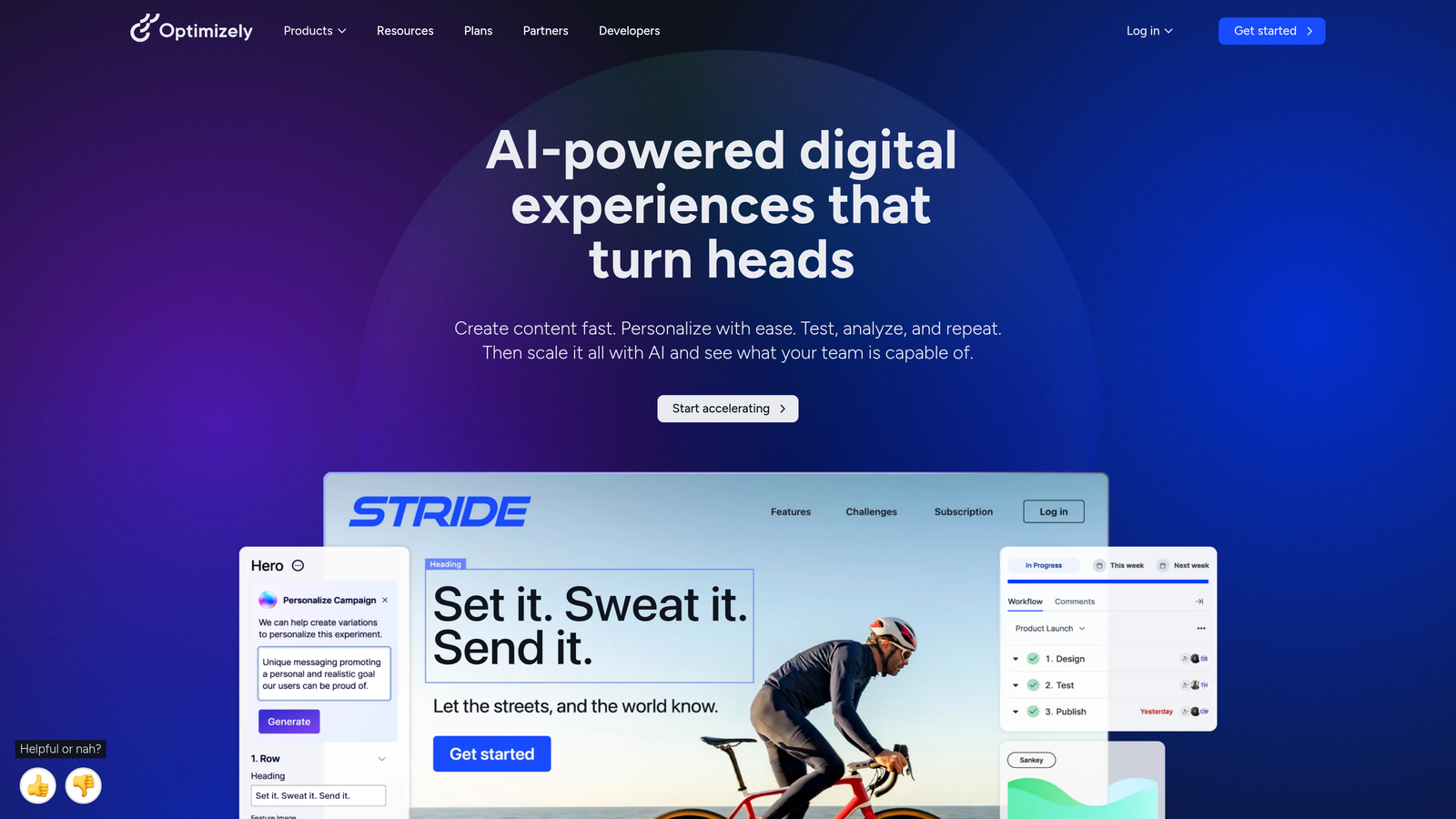
Optimizely is an enterprise experimentation platform built for full-stack A/B testing, feature flagging, and personalization at scale.
Where This Tool Shines
Optimizely is in a different category from most tools on this list. It's not a form builder or a landing page tool. It's an experimentation infrastructure platform for organizations that run testing programs as a core business discipline. The full-stack capabilities mean experiments can run across web, mobile, and server-side simultaneously, with a statistical engine rigorous enough to satisfy data science teams.
Feature flagging for controlled rollouts and a personalization engine with audience segmentation make Optimizely a genuine enterprise-grade platform. If your organization is running dozens of concurrent experiments and needs governance, audit trails, and cross-functional collaboration tools, Optimizely is built for that environment.
Key Features
Full-Stack and Web Experimentation: Run tests across web, mobile, and server-side in a unified platform with consistent statistical methodology.
Feature Flagging: Controlled feature rollouts with the ability to target specific audience segments and roll back instantly.
Personalization Engine: Audience segmentation and targeting for delivering differentiated experiences at scale.
Statistical Significance Engine: Rigorous test analysis with configurable confidence thresholds and sequential testing options.
Content and Commerce Modules: Experimentation capabilities that extend into content management and e-commerce contexts.
Best For
Enterprise product, engineering, and growth teams with dedicated experimentation programs. Not suitable for small teams or early-stage companies that don't have the volume or infrastructure to support full-stack testing.
Pricing
Custom, quote-based pricing that is not publicly listed. This signals clear enterprise positioning. Contact Optimizely directly for pricing, and expect a sales process rather than a self-serve signup. Check optimizely.com for contact options.
7. ConvertFlow
Best for: E-commerce and SaaS marketers who want segment-based personalization across popups, quizzes, and multi-step funnels.
ConvertFlow is a funnel personalization platform for building targeted popups, CTAs, quizzes, and multi-step forms based on visitor segments.
Where This Tool Shines
ConvertFlow's strength is personalization without engineering dependency. Marketers can build multi-step funnels that adapt based on visitor attributes, CRM data, or behavioral triggers, all without writing a line of code. Product recommendation quizzes, lead qualification flows, and segmented popup campaigns are all achievable through the visual builder.
The visitor-based pricing model is transparent and predictable, which makes it easier to budget for than tools that charge by conversion event or feature access. The free plan with visitor limits provides a genuine way to test the platform before committing.
Key Features
Segment-Based Personalization: Deliver different CTAs, popups, and form experiences based on visitor attributes, behavior, or CRM data.
Multi-Step Funnel Builder: Build quizzes, surveys, and product recommenders that guide visitors through personalized paths.
CTA and Popup Builder: Behavioral triggers and display rules give marketers granular control over when and where campaigns appear.
Native CRM and Email Integrations: Connects directly to major platforms, reducing the need for intermediary tools.
Free Plan Available: Visitor-limited free tier for teams that want to evaluate the platform before purchasing.
Best For
E-commerce brands and SaaS marketers who want to deliver personalized on-site experiences without relying on developers. Particularly strong for teams running product recommendation flows or multi-step lead qualification quizzes.
Pricing
Visitor-based pricing starting around $29/month. Free plan available with monthly visitor limits. Costs scale with traffic volume, so high-traffic sites should review the pricing tiers carefully. Check convertflow.com for current rates.
8. Leadpages
Best for: SMBs and solopreneurs who want unlimited landing pages at a predictable flat monthly rate.
Leadpages is a landing page and lead capture platform with flat-rate pricing, a genuine differentiator in a category where most tools charge by page or conversion volume.
Where This Tool Shines
Flat-rate pricing is rarer than it should be in the conversion tool category. Most platforms tie costs to usage volume, which creates budget unpredictability as campaigns scale. Leadpages charges a flat rate regardless of how many landing pages you publish or how many leads you capture, which makes it significantly easier to budget for.
The platform covers the essentials well: a drag-and-drop builder, conversion-focused templates, alert bars, and popup forms. Lead magnet delivery and opt-in page tools make it particularly useful for content marketers and course creators building email lists. A/B testing is available on higher tiers for teams that want to optimize beyond the baseline.
Key Features
Unlimited Landing Pages: All paid plans include unlimited published pages, with no per-page or per-lead charges.
Drag-and-Drop Builder: Conversion-focused templates with a visual editor that requires no technical skills.
Alert Bars and Popup Forms: Built-in on-site conversion tools that extend beyond standard landing pages.
Lead Magnet Delivery: Automated delivery of downloadable assets directly from the platform, without needing a separate email tool for that step.
A/B Testing: Available on higher-tier plans for teams that want to test page variants systematically.
Best For
Small businesses, solopreneurs, and content creators who need a reliable landing page platform without variable pricing risk. Also a strong choice for agencies managing multiple client campaigns who want predictable costs across a large number of pages.
Pricing
Flat-rate pricing starting around $37/month billed annually. No per-page or per-lead charges at any tier. Check leadpages.com for current plan details.
9. VWO (Visual Website Optimizer)
Best for: CRO teams that want A/B testing, heatmaps, session recordings, and surveys in a single modular platform.
VWO is a modular CRO platform combining A/B testing, multivariate testing, heatmaps, session recordings, and on-site surveys in one tool.
Where This Tool Shines
VWO's modular structure is its most practical advantage. Teams can activate the capabilities they actually need rather than paying for a monolithic platform where half the features go unused. A/B testing, split URL testing, and multivariate testing are all available alongside behavioral analytics tools that would typically require a separate Hotjar subscription.
The MTU-based pricing model (monthly tested users) is worth understanding before signing up. Unlike session-based or conversion-based pricing, MTUs represent the number of unique users included in your experiments each month. For high-traffic sites, this can become a meaningful cost driver, but the free plan provides a genuine starting point for lower-volume teams.
Key Features
A/B, Split URL, and Multivariate Testing: Multiple testing methodologies in a single platform, covering most standard CRO use cases.
Built-In Heatmaps and Session Recordings: Behavioral analytics without needing a separate tool, reducing stack complexity and cost.
On-Site Surveys: Qualitative feedback collection integrated directly with the testing platform for richer analysis.
Personalization and Segmentation: Audience targeting capabilities for delivering differentiated experiences to specific visitor segments.
Free Plan Available: Accessible for sites below a defined MTU threshold, making it viable for smaller teams to evaluate the platform properly.
Best For
In-house CRO teams and digital marketing agencies that want a comprehensive testing and analytics platform without managing multiple tool subscriptions. The modular structure suits teams with evolving needs who want to expand capabilities over time.
Pricing
MTU-based pricing with a free plan for low-traffic volumes. Paid plans start around $199/month, scaling with monthly tested user volume. Check vwo.com/pricing for current tiers and MTU thresholds.
Which Conversion Tool Is Right for Your Team?
The right tool depends less on which platform has the longest feature list and more on which pricing model fits how your team actually grows. Here's a quick way to think through the decision.
Form-first SaaS and B2B teams: If your primary conversion challenge is capturing and qualifying leads at the top of the funnel, Orbit AI is the most focused solution. The AI-native lead qualification built into the form layer means you're not paying for a form tool and a scoring tool separately, and you're not managing a fragile integration between them.
Paid media and landing page teams: Unbounce and Leadpages both serve this use case well, with meaningfully different pricing philosophies. Unbounce's conversion-based pricing makes sense if you're optimizing for cost-per-acquisition. Leadpages' flat rate is the better choice if you're managing a large volume of campaigns and want predictable monthly costs.
CRO specialists: VWO offers the most complete toolkit at a transparent price point. Hotjar is the right complement if you want behavioral analytics to inform your testing hypotheses before you run experiments.
Enterprise experimentation teams: Optimizely is in a category of its own for organizations running full-stack experimentation programs. The custom pricing reflects the scale and sophistication of the platform.
All-in-one platform buyers: HubSpot Marketing Hub is the strongest choice for teams that want forms, CRM, email, and landing pages in a single system, provided they're prepared for the Professional-tier pricing that unlocks most of the conversion-focused features.
If you're building or refining your lead generation stack and want to start with the form layer, Start building free forms today with Orbit AI and see how intelligent form design and built-in lead qualification can elevate your entire conversion strategy.


