

When your organization handles thousands of form submissions per month across multiple departments, a basic form tool simply won't cut it. Enterprise teams need builders that deliver robust security compliance, granular user permissions, deep integrations with existing tech stacks, and the ability to scale without breaking under pressure.
With dozens of platforms claiming enterprise readiness, choosing the right one means cutting through the marketing noise. We evaluated these enterprise form builders based on the criteria that matter most to large organizations: security and compliance certifications (SOC 2, HIPAA, GDPR), admin controls and team management, integration depth with CRMs and ERPs, scalability under heavy traffic, lead qualification capabilities, and total cost of ownership at scale.
Whether you're replacing a legacy system or standardizing forms across a growing organization, here's where each platform truly excels.
1. Orbit AI
Best for: High-growth teams prioritizing lead qualification, conversion optimization, and modern form design.
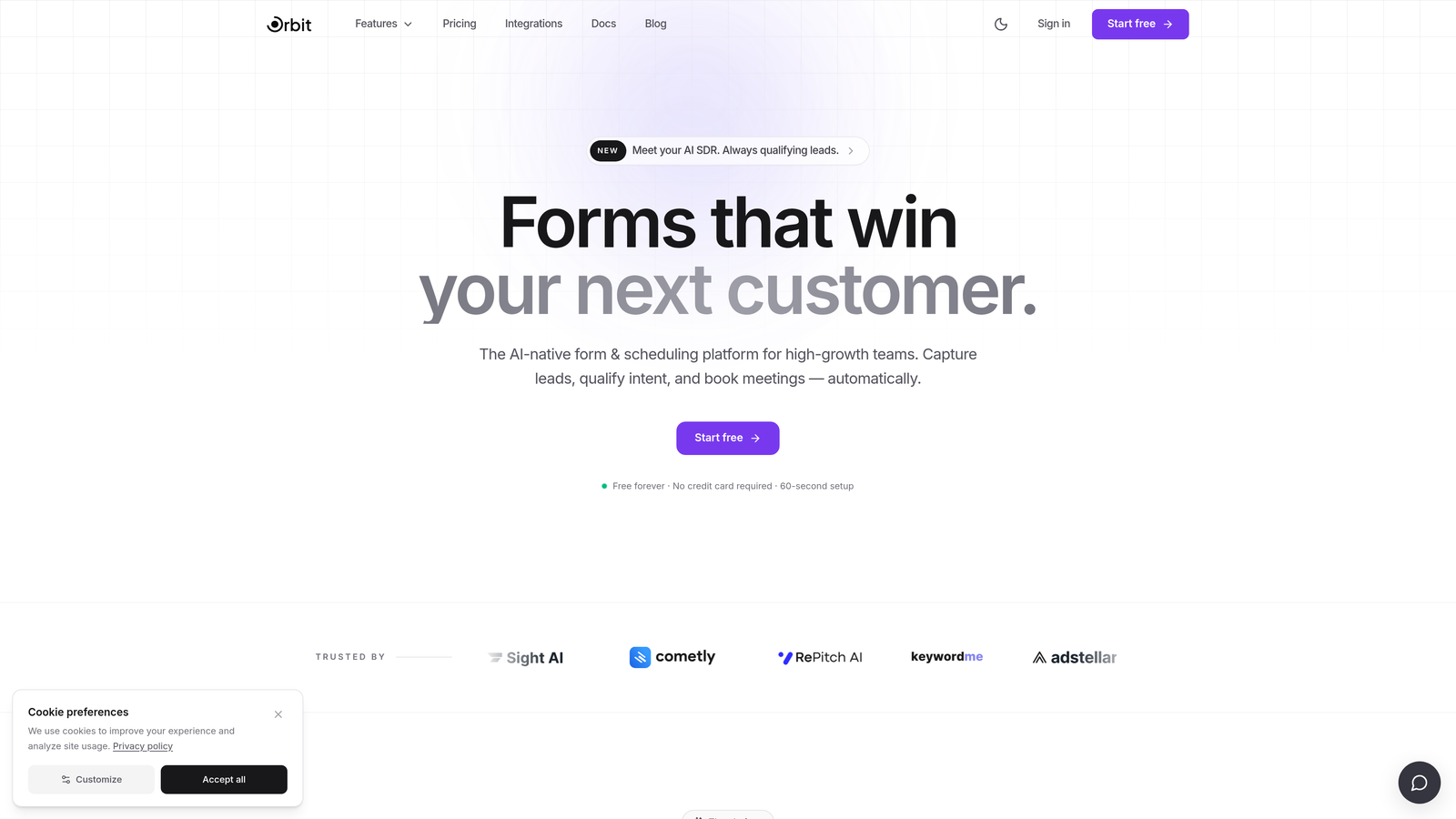
Orbit AI is an AI-powered form builder platform built specifically for teams that treat form submissions as a revenue channel, not just a data collection exercise.
Where This Tool Shines
What sets Orbit AI apart from legacy enterprise form tools is its native AI layer. Rather than bolting on analytics as an afterthought, Orbit AI builds lead qualification and scoring directly into the form submission process. This means your sales team receives pre-qualified leads with context, not just raw form data they have to manually sort through.
The platform also takes a distinctly modern approach to form design. Where many enterprise tools prioritize functionality over aesthetics, Orbit AI delivers conversion-optimized templates that look polished enough for high-stakes customer-facing use cases, from enterprise demo requests to partner onboarding flows.
Key Features
AI-Powered Lead Qualification: Automatically scores and routes leads based on form submission data, reducing manual triage for sales teams.
Conversion-Optimized Templates: Pre-built form templates engineered for high completion rates across common enterprise use cases.
Responsive, Polished Design: Modern visual layouts that maintain brand consistency across devices without requiring a designer.
CRM and Marketing Automation Integrations: Native connections with major CRM and marketing automation platforms to keep data flowing across your stack.
Real-Time Analytics Dashboard: Submission intelligence reporting that surfaces trends, drop-off points, and lead quality signals in real time.
Best For
SaaS companies and high-growth B2B teams that want their form infrastructure to actively contribute to pipeline generation. Particularly strong for marketing and revenue operations teams who are tired of manually scoring inbound leads from generic form submissions.
Pricing
Enterprise pricing is available on request. A free tier is available for smaller teams getting started, making it accessible to evaluate before committing at scale.
2. Typeform
Best for: Organizations prioritizing respondent engagement and high form completion rates through conversational UX.
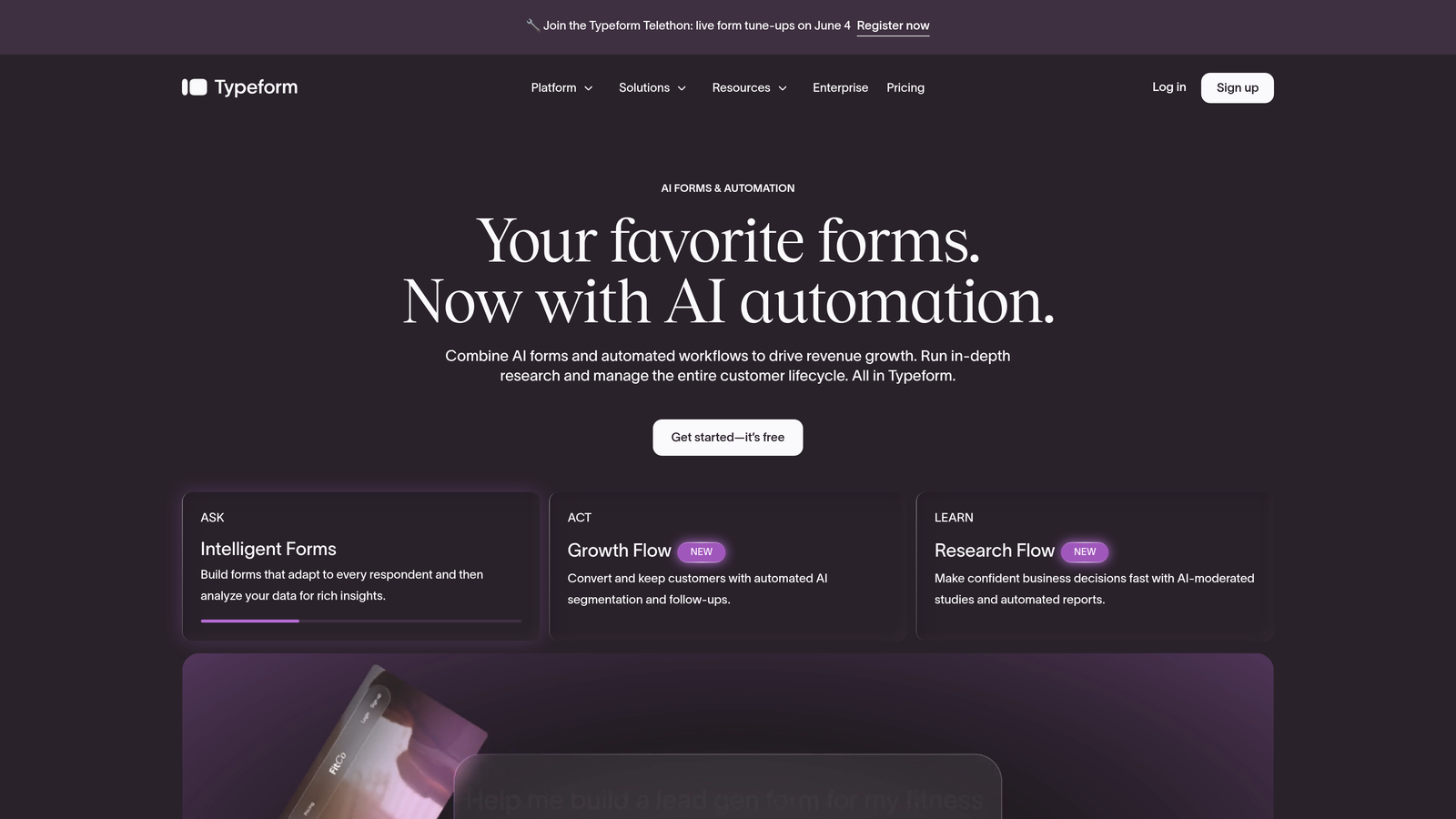
Typeform is a conversational form builder that presents one question at a time, creating an experience closer to a dialogue than a traditional form.
Where This Tool Shines
Typeform's core strength is its ability to reduce form abandonment through its signature one-question-at-a-time format. For enterprise teams running surveys, NPS programs, or customer research at scale, this format tends to produce more thoughtful responses and higher completion rates compared to traditional multi-field forms.
The enterprise plan adds the governance features large organizations require: single sign-on, custom data retention policies, and priority support. Brand kit support also makes it straightforward to deploy consistent, on-brand forms across departments without each team building from scratch.
Key Features
Conversational Form Flow: One-question-at-a-time interface that reduces cognitive load and improves completion rates.
Brand Kit Customization: Apply consistent fonts, colors, and logos across all forms at the organizational level.
Logic Jumps and Conditional Branching: Dynamic question routing based on respondent answers for personalized form experiences.
Native Integrations: Pre-built connections with HubSpot, Salesforce, Slack, and dozens of other enterprise tools.
Enterprise SSO and Data Retention: Security controls including single sign-on and configurable data retention for compliance needs.
Best For
Enterprise teams running customer research, employee surveys, or lead generation campaigns where respondent experience and completion rate are top priorities. Less ideal for complex multi-department workflow automation.
Pricing
Enterprise plan pricing is available on request. The Business plan starts at $99/month for teams that don't yet need full enterprise controls.
3. Jotform Enterprise
Best for: Organizations requiring dedicated infrastructure, data residency options, and extensive template variety.
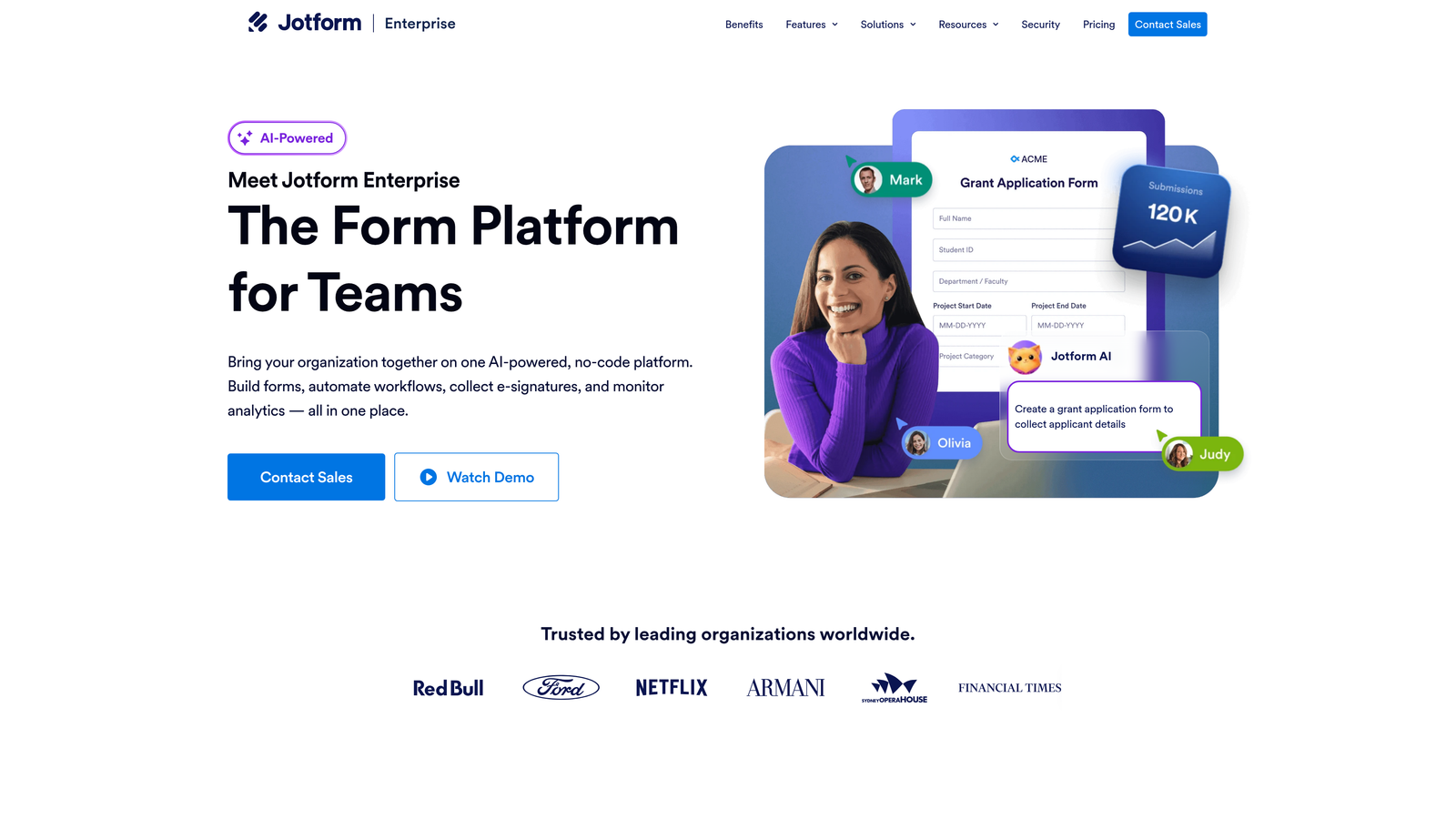
Jotform Enterprise is a dedicated enterprise form platform offering private cloud or on-premise deployment with white-labeling and local data residency.
Where This Tool Shines
Jotform Enterprise's infrastructure flexibility is its standout differentiator. For organizations in regulated industries or regions with strict data sovereignty requirements, the ability to deploy on a dedicated server with a custom domain and local data residency is a significant compliance advantage that many competitors can't match without significant custom work.
The platform's template library is also genuinely impressive in scale. With over 10,000 templates spanning industries from healthcare to education to financial services, enterprise teams can standardize form creation across departments without starting from scratch every time.
Key Features
Dedicated Server Deployment: Private cloud or on-premise options with custom domain and full white-labeling for brand consistency.
Local Data Residency: Data storage in specific geographic regions to meet regulatory and compliance requirements.
10,000+ Templates: Extensive pre-built template library with drag-and-drop customization for rapid deployment.
HIPAA and SOC 2 Compliance: Certifications available for healthcare and enterprise security requirements.
Multi-User Admin Dashboard: Granular access controls and centralized admin management for large teams.
Best For
Healthcare organizations, government agencies, and enterprises in regulated industries where data residency and dedicated infrastructure are non-negotiable requirements.
Pricing
Enterprise pricing is available through custom quotes. Standard plans start from $39/month for teams evaluating the platform before moving to enterprise tiers.
4. Formstack
Best for: Enterprises looking to consolidate forms, document generation, and e-signatures into a single workflow platform.
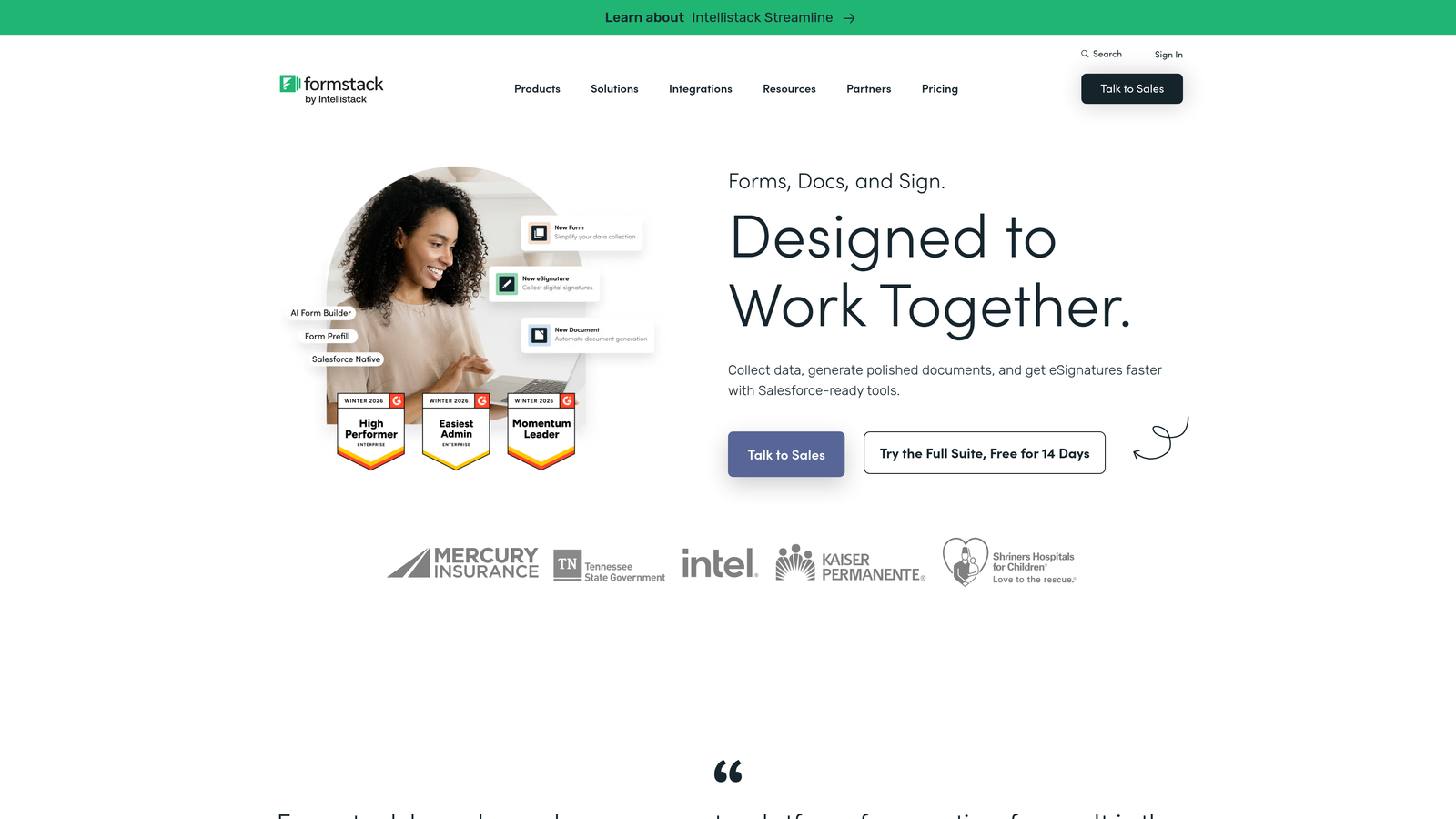
Formstack is a workplace productivity platform that combines form building, document generation, and electronic signatures into unified digital workflows.
Where This Tool Shines
Formstack's differentiation lies in its suite approach. Rather than just collecting form data, it connects that data directly to document generation and signature workflows. For enterprise teams managing contracts, onboarding packets, or approval processes, this eliminates the need to stitch together multiple point solutions.
Its Salesforce-native app, available on AppExchange, is particularly valuable for Salesforce-centric organizations that want form data flowing directly into their CRM without middleware. The built-in A/B testing capability also gives marketing and operations teams a way to optimize form performance without needing separate testing tools.
Key Features
Integrated Forms, Documents, and Sign: Full suite covering data collection, document generation, and e-signature in one platform.
Workflow Automation: Conditional routing and approval workflows that move data through multi-step processes automatically.
Compliance Certifications: HIPAA, GDPR, and SOC 2 compliance options for regulated enterprise environments.
Salesforce-Native App: AppExchange integration for deep, native Salesforce data connectivity.
A/B Testing: Built-in form conversion testing to optimize submission rates without additional tooling.
Best For
Mid-to-large enterprises that need to automate end-to-end document workflows, particularly those already invested in Salesforce who want tighter native integration.
Pricing
Enterprise plans are available with custom pricing. The Forms product starts at $99/month for teams not yet requiring the full suite.
5. Microsoft Power Apps (Dataverse Forms)
Best for: Organizations already running Microsoft 365 or Dynamics 365 that need forms deeply embedded in their existing ecosystem.
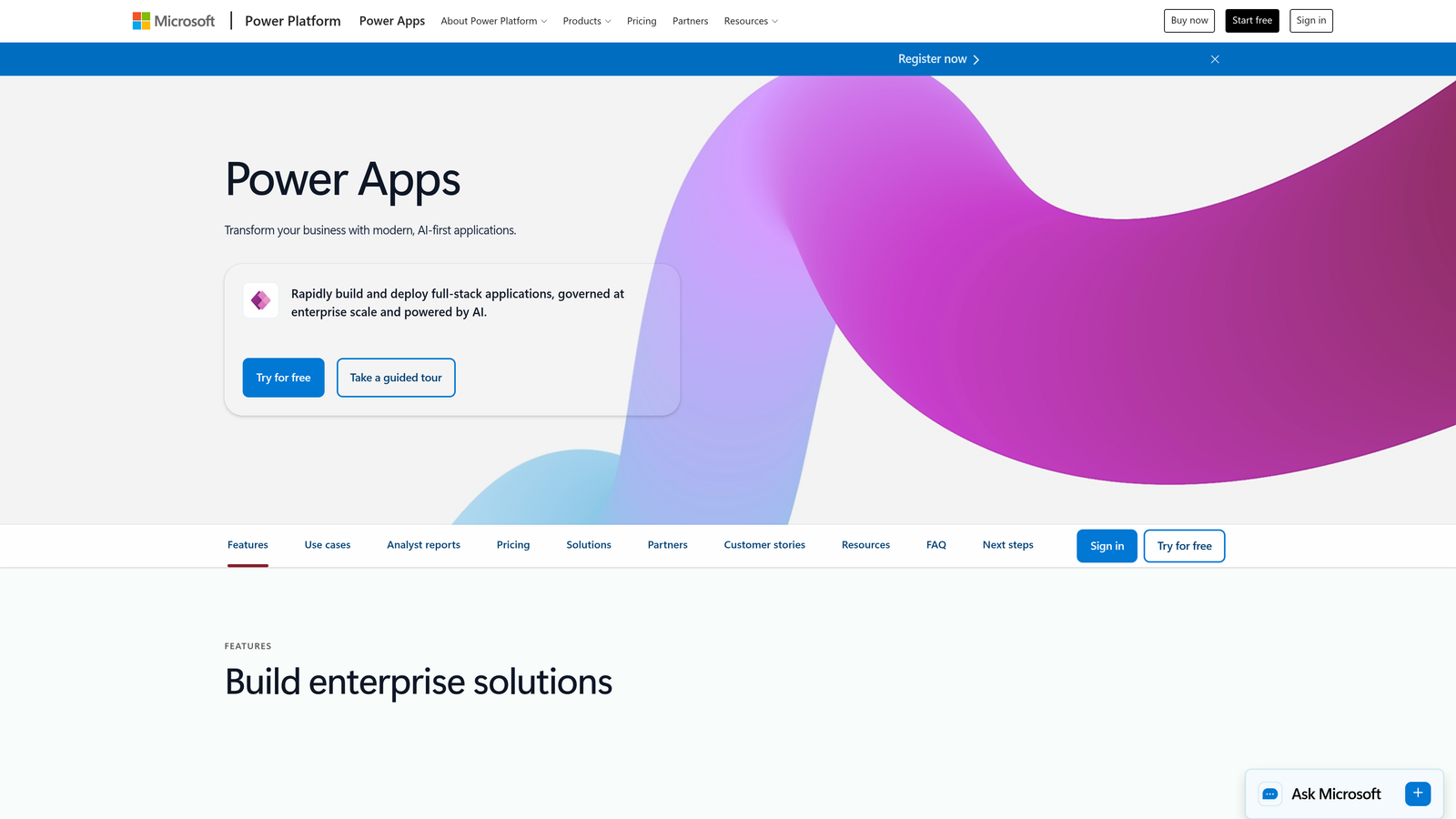
Microsoft Power Apps is a low-code application platform that enables enterprise form creation with native integration across the entire Microsoft technology stack.
Where This Tool Shines
For organizations already operating within the Microsoft ecosystem, Power Apps offers a level of native integration that standalone form tools simply cannot replicate. Forms connect directly to SharePoint, Teams, Dynamics 365, and Azure Active Directory without custom API work, making it the path of least resistance for IT departments managing large Microsoft deployments.
The Dataverse backend provides structured enterprise data storage that goes well beyond what most form tools offer, enabling complex relational data models and enterprise-grade governance. Combined with Power Automate for workflow processing, it becomes a genuinely powerful platform for complex form-driven processes.
Key Features
Native M365 Integration: Direct connections to SharePoint, Teams, Dynamics 365, and Azure AD without middleware.
Model-Driven and Canvas Forms: Flexible form building approaches to match different complexity levels and use cases.
Azure Compliance Certifications: Enterprise-grade security backed by Microsoft's extensive Azure compliance portfolio.
Power Automate Workflows: Native workflow automation for form submission processing and approval routing.
Dataverse Backend: Structured enterprise data storage with relational modeling for complex data requirements.
Best For
Large enterprises with existing Microsoft 365 or Dynamics 365 agreements where licensing can often be bundled. Less suitable for organizations outside the Microsoft ecosystem or those needing rapid, no-code deployment without IT involvement.
Pricing
Per-user licensing starts at $20/user/month and is frequently bundled with existing M365 enterprise agreements, which can significantly reduce incremental cost.
6. Cognito Forms
Best for: Data-intensive enterprise use cases requiring advanced calculation logic, complex data structures, and built-in payment processing.
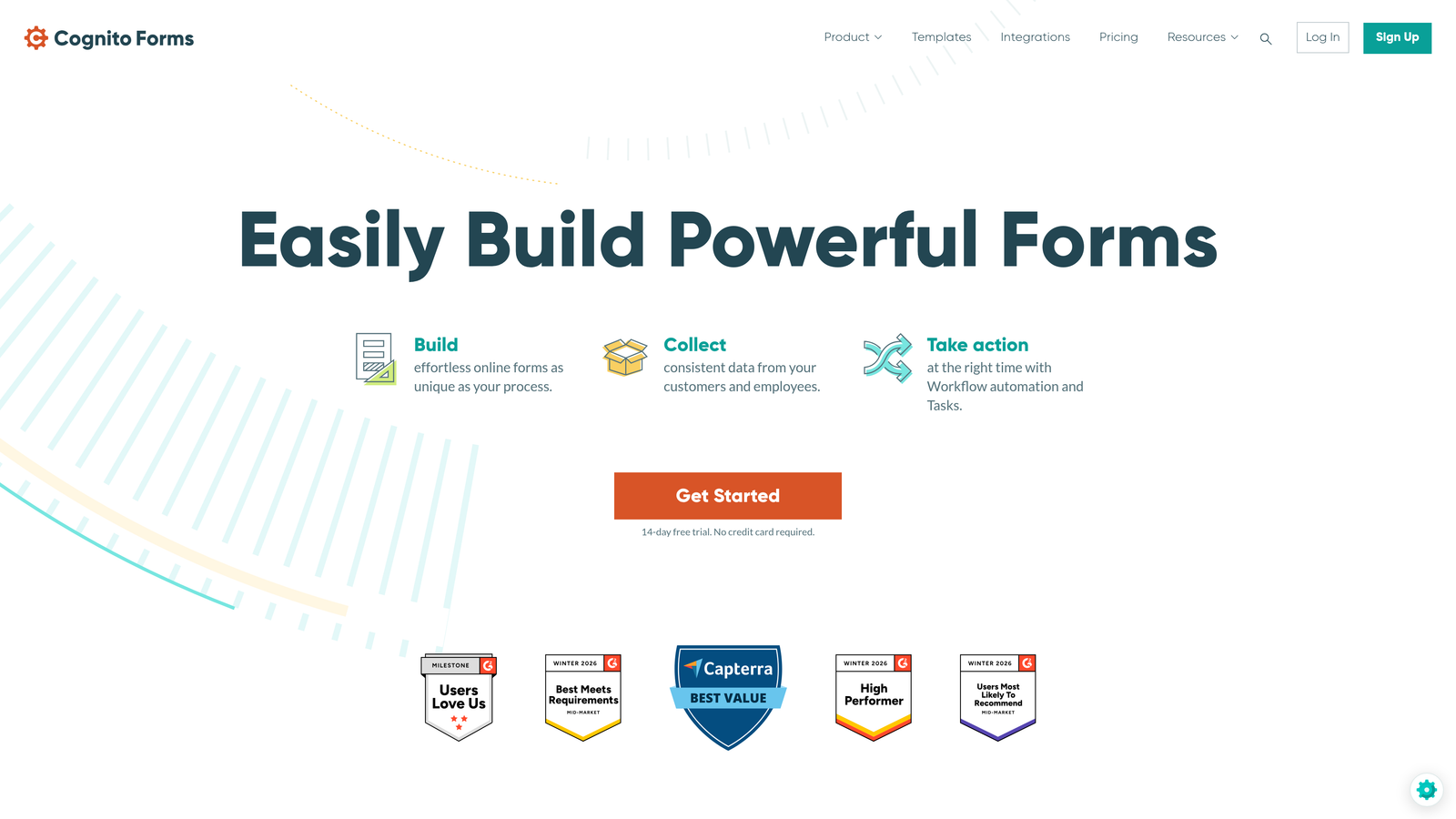
Cognito Forms is a form builder with sophisticated calculation logic and repeating sections, designed for organizations that need to collect and process complex, structured data.
Where This Tool Shines
Cognito Forms occupies a distinct niche in the enterprise form market: complex data collection with built-in computational logic. Its repeating sections feature allows forms to dynamically expand based on respondent input, making it well-suited for use cases like multi-line order forms, expense reports, or detailed project intake forms where the number of entries varies per submission.
The built-in payment processing integration with Stripe, PayPal, and Square is another differentiator. For enterprises collecting fees, deposits, or processing transactions alongside form data, this eliminates the need to connect a separate payment platform.
Key Features
Advanced Calculation Fields: Formula-based logic for automatic totals, scoring, and quantitative computations within forms.
Repeating Sections: Dynamic form sections that expand to accommodate variable numbers of entries per submission.
Built-In Payment Processing: Native Stripe, PayPal, and Square integration for transaction processing alongside data collection.
Role-Based Access Controls: Organizational permissions and team management for enterprise deployments.
HIPAA Compliance: Healthcare compliance available on the enterprise tier for regulated data collection.
Best For
Finance, operations, and procurement teams managing complex data collection workflows where calculation logic and dynamic data structures are requirements, not nice-to-haves.
Pricing
The Enterprise plan is priced at $99/month. The Team plan starts at $29/month for organizations evaluating the platform at smaller scale.
7. FormAssembly
Best for: Salesforce-centric enterprises requiring bidirectional data mapping, prefill capabilities, and comprehensive compliance certifications.
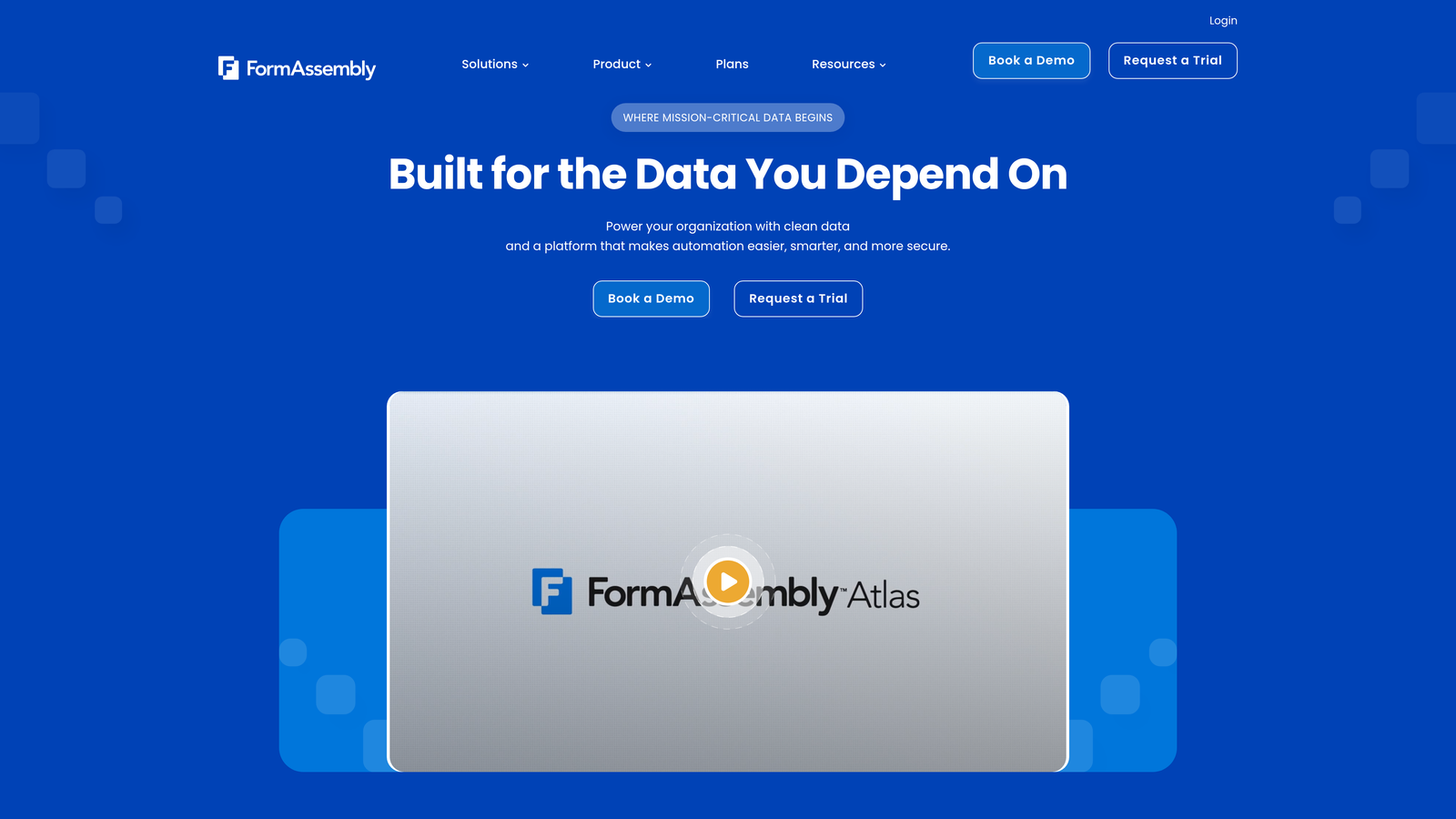
FormAssembly is an enterprise form platform purpose-built for organizations running Salesforce as their core system of record.
Where This Tool Shines
FormAssembly's Salesforce integration is widely regarded as the deepest available among dedicated form builders. The platform supports multi-object mapping, meaning a single form submission can simultaneously create or update multiple Salesforce objects, such as a Contact, Opportunity, and custom object, in a single transaction. This level of integration depth eliminates significant manual data work for Salesforce admins.
The prefill capability is equally valuable: forms can be pre-populated with existing Salesforce data, reducing friction for returning customers or internal users completing process forms. On the compliance side, FormAssembly's certifications span SOC 2 Type II, HIPAA, GDPR, and PCI DSS, making it one of the more comprehensively certified options in the market.
Key Features
Multi-Object Salesforce Mapping: Bidirectional data sync that creates and updates multiple Salesforce objects from a single form submission.
Salesforce Prefill: Automatically populate form fields with existing Salesforce record data to reduce friction.
Comprehensive Compliance: SOC 2 Type II, HIPAA, GDPR, and PCI DSS certifications for regulated enterprise requirements.
Workflow Approvals and Routing: Conditional logic and approval chains for multi-step process automation.
Centralized Admin Console: Enterprise governance tools for managing forms, users, and permissions at scale.
Best For
Salesforce-heavy enterprises in financial services, healthcare, or higher education where compliance certifications and deep CRM integration are both required. Less compelling for organizations not using Salesforce as their primary CRM.
Pricing
Enterprise tier pricing is available on request. The Compliance Cloud plan starts around $299/month, reflecting the premium compliance certifications included.
8. Feathery
Best for: Product and engineering teams embedding custom form flows directly into SaaS applications with code-level control.
Feathery is a developer-friendly form builder with a React SDK and visual editor, designed for product teams who need both design flexibility and technical depth.
Where This Tool Shines
Feathery fills a gap that most enterprise form tools leave open: the need for forms that feel completely native to a product, not like an embedded third-party widget. Its React-based SDK allows engineering teams to integrate forms directly into their application codebase while still giving non-technical team members a visual editor for content and logic changes.
This dual-mode approach is particularly valuable for SaaS companies building onboarding flows, in-app surveys, or qualification forms that need to match their product's exact design system. The API-first architecture also makes it straightforward to connect to custom internal systems that don't have pre-built integrations.
Key Features
React SDK: Embed forms natively into React applications with full code-level customization available.
Visual Drag-and-Drop Editor: Non-technical team members can manage form content and logic without developer involvement.
Multi-Step Flows with Conditional Logic: Complex branching logic for sophisticated onboarding and qualification workflows.
API-First Architecture: Custom integration support for connecting to internal systems and non-standard data destinations.
SOC 2 Compliance: Enterprise security certifications and access controls for compliant deployments.
Best For
SaaS product teams and engineering-led organizations that need form experiences indistinguishable from their core product. Less suitable for non-technical teams looking for a no-code solution they can manage independently.
Pricing
Enterprise pricing is available on request. The Growth plan starts at $49/month for teams evaluating the platform before scaling to enterprise requirements.
9. 123FormBuilder
Best for: Organizations seeking HIPAA and GDPR compliance at accessible price points with solid workflow automation capabilities.
123FormBuilder is a compliance-focused form builder that delivers HIPAA and GDPR compliance alongside conditional logic and workflow automation at a price point more accessible than many enterprise competitors.
Where This Tool Shines
123FormBuilder's value proposition centers on making enterprise-grade compliance accessible without enterprise-level pricing. For mid-market organizations that have outgrown basic form tools and need HIPAA or GDPR compliance but aren't ready to commit to the higher price tiers of platforms like FormAssembly, it offers a practical middle ground.
The platform's workflow automation capabilities, including email notifications, webhooks, and conditional routing, cover the core automation needs of most enterprise teams without requiring significant technical configuration. Integration with Salesforce and Microsoft 365 also makes it compatible with the most common enterprise tech stacks.
Key Features
HIPAA and GDPR Compliance: Compliance certifications included on enterprise plans without requiring premium add-ons.
Advanced Conditional Logic: Skip logic and branching for dynamic, personalized form experiences at scale.
Workflow Automation: Email notifications, webhooks, and conditional routing for automated submission processing.
Role-Based Team Permissions: Collaborative access controls for managing form creation and data access across departments.
Enterprise Integrations: Native connections with Salesforce, Microsoft 365, and other common enterprise platforms.
Best For
Mid-market enterprises and regulated-industry organizations that need genuine compliance certifications and workflow automation without paying the premium pricing of Tier 1 enterprise platforms.
Pricing
Enterprise plans are available with custom pricing. The Professional plan starts from $39.99/month for teams evaluating capabilities before committing to enterprise tiers.
Choosing the Right Enterprise Form Builder for Your Team
After reviewing all nine platforms, the right choice comes down to where your organization sits on a few key dimensions: your existing tech stack, your compliance requirements, and whether you're optimizing for developer control or business-user autonomy.
If you're a Salesforce-first organization with strict compliance requirements, FormAssembly's multi-object mapping and comprehensive certifications make it the most purpose-built choice. For enterprises already deep in the Microsoft ecosystem, Power Apps delivers integration depth that standalone form tools simply can't replicate, especially if licensing is already bundled into your M365 agreement.
For teams that need dedicated infrastructure and data residency options, Jotform Enterprise's private cloud deployment stands out. If workflow consolidation is the goal, combining forms, documents, and signatures, Formstack's suite approach eliminates the need to stitch together multiple tools.
Product and engineering teams building forms into SaaS applications will find Feathery's React SDK and API-first architecture uniquely suited to their needs. And for organizations where respondent experience and completion rates are the primary metric, Typeform's conversational format consistently delivers.
For high-growth B2B and SaaS teams focused on turning form submissions into qualified pipeline, Orbit AI's native lead qualification and AI-powered scoring layer addresses a gap that most traditional enterprise form builders leave entirely to downstream sales tools. The combination of intelligent lead routing, conversion-optimized design, and real-time submission intelligence makes it a strong fit for revenue-focused teams who want their form infrastructure to do more than just collect data.
The enterprise form builder market has matured significantly, and the best choice is the one that aligns with how your team actually works. Evaluate on compliance requirements first, integration depth second, and total cost of ownership across your projected user base before signing any contract.
Ready to see what AI-powered forms can do for your pipeline? Start building free forms today and experience how intelligent form design and automatic lead qualification can transform your conversion strategy from the very first submission.


