

Sales teams live and die by their pipeline. But most form builders were designed for generic data collection, not for qualifying leads, routing prospects, or triggering follow-up sequences the moment someone submits. The result? Leads go cold, reps waste time on bad-fit prospects, and conversion rates suffer.
The right form builder for a sales team does more than collect names and emails. It qualifies leads in real time, integrates with your CRM and automation stack, and helps your team focus on the deals most likely to close.
This guide covers the top form builders worth considering in 2026, starting with the tool built specifically for sales-driven lead qualification. Whether you're running outbound campaigns, gating demo requests, or optimizing your website's contact forms, there's a solution here for your team. We've evaluated each tool on lead qualification capabilities, CRM integrations, ease of setup, and overall value for sales-focused workflows.
1. Orbit AI
Best for: Sales teams that need real-time AI lead qualification and automated follow-up built in.
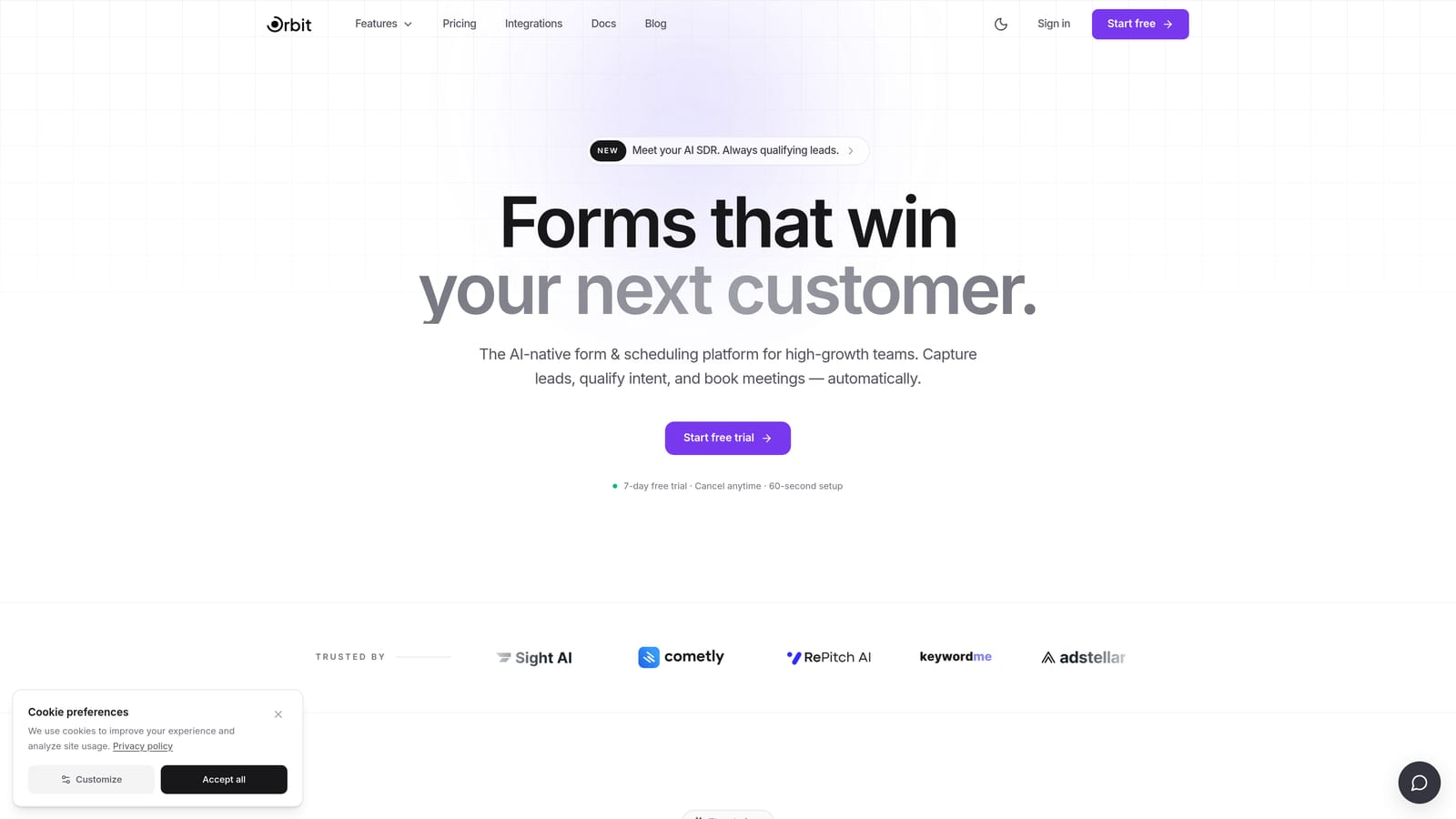
Orbit AI is an AI-powered form builder designed specifically for high-growth teams and sales-focused workflows.
Where This Tool Shines
Most form builders stop at data collection and leave the qualification work to your CRM or a patchwork of Zapier automations. Orbit AI takes a different approach: its AI agents evaluate lead quality directly from form responses, so your team knows which submissions are worth pursuing before anyone picks up the phone.
The platform also includes built-in workflows, sequences, and contact management, which means you're not just capturing leads — you're acting on them immediately. For sales teams that want a single system handling capture, qualification, and initial follow-up, this is a meaningful advantage over tools that require stitching together multiple products.
Key Features
AI Lead Qualification: AI agents assess form responses in real time and qualify leads based on your criteria, so reps focus on the best-fit prospects.
Built-in Workflows and Sequences: Automate follow-up actions triggered by form submissions without needing a separate automation tool.
Contact Management: Track, segment, and manage leads directly within the platform rather than exporting to a separate database.
Conversion-Optimized Templates: Beautifully designed form templates built with sales conversion in mind, not just aesthetics.
Analytics: Measure form performance and lead quality over time to identify which forms are driving your best pipeline.
Scheduler Integration: Let prospects book demos directly from the form, removing friction from the handoff between capture and conversation.
Best For
High-growth SaaS teams, sales ops leaders, and revenue-focused marketers who want lead qualification to happen at the form layer rather than downstream in the CRM. Particularly well-suited for teams running demo request flows, gated content, or outbound landing pages where lead quality matters as much as volume.
Pricing
Visit orbitforms.ai/pricing for current plan details. Multiple tiers are available to match different team sizes and usage levels.
2. Typeform
Best for: Teams that want a conversational, engaging form experience to improve lead capture completion rates.
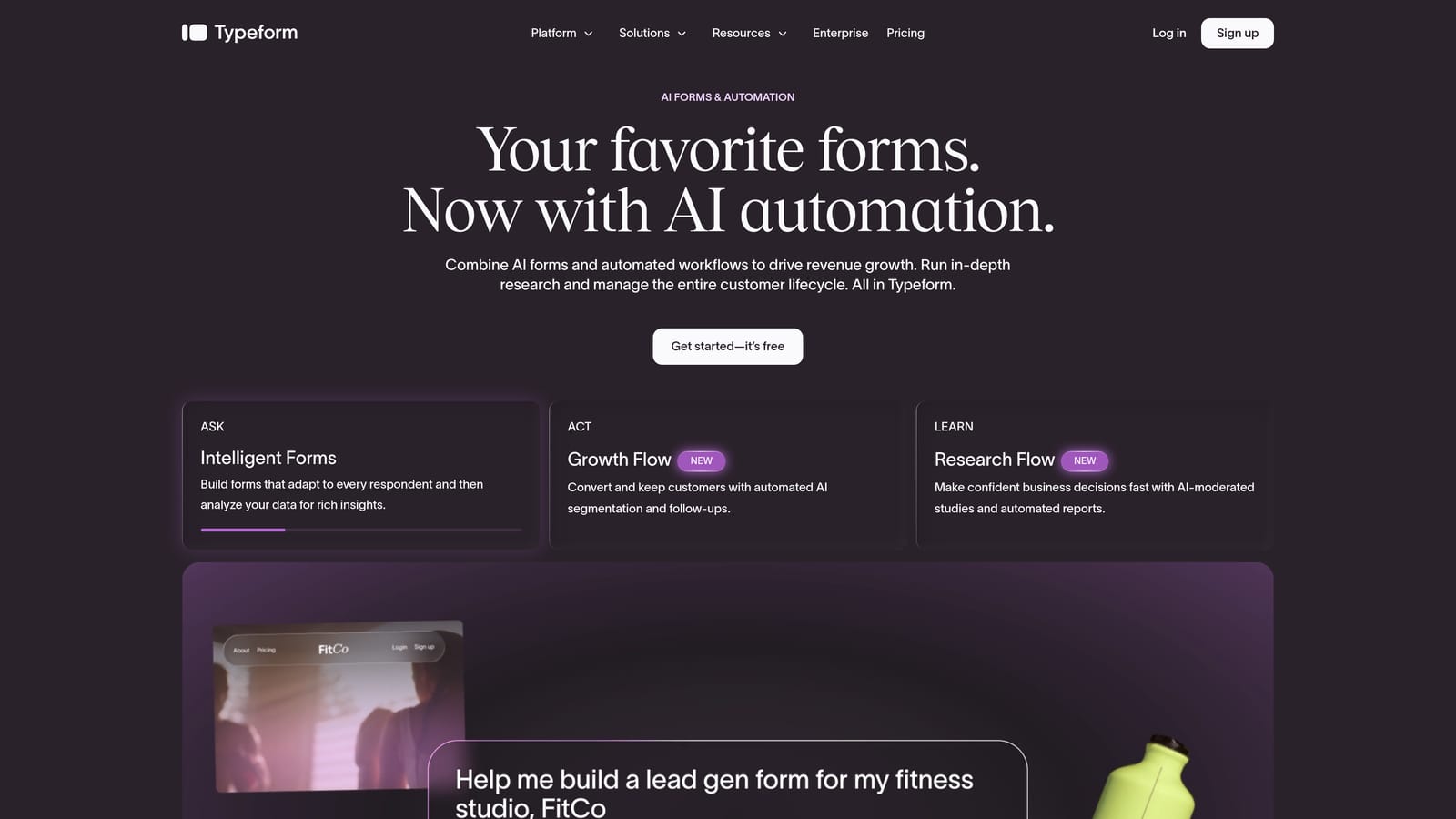
Typeform is a conversational form builder known for its one-question-at-a-time interface that makes lead capture feel less like a survey and more like a real dialogue.
Where This Tool Shines
Typeform's biggest differentiator is the experience it creates for the person filling out the form. By presenting one question at a time, it reduces the visual overwhelm that can cause drop-offs on traditional multi-field forms. For sales teams where first impressions matter, this polished UX can make a real difference in how prospects perceive your brand.
The trade-off is depth. Typeform handles basic lead routing via logic jumps and connects to HubSpot, Salesforce, and Zapier, but it's primarily a front-end UX play. Teams needing deep automation, AI qualification, or native CRM workflows will likely need to supplement it with other tools.
Key Features
Conversational Format: One-question-at-a-time interface designed to feel natural and reduce form abandonment.
Logic Jumps: Route respondents to different questions or outcomes based on their answers, enabling basic lead segmentation.
CRM Integrations: Native connections to HubSpot, Salesforce, and Zapier for pushing submissions into your existing stack.
Branded Design: Custom themes, colors, and fonts to match your company's visual identity.
Video and Image Embeds: Add multimedia elements within forms to enrich the experience for prospects.
Best For
Sales and marketing teams that prioritize form completion experience and want a polished, branded interface for lead capture. Works well for top-of-funnel forms where engagement matters most. Less suited for teams that need built-in qualification logic or advanced automation without additional integrations.
Pricing
Free plan available with limited responses. Paid plans start at approximately $25 per month, with response limits that can increase costs for high-volume teams.
3. Jotform
Best for: Sales ops teams managing complex, varied form requirements with deep conditional logic needs.
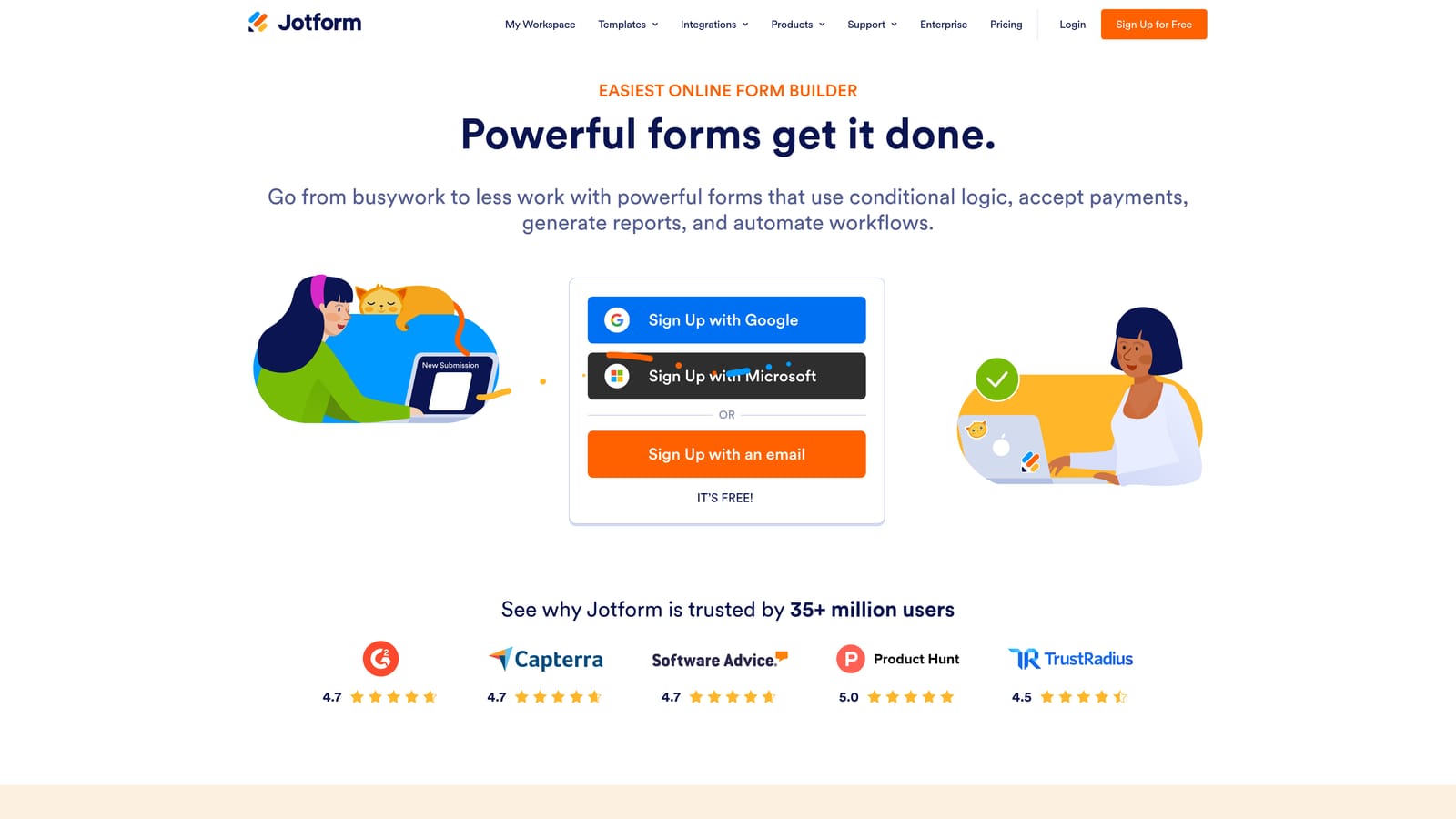
Jotform is a feature-rich form builder with thousands of templates, advanced conditional logic, and one of the broadest integration libraries in the space.
Where This Tool Shines
If your sales team needs to manage a wide variety of form types — from lead capture and event registrations to contracts and payment collection — Jotform's depth is hard to match. With over 10,000 templates and granular conditional logic, you can build sophisticated form flows without writing a line of code.
Jotform Approvals adds a multi-step workflow routing layer that's useful for sales organizations with internal review or sign-off requirements. The interface can feel dense for simple use cases, but for teams that need customization depth, that complexity is the point.
Key Features
10,000+ Templates: An extensive library including sales-focused and CRM-specific form templates to accelerate setup.
Advanced Conditional Logic: Build complex branching form flows that adapt based on respondent answers.
Jotform Approvals: Route submissions through multi-step internal approval workflows before they reach your CRM or team.
Payment and E-Signature Support: Collect payments and signatures directly within forms, useful for sales teams closing deals digitally.
Wide Integration Library: Connects to Salesforce, HubSpot, and hundreds of other tools natively or via Zapier.
Best For
Sales operations teams at mid-size companies that manage a high volume of diverse form types and need granular control over logic, routing, and integrations. Also a strong fit for teams that need payment collection or e-signatures alongside lead capture.
Pricing
Free plan available with usage limits. Paid plans start at approximately $34 per month, scaling based on submissions and features.
4. Paperform
Best for: Small sales teams building branded campaign pages and event registration forms.
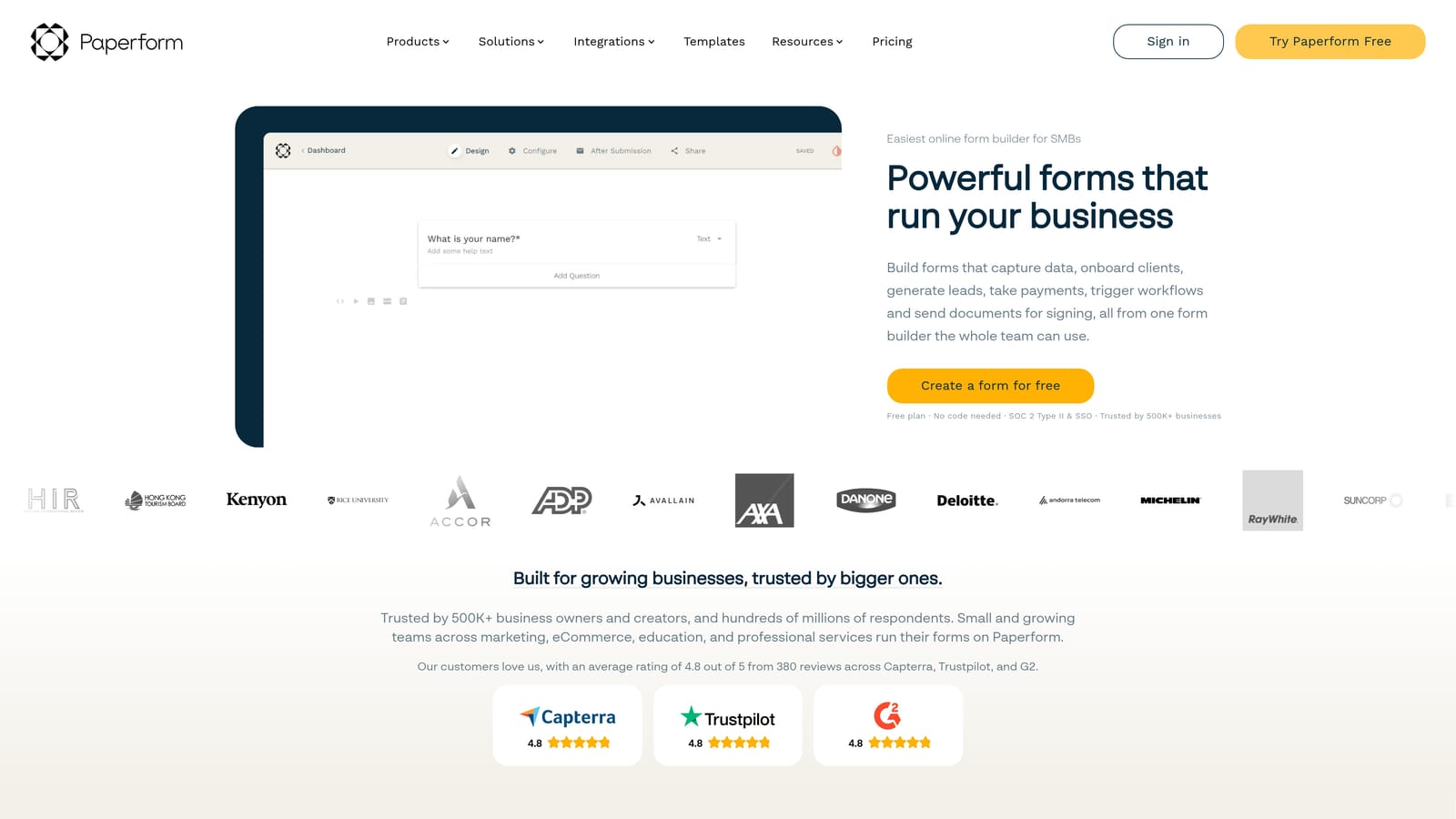
Paperform is a hybrid form builder and lightweight landing page tool that lets sales teams create editorial-style, branded forms for campaigns, demo requests, and event registrations.
Where This Tool Shines
Paperform sits in an interesting middle ground: it's more visually expressive than a traditional form builder, but simpler than a full landing page platform. The result is forms that feel like polished branded pages, which can work well for campaign-specific use cases where design quality influences trust.
Its calculation fields and product fields make it a reasonable choice for sales teams that want to include pricing estimators or product selectors within their forms. That said, it's less suited for teams that need advanced lead scoring or deep CRM-native integrations out of the box.
Key Features
Hybrid Form and Landing Page Design: Build forms that look and feel like standalone branded pages, not just embedded widgets.
Conditional Logic and Calculation Fields: Support for dynamic form behavior and numeric calculations within the form itself.
Product and Payment Fields: Useful for sales teams that want to incorporate product selection or payment collection into their forms.
Integrations via Zapier, Slack, and Notion: Connect to your existing tools through popular middleware and native integrations.
Clean Design Editor: An intuitive, flexible editor that makes it easy to match your brand without design expertise.
Best For
Small to mid-size sales teams running event registrations, campaign landing pages, or branded demo request forms. Works well when design quality is a priority and advanced qualification logic isn't required.
Pricing
No permanent free plan. Paid plans start at approximately $24 per month, with higher tiers unlocking additional integrations and form limits.
5. Tally
Best for: Early-stage sales teams that need simple, clean forms up and running quickly with minimal budget.
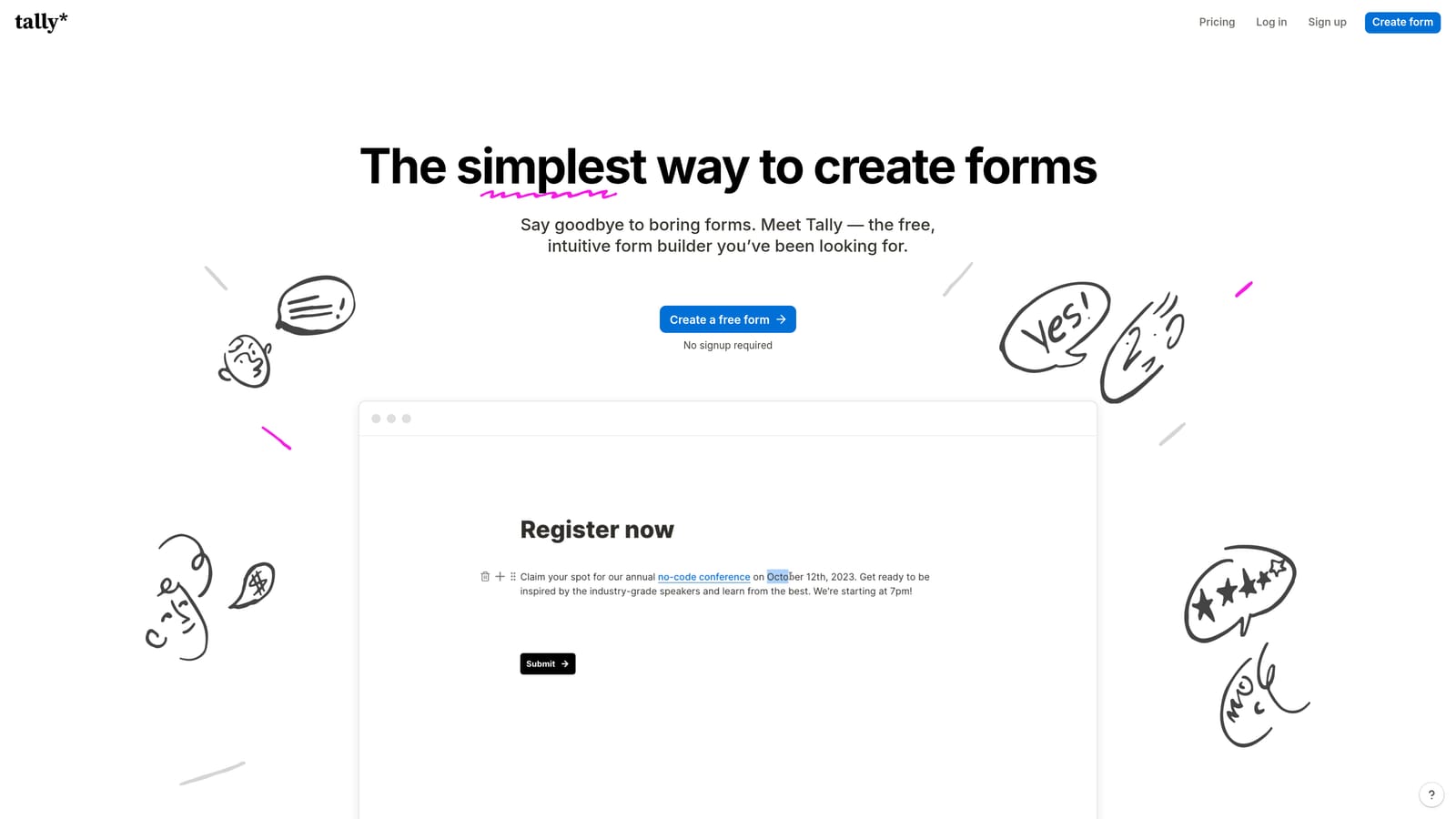
Tally is a fast, Notion-style form builder with a generous free plan and a minimal learning curve that makes it easy to launch forms without a significant time or budget investment.
Where This Tool Shines
Tally's block-based editor will feel immediately familiar to anyone who uses Notion. You can build a clean, professional-looking form in minutes, and the free plan includes no Tally branding — which is rare in this category and genuinely useful for teams that want polished forms without paying for them.
The limitations are real for sales-focused teams. Tally doesn't include native lead qualification, advanced analytics, or built-in CRM workflows. You'll need Zapier to connect it to your stack, and the automation depth is limited compared to purpose-built sales tools. But for teams in the early stages who need something functional fast, it's hard to beat the value.
Key Features
Block-Based Editor: Notion-inspired interface with a minimal learning curve — most users can build a form in under ten minutes.
Free Plan with No Branding: One of the few form builders that removes its own branding on the free tier.
Conditional Logic and Hidden Fields: Basic logic capabilities for routing and pre-populating form fields.
Zapier Integration: Connect form submissions to CRMs and other tools through Zapier automation.
Easy Embedding: Embeds cleanly into websites and landing pages without technical complexity.
Best For
Early-stage startups and small sales teams that need forms up quickly without budget constraints. A strong starting point for teams that haven't yet invested in a dedicated sales tech stack and want to validate their lead capture approach before committing to a paid platform.
Pricing
Generous free plan with core features included. Pro plan at approximately $29 per month for additional customization and integrations.
6. Formstack
Best for: Enterprise sales teams with compliance requirements and complex multi-step approval workflows.
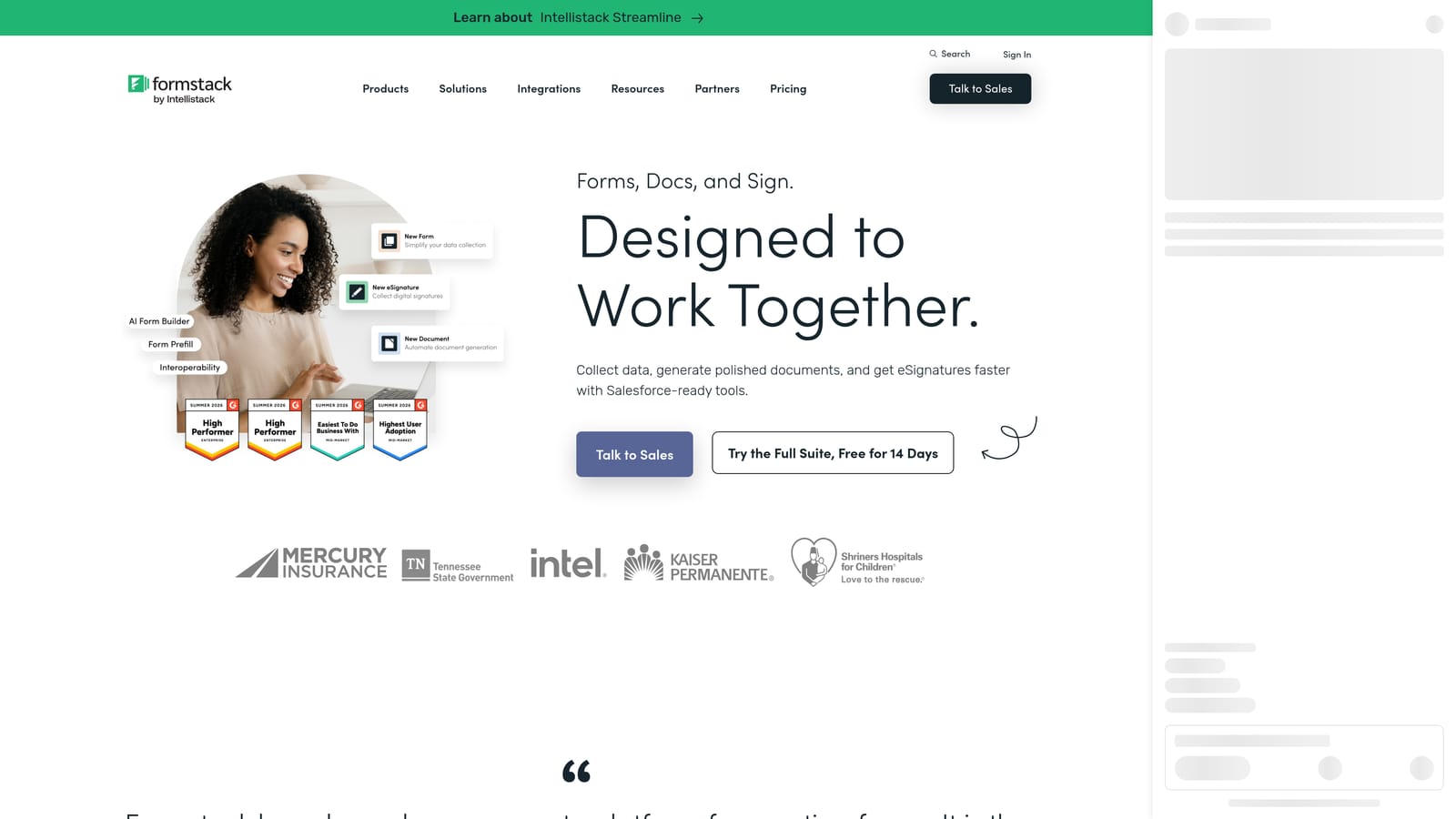
Formstack is an enterprise-grade platform combining forms, document generation, and e-signatures — built for larger sales organizations that need security, compliance, and workflow depth.
Where This Tool Shines
Formstack is the right choice when compliance isn't optional. For sales teams operating in regulated industries — healthcare, financial services, legal — having HIPAA, SOC 2, and GDPR compliance built into the platform removes a significant operational burden. You're not just collecting leads; you're doing it in a way that satisfies your legal and IT requirements.
The platform's document generation and e-signature capabilities also make it a compelling option for enterprise sales workflows where the form is just the beginning of a longer process involving proposals, contracts, and approvals. The price point reflects this enterprise positioning, making it overkill for smaller teams but well-justified for large organizations.
Key Features
Enterprise Compliance: HIPAA, SOC 2, and GDPR compliance built into the platform for regulated industries.
Document Generation and E-Signatures: Create and send documents directly from form submissions, with e-signature support built in.
Workflow Automation and Approval Routing: Multi-step approval workflows for complex internal processes tied to form submissions.
Salesforce-Native Integration: Deep, native Salesforce integration designed for enterprise CRM workflows rather than basic data passing.
Advanced Security and Data Governance: Granular access controls, audit logs, and data governance features for enterprise IT requirements.
Best For
Mid-market and enterprise sales teams in regulated industries that need compliance-grade data handling alongside their lead capture and workflow automation. Also well-suited for sales organizations where forms feed into document and contract workflows rather than just a CRM queue.
Pricing
Plans start at approximately $83 per month. Enterprise pricing is available for larger organizations with custom requirements.
Which Tool Is Right for Your Sales Team?
The best form builder for your sales team depends on where you are in your growth journey and what your pipeline actually needs.
If lead qualification is your top priority, Orbit AI is the standout choice. It's the only tool on this list with AI qualification built natively into the form layer, combined with workflows, sequences, and contact management that let your team act on submissions immediately. For high-growth teams where lead quality matters as much as volume, that's a meaningful advantage over tools that require third-party workarounds to achieve the same result.
For teams where the form experience itself drives conversions, Typeform's conversational interface is hard to beat at the front-end UX level. If you're managing a complex mix of form types and need deep customization, Jotform's breadth gives you more flexibility than almost any other option. Paperform is worth considering when you want forms that double as branded campaign pages. Tally is the fastest path to something clean and functional when budget is tight and simplicity is the goal. And for enterprise teams with compliance requirements and complex approval workflows, Formstack is built for exactly that environment.
The pattern worth noticing: most tools on this list were designed for general data collection first and adapted for sales use cases second. Orbit AI is the exception, built from the ground up for the workflows sales teams actually run.
Transform your lead generation with AI-powered forms that qualify prospects automatically while delivering the modern, conversion-optimized experience your high-growth team needs. Start building free forms today and explore the full platform at orbitforms.ai/features to see how intelligent form design can elevate your conversion strategy.


