

Your job application form is often the first real interaction a candidate has with your company. A clunky, outdated, or frustrating form doesn't just create friction — it sends a signal about your culture. In competitive hiring markets, top candidates have options, and a poor application experience can push them toward a competitor before you even see their resume.
Choosing the right job application form platform means balancing ease of use, customization depth, candidate experience, integrations with your existing ATS or HR stack, and pricing. Whether you're a lean startup hiring your first ten people or an enterprise managing thousands of applications globally, there's a platform built for your needs.
Before diving into the list, it's worth understanding what makes a form work in the first place. If you're new to form strategy, check out how to build effective web forms and how to improve form conversion rates for foundational context. Then come back here to find the platform that brings those principles to life.
1. Orbit AI
Best for: High-growth teams that want AI-powered candidate qualification and conversion-optimized application forms.
Orbit AI is an AI-powered form builder designed to help teams create smarter, more effective job application forms that qualify and route candidates automatically.
Where This Tool Shines
Most form builders are passive — they collect data and hand it off. Orbit AI takes a more active role. Its AI-powered qualification layer means your form isn't just gathering information; it's intelligently assessing candidates as they move through it, surfacing the most relevant applicants without manual review overhead.
The platform is also built with conversion in mind. The form design is modern and clean, which matters more than people realize. A well-designed application form communicates professionalism and signals that your company values the candidate's time. For teams that care about employer brand, that distinction is significant.
Key Features
AI-Powered Candidate Qualification and Routing: Automatically scores and routes applicants based on their responses, so your team spends time on the right candidates.
Dynamic Conditional Logic: Forms adapt in real time based on applicant answers, creating a personalized experience that feels relevant rather than generic.
Conversion-Optimized Form Design: Built-in design principles reduce drop-off and encourage applicants to complete the full form.
HR and CRM Integrations: Connects with popular HR tools and CRMs so candidate data flows directly into your existing workflow.
Beautiful, Modern Form UI: Reflects employer brand with polished, professional aesthetics that hold up on mobile and desktop alike.
Best For
Orbit AI is a strong fit for high-growth SaaS companies, scaling startups, and any team that wants to move beyond basic form collection toward intelligent candidate filtering. If your team is drowning in unqualified applications or losing candidates to friction, this platform addresses both problems simultaneously.
Pricing
Free tier available. Paid plans start at competitive SaaS pricing — visit orbitforms.ai for current plan details and feature breakdowns.
2. Workable
Best for: Growing companies that want an all-in-one recruiting platform with built-in application forms and ATS functionality.
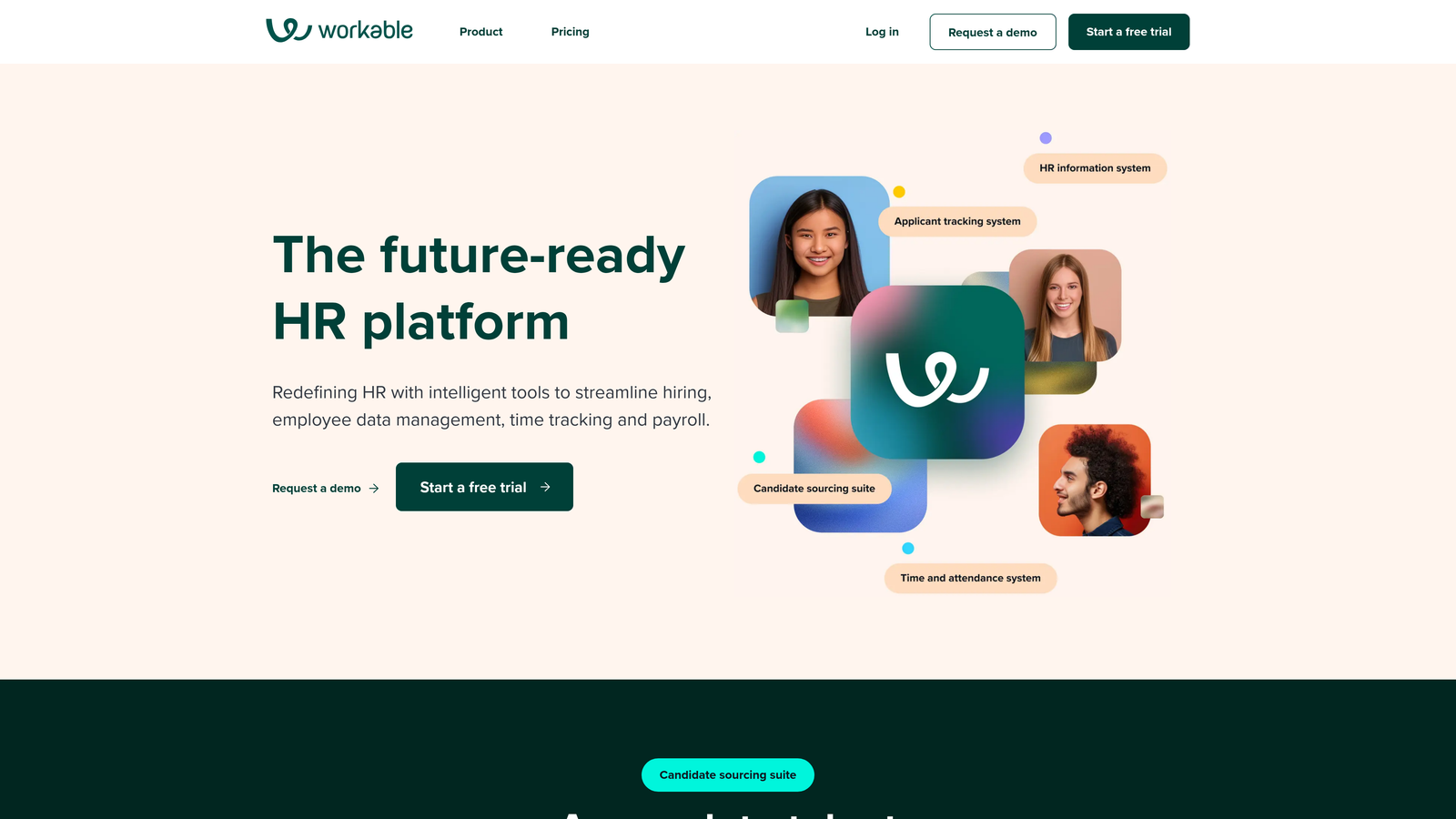
Workable is a full-featured recruiting platform that combines customizable job application forms with a complete applicant tracking system and collaborative hiring tools.
Where This Tool Shines
Workable's strength is that everything lives in one place. You're not stitching together a form builder, an ATS, and a careers page — it's all connected natively. Application forms are tied directly to job postings, and candidate data flows automatically into the hiring pipeline.
The AI-powered sourcing features also help teams proactively find candidates, not just process inbound applications. For companies managing multiple open roles simultaneously, that unified view is a genuine time-saver.
Key Features
Customizable Application Forms: Each job posting can have its own tailored form with role-specific fields.
Full ATS with Pipeline Management: Track candidates from application through offer with collaborative tools for hiring teams.
AI-Powered Candidate Sourcing: Surfaces relevant candidates from a database of millions of profiles.
Branded Careers Page Builder: Create a professional careers site without a developer.
70+ Integrations: Connects with major HR tools, job boards, and communication platforms.
Best For
Mid-sized companies and fast-growing teams that need a complete recruiting solution rather than just a standalone form builder. Particularly useful when you're posting to multiple job boards and want everything tracked in one system.
Pricing
Starter plan begins at $149/month; pricing scales based on hiring volume and feature requirements.
3. JotForm
Best for: Teams that need flexible, template-rich form building without any coding knowledge.
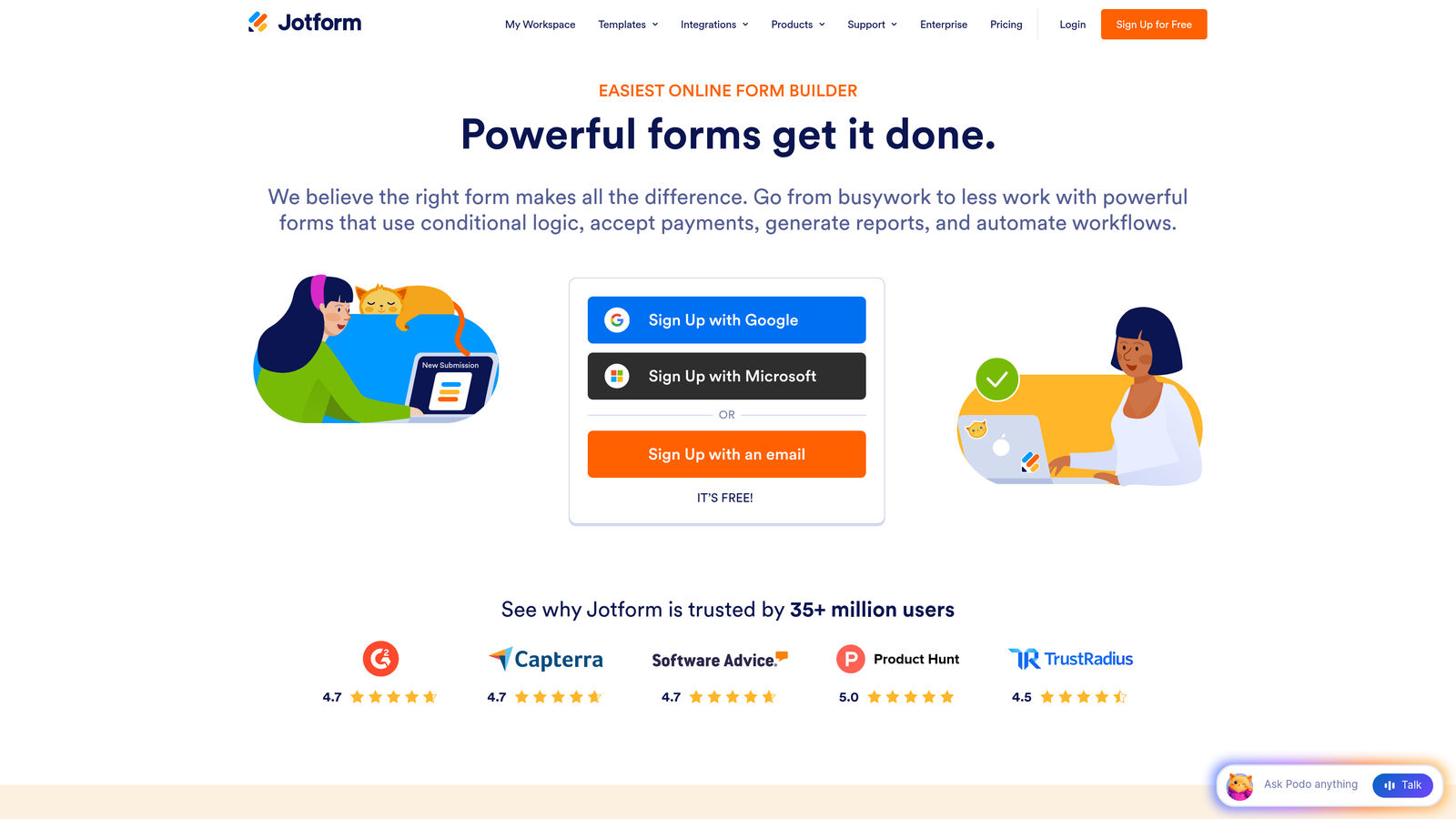
JotForm is a versatile online form builder with thousands of pre-built templates, including a robust library of job application form designs ready to customize.
Where This Tool Shines
JotForm's template library is genuinely impressive. If you need a working job application form in under an hour, you can likely find a template that gets you 80% of the way there and customize the rest with the drag-and-drop editor. No developer needed, no steep learning curve.
It also handles more complex form requirements well. File uploads for resumes and portfolios, e-signature fields, conditional logic, and even payment collection are all available. For teams with varied form needs beyond just hiring, JotForm covers a lot of ground from a single subscription.
Key Features
10,000+ Templates: Includes dedicated job application templates across industries and roles.
Drag-and-Drop Builder: Fully visual editor with no code required for any customization.
File Upload Fields: Candidates can attach resumes, portfolios, and supporting documents directly.
E-Signature and Payment Fields: Useful for onboarding forms and agreements that follow the application.
Conditional Logic: Show or hide fields based on applicant responses to keep forms relevant.
Best For
Small to mid-sized businesses, HR teams without technical resources, and organizations that need a general-purpose form tool that can handle job applications alongside other business forms.
Pricing
Free plan supports up to 5 forms. Paid plans start at $34/month with higher submission limits and advanced features.
4. Typeform
Best for: Companies that prioritize candidate experience and want a conversational, engaging application format.
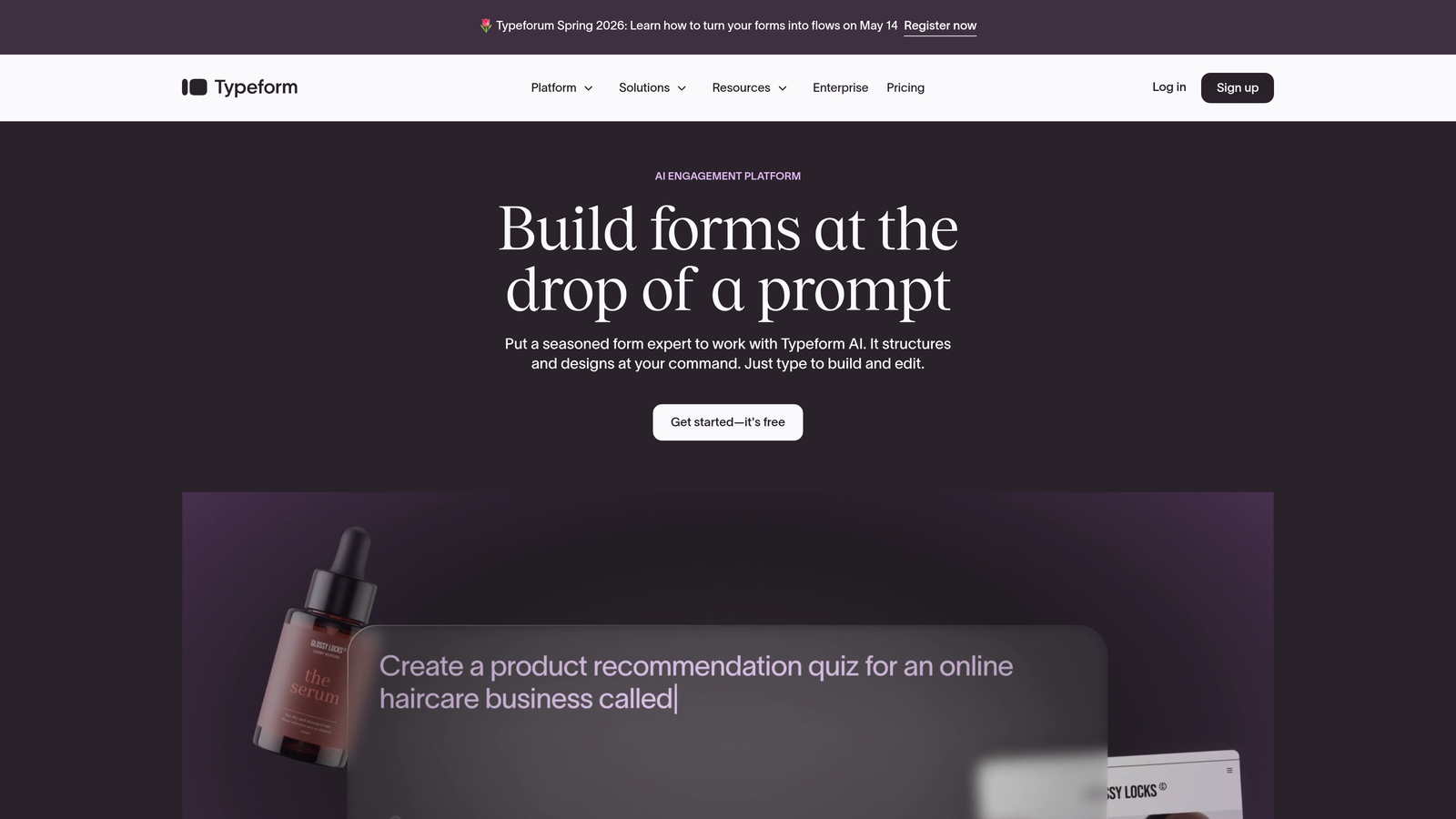
Typeform is a conversational form builder that presents one question at a time, creating an application experience that feels more like a dialogue than a form.
Where This Tool Shines
Typeform's one-question-at-a-time format is genuinely different from traditional form builders. For candidates, it reduces the psychological weight of seeing a long list of fields all at once. The experience feels lighter and more intentional, which can improve completion rates and candidate perception of your brand.
The design customization is also a standout. Typeform forms can be heavily branded with custom colors, fonts, backgrounds, and even embedded video — making them feel like a natural extension of your careers page rather than a generic form.
Key Features
Conversational Interface: One question at a time creates a low-friction, engaging candidate experience.
Strong Branding Controls: Full customization of colors, fonts, imagery, and layout.
Logic Jumps and Conditional Branching: Tailor the question flow based on each applicant's answers.
Wide Integration Support: Connects with Zapier, Slack, Google Sheets, and many more tools.
Video and Image Embedding: Add rich media to give candidates context about the role or company culture.
Best For
Companies where employer brand and candidate experience are top priorities. Especially effective for creative industries, consumer brands, and any organization that wants its application process to feel distinctive.
Pricing
Free plan available with limited responses. Paid plans start at $25/month with expanded features and response limits.
5. Google Forms
Best for: Budget-conscious teams already using Google Workspace who need a simple, functional application form quickly.
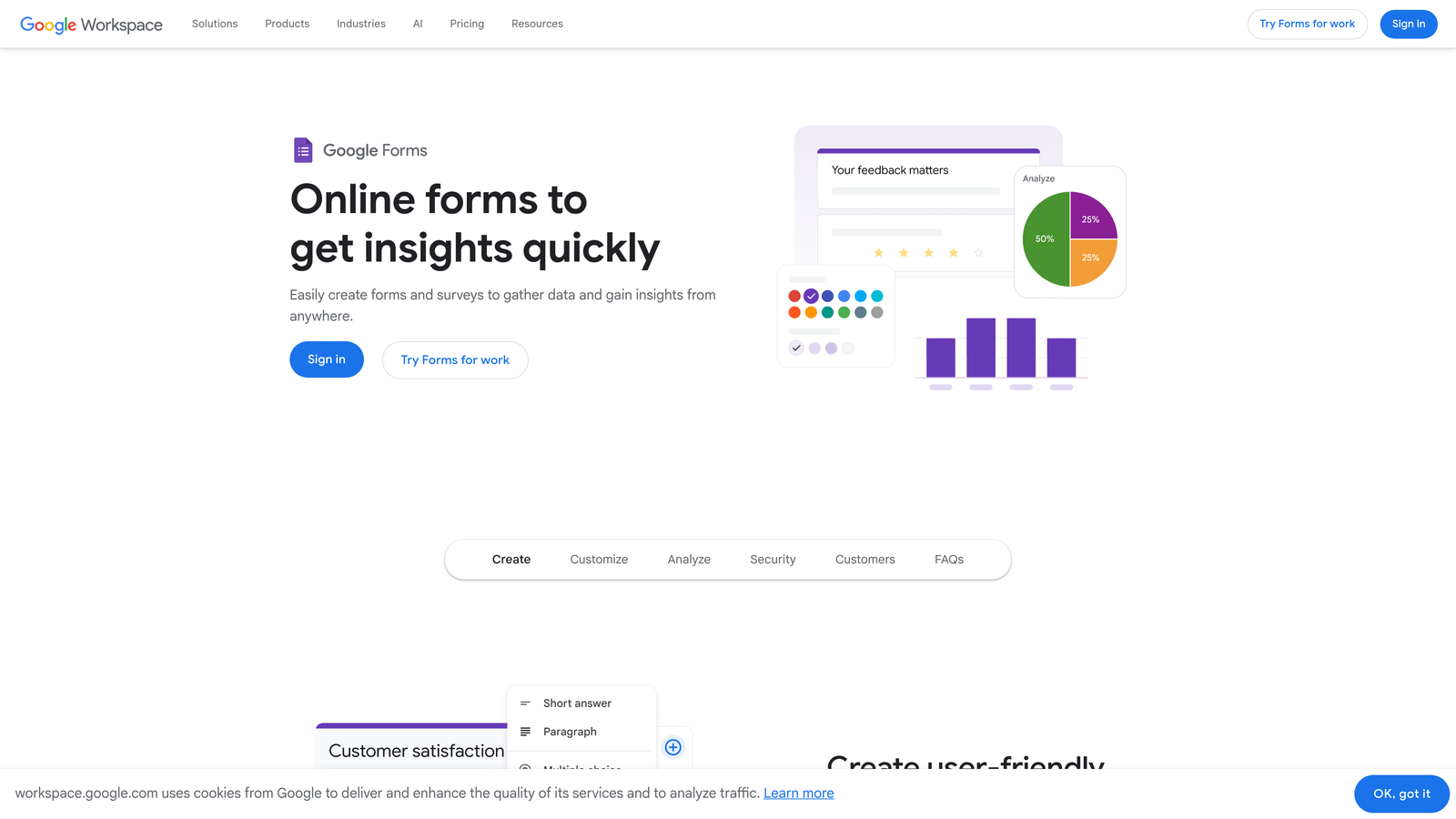
Google Forms is a free, straightforward form builder that integrates natively with Google Sheets and the broader Google Workspace ecosystem.
Where This Tool Shines
The case for Google Forms is simple: it's free, it works, and if your team already lives in Google Workspace, there's essentially zero setup required. Responses flow automatically into Google Sheets, which many HR teams already know how to navigate.
It's not going to win any design awards, and it lacks the advanced features of dedicated platforms. But for early-stage companies, nonprofits, or teams hiring infrequently, it removes every barrier to getting a functional application form live quickly.
Key Features
Completely Free: No usage limits, no paid tiers required for core functionality.
Automatic Google Sheets Integration: All responses populate a spreadsheet in real time.
Basic Conditional Logic: Section branching based on answers keeps forms focused.
File Upload Support: Candidates can submit resumes directly through the form (requires Google account).
Real-Time Collaboration: Multiple team members can edit and review forms simultaneously.
Best For
Startups in early stages, nonprofits, small businesses, and any team that needs a no-cost solution without complex requirements. Not recommended for high-volume hiring or organizations where candidate experience and branding are critical.
Pricing
Completely free with a Google account. No paid tiers.
6. Greenhouse
Best for: Mid-market and enterprise companies that need structured hiring workflows, compliance support, and deep integrations.
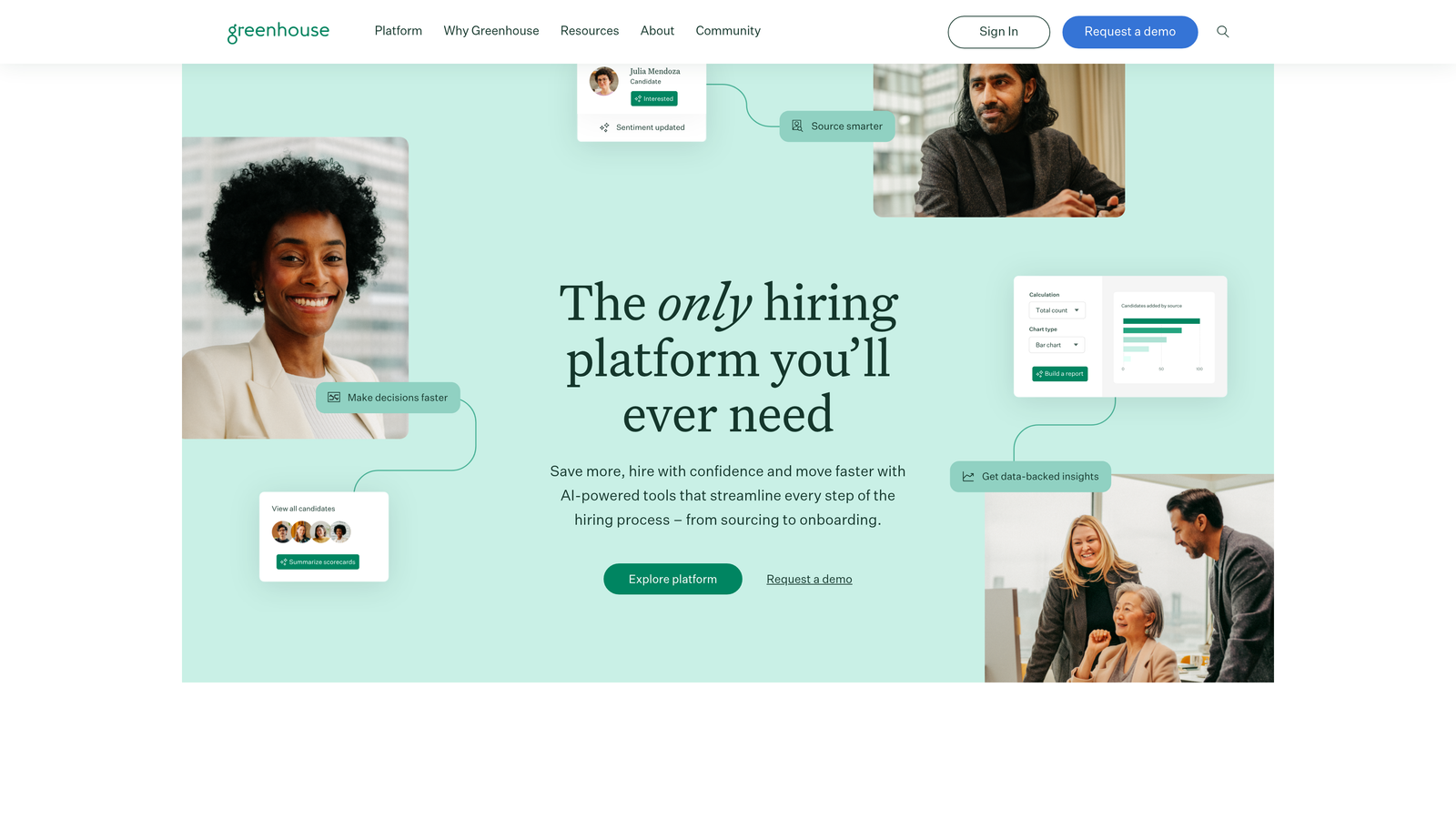
Greenhouse is an enterprise-grade talent acquisition platform built around structured hiring methodology, with highly customizable application forms and robust compliance capabilities.
Where This Tool Shines
Greenhouse is designed around the idea that consistent, structured hiring leads to better outcomes and fairer decisions. Its application forms aren't just data collection tools — they're tied into scorecards, interview kits, and evaluation frameworks that carry all the way through the hiring process.
For organizations with compliance requirements (EEOC, DEI reporting, GDPR), Greenhouse handles these at a level that general-purpose form builders simply can't match. Its 400+ integrations also make it a natural hub for enterprise HR stacks.
Key Features
Structured Hiring Methodology: Application forms connect directly to evaluation criteria and interview frameworks.
Custom Compliance Fields: EEOC, DEI, and regional compliance fields built in per role.
Scorecards and Interview Kits: Evaluation tools tied to application data for consistent assessments.
400+ Integrations: Connects with major HRIS platforms, background check providers, and productivity tools.
Advanced Analytics and DEI Reporting: Detailed pipeline analytics with diversity and inclusion metrics.
Best For
Mid-market to enterprise organizations with dedicated recruiting teams, complex compliance requirements, and a need for deep integration with existing HR infrastructure.
Pricing
Custom pricing based on company size and requirements. Typically positioned for mid-market and enterprise buyers; contact Greenhouse for a quote.
7. Lever (Employ)
Best for: Recruiting teams that want to combine applicant tracking with candidate relationship management in a single platform.
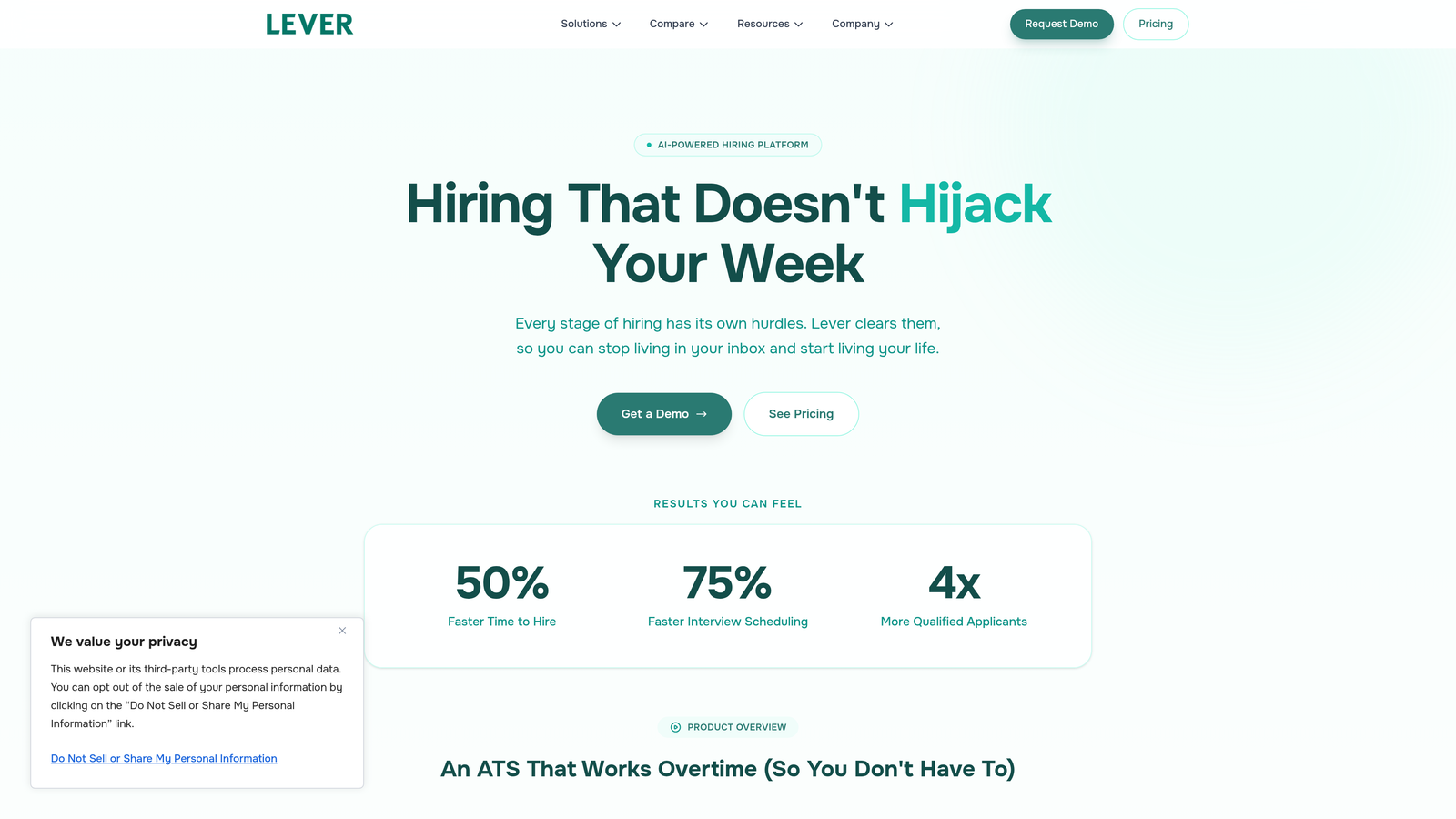
Lever is a combined ATS and CRM platform that treats candidates as long-term relationships, with integrated application forms and pipeline nurture capabilities.
Where This Tool Shines
Most ATS platforms focus on processing applicants. Lever adds a CRM layer, meaning you can nurture passive candidates over time and bring them back when the right role opens. For companies with competitive talent needs or longer hiring cycles, that relationship-first approach can be a meaningful advantage.
The application forms themselves are customizable with compliance support, and the platform's diversity and inclusion dashboards give recruiting teams visibility into pipeline health across demographic dimensions.
Key Features
CRM + ATS Hybrid: Manage both active applicants and passive candidate relationships in one system.
Customizable Application Forms: Role-specific forms with compliance field support.
Candidate Nurture Campaigns: Automated outreach and pipeline management for relationship-driven recruiting.
Diversity and Inclusion Dashboards: Real-time visibility into pipeline diversity metrics.
Key Integrations: LinkedIn, Slack, and major HRIS platforms supported natively.
Best For
Growing companies and mid-market organizations with proactive recruiting strategies, particularly those building talent pipelines for future roles rather than just filling immediate openings.
Pricing
Custom pricing; contact Lever's sales team for a quote tailored to your team size and requirements.
8. Tally
Best for: Teams that want a clean, minimalist form builder with a genuinely generous free tier and no forced branding.
Tally is a Notion-style form builder with a block-based editor, unlimited free forms, and a refreshingly straightforward approach to form creation.
Where This Tool Shines
Tally's free plan is unusually generous. Unlimited forms, unlimited submissions, and no Tally branding on free-tier forms — that combination is rare in the form builder market. For teams that need a clean, professional-looking application form without a budget for software, Tally is hard to beat.
The Notion-style editing experience also makes it intuitive for teams already familiar with block-based content tools. Building a form feels more like writing a document than configuring a software product, which lowers the learning curve significantly.
Key Features
Notion-Style Block Editor: Familiar, document-like interface for building forms without a learning curve.
Unlimited Forms and Submissions (Free): No artificial caps on the free plan.
No Branding on Free Tier: Forms look clean and professional without a paid upgrade.
Conditional Logic and File Uploads: Core functionality available on free and paid plans.
Integration Options: Zapier, webhooks, and native integrations for connecting to your workflow.
Best For
Freelancers, small teams, and budget-conscious companies that need a polished, functional job application form without a recurring software cost. Also a good fit for teams already using Notion who want a consistent editing experience.
Pricing
Free plan is highly capable. Pro plan available at $29/month for advanced features and priority support.
9. SmartRecruiters
Best for: Enterprise organizations managing global hiring at scale with multi-language and multi-jurisdiction compliance requirements.
SmartRecruiters is an enterprise talent acquisition suite built for high-volume, global hiring with customizable application workflows and deep compliance infrastructure.
Where This Tool Shines
SmartRecruiters is built for complexity. If you're hiring across multiple countries with different labor laws, language requirements, and compliance frameworks, this platform handles that complexity at a level most tools can't. Multi-language application forms, regional compliance fields, and GDPR support are built into the core product rather than bolted on as afterthoughts.
The marketplace of 600+ pre-integrated partners also makes SmartRecruiters a connective layer for enterprise HR stacks, linking assessment tools, background checks, HRIS platforms, and communication tools into a unified hiring workflow.
Key Features
Multi-Language Application Forms: Support global candidates with localized form experiences.
Compliance Infrastructure: GDPR, EEOC, and regional labor law compliance built in.
AI-Powered Candidate Matching: Automated screening and matching based on application data.
600+ Partner Integrations: Extensive marketplace connecting to the full HR technology ecosystem.
Branded Career Sites: Embedded application forms within fully branded candidate-facing career pages.
Best For
Large enterprises and multinational organizations with high hiring volumes, dedicated talent acquisition teams, and complex compliance requirements across multiple regions.
Pricing
Custom enterprise pricing. Contact SmartRecruiters' sales team for a quote based on your organization's size and scope.
Choosing the Right Platform for Your Team
The right job application form platform depends heavily on where you are as an organization and what you're optimizing for. Here's a quick guide to help you navigate the options.
If you're budget-conscious: Google Forms handles the basics for free, and Tally is the clear step up — unlimited forms, no branding, and a clean editing experience at no cost. Both are solid starting points when software spend is a constraint.
If candidate experience is your priority: Typeform's conversational format and Orbit AI's conversion-optimized design both address the drop-off problem from different angles. Typeform wins on interaction design; Orbit AI adds intelligent qualification on top of a polished experience.
If you're a high-growth team that needs more than a form: Orbit AI is worth serious consideration. Its AI-powered qualification and routing means your form actively works for you — filtering, scoring, and directing candidates before a human ever reviews the pile. For teams scaling fast and dealing with application volume, that automation layer changes the math on recruiting efficiency.
If you need a full ATS with application forms included: Workable is the most accessible entry point, while Greenhouse and Lever serve more complex mid-market needs. SmartRecruiters is the enterprise choice for global, high-volume hiring.
As you refine your approach, two areas worth focusing on are increasing overall form submissions and reducing unnecessary friction. The guides on how to increase form submissions and how to reduce form field friction offer practical tactics that apply regardless of which platform you choose.
Looking ahead, AI is reshaping what job application forms can do. Smart qualification, adaptive question flows, and automated candidate routing are moving from differentiators to expectations. The platforms that embrace this shift — treating forms as intelligent systems rather than static data collectors — will define the next era of candidate experience.
If you're ready to bring that intelligence to your own hiring process, start building free forms today with Orbit AI and see how smarter form design can transform the quality of candidates you attract and convert.


