

In a competitive market, sales teams can't afford to waste cycles on unqualified leads. Many organizations, however, still rely on simplistic, outdated lead scoring models that create friction between sales and marketing, resulting in a leaky pipeline and missed revenue opportunities. Effective lead scoring is more than just assigning arbitrary points; it's a strategic framework that aligns teams, prioritizes effort, and directly accelerates growth.
This guide moves beyond generic advice to provide a definitive roundup of 10 actionable lead scoring best practices. We’ll cover everything from foundational strategies, like combining behavioral and demographic data, to more advanced tactics, such as implementing score decay models and leveraging AI for real-time adjustments. By mastering these concepts, you transform lead management from a subjective art into a predictable science.
You will learn how to build a robust system that ensures your sales team focuses exclusively on the most promising, sales-ready opportunities. We will provide practical implementation details for each practice, showing you how to operationalize your scoring for maximum impact. While this article offers a comprehensive approach, exploring different frameworks can provide a broader understanding. For an alternative perspective, you might find value in these 8 Lead Scoring Best Practices for B2B Sales Teams as a complementary resource.
Ultimately, a well-calibrated lead scoring model is the engine of a high-performing revenue team. It provides the clarity needed to scale operations, improve conversion rates, and build a more efficient pipeline from the first touchpoint to the final sale. Let's dive into the practices that will get you there.
1. Implement Behavioral and Demographic Scoring
One of the most foundational lead scoring best practices is to build a hybrid model that combines who a lead is with what they do. This dual-pronged approach merges demographic/firmographic data (the “who”) with behavioral data (the “what”), creating a far more accurate and holistic picture of lead quality than either could provide alone. Demographic scoring assesses a lead's static attributes against your Ideal Customer Profile (ICP), while behavioral scoring measures their active engagement and buying intent.

When combined, these two scoring dimensions work in tandem. A lead from a target industry (demographic) who has also visited your pricing page and requested a demo (behavioral) is significantly more qualified than one who only fits the demographic profile but shows no engagement. This method, popularized by platforms like Marketo and HubSpot, effectively filters out high-fit, low-intent leads, allowing sales teams to focus their efforts on contacts who are both a good match and actively progressing through the buyer's journey.
Of course, the integrity of this model depends entirely on the quality of the underlying information. To ensure your scoring is based on accurate and reliable inputs, it is crucial to adhere to essential data management best practices from the very beginning.
How to Implement This Strategy
To effectively implement this hybrid model, you need a clear strategy for collecting and weighting both types of data. Understanding the different types of data collection is a great first step.
- Weighting: Start by assigning more weight to actions that indicate high purchase intent. For example, a demo request (+25 points) should score much higher than a newsletter signup (+3 points).
- Data Sources: Use form submissions as powerful behavioral triggers. With a tool like Orbit AI, you can automatically assign score values based on which form a user completes, such as a "Contact Sales" versus a "Download Ebook" form.
- Key Signals: Begin with 3-5 critical signals for each category (e.g., Demographic: Job Title, Company Size, Industry; Behavioral: Pricing Page Visit, Key Content Download, Webinar Attendance) and refine them over time.
- Regular Calibration: Analyze your closed-won deals quarterly to identify which demographic attributes and behavioral patterns most consistently lead to a sale, then adjust your score weights accordingly.
2. Align Sales and Marketing on Scoring Criteria
Even the most sophisticated lead scoring model will fail if the sales team doesn't trust or use it. This is why aligning sales and marketing on the definition of a qualified lead is one of the most critical lead scoring best practices. When both teams agree on what constitutes a Marketing Qualified Lead (MQL) and a Sales Accepted Lead (SAL), the entire revenue engine runs more smoothly, ensuring high-quality leads are passed over and acted upon efficiently.
This alignment creates a crucial feedback loop. Marketing generates and scores leads based on the agreed-upon criteria, and sales provides feedback on the quality of those leads after engaging with them. This collaborative process, championed by thought leaders like Jason Lemkin of SaaStr, transforms lead scoring from a theoretical marketing exercise into a practical sales enablement tool. Companies like Outreach.io formalize this with weekly reviews between operations teams to ensure the scoring model reflects on-the-ground realities and drives real pipeline.
Without this shared understanding, marketing may celebrate MQL volume while sales struggles with low conversion rates, leading to friction and missed revenue. The key is to treat lead scoring not as a marketing-only metric but as a jointly owned Service Level Agreement (SLA) between the two departments. You can dive deeper into the fundamentals of how to qualify sales leads to build this shared foundation.
How to Implement This Strategy
Creating and maintaining alignment requires formal processes and open communication channels. It’s an ongoing conversation, not a one-time meeting.
- Create a Scoring Rubric: Build a shared document that transparently details every scoring attribute, its point value, and the rationale behind it. This rubric should be the single source of truth for both teams.
- Establish a Feedback Loop: Implement a clear process for sales to provide feedback on lead quality directly within the CRM, ideally within 24-48 hours. This feedback is essential for refining the model.
- Hold Regular Alignment Meetings: Schedule monthly or bi-weekly meetings between sales and marketing leaders to review scoring accuracy, analyze SQL-to-opportunity conversion rates, and adjust thresholds as needed.
- Promote Collaboration: Use tools that facilitate teamwork. With Orbit AI, for example, you can involve unlimited team members in lead management, allowing SDRs and AEs to comment on lead quality and contribute directly to the scoring process.
3. Use Progressive Profiling to Avoid Friction
One of the biggest obstacles to effective lead scoring is incomplete data, yet lengthy forms are a primary cause of lead abandonment. The solution is progressive profiling, a strategy that gathers information incrementally over multiple interactions instead of demanding everything upfront. This approach reduces initial friction, boosts conversion rates, and enriches your lead profiles over time, making your lead scoring far more accurate as engagement deepens.
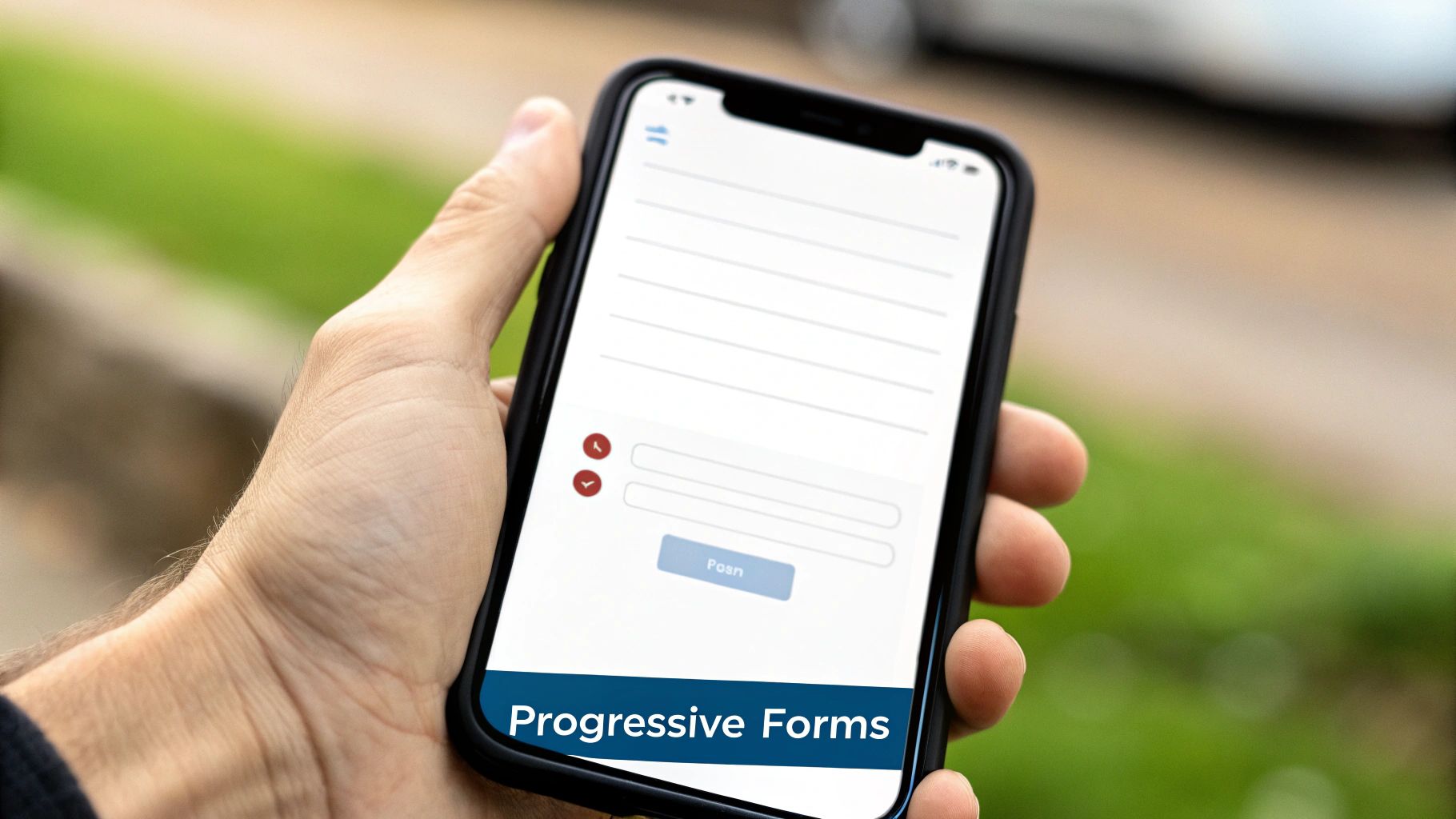
By asking for small pieces of information at each touchpoint, you build a comprehensive profile without overwhelming the prospect. For example, an initial blog subscription might only ask for an email, while a subsequent ebook download asks for company name, and a webinar registration finally asks for job title and company size. Each new piece of data refines the lead's demographic score, creating a dynamic system that reflects their growing relationship with your brand.
This method ensures your lead scoring best practices are built on a foundation of user-friendly data collection. You can learn much more about the mechanics and benefits of this strategy by reading about progressive profiling forms explained in detail.
How to Implement This Strategy
To roll out progressive profiling effectively, you need a smart, logic-driven approach to your forms and data collection workflows.
- Prioritize Initial Fields: Start by asking for only the absolute essentials on the first touchpoint, such as name and email address. This maximizes initial sign-ups and gets leads into your system.
- Use Conditional Logic: In a tool like Orbit AI, you can leverage conditional logic to reveal new form fields based on known data. If a lead has already provided their company name, the next form they see can automatically ask for their job title or department instead.
- Automate Data Requests: Set up automated email workflows that trigger after a certain level of engagement. If a lead has downloaded three ebooks but you still don't know their company size, an automated email can invite them to a personalized demo, with a form that asks for that specific detail.
- Enrich and Pre-populate: Use data from your CRM to pre-populate known fields on forms. This improves the user experience and signals to the lead that you recognize their previous interactions, making them more likely to provide the next piece of information.
4. Establish Lead Scoring Thresholds and SLAs
A sophisticated lead scoring model is only effective if its outputs trigger concrete actions. This is where defining clear numerical thresholds and Service Level Agreements (SLAs) becomes one of the most critical lead scoring best practices. Thresholds transform your scoring system from a theoretical exercise into an operational engine by creating distinct stages (e.g., Marketing Qualified Lead, Sales Qualified Lead), while SLAs ensure those leads are handled with appropriate speed and consistency. This alignment between marketing and sales is what turns a high-scoring lead into a closed-won deal.
Establishing these rules prevents qualified leads from languishing in the CRM and holds both teams accountable for their roles in the revenue pipeline. For instance, once a lead crosses the SQL threshold (e.g., 70+ points), an SLA might mandate that a sales representative must make initial contact within 24 hours. This structure ensures that marketing's efforts to generate high-intent leads are met with timely and predictable sales engagement, maximizing conversion potential and fostering a collaborative, performance-driven culture.
How to Implement This Strategy
To operationalize your lead scores, you need to define the handoff points and the rules of engagement for your teams. This process requires a data-informed approach and clear documentation.
- Set Data-Driven Thresholds: Analyze your historical CRM data. Calculate the average lead score for customers at the point of conversion versus the average score of leads that never converted. This gap will help you set realistic initial thresholds for MQLs and SQLs.
- Define Tiers: Create at least three distinct tiers to guide actions. For example: a Marketing Qualified Lead (MQL) at 41-69 points might be added to a nurture campaign, while a Sales Qualified Lead (SQL) at 70+ points is immediately routed to sales for follow-up.
- Implement SLAs: Set aggressive but achievable SLAs based on lead quality. A "hot" lead who requests a demo might have a 1-hour SLA, whereas a standard SQL might have a 24-hour SLA. Document these agreements and build them into your CRM reporting.
- Automate Routing: Use your marketing automation platform or a tool like Orbit AI to trigger workflows when a lead's score crosses a threshold. This can include automatically assigning the lead to a sales rep, sending a Slack notification, and creating a task in your CRM.
5. Track and Analyze Lead Score Decay
Not all leads retain their initial high score indefinitely; buying intent is often fleeting. A critical lead scoring best practice is to implement score decay, a mechanism that automatically reduces a lead's score over time due to inactivity. This ensures your sales team isn't wasting valuable resources chasing contacts who have gone cold, keeping the pipeline fresh and focused on genuinely engaged prospects.
Lead score decay reflects the reality of the sales cycle. A prospect who downloaded a whitepaper 90 days ago but hasn't engaged since is far less "sales-ready" than one who visited your pricing page yesterday. By systematically lowering scores for dormant leads, you maintain the integrity of your MQL (Marketing Qualified Lead) threshold and provide a more accurate, real-time picture of your most promising opportunities. This practice prevents pipeline inflation and helps identify leads that need to be moved back into a nurturing sequence.
Automating this process is key to its effectiveness. Platforms like HubSpot and Marketo allow you to set rules that subtract points after a set period of inactivity, such as 30 days without an email click or website visit. This ensures your scoring model remains dynamic and responsive to a lead’s current level of interest, not just their historical actions.
How to Implement This Strategy
Implementing score decay requires a thoughtful approach that aligns with your specific sales cycle and customer journey. It's not just about subtracting points; it's about creating intelligent triggers for re-engagement.
- Set Inactivity Triggers: Define what "inactivity" means for your business. A common starting point is to begin score decay after 30 days without any tracked engagement, like an email open, website visit, or content download.
- Adjust Decay Rates: Your decay rules should reflect your average sales cycle length. For shorter cycles, a more aggressive decay rate is appropriate. For longer, more considered purchases, you might extend the inactivity window to 60 or 90 days.
- Automate Re-engagement: Don't just let scores drop. Create automated workflows that trigger when a lead's score falls below a certain threshold. These workflows can re-enroll the lead into a nurturing campaign designed to rekindle their interest with educational content or a special offer.
- Analyze Recycled Leads: Carefully track the conversion rates of leads who are "recycled" back into marketing nurturing after their score decays. This data is invaluable for identifying your most effective re-engagement campaigns and content.
6. Leverage Firmographic and Technographic Data
Going beyond basic demographics, another crucial lead scoring best practice is to enrich profiles with firmographic and technographic data. Firmographic data details company attributes like industry, revenue, and employee count, while technographic data reveals the software and technologies a company uses. Integrating this information provides deep context, transforming your scoring model from just evaluating a contact to evaluating an entire account's potential.
This approach creates a powerful, multi-layered view of lead quality. A lead who merely fits a job title criterion is interesting; a lead with the right job title at a company within your target industry, of a specific size, and using a complementary technology (like Salesforce or Marketo) is a high-value, sales-ready opportunity. This allows for hyper-targeted segmentation and ensures sales conversations are relevant from the very first touchpoint.
Enriching leads with this data is essential for modern B2B marketing, moving from a person-centric to an account-centric view. For a deeper dive into the tools that make this possible, explore these top lead enrichment tools that can automate the process and supercharge your scoring accuracy.
How to Implement This Strategy
To effectively integrate this data, you need to automate its collection and define clear scoring rules based on your Ideal Customer Profile (ICP). This ensures your model is both efficient and precise.
- Automate Data Enrichment: Integrate a data enrichment tool like ZoomInfo, Clearbit, or Hunter directly with your marketing automation platform or CRM. This automatically appends firmographic and technographic data to new leads as they come in, often triggered by a form submission.
- Score Based on Fit: Assign positive points to attributes that align with your ICP. For example, award +15 for companies in your target industry (e.g., SaaS), +10 for a company size of 100-500 employees, and negative points for those outside your target market.
- Identify Tech Stack Signals: Award high scores to leads from companies using technologies that complement your own product. A lead from a company using HubSpot might receive +20 points if your product integrates seamlessly with it, indicating a higher likelihood of adoption.
- Combine with Behavior: Use firmographic and technographic data as a multiplier for behavioral scores. A demo request from a non-ICP company might be worth 25 points, but the same request from a perfect-fit account could be worth 50, fast-tracking it to sales.
7. Implement Negative Scoring to Disqualify Early
Just as important as identifying good leads is filtering out bad ones. One of the most effective lead scoring best practices is to implement negative scoring, a system that deducts points from a lead's score based on disqualifying attributes or actions. This proactive approach prevents poorly-fit leads from consuming valuable sales time and ensures your pipeline remains clean and focused on genuine opportunities.
Negative scoring acts as a quality control mechanism. It helps you quickly identify leads who are students, competitors, or from non-target countries or industries. For example, a B2B SaaS company might deduct points for submissions using a free email domain like Gmail or Yahoo, as it often indicates a lower-quality or non-business inquiry. By assigning negative values, you can automatically lower or even zero out the scores of these contacts, preventing them from ever being routed to sales as Marketing Qualified Leads (MQLs).
This method creates a crucial distinction between low-interest leads and genuinely bad-fit leads. A lead with a low score might just need more nurturing, but a lead with a negative score should likely be removed from active sales queues entirely. This allows your team to confidently prioritize their follow-up efforts on contacts that have a real potential to convert.
How to Implement This Strategy
To use negative scoring effectively, you must clearly define your disqualification criteria and build them directly into your scoring model and lead capture process.
- Define Disqualifiers: Identify clear, non-negotiable disqualifiers. Common examples include competitor domains, student email addresses, specific job titles (e.g., "Intern"), or activity from non-target countries.
- Assign Negative Weights: Assign significant negative points to strong disqualifiers. For instance, a known competitor domain could be -50 points, while a free email address might be -10 points.
- Automate at the Source: Use conditional logic in your forms to screen leads out from the start. With a tool like Orbit AI, you can build forms that identify disqualifying answers (e.g., a "yes" to "Are you a student?") and automatically tag them or prevent them from triggering a sales notification.
- Create a Disqualified Queue: Instead of deleting disqualified leads, route them to a separate list or status in your CRM. You can label this "Disqualified - Monitor" to periodically review for any false positives or changing circumstances.
8. Create Industry-Specific and Persona-Based Scoring Models
A one-size-fits-all approach to lead scoring can significantly dilute its effectiveness. One of the most advanced lead scoring best practices is to develop separate, tailored scoring models for your key industries and buyer personas. Different customer segments exhibit unique buying patterns, value different types of content, and follow distinct decision-making timelines, and your scoring system must reflect this reality to maintain accuracy.
This granular approach moves beyond a single, company-wide model to create multiple, contextual frameworks. For instance, an enterprise CFO in the financial services industry will engage with your brand very differently than a marketing manager at a mid-market tech startup. By creating a unique model for each, you can assign more accurate scores based on the specific signals that matter most to that segment, ensuring more relevant and effective sales follow-up. This method prevents high-value enterprise leads from being overlooked simply because they don't fit the behavioral profile of a more common SMB lead.
Top-tier companies like Salesforce exemplify this strategy by using different scoring criteria for their various cloud products and the distinct buyer personas they target. This allows them to route leads with precision, aligning the right sales team with the right prospect based on a much deeper understanding of their context and needs.
How to Implement This Strategy
Deploying persona-based scoring requires a strategic and iterative approach. The goal is to build models that accurately reflect the unique journey of each key customer segment.
- Prioritize and Segment: Start with your 2-3 most important buyer personas or industry verticals. Don't try to build models for everyone at once. Focus on the segments that drive the most revenue or represent the biggest growth opportunities.
- Analyze Persona-Specific Signals: Dive into your historical data. Analyze closed-won deals for each target persona to identify which demographic attributes and behavioral engagements were most common. A CMO might value thought leadership content (+15 points), while a Head of IT might prioritize technical documentation and integration guides (+20 points).
- Use Conditional Logic: A powerful way to activate these models is through your data capture tools. With a form builder like Orbit AI, you can use conditional logic on fields like "Job Title" or "Industry" to automatically tag a new lead and apply the correct persona-specific scoring model from the moment of conversion.
- Set Different Thresholds: A "sales-ready" score for an enterprise persona may be lower or higher than for an SMB persona, depending on their typical sales cycle length and conversion rates. Adjust your MQL and SQL thresholds for each model based on historical performance.
9. Use Real-Time Scoring and Instant Notifications
One of the most critical lead scoring best practices is to close the gap between a lead reaching a qualification threshold and sales taking action. Speed is paramount; a lead’s interest is highest in the moments after they engage. Real-time scoring and instant notifications transform lead scoring from a passive, analytical tool into an active, revenue-driving engine by alerting sales reps the second a high-value prospect shows intent.
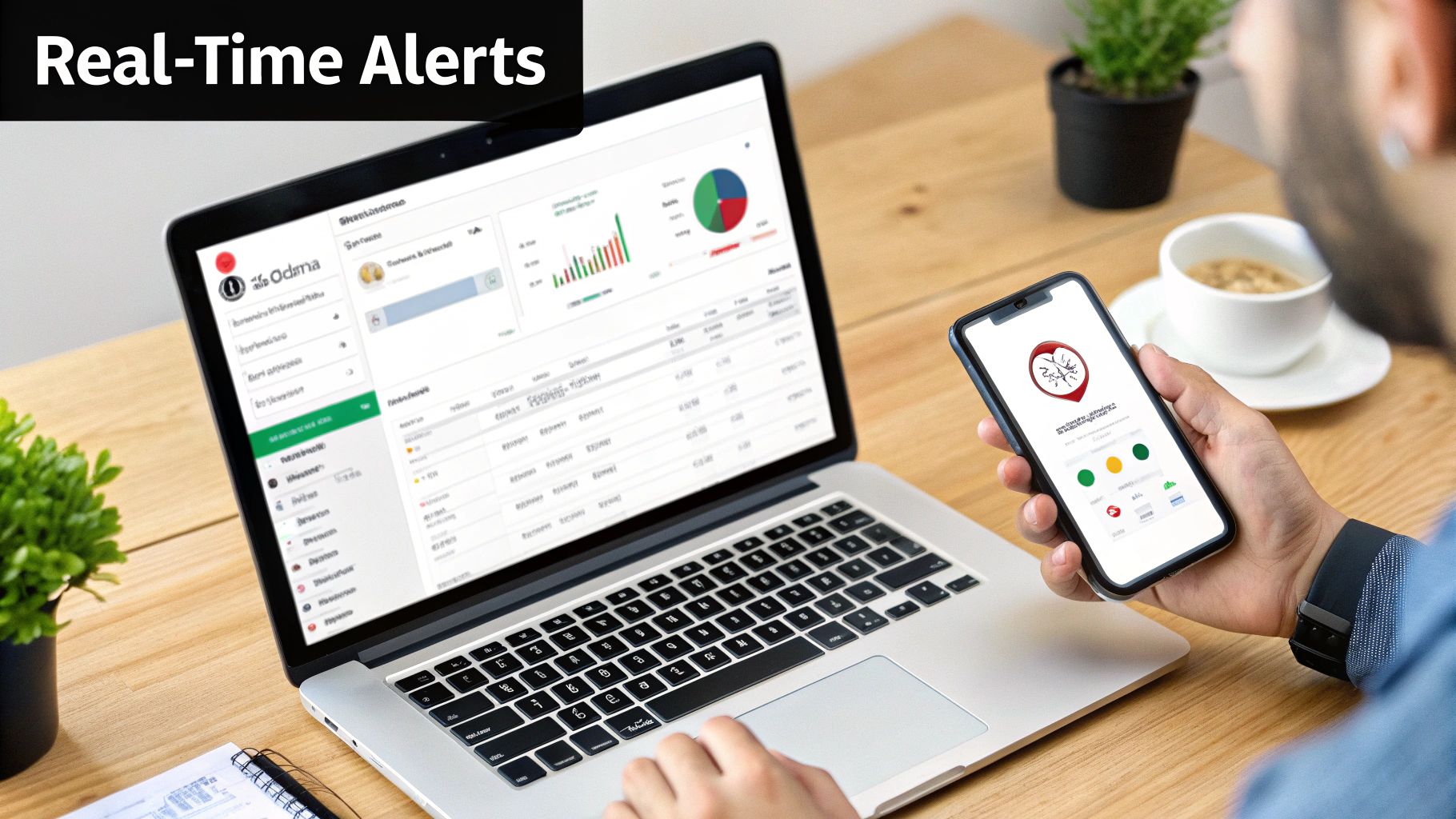
This immediate handoff drastically reduces lead-to-contact time, often from days to mere minutes. When a sales rep can follow up while the prospect is still on the website or has just downloaded a resource, the conversation is more relevant and conversion rates improve significantly. Tools like Drift and Qualified.com exemplify this by instantly notifying reps via Slack when a high-intent visitor is on site, enabling immediate, contextual engagement that capitalizes on peak interest.
By operationalizing your scoring model with instant alerts, you empower your sales team to connect with the right leads at the perfect moment. This proactive approach ensures that no high-value opportunity goes cold due to delays in communication or manual lead assignment processes.
How to Implement This Strategy
Setting up an automated, real-time alert system requires integrating your lead capture and scoring tools with your team's communication platforms.
- Tiered Notifications: Create different alert channels for varying lead scores. For instance, send an SMS or high-priority Slack alert for hot leads (90+ points), a standard Slack channel notification for SQLs (70+), and a daily email digest for new MQLs.
- Actionable Alerts: Ensure notifications are rich with context. Include the lead’s name, company, score, the specific actions they took, and suggested talking points or next steps.
- Automation with Orbit AI: Use a platform like Orbit AI to create powerful, instant workflows. You can configure it to send a custom notification directly to a specific Slack channel or sales rep the moment a high-scoring lead submits a form, complete with all their captured data.
- Track Response Time: Make notification-to-response time a core sales metric. This encourages rapid follow-up and helps you measure the direct impact of your real-time notification system on sales efficiency and pipeline velocity.
10. Continuously Test, Learn, and Optimize Your Scoring Model
One of the most critical lead scoring best practices is treating your model not as a one-time project but as a dynamic, living system. A "set it and forget it" approach is a recipe for inaccuracy, as markets shift, buyer behaviors evolve, and your ideal customer profile (ICP) matures. Continuous testing, learning, and optimization ensure your scoring model remains a reliable engine for identifying high-quality leads over the long term.
This iterative process involves regularly analyzing the correlation between lead scores and actual sales outcomes. By comparing the scores of converted leads against those that didn't convert, you can identify patterns, uncover blind spots, and validate your scoring criteria. Best-in-class demand generation teams often report making monthly or quarterly optimizations based on this conversion data, ensuring their sales reps always receive the most accurately qualified leads.
The goal is to create a feedback loop where sales outcomes directly inform and refine your marketing qualification process. This prevents your model from becoming stale and disconnected from real-world results, ultimately improving sales efficiency and conversion rates.
How to Implement This Strategy
A structured approach to optimization is key. You need a consistent cadence for review and a clear methodology for testing changes to isolate their impact.
- Review Scoring Accuracy Monthly: Compare the average score of all closed-won deals against closed-lost deals from the previous month. A healthy model will show a significantly higher average score for converted leads.
- Analyze the Outliers: Investigate "surprising" deals. Why did a low-scoring lead convert? What caused a high-scoring lead to stall? These anomalies often reveal flaws in your logic or missing behavioral signals.
- A/B Test Scoring Changes: When you identify a potential improvement, change only one variable at a time. For instance, test increasing the score for a specific case study download for a month and measure its impact on the quality of sales-qualified leads (SQLs).
- Leverage Analytics: Use integrated tools to see which lead sources and behaviors consistently produce high-value customers. Understanding the granular data from your lead capture points is crucial, and you can dive deeper into the best form analytics and tracking tools to get these insights.
- Document Everything: Maintain a changelog for your scoring model. For every adjustment, document the rationale, the change made, the expected impact, and the actual results. This creates an invaluable record for future optimizations.
10-Point Lead Scoring Best Practices Comparison
| Strategy | Implementation complexity | Resource requirements | Expected outcomes | Ideal use cases | Key advantages |
|---|---|---|---|---|---|
| Implement Behavioral and Demographic Scoring | Moderate–High (integration + weighting models) | Multiple data sources, analytics, CRM integration, model maintenance | More accurate lead qualification, fewer false positives, improved conversion | B2B lead gen with varied firmographics and engagement signals | Combines fit and intent, real-time scoring, better prioritization |
| Align Sales and Marketing on Scoring Criteria | Low–Moderate (process and governance) | Meetings, shared documentation, collaboration tools | Consistent lead definitions, smoother handoffs, higher trust | Teams with handoff friction between marketing and sales | Reduces disputes, improves SLA adherence, aligns incentives |
| Use Progressive Profiling to Avoid Friction | Moderate (multi-step form logic) | Form builder with conditional logic, CRM field memory | Higher form completion, richer data over time, evolving scores | High-friction flows or long customer journeys | Lowers abandonment, improves UX, incremental data capture |
| Establish Lead Scoring Thresholds and SLAs | Low–Moderate (policy + configuration) | Historical data analysis, CRM automation, cross-team agreement | Consistent lead routing, measurable performance, faster follow-up | Scaling sales ops requiring predictable pipeline handling | Creates accountability, enables automation, clear routing rules |
| Track and Analyze Lead Score Decay | Moderate (time- and engagement-based rules) | Analytics, automation for recycling/re-engagement, rules engine | Fewer stale leads, targeted re-engagement, cleaner CRM | Long sales cycles or high-volume pipelines | Prevents chasing cold leads, improves rep efficiency, triggers nurture |
| Leverage Firmographic and Technographic Data | Moderate (enrichment + mapping) | Data providers (Clearbit/ZoomInfo), integration budget, enrichment logic | Better-fit identification, personalized outreach, ABM alignment | Enterprise/ABM programs or tech-aware targeting | Precise targeting, technographic signals, faster DM identification |
| Implement Negative Scoring to Disqualify Early | Low–Moderate (rule definitions) | Disqualifier list, form checks, QA and review | Fewer false positives, reduced wasted effort, clearer pipeline | High inbound volume with many low-fit leads | Automates disqualification, saves sales time, documents reasons |
| Create Industry-Specific & Persona-Based Scoring Models | High (multiple models + maintenance) | More segmented data, analytics, model governance, upkeep | Higher segment accuracy, tailored messaging, improved conversions | Diverse product lines, multiple buyer personas, ABM strategies | Persona-tailored scoring, accounts for different buying cycles |
| Use Real-Time Scoring and Instant Notifications | Moderate–High (real-time infra + integrations) | Always-on systems, CRM/Slack/SMS integrations, monitoring | Immediate follow-up, higher conversion in first hour, real-time visibility | Time-sensitive leads, SDR/rapid-response teams | Enables just-in-time outreach, reduces lead-to-contact time |
| Continuously Test, Learn, and Optimize Scoring Model | Moderate (ongoing testing & analytics) | A/B testing tools, analytics, stakeholder time, versioning | Model accuracy improves, adapts to market shifts, fewer surprises | Data-driven revenue ops and mature demand teams | Continuous improvement, prevents model drift, data-led refinements |
Turn Every Form Submission into a Qualified Conversation
Mastering lead scoring isn't a "set it and forget it" task; it's a dynamic discipline that transforms your go-to-market engine from a reactive process into a predictive powerhouse. Throughout this guide, we've explored the foundational pillars of a high-performing system. We moved beyond simple demographic inputs to embrace the rich context of behavioral signals, firmographic data, and real-time intent. By implementing these lead scoring best practices, you bridge the critical gap between marketing efforts and sales outcomes, ensuring every resource is focused on the opportunities most likely to convert.
The journey begins with a unified vision. Aligning sales and marketing on what constitutes a "qualified lead" is the single most important step you can take. This shared definition becomes the blueprint for your entire model, informing everything from your scoring thresholds and SLAs to the negative scoring criteria that filter out noise. Without this alignment, even the most sophisticated model will fail to deliver its primary goal: a steady stream of revenue-ready conversations for your sales team.
From Theory to Actionable Intelligence
Putting these principles into practice requires a shift in mindset and tooling. It’s about moving away from static, spreadsheet-based models and embracing a system that is agile, intelligent, and deeply integrated into your workflows.
Consider the key takeaways we've covered:
- Holistic Data Integration: The most effective models combine multiple data streams. You must look at who the lead is (demographics), where they work (firmographics), what they do on your site (behavioral), and what tools they use (technographics). Each layer adds crucial context, painting a complete picture of their potential value.
- Dynamic and Continuous Optimization: A scoring model is a living system. Regular testing, analysis, and calibration are not optional; they are essential for maintaining accuracy. As your ideal customer profile evolves and market conditions change, your model must adapt in lockstep.
- Automation as a Force Multiplier: Manual lead routing and qualification are bottlenecks to growth. The true power of lead scoring is unlocked when it's operationalized. Real-time scoring, instant notifications, and automated routing ensure that hot leads are engaged within minutes, not hours or days, dramatically increasing your chances of success.
The ultimate goal is to create a predictable and scalable pipeline. By implementing these lead scoring best practices, you stop wasting valuable sales cycles on unqualified prospects and empower your team to focus their energy on building relationships and closing deals. You replace guesswork with a data-driven framework that provides clarity and confidence, allowing you to forecast more accurately and invest your marketing budget with greater precision. This strategic approach ensures that every form submission, every downloaded whitepaper, and every demo request is not just another entry in a database, but the beginning of a qualified conversation.
Ready to build an intelligent, automated lead scoring engine without the manual overhead? Orbit AI integrates directly with your forms to enrich, qualify, and score leads in real time, so your sales team can focus on revenue-ready conversations. Discover how Orbit AI can supercharge your lead qualification today.


