

Your order form is the final handshake between your store and your customer, and a clunky one costs you sales. Whether you're selling physical products, digital downloads, or subscription boxes, the right order form builder can mean the difference between a completed purchase and an abandoned cart.
The tools in this list were evaluated on ease of setup, payment integrations, conditional logic, design flexibility, and how well they serve ecommerce teams focused on conversion. We've included options across a range of use cases and budgets, from AI-powered platforms built for high-growth teams to flexible form builders that handle order collection well.
If you're also thinking about how your forms qualify and route leads post-purchase, check out our guide on best online form builder for conversions and conversion rate benchmarks before diving in.
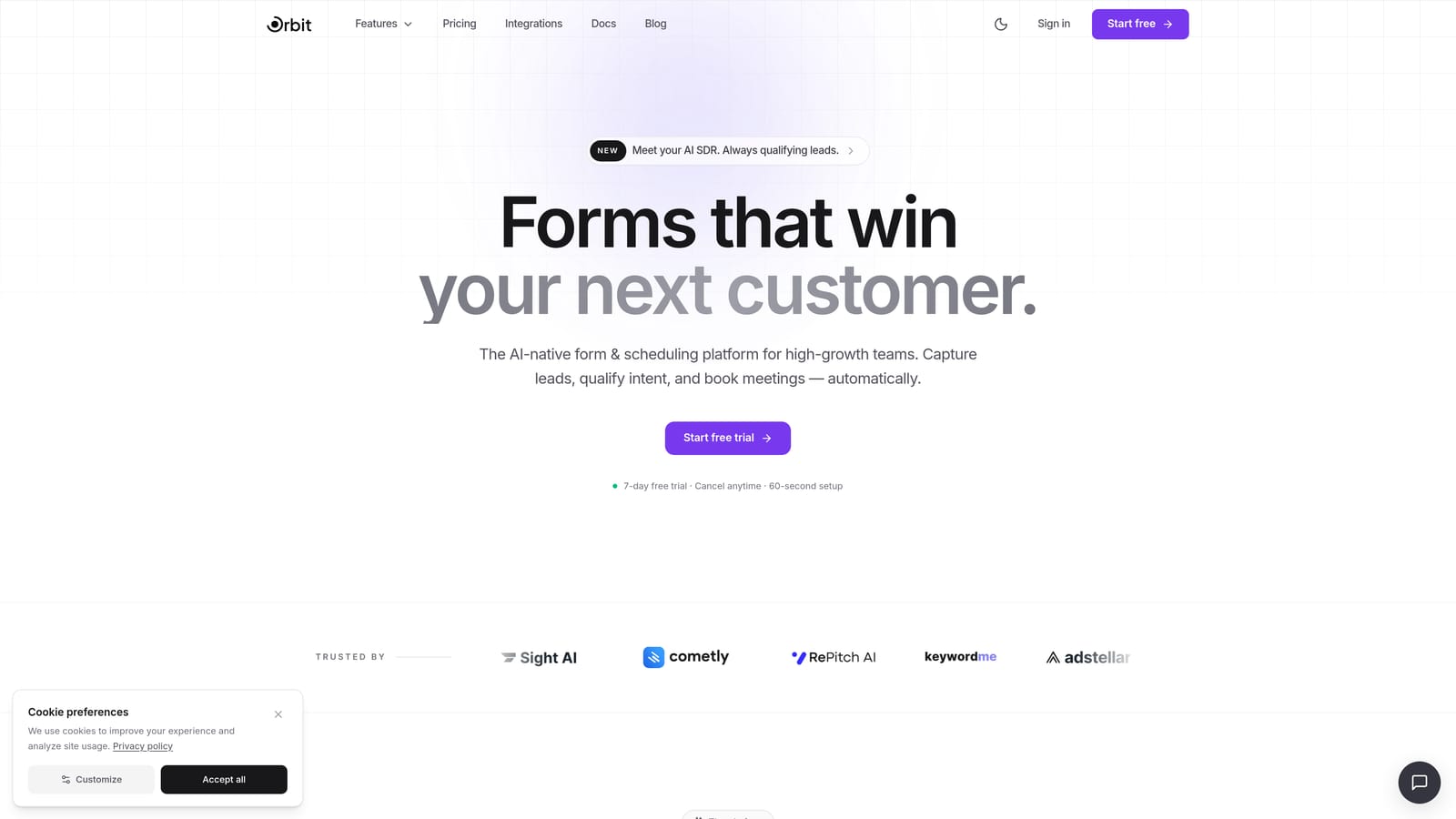
1. Orbit AI
Best for: High-growth ecommerce teams that want AI-powered buyer qualification built into their order flow.
Orbit AI is an AI-powered form builder designed for conversion optimization and intelligent lead qualification at the point of order submission.
Where This Tool Shines
Most order form builders treat submission as the finish line. Orbit AI treats it as the starting line. The platform embeds AI-driven qualification logic directly into your form, so every completed order doesn't just tell you what was bought — it tells you who bought it, what their intent signals look like, and how they should be routed downstream.
For ecommerce teams managing high order volumes or selling across multiple customer segments, this distinction matters. Instead of exporting a spreadsheet and manually sorting buyers, Orbit AI surfaces that intelligence automatically, letting your team focus on fulfillment and follow-up rather than data wrangling.
Key Features
AI-Powered Lead Qualification: Intelligent logic embedded in form flows surfaces buyer intent and segments customers automatically at submission.
Conversion-Optimized Templates: Modern, visually polished form designs built specifically to reduce friction and improve order completion rates.
Conditional Logic: Dynamic order flows that adapt based on buyer inputs, showing relevant fields, pricing, or product options in real time.
Buyer Segmentation and Routing: Post-submission routing rules that send different buyer types to the right team, workflow, or CRM pipeline automatically.
Ecommerce and CRM Integrations: Connects with the platforms your team already uses for order management and customer relationship tracking.
Best For
Orbit AI is the strongest fit for high-growth ecommerce and SaaS teams that view their order form as a sales touchpoint, not just a data entry field. If you're scaling fast and need your form to do more than collect information, this is where the platform earns its place at the top of the list.
Pricing
Check current pricing and plan details at orbitforms.ai. Free building options are available to get started.
2. Typeform
Best for: Ecommerce brands that want a polished, conversational order experience with minimal form fatigue.
Typeform is a conversational form builder known for its one-question-at-a-time interface that reduces abandonment and keeps buyers engaged through the order process.

Where This Tool Shines
Typeform's core insight is that long, traditional forms feel like work. By breaking the order process into a single-question flow, it makes purchasing feel more like a guided conversation. For brands selling products that benefit from a bit of discovery, such as customizable items, curated bundles, or subscription tiers, this format can meaningfully improve completion rates.
The design quality is consistently strong out of the box. Even without deep customization, a Typeform order form looks professional and on-brand, which matters for DTC brands where aesthetics are part of the value proposition.
Key Features
Conversational UX: One-question-at-a-time interface that reduces cognitive load and keeps buyers moving forward.
Stripe Payment Integration: Collect payment directly within the form flow without redirecting buyers to a separate checkout page.
Logic Jumps: Conditional paths that route buyers to different questions or product options based on their previous answers.
Design Customization: Strong brand theming options including custom fonts, colors, and background imagery.
Order Form Templates: A wide library of pre-built templates that can be adapted for product ordering, pre-orders, and custom requests.
Best For
Typeform works best for brands where the buying experience is part of the product. It's a strong choice for DTC brands, creators, and boutique ecommerce stores where a polished, low-friction UX is a competitive advantage. It's less suited for high-volume, utilitarian order processing.
Pricing
Free plan available with limited responses. Paid plans start at approximately $25/month. Verify current pricing at typeform.com.
3. Jotform
Best for: Ecommerce teams that need the broadest payment gateway support and the deepest native order form features.
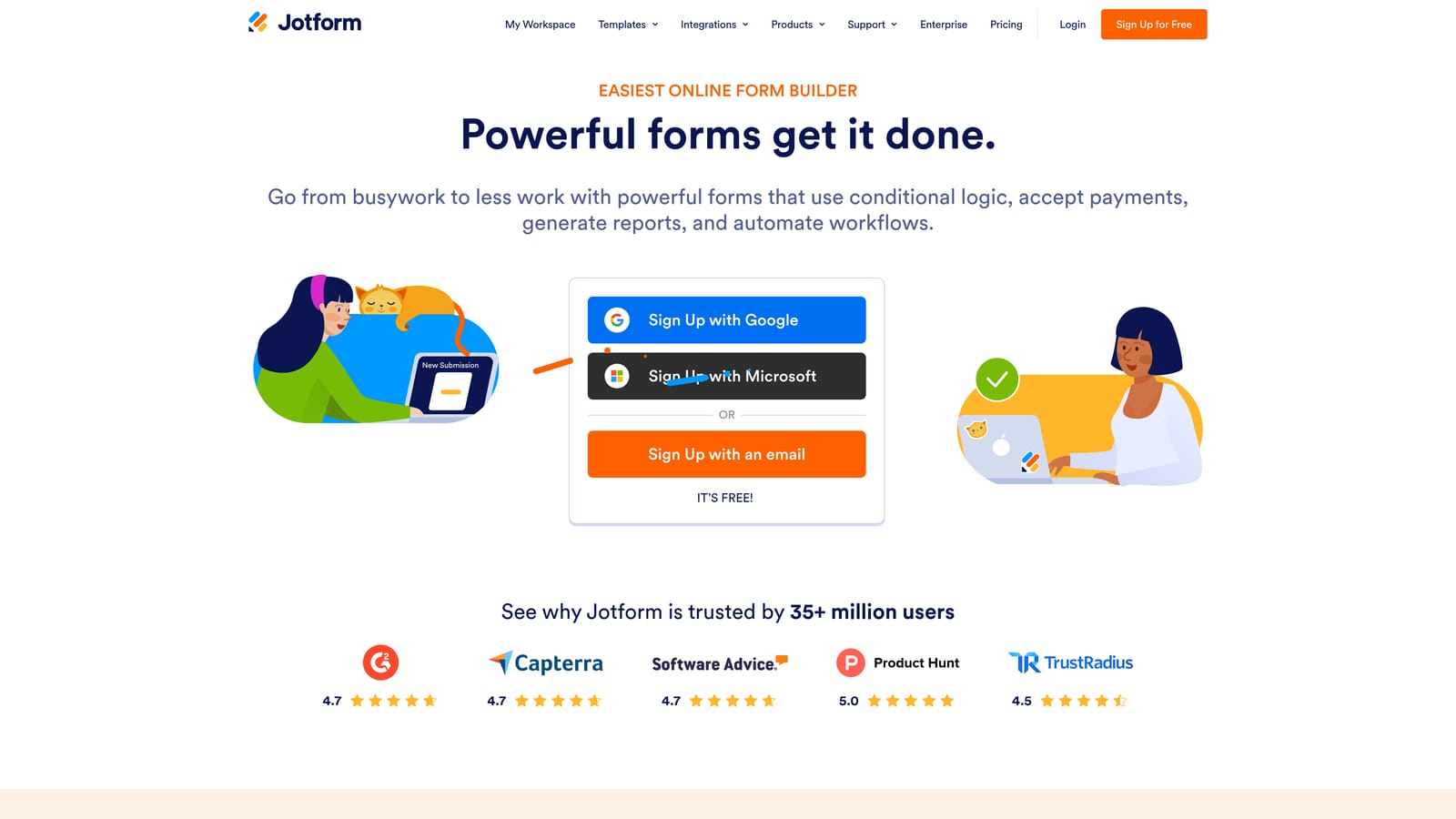
Jotform is a feature-rich form builder with more native payment integrations than almost any competitor, plus dedicated ecommerce tools like product list fields and a built-in Store Builder.
Where This Tool Shines
If payment flexibility is your primary concern, Jotform is hard to beat. Native support for PayPal, Stripe, Square, Authorize.net, and a long list of regional gateways means you're unlikely to hit a wall when connecting your preferred processor. This is particularly valuable for stores operating across multiple markets or those with existing gateway relationships they need to preserve.
The sheer volume of templates is also a practical advantage. Jotform offers thousands of pre-built order form templates covering everything from wholesale purchasing to food ordering to digital product delivery, which means most teams can find a starting point that's already 80% of the way there.
Key Features
Multi-Gateway Payment Support: Native integrations with PayPal, Stripe, Square, Authorize.net, and many others for maximum payment flexibility.
Store Builder and Product Fields: Dedicated ecommerce features including product lists, inventory tracking inputs, and a visual store interface.
Extensive Template Library: Thousands of order form templates covering a wide range of industries and order types.
Conditional Logic and Calculations: Dynamic fields that adjust pricing, show relevant options, and calculate order totals automatically.
Free Tier: A functional free plan that lets non-technical users get started without upfront cost.
Best For
Jotform is the go-to for non-technical ecommerce teams that need a lot of functionality without custom development. It's particularly strong for businesses with complex payment requirements, multi-product catalogs, or a need for ready-made templates they can deploy quickly.
Pricing
Free plan available with submission limits. Paid plans start at approximately $34/month. Verify current pricing at jotform.com.
4. Paperform
Best for: Creators and small brands that want order forms that feel like beautifully designed product pages.
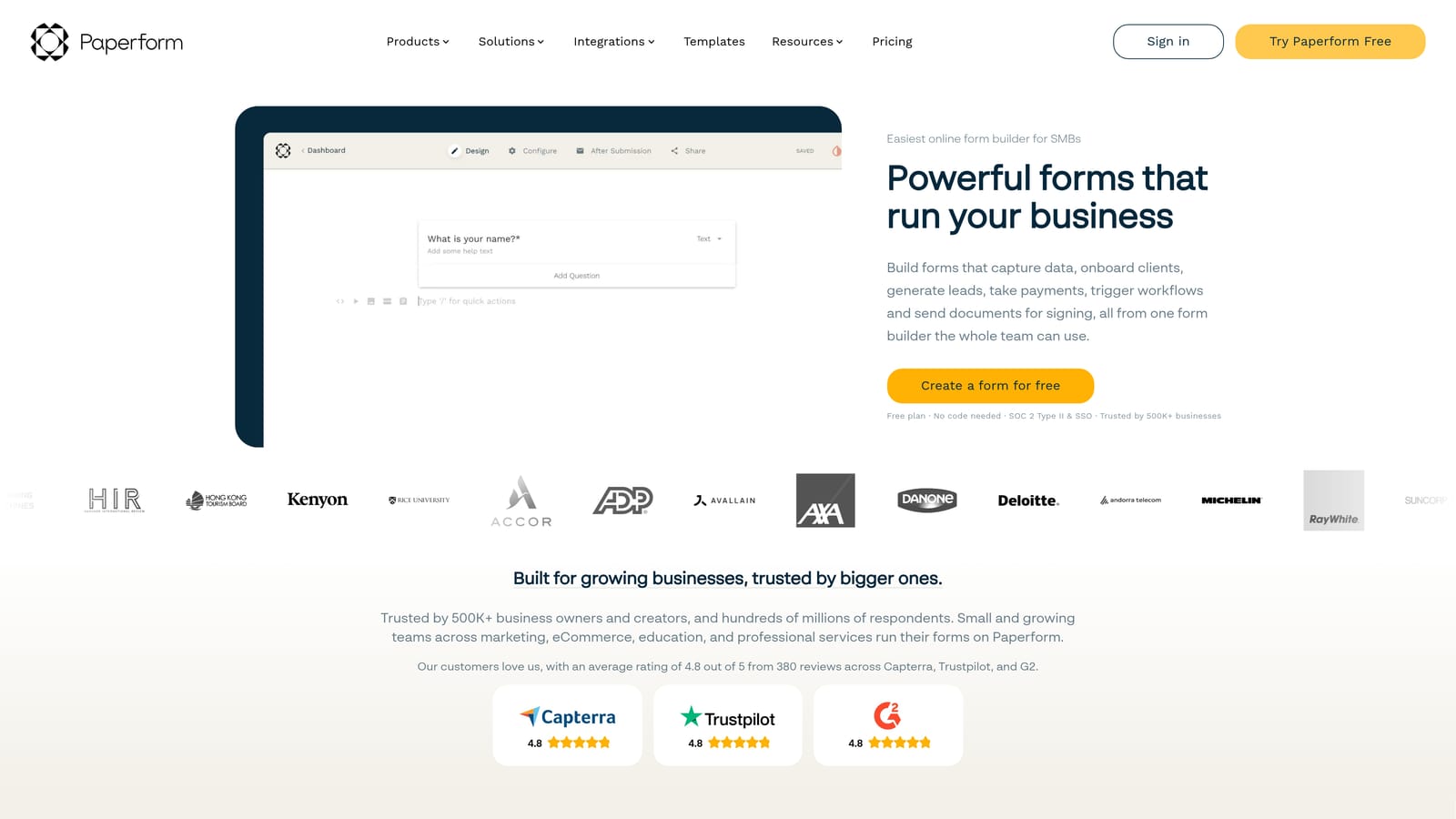
Paperform takes a document-editor approach to form building, letting you blend product descriptions, images, and pricing directly alongside form fields in a single, cohesive page.
Where This Tool Shines
The core difference with Paperform is context. Traditional order forms strip away all the selling — you get fields, a price, and a submit button. Paperform lets you keep the product story alive right up until the moment of purchase. You can place a product image next to a size selector, add a description paragraph above a quantity field, or embed pricing details inline with the form itself.
For independent brands, creators, and service providers selling directly, this format turns the order form into a lightweight sales page. It's particularly effective when the product requires a bit of explanation or when you want to reinforce value at the moment of decision.
Key Features
Document-Editor Interface: Write and design a full page with form fields embedded inline, rather than building a standalone form.
Native Stripe Payments: Collect payment directly through the form without a separate checkout redirect.
Inline Product Details: Embed images, descriptions, and pricing alongside form fields to keep the selling context intact.
Conditional Logic and Calculations: Dynamic fields and automatic price calculations based on buyer selections.
Custom Domain Support: Host order pages on your own domain for a fully branded purchasing experience.
Best For
Paperform is best suited for creators, consultants, and small ecommerce brands that sell products or services requiring context and explanation. If your product benefits from storytelling at the point of purchase, this format delivers that in a way standard form builders can't match.
Pricing
No free tier; a free trial is available. Paid plans start at approximately $24/month. Verify current pricing at paperform.co.
5. Tally
Best for: Early-stage ecommerce teams that need a free, fast, and functional order form without submission limits.
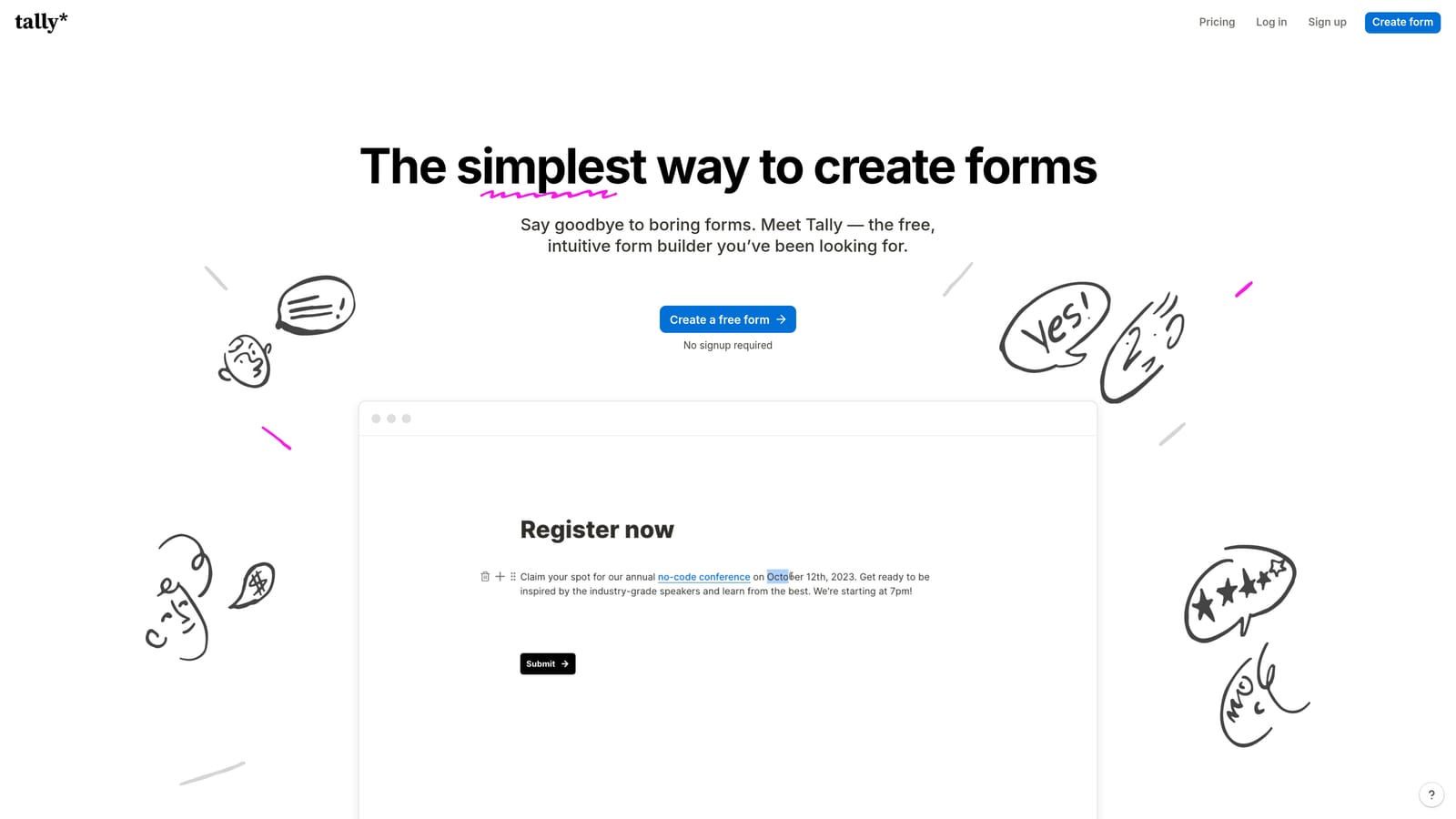
Tally is a minimalist, Notion-inspired form builder with a genuinely unlimited free tier, making it the most accessible starting point for stores validating products before scaling.
Where This Tool Shines
Most free form builder tiers come with catch. Tally's free plan offers unlimited forms and unlimited submissions, which is a meaningful differentiator for early-stage stores that don't yet know their order volume. You can run a product launch, collect pre-orders, or test a new offering without hitting a paywall mid-campaign.
The block-based editor is clean and approachable. If you've used Notion, the interface will feel immediately familiar. It won't win awards for design flexibility, but it produces clean, professional-looking forms that load quickly and embed easily on any page. For more on how Tally compares to more feature-rich alternatives, see this comparison at orbitforms.ai.
Key Features
Unlimited Free Plan: No submission caps or form limits on the free tier, which is genuinely rare among form builders.
Block-Based Editor: A Notion-style interface with a low learning curve that most users can master in under an hour.
Stripe Payment Collection: Payment integration available on paid plans for order form use cases.
Conditional Logic: Dynamic form flows that adapt based on buyer responses, available across plans.
Lightweight Embeds: Clean embed code that drops into any website or landing page without slowing page load.
Best For
Tally is the right choice for bootstrapped or early-stage ecommerce teams that need to move fast and stay lean. It's also a solid option for running one-off product drops or limited campaigns where you want a quick, no-cost order collection solution before committing to a paid platform.
Pricing
Free plan with unlimited submissions. Tally Pro starts at approximately $29/month. Verify current pricing at tally.so.
6. Formstack
Best for: Enterprise and B2B teams managing complex order workflows, approvals, and compliance requirements.
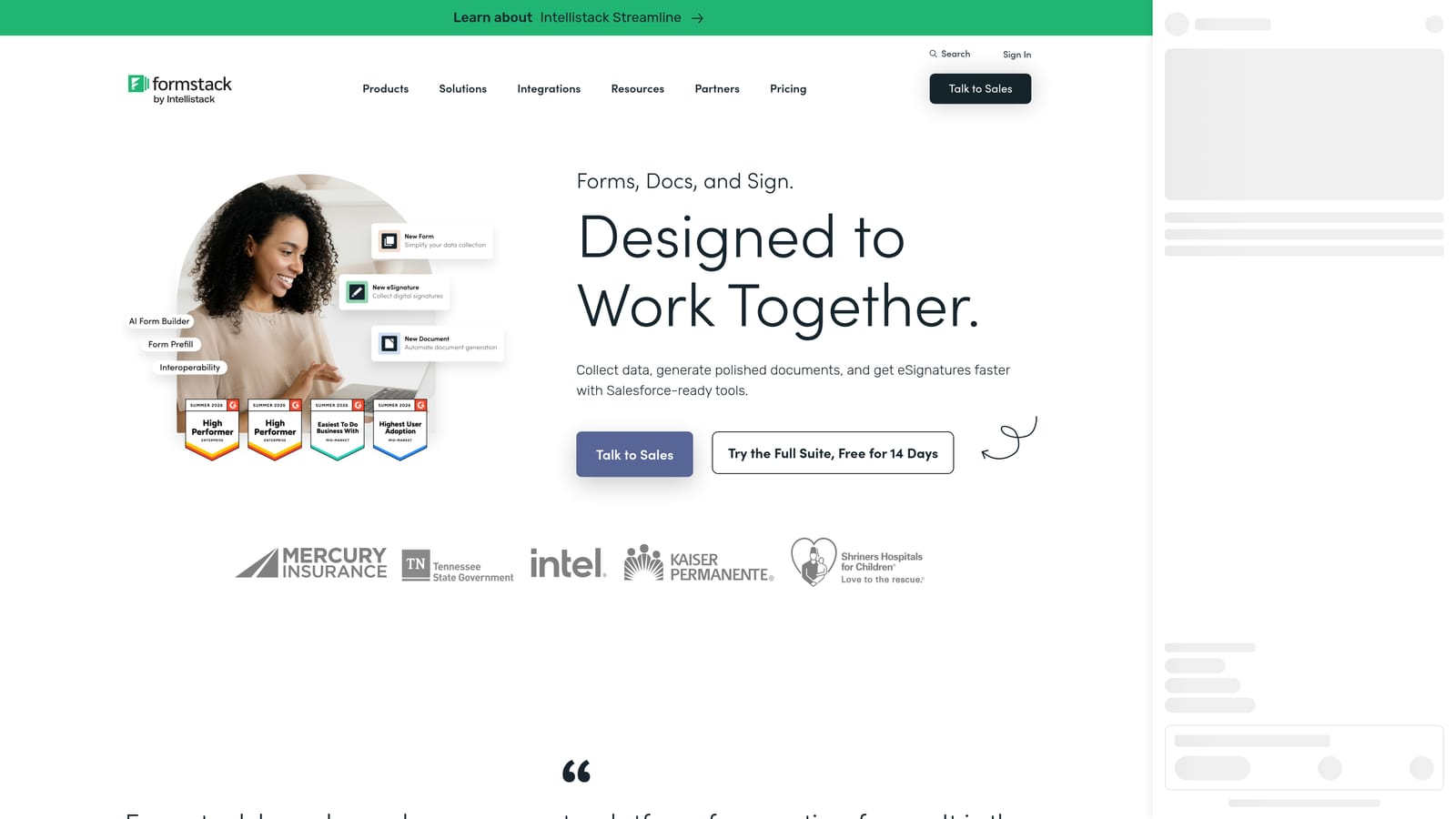
Formstack is an enterprise-grade platform that combines form building with workflow automation, document generation, and e-signature collection for sophisticated order and procurement processes.
Where This Tool Shines
Formstack operates in a different category than the other tools on this list. Where most form builders focus on the moment of submission, Formstack is built around what happens after: multi-step approval chains, automatically generated order documents, e-signature collection, and audit trails for regulated industries. For B2B ecommerce, wholesale purchasing, or procurement workflows, this depth is genuinely valuable.
The platform's enterprise CRM integrations with Salesforce and HubSpot mean that order data flows directly into the systems your sales and operations teams already live in. For organizations where an order triggers a chain of internal processes, Formstack handles that orchestration in a way lighter-weight tools simply can't.
Key Features
Advanced Workflow Automation: Multi-step approval and routing workflows for complex B2B order and procurement processes.
Document Generation: Automatically generate order documents, contracts, and purchase records from form submissions.
E-Signature Collection: Collect legally binding signatures as part of the order or agreement process.
Enterprise CRM Integrations: Deep integrations with Salesforce, HubSpot, and other enterprise platforms for seamless data flow.
Compliance and Audit Trails: Built-in features for regulated industries that need documented records of every order and approval step.
Best For
Formstack is purpose-built for enterprise and B2B teams where an order is the beginning of a complex internal workflow, not the end of a simple transaction. It's overkill for most direct-to-consumer stores, but genuinely powerful for wholesale, procurement, and regulated industry order management.
Pricing
Enterprise-level pricing at the higher end of the market. Verify current plans and pricing at formstack.com.
Which Order Form Builder Is Right for You?
Each tool on this list earns its place, but they serve meaningfully different needs. Here's how to cut through the options quickly.
Orbit AI is the strongest choice if you want your order form to do more than collect data. The AI-powered qualification and buyer routing built into the platform make it the right fit for high-growth teams that treat every order submission as a sales signal worth acting on.
Typeform excels when the buying experience itself is part of your brand. If you're selling products that benefit from a guided, conversational flow, its one-question-at-a-time format reduces friction in a way that traditional form layouts can't match.
Jotform wins on breadth. If you need native support for multiple payment gateways, a large template library, and robust ecommerce-specific fields without hiring a developer, Jotform delivers more out-of-the-box functionality than almost anything else on the market.
Paperform is the pick for brands where context sells. If your product needs explanation at the moment of purchase, the document-editor format keeps your product story alive right up until the buyer hits submit.
Tally is the fastest path to a functional order form at zero cost. For early-stage stores validating a product or running a limited campaign, the unlimited free tier removes every barrier to getting started.
Formstack belongs in the conversation when your order process involves approvals, documents, e-signatures, or enterprise CRM workflows. It's the right tool for B2B and procurement-heavy use cases, and likely unnecessary for anything simpler.
If you're building for growth and want your order form to qualify buyers, segment customers, and trigger the right downstream actions automatically, Orbit AI is where to start. Start building free forms today and see how intelligent form design can elevate your conversion strategy.


