

Order forms are often the last thing standing between a visitor and a conversion. A clunky, confusing, or slow form doesn't just frustrate users — it actively costs you revenue. Whether you're collecting product orders, service requests, or B2B purchase inquiries, the software you build on shapes the experience your customers have at the most critical moment.
The good news is that the order form builder category has matured considerably. Payment processing, conditional logic, multi-step flows, and CRM integrations are now table stakes. The tools that stand out in 2026 are the ones that go further — helping teams not just collect submissions, but act on them intelligently.
Here are the top order form builder software tools worth considering this year, selected based on ease of use, customization depth, payment support, and how well each serves high-growth teams focused on conversion.
1. Orbit AI
Best for: High-growth SaaS and B2B teams who want order forms that qualify leads in real time.
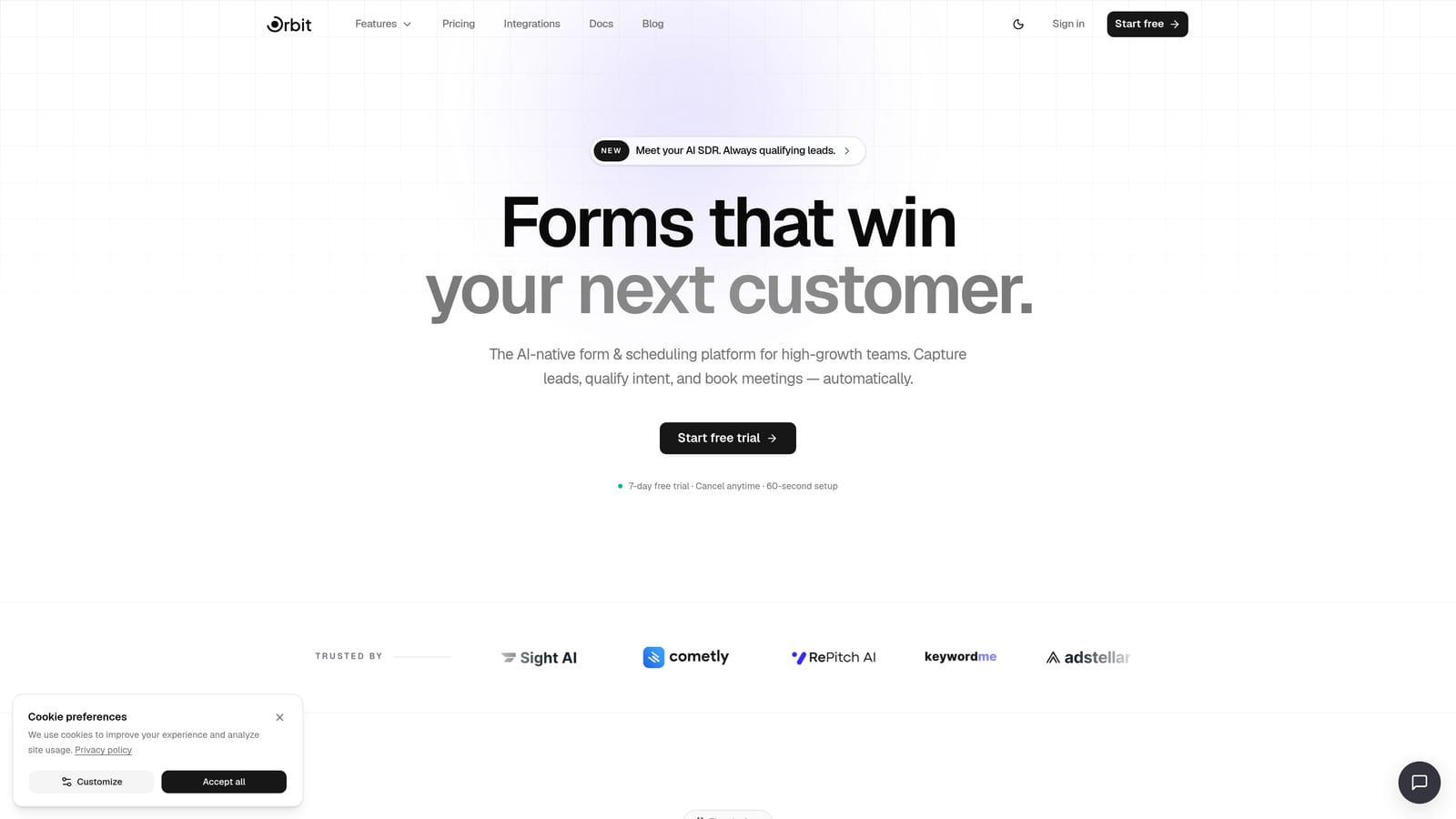
Orbit AI is an AI-powered form builder designed specifically for teams where lead quality matters as much as lead volume.
Where This Tool Shines
Most order form tools are passive. They collect data and hand it off. Orbit AI takes a different approach: its AI layer scores and routes submissions in real time based on how respondents answer, which means your sales or fulfillment team sees qualified, prioritized leads rather than a raw inbox of unfiltered submissions.
This is particularly valuable for B2B order and request flows where not every submission is a good fit. Instead of manually triaging responses, teams can set qualification criteria and let the AI surface the right leads automatically. The form design itself is clean and conversion-focused, built to reduce friction rather than add it.
Key Features
AI-Driven Lead Qualification: Scores and routes form submissions in real time based on response logic, reducing manual triage for sales and ops teams.
Conversion-Optimized Design: Modern, clean UI designed with conversion in mind — not just aesthetics.
Multi-Step Form Support: Handles complex order and request flows across multiple steps without losing respondents.
SaaS Stack Integrations: Connects with common CRM and automation platforms to keep your order data flowing where it needs to go.
Form Analytics: Built-in performance tracking so you can see where respondents drop off and optimize accordingly.
Best For
Orbit AI is the strongest fit for SaaS companies, B2B service providers, and high-growth teams where lead qualification is part of the order or request process. If you're tired of forms that just collect data without helping you act on it, this is the tool built to solve that problem.
Pricing
Current plans are available at orbitforms.ai/pricing. Pricing reflects the platform's AI capabilities and is structured for growing teams.
2. Typeform
Best for: Brands that want a high-engagement, conversational order experience with minimal friction.
Typeform is a conversational form builder known for its one-question-at-a-time format that creates a more engaging, guided order experience.

Where This Tool Shines
Typeform's signature format — presenting one question at a time rather than a full form — makes order flows feel less like filling out paperwork and more like a conversation. For brands selling higher-consideration products or services, this approach can meaningfully reduce the intimidation factor of a long order form.
The platform also has one of the stronger template libraries in the category, with dedicated order form templates that give you a solid starting point. Logic jumps let you build conditional paths, so customers only see the questions relevant to what they're ordering.
Key Features
Conversational One-Question Format: Presents questions sequentially to reduce cognitive load and form abandonment.
Stripe Payment Integration: Collects payment directly within the form flow without redirecting users.
Logic Jumps: Routes respondents through different question paths based on their previous answers.
Template Library: Includes ready-to-use order form templates for faster setup.
Integrations: Connects with HubSpot, Salesforce, Zapier, and a wide range of other tools.
Best For
Typeform works best for lower-to-mid volume order flows where the experience quality matters — think service-based businesses, creative agencies, or brands selling premium or customized products. It's less suited to high-volume, transactional order processing where speed is the priority.
Pricing
A free tier is available with limited responses. Paid plans start at a mid-range monthly price — verify current rates at typeform.com/pricing.
3. Jotform
Best for: Teams that need the deepest native payment integrations and order-specific features like inventory tracking.
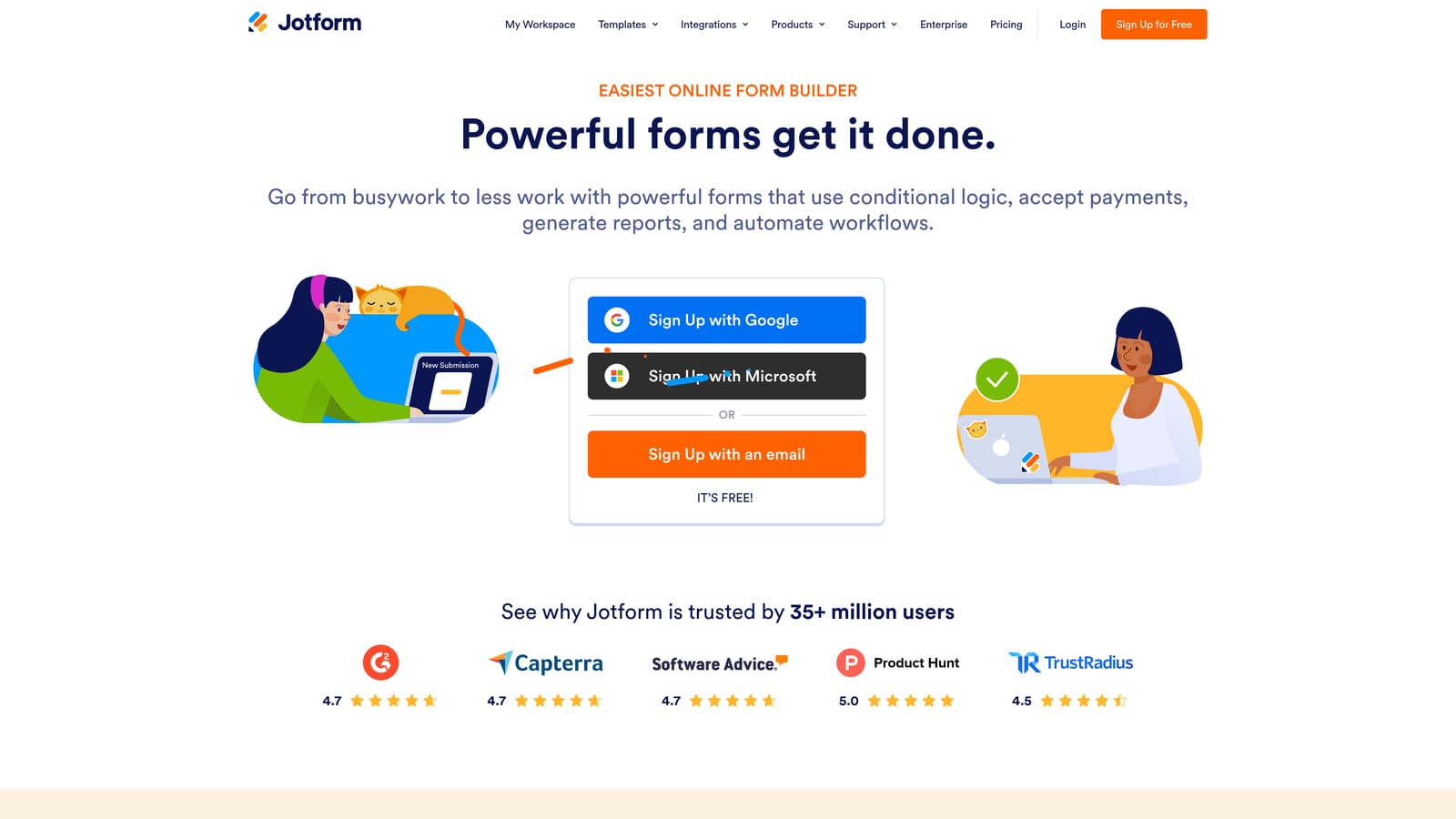
Jotform is one of the most feature-complete form builders available, with a particularly strong set of tools built specifically for order management.
Where This Tool Shines
Where most form builders treat payment as an add-on, Jotform treats it as a core capability. The platform supports native integrations with Stripe, PayPal, Square, Authorize.net, and several other payment processors — giving you flexibility to match your existing payment infrastructure. Calculation fields let you build dynamic pricing directly into the form, so order totals update automatically based on what customers select.
Jotform also includes features you won't find in most competitors: inventory tracking fields that prevent overselling, PDF order confirmation generation, and Jotform Tables, a built-in database that functions as a lightweight order management system. For teams that want to handle the full order cycle within one platform, that's a compelling package.
Key Features
Multi-Gateway Payment Support: Native integrations with Stripe, PayPal, Square, Authorize.net, and more.
Calculation Fields: Dynamic pricing that updates order totals based on customer selections in real time.
Inventory Tracking: Prevents orders from exceeding available stock directly within the form.
PDF Generation: Automatically creates order confirmation documents for customers and internal teams.
Jotform Tables: Built-in order management database for tracking and organizing submissions.
Best For
Jotform is a strong fit for product-based businesses, event organizers, and teams managing moderate-to-high order volumes who need robust payment flexibility and order tracking without a full e-commerce platform. The interface can feel dense compared to newer tools, but the feature depth justifies the learning curve for the right use case.
Pricing
A free tier is available with submission limits. Paid plans scale with volume — verify current tiers at jotform.com/pricing.
4. Paperform
Best for: Businesses that want fully branded, visually rich order forms that feel like landing pages.
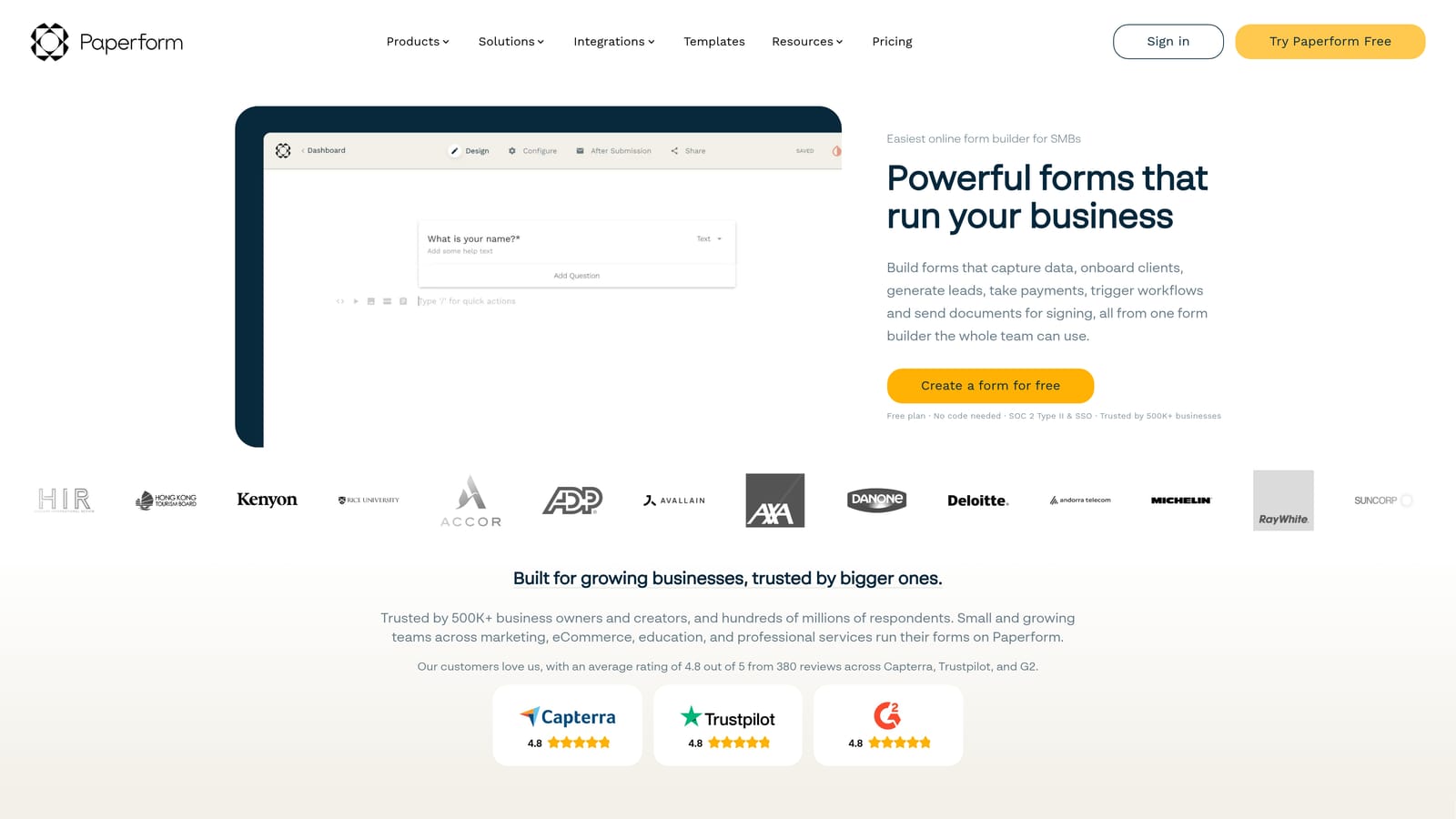
Paperform is a hybrid form and mini landing page builder that lets you create order experiences with rich media, product images, and custom branding in a single form.
Where This Tool Shines
Paperform's core differentiator is its editor. Unlike traditional form builders that separate design from function, Paperform lets you mix rich text, images, and video directly within the form itself. The result is an order form that looks and feels like a branded product page — not a generic data collection widget. For businesses where visual presentation influences purchase decisions, this matters.
Product fields with image support let customers see what they're ordering, which is particularly useful for small catalogs, artisan products, or service packages where visuals help close the sale. The no-code editor is intuitive enough that non-technical team members can build and update forms without developer help.
Key Features
Rich Media Embedding: Add text, images, and video directly within the form to create a branded order experience.
Product Fields with Image Support: Display product visuals alongside order options for a more e-commerce-like feel.
Payment Support: Accepts payments via Stripe, PayPal, and Braintree.
Calculation Fields: Dynamic pricing that adjusts order totals based on customer selections.
No-Code Editor: Intuitive, document-style interface that requires no technical background to use.
Best For
Paperform is best suited for small-to-medium businesses, service providers, and creators with smaller product catalogs who want their order forms to reflect their brand quality. It's not designed for high-volume or enterprise order workflows, but for the right use case, nothing else in this list comes close on visual experience.
Pricing
No free tier is available. Paid plans start at a reasonable monthly rate — verify current pricing at paperform.co/pricing.
5. Tally
Best for: Lean teams and early-stage builders who need clean, functional order forms without a budget.
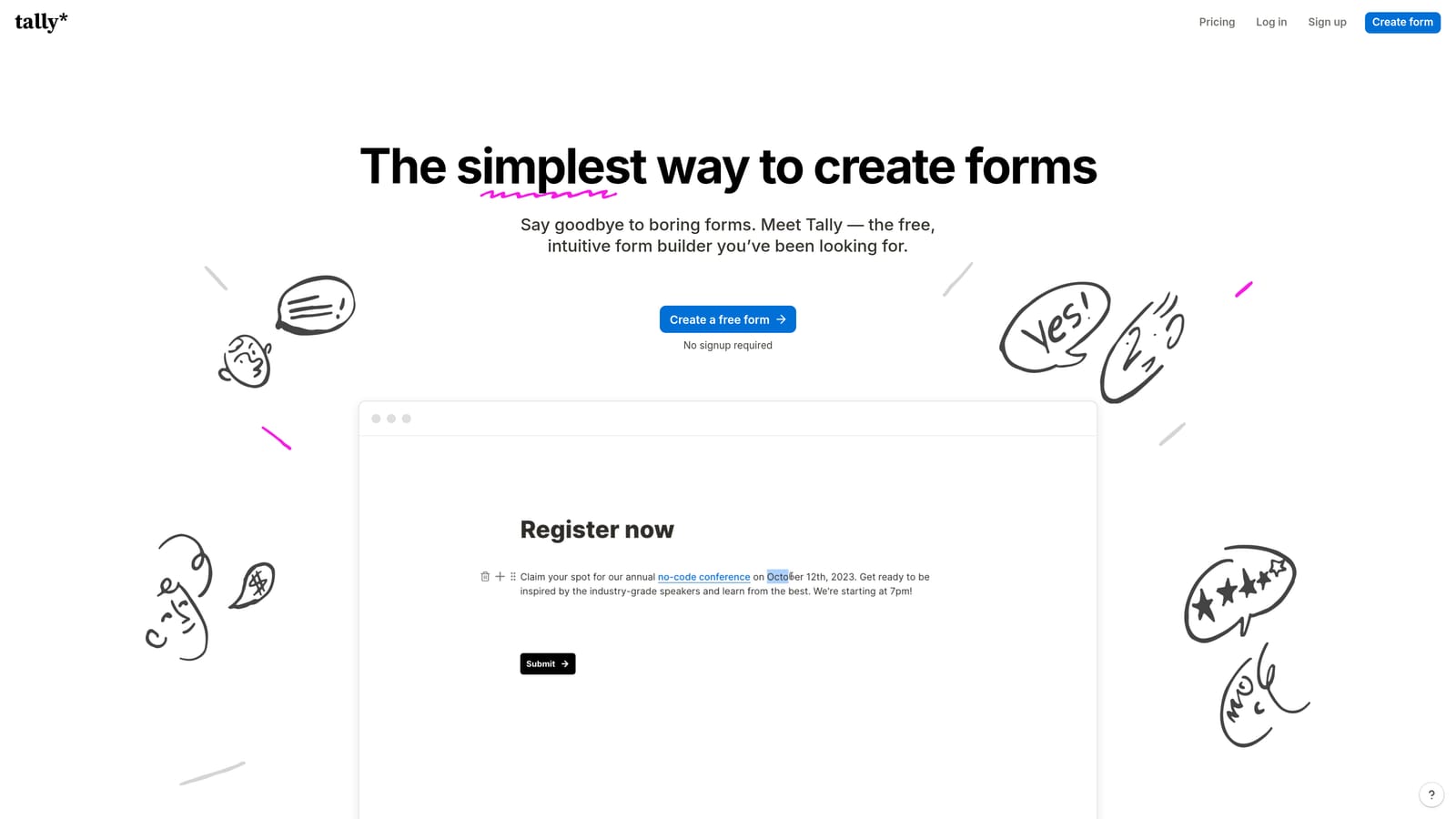
Tally is a minimalist, Notion-inspired form builder with a genuinely generous free tier that makes it accessible for teams at any stage.
Where This Tool Shines
Tally's free tier stands out in a category where most tools lock useful functionality behind paid plans. Unlimited forms and unlimited submissions on the free plan means you can build and launch order forms at real scale without immediately hitting a paywall. The block-based editor, familiar to anyone who uses Notion, has a short learning curve and produces clean, professional-looking forms quickly.
The embed experience is particularly smooth. Tally forms integrate cleanly into websites and Notion pages, making it a natural fit for teams that already operate within the Notion ecosystem or want a lightweight form solution that doesn't feel bolted on.
Key Features
Generous Free Tier: Unlimited forms and submissions at no cost, making it accessible for early-stage teams.
Block-Based Editor: Notion-style interface that's fast to learn and produces clean output.
Stripe Payments: Payment collection available on paid plans for order forms that require checkout.
Clean Embed Experience: Integrates smoothly into websites and Notion pages without visual friction.
Growing Integrations: Expanding library of connections to popular tools and automation platforms.
Best For
Tally is the right pick for startups, solopreneurs, and lean teams who need functional order forms without advanced features like inventory tracking or dynamic pricing. If your order flow is relatively straightforward and budget is a constraint, Tally delivers more value on its free tier than almost anything else in this list.
Pricing
A strong free tier is available. Tally Pro adds payment collection, custom domains, and additional features — verify current rates at tally.so/pricing.
6. Formstack
Best for: Enterprise teams with complex B2B order workflows, compliance requirements, or multi-step approval processes.
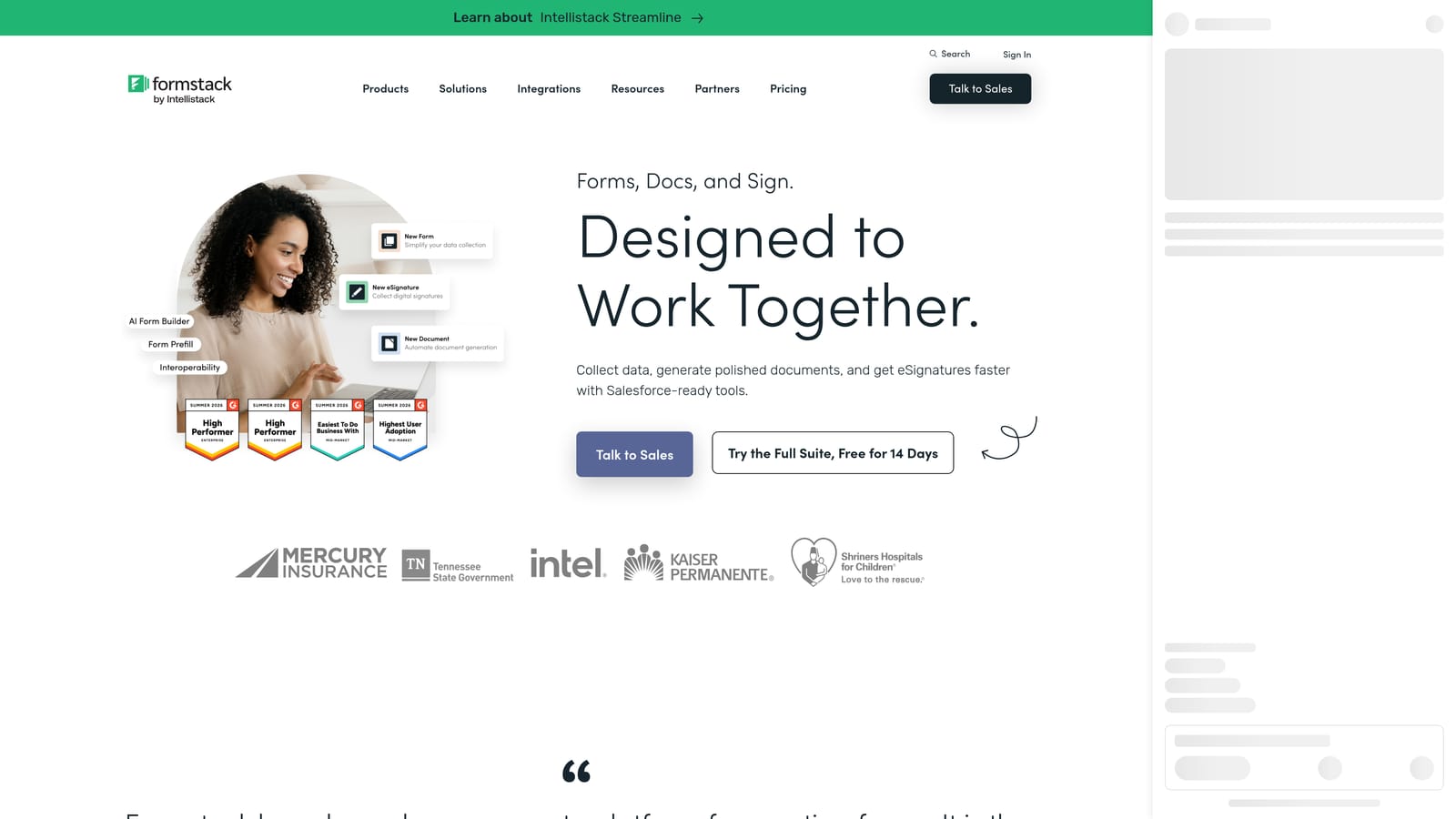
Formstack is an enterprise form and workflow platform that extends well beyond basic order form functionality into document generation, e-signatures, and approval routing.
Where This Tool Shines
Formstack is built for complexity. Where most form tools stop at submission collection, Formstack extends the order process into what happens next: documents get generated, signatures get collected, approvals get routed to the right stakeholders. For B2B teams where an order isn't just a transaction but the start of a contract or fulfillment workflow, that end-to-end capability is genuinely useful.
The platform's compliance features — including HIPAA and GDPR support — make it one of the few form tools appropriate for regulated industries. Native Salesforce and HubSpot integrations are deep rather than surface-level, which matters for enterprise teams with complex CRM workflows built around their order data.
Key Features
Multi-Step Approval Workflows: Routes order submissions through internal approval chains before processing.
Document Generation and E-Signatures: Automatically creates order documents and collects signatures within the same workflow.
Compliance Features: HIPAA and GDPR capabilities for teams operating in regulated industries.
Native CRM Integrations: Deep Salesforce and HubSpot connections for enterprise-grade order data management.
Enterprise Security Controls: Access controls, audit trails, and security features suited to large organizations.
Best For
Formstack is the right choice for mid-market and enterprise teams with complex B2B order processes, compliance obligations, or multi-stakeholder approval requirements. It's overkill for small teams or simple order forms — the price point and feature depth are calibrated for organizations with real workflow complexity to manage.
Pricing
Formstack is priced at a higher tier reflecting its enterprise positioning. Verify current plans at formstack.com/pricing.
Which Tool Is Right for Your Team?
The best order form builder depends entirely on what you're optimizing for. Here's a quick way to think through the decision.
If your priority is lead qualification and conversion intelligence, Orbit AI is the clear choice. It's the only tool on this list that actively scores and routes submissions in real time, which makes a meaningful difference for B2B teams where order quality matters as much as order volume.
If you're focused on engagement and experience quality, Typeform's conversational format or Paperform's rich media editor will serve you well — particularly for higher-consideration purchases where the form experience influences the buying decision.
If you need deep payment flexibility and order management features, Jotform's native multi-gateway support, inventory tracking, and PDF generation make it the most complete option for product-based businesses.
If you're budget-constrained or just getting started, Tally's free tier is genuinely hard to beat. You get unlimited forms and submissions without paying anything, which gives you room to test and iterate before committing to a paid platform.
And if you're managing enterprise-scale B2B order workflows with compliance requirements and multi-step approvals, Formstack is built for exactly that level of complexity.
For high-growth teams that want their order forms to do more than collect data, Orbit AI's AI-powered qualification layer addresses the gap that every other tool on this list leaves open. Start building free forms today and see how intelligent form design can elevate your conversion strategy — without adding complexity to your workflow.


