

Form builders have become a core part of the modern growth stack, but pricing models vary wildly. Many platforms charge premium rates for features that should come standard. Whether you're a lean startup qualifying leads or a scaling SaaS team running multiple campaigns, the right form builder should deliver real conversion value without draining your budget.
This list covers the best affordable form builder options in 2026, evaluated on pricing transparency, core feature depth, ease of use, and ability to support lead generation goals. We've included only tools that offer genuine value at accessible price points. If you're also weighing how different tools handle conversion optimization, our guide on how to improve form conversion rates is worth reading alongside this comparison.
1. Orbit AI
Best for: High-growth SaaS and B2B teams that need lead qualification built into the form itself.
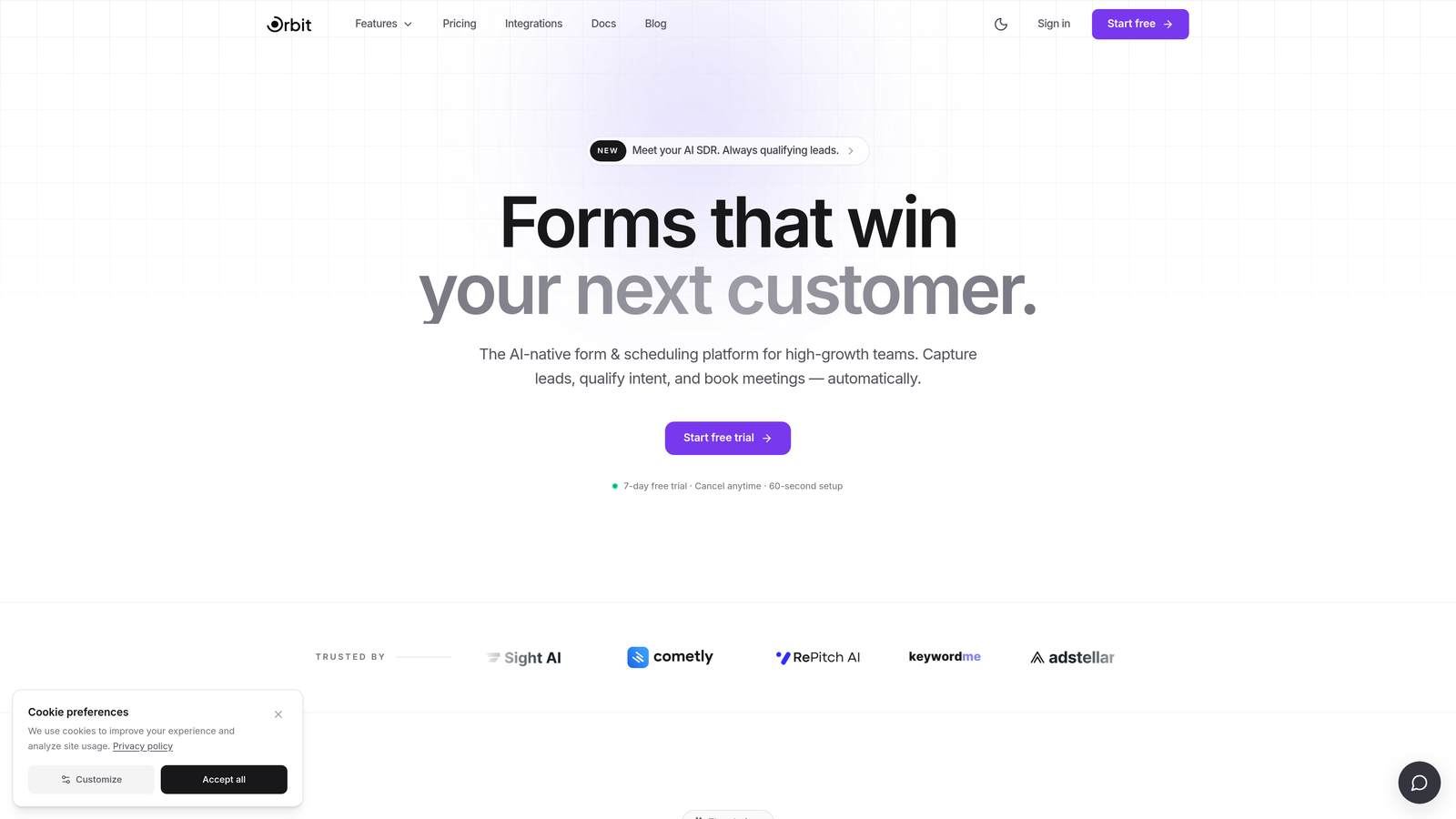
Orbit AI is an AI-powered form builder designed specifically for conversion optimization and intelligent lead qualification.
Where This Tool Shines
Most affordable form builders treat forms as passive data collectors. Orbit AI takes a fundamentally different approach by embedding lead qualification logic directly into the form flow. As a prospect fills out a form, the platform scores and routes them in real time, giving your sales team an immediate picture of lead quality without any manual triage.
The design philosophy is equally intentional. Forms are clean, modern, and built to reduce friction, which matters when you're optimizing for conversion rather than just submission volume. For teams that live and die by pipeline quality, that combination of intelligent qualification and polished UX is genuinely hard to find at this price point.
Key Features
AI-Powered Lead Qualification: Qualification logic runs inside the form flow itself, scoring leads automatically without requiring a separate tool or manual review step.
Automated Lead Scoring: Prospects are ranked by value signals so your team can prioritize outreach on the leads most likely to convert.
Conversion-Optimized Design: Clean, modern form UI built to minimize drop-off and maximize completion rates across devices.
Conditional Logic and Dynamic Fields: Forms adapt in real time based on respondent answers, creating a personalized experience that feels relevant rather than generic.
CRM and Marketing Automation Integrations: Connect directly with the tools your team already uses to ensure qualified leads flow into your pipeline without manual data entry.
Best For
Orbit AI is the strongest fit for SaaS companies, B2B marketing teams, and growth-focused operators who need more than a form. If lead quality is a priority and you want qualification to happen automatically rather than after the fact, this is built for that exact workflow.
Pricing
Visit orbitforms.ai for current pricing details, as plans are updated regularly to reflect new features and tiers.
2. Tally
Best for: Freelancers, indie makers, and early-stage teams who need unlimited forms without paying anything.
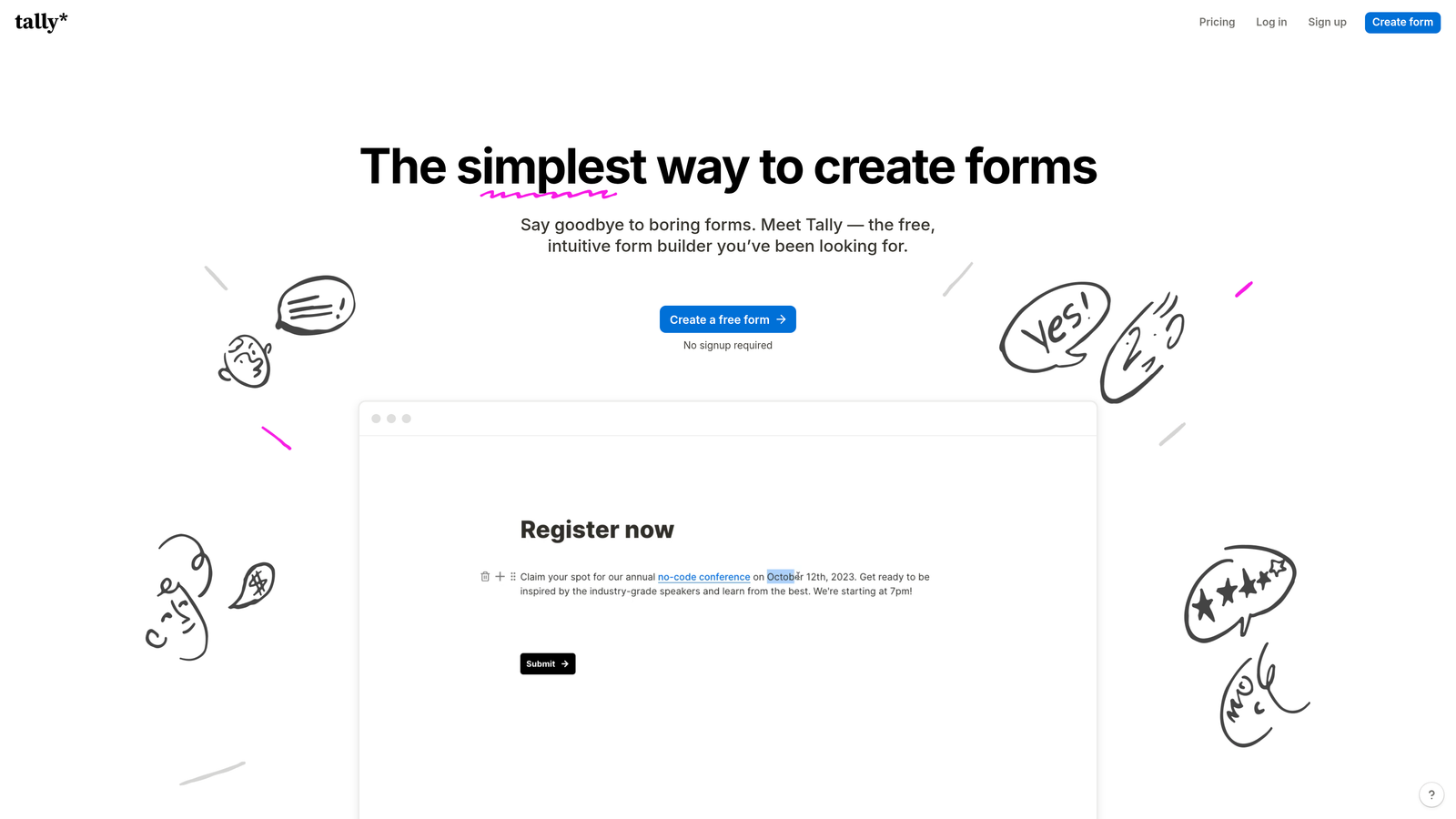
Tally is a minimalist form builder with a generous free plan and a clean, Notion-inspired design aesthetic.
Where This Tool Shines
Tally's free plan is genuinely one of the most permissive in the market. You get unlimited forms and unlimited submissions without hitting a paywall, which is rare among form builders that have historically used submission caps as their primary upgrade trigger. For teams that just need forms to work without counting responses, that's a meaningful advantage.
The design experience is deliberately simple. Building a form in Tally feels closer to writing a document than configuring a tool, which lowers the learning curve significantly for non-technical users. It's not built for complex lead qualification workflows, but for straightforward data collection, it's hard to beat at this price.
Key Features
Unlimited Forms and Submissions on Free Plan: No submission caps or form limits, making it genuinely free for teams at any volume on the free tier.
Clean, Distraction-Free Design: Minimalist form UX that keeps respondents focused without visual clutter.
Conditional Logic on Free and Paid Tiers: Basic branching logic is available even without upgrading, which is uncommon among free plans.
Notion and Website Embeds: Forms embed cleanly into Notion pages and websites with minimal configuration.
Pro Plan Upgrades: Tally Pro adds custom domains, file uploads, and third-party integrations for teams that need more control.
Best For
Tally is ideal for solopreneurs, freelancers, and early-stage startups that need functional, good-looking forms without a budget. It's also a strong choice for internal tools, quick surveys, and Notion-based workflows where design simplicity is a priority.
Pricing
Free plan available with no submission limits. Pro plan pricing is listed at tally.so. Verify current rates before making a decision.
3. Typeform
Best for: Teams that want a conversational, engaging form experience for surveys, quizzes, and lead capture.
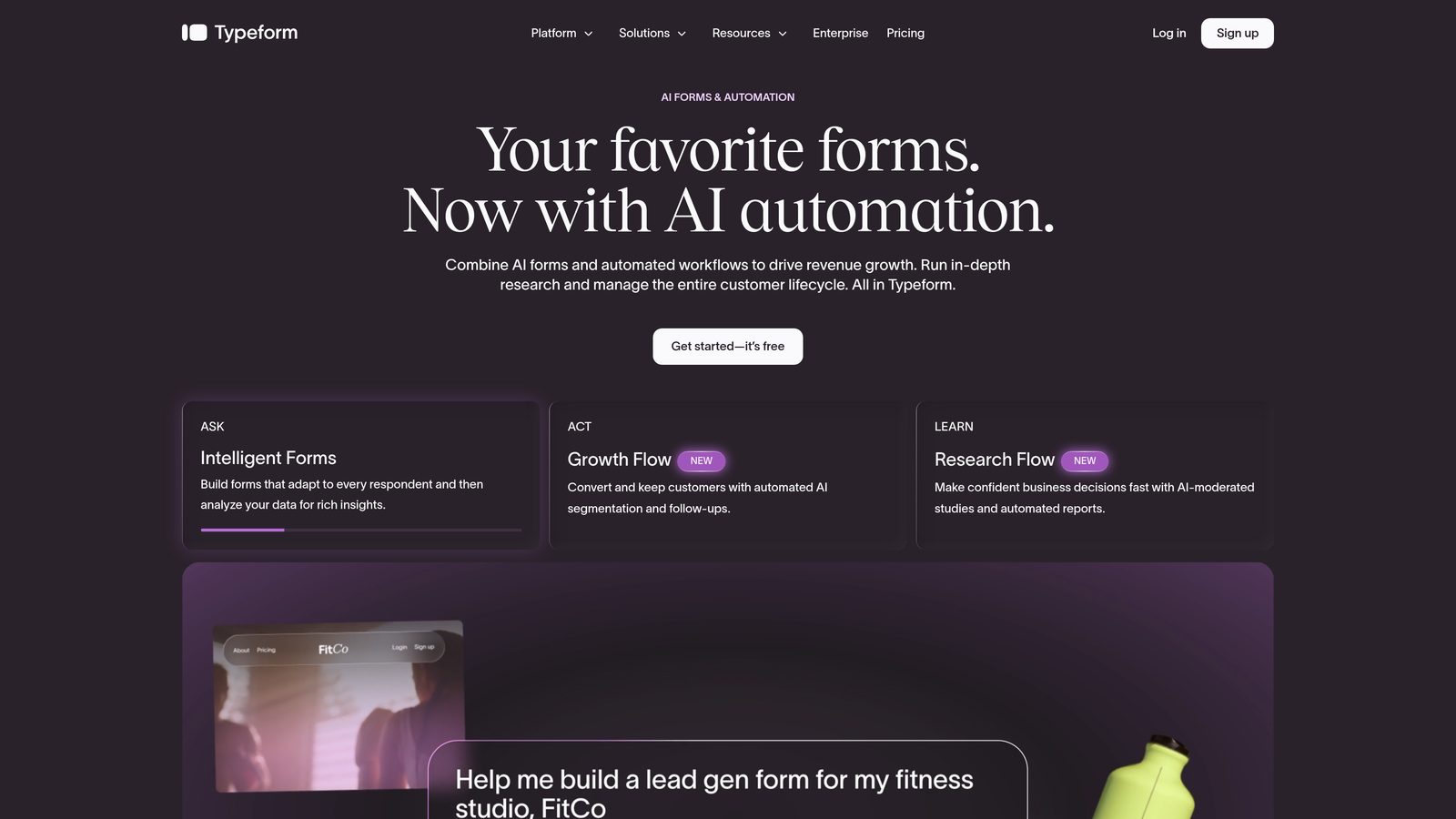
Typeform is a well-established conversational form builder known for its one-question-at-a-time format that creates a more engaging respondent experience.
Where This Tool Shines
Typeform's core design principle, showing one question at a time, creates a form experience that feels less like a form and more like a conversation. This approach tends to reduce the visual overwhelm that causes respondents to abandon traditional long-form surveys, which is why it remains popular for lead generation, research, and quiz-style content.
The template library is one of the strongest in the market, covering use cases from NPS surveys to product feedback to lead capture. For teams that want to launch quickly with a proven format, those templates remove a lot of the upfront design work.
Key Features
Conversational One-Question-at-a-Time UX: The signature format presents questions sequentially, reducing friction and improving completion rates for longer forms.
Extensive Template Library: Pre-built templates spanning surveys, quizzes, lead capture forms, and more, ready to customize and deploy quickly.
Logic Jumps and Conditional Branching: Route respondents through different question paths based on their answers for a more personalized experience.
Integration Ecosystem: Connects with HubSpot, Salesforce, Zapier, and a wide range of marketing and CRM tools.
Free Plan with Response Limits: A free tier is available, though it caps monthly responses, which may require upgrading for higher-volume campaigns.
Best For
Typeform works well for marketing teams running lead gen campaigns, product teams collecting user feedback, and anyone building quiz funnels or survey flows where respondent experience directly affects completion rates.
Pricing
Free tier available with response limits. Paid plans are listed at typeform.com. Verify current pricing before committing, as plans and limits change.
4. Jotform
Best for: Teams that need a feature-complete form builder with payment collection and a large template library on a budget.
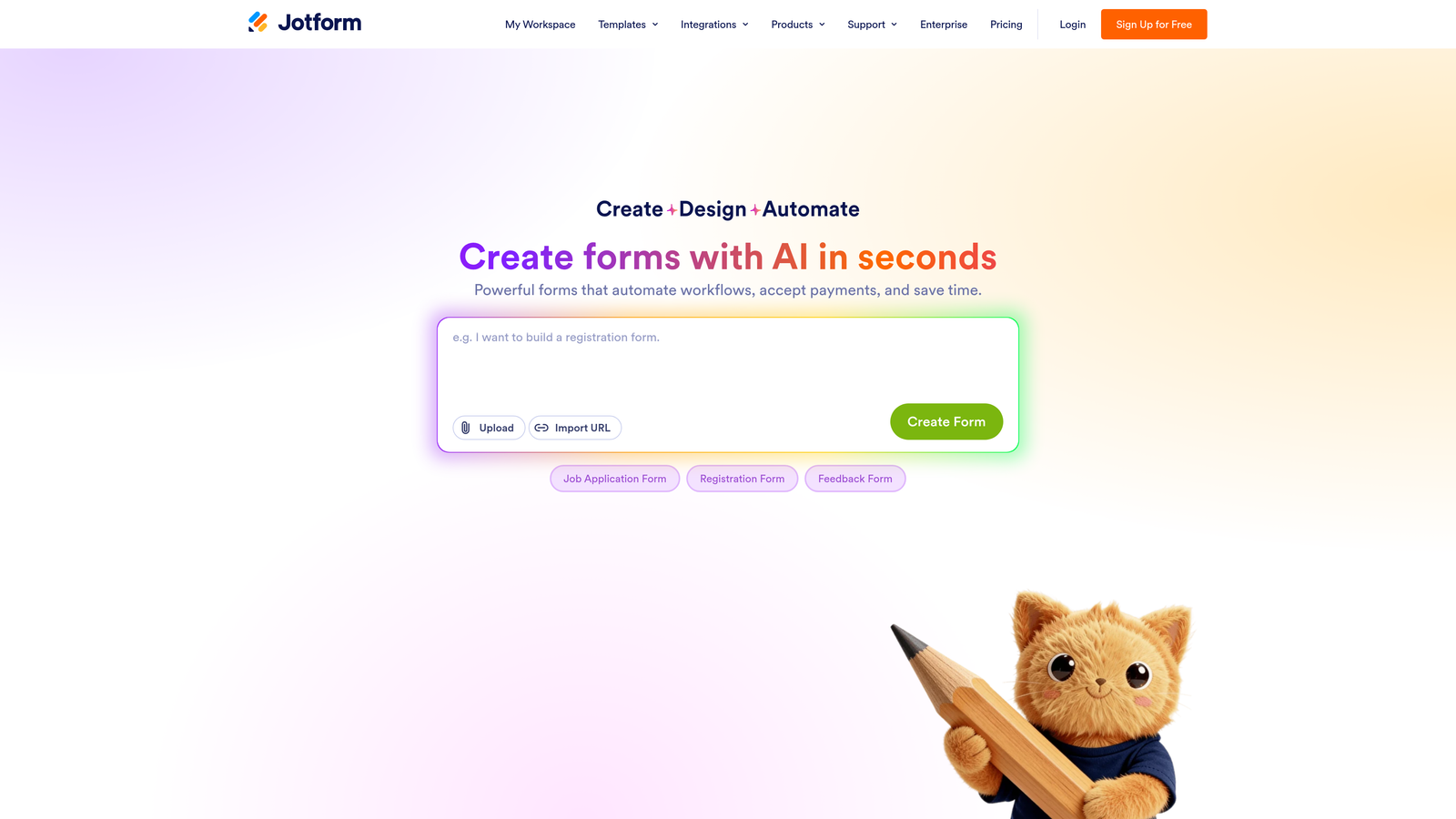
Jotform is one of the most feature-rich form builders available, offering thousands of templates and a capable free plan that covers a wide range of use cases.
Where This Tool Shines
Jotform's depth is its defining characteristic. While many affordable tools offer a narrow feature set, Jotform packs in payment collection, conditional logic, file uploads, calculation fields, and an integration library that rivals tools costing significantly more. For teams that need to handle diverse form types across a single platform, that breadth is genuinely useful.
The free plan is also more functional than most. You get access to multiple forms and a meaningful submission allowance before hitting any limits, which gives teams real room to evaluate the platform before deciding whether to upgrade.
Key Features
Thousands of Pre-Built Templates: One of the largest template libraries in the market, spanning industries from healthcare to e-commerce to education.
Built-In Payment Collection: Native integrations with Stripe, PayPal, and Square allow you to collect payments directly through forms without third-party workarounds.
Conditional Logic and Calculation Fields: Advanced logic and math-based fields support complex form workflows without requiring custom code.
Broad Integration Support: Connects with CRMs, cloud storage platforms, email marketing tools, and more out of the box.
Functional Free Plan: The free tier includes multiple forms and a reasonable submission limit, making it genuinely useful for smaller teams and early evaluation.
Best For
Jotform suits operations teams, small businesses, and agencies that need to handle multiple form types, including payment forms, registration forms, and data collection workflows, all from a single platform with room to grow.
Pricing
Free plan available. Paid plans scale based on submission volume and storage. Current pricing is listed at jotform.com. Verify before publishing or purchasing.
5. Paperform
Best for: Small businesses and consultants who want forms that double as lightweight landing pages with native payment and scheduling.
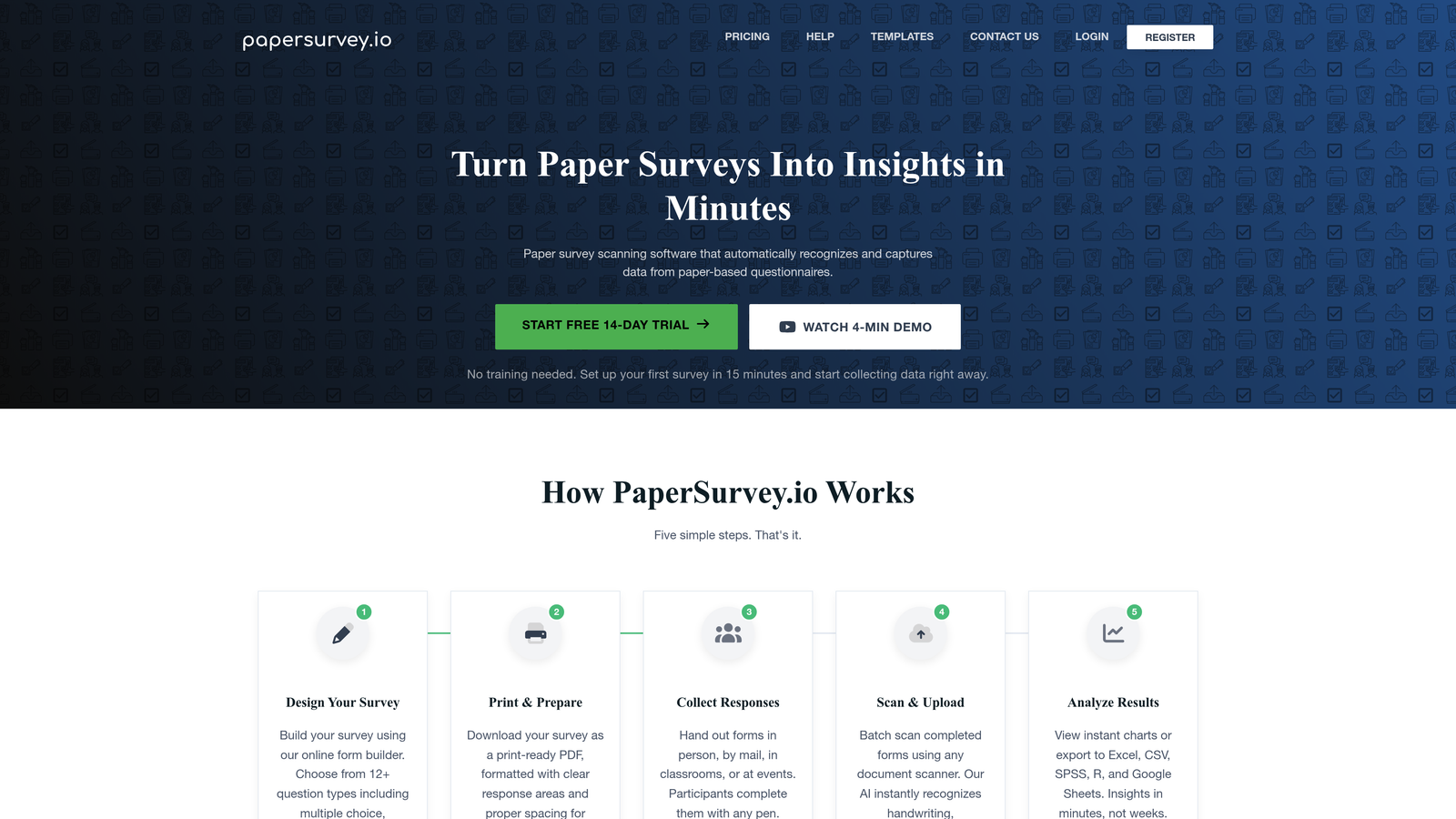
Paperform is a document-style form builder that blends form creation with landing page design, native payment processing, and appointment scheduling in a single tool.
Where This Tool Shines
Paperform's editor feels like writing a document rather than configuring a form builder. You add text, images, and form fields in a freeform layout, which gives you far more design flexibility than most form tools allow. The result is forms that can genuinely function as standalone pages for product orders, service bookings, or intake flows without needing a separate landing page tool.
The native scheduling and payment integrations set it apart from tools that require Zapier or third-party connectors to handle those functions. For consultants or small business owners who want to collect payment and book appointments from a single form, that all-in-one capability is a real time saver.
Key Features
Document-Style Form Editor: Rich text editor interface lets you mix content and form fields freely, creating forms that look and feel like polished pages.
Native Payment Processing: Built-in integrations with Stripe, PayPal, and Braintree support one-time and recurring payments without extra configuration.
Built-In Appointment Scheduling: Scheduling functionality is included natively, removing the need for a separate booking tool for service-based businesses.
Conditional Logic and Calculation Support: Dynamic fields and calculation logic handle complex pricing forms, quizzes, and multi-step workflows.
Trial Before Committing: A trial period lets you test the platform before moving to a paid plan, which is useful given there's no permanent free tier.
Best For
Paperform is a strong fit for consultants, coaches, small business owners, and creative professionals who need forms that handle payments, bookings, and content in one place without a steep learning curve.
Pricing
No permanent free plan. A trial is available, and paid plan pricing is listed at paperform.io. Verify current rates before purchasing.
6. Formstack
Best for: Operations and mid-market teams that need structured workflow automation, data routing, and compliance-aware form features.
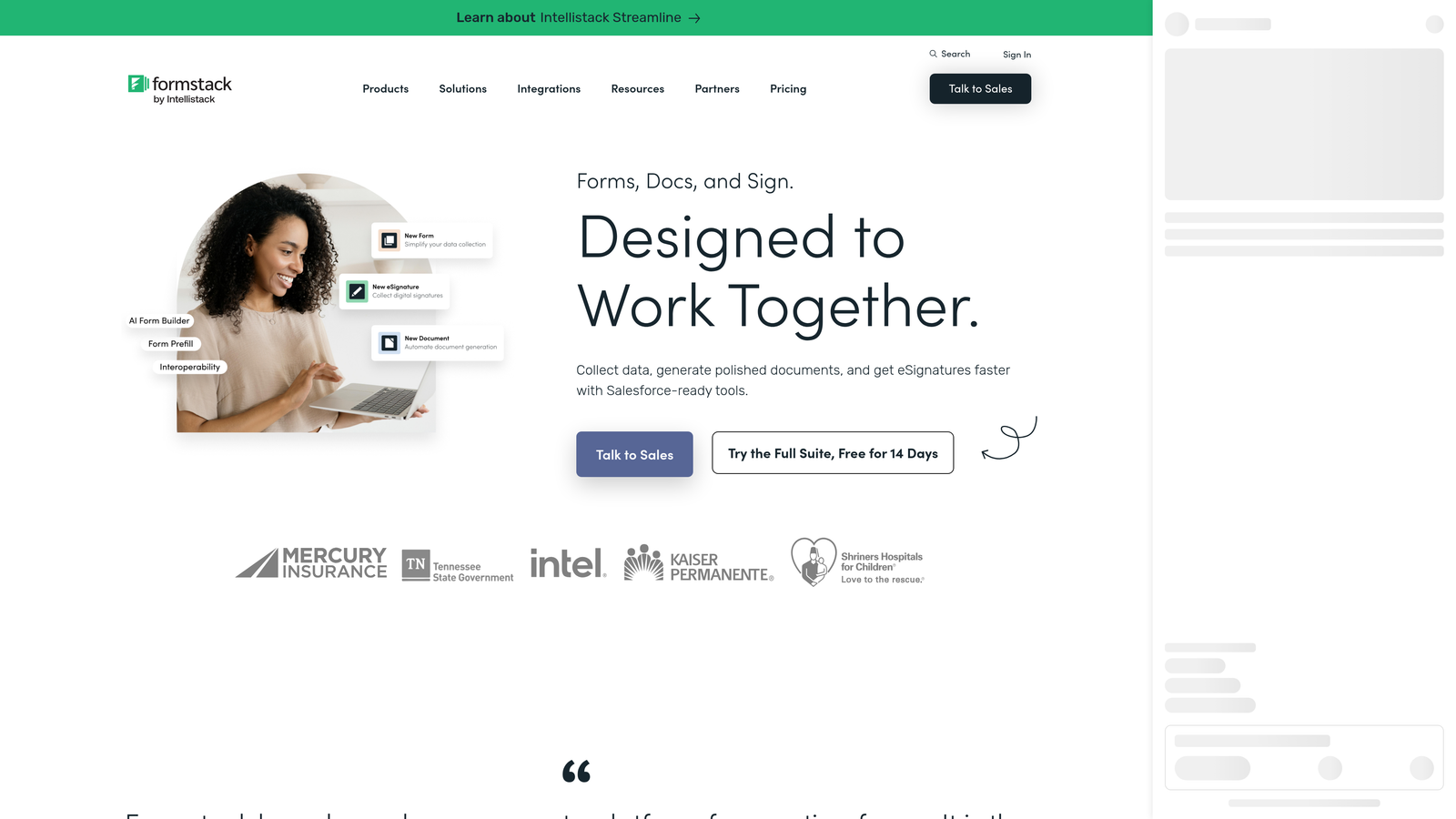
Formstack is a workflow-oriented form platform with advanced conditional logic, data routing, and compliance-friendly features built for teams that have outgrown basic form tools.
Where This Tool Shines
Formstack sits in a different category from the other tools on this list. Where most form builders focus on the respondent experience, Formstack focuses on what happens after submission. Its data routing and workflow automation capabilities mean that completed forms can trigger multi-step internal processes automatically, routing data to the right teams, systems, or documents without manual handling.
For teams in regulated industries or those managing structured operational workflows, the compliance-friendly features and enterprise integrations make Formstack a practical choice at the entry level. It's not the leanest option on this list, but it's the most capable for teams with structured backend needs.
Key Features
Advanced Conditional Logic: Sophisticated branching and field logic supports complex form structures that adapt based on respondent inputs.
Data Routing and Workflow Automation: Submission data can be routed to different systems, teams, or document workflows automatically based on defined rules.
Compliance-Aware Features: Built with considerations for HIPAA and GDPR requirements, making it suitable for healthcare, legal, and regulated industries.
Enterprise Integration Support: Connects with Salesforce, HubSpot, and a range of enterprise tools for seamless data flow across platforms.
Entry-Level Forms Plan: An accessible starting tier gives growing teams access to core features without requiring an enterprise commitment upfront.
Best For
Formstack is best suited for operations managers, mid-market teams, and organizations in regulated industries that need forms to be part of a larger, automated workflow rather than standalone data collection points.
Pricing
Paid plans only. Entry-level pricing and plan details are listed at formstack.com. Verify current pricing before making a decision.
Which Tool Is Right for Your Team?
Every tool on this list earns its place, but the right choice depends on what you're actually trying to accomplish with your forms.
If lead qualification and conversion optimization are your priorities, Orbit AI is the standout option. It's the only tool here that embeds AI-powered lead scoring directly into the form experience, making it purpose-built for high-growth teams that need pipeline quality, not just submission volume.
For teams on a tight budget who just need forms to work, Tally is the most generous free option available. Jotform is the better call if you need payment collection or a broad template library alongside that free tier. Typeform is worth considering when respondent experience and completion rates are the primary concern, particularly for surveys or quiz funnels.
If your forms need to double as lightweight landing pages with native payment and booking, Paperform fills that gap well. And if your team has structured workflow needs or operates in a regulated industry, Formstack brings the automation and compliance features that simpler tools don't offer.
The most important shift happening in form building right now is the move from passive data collection to active lead intelligence. Forms that qualify, score, and route leads automatically are becoming the baseline expectation for growth teams, not a premium add-on.
Transform your lead generation with AI-powered forms that qualify prospects automatically while delivering the modern, conversion-optimized experience your high-growth team needs. Start building free forms today and see how intelligent form design can elevate your conversion strategy.


