

Lead capture is the engine behind every high-growth pipeline, but most teams don't need an enterprise-priced platform to run it well. The challenge isn't finding a form builder. It's finding one that qualifies leads intelligently, converts visitors efficiently, and fits a budget that doesn't require a procurement process to approve.
The affordable lead capture market has matured considerably. Conditional logic, CRM integrations, and multi-step flows are no longer premium-only features. The real differentiators now are qualification depth, UX quality, and how well a tool fits your specific workflow. Whether you're a lean startup or a scaling SaaS team, the right platform should grow with you without locking you into features you'll never use.
This list covers the top affordable lead capture platforms available in 2026, evaluated on pricing transparency, core capture and qualification features, ease of setup, and conversion-focused design. If you want to go deeper on what happens after the form, our guides on how to improve lead quality and how to increase form submissions are worth a read.
1. Orbit AI
Best for: High-growth teams that need built-in AI lead qualification alongside conversion-optimized form design.
Orbit AI is an AI-powered form builder designed specifically for lead generation, with native lead qualification and scoring built directly into the platform.
Where This Tool Shines
Most form builders capture data and then hand off the qualification work to your CRM, a Zapier automation, or a sales rep. Orbit AI handles qualification inside the platform itself. Lead scoring and routing happen as part of the form flow, which means your team receives pre-qualified leads rather than raw submissions that still need manual review.
The design focus is equally strong. Forms are built to convert, with modern templates and a UX philosophy centered on progressive disclosure and clean, engaging interfaces. For high-growth teams where every conversion point matters, this combination of intelligent qualification and polished design is a meaningful differentiator.
Key Features
AI-Powered Lead Qualification: Built-in lead scoring and qualification logic that processes leads within the form flow, reducing dependence on external tools.
Conversion-Optimized Templates: Modern, beautiful form templates designed specifically for lead generation use cases, not generic data collection.
Conditional Logic and Dynamic Fields: Personalized capture flows that adapt based on respondent answers, keeping forms relevant and completion rates high.
CRM and Marketing Integrations: Connects with the tools your team already uses, so qualified leads flow directly into your existing stack.
Lead Generation Focus: Unlike general-purpose form builders, every feature is oriented around capture, qualification, and conversion outcomes.
Best For
Orbit AI is the right fit for SaaS teams, growth marketers, and demand generation professionals who want lead qualification to happen automatically, without stitching together multiple tools. If your primary goal is converting traffic into scored, actionable leads, this is where to start.
Pricing
Check current plans and pricing directly at orbitforms.ai, as plans are updated regularly to reflect new features.
2. Tally
Best for: Teams on tight budgets who need unlimited forms and responses without paying a cent.
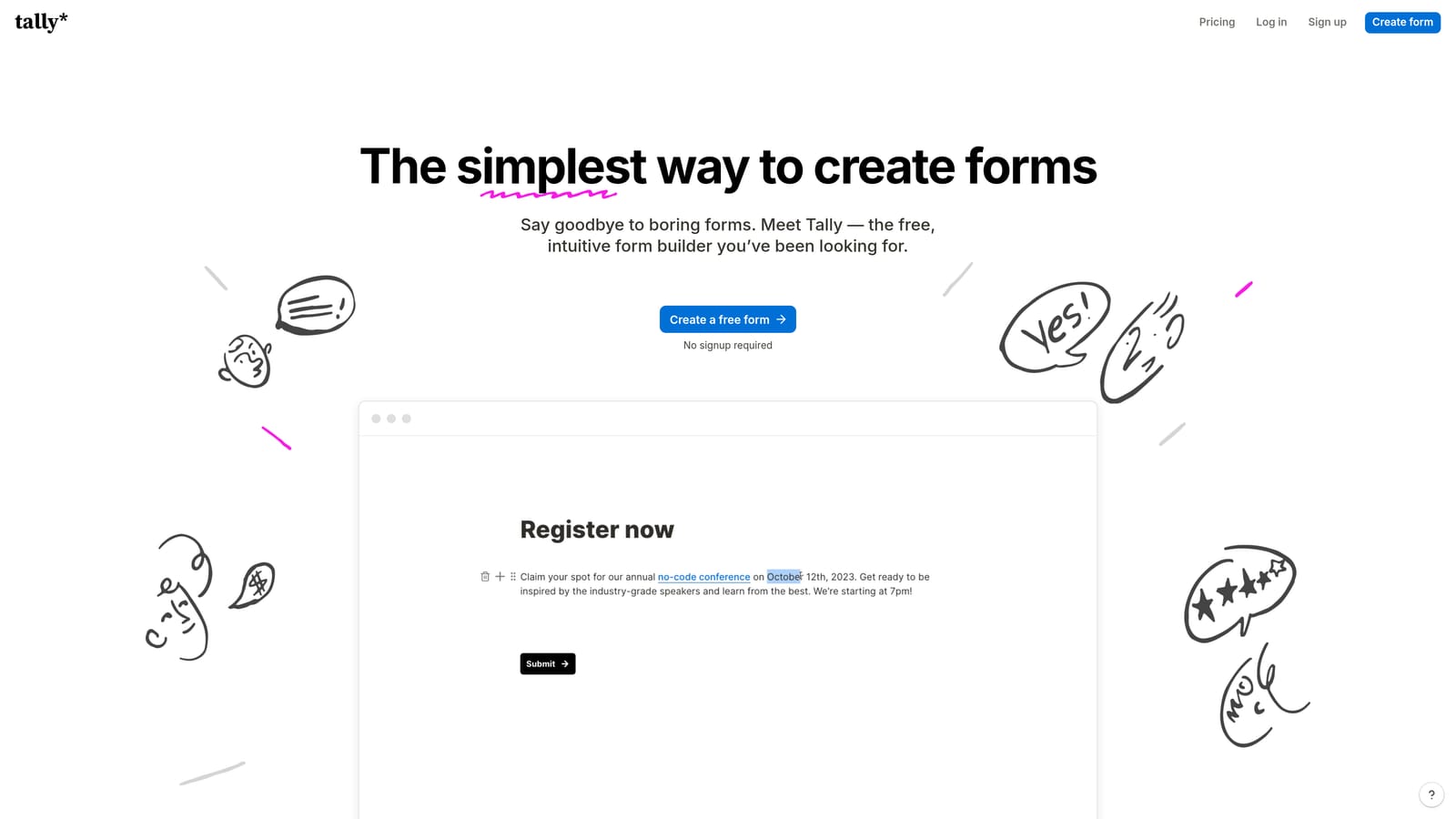
Tally is a clean, Notion-style form builder with one of the most generous free tiers in the market, offering unlimited forms and unlimited responses at no cost.
Where This Tool Shines
Tally's free plan is genuinely useful, not a stripped-down teaser. You get unlimited forms, unlimited responses, conditional logic, and easy embedding, all without entering a credit card. For early-stage teams or projects where budget is the primary constraint, this is a hard offer to ignore.
The editor is fast and intuitive, with a block-based interface that feels familiar to anyone who uses Notion. Setup takes minutes rather than hours, and the learning curve is nearly flat. The tradeoff is that Tally doesn't offer native AI lead qualification, so it works best for straightforward capture flows rather than scored or segmented lead pipelines.
Key Features
Unlimited Free Forms and Responses: No submission caps or form limits on the free plan, which is rare in this category.
Block-Based Editor: Fast, intuitive form creation with a familiar Notion-like interface that requires no training to use.
Conditional Logic on Free Plan: Basic branching logic is available without upgrading, which keeps simple personalized flows accessible.
Easy Embedding: Embeds cleanly into websites, Notion pages, and other environments with minimal configuration.
Pro Plan Upgrades: Custom domains, Tally branding removal, and priority support available on the paid tier.
Best For
Tally suits early-stage startups, indie makers, and small teams who need reliable lead capture without a budget. It's also a strong option for teams that want a secondary form tool for internal use or lower-stakes capture flows.
Pricing
Free tier available with no submission limits. Pro plan is approximately $29/month. Verify current pricing at tally.so.
3. Typeform
Best for: Teams that prioritize form UX and brand experience as core parts of their lead capture strategy.
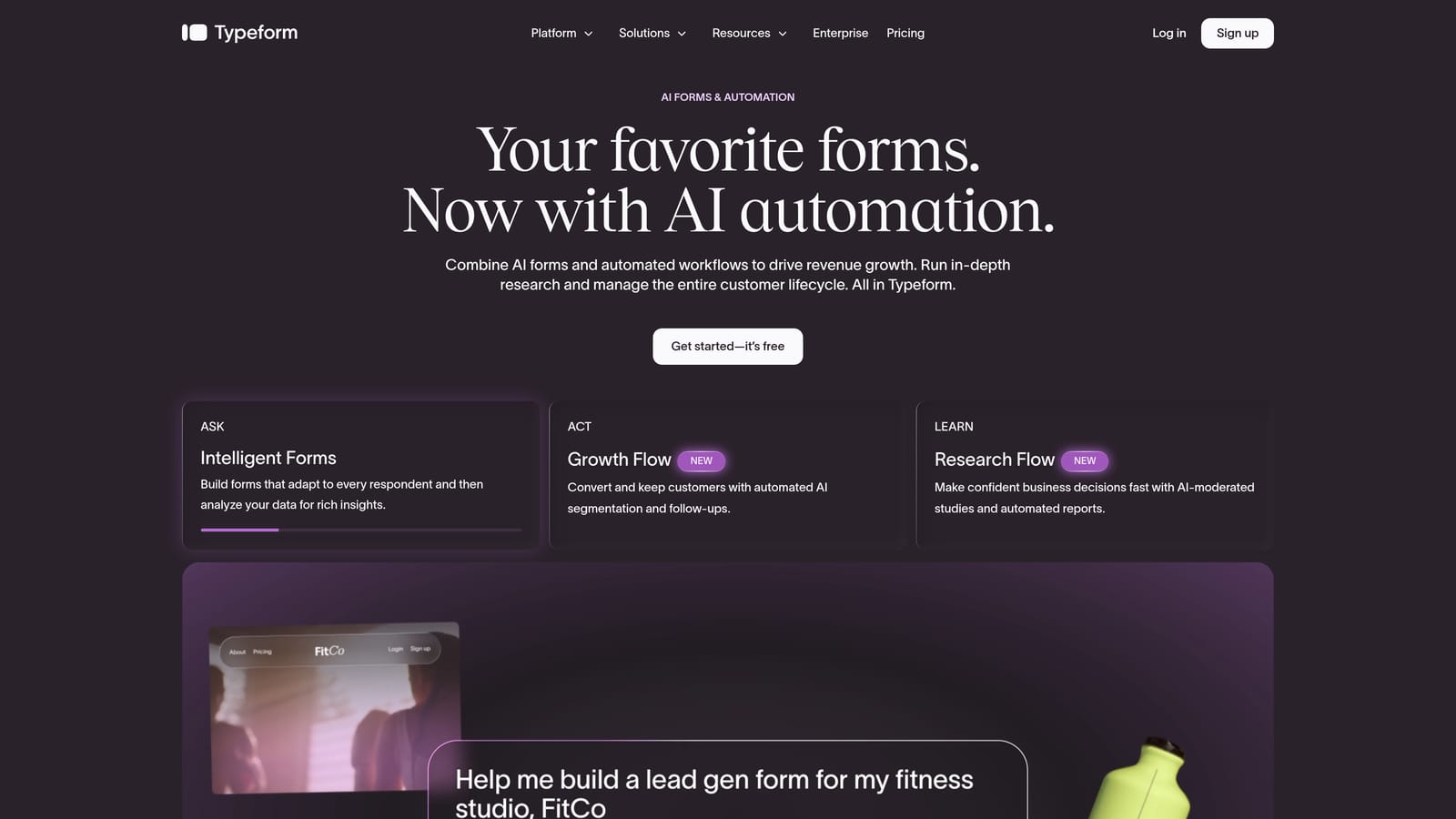
Typeform is the original conversational form builder, known for its one-question-at-a-time format that creates an engaging, dialogue-style lead capture experience.
Where This Tool Shines
Typeform's format is distinct. Rather than presenting a full form at once, it guides respondents through questions one at a time, which creates a more conversational feel and can reduce abandonment on longer forms. For teams where brand perception matters, the polished output is a genuine asset.
The platform has also expanded its AI capabilities in recent product updates, adding smarter form flow features that adapt based on responses. Integration depth is strong, with native connections to major CRMs, Slack, HubSpot, and a wide range of marketing tools. It's a mature platform with a large template library and a well-established ecosystem.
Key Features
Conversational One-Question Format: Guides respondents through forms like a dialogue, which tends to feel less overwhelming than traditional multi-field layouts.
Polished Templates and Brand Controls: Strong design quality out of the box, with customization options that align forms to your brand identity.
Logic Jumps and Conditional Branching: Adaptive form paths based on respondent answers, enabling more relevant capture flows.
CRM and Marketing Integrations: Native integrations with HubSpot, Salesforce, Slack, Mailchimp, and many others.
AI-Enhanced Form Flows: Recent additions include AI features that help optimize question sequencing and form logic.
Best For
Typeform is the right choice for marketing teams, agencies, and brand-conscious SaaS companies where the form experience itself reflects on the company. It suits teams willing to invest slightly more for a premium respondent experience.
Pricing
Free tier available with limited responses. Paid plans start at approximately $25/month. Verify current pricing at typeform.com.
4. Jotform
Best for: Teams that need lead capture, payments, surveys, and e-signatures consolidated into one platform.
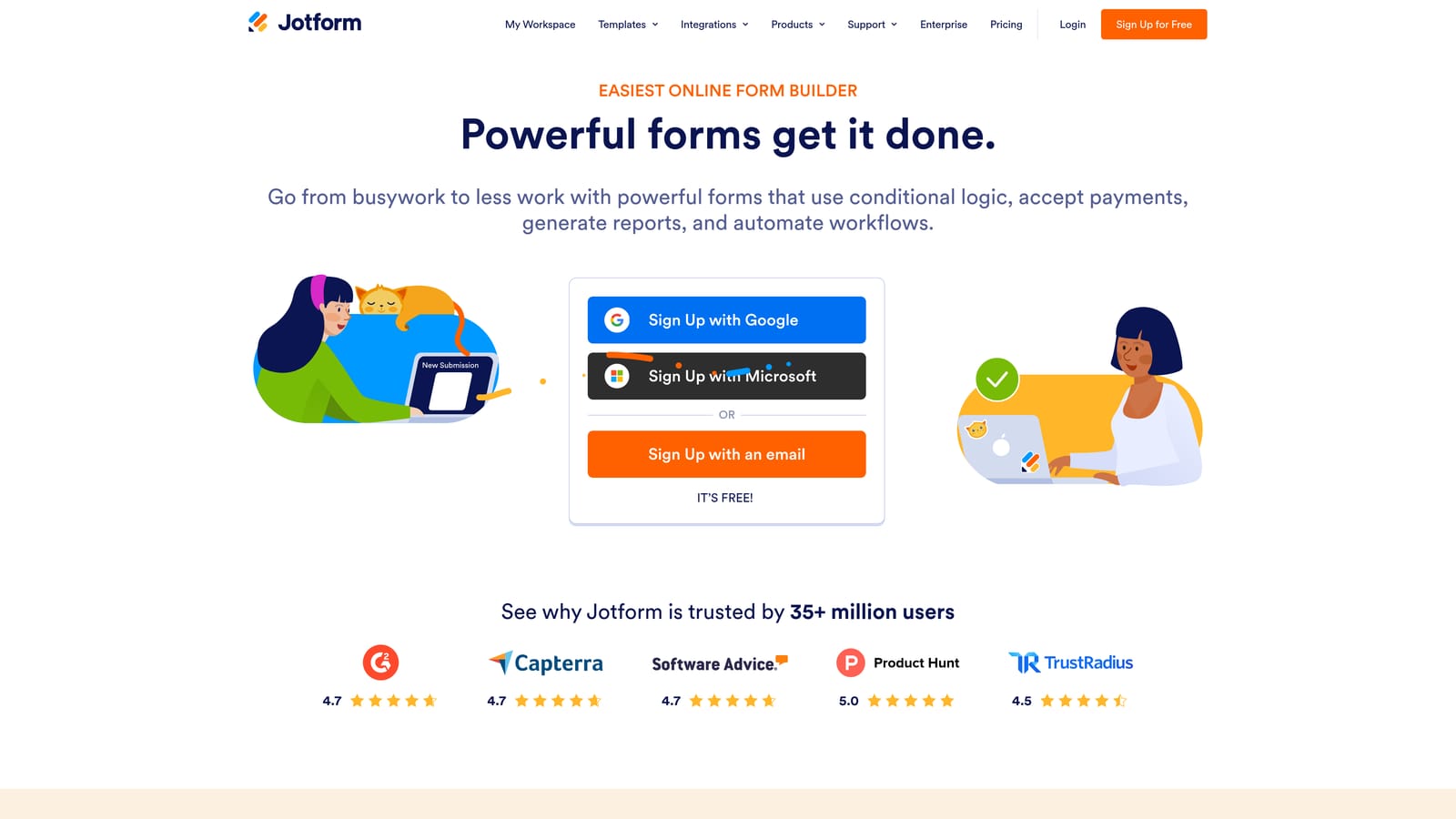
Jotform is one of the most feature-rich form builders in the affordable category, covering a broader range of use cases than almost any other tool on this list.
Where This Tool Shines
Jotform's strength is breadth. Where most form builders focus on one or two core use cases, Jotform handles lead capture, payment collection, document generation, e-signatures, surveys, and more, all from a single platform. For teams managing multiple capture workflows, this consolidation can meaningfully reduce tool sprawl.
The template library is among the largest available, with thousands of pre-built forms across industries and use cases. The integration ecosystem is equally extensive, connecting to a wide range of CRMs, payment processors, and productivity tools. The free tier is functional, though the submission cap of 100 per month limits its usefulness for active lead generation campaigns.
Key Features
Extensive Template Library: Thousands of templates spanning lead generation, payments, surveys, registrations, and more.
Built-In Payment Processing: Native integrations with Stripe, PayPal, and Square for collecting payments directly through forms.
Document and PDF Generation: Automatically generate formatted documents or PDFs from form submissions.
E-Signature Support: Collect legally binding signatures as part of form workflows.
Broad Integration Ecosystem: Connects with hundreds of third-party tools across CRM, marketing, and productivity categories.
Best For
Jotform suits operations teams, agencies, and businesses that need to manage multiple form types across different departments. It's particularly strong for teams that want to consolidate payments, lead capture, and document workflows into one tool rather than managing separate platforms.
Pricing
Free tier includes 5 forms and 100 monthly submissions. Bronze plan is approximately $34/month. Verify current pricing at jotform.com.
5. Paperform
Best for: Teams that want content-rich, landing-page-style lead capture without maintaining a separate page builder.
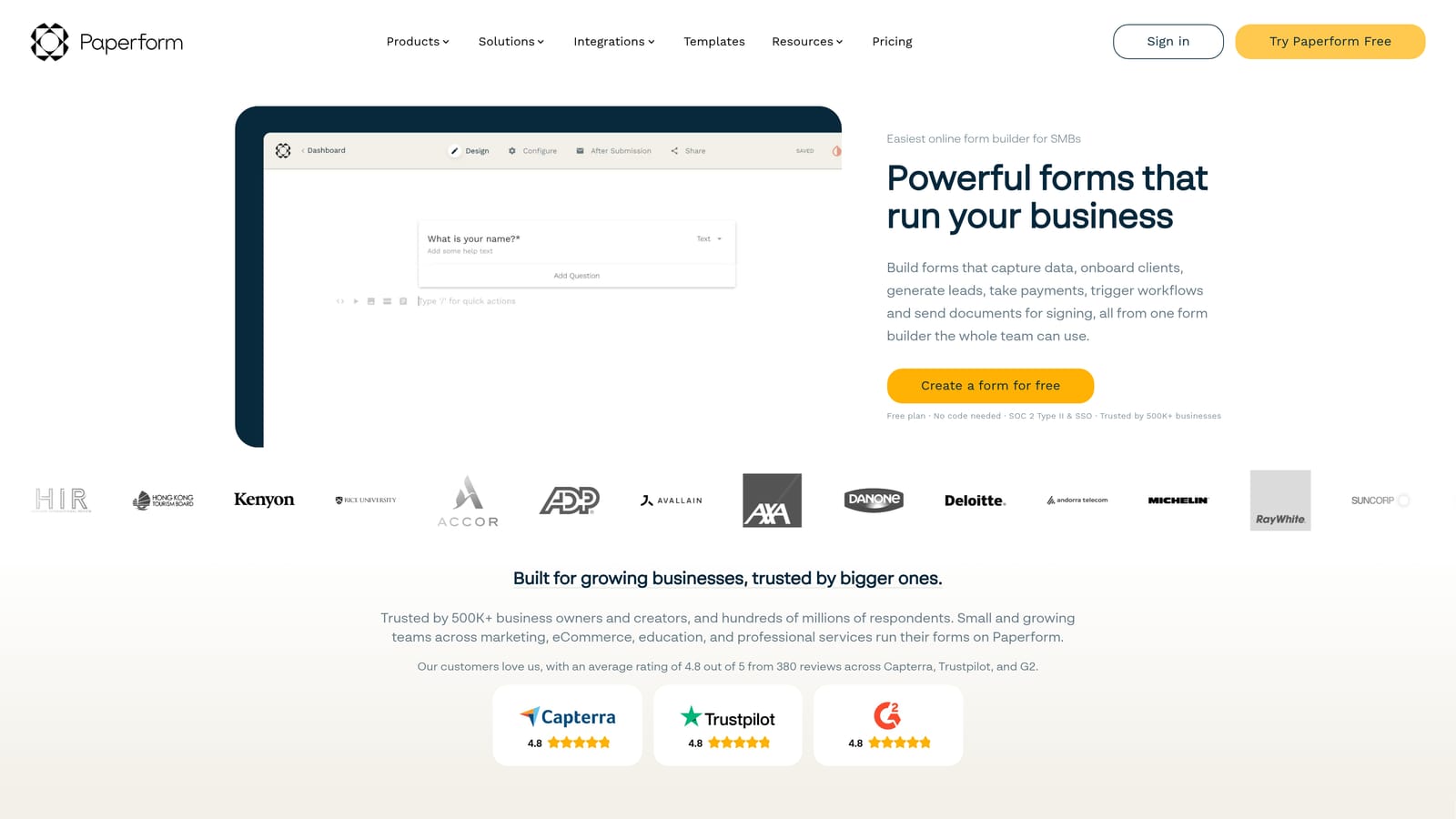
Paperform takes a distinctive approach to form building, blending form fields with rich content to create experiences that feel more like polished landing pages than traditional forms.
Where This Tool Shines
Paperform's core idea is that a form doesn't have to look like a form. You can embed text, images, and video directly within the form itself, creating a rich, content-driven capture experience that contextualizes each question. For teams without a dedicated landing page tool, this can replace an entire layer of the conversion stack.
The output is consistently polished with minimal design effort. Multi-step forms, conditional logic, and payment collection are all supported, and the editor is straightforward enough that non-technical team members can build and publish forms without help. It occupies a useful middle ground between a form builder and a lightweight landing page tool.
Key Features
Rich Media Embedding: Add text, images, and video directly within forms to provide context and increase engagement throughout the capture flow.
Landing Page-Style Output: Forms function as standalone pages, removing the need for a separate landing page tool for many use cases.
Conditional Logic and Multi-Step Support: Adaptive form paths and multi-page structures for more complex capture workflows.
Built-In Payment Collection: Accept payments directly through forms without additional integrations.
Minimal Design Effort: Clean, polished output that looks professional without requiring design skills or custom CSS.
Best For
Paperform is a strong fit for content marketers, coaches, consultants, and SaaS teams running product-led capture flows where context and content around the form questions matter as much as the questions themselves.
Pricing
Essentials plan is approximately $24/month. Verify current pricing at paperform.co.
6. Formstack
Best for: Teams that need lead capture embedded in larger operational workflows, document generation, and advanced data routing.
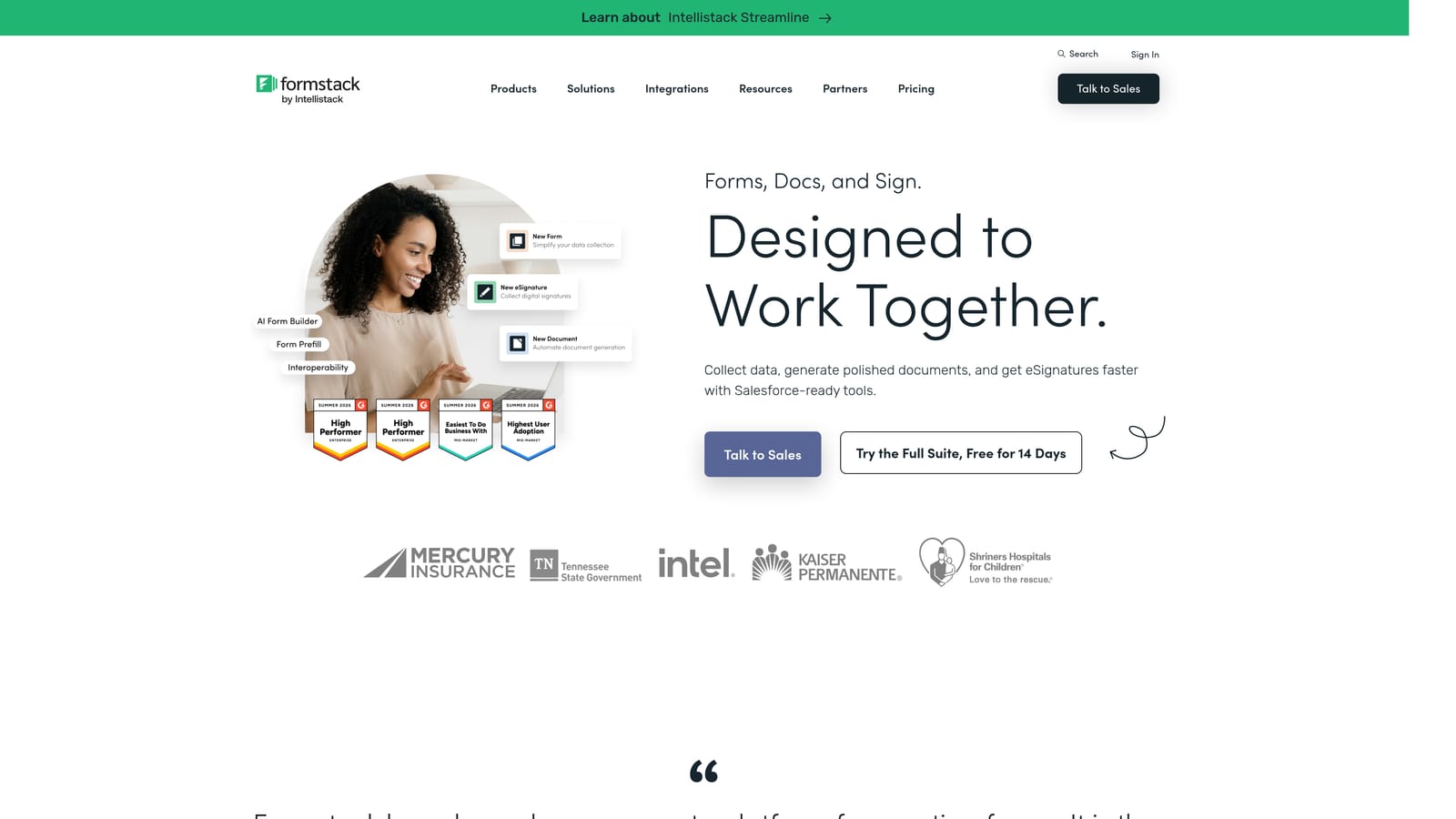
Formstack is a workflow-oriented form platform that goes beyond lead capture into process automation, document generation, and regulated-industry compliance.
Where This Tool Shines
Formstack sits at the upper edge of the affordable category, and the additional cost reflects a genuinely different scope. Where other tools focus on the capture moment, Formstack is built for what happens after the submission: routing data to the right CRM fields, triggering document generation, collecting e-signatures, and managing multi-step internal processes.
For teams in regulated industries, HIPAA-compliant forms are a built-in capability rather than an add-on. The platform is also well-suited to organizations where forms need to connect to internal approval workflows or operational systems, not just marketing automation tools. It's more platform than form builder, which is exactly what some teams need.
Key Features
Workflow Automation: Trigger internal processes, approvals, and data routing automatically based on form submissions.
Document Generation and E-Signatures: Create formatted documents and collect legally binding signatures as part of connected workflows.
Advanced CRM Data Routing: Route and map submission data to specific CRM fields with precision, reducing manual data entry.
HIPAA-Compliant Forms: Built-in compliance support for healthcare and other regulated industries.
Conditional Logic and Multi-Page Forms: Adaptive form paths and multi-step structures for complex capture and intake scenarios.
Best For
Formstack suits operations teams, healthcare organizations, financial services firms, and enterprise-leaning companies that need forms embedded in larger process workflows rather than standalone marketing capture tools.
Pricing
Forms plan starts at approximately $50/month. Full platform pricing is higher. Verify current pricing at formstack.com.
Which Tool Is Right for Your Team?
Every platform on this list solves the core challenge of affordable lead capture, but they each do it differently. Matching the tool to your actual use case will matter more than chasing the lowest price.
If AI-powered lead qualification is the priority, Orbit AI is the clear starting point. It's the only platform here that handles scoring and qualification natively, which means less duct tape between your form and your CRM. For ultra-lean budgets with no compromise on core functionality, Tally's free tier is genuinely hard to beat.
Teams that care deeply about form UX and brand experience should look at Typeform, where the conversational format and polished design have been refined over years. Jotform wins on breadth: if you need payments, surveys, e-signatures, and lead capture under one roof, it's the most versatile option in the group. Paperform is the pick for content-rich, landing-page-style capture flows where context around the questions matters as much as the questions themselves. And Formstack suits teams that need forms embedded in larger operational workflows, particularly in regulated industries.
The best platform is the one your team will use consistently, and one that fits your budget today while scaling with you as lead volume grows. Start with a free trial on whichever tool maps closest to your primary use case, and revisit as your needs evolve.
For more on building forms that convert, explore our guides on lead capture forms, lead forms for B2B companies, and how to qualify leads with forms.
Ready to see what AI-powered qualification looks like in practice? Start building free forms today and experience how intelligent form design can transform your conversion strategy.


