

Choosing a form builder isn't just about features. It's about finding a pricing model that scales with your growth without quietly penalizing you for success. A submission cap that feels generous on day one can become a real constraint by month six, and AI features locked behind enterprise tiers can stall the lead qualification workflows your team actually needs.
This guide breaks down the top custom form builders by pricing structure, transparency, and genuine value. We cover what each plan includes, where the value walls are, and which use cases each tier realistically serves. For teams focused on lead generation and conversion optimization, we've paid particular attention to how AI features, submission limits, and integrations are gated across pricing tiers.
Here are the best custom form builder pricing plans worth considering in 2026.
1. Orbit AI
Best for: High-growth SaaS and B2B teams running lead qualification funnels
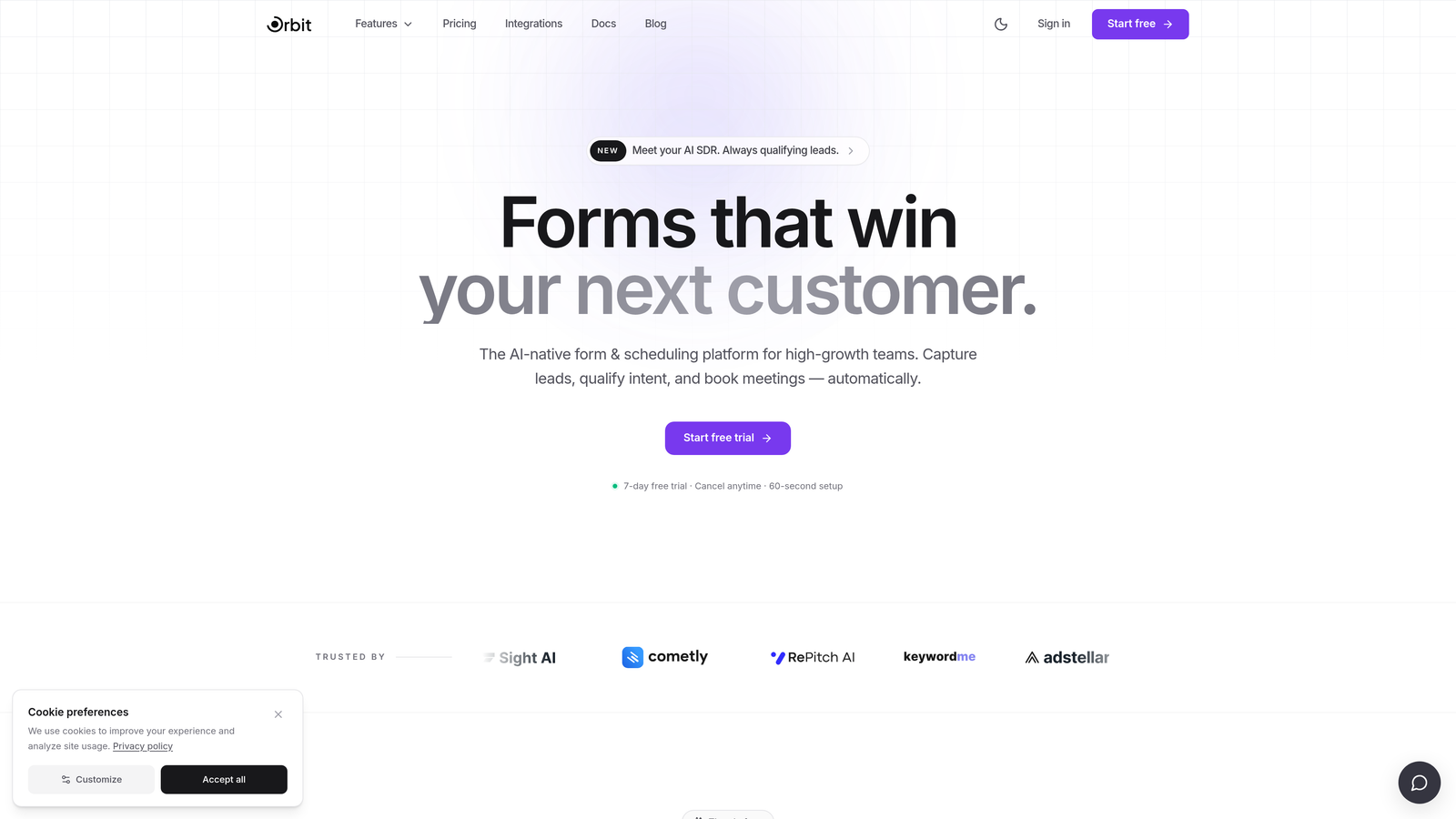
Orbit AI is an AI-powered form builder with lead qualification and scoring built directly into the platform, not bolted on as an add-on.
Where This Tool Shines
Most form builders treat AI as a premium feature you unlock at the top tier. Orbit AI takes the opposite approach: lead qualification logic, scoring, and routing are core to the product across plans. For teams running demand generation or inbound lead capture, this changes the math significantly. You're not paying a premium just to access the features that actually make your forms convert.
The platform is designed with high-growth teams in mind, which shows in the form design itself. Branded, conversion-optimized layouts come standard rather than requiring workarounds or custom CSS. If your forms are the front door to your sales funnel, Orbit AI treats them that way from the start.
Key Features
AI-Powered Lead Qualification: Qualification logic and lead scoring are built into form flows, not reserved for enterprise tiers.
Conversion-Optimized Design: Modern, branded form UI designed to reduce drop-off and improve completion rates.
Lead Scoring and Routing: Automatically score and route leads based on form responses, keeping your sales team focused on high-intent prospects.
CRM and Marketing Automation Integrations: Connect directly with the tools your revenue team already uses.
Designed for Demand Generation: Multi-step qualification funnels are a first-class use case, not an afterthought.
Best For
Orbit AI is the strongest fit for SaaS companies, B2B marketing teams, and growth-focused organizations where form submissions feed directly into a sales pipeline. If lead quality matters as much as lead volume, and you want qualification logic without paying enterprise prices, this is the tool to evaluate first.
Pricing
Verify current plan details and pricing at orbitforms.ai. The platform is built to scale with high-growth teams, so it's worth checking what's included at each tier before comparing against submission-limited alternatives.
2. Typeform
Best for: Marketing teams prioritizing polished, conversational form experiences
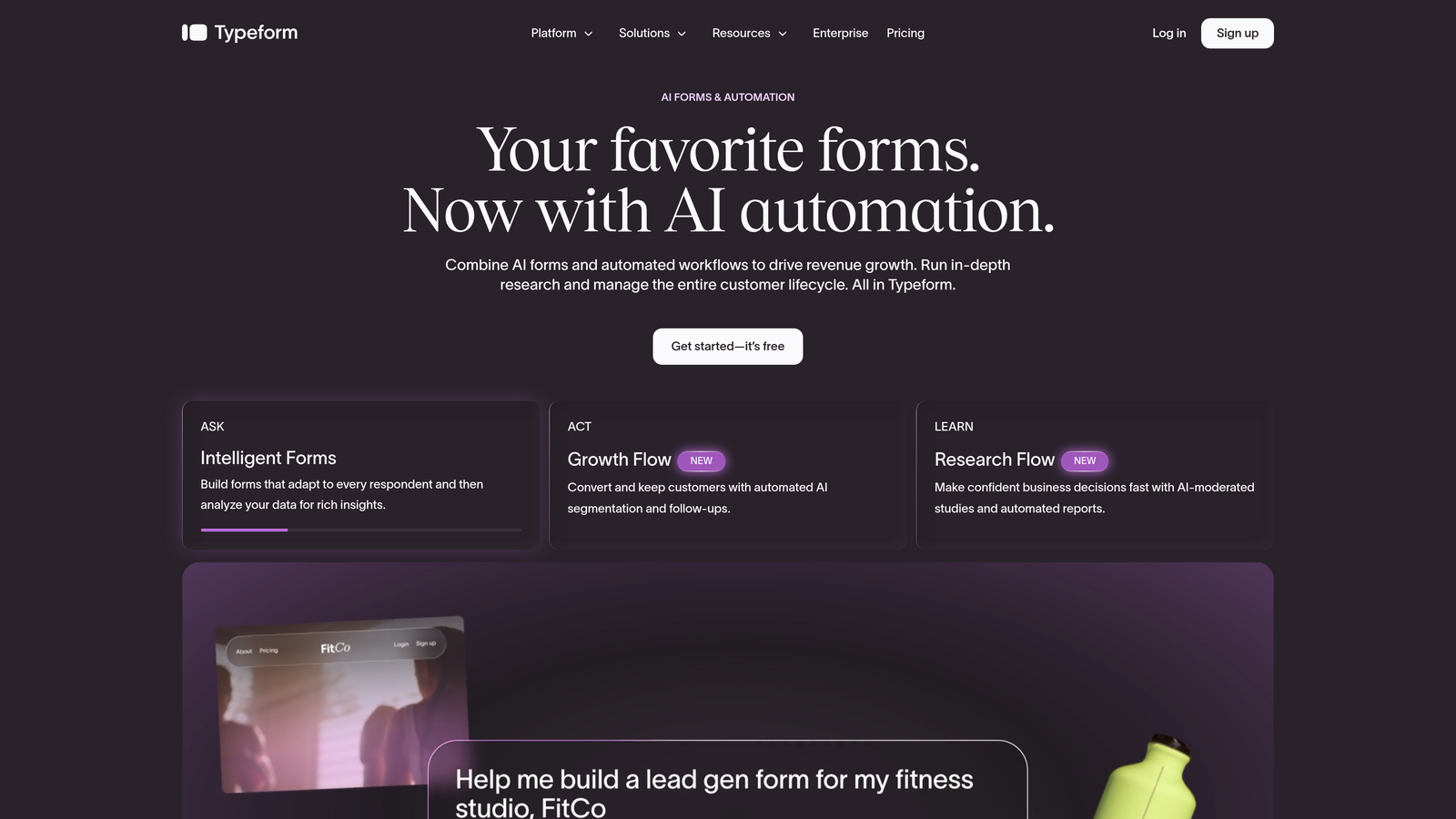
Typeform is a conversational form builder known for its one-question-at-a-time format and strong visual design, widely used by marketing and product teams.
Where This Tool Shines
Typeform's core differentiator is the experience it creates for respondents. The conversational flow feels less like filling out a form and more like a dialogue, which can improve completion rates for surveys, onboarding flows, and research questionnaires. The visual design options are among the most polished in the market.
The tradeoff is in how features are gated. Logic jumps and conditional branching, which are essential for any meaningful qualification flow, are available from mid-tier plans upward. Teams on the free plan (capped at around 100 responses per month) will hit limits quickly if they're running active lead generation campaigns.
Key Features
Conversational One-Question UX: The signature format that reduces respondent friction and improves engagement.
Brand Customization: Strong theme options for aligning forms with your visual identity, available on paid plans.
Logic Jumps and Conditional Branching: Route respondents through different paths based on answers, available from mid-tier plans.
Native Integrations: Connects with HubSpot, Salesforce, Slack, and other common tools.
Free Plan: Available with limited monthly responses and Typeform branding on submissions.
Best For
Typeform works well for marketing teams running surveys, NPS forms, and customer research where the experience quality matters. It's less optimized for high-volume lead qualification workflows, particularly at lower pricing tiers where response limits and feature gating can become friction points.
Pricing
A free plan is available. Paid plans start around $25 per month, though verify current tiers and response limits at typeform.com before committing, as response caps vary significantly by plan.
3. Jotform
Best for: Teams needing diverse form types across multiple departments or use cases
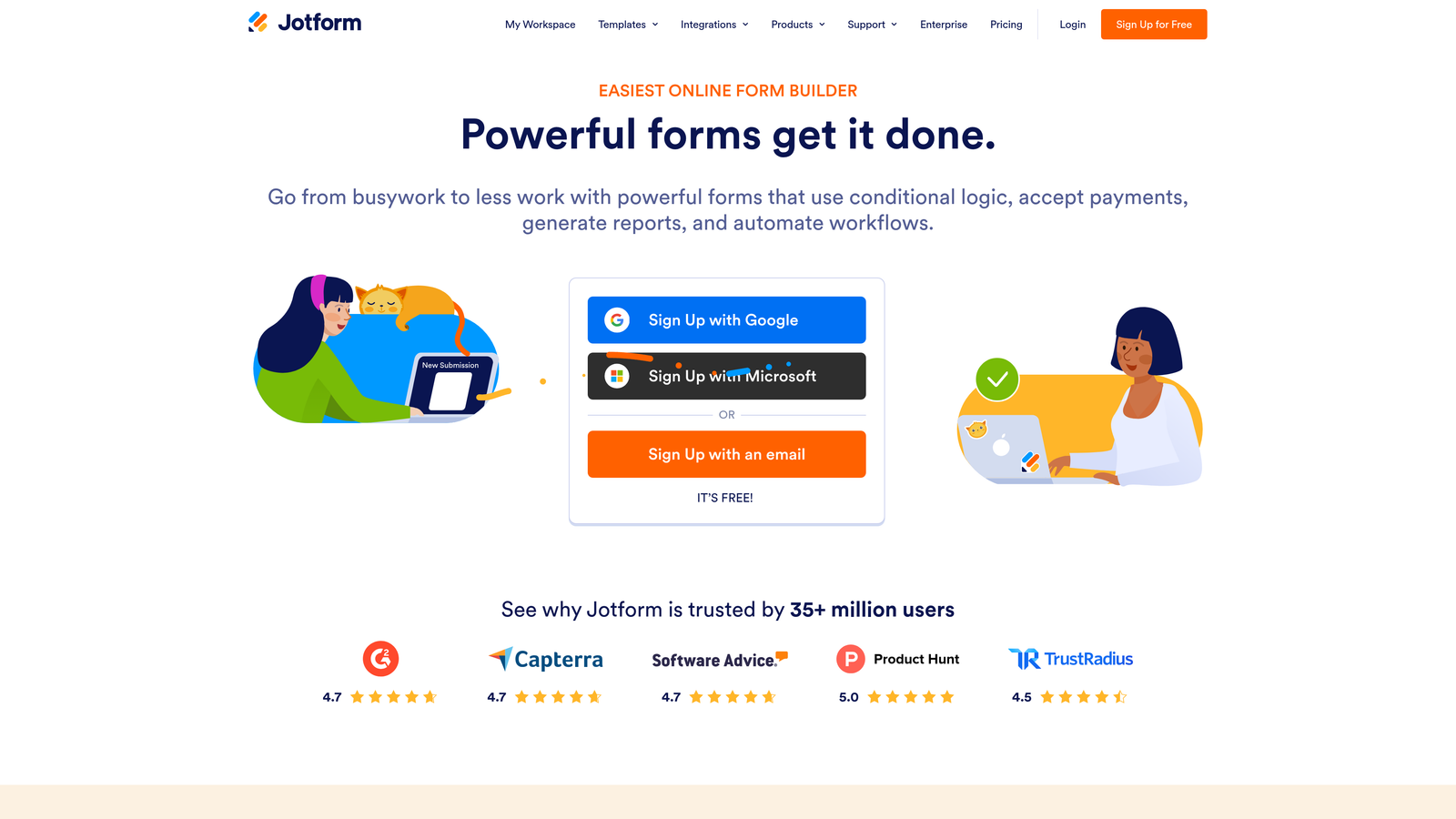
Jotform is a feature-rich form builder with one of the largest template libraries available, built to serve a wide range of form types across industries.
Where This Tool Shines
Jotform's breadth is its defining strength. With over 10,000 templates spanning industries from healthcare to e-commerce to HR, it's one of the few form builders that can genuinely serve an entire organization rather than a single team. Payment integrations, approval workflows, and multi-step processes are all available within the same platform.
The free plan is relatively limited at five forms and 100 monthly submissions, which means most growing teams will need a paid tier fairly quickly. That said, the paid plans scale submission and form limits significantly, making Jotform a reasonable long-term option for organizations with diverse form needs across departments.
Key Features
10,000+ Templates: The largest template library in this comparison, covering virtually every industry and use case.
Payment Integrations: Native connections with Stripe, PayPal, and Square for commerce and registration forms.
Approval Workflows: Multi-step approval and routing processes built into the platform.
HIPAA Compliance: Available at higher tiers, making it viable for healthcare and regulated industries.
Free Plan: Available with five forms and 100 monthly submissions.
Best For
Jotform is a strong fit for organizations that need a single platform to handle many different form types: HR intake forms, event registrations, payment collection, and customer surveys. It's less specialized for lead qualification workflows, but its depth makes it a practical choice for multi-department deployments.
Pricing
Free plan available. Paid plans scale by submission volume and number of forms. Verify current plan tiers and limits at jotform.com before selecting a tier, particularly if you anticipate growing submission volume.
4. Tally
Best for: Early-stage startups, developers, and indie makers needing functional forms without a budget
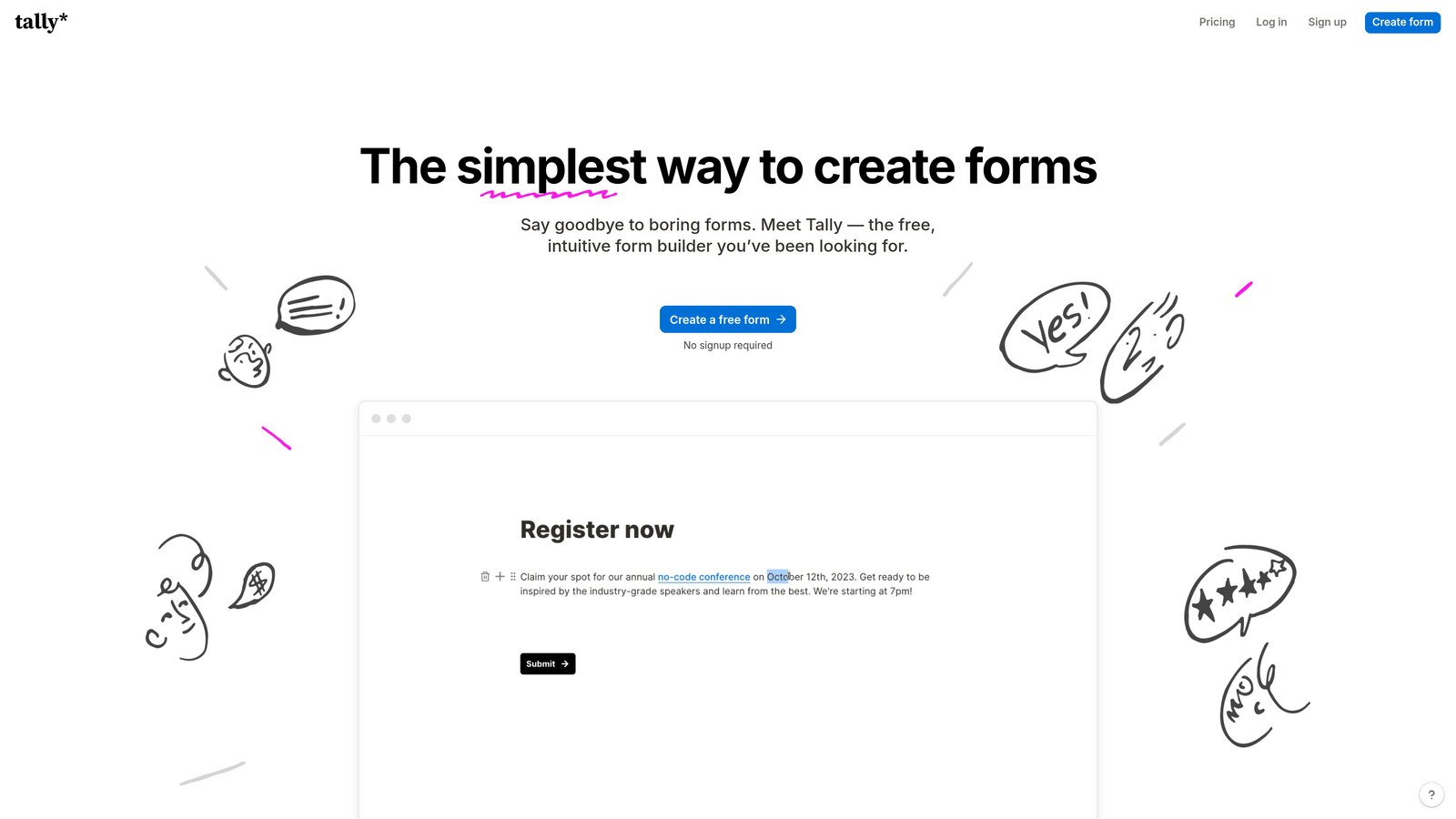
Tally is a minimalist form builder with a genuinely unlimited free tier, making it one of the most accessible options in the market for teams with tight budgets.
Where This Tool Shines
Tally's free plan is legitimately differentiated. Unlimited forms and unlimited submissions at no cost is a rare offer in a market where most free tiers are designed to push you toward a paid plan within weeks. For developers, indie makers, and early-stage startups that need working forms without overhead, Tally removes the usual friction entirely.
The Notion-like block editor makes form building intuitive for teams already familiar with that interaction model. The UI is clean and distraction-free, which works well for simple data collection. The tradeoff is that Tally doesn't offer advanced AI features, lead qualification logic, or the kind of conversion optimization tooling that growth-stage teams typically need.
Key Features
Unlimited Free Plan: Unlimited forms and submissions on the free tier, with no hidden caps.
Notion-Like Block Editor: Familiar, intuitive interface for teams comfortable with block-based editing tools.
Custom Domains and Branding Removal: Available on the Pro plan for teams that need white-labeled forms.
Webhooks and Zapier Integrations: Connect form submissions to other tools via automation.
Clean Form UI: Minimalist, distraction-free design that keeps respondent focus on the form itself.
Best For
Tally is the right call for early-stage teams, solo founders, and developers who need functional forms quickly without any budget commitment. It's not built for lead qualification or conversion optimization at scale, so teams with those priorities will likely outgrow it as they mature.
Pricing
Free plan with unlimited forms and submissions. Pro plan is around $29 per month. Verify current pricing and Pro feature details at tally.so.
5. Paperform
Best for: Service businesses and creators combining forms, payments, and bookings in one tool
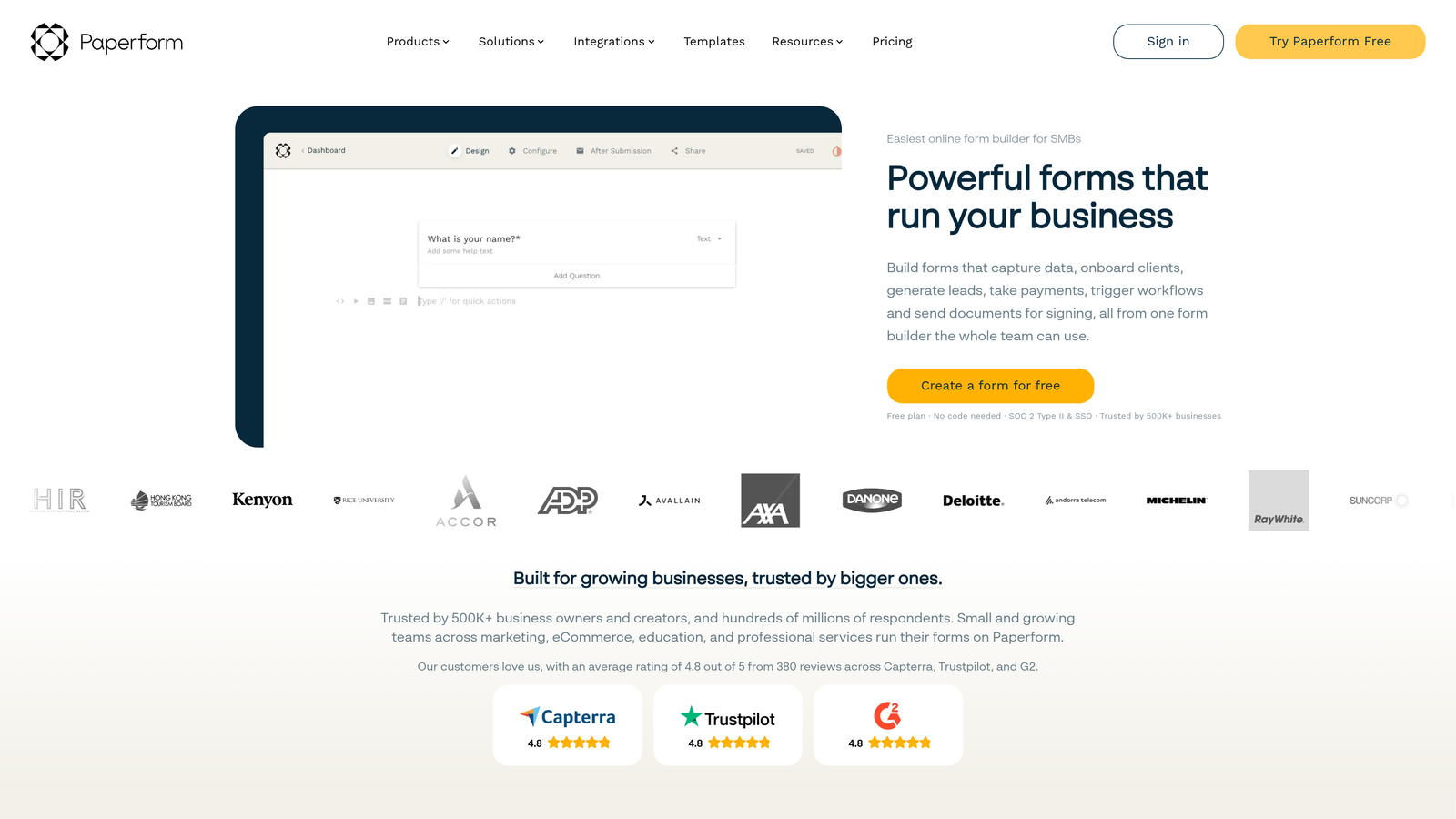
Paperform is a form builder that doubles as a lightweight landing page and commerce platform, combining forms, payments, and bookings in a single product.
Where This Tool Shines
Paperform occupies a useful niche: it's the form builder for teams that also need to sell products, take bookings, or create landing page-style experiences without spinning up a separate tool. Built-in Stripe payment processing works without extra integration setup, which removes a meaningful friction point for service businesses and creators.
The flexible form layouts support rich media embeds and a more editorial feel than most form builders, which makes Paperform particularly strong for forms that function as mini landing pages. Conditional logic and multi-step forms are available across plans, and an agency plan exists for teams managing multiple client accounts.
Key Features
Built-In Stripe Payments: Native payment processing without needing a separate integration or third-party setup.
Product Pages and Bookings: Create product sales pages and booking forms within the same platform.
Rich Media and Flexible Layouts: Embed images, video, and custom content alongside form fields for landing page-style experiences.
Conditional Logic and Multi-Step Forms: Available across plans for creating dynamic, responsive form flows.
Agency Plan: Designed for managing multiple client accounts from a single dashboard.
Best For
Paperform is ideal for freelancers, service businesses, coaches, and creators who want one tool that handles forms, commerce, and bookings together. It's less optimized for B2B lead qualification at scale, but it's a strong value proposition for teams where those three use cases overlap regularly.
Pricing
Plans start around $24 per month on the Essentials tier. Submission limits apply across plans, with higher tiers unlocking more. Verify current pricing and plan details at paperform.co.
6. Formstack
Best for: Enterprise teams and regulated industries needing workflow automation and compliance
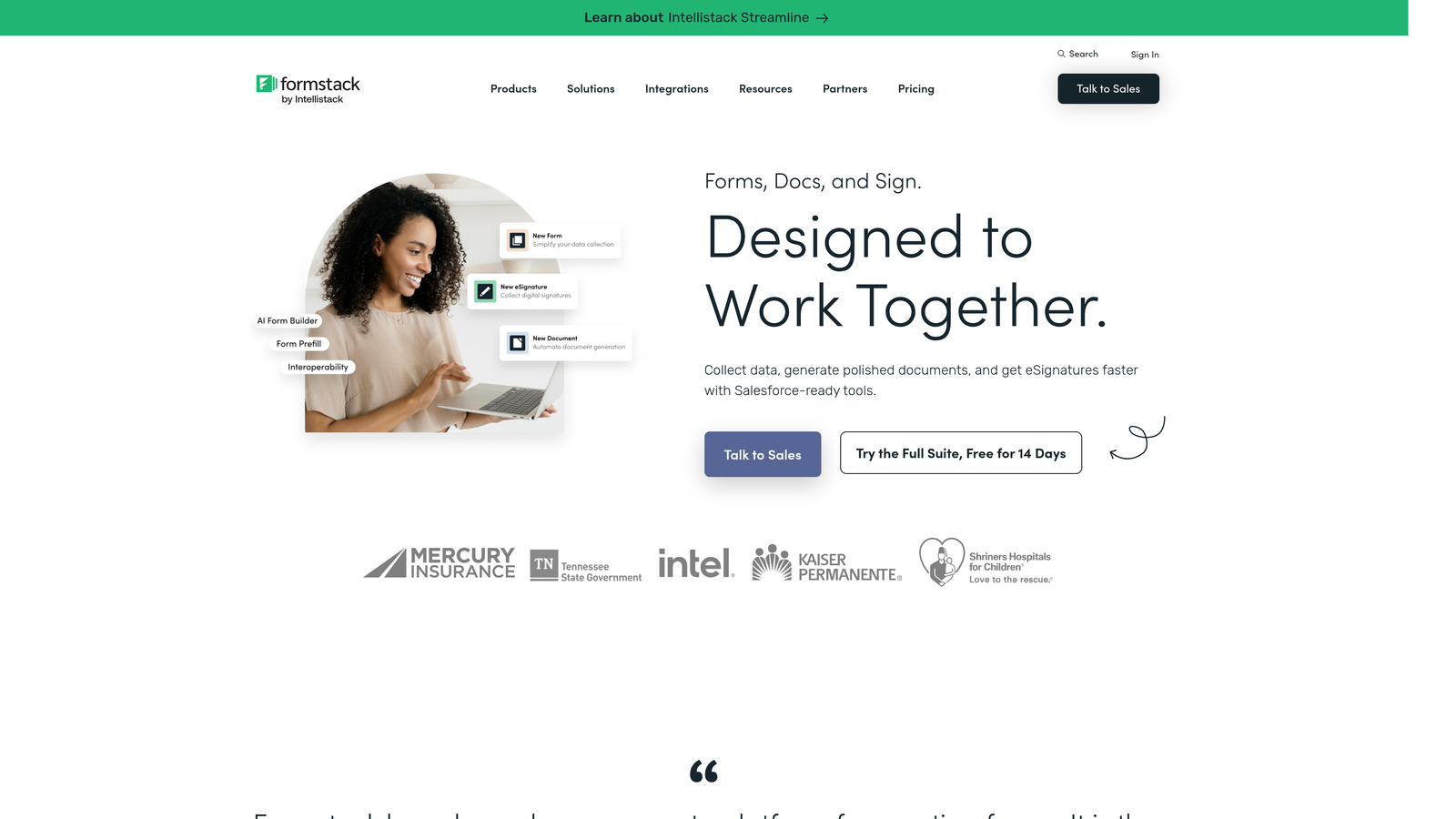
Formstack is an enterprise-grade platform covering forms, documents, e-signatures, and approval workflows, with strong compliance credentials for regulated industries.
Where This Tool Shines
Formstack is built for organizations where forms are part of a larger operational workflow rather than just a data collection touchpoint. Document generation, e-signature capabilities, and advanced approval routing make it a genuine workflow platform, not just a form builder with enterprise pricing.
HIPAA compliance, SSO, and enterprise-grade security controls make Formstack one of the few options on this list that can realistically serve healthcare organizations, financial services teams, and other regulated industries without significant custom configuration. The tradeoff is complexity and cost: Formstack's pricing reflects its enterprise positioning, and the platform can feel over-engineered for teams with simpler needs.
Key Features
HIPAA-Compliant Forms: Purpose-built for healthcare and regulated industries requiring data compliance.
Advanced Workflow Automation: Approval routing and multi-step workflow automation beyond basic form logic.
Document Generation and E-Signatures: Create documents and collect signatures within the same platform.
SSO and Enterprise Security: Single sign-on and enterprise-grade access controls for IT-governed environments.
Enterprise Integrations: Native connections with Salesforce, Microsoft 365, and major enterprise tools.
Best For
Formstack is the right fit for large organizations, healthcare teams, and compliance-heavy industries where workflow automation, document handling, and regulatory requirements are non-negotiable. For most growth-stage SaaS teams, the complexity and price point will exceed what's actually needed.
Pricing
Enterprise-oriented pricing with quote-based tiers at higher levels. Verify current plan structure and pricing at formstack.com directly, as costs vary significantly based on which platform modules you need.
Matching the Right Tool to Your Actual Needs
The right form builder depends less on feature lists and more on how your team actually uses forms and what growth looks like over the next 12 months. Here's how to think through the decision.
If lead qualification is central to your workflow, and you're running multi-step funnels that feed a sales pipeline, Orbit AI is the clearest starting point. AI-powered qualification logic built into the core product means you're not paying a premium to access the features that actually drive conversion outcomes. It's built for the use case rather than adapted to it.
For teams prioritizing respondent experience and visual polish above all else, Typeform remains a strong choice, particularly for surveys and research. Just map your expected submission volume against their tier limits before committing.
If your organization needs a single platform across multiple departments with diverse form types, Jotform's template depth and workflow capabilities make it a practical enterprise-lite option. Formstack steps in when compliance requirements, document generation, and enterprise security become non-negotiable.
Tally is the honest answer for teams that need working forms with zero budget friction. And Paperform earns its place for service businesses that want forms, payments, and bookings under one roof.
Before committing to any plan, map three things: your expected monthly submission volume, the specific features your team needs on day one versus later, and whether AI-powered qualification is a current priority or a future one. Pricing transparency matters, and the tools that show you exactly what's included at each tier are the ones worth trusting with your growth stack.
For high-growth teams focused on converting more leads through smarter form design, start building free forms today and see how AI-powered qualification can change what your forms actually accomplish.


