

Your online store's forms are silent salespeople working around the clock. Whether capturing leads, processing orders, gathering customer feedback, or handling returns, the right ecommerce form builder can mean the difference between a completed purchase and an abandoned cart. But with dozens of options available, finding one that integrates seamlessly with your store, looks professional, and actually drives conversions isn't straightforward.
We've tested and evaluated the top ecommerce form builders based on ease of use, ecommerce-specific features, integration capabilities, and conversion optimization tools. Here are nine standout options for online retailers in 2026.
1. Orbit AI
Best for: High-growth ecommerce teams needing intelligent lead qualification and conversion-optimized forms
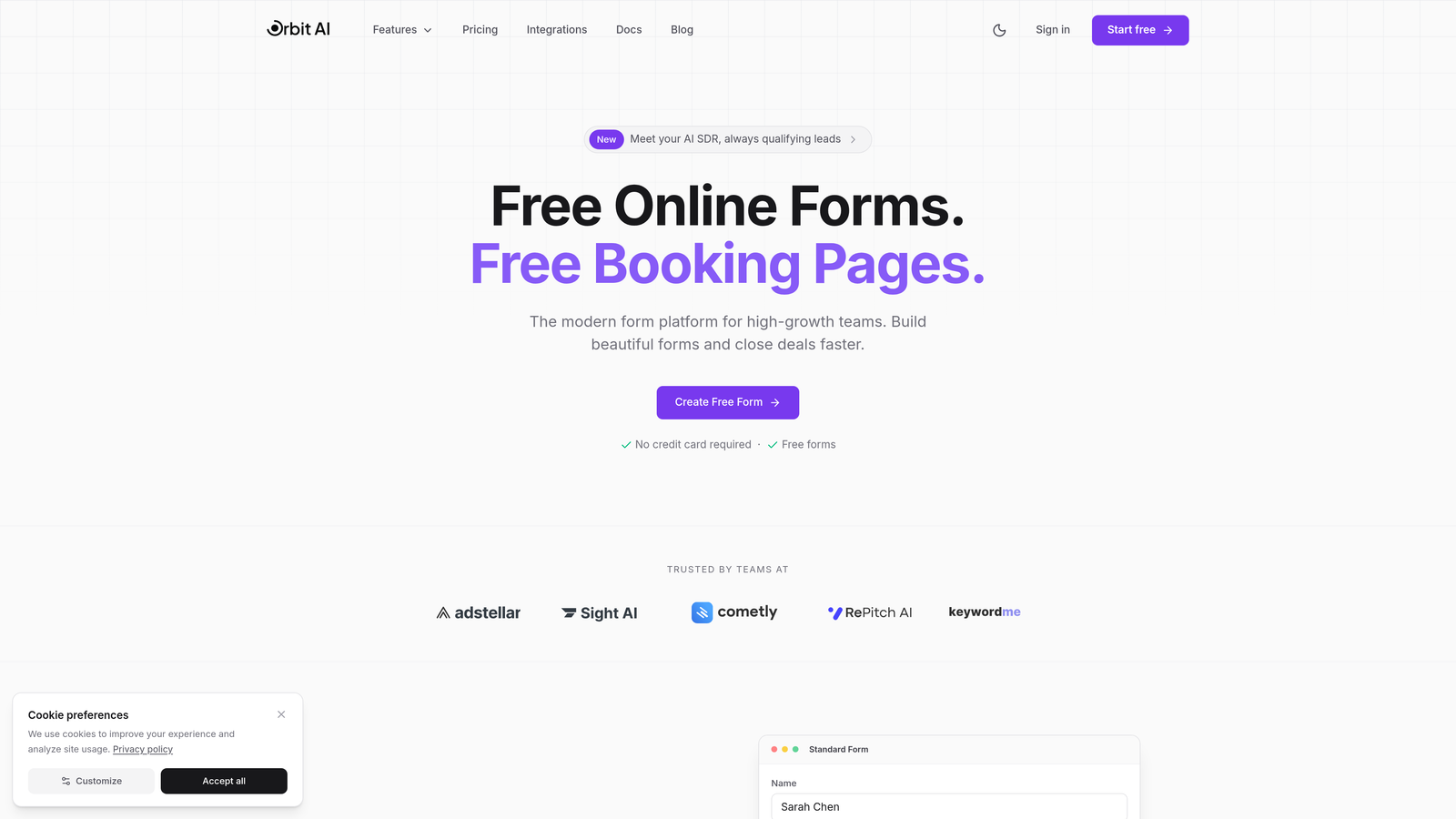
Orbit AI is an AI-powered form builder designed specifically for teams that need more than just data collection.
Where This Tool Shines
What sets Orbit AI apart is its built-in intelligence layer. While most form builders simply collect information, Orbit AI automatically qualifies and scores leads based on their responses, helping your sales team prioritize high-intent prospects instantly.
The platform's modern, conversion-optimized designs are built with ecommerce psychology in mind. Every template is crafted to reduce friction and guide customers smoothly through completion, whether you're capturing email subscribers or processing custom product inquiries.
Key Features
AI-Powered Lead Qualification: Automatically scores and routes leads based on purchase intent and customer profile.
Conversion-Optimized Templates: Pre-built forms designed specifically for ecommerce use cases with proven conversion patterns.
Native Ecommerce Integrations: Connects seamlessly with major CRMs, email platforms, and ecommerce systems without middleware.
Real-Time Analytics: Track conversion rates, completion times, and drop-off points to continuously optimize performance.
Automated Follow-Up Sequences: Trigger personalized email sequences based on form responses and qualification scores.
Best For
Orbit AI works exceptionally well for growing ecommerce brands that need to scale their lead generation without scaling their team. If you're drowning in form submissions and need intelligent filtering to identify your best prospects, this platform delivers that automation layer.
Pricing
Free tier available with core features. Paid plans start at competitive rates designed for growing businesses, with pricing that scales as your form volume increases.
2. Shopify Forms
Best for: Shopify merchants wanting zero-friction integration with their existing store infrastructure
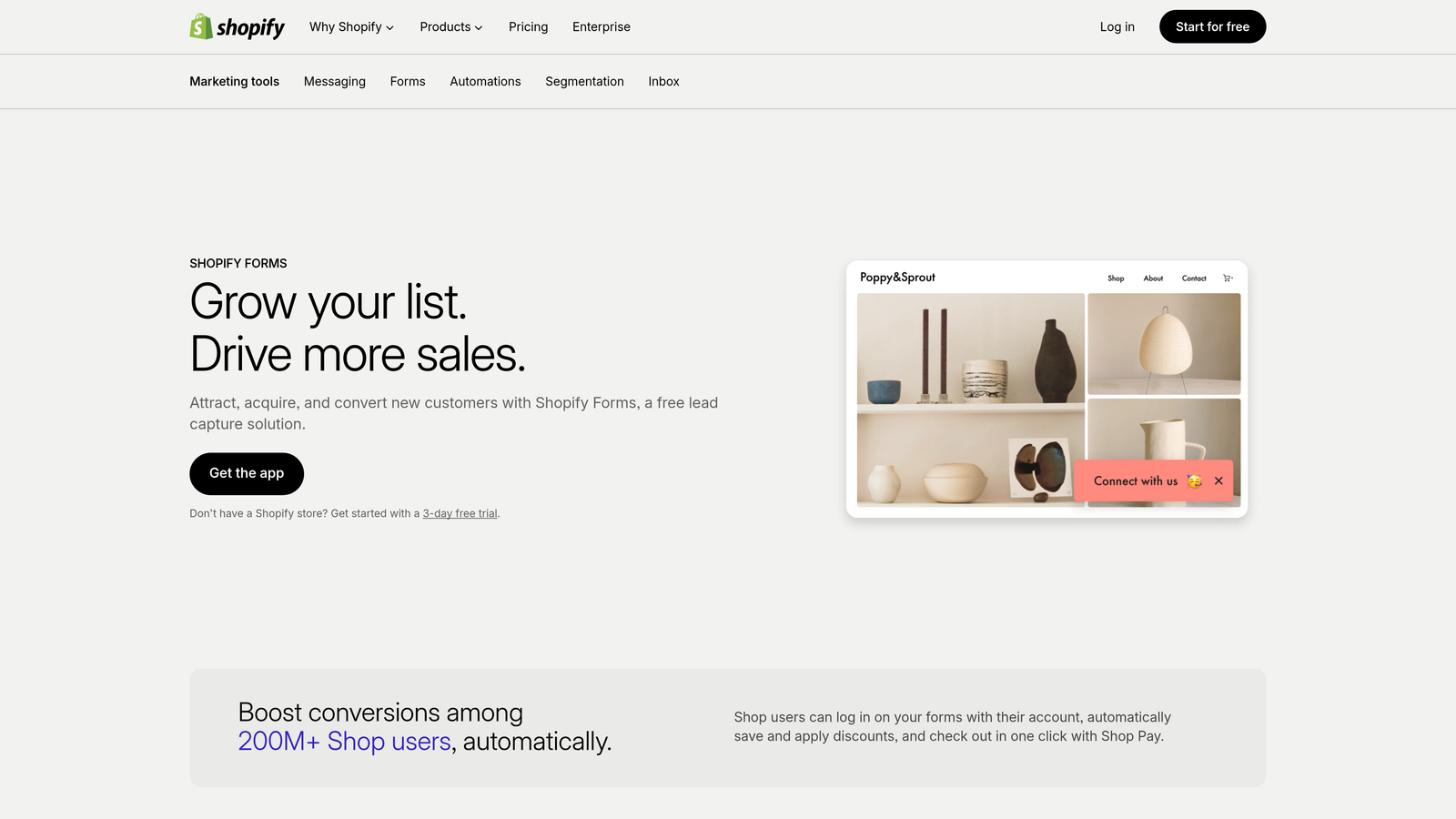
Shopify Forms is the native form solution built directly into the Shopify ecosystem.
Where This Tool Shines
If you're already running on Shopify, this tool eliminates integration headaches entirely. Customer data flows automatically into your Shopify admin, creating a unified view of every interaction without manual exports or third-party connectors.
The one-click installation and pre-built templates mean you can have a professional form live on your store in minutes. For merchants who value simplicity and native functionality over advanced features, this straightforward approach is refreshing.
Key Features
One-Click Installation: Deploy forms to your Shopify store instantly without code or complex setup.
Automatic Customer Sync: All form submissions automatically populate your Shopify customer database and admin panel.
Ecommerce Templates: Pre-built forms for newsletter signups, product inquiries, waitlists, and customer feedback.
Mobile Optimization: Forms automatically adapt to mobile devices with Shopify's responsive framework.
Email Marketing Integration: Connect directly to Shopify Email and other marketing apps in the ecosystem.
Best For
Shopify merchants who want a reliable, no-fuss solution that works natively with their platform. Perfect for stores that prioritize operational simplicity over advanced customization or complex workflows.
Pricing
Completely free for all Shopify merchants as part of the platform.
3. Typeform
Best for: Creating engaging, conversational form experiences that feel more like interactions than surveys
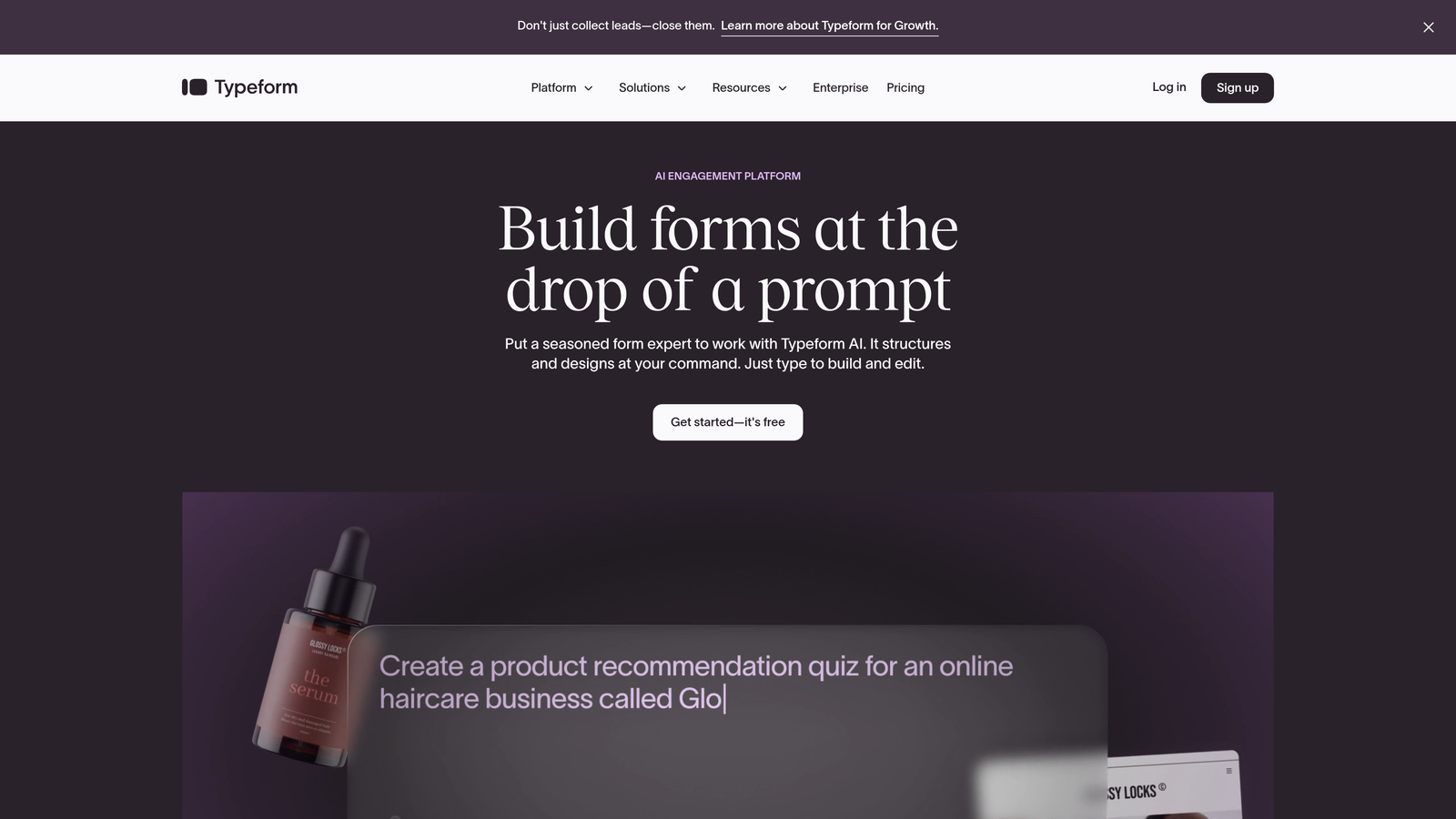
Typeform is known for its distinctive one-question-at-a-time approach that transforms traditional forms into conversations.
Where This Tool Shines
The conversational format genuinely changes how customers interact with your forms. Instead of facing an intimidating wall of fields, respondents answer one question at a time, creating a more human experience that often improves completion rates.
Logic jumps let you create personalized paths based on previous answers. If a customer indicates interest in a specific product category, you can immediately ask relevant follow-up questions while skipping irrelevant ones.
Key Features
Conversational Interface: One-question-at-a-time presentation reduces cognitive load and improves engagement.
Advanced Logic Jumps: Create dynamic form paths that adapt based on customer responses.
Rich Media Support: Embed videos, images, and GIFs to create visually engaging experiences.
Payment Collection: Accept payments directly through Stripe integration for order forms and deposits.
Integration Library: Connect with hundreds of tools including major ecommerce platforms and CRMs.
Best For
Ecommerce brands focused on customer experience and willing to invest time in creating thoughtful, engaging forms. Works especially well for complex product inquiries, custom orders, or detailed customer research.
Pricing
Free basic plan with limited responses. Paid plans start at $25/month with increased response limits and advanced features.
4. JotForm
Best for: Merchants needing extensive payment gateway options and ready-made ecommerce templates
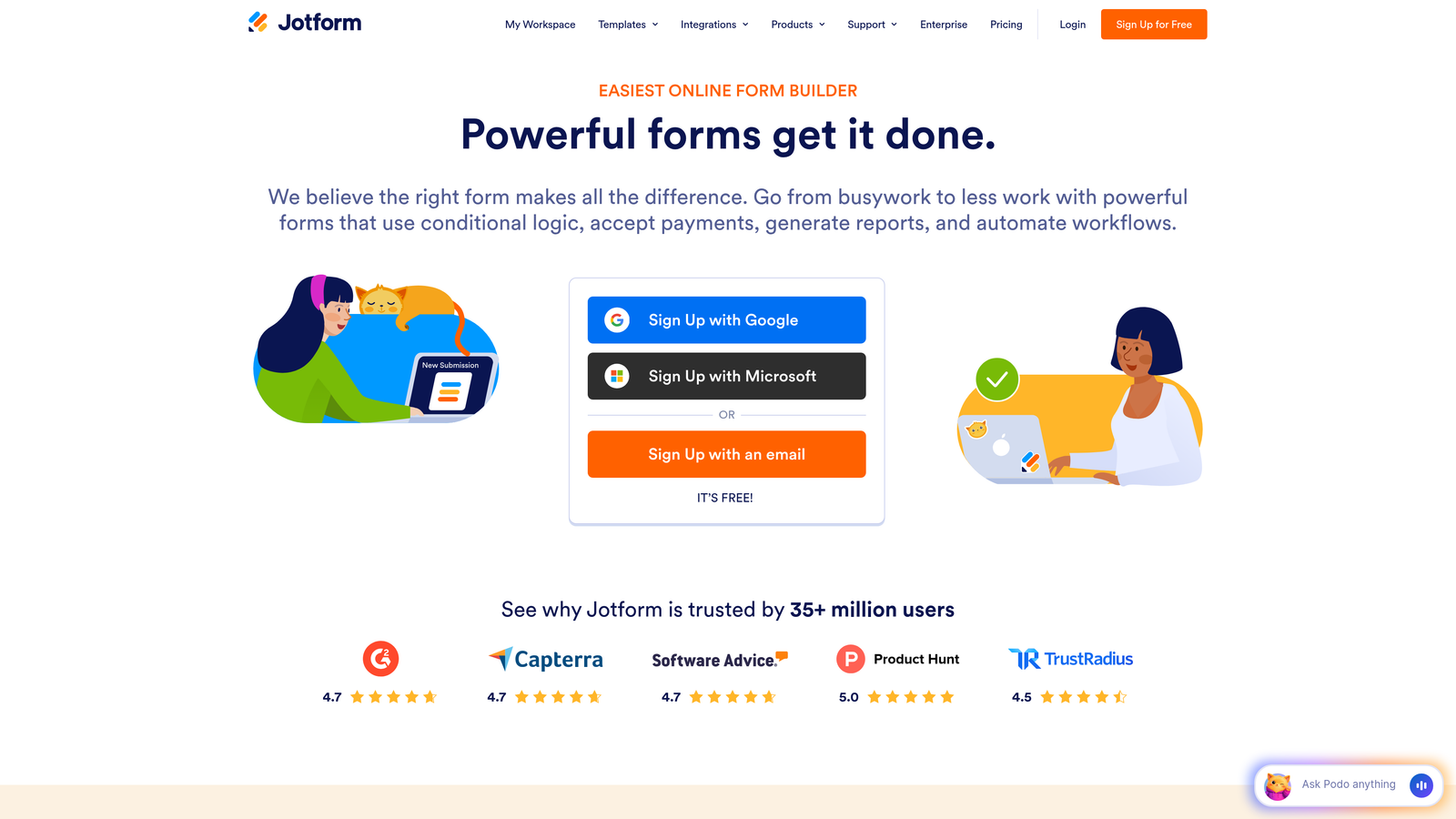
JotForm is a versatile platform offering one of the largest template libraries in the industry.
Where This Tool Shines
With over 10,000 templates, you'll find pre-built forms for virtually any ecommerce scenario. Product order forms, donation pages, event registrations, and customer surveys are all available as starting points you can customize.
The payment processing flexibility is exceptional. JotForm integrates with more than 30 payment gateways, giving you options whether you need PayPal, Square, Authorize.net, or regional processors. This flexibility matters if you're expanding internationally or need specific payment methods.
Key Features
Massive Template Library: Over 10,000 pre-built templates including hundreds designed specifically for ecommerce use cases.
30+ Payment Gateways: Accept payments through virtually any processor you need for your market.
Product Widgets: Add product catalogs, inventory tracking, and shopping cart functionality directly to forms.
Conditional Logic: Show or hide fields based on responses, with calculation fields for dynamic pricing.
PDF Generation: Automatically create PDF order confirmations and invoices from form submissions.
Best For
Online retailers who need robust payment processing options and want to start with proven templates rather than building from scratch. Ideal for stores selling internationally or requiring specific regional payment methods.
Pricing
Free tier available with 100 monthly submissions. Paid plans start at $34/month with higher limits and advanced features.
5. WPForms
Best for: WordPress and WooCommerce stores wanting native integration without leaving their CMS
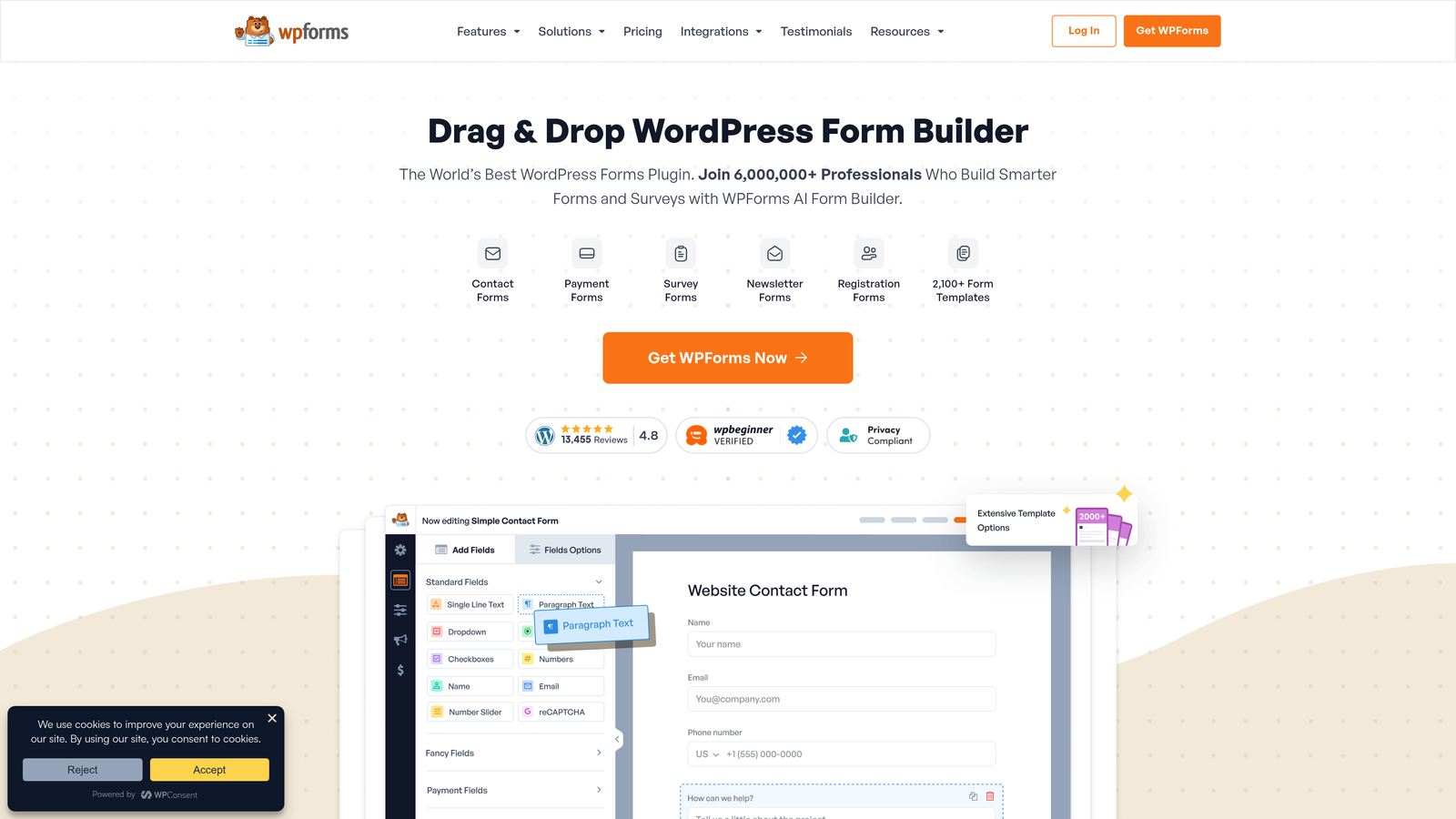
WPForms is built specifically for the WordPress ecosystem with deep WooCommerce integration.
Where This Tool Shines
If your ecommerce store runs on WooCommerce, WPForms feels like a natural extension of your platform. The drag-and-drop builder works exactly like other WordPress tools you're already familiar with, eliminating the learning curve.
The WooCommerce addon transforms standard forms into order forms that can handle product selections, calculate totals, and process payments without customers leaving your site. Everything happens within your WordPress environment, maintaining brand consistency.
Key Features
WordPress-Native Builder: Drag-and-drop interface that matches the WordPress admin experience you already know.
WooCommerce Integration: Create custom order forms with product selection, pricing calculations, and checkout.
Payment Processing: Accept payments through Stripe and PayPal directly within your forms.
Spam Protection: Built-in anti-spam features protect your forms without requiring separate plugins.
Entry Management: View and manage all submissions from your WordPress dashboard.
Best For
WordPress and WooCommerce store owners who want to keep everything within their existing CMS. Perfect for merchants who prefer managing all aspects of their store from a single dashboard.
Pricing
Free Lite version with basic features. Pro version starts at $49.50/year with full WooCommerce integration and payment processing.
6. Formstack
Best for: Enterprise ecommerce operations requiring advanced automation, compliance, and Salesforce integration
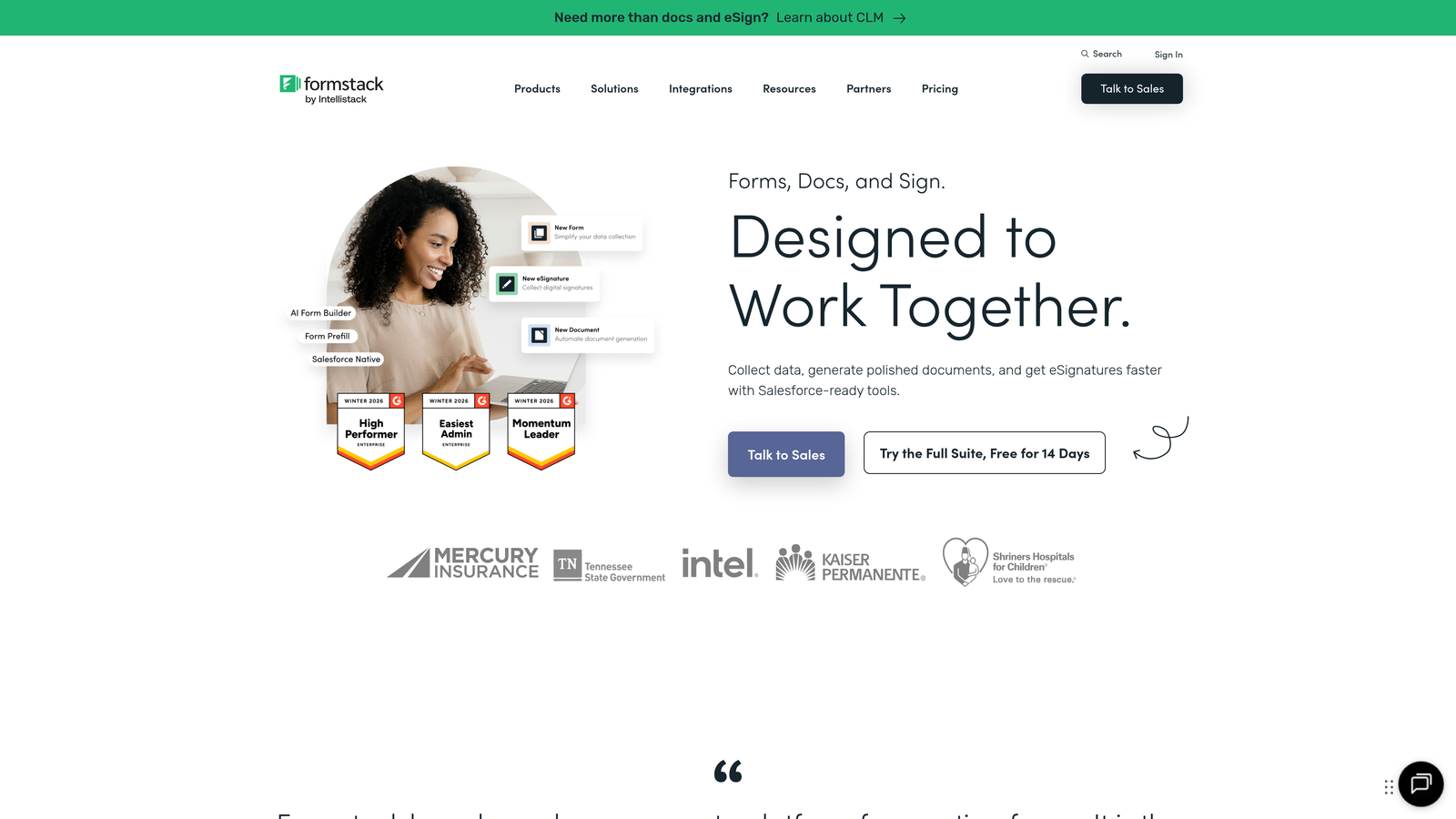
Formstack is an enterprise-grade platform built for organizations with complex workflows and compliance requirements.
Where This Tool Shines
The workflow automation capabilities go far beyond basic form submission. You can trigger multi-step processes, route approvals, generate documents, and update multiple systems based on a single form submission.
For ecommerce businesses in regulated industries or handling sensitive customer data, Formstack offers HIPAA and GDPR compliance features that many competitors lack. Electronic signature collection is built in, useful for custom orders, contracts, or B2B transactions.
Key Features
Advanced Workflow Automation: Create complex, multi-step processes triggered by form submissions.
Compliance Options: HIPAA and GDPR-compliant data handling for regulated industries.
Electronic Signatures: Collect legally binding signatures directly within forms for contracts and agreements.
Salesforce Native Integration: Sync form data directly to Salesforce without third-party connectors.
A/B Testing: Test different form versions to optimize conversion rates with built-in analytics.
Best For
Large ecommerce operations or B2B sellers with complex approval workflows, compliance requirements, or heavy Salesforce usage. The platform's capabilities justify the higher price point when you need enterprise-level automation.
Pricing
Plans start at $50/month. Enterprise pricing available for larger organizations with custom requirements.
7. Paperform
Best for: Creating beautiful, branded landing page-style forms with built-in ecommerce functionality
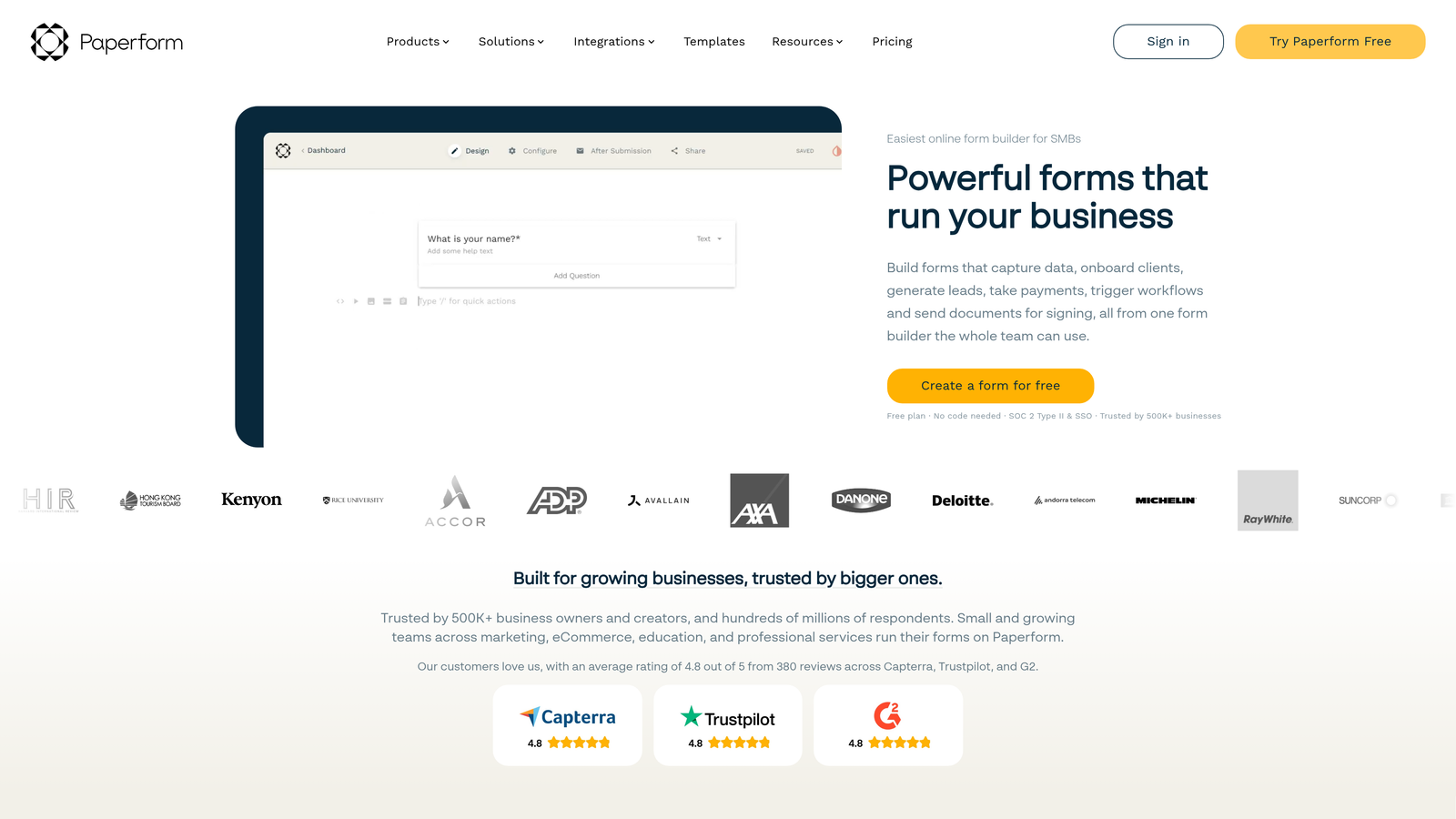
Paperform blurs the line between forms and landing pages, offering a more visual, content-rich approach.
Where This Tool Shines
Think of Paperform as a landing page builder that happens to collect data. You can add images, videos, text blocks, and product showcases alongside your form fields, creating experiences that feel more like branded pages than traditional forms.
The built-in product catalog and checkout functionality means you can create complete purchase experiences without separate ecommerce infrastructure. This works particularly well for limited product lines, pre-orders, or event-based selling.
Key Features
Landing Page Design: Create visually rich forms that incorporate images, videos, and formatted text like a landing page.
Built-In Ecommerce: Add product catalogs, shopping carts, and checkout functionality directly to your forms.
Appointment Scheduling: Integrate booking and scheduling capabilities for consultations or services.
Custom Branding: Full control over colors, fonts, and styling to match your brand identity.
Calculation Fields: Create dynamic pricing forms that calculate totals based on customer selections.
Best For
Brands that prioritize visual design and want forms that feel like natural extensions of their marketing materials. Excellent for limited product launches, custom orders, or service-based ecommerce businesses.
Pricing
Plans start at $24/month with unlimited forms and submissions.
8. Google Forms
Best for: Budget-conscious merchants needing simple, reliable forms with Google Workspace integration
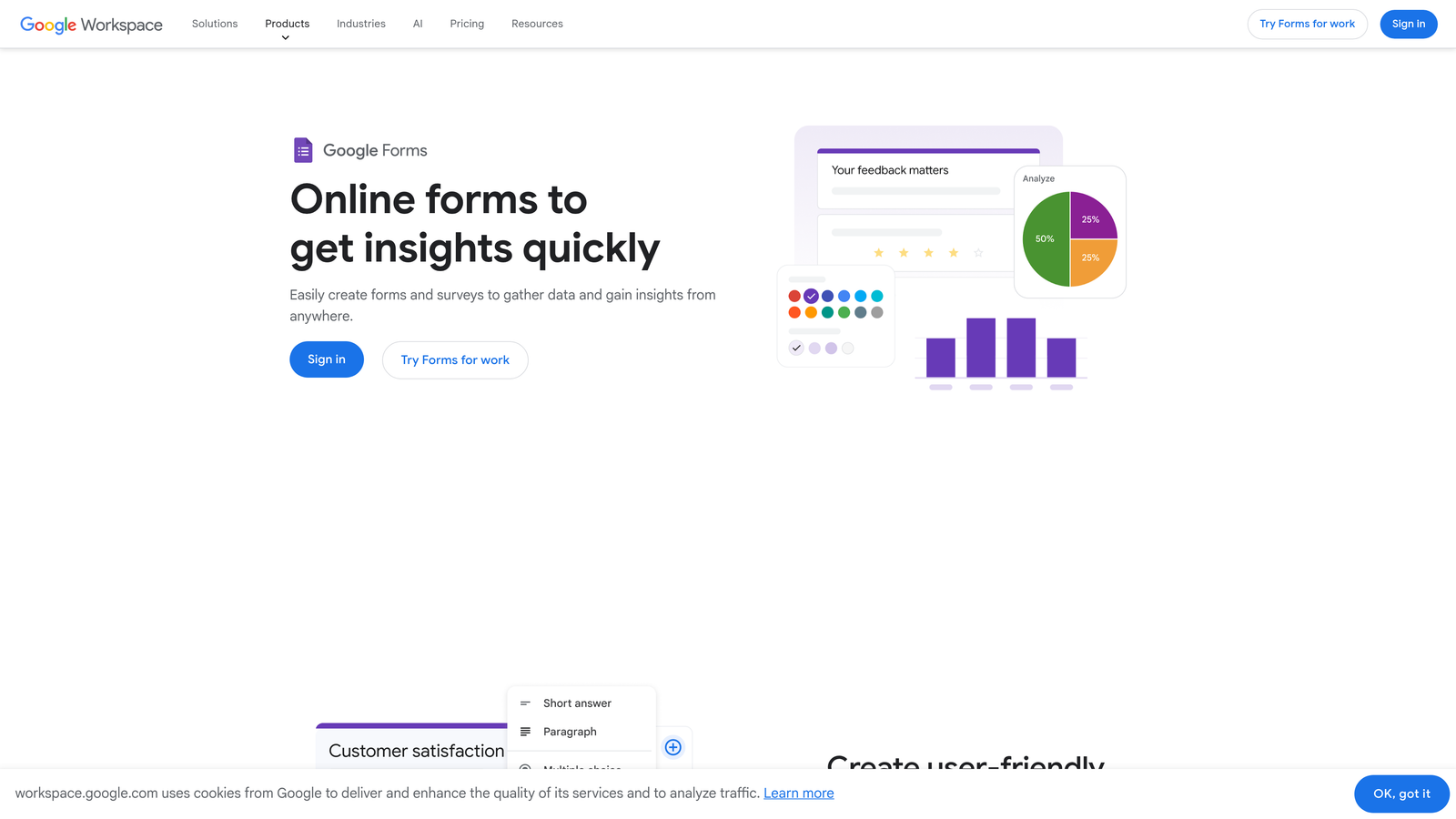
Google Forms is the completely free option that covers basic form needs without cost.
Where This Tool Shines
The price point is unbeatable. You get unlimited forms, unlimited responses, and automatic data sync to Google Sheets without paying anything. For startups or small stores testing ideas, this removes all financial barriers to collecting customer feedback.
If your team already uses Google Workspace, the collaborative editing features let multiple team members work on forms simultaneously. Responses flow directly into Google Sheets where you can analyze them with familiar spreadsheet tools.
Key Features
Completely Free: No limits on forms, responses, or features for any user with a Google account.
Google Sheets Integration: Responses automatically populate a spreadsheet for easy analysis and manipulation.
Collaborative Editing: Multiple team members can build and edit forms together in real-time.
Basic Conditional Logic: Show or hide questions based on previous answers to create dynamic forms.
File Upload Support: Collect images, documents, and other files from customers.
Best For
Small ecommerce businesses or startups that need basic form functionality without budget for paid tools. Works well for customer surveys, feedback collection, and simple contact forms where advanced features aren't required.
Pricing
Completely free with a Google account.
9. Wufoo
Best for: Straightforward order forms and customer inquiries without complexity or steep learning curves
Wufoo is a no-nonsense form builder focused on simplicity and ease of use.
Where This Tool Shines
The drag-and-drop builder is genuinely intuitive. You can create a functional order form or contact form in minutes without tutorials or documentation. This simplicity makes it accessible for team members who aren't technically inclined.
Payment collection through Stripe and PayPal is straightforward to set up. The reporting and analytics are basic but clear, showing you submission trends and completion rates without overwhelming dashboards.
Key Features
Simple Drag-and-Drop Builder: Create forms quickly with an intuitive interface that requires minimal learning.
Payment Processing: Accept payments through Stripe and PayPal integrations for order forms.
Basic Analytics: View submission data, completion rates, and trends with straightforward reporting.
File Uploads: Allow customers to attach files, images, or documents to their submissions.
Zapier Integration: Connect to hundreds of other tools through Zapier for basic automation.
Best For
Small to medium ecommerce stores that need reliable forms without advanced features or complexity. Ideal for merchants who value simplicity and want to avoid overwhelming options or steep learning curves.
Pricing
Free tier available with basic features. Paid plans start at $14.08/month with increased submission limits.
Finding Your Perfect Match
The right ecommerce form builder depends entirely on your platform, budget, and specific needs. If you're running on Shopify and want something that just works, Shopify Forms delivers native integration without complexity. WordPress and WooCommerce stores will find WPForms offers the tightest integration with their existing infrastructure.
For teams focused on conversion optimization and lead quality, Orbit AI's intelligent qualification layer helps you identify high-intent prospects automatically while maintaining the modern, professional aesthetic that builds trust with customers. The AI-powered approach means you're not just collecting data but actually understanding which leads deserve immediate attention.
Budget-conscious startups can start with Google Forms to validate their approach before investing in paid tools. When you're ready for more sophisticated features like conversational interfaces or landing page-style designs, Typeform and Paperform offer compelling options that enhance the customer experience.
Enterprise operations with complex workflows and compliance requirements will appreciate Formstack's advanced automation and security features, while JotForm's extensive payment gateway support makes it ideal for international expansion.
Start building free forms today and see how intelligent form design can elevate your conversion strategy. The difference between a generic form and a conversion-optimized experience often determines whether a prospect becomes a customer.


