

Enterprise form software has evolved well beyond simple contact forms. Today's high-growth teams need platforms that handle complex logic, qualify leads automatically, integrate with CRM and marketing stacks, and scale without breaking. But with so many options claiming to be "enterprise-ready," the differences in capability, flexibility, and pricing can be dramatic.
This comparison covers six platforms purpose-built or well-suited for enterprise and high-growth use cases. Whether you're evaluating tools for a sales team, a marketing ops function, or a product-led growth motion, this breakdown will help you match the right platform to your specific requirements.
Each tool is assessed on core features, ideal use case, and pricing transparency so you can make a fast, informed decision.
1. Orbit AI
Best for: High-growth B2B teams that need forms to qualify and route leads in real time
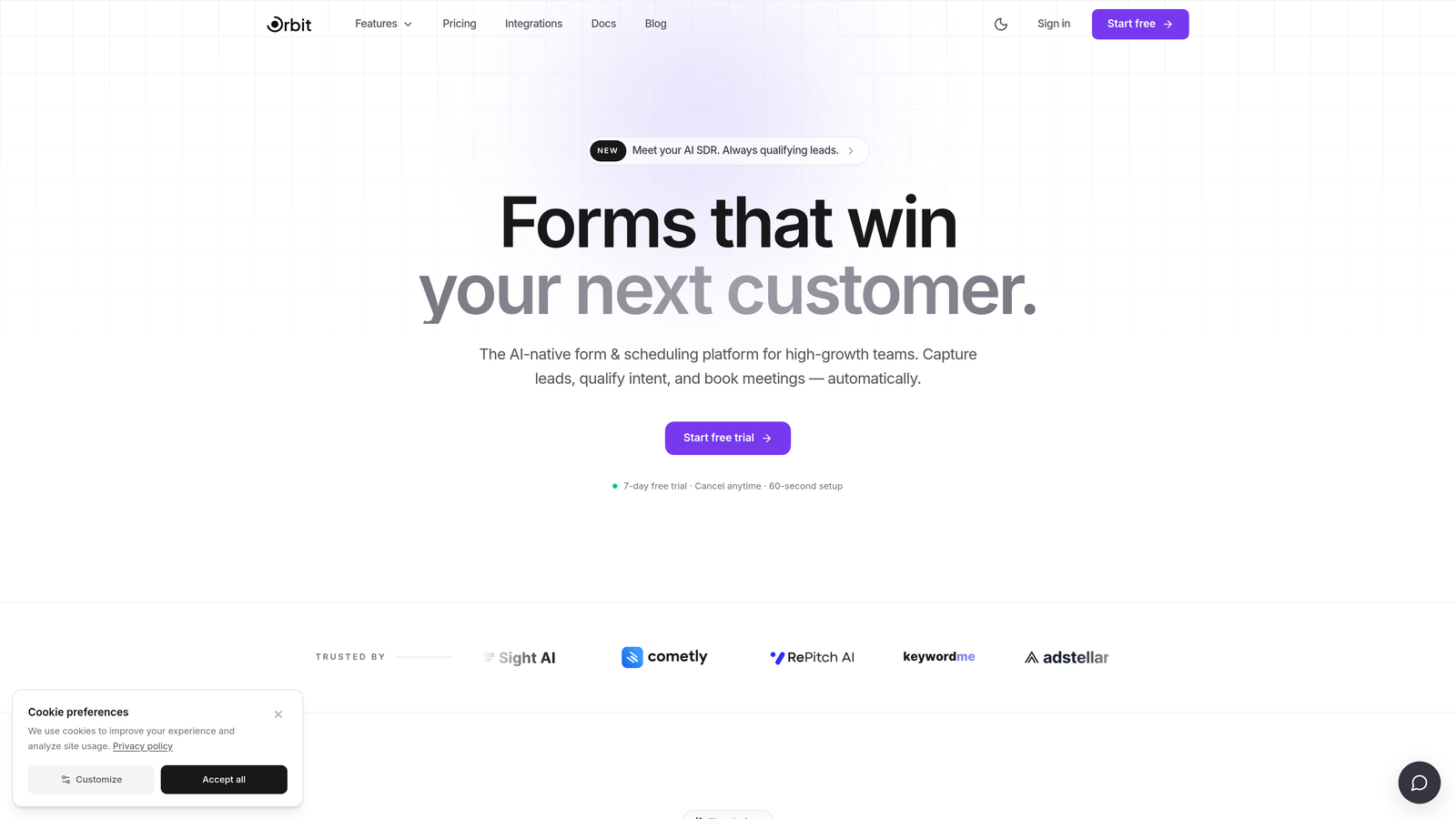
Orbit AI is an AI-powered form builder with built-in lead qualification and conversion optimization designed for revenue-focused teams.
Where This Tool Shines
Most enterprise form tools treat lead qualification as an integration problem: collect the data, push it to a CRM, and let the CRM score it later. Orbit AI flips that model by building qualification into the form layer itself. Leads are scored and routed based on their responses in real time, before they ever hit your CRM.
This matters enormously for demand gen and revenue ops teams where response time and lead quality both drive pipeline outcomes. The platform also prioritizes conversion-optimized UX, meaning the form experience itself is engineered to reduce drop-off, not just collect answers.
Key Features
AI-Powered Lead Qualification: Scores and routes leads automatically based on form responses in real time, removing the lag between submission and sales action.
Conversion-Optimized Design: Smart UX patterns built to minimize abandonment and improve submission rates across device types.
Dynamic Form Logic: Questions adapt based on previous answers, creating a personalized path for each respondent without requiring manual branching setup.
CRM and Marketing Automation Integrations: Connects directly to your existing stack for seamless lead handoff without manual exports or middleware workarounds.
Lead Quality Analytics: Dashboard focused on lead quality metrics, not just raw volume, so your team optimizes for pipeline impact rather than submission counts.
Best For
Orbit AI is the strongest fit for B2B SaaS companies, demand gen teams, and revenue ops functions where lead quality and speed-to-qualification are primary concerns. If your forms are the first stage of a revenue pipeline rather than a simple data collection exercise, this platform is built for that exact context.
Pricing
Visit orbitforms.ai for current pricing plans. The platform is designed with high-growth teams in mind, so plan structures reflect enterprise and scaling use cases.
2. Jotform
Best for: Compliance-heavy organizations needing broad template coverage and enterprise security certifications
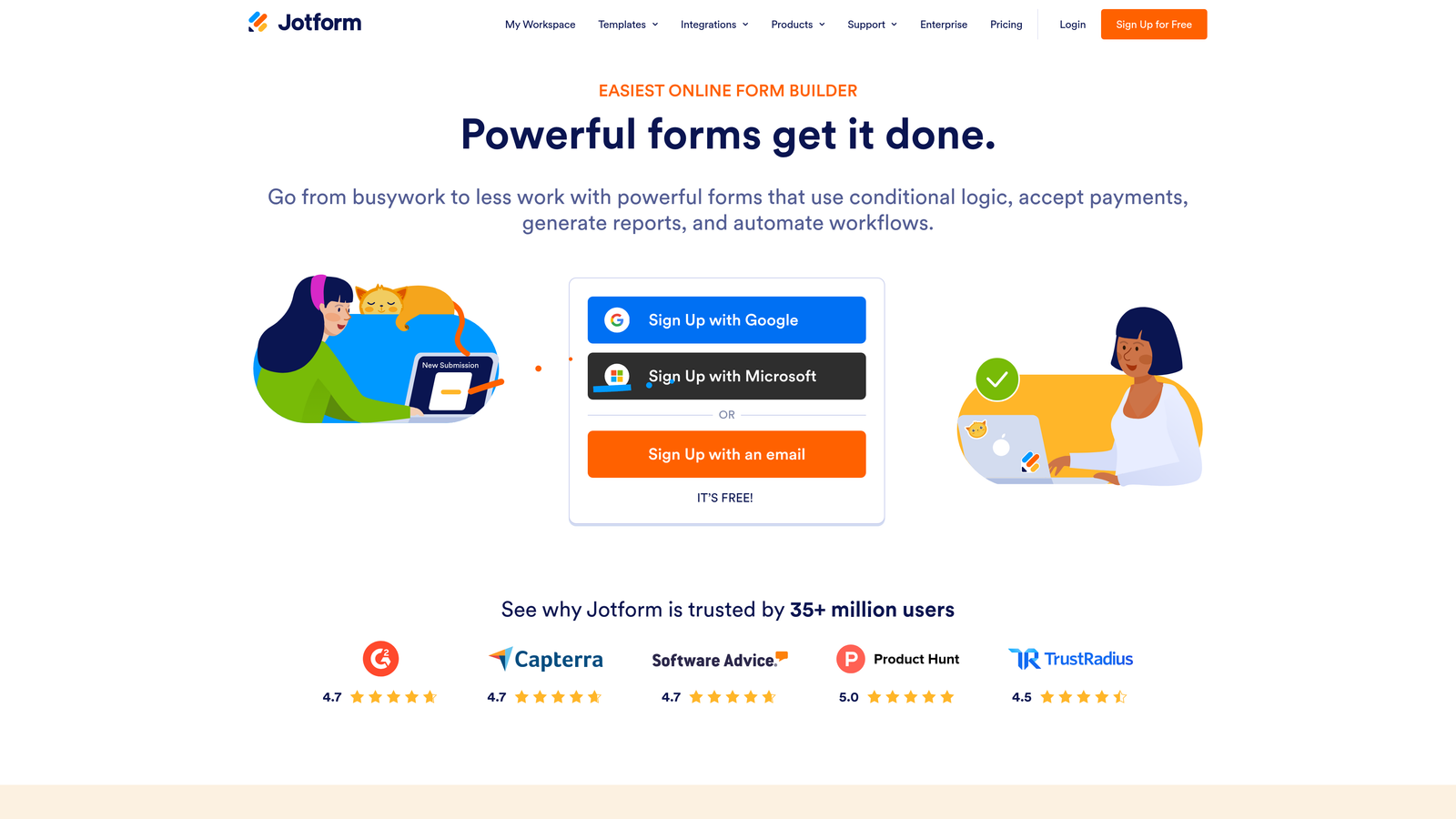
Jotform is one of the most established enterprise form platforms, offering a vast template library, approval workflows, and strong compliance credentials.
Where This Tool Shines
Jotform's depth comes from years of iteration across an enormous range of use cases: HR forms, payment collection, event registration, surveys, and multi-step approval workflows. For organizations that need a single platform to cover all of these without custom development, Jotform delivers that breadth reliably.
The enterprise tier adds SSO, white-labeling, dedicated support, and private cloud or on-premise deployment options. These are meaningful capabilities for IT and security teams evaluating risk and data residency requirements. If compliance certifications are a gating factor in your vendor evaluation, Jotform checks most of the boxes.
Key Features
Enterprise Security Certifications: HIPAA, SOC 2, and GDPR compliance built in, making it viable for healthcare, legal, and financial services organizations.
Approval Workflow Builder: Multi-step internal approval processes that route form submissions through defined reviewer chains.
Extensive Template Library: Thousands of pre-built templates spanning HR, operations, payments, and more to accelerate deployment.
SSO and White-Labeling: Enterprise tier includes single sign-on, branded experiences, and dedicated account support.
Private Cloud and On-Premise Deployment: For organizations with strict data residency or infrastructure requirements, these options are available at enterprise tier.
Best For
Jotform suits large organizations in regulated industries where compliance certifications, deployment flexibility, and broad use case coverage matter more than conversion optimization or AI-driven lead qualification. It's a strong general-purpose enterprise data collection platform.
Pricing
A free tier is available with limited submissions. Enterprise pricing is custom and quote-based. Contact Jotform's sales team for a tailored proposal based on user count and feature requirements.
3. Formstack
Best for: Regulated industries where form submissions need to trigger document generation and e-signature workflows
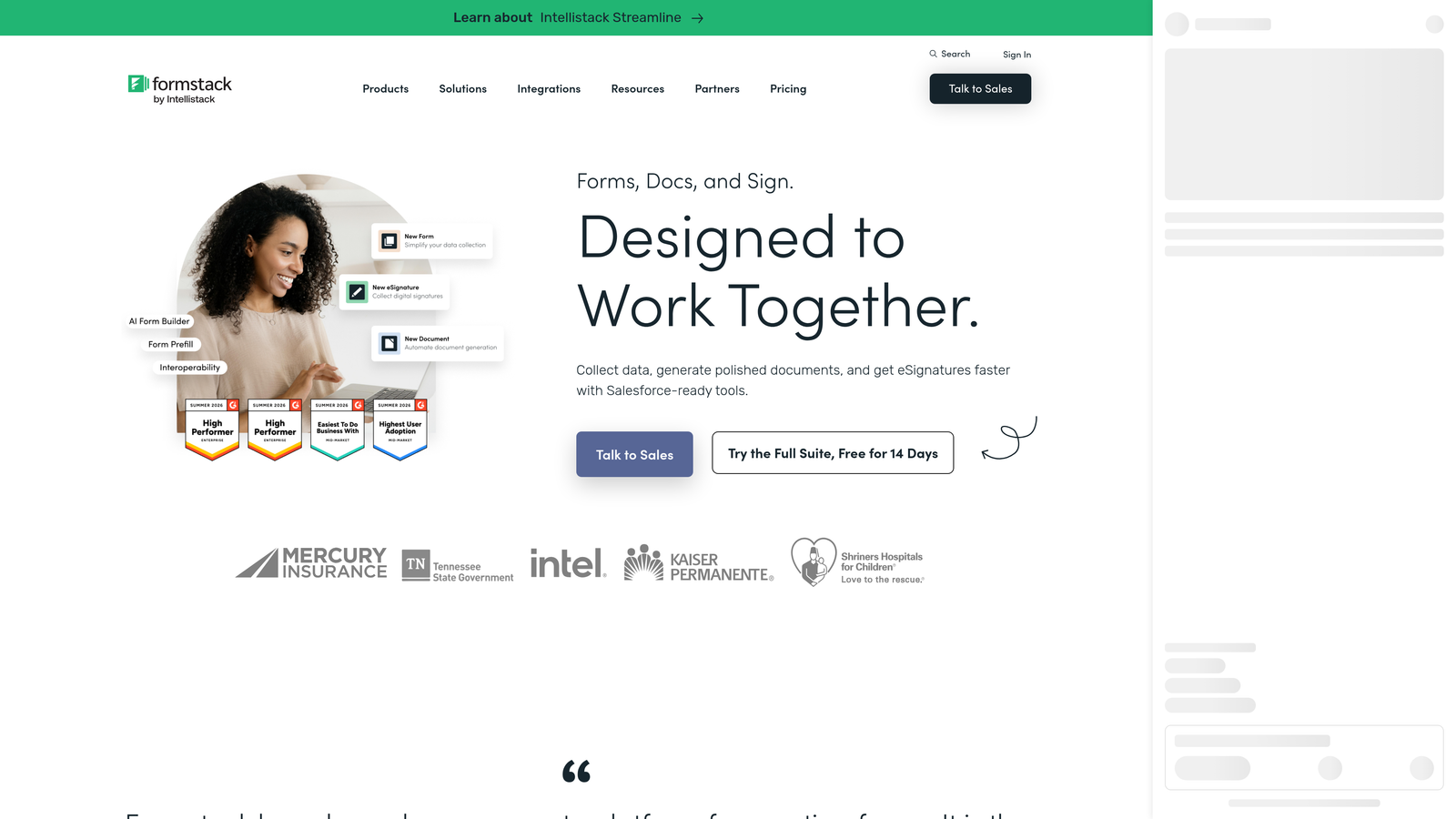
Formstack is a full workflow automation suite combining forms, document generation, and e-signatures in a single platform.
Where This Tool Shines
Formstack goes well beyond form building. Its real strength is in connecting form submissions to downstream document and approval workflows. Think of it as the platform you reach for when a completed form needs to automatically generate a contract, populate a PDF, and route it for signature without any manual intervention in between.
This makes Formstack particularly compelling in healthcare, financial services, and legal contexts where data collected via form needs to flow into regulated document workflows. The native Salesforce integration is also notably deep, with advanced field mapping that goes beyond simple contact creation.
Key Features
Unified Suite: Formstack Forms, Documents, and Sign work together natively, reducing the need for third-party automation glue between products.
Native Salesforce Integration: Advanced field mapping and Salesforce-native functionality for teams running their revenue process on the platform.
Compliance and Security: Audit trails, field-level encryption, and compliance features designed for regulated industry requirements.
Workflow Automation: Connects form submissions directly to document generation and approval routing without manual steps.
Advanced Analytics: Conversion tracking and submission analytics to monitor form performance over time.
Best For
Formstack is the right choice for teams in healthcare, legal, or financial services where form data needs to trigger document workflows, e-signatures, or compliance-tracked approval chains. It's less focused on lead generation and more on operational data flow in regulated contexts.
Pricing
Formstack uses modular pricing per product, so costs scale based on which suite components you need. Full suite plans start at higher price points. Contact Formstack for enterprise pricing specific to your team size and workflow requirements.
4. Typeform
Best for: Marketing teams prioritizing brand experience, survey completion rates, and conversational lead capture
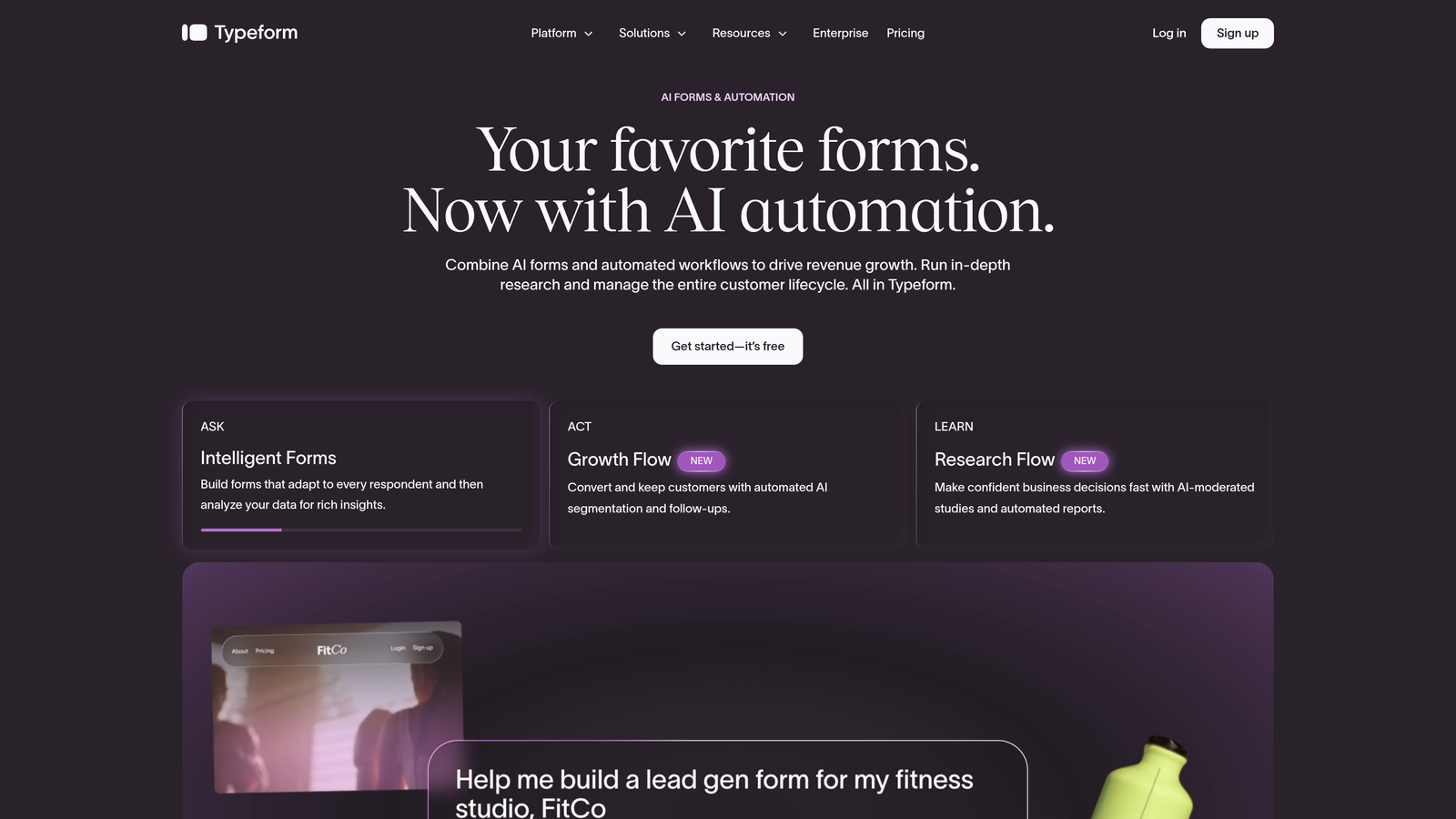
Typeform is a conversational form builder known for its one-question-at-a-time format that prioritizes respondent experience and brand consistency.
Where This Tool Shines
Typeform's defining characteristic is its format: questions appear one at a time, creating a conversational rhythm that typically feels less overwhelming than a dense multi-field form. For marketing campaigns, NPS surveys, and brand-forward lead gen, this approach tends to produce a more engaging respondent experience.
Business and Enterprise tiers add custom branding, advanced logic jumps, and native integrations with HubSpot and Salesforce. The video form feature is a notable differentiator, allowing teams to embed video questions or intros for richer engagement in research or feedback contexts.
Key Features
Conversational Interface: One-question-at-a-time format designed to improve completion rates by reducing cognitive load on respondents.
Custom Branding and White-Labeling: Full brand control available on Business and Enterprise plans, including custom domains and removal of Typeform branding.
Native CRM Integrations: Direct connections to HubSpot, Salesforce, and major marketing automation platforms without middleware.
Advanced Logic and Branching: Personalized form paths based on previous answers to ensure respondents only see relevant questions.
Video Forms: Multimedia question types including video for richer engagement in research, feedback, and onboarding contexts.
Best For
Typeform is strongest for marketing teams running surveys, brand-forward lead gen campaigns, or NPS collection where the respondent experience and completion rate are the primary metrics. It's less suited for complex internal workflows, compliance-heavy data collection, or AI-driven lead qualification.
Pricing
A free tier is available with limited responses. Business plans are available at published pricing. Enterprise pricing is custom. Costs scale with response volume and seat count at higher tiers.
5. Paperform
Best for: Mid-market teams and agencies needing multi-purpose forms with built-in payments and scheduling
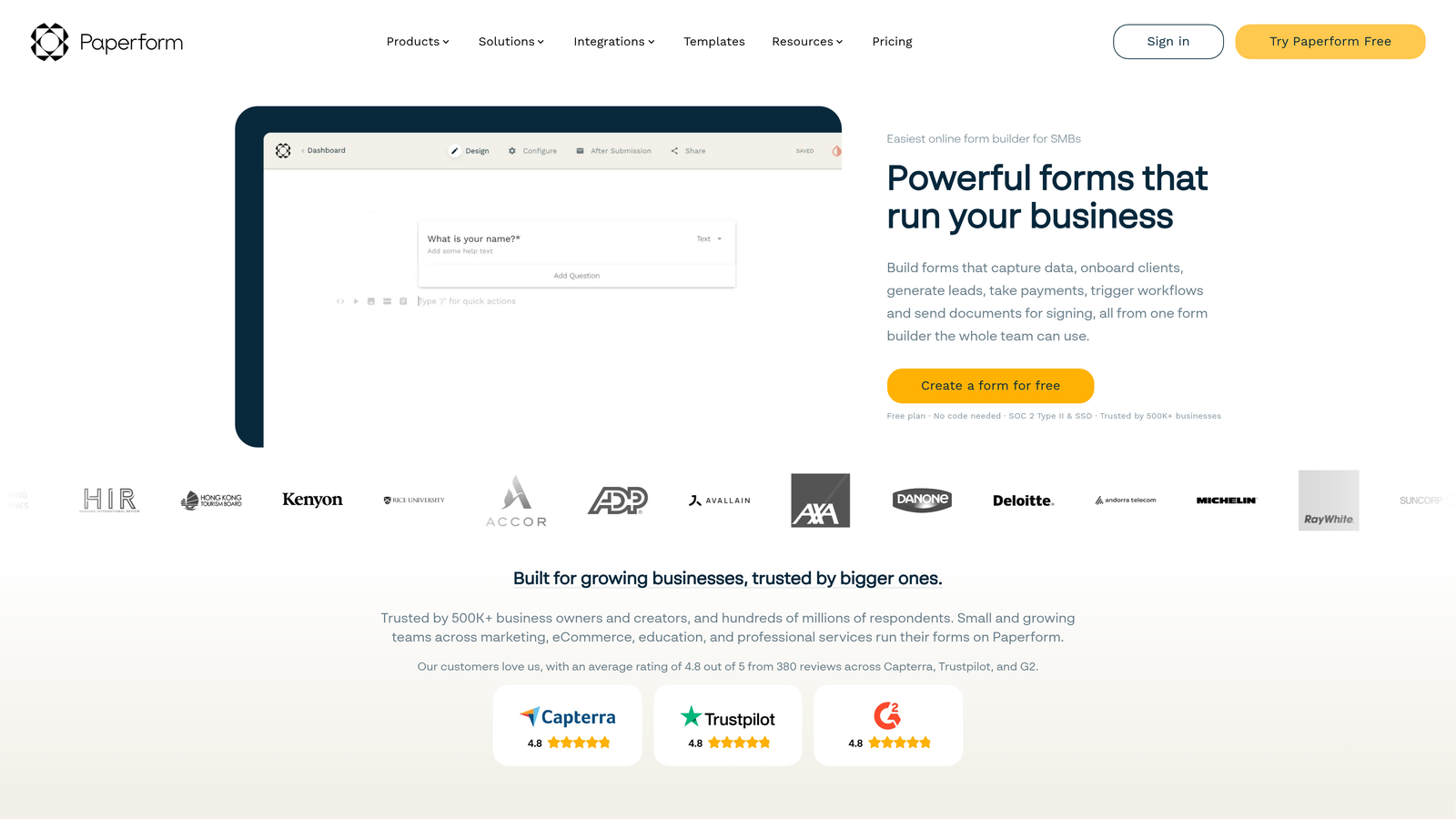
Paperform is a flexible form and page builder that combines forms, payment collection, and scheduling in a single editor without requiring multiple tools.
Where This Tool Shines
Paperform's editor is closer to a page builder than a traditional form tool. You can mix rich text, images, embeds, and form fields on the same canvas, which makes it practical for forms that need to look and feel like landing pages rather than plain data collection screens.
The built-in payment collection via Stripe and PayPal is a genuine differentiator for teams selling products, collecting deposits, or running paid registrations. Combined with native scheduling and booking functionality, Paperform reduces the number of separate tools a team needs to manage for common business workflows.
Key Features
Page-Builder-Style Editor: Rich text, images, and embeds alongside form fields in a single flexible canvas for polished, content-rich form pages.
Built-In Payment Collection: Native Stripe and PayPal integration for payments, deposits, and product sales without third-party tools.
Scheduling and Booking: Native appointment and booking functionality integrated directly into the form experience.
Flat-Rate Pricing: No per-response charges, making costs predictable for teams with high form submission volume.
Automation Integrations: Connects with Zapier, Make, and major CRM and email platforms for workflow automation.
Best For
Paperform suits mid-market businesses, agencies, and service teams that need forms to handle payments, bookings, and rich content presentation alongside data collection. It's a strong choice when you want to consolidate multiple tools into one without sacrificing design flexibility.
Pricing
The Essentials plan starts at approximately $29 per month. Agency and higher tiers are available. All plans use flat-rate pricing with no per-response charges, which is attractive for teams with high submission volumes.
6. Tally
Best for: Cost-conscious teams, startups, and lean ops functions that need unlimited forms without per-response pricing
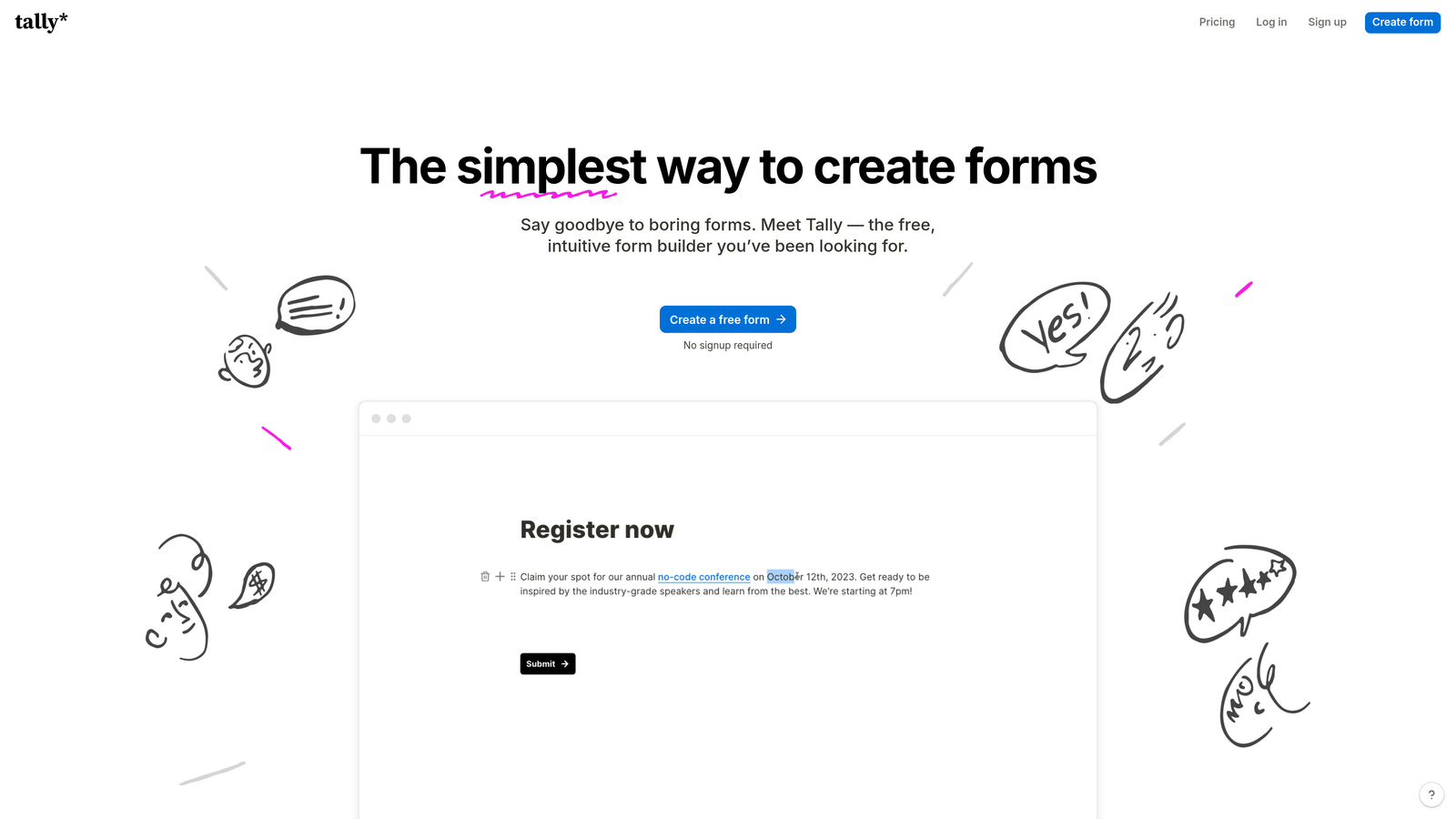
Tally is a Notion-inspired form builder with a generous free tier offering unlimited forms and responses, popular with lean teams and startups.
Where This Tool Shines
Tally's free tier is genuinely unusual in this market: unlimited forms, unlimited responses, no submission caps. For startups, internal ops teams, or anyone running high-volume lightweight forms, this removes the pricing anxiety that comes with most alternatives. The block-based editor will feel immediately familiar to anyone who uses Notion, which lowers the learning curve significantly.
Tally Pro adds conditional logic, hidden fields, calculated fields, custom domains, and white-labeling. These features bring it into range for more sophisticated use cases while maintaining the simplicity that makes it appealing to lean teams in the first place.
Key Features
Unlimited Free Tier: Unlimited forms and unlimited responses on the free plan, a rare offering in a market where most tools charge at scale.
Block-Based Editor: Notion-inspired interface that makes form creation fast and intuitive for teams already working in block-based tools.
Conditional Logic and Calculated Fields: Available on Pro plan for more dynamic and personalized form experiences.
Custom Domains and White-Labeling: Tally Pro supports branded form experiences with custom domain hosting.
Integrations: Connects with Zapier, Make, Notion, and Google Sheets for lightweight workflow automation.
Best For
Tally is the right pick for startups, internal ops teams, and cost-conscious organizations that need high-volume form capability without complex compliance requirements or AI-driven qualification. It's not a fit for regulated industries or teams that need SOC 2 or HIPAA certifications.
Pricing
The free tier is exceptionally generous with no submission limits. Tally Pro starts at approximately $29 per month per workspace, making it one of the more affordable paid options in this comparison.
Matching the Right Tool to Your Use Case
These six platforms serve meaningfully different needs, and the right choice depends heavily on what your team is actually trying to accomplish with forms.
If your forms are the first stage of a revenue pipeline and lead quality is a primary concern, Orbit AI is the standout option. Its AI-native approach to qualification and routing sets it apart from every other tool in this list, which treat qualification as something that happens after form submission rather than during it. For demand gen teams and revenue ops functions, that distinction is significant.
For compliance-heavy organizations in healthcare, legal, or regulated industries, Jotform's certification depth and deployment flexibility make it the safer enterprise choice. If your evaluation is gated by HIPAA or SOC 2 requirements, Jotform covers that ground reliably.
Formstack is the right fit when forms need to trigger document generation, e-signature workflows, or complex approval chains. It's less a form tool and more a workflow automation platform that starts with a form.
Typeform excels when brand experience and respondent engagement are the primary metrics. Marketing teams running campaigns, surveys, or NPS programs where completion rate and brand consistency matter will find it well-suited to those goals.
Paperform is the practical choice for teams that want to consolidate forms, payments, and bookings into a single tool without stitching together multiple platforms. Its flat-rate pricing also makes it predictable at scale.
Tally is the clear winner on cost efficiency. For startups and lean teams that need unlimited forms without per-response pricing, the free tier alone is hard to beat for straightforward use cases.
Transform your lead generation with AI-powered forms that qualify prospects automatically while delivering the modern, conversion-optimized experience your high-growth team needs. Start building free forms today and see how intelligent form design can elevate your conversion strategy.


