

Enterprise teams don't just need forms. They need intelligent data capture that qualifies leads, integrates with complex tech stacks, and scales without breaking. The wrong platform creates real bottlenecks: manual lead sorting, poor conversion rates, and compliance headaches that slow procurement to a crawl.
This guide covers the best form builder platforms built for enterprise-level demands. Each tool was evaluated on lead qualification capabilities, integration depth, conditional logic, compliance features, and overall scalability. Whether you're running a high-volume sales pipeline or managing multi-department data collection, these options represent the strongest choices available in 2026.
Here's what each tool does best, and who it's actually built for.
1. Orbit AI
Best for: High-growth SaaS and demand generation teams that need AI-powered lead qualification at the point of form submission.
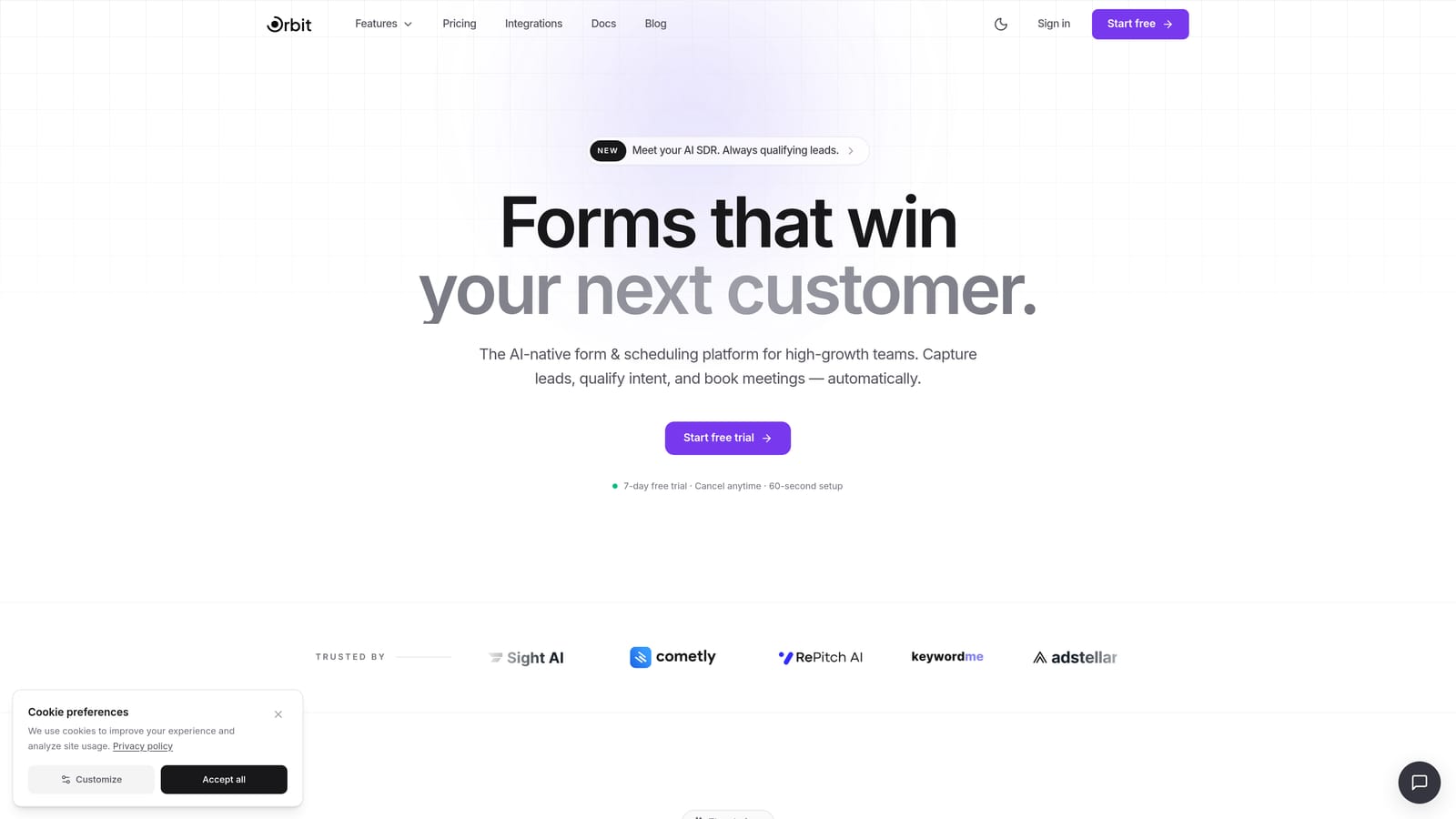
Orbit AI is an AI-native form builder that moves beyond data collection, automatically scoring, qualifying, and routing leads the moment they submit a form.
Where This Tool Shines
Most form builders are passive. They collect data and hand it off to a human to sort through later. Orbit AI flips that model entirely. The platform's AI qualification layer works at the moment of submission, meaning your sales team receives leads that are already scored and routed, not a raw list to manually triage.
For SaaS teams tracking pipeline metrics and optimizing conversion rate benchmarks, this matters enormously. Forms become an active part of the revenue engine rather than a data collection step that happens before the real work begins.
Key Features
AI-Powered Lead Qualification: Automatically scores and routes leads based on quality signals captured during form submission, eliminating manual review.
Conversion-Optimized Design System: Purpose-built form UI designed to reduce drop-off on landing pages and campaign pages, with modern aesthetics that hold up against brand standards.
Conditional Logic and Smart Routing: Dynamically adjusts the form experience and routes submissions based on lead quality signals, not just field values.
Brand-Forward Form UI: Clean, modern form design that reduces friction and keeps completion rates high across device types.
Pipeline Metric Tracking: Built with SaaS conversion KPIs in mind, including completion rate, lead quality distribution, and submission-to-opportunity tracking.
Best For
Orbit AI is the strongest fit for SaaS companies and demand generation teams who treat form conversion as a revenue metric, not an IT function. If your team is frustrated by manual lead sorting or losing qualified prospects to poor form UX, this platform addresses both problems natively.
Pricing
Current plan details are available at orbitforms.ai. Pricing is structured for growing teams with enterprise needs.
2. Jotform
Best for: High-volume, multi-department data collection with broad template coverage and workflow automation.
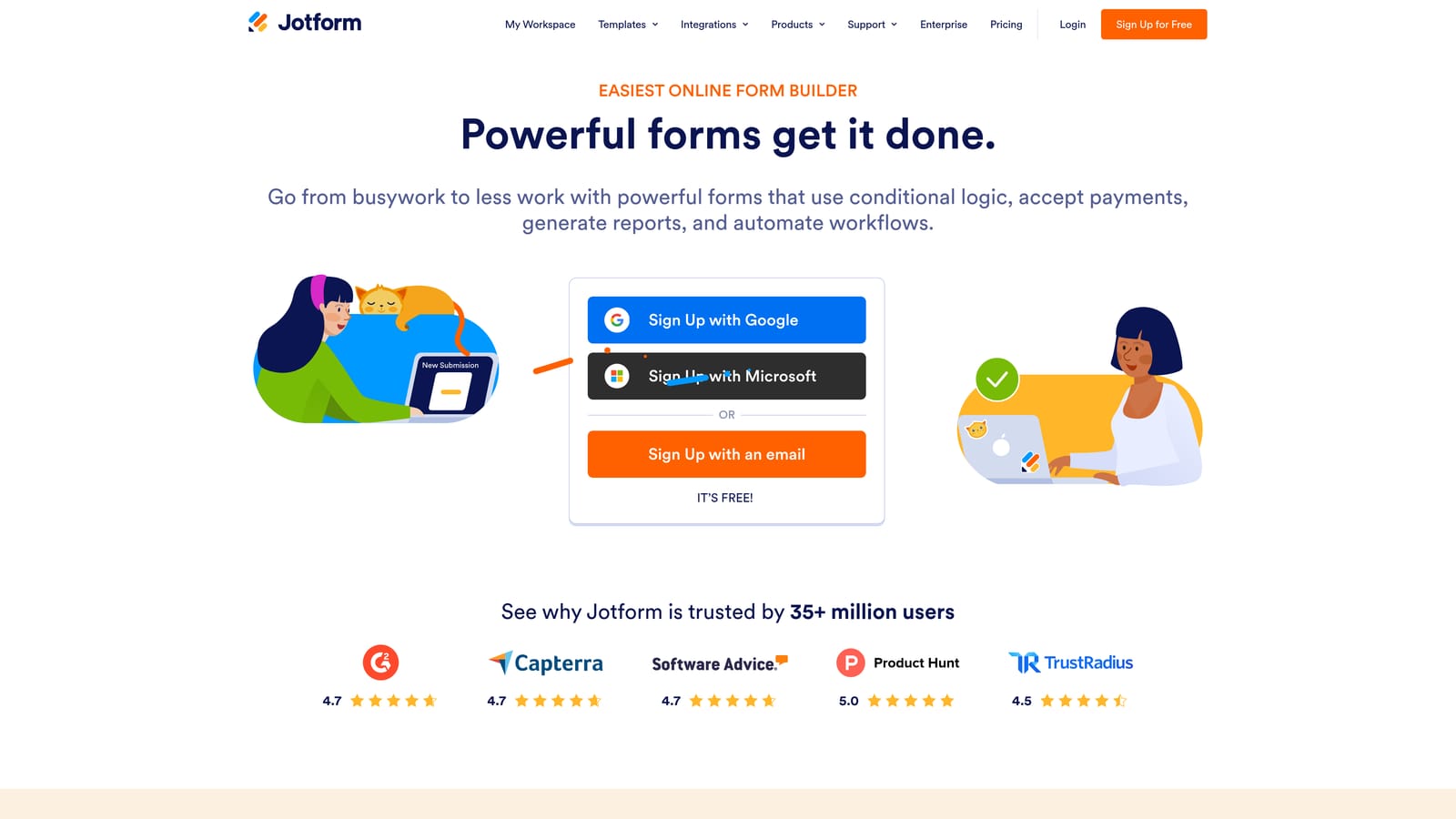
Jotform is one of the most established form platforms available, known for its extensive template library, strong workflow automation, and enterprise-grade features including SSO and team management.
Where This Tool Shines
Jotform's strength is breadth. With a template library spanning dozens of use case categories and over 100 native integrations, it's built for organizations that need one platform to handle everything from HR onboarding forms to payment collection and approval workflows. The learning curve is low, and the feature ceiling is high.
The Enterprise plan adds SSO, custom branding, HIPAA compliance options, and dedicated support, making it viable for larger organizations with IT governance requirements. It's particularly well-suited for operations and HR teams managing complex, multi-step data collection processes.
Key Features
Extensive Template Library: Thousands of pre-built form templates spanning HR, legal, operations, payments, and more, ready to deploy with minimal configuration.
Enterprise Plan with SSO and HIPAA Options: Supports single sign-on, custom branding, and HIPAA-compliant data handling for regulated use cases.
Approval Workflows: Multi-step form routing and approval flows that connect form submissions to internal review processes.
100+ Native Integrations: Direct connections to CRM, payment, and productivity tools without requiring third-party middleware.
Team Management: Role-based access control and team workspaces for multi-department deployments.
Best For
Jotform suits large organizations that need a single platform to serve diverse internal teams. HR, operations, finance, and IT departments will find it particularly useful. It's less specialized for outbound lead generation but highly capable for internal and mixed-use form needs.
Pricing
Enterprise pricing is available on request. Standard plans are offered at accessible price points. Verify current rates at jotform.com.
3. Formstack
Best for: Regulated industries requiring HIPAA compliance, audit trails, document generation, and e-signature capabilities.
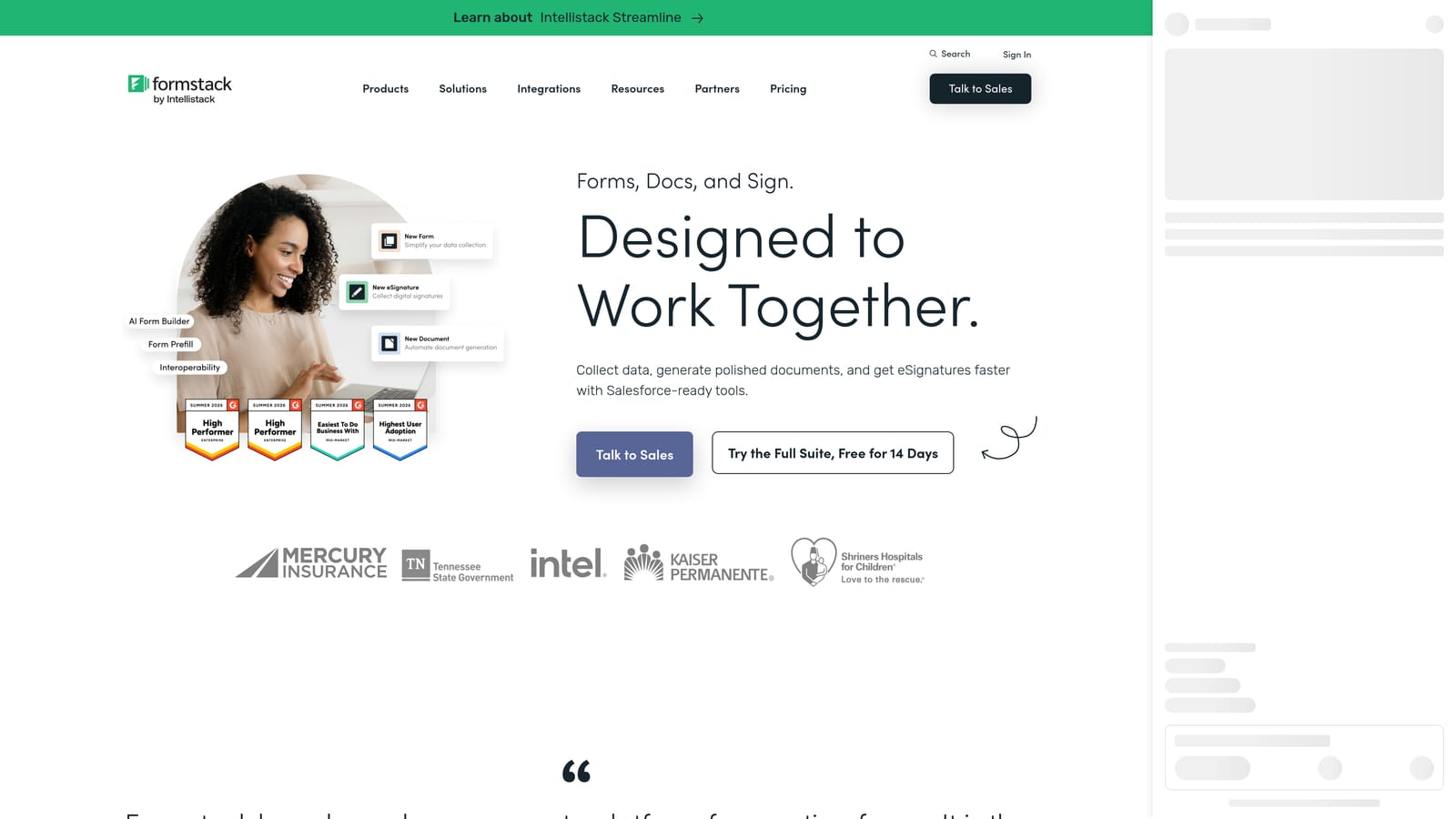
Formstack is an enterprise form and workflow platform built with compliance-heavy industries in mind, offering a full suite of data governance and document automation tools alongside core form building.
Where This Tool Shines
When compliance is the primary procurement driver, Formstack is consistently one of the first platforms evaluated. Its HIPAA-compliant form collection, audit trail support, and document generation capabilities make it a natural fit for healthcare, finance, and legal teams that can't afford compliance gaps in their data collection workflows.
Beyond compliance, Formstack extends its value through companion products: Formstack Documents handles automated document generation from form data, and Formstack Sign adds native e-signature capabilities. Together, these create an end-to-end workflow that takes a form submission all the way through to a signed, filed document without leaving the platform.
Key Features
HIPAA-Compliant Form Collection: Purpose-built for regulated data handling with audit trail support and access controls that satisfy compliance requirements.
Formstack Documents: Automatically generates documents from form submission data, reducing manual data entry and formatting work.
Formstack Sign: Native e-signature capability integrated directly into the form and document workflow.
Approval Routing: Multi-step workflow automation that moves submissions through internal review and approval processes.
Compliance Posture: Strong positioning for HIPAA, GDPR, and SOC 2 requirements. Verify current certifications directly at formstack.com before procurement decisions.
Best For
Formstack is the right choice for healthcare organizations, financial services firms, and legal teams where compliance isn't optional. It's also a strong fit for any enterprise that needs form data to flow automatically into documents and signed agreements.
Pricing
Tiered plans are available with enterprise pricing on request. Verify current rates at formstack.com.
4. Typeform
Best for: Marketing-led enterprises where conversational form UX and brand experience drive engagement and completion rates.
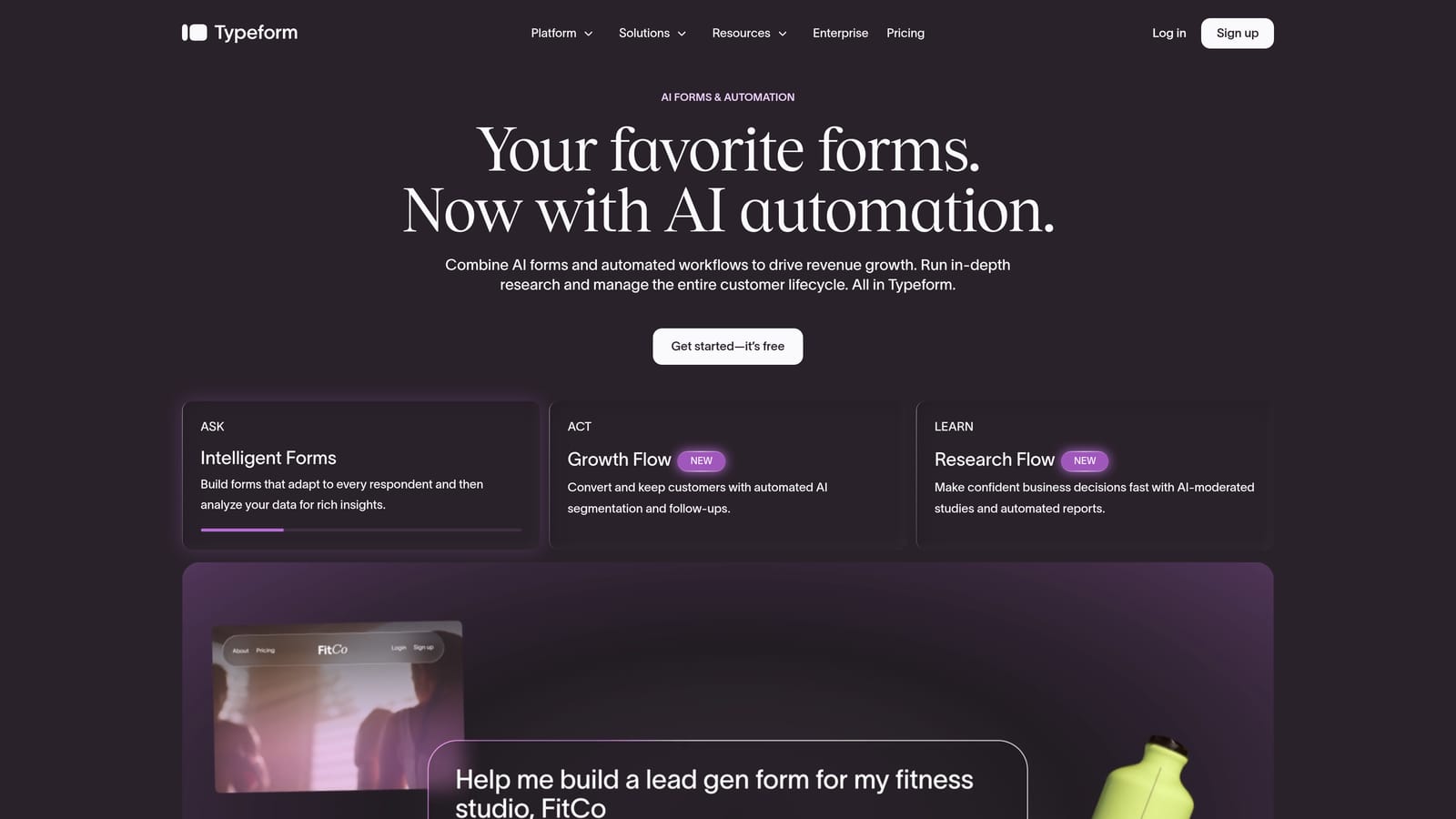
Typeform pioneered the conversational, one-question-at-a-time format and remains the benchmark for form experiences that feel polished, human, and on-brand.
Where This Tool Shines
Typeform's core insight is that form design directly affects how willing people are to complete them. By presenting one question at a time in a clean, focused interface, it reduces the visual overwhelm that causes drop-off on traditional multi-field forms. For enterprises where the form itself is a brand touchpoint, this matters.
The Business and Enterprise tiers add the infrastructure large organizations need: SSO, custom domains, priority support, and deep integrations with tools like HubSpot and Salesforce. Logic jumps, hidden fields, and answer piping allow for genuinely personalized form experiences that adapt based on what respondents have already said.
Key Features
Conversational Form Format: One-question-at-a-time design that reduces abandonment and creates a more engaging respondent experience.
Logic Jumps and Answer Piping: Dynamic form paths that personalize the experience based on previous answers, creating a more relevant interaction.
Enterprise SSO and Custom Domains: Business and Enterprise tiers include single sign-on, branded domains, and priority support for IT governance requirements.
CRM Integrations: Native connections to HubSpot, Salesforce, and other enterprise tools for seamless data handoff.
Brand Customization: Extensive design controls that let teams match form aesthetics to brand standards without developer involvement.
Best For
Typeform works best for marketing teams, brand-conscious enterprises, and organizations running survey research or lead capture campaigns where the respondent experience is a competitive differentiator. It's less suited for heavy compliance use cases or teams that need AI-driven lead qualification built in.
Pricing
Business and Enterprise tiers are available. Verify current pricing at typeform.com.
5. Paperform
Best for: Product teams and agencies that need design-flexible, content-rich forms that function like branded landing pages.
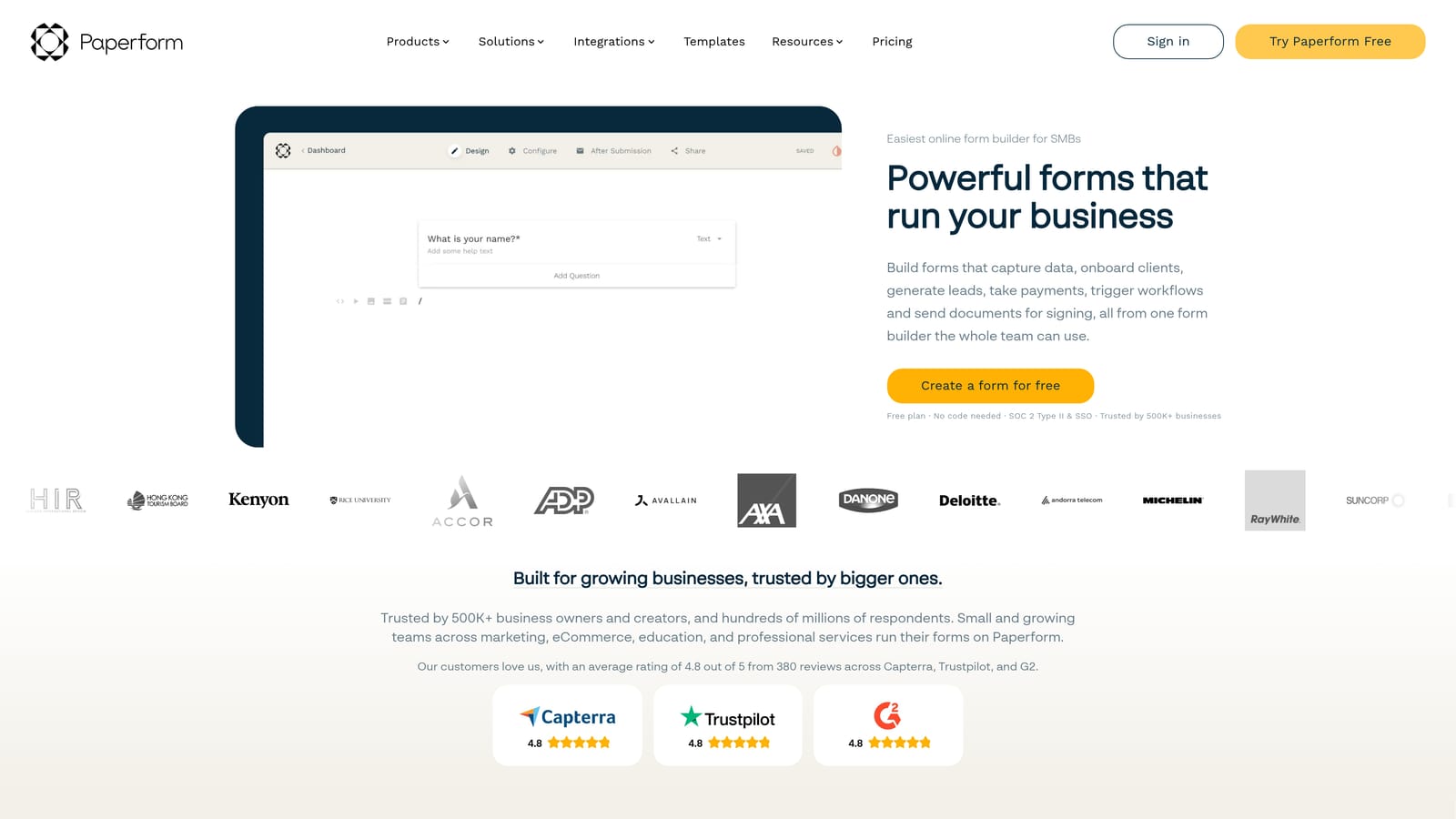
Paperform takes a document-style approach to form building, allowing teams to embed media, accept payments, apply conditional logic, and schedule appointments within a single, content-rich form page.
Where This Tool Shines
Paperform's editor feels closer to a page builder than a traditional form tool. You can mix text, images, video, and form fields freely, which means a Paperform form can look and feel like a fully branded landing page rather than a data entry screen. For teams that want to control the full experience without spinning up a separate landing page, this is a genuine time-saver.
The platform also handles payment processing, scheduling, and calculation fields natively, making it useful for product teams running signups, bookings, or quote requests within a single form. Integration with Zapier, Make, and direct API access covers most workflow automation needs without requiring dedicated engineering resources.
Key Features
Document-Style Editor: Freeform layout that combines text, media, and form fields into a single branded page experience.
Native Payment Processing: Accept payments directly within forms without third-party checkout redirects.
Scheduling and Media Embeds: Built-in scheduling capability and media embedding for rich, multi-purpose form pages.
Conditional Logic and Calculation Fields: Dynamic form behavior and real-time calculations for complex, context-aware form experiences.
Flexible Integration Options: Zapier, Make, and direct API support for connecting form data to existing workflows.
Best For
Paperform is a strong fit for agencies, product teams, and startups that prioritize design flexibility and need forms to handle multiple functions simultaneously. It's less focused on enterprise compliance and doesn't offer AI-driven lead qualification, but it excels at creating polished, multi-purpose form experiences quickly.
Pricing
Pro and Agency plans are available. Verify current rates at paperform.co.
6. Tally
Best for: Lean teams or enterprises needing fast, lightweight form deployment without complexity or cost barriers.
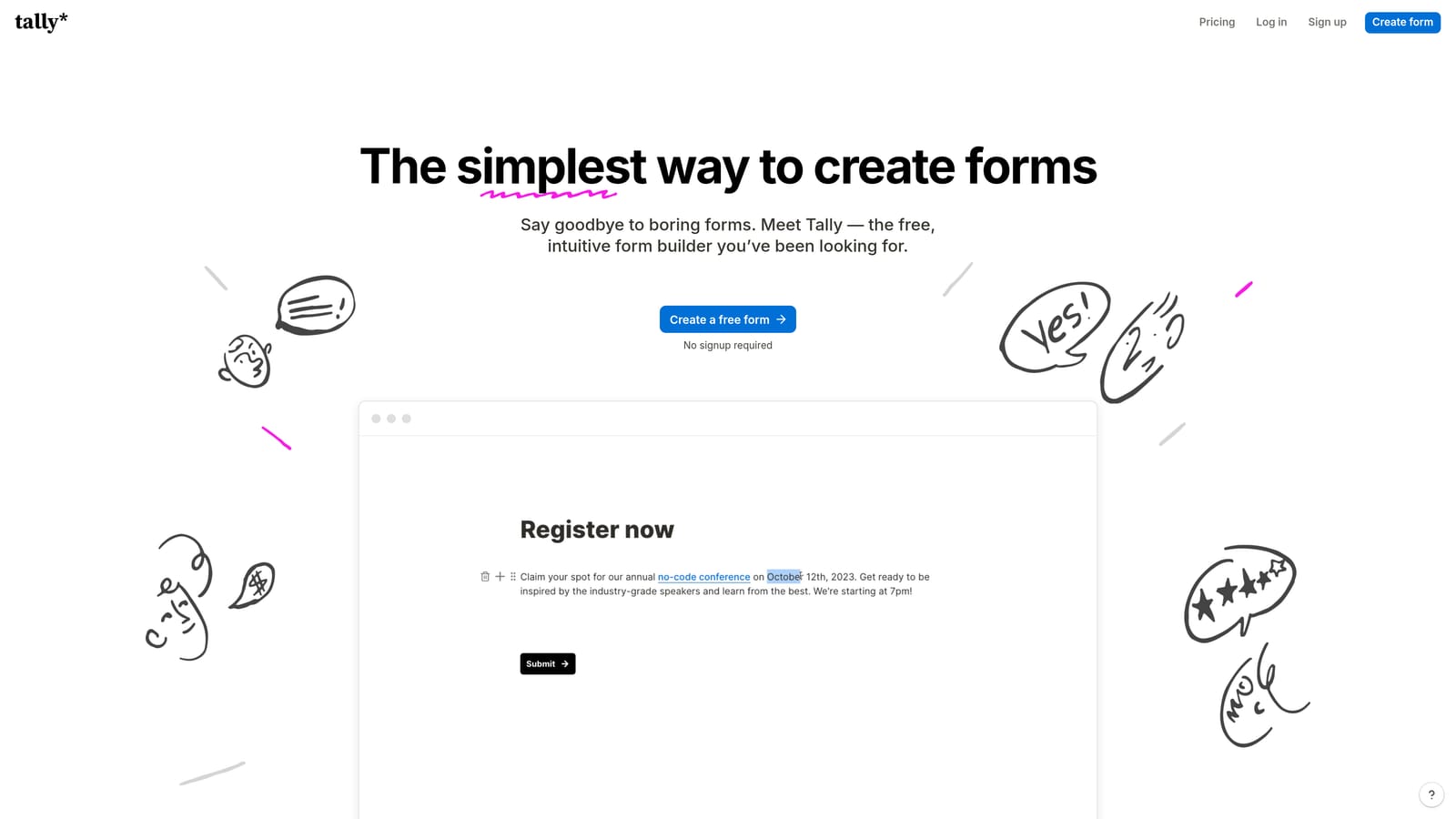
Tally is a lightweight, fast-to-deploy form builder with a Notion-like editing experience and a genuinely generous free tier that makes it easy to get forms live without procurement friction.
Where This Tool Shines
Tally's block-based editor is intuitive enough that anyone familiar with Notion can build a polished form in minutes. The free plan offers unlimited forms and responses, which is unusual in the market and makes it a practical choice for internal tools, quick surveys, or supplementary form needs that don't justify a full enterprise license.
For larger organizations, Tally works well as a lightweight internal tool running alongside a more feature-rich primary platform. It's not built for heavy compliance requirements or AI-driven lead qualification, but for speed and simplicity, it's genuinely hard to beat at its price point.
Key Features
Unlimited Forms on Free Plan: No submission caps or form limits on the free tier, which is a meaningful differentiator for teams testing or scaling gradually.
Notion-Style Block Editor: Familiar drag-and-drop editing experience that reduces the learning curve for teams already working in productivity tools.
Conditional Logic on All Plans: Basic conditional logic and hidden fields available across free and paid tiers.
Clean Embed Options: Minimal, well-designed form output that embeds cleanly into websites and internal tools.
Zapier and Webhook Integrations: Simple automation connections for routing form data into existing workflows.
Best For
Tally suits lean teams, internal operations, or enterprises that need a fast supplementary form tool without adding another complex platform to the stack. It's not the right choice for teams with serious compliance requirements or those who need AI-powered lead qualification and advanced pipeline tracking.
Pricing
A free tier is available with no submission limits. A Pro plan is offered at an accessible monthly rate. Verify current pricing at tally.so.
Matching the Right Tool to Your Enterprise Needs
The best form builder for your enterprise depends on what problem you're actually trying to solve. These six platforms each occupy a distinct position, and choosing the wrong one means paying for features you don't need while missing the ones you do.
Here's a quick map to the right choice:
Orbit AI is the clear pick for SaaS and demand generation teams who need forms to do more than collect data. If lead qualification, conversion optimization, and pipeline tracking are your core metrics, it's purpose-built for exactly that outcome.
Jotform fits organizations that need one platform to serve multiple departments at scale, particularly HR, operations, and finance teams managing high-volume, varied form workflows.
Formstack is the right call when compliance is the non-negotiable starting point. Healthcare, legal, and financial services teams will find its HIPAA support, audit trails, and document automation genuinely valuable.
Typeform belongs in the stack of marketing-led enterprises where the respondent experience is a brand differentiator and conversational form design drives higher engagement.
Paperform works best for product teams and agencies that want the flexibility to build content-rich, multi-purpose form pages without spinning up a separate landing page tool.
Tally is the fastest path to a clean, functional form with no cost barrier, making it ideal for lean teams or as a lightweight internal tool within a larger enterprise stack.
For teams serious about turning form submissions into qualified pipeline rather than just a spreadsheet of contacts, the AI-native approach changes the game. Start building free forms today and see how intelligent lead qualification built directly into your form flow can transform what your forms actually deliver for your revenue team.


