

The form builder market has evolved far beyond basic contact forms. Today's platforms are lead qualification engines, workflow triggers, and conversion tools built to power entire pipelines. But with so many options, choosing the right online form creation platform can make or break how efficiently your team captures and converts leads.
This list covers six platforms suited to different team sizes, use cases, and growth goals. Whether you need AI-powered lead qualification, a no-code drag-and-drop builder, or enterprise-grade compliance, there's a platform here for you.
We evaluated each tool on ease of use, integration depth, lead capture capabilities, pricing transparency, and suitability for high-growth teams. Here are the top online form creation platforms worth considering in 2026.
1. Orbit AI
Best for: High-growth SaaS and marketing teams that need forms to qualify and route leads automatically.
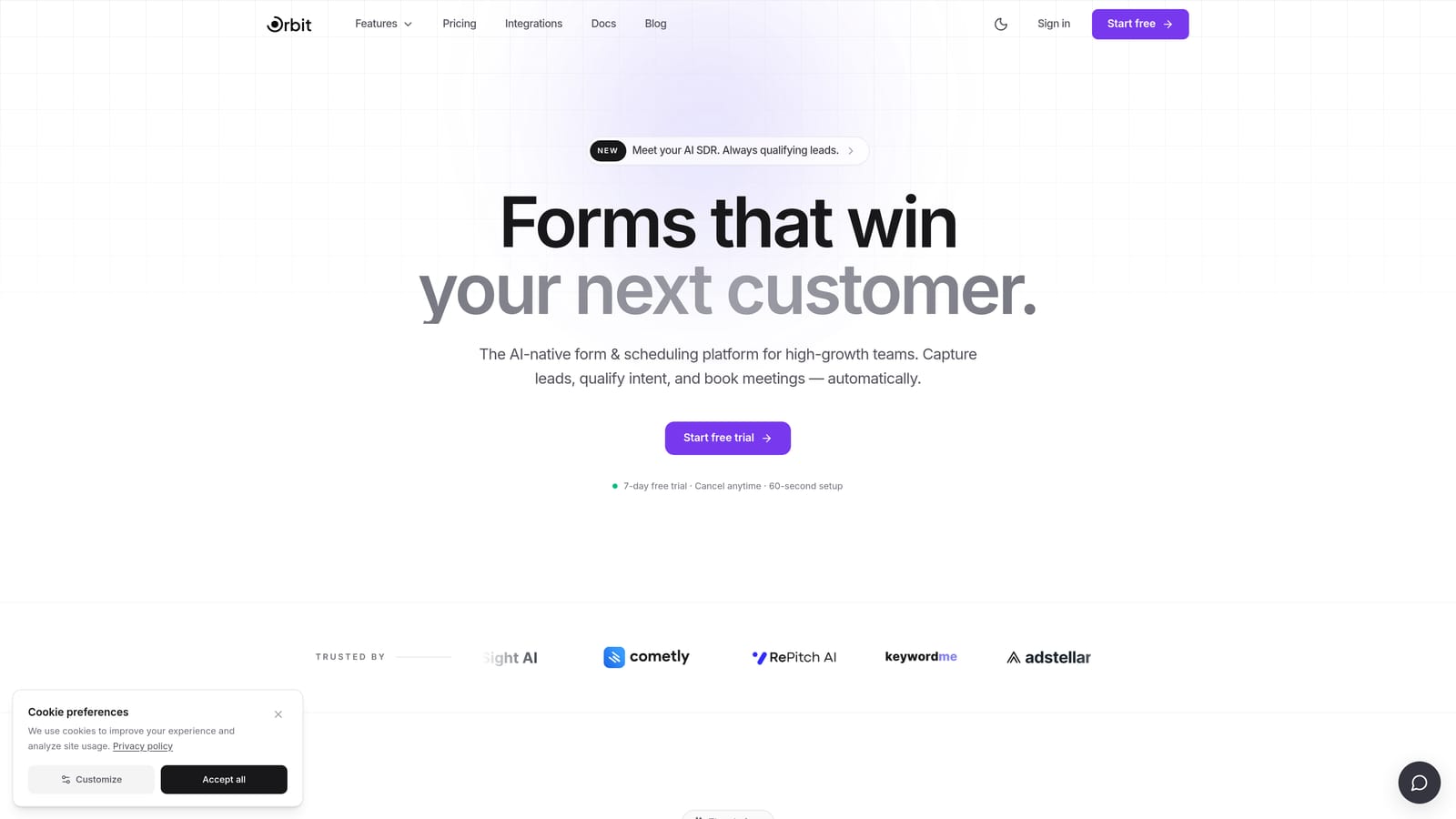
Orbit AI is an AI-powered form creation platform that goes beyond data collection to score, tag, and route leads based on how respondents answer.
Where This Tool Shines
Most form builders stop at the submission. Orbit AI is built around what happens next. Its AI agents analyze responses in real time, qualify leads against your criteria, and trigger downstream workflows automatically, so your sales or marketing team receives context-rich, pre-scored leads rather than raw form data.
The platform also brings together contact management, scheduler integration, and a conversion-focused design system in one place. For teams treating every form submission as a pipeline entry point, that unified layer is a meaningful operational advantage over cobbling together separate tools.
Key Features
AI-Powered Lead Qualification and Scoring: Automatically scores and tags leads based on form responses using built-in AI agents, so high-intent prospects surface immediately.
Workflow Automation and Sequences: Triggers email sequences, CRM updates, Slack alerts, or custom workflows the moment a form is submitted, without requiring a third-party automation tool.
Contact Management and Lead Tracking: Maintains a CRM-style contact record for every submission, giving teams a running view of lead history and engagement.
Scheduler Integration: Lets respondents book meetings directly from the form, compressing the time between interest and conversation.
Analytics Dashboard: Tracks form performance, completion rates, and conversion metrics so teams can iterate on what's working.
Conversion-Optimized Templates: Pre-built, visually polished form designs that prioritize completion and engagement from the first field.
Best For
Orbit AI is best suited to SaaS companies, growth-focused marketing teams, sales teams, and agencies where lead quality matters as much as lead volume. If your team is manually reviewing and routing form submissions today, this platform is built to automate that work.
Pricing
Current plan details and pricing tiers are available at orbitforms.ai/pricing. A free starting option is available.
2. Typeform
Best for: Teams prioritizing respondent engagement and high form completion rates.
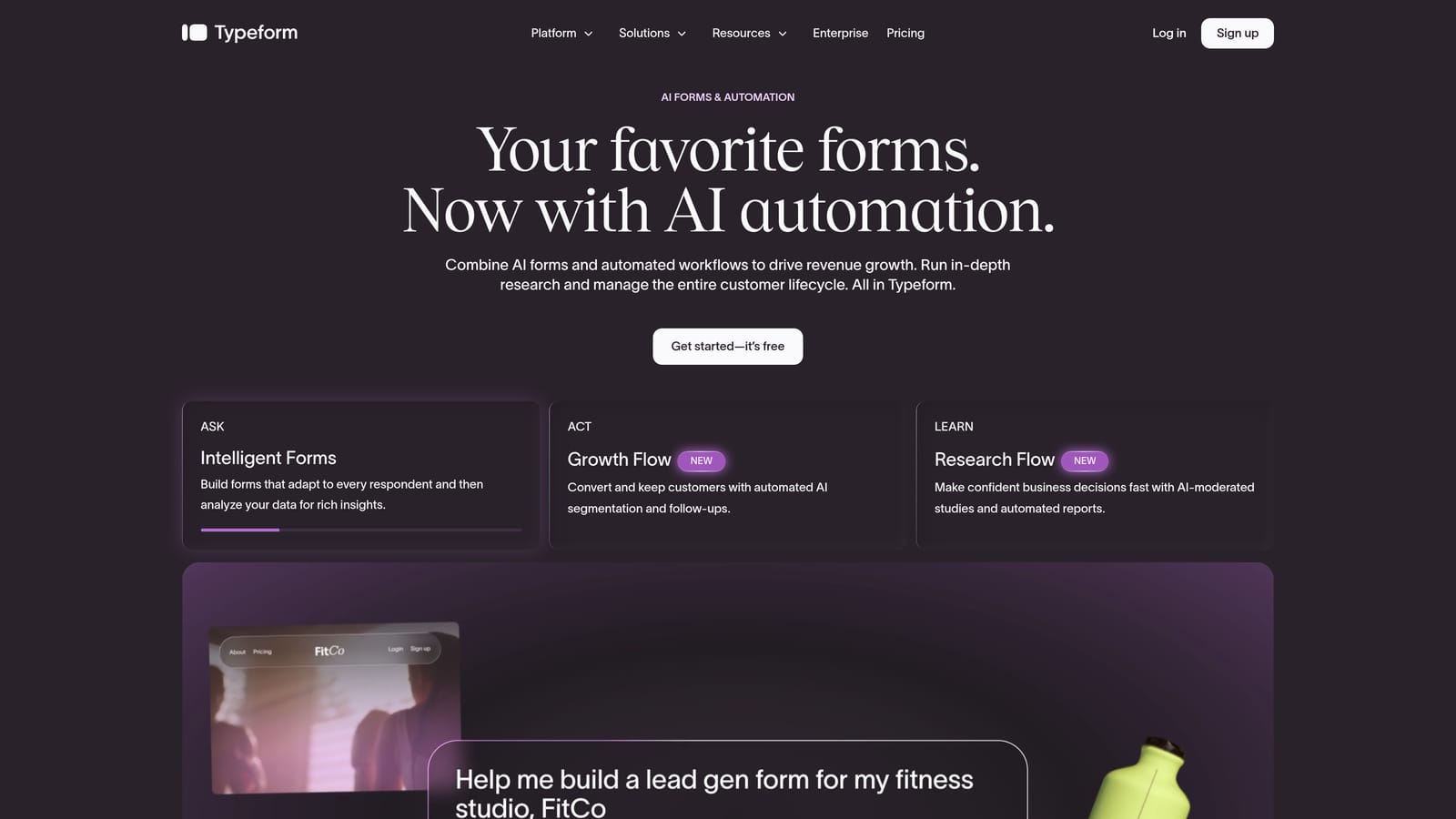
Typeform is a conversational form builder known for its one-question-at-a-time format that reduces form fatigue and improves completion rates for surveys, lead gen, and NPS campaigns.
Where This Tool Shines
Typeform's core insight is simple: people complete forms that feel like conversations. By presenting one question at a time with clean visuals and smooth transitions, it creates an experience that feels far less overwhelming than a traditional multi-field form. This format has made it a go-to for teams running brand surveys, customer research, and top-of-funnel lead capture.
The platform has also expanded its capabilities with video forms and AI-assisted form creation features, giving teams more ways to engage respondents beyond text alone. Its integration ecosystem is broad, connecting natively with HubSpot, Salesforce, Zapier, and a range of other tools.
Key Features
Conversational One-Question Format: Presents questions sequentially to reduce abandonment and create a more natural respondent experience.
Logic Jumps and Conditional Branching: Routes respondents to different questions based on their answers, enabling personalized form paths.
CRM and Automation Integrations: Connects with HubSpot, Salesforce, Zapier, and other tools to push submissions into existing workflows.
Video Forms: Allows teams to embed video questions or intros for a more human, engaging form experience.
AI-Assisted Form Creation: Helps teams generate form structures and questions faster using AI suggestions.
Best For
Typeform works well for marketing teams running surveys, NPS programs, or lead gen campaigns where respondent experience and completion rate are the primary concerns. Teams that need deep lead qualification or native automation may want to pair it with additional tools or consider a platform like Orbit AI. See how they compare at orbitforms.ai/compare/typeform-alternative.
Pricing
A free plan is available with response limits. Paid plans scale based on monthly response volume and feature access, with several tiers to choose from.
3. Jotform
Best for: Teams that need broad feature coverage across payments, documents, approvals, and integrations.
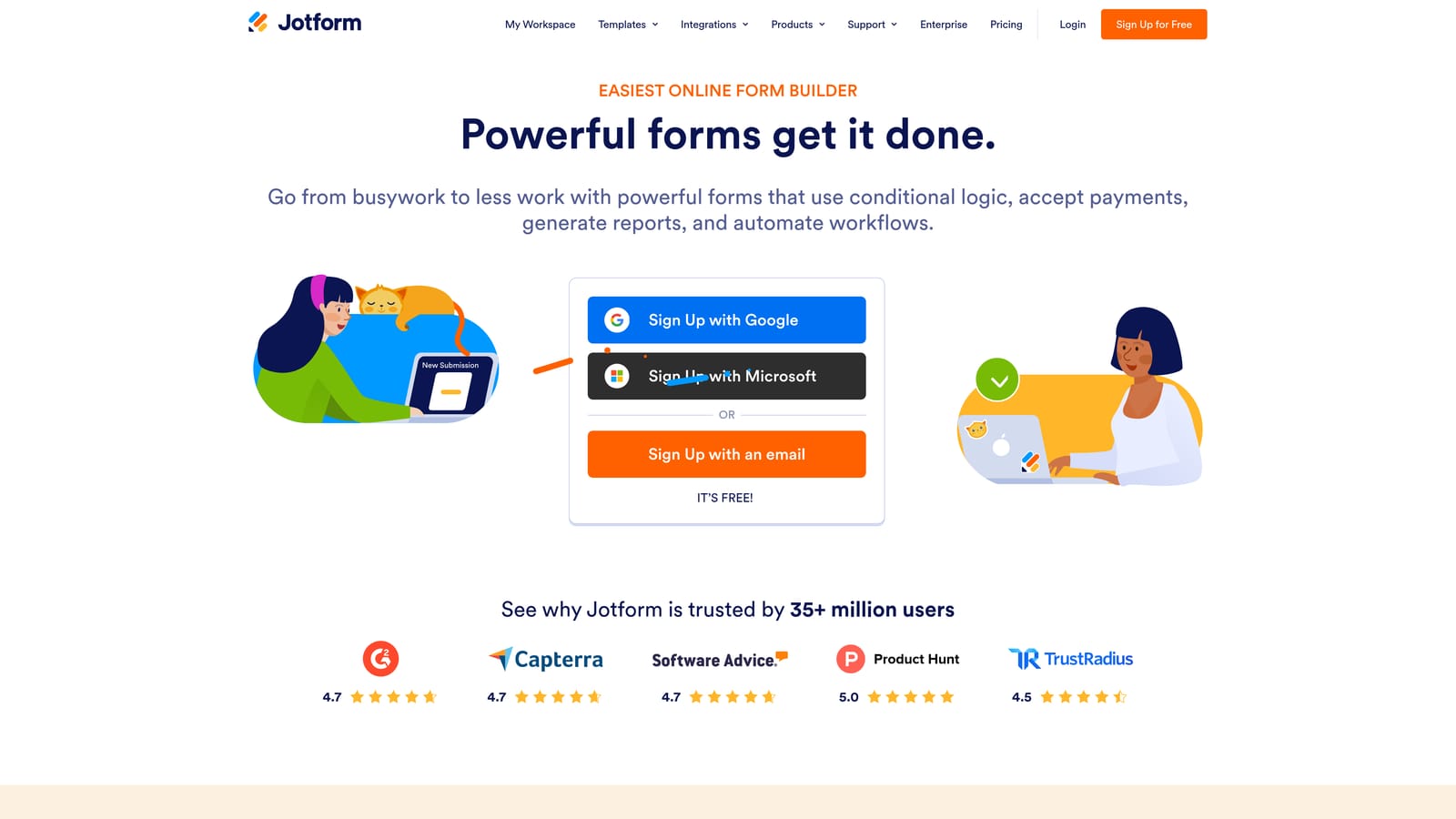
Jotform is a feature-rich form builder with one of the largest template libraries on the market, spanning HR, healthcare, education, operations, and marketing use cases.
Where This Tool Shines
Jotform's strength is breadth. Few platforms match it for sheer variety of form types, templates, and built-in capabilities. Whether you need to collect payments, generate PDFs from submissions, route approvals, or connect to over a hundred native integrations, Jotform likely has a path to do it without custom development.
It has also introduced an AI form builder assistant that can generate form structures from a text prompt, lowering the barrier for teams without dedicated form designers. For organizations managing multiple departments with different form needs, Jotform's versatility makes it a practical all-in-one choice.
Key Features
Thousands of Pre-Built Templates: A massive library of industry-specific templates covering virtually every use case, from event registration to medical intake.
Payment Collection: Accepts payments via Stripe, PayPal, and other processors directly through form submissions.
PDF Document Generation: Automatically creates formatted PDF documents from submitted form data.
Approval Workflow Routing: Routes submissions through multi-step approval chains for internal review processes.
100+ Native Integrations: Connects with a wide range of CRMs, project management tools, cloud storage platforms, and communication apps.
Best For
Jotform suits operations teams, HR departments, healthcare administrators, and educators who need a reliable, versatile form tool. Teams focused specifically on lead qualification and pipeline growth may find its native automation capabilities less developed than purpose-built platforms. Compare options at orbitforms.ai/compare/jotform-alternative.
Pricing
A free plan is available, with paid plans scaling based on monthly submission volume and storage. Pricing tiers are clearly published on Jotform's website.
4. Tally
Best for: Startups, indie hackers, and lean teams that need capable forms without the cost.
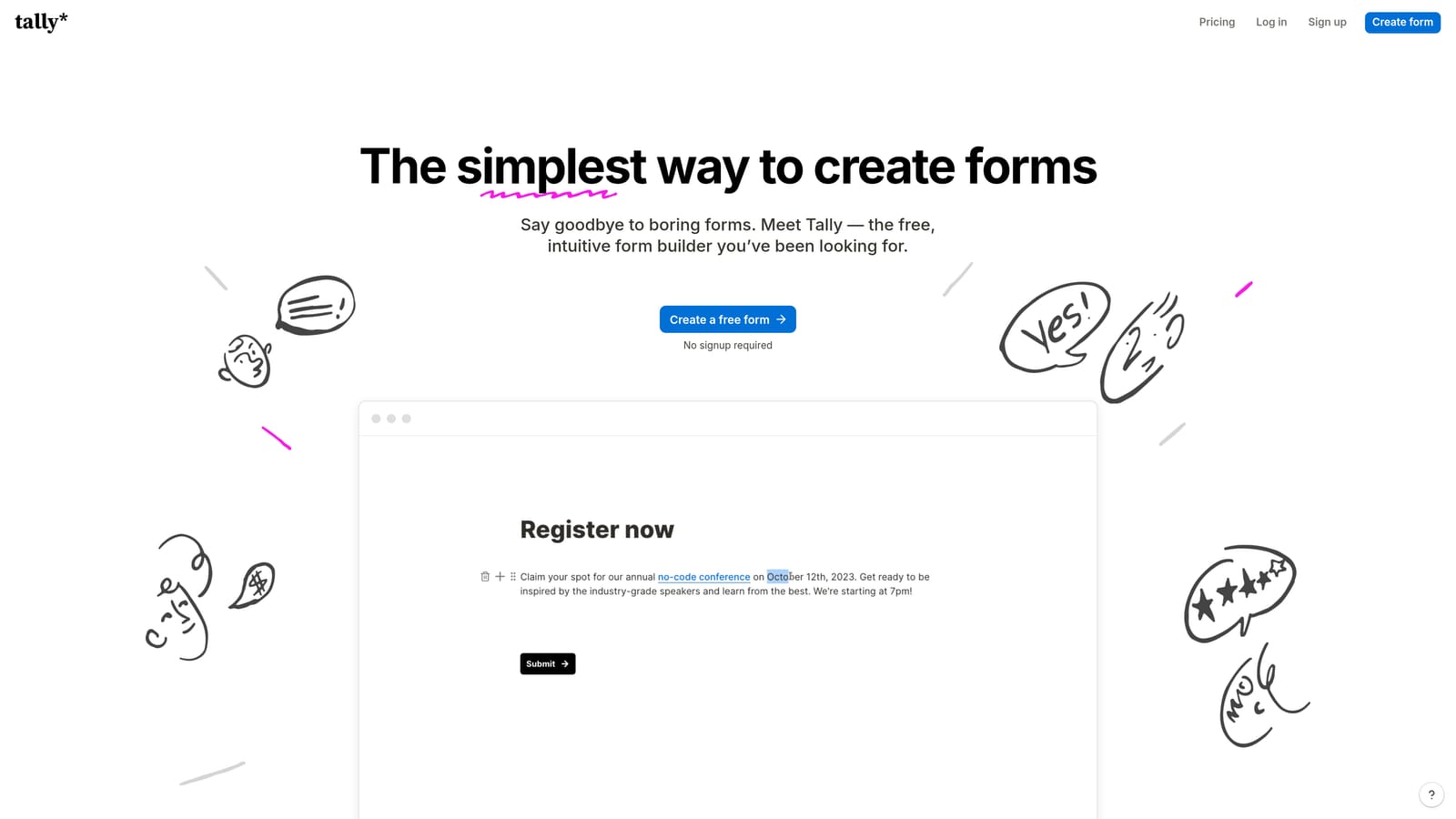
Tally is a Notion-inspired form builder with a genuinely generous free tier: unlimited forms, unlimited responses, and no forced branding, making it a standout option for budget-conscious teams.
Where This Tool Shines
Tally's free plan is one of the most competitive in the market. Where most platforms cap free users at a handful of forms or a few hundred monthly responses, Tally removes those limits entirely. The result is a tool that early-stage teams and solo operators can rely on without watching a usage meter.
The Notion-like block editor makes form building intuitive for anyone already comfortable in that ecosystem. It's clean, fast, and low-friction. Integrations with Notion, Google Sheets, and Zapier cover the basics for most lightweight workflows, though teams needing advanced lead scoring or native CRM automation will hit its ceiling relatively quickly.
Key Features
Unlimited Forms and Responses on Free Plan: No artificial caps on form count or submission volume, even on the free tier.
No Branding on Free Tier: Forms don't display Tally branding by default, which is uncommon among free-tier form tools.
Notion-Like Block Editor: Familiar, drag-and-drop editing experience that feels natural for teams already working in Notion.
Core Integrations: Connects with Notion, Google Sheets, Zapier, and other common tools for basic data routing.
Custom Domains and File Uploads on Paid Plan: Tally Pro unlocks additional customization and file handling capabilities.
Best For
Tally is an excellent fit for early-stage startups, freelancers, and lean teams that need functional, unbranded forms without a monthly bill. Teams scaling into active lead generation or needing qualification logic will likely outgrow it. See how it compares at orbitforms.ai/compare/tally-alternative.
Pricing
The free plan is genuinely robust with no response limits. Tally Pro is the paid upgrade, adding custom domains, file uploads, and advanced features at a straightforward monthly rate.
5. Paperform
Best for: Agencies and consultants building branded, landing-page-style forms for clients.
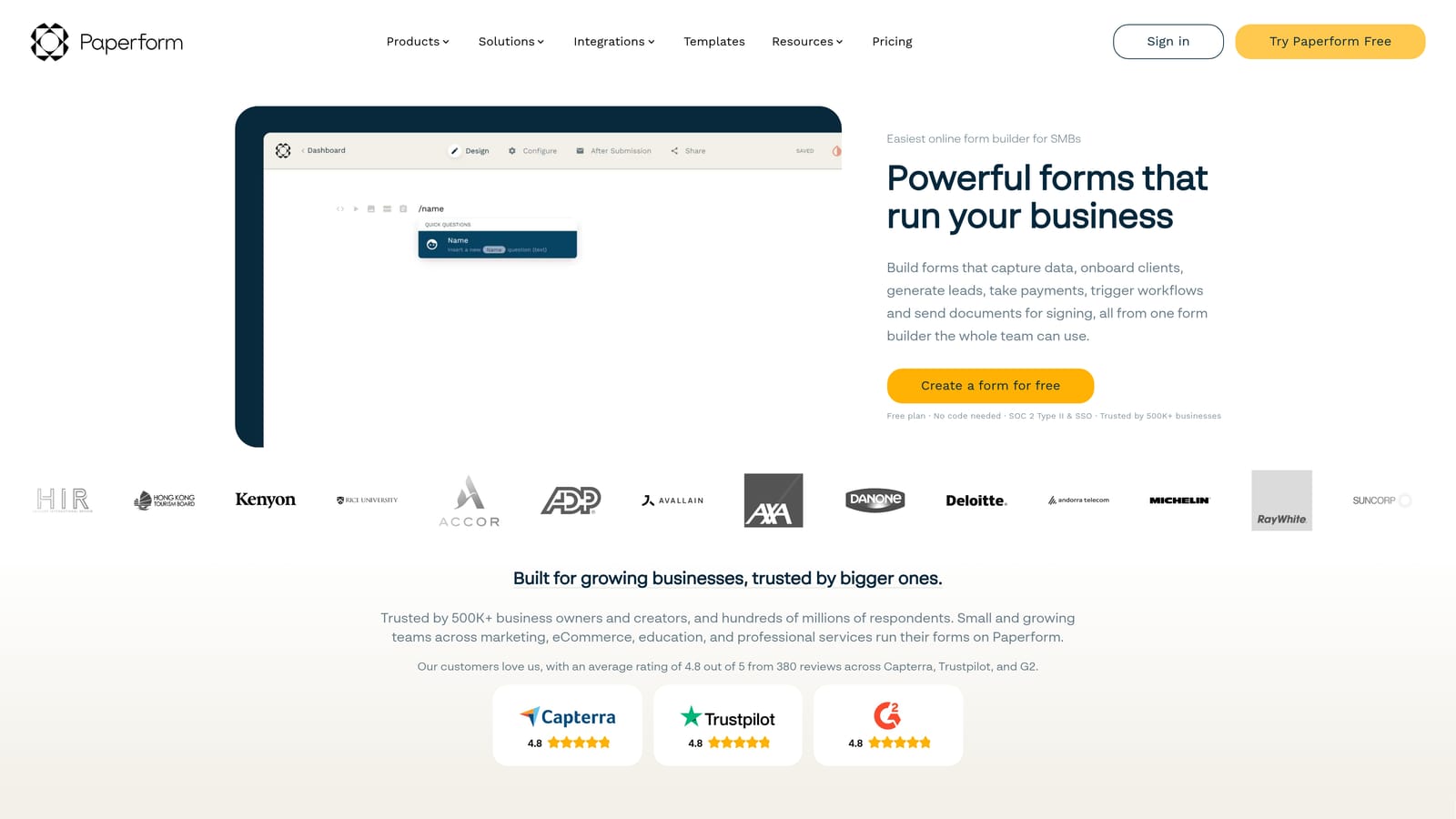
Paperform is a form builder that blurs the line between forms and landing pages, allowing teams to embed rich media, product listings, and branded content directly into their forms for a polished, high-converting experience.
Where This Tool Shines
Paperform's biggest differentiator is visual. Where most form builders produce forms that look like forms, Paperform lets you create something that reads more like a branded mini-website. You can embed images, video, product descriptions, and custom copy alongside your fields, giving the whole submission experience a cohesive, designed feel.
This makes it particularly strong for agencies building client-facing intake forms, consultants running discovery questionnaires, and e-commerce teams that want product selection and payment in a single, attractive flow. The tradeoff is that it doesn't offer a permanent free plan, so teams need to commit to a paid tier after the trial period.
Key Features
Landing Page-Style Form Design: Supports rich media embedding, custom copy, and visual layouts that go far beyond standard form aesthetics.
Product Listings and Payment Collection: Allows teams to display products and collect payment directly within the form experience.
Conditional Logic and Branching: Routes respondents through different paths based on their answers for personalized experiences.
Zapier and Native Integrations: Connects to downstream tools for data routing and workflow triggers.
Brand Customization: Extensive design controls for fonts, colors, layouts, and imagery to match brand standards precisely.
Best For
Paperform is best suited to agencies, consultants, and creative teams that place a premium on visual presentation and brand consistency. Teams focused on lead pipeline automation or CRM-native qualification workflows may find it less purpose-built for those goals.
Pricing
There is no permanent free plan. Paid plans are available at several tiers, and Paperform offers a trial period to test the platform before committing. Current pricing is published on Paperform's website.
6. Formstack
Best for: Enterprise teams in regulated industries requiring HIPAA compliance and advanced workflow routing.
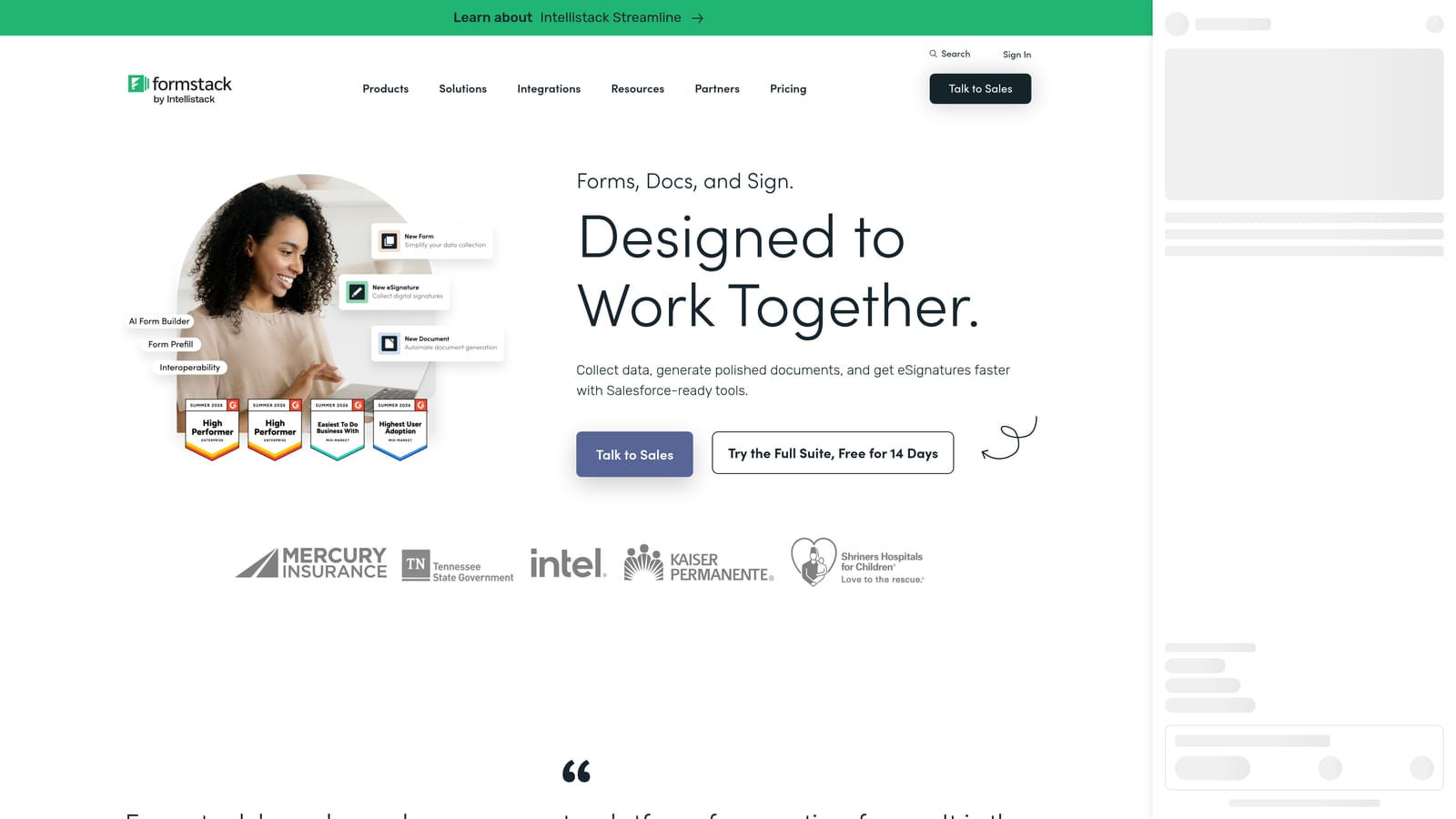
Formstack is an enterprise-grade form and workflow platform built for organizations that need compliance, document generation, and multi-step approval chains at scale.
Where This Tool Shines
Formstack occupies a distinct category: it's not trying to be the simplest or most affordable form builder. It's built for organizations where data handling carries regulatory weight. HIPAA compliance, enterprise SSO, advanced security controls, and audit-ready workflows make it a serious option for healthcare providers, legal teams, financial services firms, and large operations departments.
Beyond compliance, Formstack's document generation capability is a genuine operational tool. Teams can automatically produce contracts, intake packets, or approval documents from submitted form data, removing manual document prep from their workflows entirely. The platform's depth comes with corresponding complexity and cost, which makes it a poor fit for lean or early-stage teams.
Key Features
HIPAA-Compliant Data Collection: Meets healthcare data privacy requirements, making it suitable for patient intake, clinical research, and other regulated use cases.
Advanced Conditional Logic: Supports complex branching and field logic to handle sophisticated form structures.
Document Generation: Automatically creates formatted documents from form submission data for contracts, reports, or intake packets.
Workflow Routing and Approval Chains: Routes submissions through defined approval sequences with notifications and escalation paths.
Enterprise SSO and Security Controls: Supports single sign-on, role-based access, and enterprise-grade security configurations.
Best For
Formstack is the right choice for healthcare organizations, legal and financial services firms, and large enterprise operations teams where compliance and document workflows are non-negotiable requirements. It is not designed for lean startup teams or growth marketers focused on conversion optimization.
Pricing
Formstack is priced at the higher end of the market, reflecting its enterprise positioning. Contact their sales team for current plan details and enterprise pricing.
Which Platform Is Right for Your Team?
Each of these platforms serves a genuinely different need, and the right choice depends heavily on what you're optimizing for.
AI-powered lead qualification: Orbit AI is the clear choice. No other platform on this list combines form creation with built-in lead scoring, automated sequences, and contact management in a single tool designed specifically for pipeline-driven teams.
Conversational engagement and survey UX: Typeform's one-question-at-a-time format remains one of the best experiences for respondents, particularly for NPS programs, research surveys, and brand-forward lead gen campaigns.
Maximum feature breadth: Jotform covers more ground than any other tool here, from payments to PDF generation to approval workflows, making it a solid all-in-one for diverse operational needs.
Budget-conscious teams: Tally's free tier is unmatched. If your team needs functional, unbranded forms without a monthly commitment, it's the most practical starting point.
Branded, landing-page-style forms: Paperform stands alone for teams where visual presentation and brand cohesion are the top priority in the form experience.
Enterprise compliance: Formstack is the purpose-built solution for regulated industries that need HIPAA compliance, document generation, and enterprise security controls.
For high-growth teams where every form submission represents a potential pipeline opportunity, the gap between a basic form builder and a platform like Orbit AI is the difference between collecting data and generating qualified leads. Start building free forms today and see how intelligent form design can elevate your conversion strategy.


