

High form drop-off rates are quietly killing your pipeline. A prospect lands on your demo request page, starts filling in their details, and then disappears — never to return. It happens constantly, and most teams don't realize how much revenue is walking out the door with every abandoned submission.
The root causes are well understood: forms that ask too many irrelevant questions, poor mobile experiences, generic layouts that feel like data entry screens, and no adaptive logic to guide users through a relevant path. The good news is that modern form builders have evolved well beyond static fields and submit buttons.
Today's top platforms use conversational UX, conditional logic, AI-powered qualification, and smart design to keep users engaged and moving forward. This list covers the best tools specifically suited to reducing form abandonment and improving conversion rates. Each was evaluated on UX quality, conditional logic capabilities, mobile responsiveness, integrations, and lead qualification features. Whether you're running a high-growth SaaS team or a lean marketing operation, there's a solution here that fits your stack.
1. Orbit AI
Best for: High-growth SaaS and B2B teams that need AI-powered lead qualification built into the form itself.
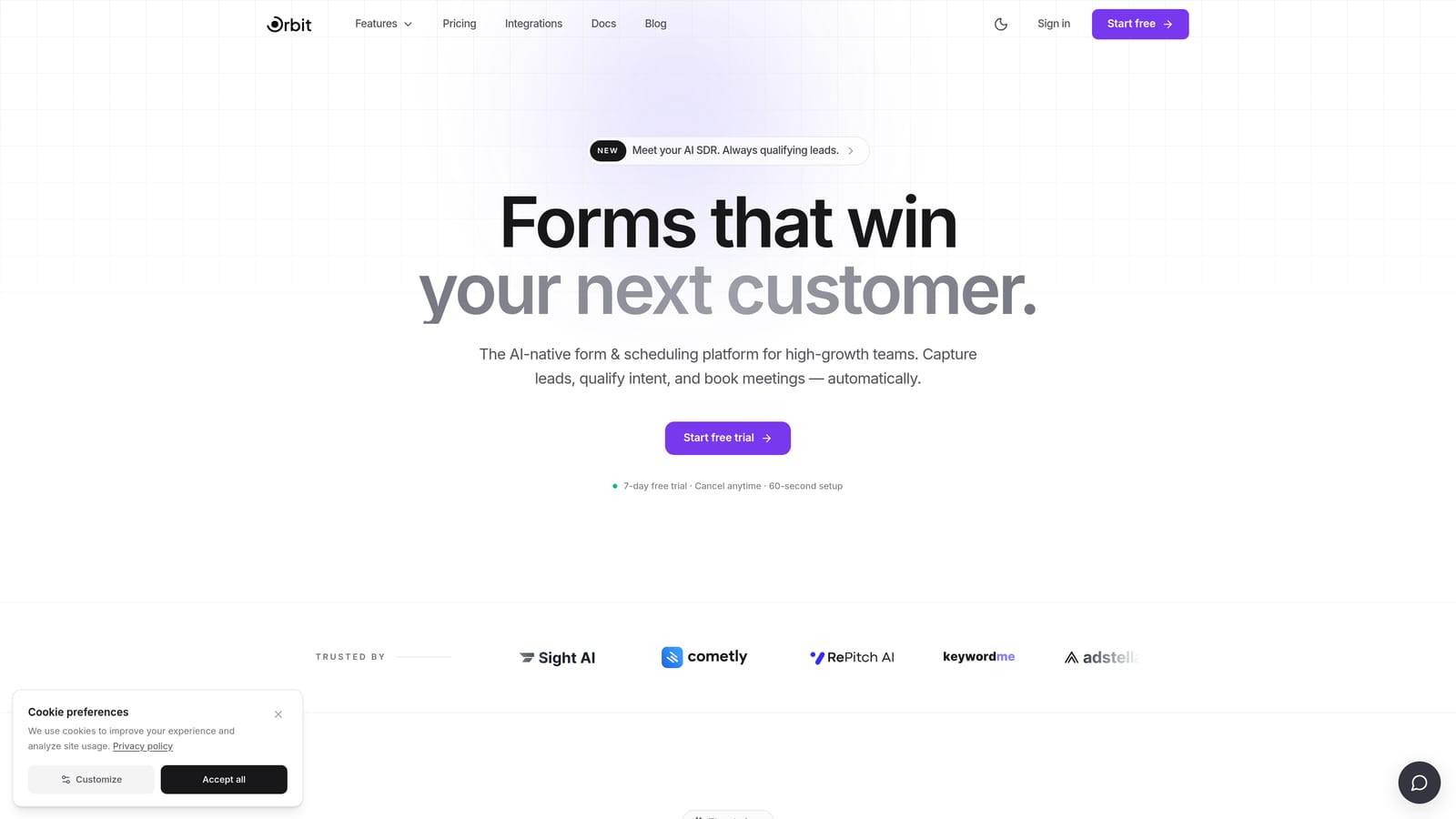
Orbit AI is an AI-powered form builder platform designed from the ground up for conversion optimization and intelligent lead qualification.
Where This Tool Shines
Most form builders collect data and hand it off. Orbit AI does something fundamentally different: it qualifies leads as they fill out the form, scoring and routing prospects in real time before they ever hit submit. This directly addresses one of the deepest causes of drop-off — forms that feel generic, irrelevant, and disconnected from the user's actual situation.
The adaptive form paths mean each user sees only the questions that matter to them. The form gets shorter and more relevant as it progresses, which keeps completion rates high. For sales and revenue teams, the payoff is immediate: high-intent leads surface automatically, and follow-up can happen before a competitor even sees the inquiry.
Key Features
AI-Powered Lead Qualification: Scores and routes leads during form completion, giving sales teams a prioritized pipeline without manual review.
Conditional Logic and Adaptive Paths: Shows only relevant questions based on prior answers, reducing perceived form length and cognitive load.
Conversion-Optimized Design: Modern, minimal UX built specifically to reduce friction and keep users moving through the form.
Real-Time Lead Prioritization: Surfaces high-intent prospects immediately so revenue teams can act fast on warm leads.
CRM and Marketing Automation Integrations: Connects seamlessly with the tools your team already uses, keeping data flowing without manual intervention.
Best For
Orbit AI is purpose-built for high-growth SaaS and B2B teams where lead quality matters as much as lead volume. If your biggest challenge is not just capturing leads but knowing which ones to call first, this platform was built for that exact problem.
Pricing
Visit orbitforms.ai for current pricing and plans. The platform is designed for growth-stage and scaling teams.
2. Typeform
Best for: Brands where form experience and aesthetics are central to conversion strategy.
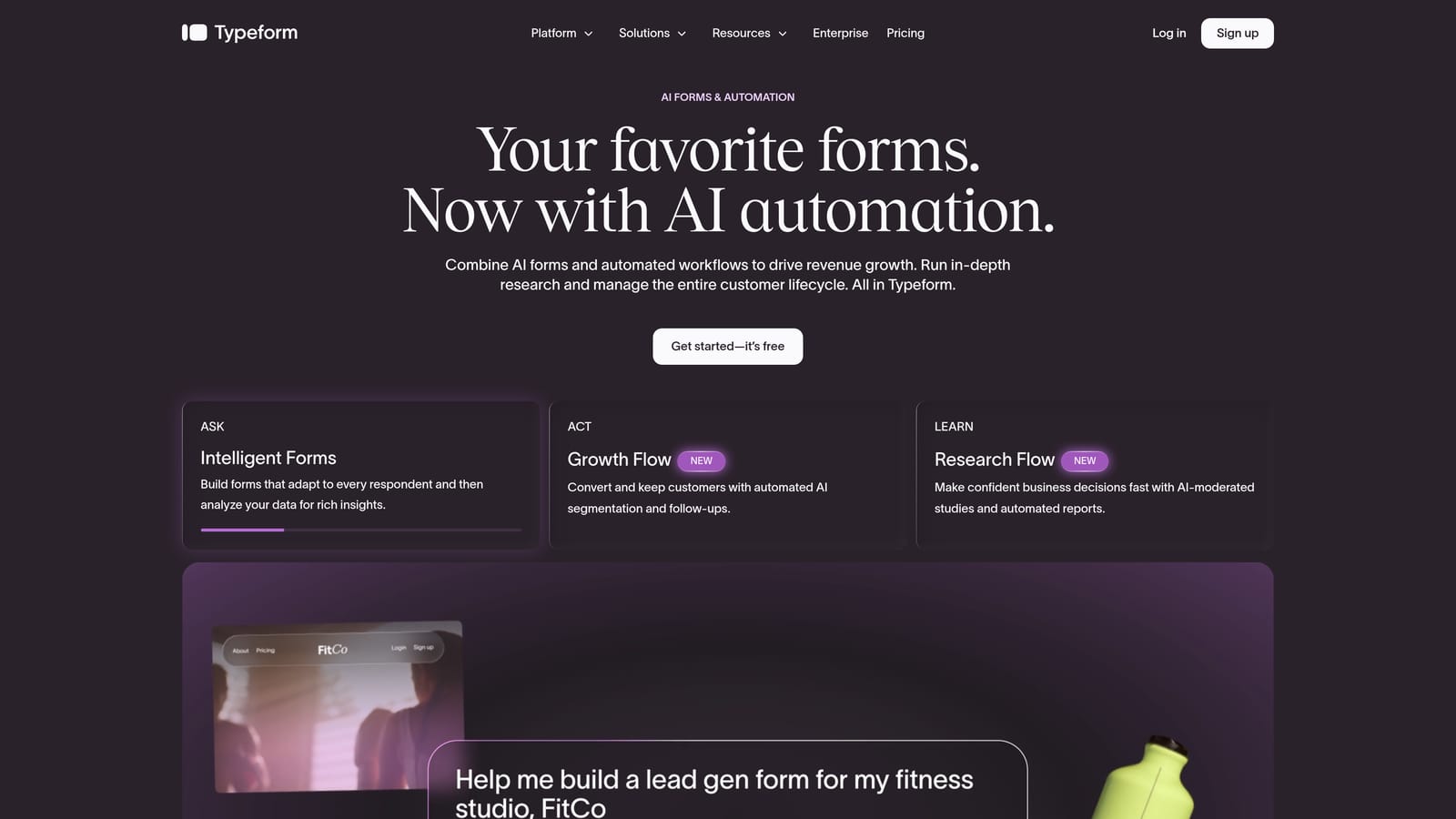
Typeform is a conversational form builder that pioneered the one-question-at-a-time format to reduce cognitive load and improve completion rates.
Where This Tool Shines
Typeform's core insight is simple but powerful: presenting one question at a time makes a form feel less like a chore and more like a conversation. For surveys, lead capture forms, and quizzes where user experience directly influences completion, this format consistently outperforms traditional multi-field layouts.
The design system is polished and highly customizable, making it a strong choice for brands that want their forms to feel like an extension of their visual identity. Built-in analytics also let you see exactly where users are dropping off, so you can iterate intelligently rather than guessing.
Key Features
Conversational One-Question UX: Presents questions sequentially to reduce overwhelm and keep users focused on a single input at a time.
Conditional Logic and Branching: Creates personalized form paths that show only relevant follow-up questions based on prior responses.
Polished Design System: Strong brand customization options with a clean, modern aesthetic out of the box.
CRM and Marketing Integrations: Native connections to HubSpot, Salesforce, Zapier, and other major platforms.
Built-In Drop-Off Analytics: Shows exactly which questions cause users to abandon, enabling data-driven form optimization.
Best For
Typeform works best for teams running surveys, quizzes, or lead capture flows where experience quality is a differentiator. It's particularly well-suited for consumer-facing brands and marketing teams that treat the form itself as part of the brand touchpoint.
Pricing
Free plan available. Paid plans start at approximately $25/month, with pricing that scales based on response volume — worth factoring in at higher traffic levels.
3. Tally
Best for: Startups and lean teams that need clean, functional forms without design overhead or cost.
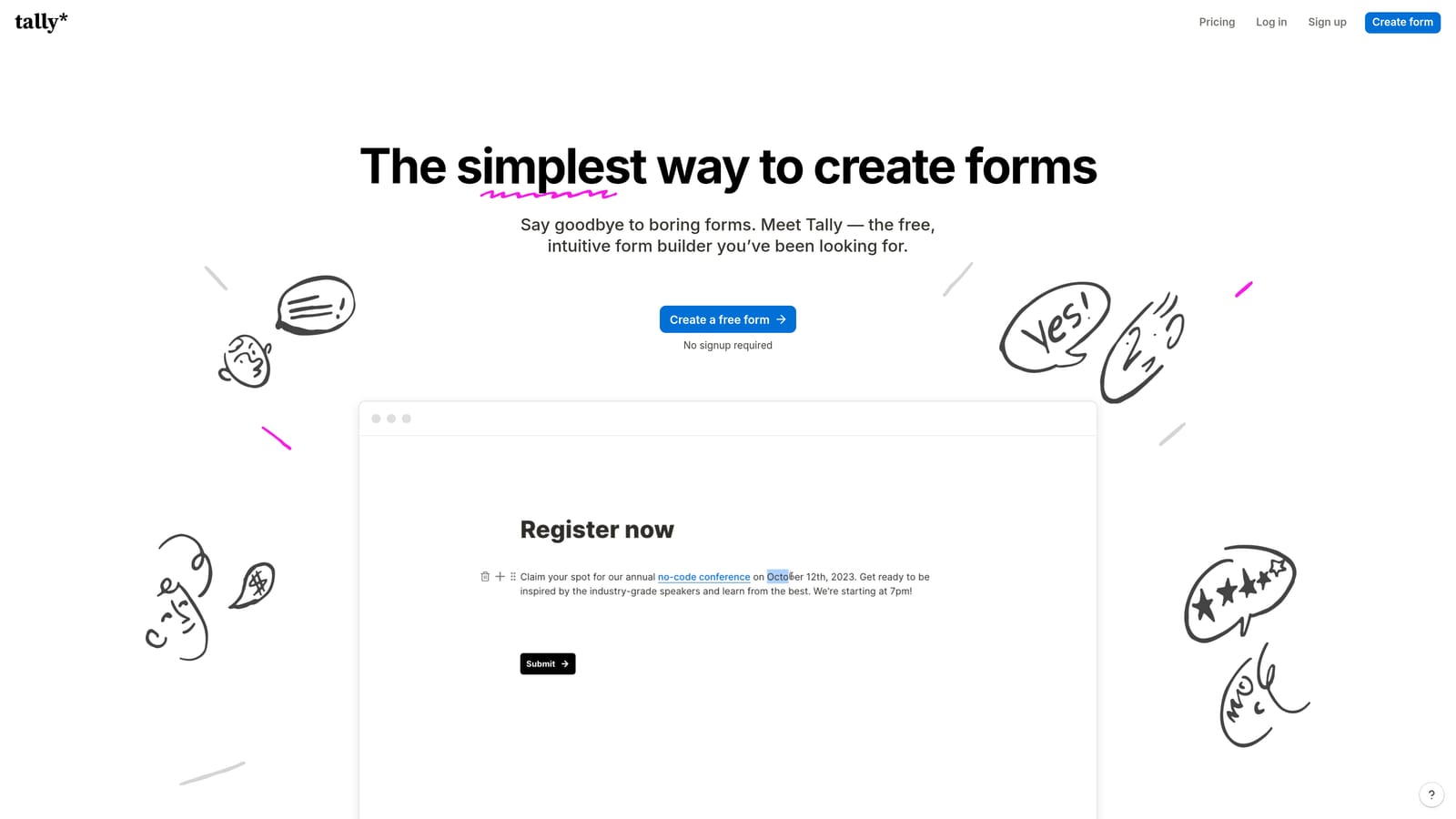
Tally is a minimalist, block-based form builder with a Notion-like editor that makes building forms fast, intuitive, and distraction-free.
Where This Tool Shines
Tally's approach to reducing drop-off is rooted in simplicity. The editor is fast to learn and the forms it produces are clean and uncluttered, removing the visual noise that can make users second-guess whether a form is worth completing. For teams that want to ship a well-designed form quickly, Tally removes almost every obstacle in the way.
The free tier is genuinely generous: unlimited forms and unlimited submissions at no cost. This makes it an excellent starting point for early-stage teams testing lead capture flows before committing to a more feature-heavy platform.
Key Features
Block-Based Editor: Fast, intuitive form building with a familiar Notion-style interface that requires minimal learning curve.
Conditional Logic: Dynamic form paths that adapt based on responses, making forms feel shorter and more relevant.
Generous Free Tier: Unlimited forms and submissions on the free plan, making it accessible for teams at any stage.
Clean Embed Options: Minimal styling that integrates naturally into existing websites without visual friction.
Zapier and Native Integrations: Basic workflow automation to connect submissions to the tools your team already uses.
Best For
Tally is ideal for startups, indie teams, and early-stage companies that need clean, functional forms fast. It's less suited for complex lead qualification workflows, but excellent for reducing friction in straightforward lead capture, intake, or registration scenarios.
Pricing
Free plan available with unlimited forms and submissions. Pro plan at approximately $29/month for advanced features and customization.
4. Paperform
Best for: Teams that want forms to feel like curated brand experiences rather than data entry screens.
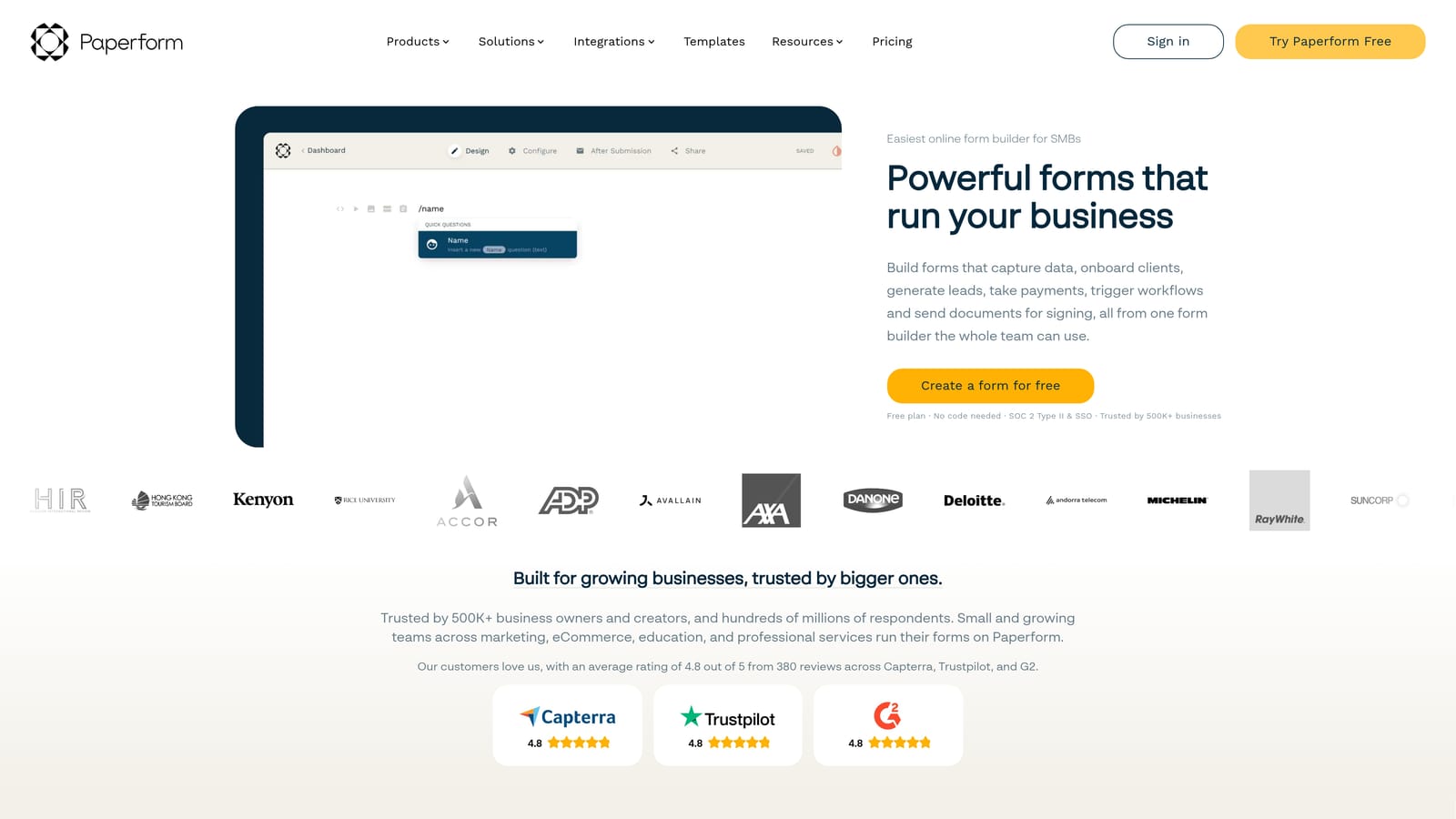
Paperform is a form builder that doubles as a landing page tool, letting teams create richly designed form experiences with text, media, and branding woven directly into the form itself.
Where This Tool Shines
One underappreciated cause of form drop-off is the sterile, clinical feel of traditional forms. When a user lands on a page that looks like a spreadsheet, their instinct is to hesitate. Paperform solves this by blending form fields with rich content: headlines, images, videos, and descriptive copy that provide context and build confidence as the user progresses.
The result is a form that feels more like a guided experience than an interrogation. For teams selling higher-consideration products or services, this context-rich format can meaningfully reduce the anxiety that causes users to bail before completing.
Key Features
Form-Meets-Landing-Page Editor: Combines rich content blocks with form fields for a guided, brand-aligned experience.
Conditional Logic and Multi-Step Support: Adapts the form path based on user responses and breaks longer flows into manageable steps.
Payment Collection: Supports Stripe and other processors directly within the form, useful for bookings, registrations, and product flows.
Flexible Design Controls: Strong brand customization for teams with established visual identities.
Wide Integration Library: Connects with CRMs, email platforms, and automation tools to keep workflows intact.
Best For
Paperform suits teams in professional services, e-commerce, or any context where the form experience needs to reflect brand quality. It's also a strong choice for teams that want to combine form capture with payment or booking flows in a single page.
Pricing
Plans start at approximately $24/month. A 14-day free trial is available, making it easy to evaluate before committing.
5. Jotform
Best for: Organizations managing high form volume or complex multi-department workflows at scale.
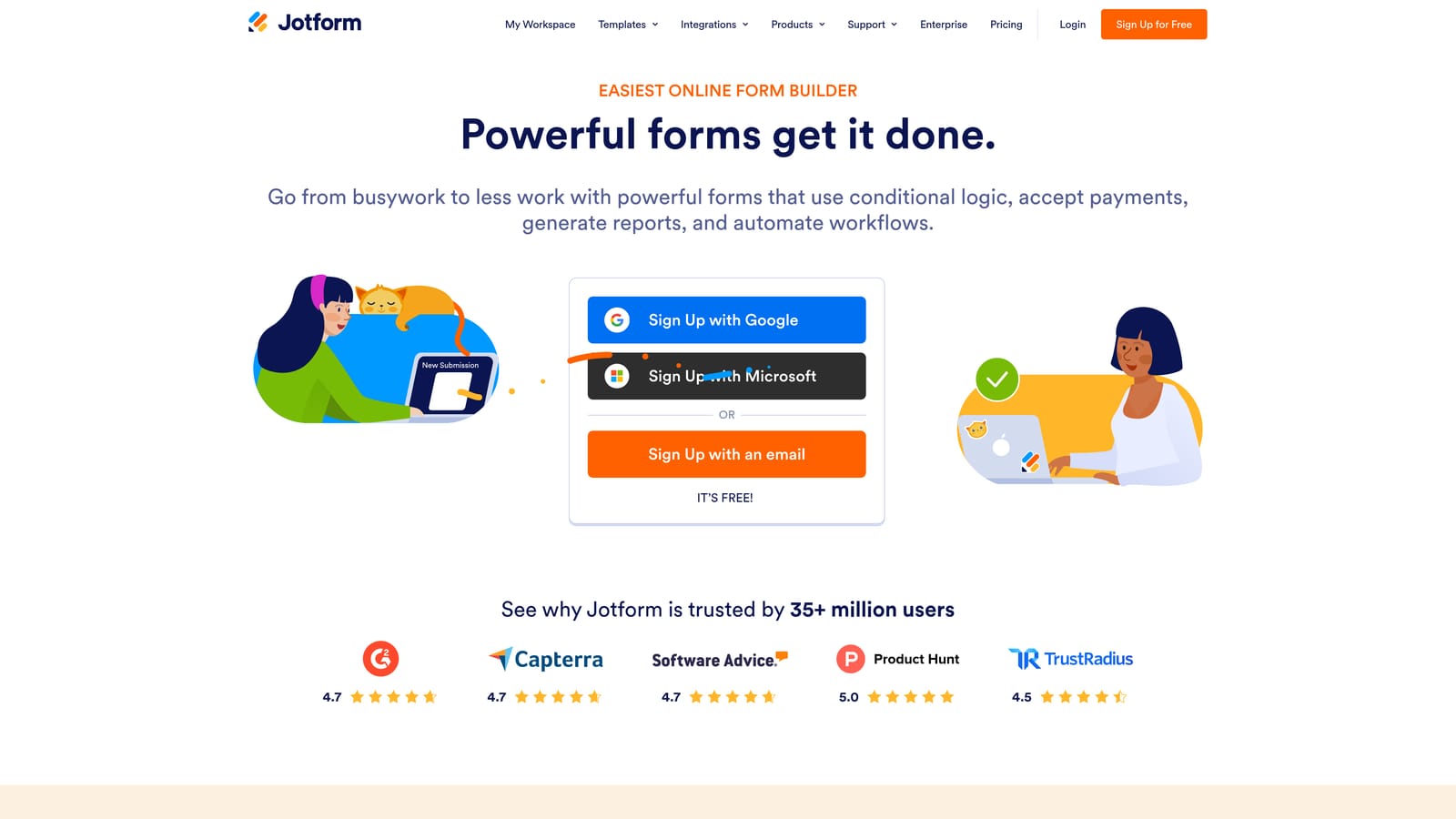
Jotform is one of the most established form builders available, with an extensive template library, deep integrations, and compliance options for regulated industries.
Where This Tool Shines
Jotform's strength is breadth. With hundreds of templates covering virtually every use case, teams can launch forms quickly without starting from scratch. For organizations running multiple form types across departments — HR intake, customer support, event registration, lead capture — Jotform provides the infrastructure to manage everything from a single platform.
Its conditional logic, multi-page form support, and calculation fields give form builders meaningful tools to reduce drop-off by making forms feel more structured and purposeful. The submission management dashboard also helps teams track and act on completed responses efficiently.
Key Features
Extensive Template Library: Hundreds of pre-built templates covering a wide range of industries and use cases.
Conditional Logic and Multi-Page Forms: Adaptive paths and paginated layouts to reduce overwhelm on longer forms.
HIPAA-Compliant Options: Available for healthcare and regulated industries that require strict data handling standards.
Large Integration Ecosystem: Connects with CRMs, payment processors, storage tools, and hundreds of other platforms.
Form Analytics and Submission Dashboard: Tracks completion rates and manages incoming submissions in one place.
Best For
Jotform is best suited for larger organizations or teams managing diverse form needs across multiple functions. The depth of features is a genuine asset at scale, though new users may find the interface requires more ramp-up time than simpler alternatives.
Pricing
Free plan available. Paid plans start at approximately $34/month, scaling with submission volume and team size.
6. Formstack
Best for: Operations and compliance-heavy teams that need forms tightly integrated with downstream workflows.
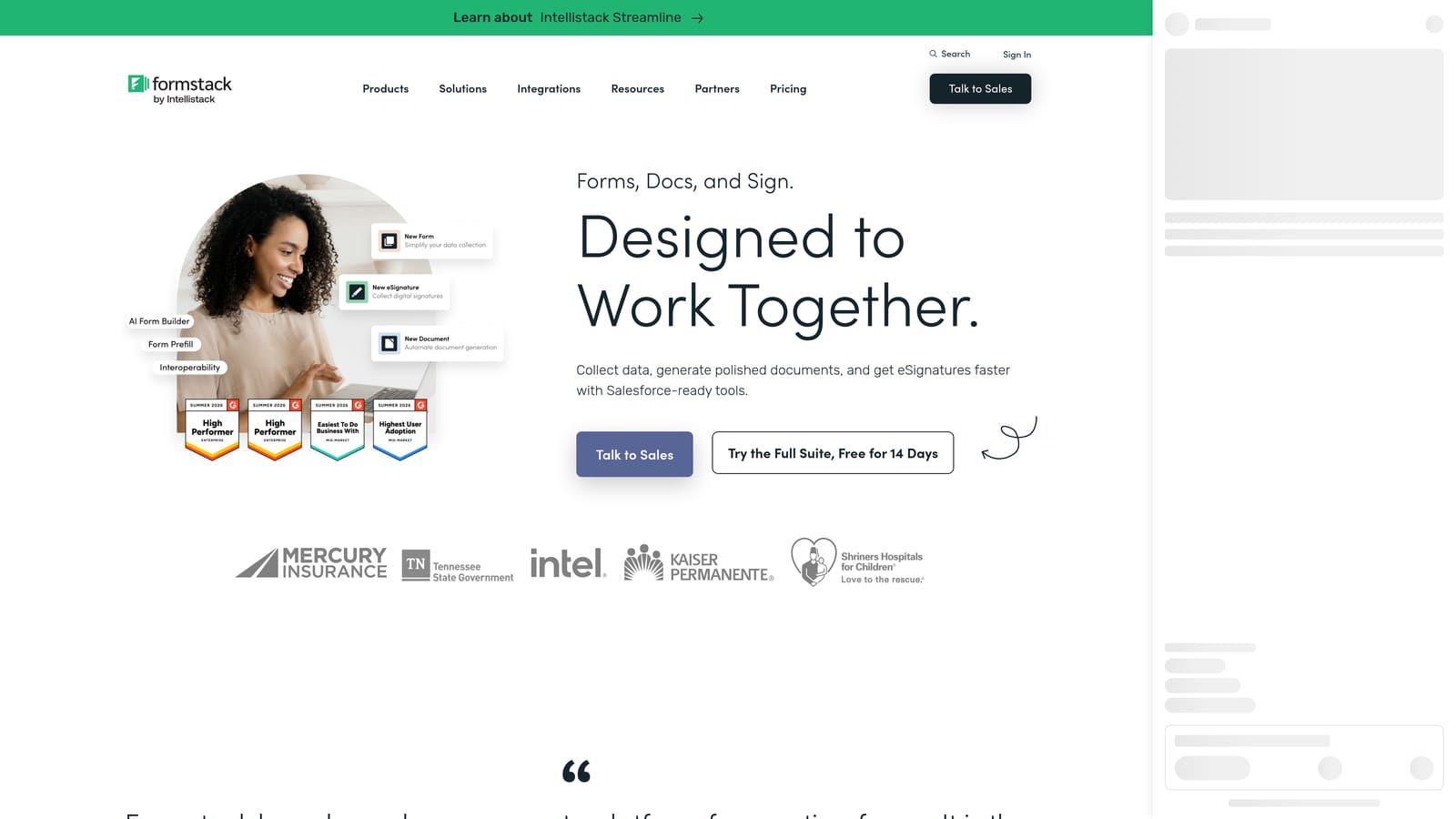
Formstack is a workflow-focused form platform that excels at what happens after submission: document generation, approval routing, and CRM data sync.
Where This Tool Shines
Formstack takes a different angle on the drop-off problem. While other tools focus primarily on the user experience during form completion, Formstack's differentiation is in the operational infrastructure that surrounds the form. For teams where a submitted form triggers a chain of approvals, document generation, or compliance checks, Formstack handles that entire workflow rather than just handing off raw data.
Its conditional logic and multi-step form design still address front-end drop-off, but the platform's real value emerges for teams in sales operations, legal, HR, or compliance-heavy industries where form data needs to flow directly into structured processes without manual handling.
Key Features
Conditional Logic and Multi-Step Forms: Adaptive form design that reduces irrelevant questions and structures longer flows into clear stages.
Document Generation and E-Signature: Automatically creates documents from form submissions and supports digital signatures in the same workflow.
Approval Workflow Routing: Routes submissions through defined approval chains, reducing manual coordination after capture.
Compliance Features: Built for regulated industries with data handling and audit trail capabilities.
Deep Enterprise Integrations: Native connections to Salesforce, HubSpot, and enterprise tools for seamless data sync.
Best For
Formstack is purpose-built for mid-market and enterprise teams in operations, sales, HR, or regulated industries where the form is the entry point to a structured business process. It's less suited for teams looking primarily for lightweight lead capture.
Pricing
Plans start at approximately $83/month. Enterprise pricing is available for larger organizations with complex workflow requirements.
Which Tool Is Right for Your Drop-Off Problem?
Each of these tools addresses form drop-off from a slightly different angle, and the right choice depends on where your biggest friction point actually lives.
If your primary challenge is lead quality alongside lead capture, Orbit AI is the standout choice. It's the only platform on this list that qualifies leads in real time during form completion, making it purpose-built for high-growth SaaS and B2B teams where knowing which leads to prioritize is as important as collecting them. The adaptive form paths and conversion-focused design also directly attack the UX causes of drop-off.
For teams where experience and aesthetics drive conversion, Typeform's conversational format remains one of the most effective UX approaches available. If you're an early-stage team that needs clean forms fast without budget pressure, Tally's generous free tier and minimal editor make it a natural starting point. Paperform is the right pick when your form needs to feel like a brand experience rather than a data entry screen.
For larger organizations managing form volume across multiple departments, Jotform provides the template depth and integration breadth to handle diverse needs at scale. And for operations or compliance-heavy teams where the form triggers a structured downstream workflow, Formstack's document generation and approval routing capabilities go deeper than any other option on this list.
The common thread across all of these tools is intentional design: forms that adapt to users, reduce irrelevant questions, and make completion feel effortless. That's what moves the needle on drop-off.
If you're ready to go further and want forms that don't just collect data but actively qualify and prioritize your leads, transform your lead generation with AI-powered forms that qualify prospects automatically while delivering the modern, conversion-optimized experience your high-growth team needs. Start building free forms today and see how intelligent form design can elevate your conversion strategy.


