

JotForm has long been a reliable workhorse for form building, but enterprise teams tend to hit its ceiling faster than expected. Limited lead qualification logic, compliance gaps on standard plans, and a UI that wasn't designed for high-volume, high-stakes workflows can all become real friction points as your team scales.
Whether you're managing complex multi-step intake flows, qualifying thousands of inbound leads, or need tighter security controls like SSO and role-based permissions, there are purpose-built alternatives worth considering. This guide covers the best JotForm alternatives for enterprise teams in 2026, evaluated on enterprise-readiness, form logic depth, lead qualification capabilities, and overall scalability.
A quick note on transparency: Orbit AI is our own product and appears first. All other tools are evaluated independently and honestly, including their limitations.
1. Orbit AI
Best for: High-growth B2B and SaaS teams that need AI-driven lead qualification at the form layer
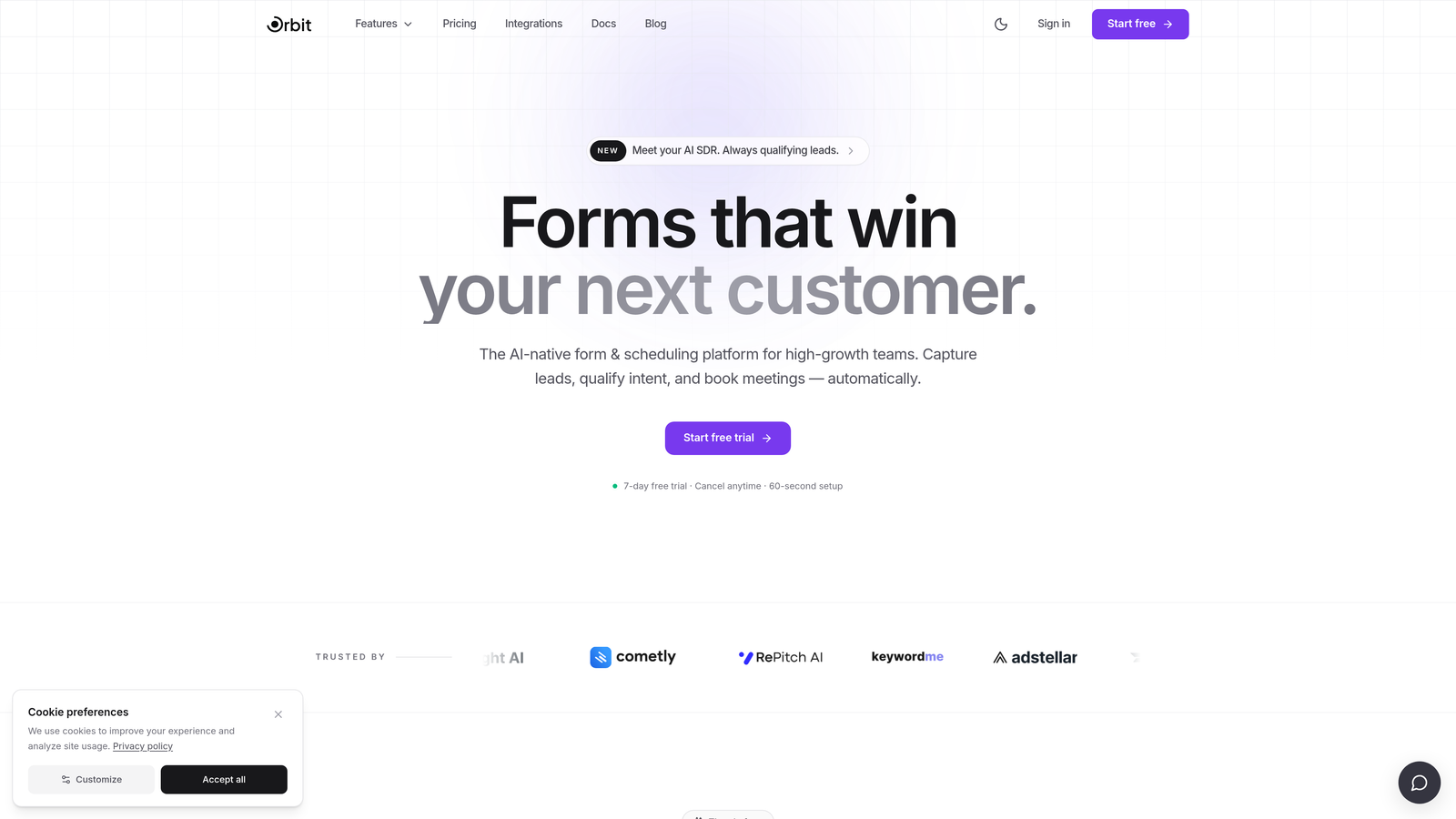
Orbit AI is an AI-powered form builder with built-in lead qualification and scoring, designed for demand generation teams that can't afford to let unqualified leads clog their CRM pipeline.
Where This Tool Shines
What separates Orbit AI from most form builders is where the intelligence lives. Rather than collecting submissions and leaving qualification logic to your CRM or sales team, Orbit AI embeds scoring and routing directly into the form flow. A lead gets evaluated in real time, before it ever reaches your pipeline.
For SaaS and B2B teams running high-volume inbound, this matters. Routing a poorly qualified lead through your full sales motion is expensive. Orbit AI is built to prevent that problem at the source, with conversion-optimized design that keeps completion rates high while the qualification logic runs quietly in the background.
Key Features
AI-Driven Qualification Logic: Lead qualification is built directly into the form flow, not bolted on after the fact.
Real-Time Lead Scoring and Routing: Leads are scored and routed to the right destination before they reach your CRM.
Conditional Logic and Modern Design: Conversion-optimized form design with conditional logic that adapts to each respondent's answers.
CRM and Marketing Automation Integrations: Connects with major CRMs and marketing automation platforms to fit into existing enterprise stacks.
Built for Demand Gen Workflows: Purpose-built for B2B and SaaS demand generation, not generic form collection.
Best For
Orbit AI is the strongest fit for high-growth SaaS companies, B2B demand generation teams, and revenue operations leaders who want qualification to happen at the form layer rather than downstream. If lead quality is a core KPI for your team, this is where to start.
Pricing
Visit orbitforms.ai for current pricing and plan details. Plans are designed to scale with high-growth teams.
2. Typeform
Best for: Conversion-focused form experiences with a conversational, one-question-at-a-time format
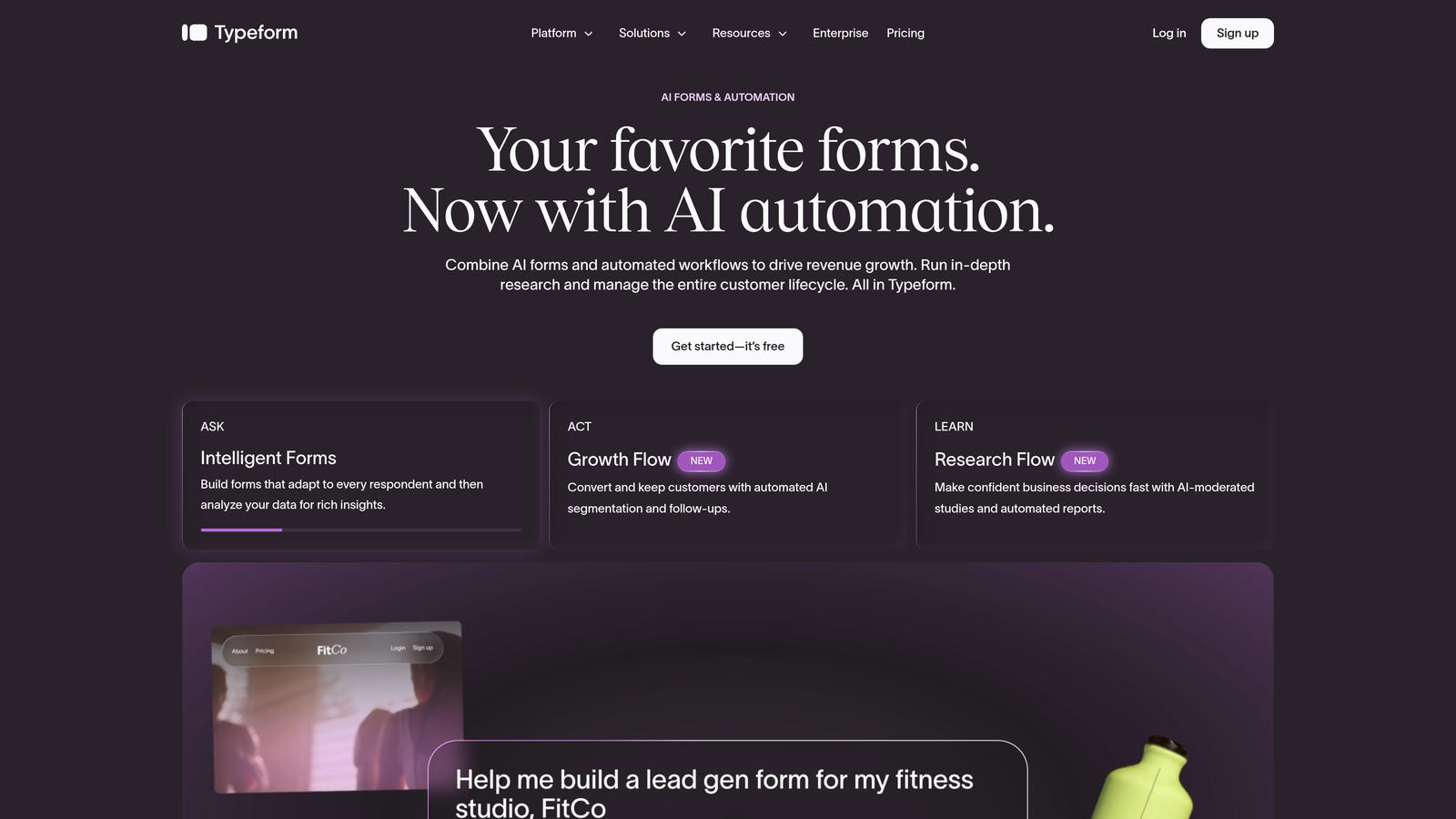
Typeform is a conversational form builder known for its distinctive one-question-at-a-time interface, with an enterprise tier that adds SSO, Salesforce integration, and priority support.
Where This Tool Shines
Typeform's biggest strength is the experience it creates for respondents. Long forms feel less overwhelming when questions appear one at a time, and this format tends to drive higher completion rates on surveys, applications, and research flows. For teams where form aesthetics and brand experience matter as much as data collection, Typeform is hard to beat.
The enterprise tier adds the infrastructure larger teams need: SSO, custom domains, advanced logic jumps, and native integrations with Salesforce and HubSpot. It's a credible enterprise option for marketing, research, and product feedback use cases.
Key Features
Conversational UI: One-question-at-a-time format that reduces abandonment on longer, multi-step forms.
Enterprise Plan: Includes SSO, custom domains, and priority support for larger organizations.
Logic Jumps and Hidden Fields: Supports URL parameters and moderately complex conditional routing.
Native CRM Integrations: Salesforce and HubSpot integrations available on higher-tier plans.
Brand Customization: Strong visual customization options for marketing, research, and product teams.
Best For
Typeform is a strong choice for marketing, research, and product teams that prioritize respondent experience and brand consistency. It's less suited for teams that need deep lead qualification logic or complex enterprise compliance requirements beyond SSO.
Pricing
Enterprise pricing is available on request. Paid plans start at a monthly rate with response-based tiers. Check typeform.com for current plan details, as pricing scales with response volume.
3. Formstack
Best for: Regulated industries requiring HIPAA, SOC 2, and FERPA compliance with integrated document workflows
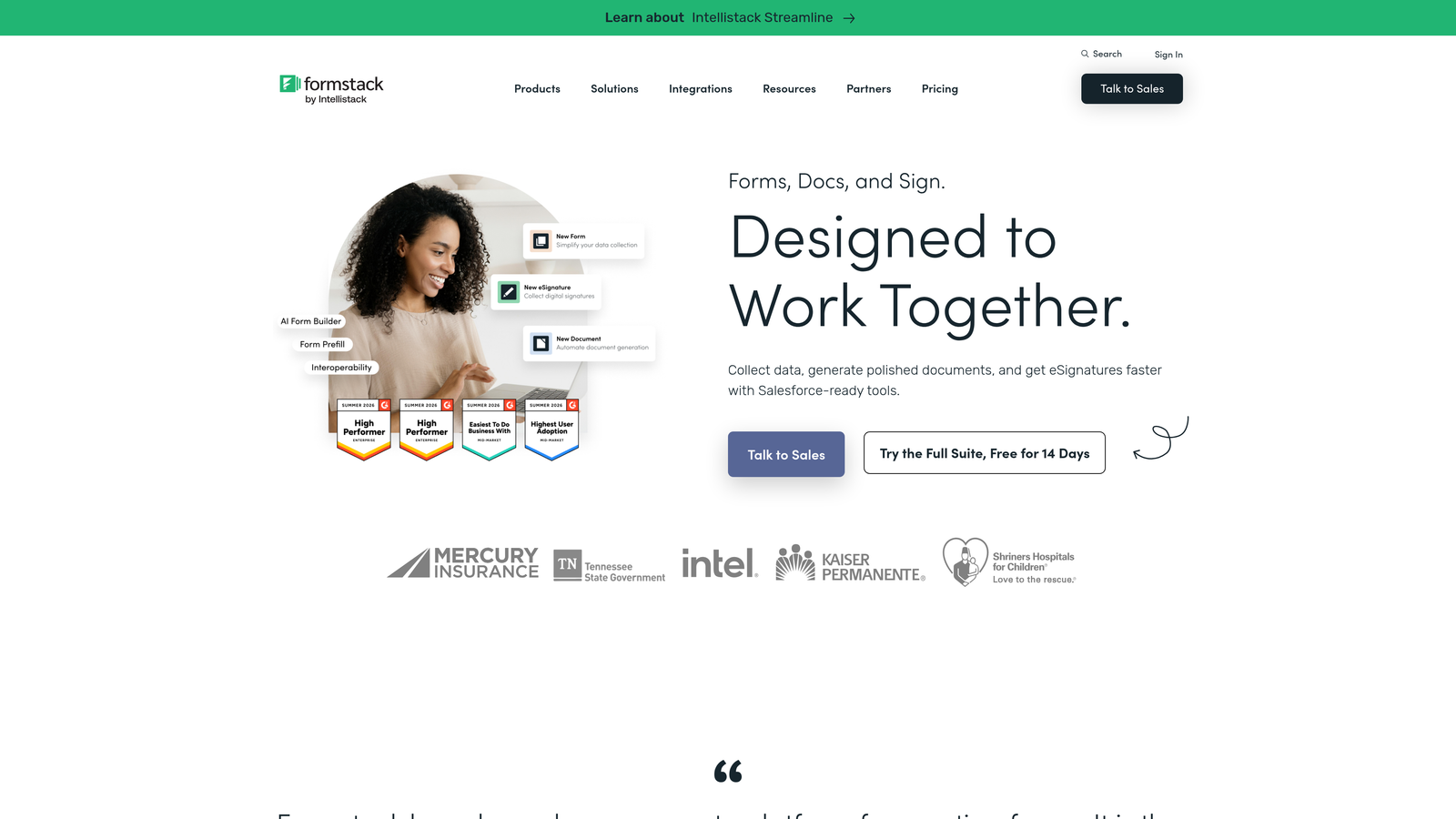
Formstack is an enterprise-grade data collection platform with a full suite of compliance certifications and built-in document generation and e-signature capabilities.
Where This Tool Shines
If your enterprise operates in healthcare, education, finance, or any other regulated vertical, Formstack is one of the few form platforms that takes compliance seriously at the infrastructure level. HIPAA, FERPA, SOC 2 Type II, and GDPR certifications are built in, not add-ons. For legal, HR, and clinical teams, this removes a significant procurement hurdle.
Beyond compliance, Formstack's integrated suite is genuinely useful. Forms, Documents, and Sign work together as a connected workflow, so teams can collect data, generate a document from that data, and collect a signature without stitching together separate tools. That kind of end-to-end capability is rare in this category.
Key Features
Compliance Certifications: HIPAA, FERPA, SOC 2 Type II, and GDPR compliance built into the platform infrastructure.
Integrated Workflow Suite: Forms, Documents, and Sign work together in one connected platform.
Approval Routing and Automation: Advanced workflow automation with multi-step approval routing for complex internal processes.
Conditional Logic and Prefill: Supports prefill, conditional logic, and field calculations for dynamic form experiences.
Deep CRM Integrations: Native connections to Salesforce, HubSpot, and Microsoft Dynamics.
Best For
Formstack is purpose-built for regulated industries and enterprise teams with complex approval workflows. Legal, HR, healthcare, and education teams will find the compliance infrastructure and document suite particularly valuable. Teams looking for a modern, design-forward UI may find the experience more utilitarian than they'd prefer.
Pricing
Team and enterprise plans are available, with pricing based on features and user count. Contact Formstack directly for enterprise quotes, as pricing varies significantly by configuration.
4. Paperform
Best for: Design-forward teams building branded, content-rich intake flows without developer support
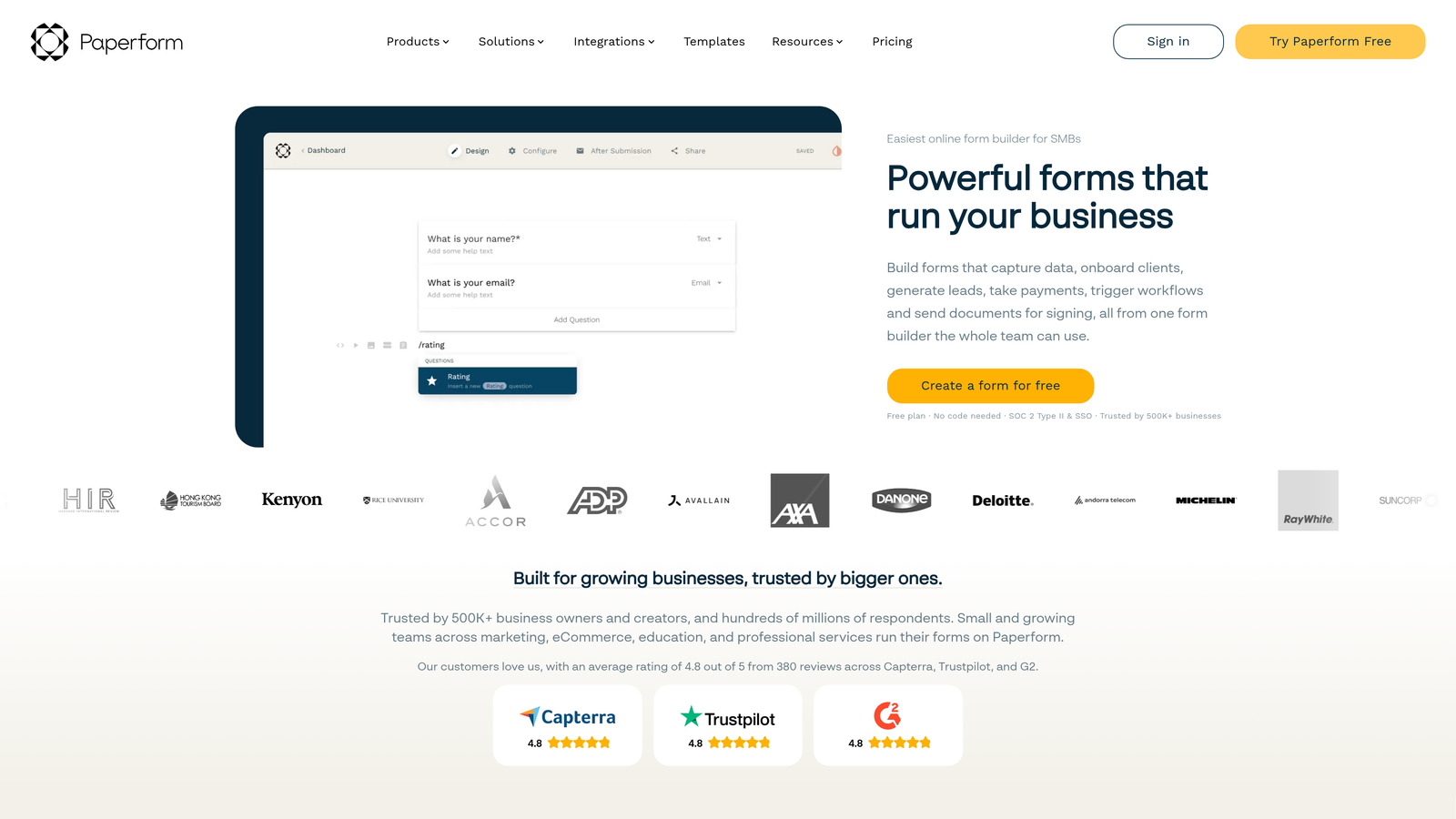
Paperform is a design-first form builder with a document-style editor that lets teams create rich, branded form experiences that feel more like landing pages than traditional data collection forms.
Where This Tool Shines
Paperform's block-based, document-style editor is genuinely different from most form builders. You can mix text, images, video, and form fields on the same canvas, which makes it well-suited for intake flows that need to communicate context alongside collecting information. Think client onboarding, event registration, or product order forms that double as brand touchpoints.
Payment collection is a standout feature. Native integrations with Stripe, PayPal, and Square are built in, making Paperform a practical choice for teams that need to combine data collection with transactions. Agency teams and ops leads building client-facing workflows tend to gravitate toward it for this reason.
Key Features
Document-Style Block Editor: Mix text, media, and form fields on a single canvas for rich, branded experiences.
Built-In Payment Collection: Native Stripe, PayPal, and Square integrations without third-party workarounds.
Conditional Logic and Calculations: Product fields, conditional logic, and calculation support for dynamic form behavior.
Team Workspaces and Sub-Accounts: Higher-tier plans include team workspaces for agencies and multi-client operations.
Integration Support: Wide connectivity via native integrations and Zapier for workflow automation.
Best For
Paperform works best for agencies, operations teams, and marketing teams that need visually compelling, content-rich forms without developer involvement. It's less suited for teams whose primary need is deep lead qualification logic or CRM-heavy enterprise workflows at scale.
Pricing
Pro and Agency plans are available, with team pricing scaling by seat count. Visit paperform.co for current rates, as plans are updated periodically.
5. Tally
Best for: Lean enterprise and internal operations teams that need capable forms without a significant budget commitment
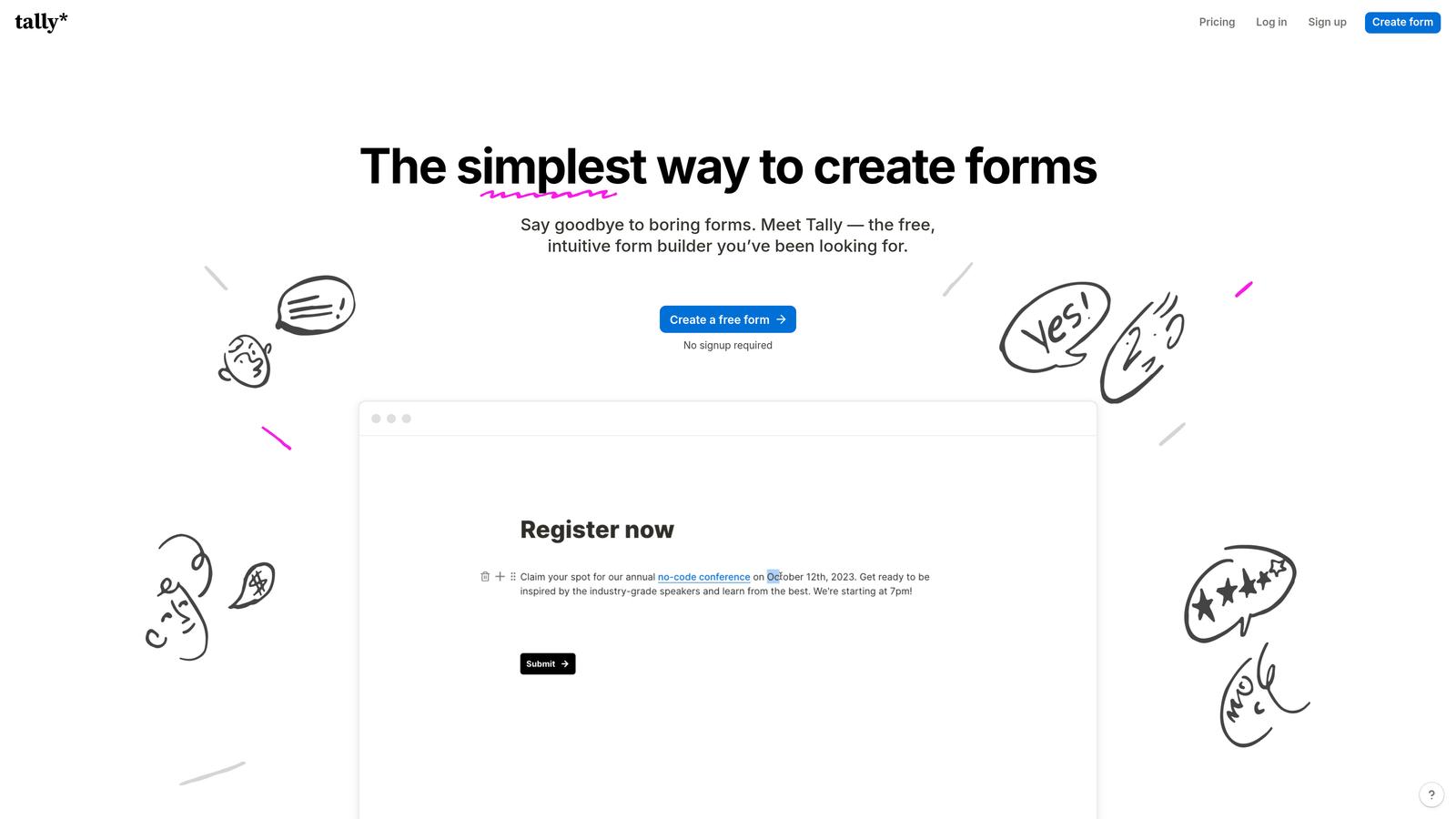
Tally is a Notion-inspired free form builder with a genuinely generous unlimited free tier and growing adoption among lean enterprise and internal operations teams.
Where This Tool Shines
Tally's free plan is legitimately impressive. Unlimited forms, unlimited responses, conditional logic, hidden fields, URL parameters, and webhook support are all available without paying anything. For internal operations teams building employee surveys, feedback forms, or request intake flows, this removes the budget conversation entirely.
The block-based editor is intuitive and low-friction. Teams that already use Notion will feel at home immediately. The Pro plan adds custom domains, file uploads, and partial submission capture for teams that need a bit more. For many internal use cases, the free plan is more than enough.
Key Features
Unlimited Free Tier: Unlimited forms and responses on the free plan with no hidden caps on core functionality.
Block-Based Editor: Low learning curve with a Notion-style interface that teams adopt quickly.
Logic and Webhooks on Free: Conditional logic, hidden fields, and webhooks available without a paid plan.
Pro Plan Upgrades: Custom domains, file uploads, and partial submission capture on the Pro tier.
Workflow Integrations: Zapier and Make integrations for connecting forms to broader automation stacks.
Best For
Tally is the right call for lean enterprise teams, internal operations, and early-stage companies that need capable forms without a significant budget commitment. It's worth noting that SSO, advanced permissions, and native enterprise integrations are less mature than Formstack or Typeform's enterprise tiers, so teams with strict IT governance requirements should evaluate those gaps carefully.
Pricing
The free plan covers most use cases with generous limits. The Pro plan adds advanced features at an accessible price point. See tally.so for current pricing.
Which Tool Is Right for Your Enterprise?
Each tool on this list solves a real problem, but they solve different problems. The right choice depends almost entirely on what your enterprise team actually needs most.
Orbit AI is the strongest pick if lead qualification is your primary objective. The AI-driven scoring and routing at the form layer is a genuine differentiator for SaaS and B2B demand generation teams that need to protect pipeline quality at scale.
Typeform wins on respondent experience. If your enterprise runs high-stakes surveys, research flows, or marketing forms where completion rate and brand impression matter, its conversational format is hard to match.
Formstack is the clear choice for regulated industries. Healthcare, education, legal, and HR teams that need HIPAA, SOC 2, and FERPA compliance with integrated document workflows will find it covers ground no other tool on this list does.
Paperform fits teams that want design flexibility and built-in payment collection without developer involvement. Agencies and ops teams building client-facing intake flows get a lot of value from its document-style editor.
Tally is the pragmatic choice for lean teams and internal operations. Its free tier is genuinely capable, and for teams that don't need deep enterprise SSO or native CRM integrations, it removes the budget barrier entirely.
If your team is focused on converting and qualifying inbound leads at scale, the form layer is exactly where that work should happen. Start building free forms today and see how AI-powered qualification can change what your forms actually do for your pipeline.


