

Your forms are the front door to your marketing automation—but if they're not connected to your workflows, you're leaving leads stranded in spreadsheets while competitors nurture them in real-time. The right form tool doesn't just collect data; it triggers sequences, qualifies leads instantly, and feeds your entire marketing stack without manual exports.
We evaluated dozens of marketing automation form tools based on native integrations, automation depth, lead qualification features, and ease of use. Here are the nine that actually deliver on the promise of seamless form-to-automation workflows.
1. Orbit AI
Best for: High-growth teams needing AI-powered lead qualification built directly into their forms
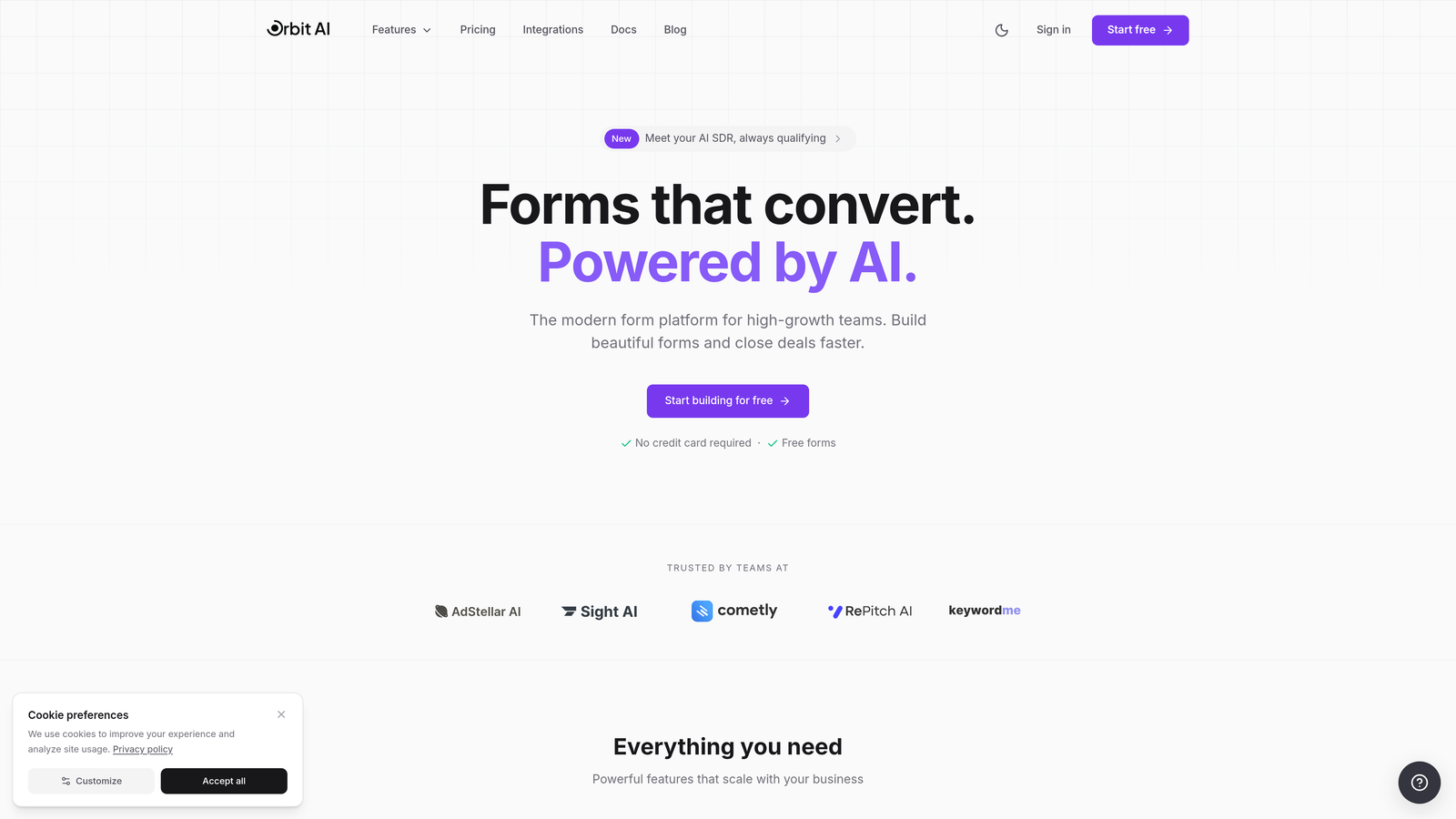
Orbit AI is an AI-powered form builder that qualifies leads at the point of capture and triggers workflows automatically.
Where This Tool Shines
Orbit AI eliminates the gap between form submission and lead action. Instead of collecting contact information and manually sorting through responses later, the platform uses AI to qualify prospects in real-time, routing high-value leads to immediate follow-up sequences while nurturing others appropriately.
The platform's conversion-optimized templates are designed specifically for high-growth teams who need forms that look modern and perform well without requiring design resources. Everything connects natively to your existing marketing stack, so qualified leads flow directly into your CRM and automation tools.
Key Features
AI-Powered Lead Qualification: Automatically scores and routes leads based on their responses and behavior patterns.
Native Workflow Automation: Trigger multi-step sequences directly from form submissions without third-party connectors.
Conversion-Optimized Templates: Pre-built form designs tested for maximum completion rates across industries.
Real-Time Analytics: Track form performance, lead quality, and conversion metrics in a unified dashboard.
Major Platform Integrations: Connect seamlessly with popular CRMs, email platforms, and marketing automation tools.
Best For
Teams who want to move fast without sacrificing lead quality. Particularly valuable for SaaS companies, agencies, and B2B businesses where intelligent lead routing makes a measurable difference in conversion rates and sales efficiency.
Pricing
Free tier available for getting started. Paid plans begin at $29/month with expanded automation capabilities and higher submission limits.
2. HubSpot Forms
Best for: Teams already using HubSpot who need native CRM integration and progressive profiling
HubSpot Forms is the native form builder within HubSpot's marketing platform with deep CRM connectivity.

Where This Tool Shines
If you're in the HubSpot ecosystem, these forms are nearly unbeatable for seamless data flow. Every submission updates your CRM instantly, and smart fields automatically adjust based on what you already know about a contact, preventing form fatigue from asking the same questions repeatedly.
The progressive profiling feature is particularly powerful for nurturing campaigns. As contacts return to your site, forms adapt to gather new information rather than repeating fields, creating a smoother experience while building richer contact profiles over time.
Key Features
Seamless CRM Sync: Every form submission updates contact records automatically without manual imports or delays.
Progressive Profiling: Forms intelligently adapt to show different questions to returning visitors based on existing data.
Smart Fields: Automatically pre-populate known information for contacts already in your database.
Built-In A/B Testing: Test different form versions to optimize completion rates directly within the platform.
Automatic Workflow Enrollment: Trigger sequences, assign tasks, and update properties based on form submissions.
Best For
Companies already invested in the HubSpot ecosystem who want zero-friction data flow between forms and their CRM. The value proposition weakens significantly if you're not using HubSpot's other tools.
Pricing
Free with HubSpot CRM, making it accessible for startups. Advanced form features like dependent fields and progressive profiling require Marketing Hub, starting at $800/month.
3. ActiveCampaign Forms
Best for: Email-focused marketers who need sophisticated automation triggers from form submissions
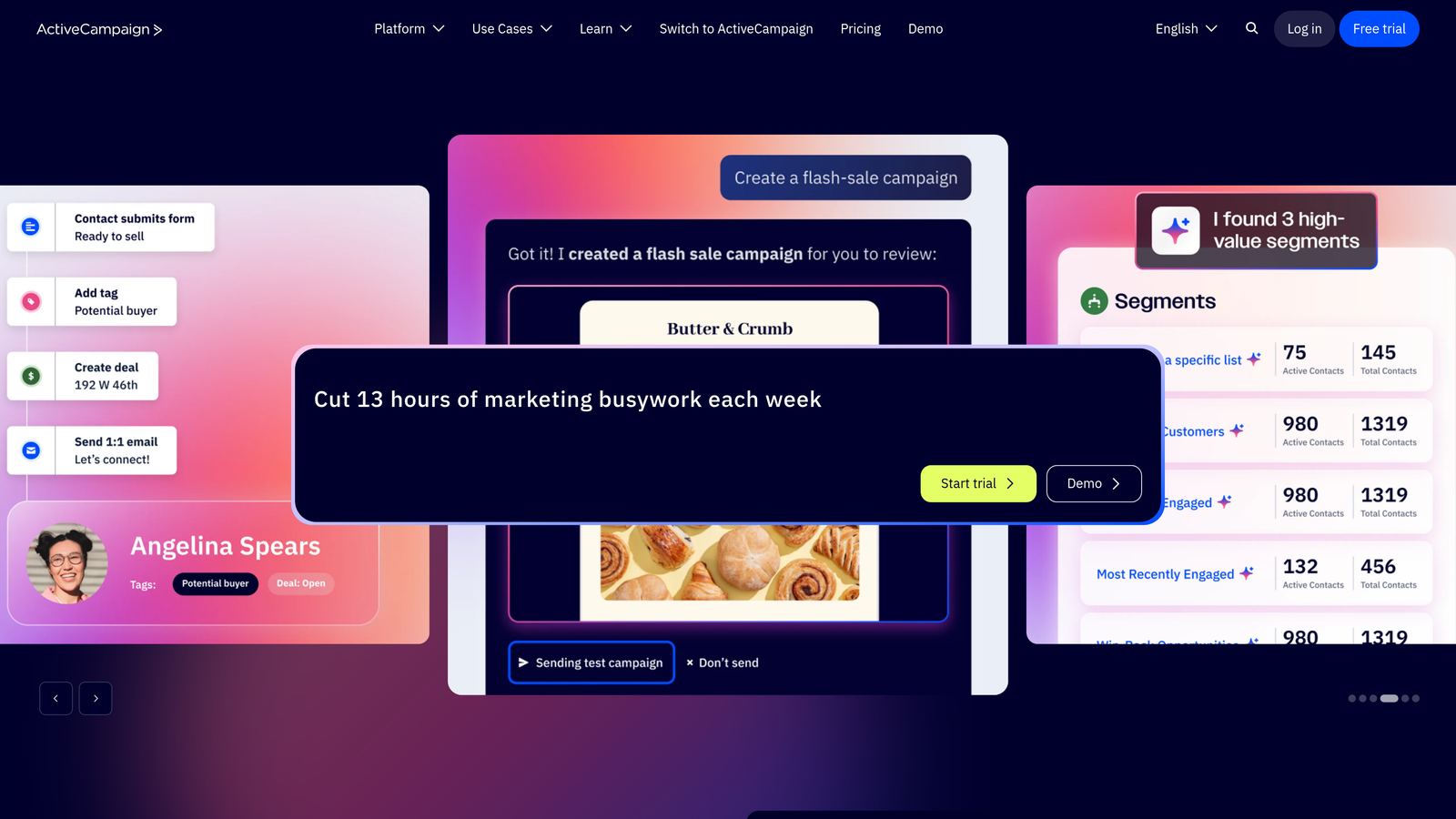
ActiveCampaign Forms is a form builder integrated with powerful email automation and CRM capabilities.
Where This Tool Shines
ActiveCampaign excels at turning form submissions into sophisticated automation sequences. The platform's strength lies in its ability to combine form data with site tracking and email behavior to create highly personalized follow-up campaigns.
The conditional logic capabilities are particularly robust, allowing you to show or hide fields based on previous answers, creating dynamic forms that adapt to each respondent. This keeps forms shorter and more relevant, which directly improves completion rates.
Key Features
Direct Automation Triggers: Launch multi-step email sequences immediately upon form submission without additional setup.
Advanced Conditional Logic: Show or hide fields dynamically based on user responses for personalized form experiences.
Contact Tagging and Segmentation: Automatically tag contacts and add them to segments based on their form responses.
Site Tracking Integration: Combine form data with browsing behavior for more intelligent lead scoring.
Lead Scoring: Assign points based on form submissions and responses to prioritize high-intent prospects.
Best For
Email marketers who want to build sophisticated nurture campaigns triggered by form behavior. Particularly valuable for businesses with complex customer journeys that require different messaging paths based on form responses.
Pricing
Starts at $29/month for the Lite plan with forms included. More advanced automation features unlock at higher tiers, with Professional at $149/month offering the full feature set.
4. Typeform
Best for: Brands prioritizing engagement and completion rates through conversational form experiences
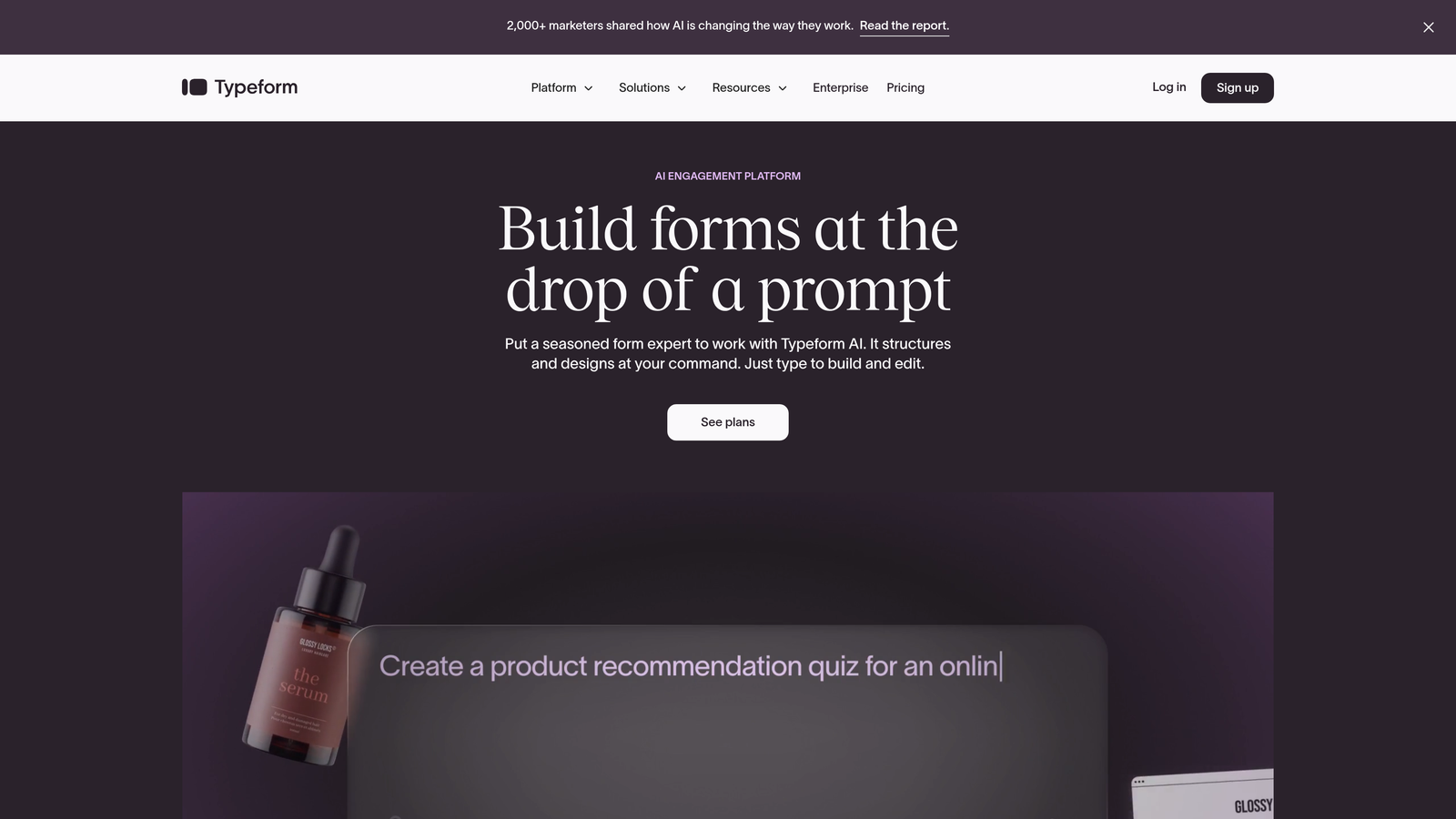
Typeform is a conversational form builder known for high engagement rates and beautiful design.
Where This Tool Shines
Typeform's one-question-at-a-time approach fundamentally changes how people interact with forms. Instead of facing a wall of fields, respondents answer questions conversationally, which significantly reduces form abandonment and increases completion rates.
The platform's design aesthetic is notably polished, making even complex forms feel approachable. Logic jumps allow you to create branching paths based on responses, so each person sees only relevant questions, creating a more personalized experience.
Key Features
Conversational Format: One-question-at-a-time interface that feels more like a conversation than a traditional form.
Logic Jumps and Branching: Route respondents through different question paths based on their answers.
Native Integrations: Connect directly with Zapier, HubSpot, Mailchimp, and other marketing platforms.
Rich Media Support: Embed videos, images, and GIFs to create more engaging form experiences.
Partial Submission Capture: Save incomplete responses so you can follow up with people who started but didn't finish.
Best For
Consumer brands and creative agencies where form aesthetics and user experience matter as much as data collection. Less ideal for enterprise B2B contexts where traditional forms are expected.
Pricing
Free tier available with Typeform branding. Basic plan starts at $25/month, removing branding and adding logic jumps. Higher tiers unlock advanced features and increased response limits.
5. Jotform
Best for: Teams needing versatile forms with extensive templates and payment collection capabilities
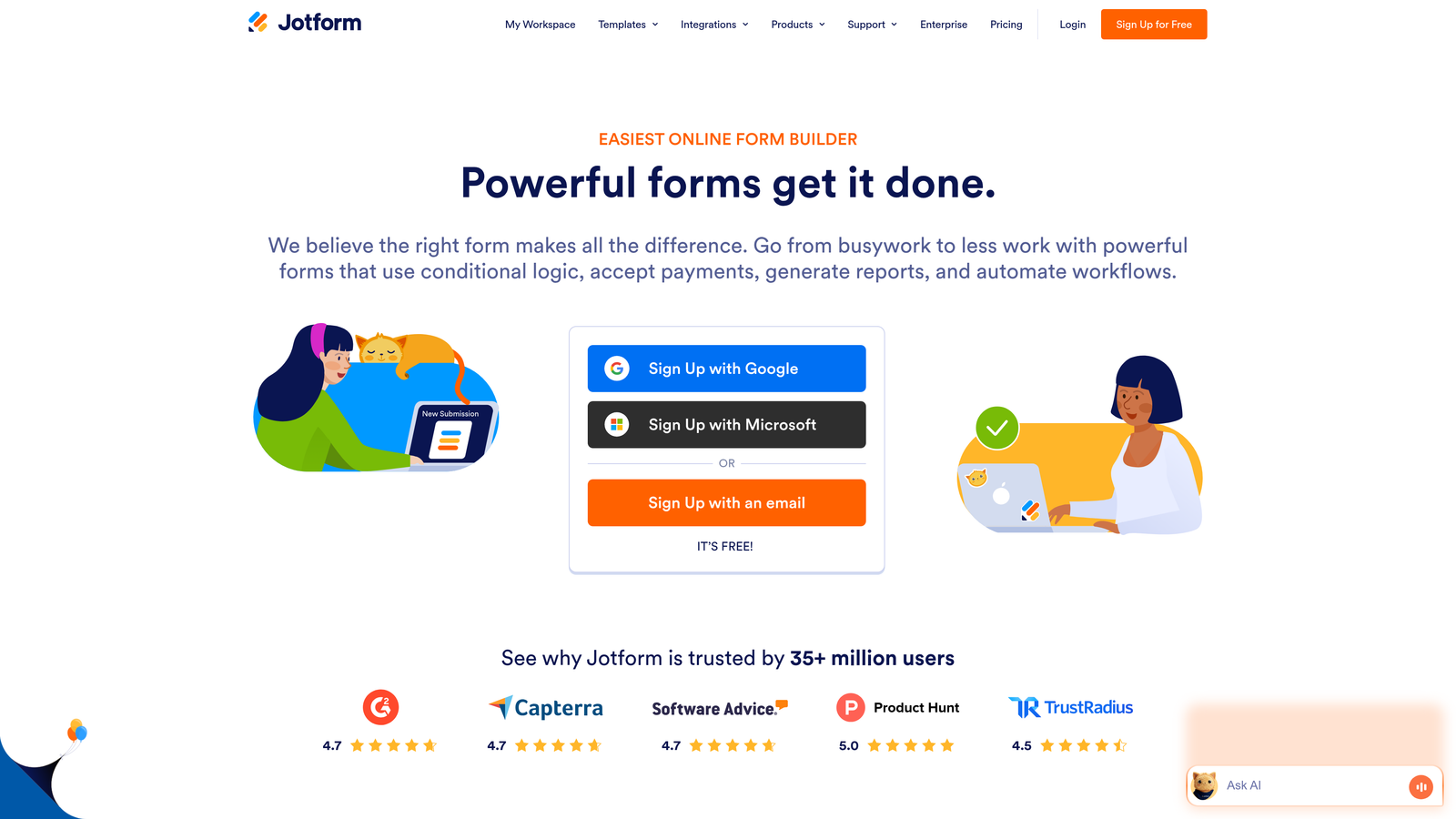
Jotform is a versatile form builder with extensive templates and solid automation integrations.
Where This Tool Shines
Jotform's massive template library means you can find a pre-built form for almost any use case, from event registrations to product orders to job applications. This dramatically reduces setup time compared to building forms from scratch.
The platform's payment integration capabilities set it apart for businesses that need to collect money alongside information. You can process payments through multiple gateways directly within forms, making it valuable for e-commerce, donations, and service bookings.
Key Features
10,000+ Form Templates: Extensive library covering virtually every industry and use case imaginable.
Conditional Logic and Calculations: Show fields based on responses and perform calculations within forms.
Native CRM Integrations: Connect directly with Salesforce, HubSpot, and other major CRM platforms.
Payment Collection: Accept payments through PayPal, Stripe, Square, and other processors built into forms.
Approval Workflows: Route submissions through approval chains for applications and requests.
Best For
Small businesses and solopreneurs who need forms that do everything without requiring technical expertise. The breadth of features makes it particularly valuable when you need payment processing combined with lead capture.
Pricing
Free tier includes 5 forms with 100 monthly submissions. Bronze plan at $34/month increases limits and removes Jotform branding. Higher tiers add HIPAA compliance and advanced features.
6. Gravity Forms
Best for: WordPress sites needing powerful forms with extensive customization through add-ons
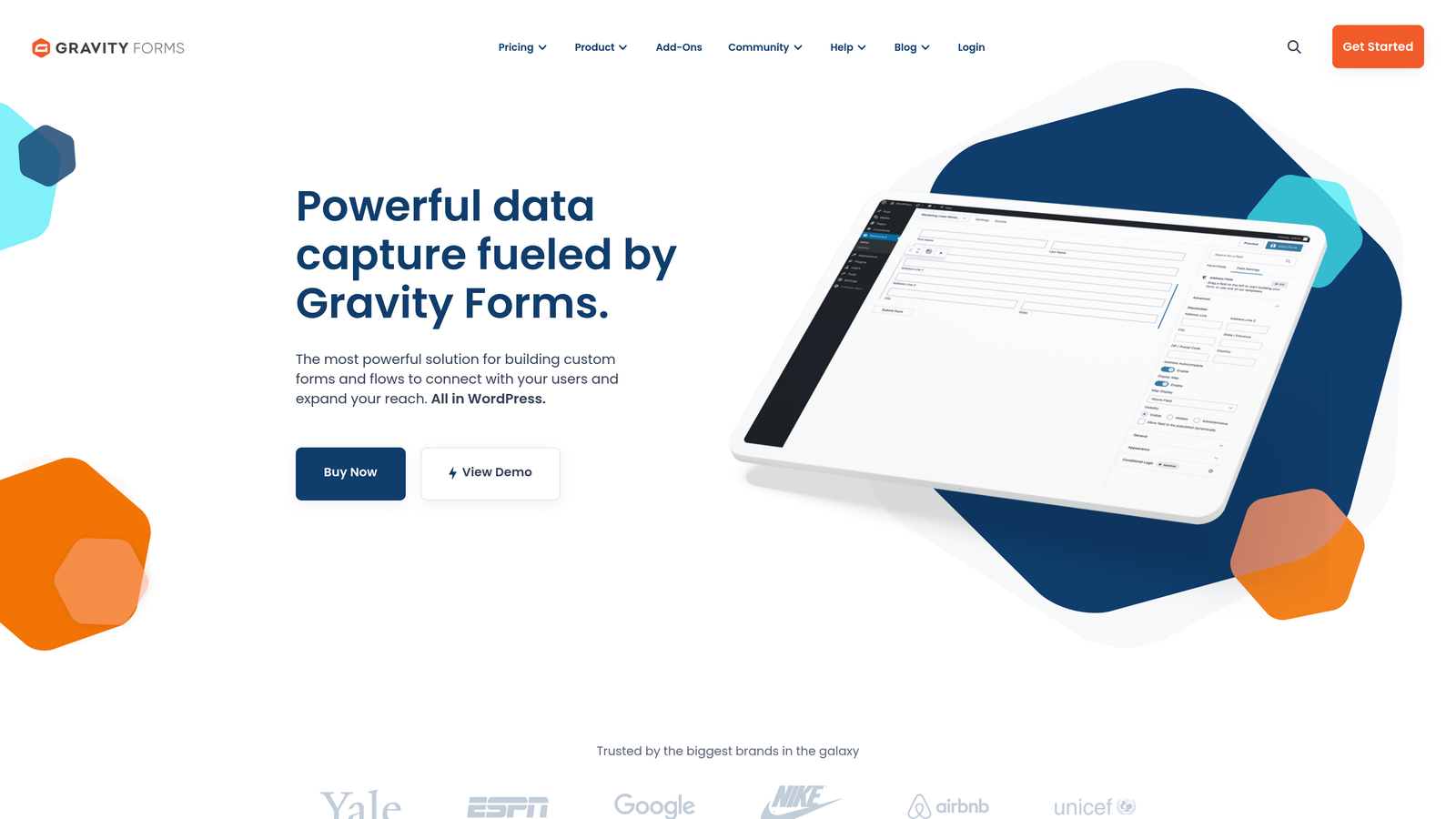
Gravity Forms is a WordPress-native form plugin with an extensive add-on ecosystem for automation.
Where This Tool Shines
For WordPress users, Gravity Forms offers unmatched flexibility through its add-on architecture. You can extend functionality exactly as needed without paying for features you won't use, and the deep WordPress integration means forms feel native to your site.
The plugin's webhook support is particularly valuable for custom automation workflows. You can send form data to virtually any platform that accepts webhooks, making it possible to integrate with tools that don't have pre-built connectors.
Key Features
Deep WordPress Integration: Works seamlessly with WordPress themes, plugins, and user management systems.
Extensive Add-On Ecosystem: Connect to Mailchimp, Zapier, Salesforce, PayPal, and dozens of other platforms through official add-ons.
Conditional Logic: Show or hide fields, pages, and submission buttons based on user selections.
User Registration Workflows: Create WordPress user accounts directly from form submissions with custom role assignment.
Webhook Support: Send form data to custom endpoints for integration with any platform that accepts webhooks.
Best For
WordPress-based businesses that need powerful forms without leaving their content management system. Not suitable if you're not using WordPress, as it's a plugin rather than a standalone platform.
Pricing
Basic license at $59/year covers one site with core features. Elite license at $259/year includes all add-ons and unlimited sites, making it cost-effective for agencies managing multiple clients.
7. Formstack
Best for: Enterprise teams needing advanced workflows, document generation, and compliance features
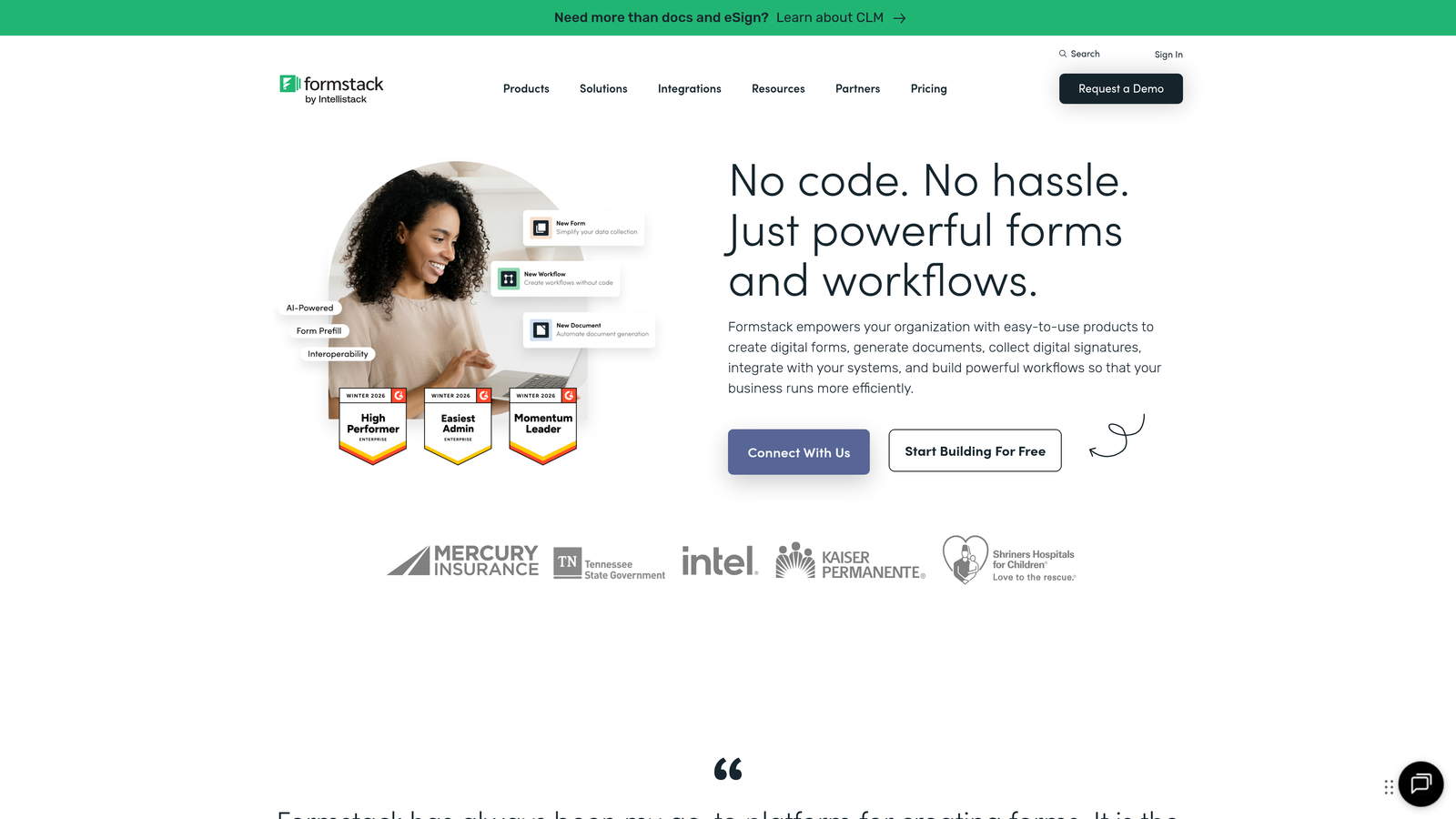
Formstack is an enterprise form and workflow automation platform with document generation capabilities.
Where This Tool Shines
Formstack goes beyond simple form submission by automating what happens next. The visual workflow builder lets you create complex approval chains, document generation processes, and multi-step routing without coding.
For industries with strict compliance requirements, Formstack offers HIPAA-compliant forms and data handling, making it suitable for healthcare, finance, and other regulated sectors. The Salesforce-native edition provides particularly tight integration for Salesforce-heavy organizations.
Key Features
Visual Workflow Builder: Create multi-step approval processes and routing logic through a drag-and-drop interface.
Document Generation: Automatically create PDFs, contracts, and other documents from form submission data.
Advanced Routing: Send submissions to different teams or systems based on complex conditional logic.
HIPAA and Compliance: Meet healthcare and financial industry requirements with encrypted data handling and audit trails.
Salesforce-Native Edition: Deploy forms directly within Salesforce for seamless CRM integration.
Best For
Mid-market and enterprise organizations with complex approval workflows and compliance requirements. The platform's depth makes it overkill for simple lead capture but invaluable for sophisticated business processes.
Pricing
Forms product starts at $50/month for basic features. Suite pricing varies based on products included and user count, typically landing in the $200-500/month range for growing teams.
8. Pardot (Marketing Cloud Account Engagement)
Best for: B2B enterprises deeply invested in Salesforce who need sophisticated lead scoring
Pardot is Salesforce's B2B marketing automation platform with native form and landing page capabilities.
Where This Tool Shines
Pardot's forms are inseparable from its lead scoring and grading system, which is where the platform's real power lives. Every form submission feeds into a comprehensive scoring model that considers engagement history, company fit, and behavior patterns to identify sales-ready leads.
The progressive profiling feature works particularly well for long sales cycles, gradually building complete prospect profiles across multiple touchpoints without overwhelming people with lengthy forms upfront.
Key Features
Native Salesforce Integration: Forms sync directly with Salesforce CRM with zero configuration required.
Lead Scoring and Grading: Automatically score prospects based on engagement and grade them based on fit criteria.
Progressive Profiling: Collect additional information over time by showing different fields to returning visitors.
Engagement Studio: Build sophisticated nurture programs triggered by form submissions and other behaviors.
Account-Based Marketing: Connect form submissions to account-level campaigns for enterprise sales strategies.
Best For
Enterprise B2B companies with complex sales cycles and established Salesforce implementations. The platform's sophistication requires dedicated marketing operations resources to realize its full value.
Pricing
Growth tier starts at $1,250/month, making it one of the most expensive options in this comparison. Plus and Advanced tiers add features and support, with pricing increasing accordingly.
9. Unbounce Smart Builder Forms
Best for: Performance marketers running paid campaigns who need landing pages and forms optimized together
Unbounce Smart Builder Forms is a landing page builder with AI-powered form optimization for conversion.
Where This Tool Shines
Unbounce treats forms as part of a complete landing page experience rather than standalone elements. The AI-powered Smart Builder suggests copy and design improvements based on conversion data from thousands of landing pages, helping you optimize without extensive testing.
Smart Traffic automatically routes visitors to the landing page variant most likely to convert them based on their attributes, essentially running continuous optimization without manual intervention. This makes it particularly valuable for paid campaigns where conversion rate directly impacts ROI.
Key Features
AI-Powered Suggestions: Get copy and design recommendations based on high-performing landing pages across the platform.
Integrated Landing Pages: Build forms within landing pages optimized specifically for conversion rather than treating them separately.
Smart Traffic: Automatically route visitors to the page variant most likely to convert them using machine learning.
Webhook and Zapier Integration: Connect form submissions to marketing automation tools and CRMs.
Popups and Sticky Bars: Capture leads through multiple formats beyond traditional landing page forms.
Best For
Marketing teams running paid acquisition campaigns where landing page and form performance directly impacts customer acquisition costs. Less suitable if you primarily need forms embedded in existing site pages.
Pricing
Launch plan at $99/month includes basic features and Smart Builder. Optimize plan at $145/month adds Smart Traffic and additional conversion tools, making it worthwhile for teams spending significantly on paid campaigns.
Making the Right Choice
The best marketing automation form tool depends on where you need the most leverage. If you're prioritizing intelligent lead qualification without building complex rule sets, Orbit AI delivers AI-powered routing that adapts to your leads automatically. Teams already invested in HubSpot or Salesforce will find the native form builders (HubSpot Forms and Pardot) offer unmatched data flow within their respective ecosystems.
For email-focused campaigns with sophisticated nurture sequences, ActiveCampaign's tight integration between forms and automation workflows makes it a strong contender. If engagement and completion rates matter more than anything else, Typeform's conversational approach consistently outperforms traditional forms.
WordPress users should seriously consider Gravity Forms for its flexibility and one-time pricing model, while enterprise teams with complex approval workflows will appreciate Formstack's document generation and compliance features. Performance marketers running paid campaigns benefit most from Unbounce's integrated landing page and form optimization.
The common thread among top performers is eliminating friction between form submission and automated action. The tools that win are those that trigger workflows instantly, qualify leads intelligently, and integrate natively with your existing stack without requiring constant manual intervention.
Transform your lead generation with AI-powered forms that qualify prospects automatically while delivering the modern, conversion-optimized experience your high-growth team needs. Start building free forms today and see how intelligent form design can elevate your conversion strategy.


