

Choosing a form platform isn't just about features. It's about whether the pricing model will still make sense when you're processing ten times your current volume. Most teams discover this the hard way: a tool that's affordable at 100 submissions per month becomes a budget line item you're defending at 10,000.
This guide breaks down the best scalable form platforms by what you actually pay as you grow, where each platform draws its pricing limits, and which use cases each one genuinely serves. Whether you're a high-growth SaaS team capturing leads at scale, an agency juggling multiple clients, or a B2B company that needs intelligent lead qualification built in, the right pricing model can make or break your stack.
We've evaluated each platform on pricing transparency, scalability, feature access at each tier, and real-world fit for growth-focused teams.
1. Orbit AI
Best for: High-growth SaaS and B2B teams who need forms that qualify leads, not just collect them.
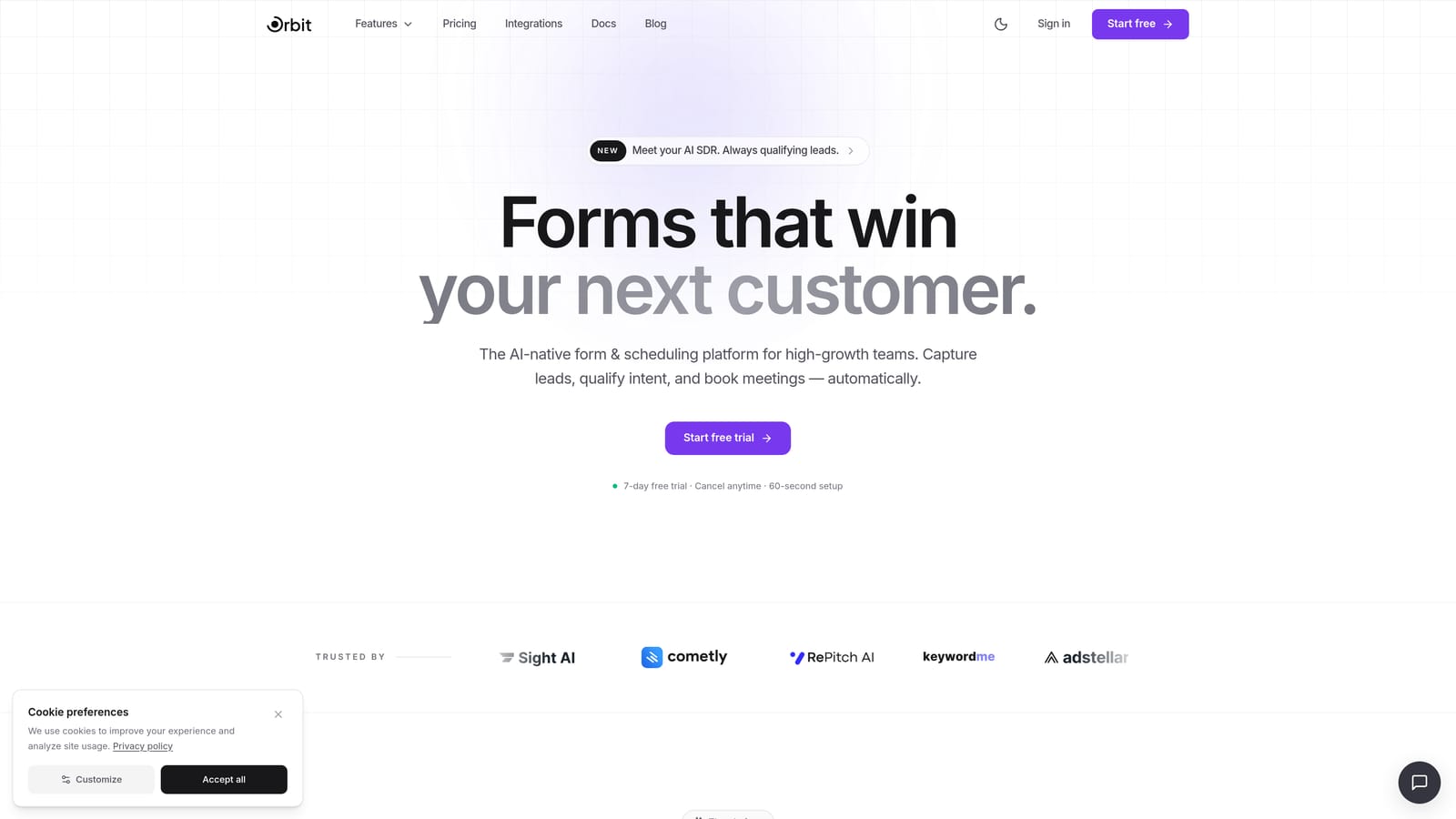
Orbit AI is an AI-powered form builder with built-in lead qualification, designed for teams where lead quality matters as much as lead volume.
Where This Tool Shines
Most form builders are passive data collectors. Orbit AI takes a fundamentally different approach: its AI qualification layer works at the point of form capture, scoring and routing leads before they ever hit your CRM. For B2B and SaaS teams running high-stakes lead gen, this means less time cleaning up unqualified submissions downstream.
The forms themselves are built for conversion. Clean, modern UI design is baked into the platform rather than bolted on, so you're not spending hours fighting templates to produce something that looks like it belongs in 2026.
Key Features
AI-Powered Lead Qualification: Scores and routes leads at the point of capture, reducing reliance on downstream CRM workflows.
Conversion-Optimized Form Design: Modern, visually polished forms built specifically for growth teams who care about completion rates.
Conditional Logic and Smart Routing: Show different questions or paths based on respondent inputs, keeping forms relevant and concise.
CRM and Marketing Stack Integrations: Connects with the tools your team already uses, so qualified leads flow directly into your existing workflows.
Beautiful, Functional UI: Design quality that doesn't compromise on capability — forms that look great and perform.
Best For
Orbit AI is the strongest fit for high-growth SaaS companies and B2B teams where lead quality is a strategic priority. If your team is tired of manually qualifying form submissions or building complex downstream automation to do what the form should handle natively, this is the platform built for that problem.
Pricing
Orbit AI's pricing is designed to scale with high-growth teams. Visit orbitforms.ai/pricing for current tiers and to find the plan that fits your volume and qualification needs.
2. Typeform
Best for: Teams prioritizing conversational form experiences and strong brand presentation.
Typeform is a conversational form builder known for its one-question-at-a-time interface and polished visual design capabilities.

Where This Tool Shines
Typeform's signature format, presenting one question at a time in a flowing, dialogue-like experience, genuinely improves completion rates for longer forms. If your form needs to feel like a conversation rather than a spreadsheet, Typeform delivers that experience better than most.
The visual customization options are also strong. Typeform forms can be styled to match brand guidelines without requiring design expertise, making it a popular choice for marketing teams that care about how their forms look in the wild.
Key Features
Conversational Interface: One-question-at-a-time format creates a more engaging, dialogue-like experience for respondents.
Visual Design and Brand Customization: Extensive styling options to align forms with brand identity.
Logic Jumps and Conditional Branching: Route respondents through different question paths based on their answers.
Wide Integration Ecosystem: Connects with a broad range of CRMs, marketing tools, and automation platforms.
Video and Image Embedding: Enrich forms with media to improve context and engagement.
Best For
Typeform works well for marketing teams running surveys, research forms, or lead capture where brand experience is a priority. It's less suited to teams with very high response volumes, since its response-based pricing model means costs scale directly with traffic, which can become a concern at scale.
Pricing
A free tier is available with limited monthly responses. Paid plans (Basic, Plus, Business, Enterprise) increase response limits as you move up. Because pricing is tied to response volume, high-traffic teams should model their expected monthly submissions carefully before committing.
3. Jotform
Best for: Teams that need a feature-rich platform with broad template coverage and diverse use cases.
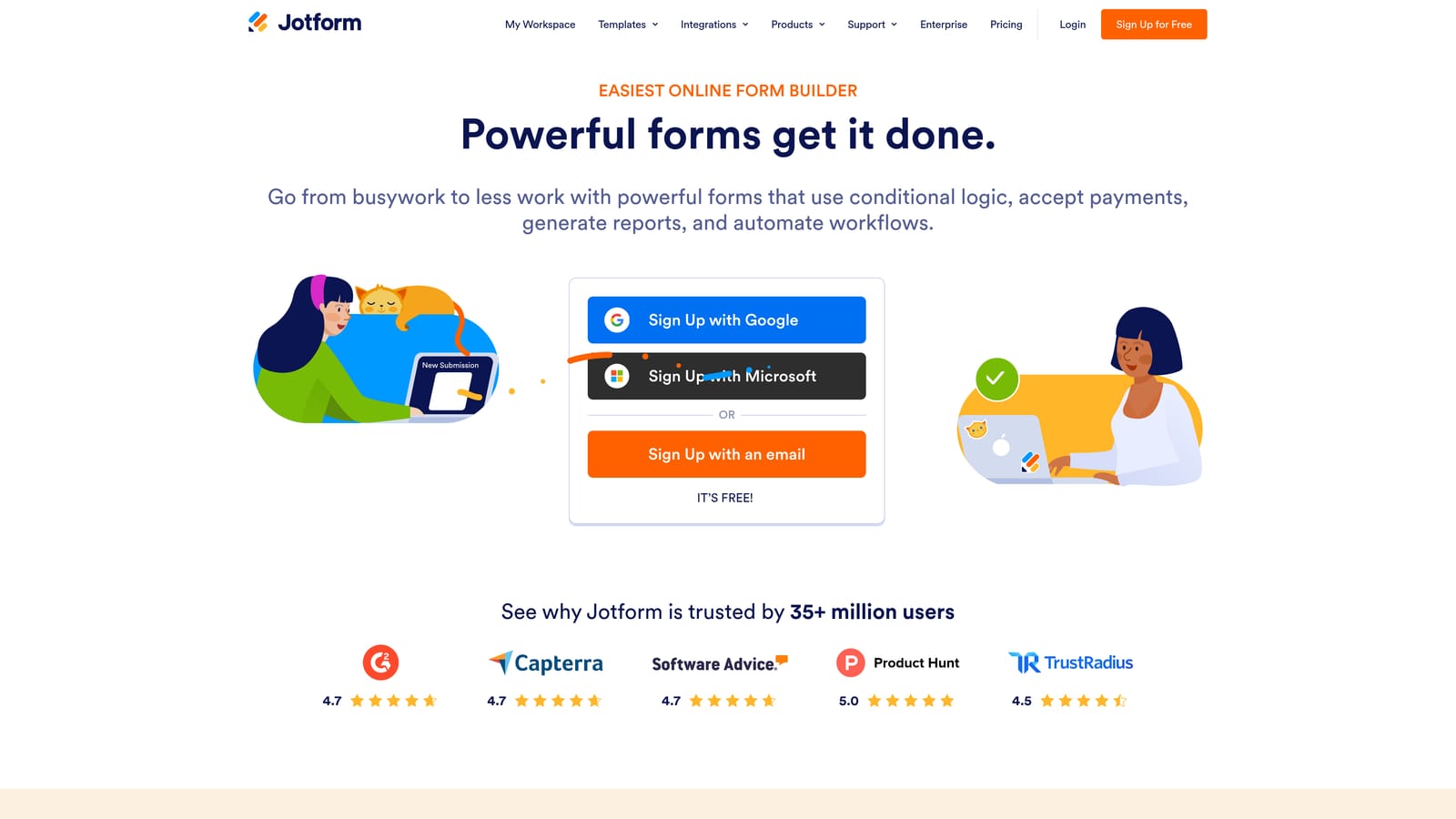
Jotform is one of the most feature-complete form builders available, offering an extensive template library and a wide integration ecosystem suited to a broad range of workflows.
Where This Tool Shines
Jotform's template library is genuinely impressive. With thousands of pre-built forms covering everything from lead capture to event registration to payment collection, teams can get up and running quickly without building from scratch. This breadth makes it particularly useful for agencies or operations teams managing diverse form needs.
The free tier is also among the most generous in the market, making Jotform a strong starting point for teams that want to explore without committing budget upfront.
Key Features
Extensive Template Library: Thousands of templates across industries and use cases, dramatically reducing setup time.
Wide Integration Library: Connects with CRMs, payment processors, project management tools, and more.
Form Analytics and Reporting: Built-in reporting to track submission trends and form performance.
Multi-Page Forms and File Uploads: Handles complex, multi-step forms with file attachment capabilities.
Conditional Logic: Show or hide fields based on respondent answers to keep forms relevant.
Best For
Jotform suits teams that need versatility across many different form types, particularly agencies, operations teams, or businesses managing forms across multiple departments. It's a strong generalist platform rather than a specialist in any one category.
Pricing
Jotform offers a free plan with a solid submission allowance. Paid tiers (Bronze, Silver, Gold) scale by monthly submission volume and the number of forms allowed. Enterprise pricing is available by quote for organizations that need higher limits and dedicated support.
4. Tally
Best for: Teams that want unlimited responses and flat-rate pricing without enterprise complexity.
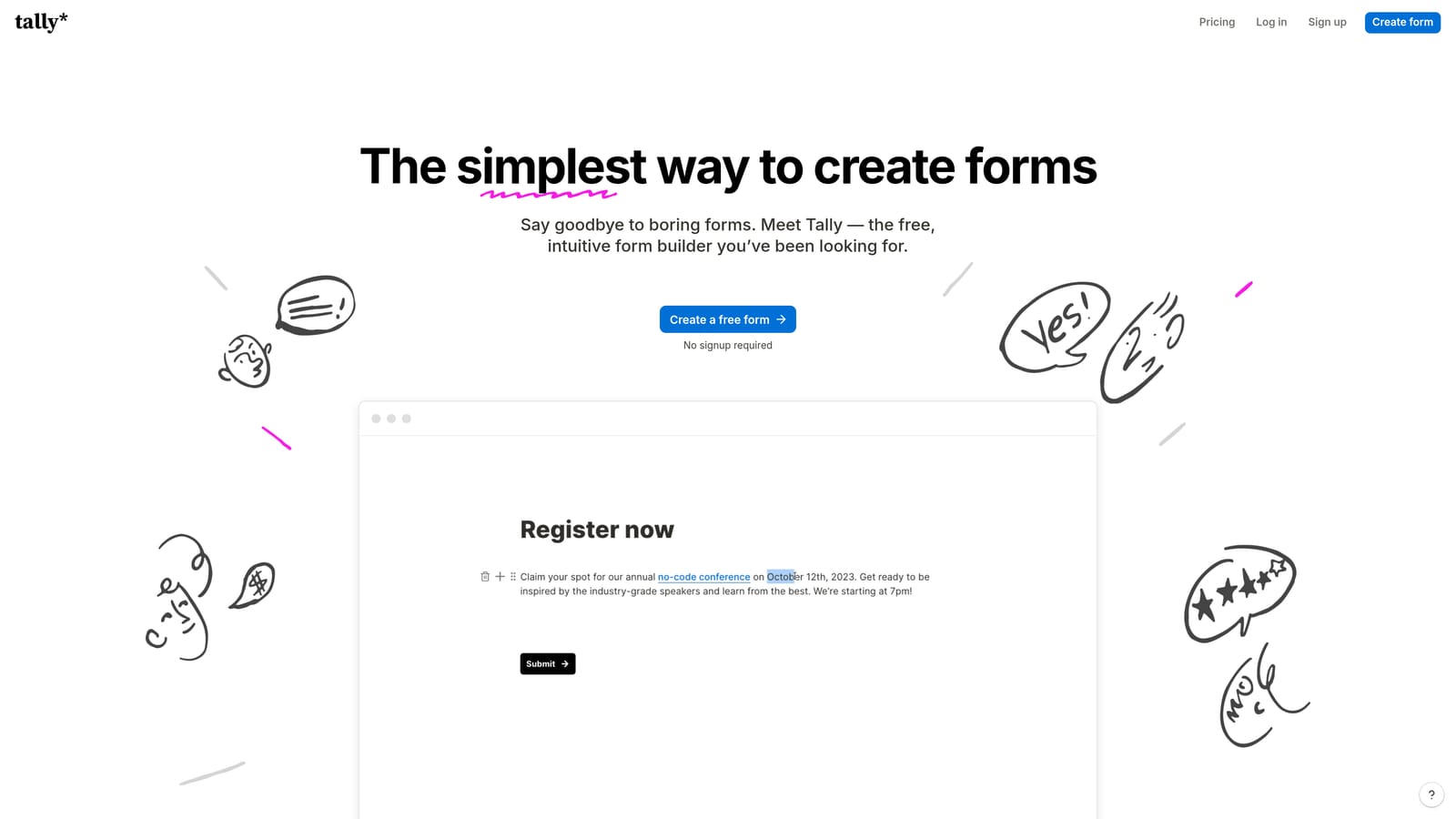
Tally is a minimalist form builder with a Notion-like editing experience and one of the most generous free tiers in the market, including unlimited responses.
Where This Tool Shines
Tally's core differentiator is its pricing model. Unlimited responses on the free tier means you're not watching a submission counter tick toward an overage charge. For teams with unpredictable or high response volumes, this removes a significant source of pricing anxiety.
The editing experience is clean and intuitive. If your team is already comfortable with Notion-style block editors, Tally's interface will feel immediately familiar, reducing onboarding friction considerably.
Key Features
Unlimited Forms and Responses on Free Tier: No response caps means no surprise upgrade pressure from traffic spikes.
Notion-Inspired Block Editor: Clean, familiar editing interface that's fast to learn and use.
Custom Domains and Branding Removal: Available on the Pro plan for teams that need white-labeled form experiences.
Conditional Logic and Hidden Fields: Core logic features available without requiring an enterprise tier.
Flat-Rate Pro Pricing: Predictable monthly cost regardless of response volume.
Best For
Tally is an excellent fit for startups, indie teams, and growing businesses that want scalable pricing without complex tier structures. It's particularly strong for teams that value simplicity and predictability over advanced analytics or enterprise workflow features.
Pricing
The free tier includes unlimited responses with no time limit. Tally Pro is a flat monthly rate that adds custom domains, branding removal, file uploads, and additional features. Check tally.so for current Pro pricing.
5. Paperform
Best for: Teams that want forms to function as standalone, rich-media pages with native payment processing.
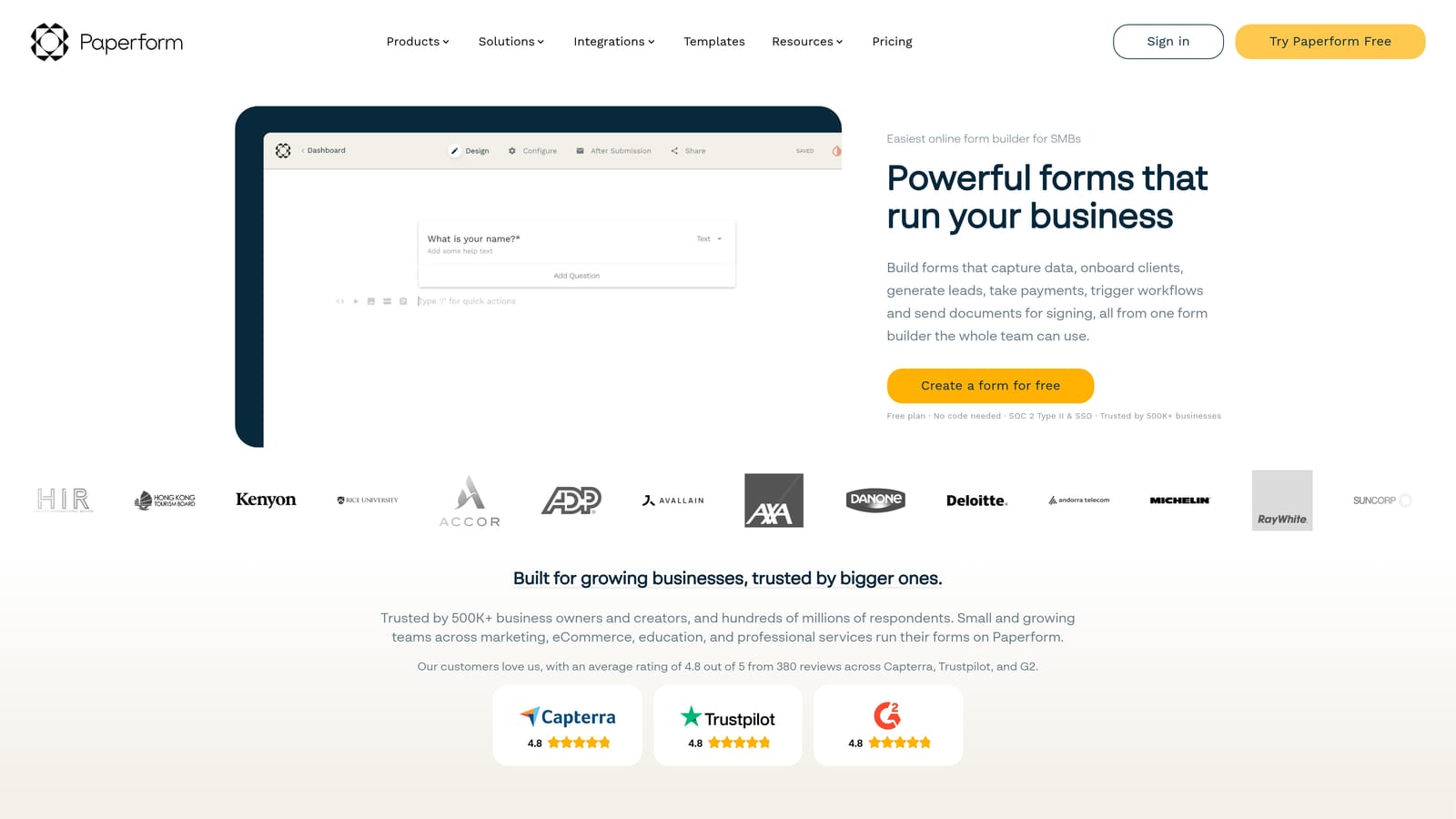
Paperform is a form builder that treats each form as a fully designed page, combining rich media, product listings, and native payment capabilities in a single tool.
Where This Tool Shines
Paperform occupies an interesting niche: it's somewhere between a form builder and a lightweight landing page tool. Each form can include images, video, formatted text, and product listings alongside the actual form fields, making it well-suited for use cases where the form needs to sell or inform as much as it collects.
Native Stripe integration means payment collection is built in without requiring a third-party plugin, which simplifies setup for teams running order forms, event registrations, or paid bookings.
Key Features
Rich Media Form Pages: Embed images, video, and formatted text directly into form pages for a more complete experience.
Native Stripe Payment Integration: Accept payments directly through forms without additional payment tools.
Product Listings and E-Commerce Capabilities: Build order forms with product selections, quantities, and pricing logic.
Conditional Sections and Logic: Show or hide entire sections based on respondent inputs.
Flat-Rate Monthly Pricing: Predictable costs across tiers, not tied to response volume.
Best For
Paperform is a strong fit for small businesses, consultants, and creative teams that need forms to double as mini landing pages or order forms. It's less focused on pure lead qualification workflows and better suited to teams where the form experience itself is part of the product offering.
Pricing
Paperform offers Essentials, Pro, and Business tiers at flat monthly rates. Because pricing isn't response-based, it remains predictable as volume grows. Check paperform.co for current tier pricing.
6. Formstack
Best for: Regulated industries and enterprise teams that need forms, document generation, and e-signatures in one platform.
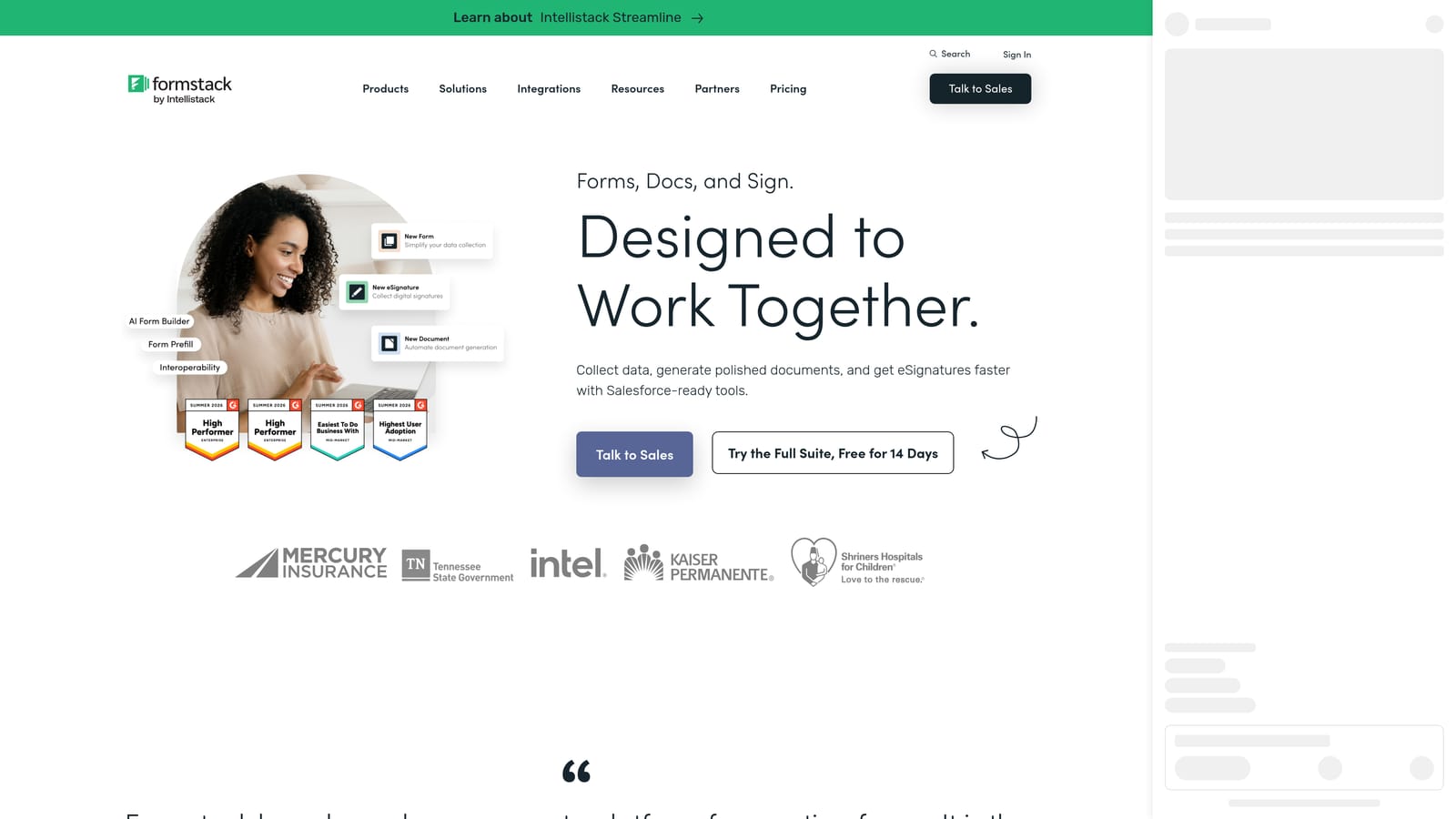
Formstack is an enterprise-oriented platform that goes well beyond form building, combining workflow automation, document generation, and e-signature capabilities for complex organizational needs.
Where This Tool Shines
Formstack's strength is depth, not simplicity. For organizations in regulated industries like healthcare, finance, or legal services, the platform's HIPAA-compliant form options and multi-step approval workflows address compliance requirements that most form builders simply can't meet.
The bundled platform approach, combining Forms, Documents, and Sign in a single ecosystem, is genuinely valuable for enterprise teams that would otherwise be stitching together multiple tools to manage the full lifecycle from data collection to signed agreement.
Key Features
HIPAA-Compliant Form Options: Meets data compliance requirements for healthcare and regulated industries.
Document Generation and E-Signature Workflows: Convert form submissions into formatted documents with integrated signing capabilities.
Multi-Step Approval Workflows: Route submissions through internal approval chains before action is taken.
Salesforce and Enterprise CRM Integrations: Deep integrations with enterprise CRM and business systems.
Bundled Platform: Forms, Documents, and Sign available together for organizations that need the full workflow.
Best For
Formstack is built for enterprise teams and regulated industries where compliance, workflow automation, and document management are non-negotiable requirements. It's not the right fit for smaller teams or those primarily focused on lead generation, as the platform's complexity and pricing reflect its enterprise positioning.
Pricing
A Forms-only plan is available for teams that need the core form builder. Full platform pricing, including Documents and Sign, is available by quote. Formstack represents an enterprise-level investment, so it's best evaluated by organizations with the operational complexity to justify it.
Making the Right Choice for Your Growth Stage
The six platforms in this guide represent meaningfully different philosophies about what a form builder should do and how it should charge you for doing it.
If you're a high-growth SaaS or B2B team where lead qualification is a strategic priority, Orbit AI is the only platform in this list built specifically for that problem. AI-powered qualification at the point of capture means your forms are doing qualification work that most teams are currently doing manually or not at all.
For teams that need flat-rate, unlimited-response pricing without enterprise overhead, Tally is the standout. Its free tier alone handles what other platforms charge for, making it an exceptional starting point for volume-heavy use cases on a tight budget.
If brand experience and conversational design matter most, Typeform delivers the most polished form interaction in the market, though its response-based pricing deserves careful modeling before you scale. For teams needing breadth across many form types and use cases, Jotform's template library and integration depth make it a reliable generalist. Paperform suits teams where forms need to function as rich, standalone pages. And Formstack is the clear choice when enterprise compliance and document workflows are the primary driver.
The pricing model you choose today will shape your costs tomorrow. Pick the platform whose upgrade triggers align with how your team actually grows, not just the one with the lowest starting price.
Transform your lead generation with AI-powered forms that qualify prospects automatically while delivering the modern, conversion-optimized experience your high-growth team needs. Start building free forms today and see how intelligent form design can elevate your conversion strategy.


