

Enterprise teams don't just need forms. They need form infrastructure that scales with their ambitions, integrates with their stack, and doesn't fall apart when submission volumes spike or compliance requirements tighten.
As organizations grow, the gap between a basic form builder and a true enterprise-grade solution becomes impossible to ignore: fragmented data, compliance risks, shallow integrations, and forms that can't keep pace with complex workflows. The right platform doesn't just collect responses — it becomes a core part of how your team captures, qualifies, and routes leads at scale.
This guide compares the best scalable form solutions built for enterprise demands. Each tool was evaluated on scalability, automation depth, integration breadth, compliance features, and how well it supports conversion-focused teams. Whether you're managing high-volume lead capture, multi-department workflows, or need AI-powered qualification built in from the start, you'll find the right fit here. If you're also thinking through the cost side, our breakdown of enterprise form builder pricing and custom form solution quotes are worth reading alongside this guide.
1. Orbit AI
Best for: High-growth B2B and SaaS teams that need forms to qualify leads, not just collect them.
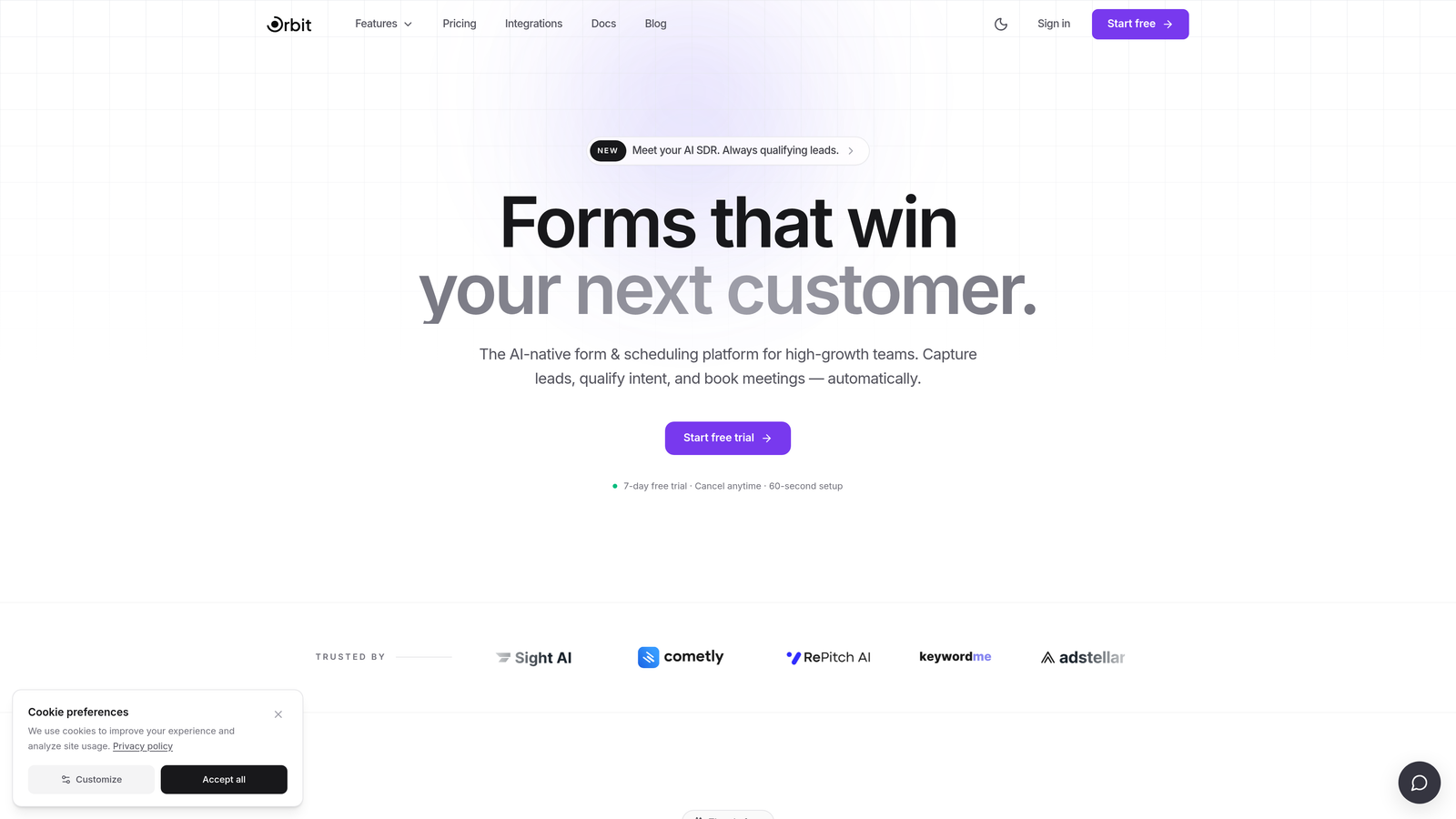
Orbit AI is an AI-powered form builder with native lead qualification and scoring built directly into the form layer.
Where This Tool Shines
Most form builders treat lead qualification as an afterthought, relying on external CRM logic or manual review after submission. Orbit AI flips that model entirely. The AI qualification layer lives inside the form experience itself, which means your team gets scored, prioritized leads the moment someone submits — without stitching together separate tools.
For high-growth SaaS and B2B teams where lead quality matters as much as lead volume, this is a genuine differentiator. The platform is also built with conversion in mind: modern, brand-consistent templates and dynamic routing ensure that high-intent prospects get a tailored experience while lower-priority submissions are handled efficiently.
Key Features
AI-Powered Lead Qualification: Qualification logic runs natively inside the form — no external CRM rules or manual scoring required after submission.
Real-Time Lead Scoring: Submissions are scored on intent signals in real time, letting your sales team prioritize outreach immediately.
Conditional Logic and Dynamic Routing: Form paths adapt based on lead quality signals, routing high-value prospects to the right next step automatically.
Conversion-Optimized Design: Modern, brand-consistent templates designed to maximize completion rates for enterprise marketing and demand gen teams.
Enterprise-Grade Collaboration: Built for team environments with scalable access controls and multi-user workflows.
Best For
SaaS companies, B2B marketing teams, and demand generation leaders who need forms that do more than collect data. If lead quality and conversion rate optimization are priorities for your team, Orbit AI is purpose-built for that use case in a way most general-purpose form builders are not.
Pricing
Enterprise pricing is available on request. Visit the custom form solution quote page for details on plans tailored to your team's scale and requirements.
2. Formstack
Best for: Enterprises needing end-to-end workflow automation, document generation, and e-signature in one platform.
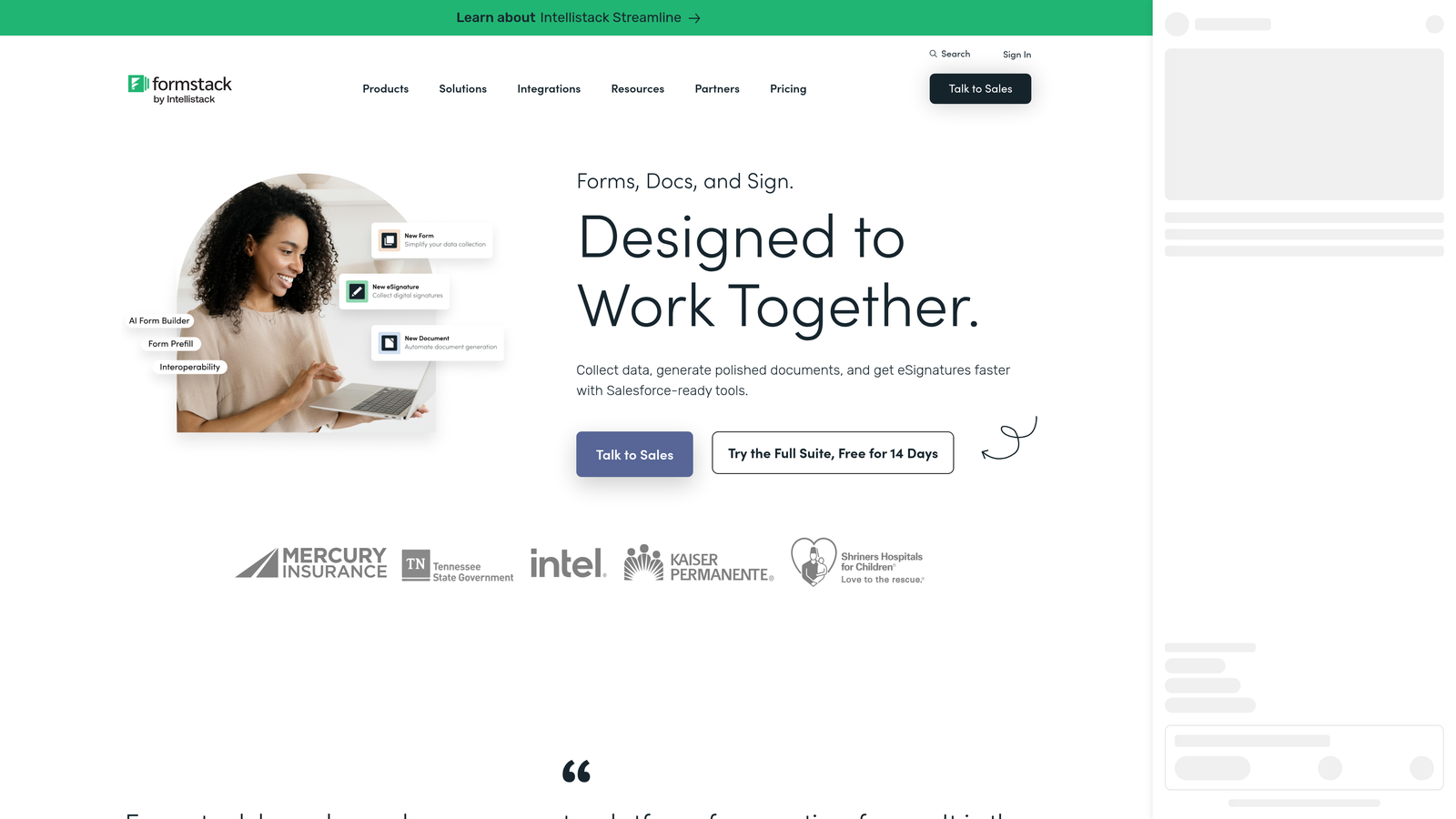
Formstack is a workflow automation platform with a powerful form builder at its core, designed for complex multi-step enterprise processes.
Where This Tool Shines
Formstack is less of a "form builder" and more of a process automation suite that happens to start with a form. Its real strength is in connecting form submissions to downstream workflows: approval routing, document generation, and e-signature capabilities are all native to the platform. For HR, legal, and operations teams at larger enterprises, this end-to-end capability is hard to replicate by stitching together separate tools.
The compliance posture is also enterprise-ready. SOC 2 Type II, HIPAA, and GDPR coverage means Formstack is viable in regulated industries like healthcare and finance where data handling requirements are strict.
Key Features
Multi-Step Workflow Automation: Build approval chains and routing logic that trigger automatically based on form responses.
Document Generation and E-Signature: Formstack Documents and Formstack Sign are native products, removing the need for third-party document tools.
Enterprise Security Compliance: SOC 2 Type II, HIPAA, and GDPR certifications make it viable for regulated industries.
CRM and Enterprise Integrations: Pre-built connectors for Salesforce, HubSpot, and other major enterprise platforms.
Role-Based Access Controls: Team workspaces and permission management for larger, multi-department deployments.
Best For
Operations, HR, legal, and compliance teams at mid-to-large enterprises that need forms as part of a broader process automation workflow, particularly where document generation or e-signature is part of the process.
Pricing
Forms plan starts around $83/month. Full enterprise pricing, including access to Documents and Sign products, is available on request directly from Formstack.
3. Jotform
Best for: Enterprises across diverse industries that need a broad, high-volume platform with deep compliance coverage.
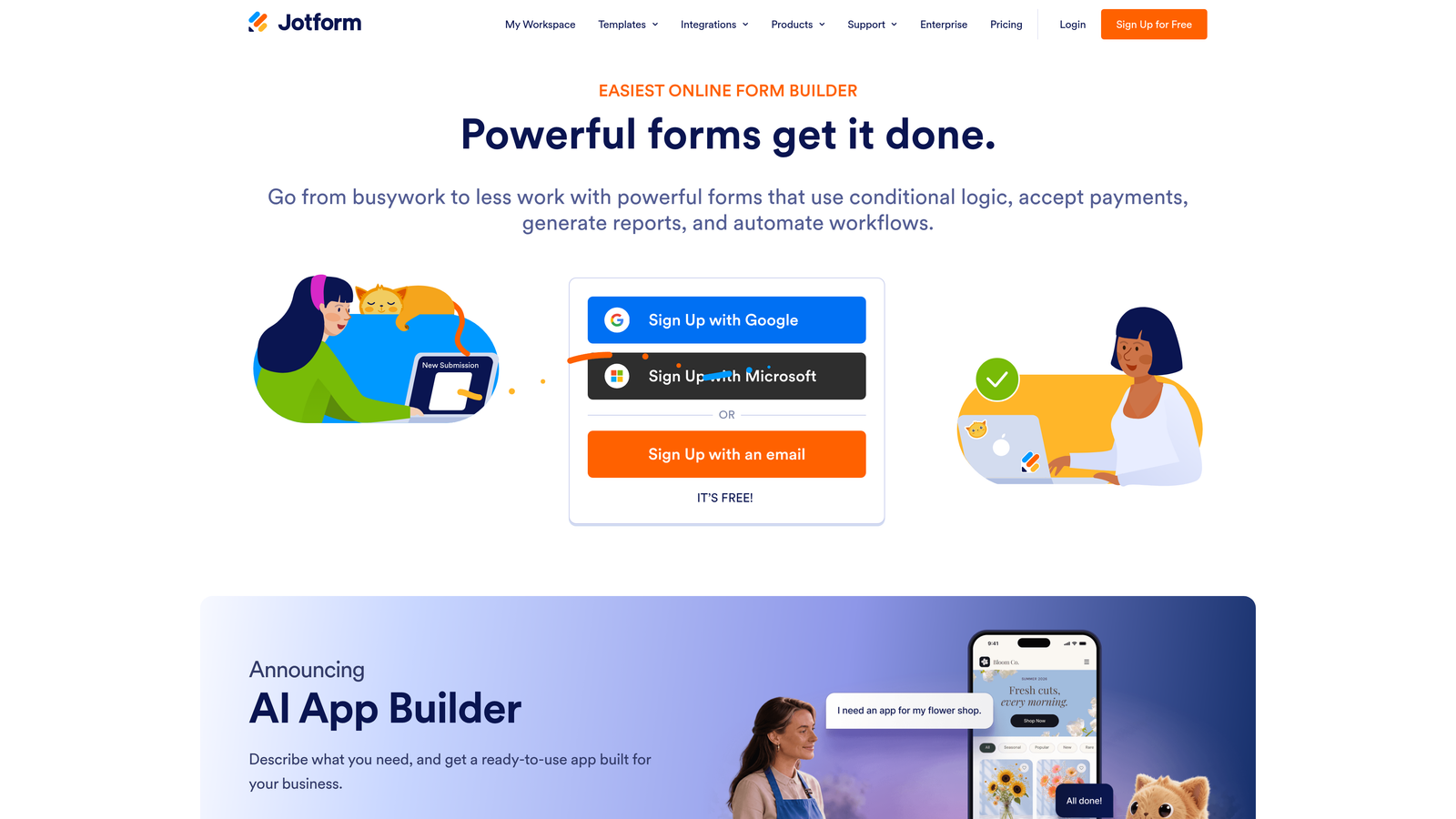
Jotform is a versatile, high-volume form platform with one of the largest template libraries and integration ecosystems available for enterprise buyers.
Where This Tool Shines
Jotform's breadth is its biggest asset. With over 150 native integrations spanning CRMs, payment processors, and productivity tools, it fits into almost any enterprise tech stack without requiring custom development. The platform is also one of the most compliance-ready options on this list, covering SOC 2 Type II, HIPAA, GDPR, and PCI DSS — a combination that covers most regulated industry requirements in a single platform.
The enterprise plan adds SSO, custom domains, and priority support, which are practical requirements for large deployments. Jotform Tables and built-in reporting also reduce dependence on external data management tools for teams that want a more self-contained solution.
Key Features
150+ Native Integrations: Connects directly with major CRMs, payment processors, and productivity platforms without relying on middleware.
Comprehensive Compliance Coverage: SOC 2 Type II, HIPAA, GDPR, and PCI DSS certifications in a single platform.
Advanced Form Logic: Calculation fields, multi-page forms, and conditional logic for complex data collection workflows.
Jotform Tables and Reports: Built-in data management and reporting reduces the need for additional BI tooling for standard use cases.
Enterprise SSO and Custom Domains: Dedicated enterprise plan with single sign-on, custom domain support, and priority support SLAs.
Best For
Enterprises in regulated industries (healthcare, finance, education) or any organization that needs a proven, broadly compatible platform with strong compliance credentials and a large template library to accelerate deployment.
Pricing
Team plans start around $34/month. Enterprise plan pricing is available on request and includes dedicated support, SSO, and advanced security features.
4. Typeform
Best for: Enterprise marketing teams that prioritize form engagement, completion rates, and brand experience.
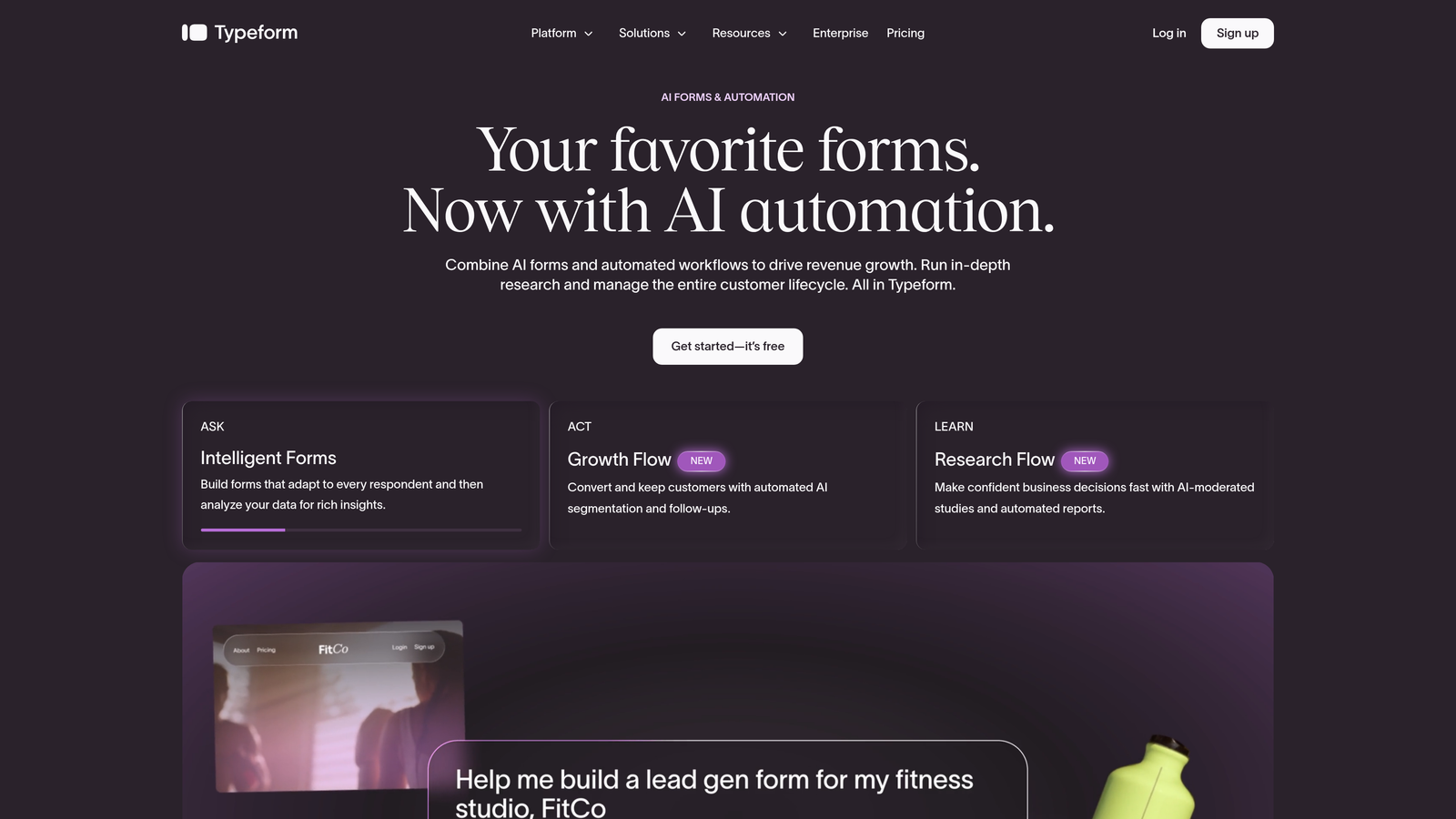
Typeform is a conversational form builder known for its one-question-at-a-time format that drives higher engagement compared to traditional static form layouts.
Where This Tool Shines
Typeform's differentiator is the form experience itself. By presenting one question at a time in a clean, conversational interface, it reduces the cognitive load that causes respondents to abandon traditional multi-field forms. For enterprise marketing teams running lead generation campaigns, customer surveys, or product feedback programs, that experience quality translates directly to better completion data.
The enterprise plan adds white-labeling, custom branding, and branded subdomain support, which matters when forms need to feel like a seamless extension of your brand rather than a third-party tool. Built-in per-question drop-off analytics also give teams actionable insight into where respondents disengage.
Key Features
Conversational One-Question Format: Single-question presentation reduces friction and typically improves completion rates versus traditional form layouts.
Advanced Logic Jumps and Personalization: Form paths adapt dynamically based on previous responses for a tailored experience.
Built-In Drop-Off Analytics: Per-question completion tracking shows exactly where respondents abandon the form.
Custom Branding and White-Labeling: Enterprise plans support fully branded experiences with custom domains and subdomain options.
Broad Integration Ecosystem: Native connections to HubSpot, Salesforce, Slack, and 500+ additional tools via Zapier.
Best For
Enterprise marketing, demand generation, and customer experience teams that want a premium form experience and are willing to invest in the UX quality that drives higher engagement and completion rates.
Pricing
Business plan starts at $83/month. Enterprise pricing, including advanced security, custom branding, and dedicated support, is available on request.
5. Paperform
Best for: Marketing and operations teams that need flexible, content-rich form pages with built-in payments and scheduling.
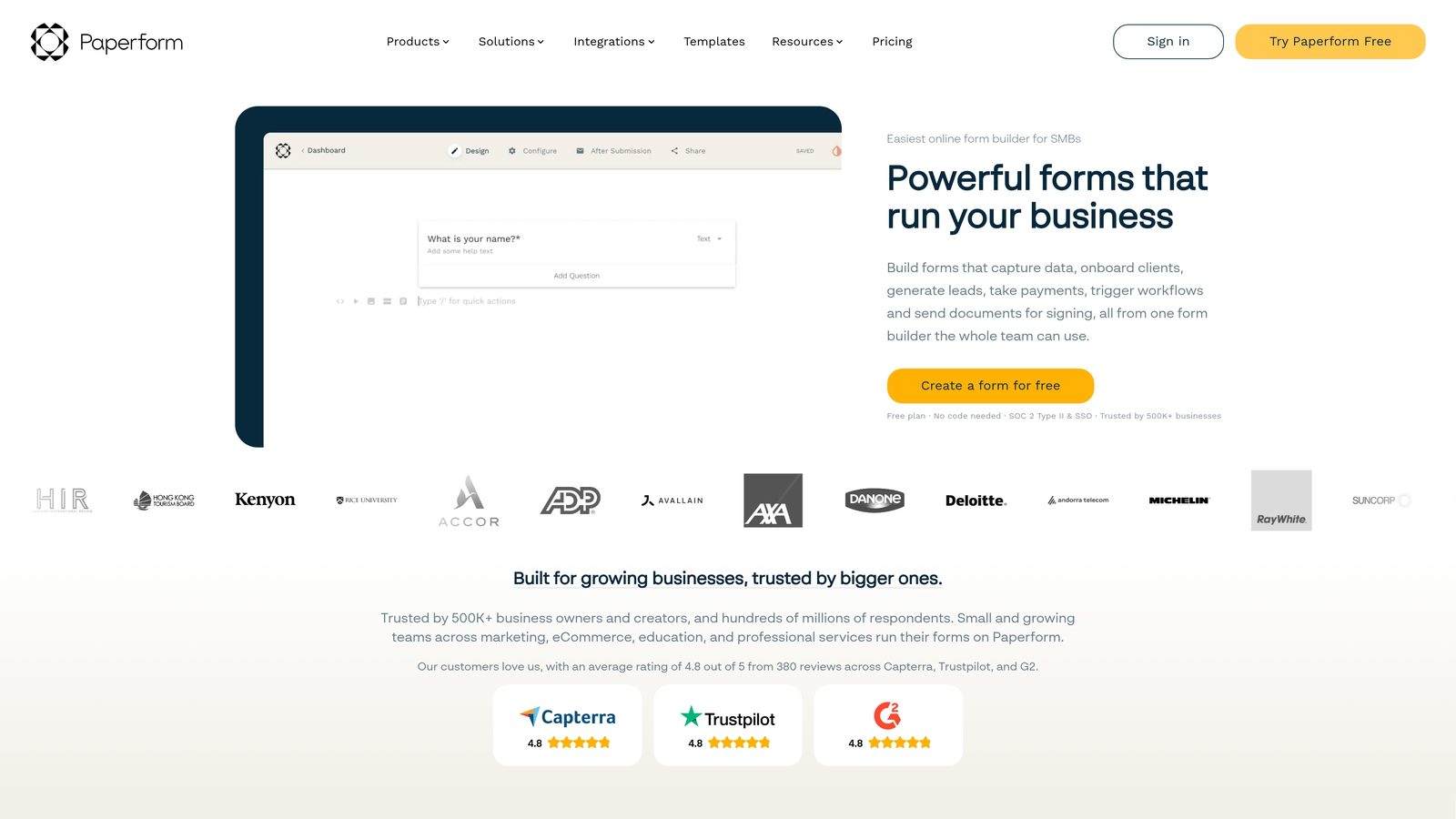
Paperform is a document-style form builder that combines forms, payments, scheduling, and conditional logic in a single flexible editor.
Where This Tool Shines
Paperform's editing experience is genuinely different from most form builders. Rather than a traditional field-by-field builder, it works more like a rich document editor where you can freely mix text, images, video, and form fields on the same page. This makes it well-suited for landing pages, event registrations, product order forms, and any use case where the form itself needs to tell a story or present context alongside the questions.
The built-in payment processing (Stripe, PayPal, Square) and native appointment scheduling remove the need for separate tools in many marketing and events workflows. For teams managing a mix of lead capture, sales, and bookings, that consolidation is a practical time-saver.
Key Features
Document-Style Editor: Freely mix text, images, video, and form fields on the same page without layout restrictions.
Built-In Payment Processing: Native Stripe, PayPal, and Square integration without requiring third-party plugins.
Appointment Scheduling: Booking and scheduling capabilities built natively into the form experience.
Conditional Logic and Calculation Fields: Dynamic form paths and calculated outputs for more complex data collection needs.
2,000+ Integrations: Connects to a wide range of tools via native connections and Zapier.
Best For
Marketing teams, event organizers, and operations professionals who need creative, standalone form pages that combine content presentation with data collection, payments, or scheduling in a single, polished experience.
Pricing
Essentials plan starts at $29/month. Agency and higher-tier plans are available for teams that need more forms, submissions, and advanced features.
6. Tally
Best for: Scaling teams that want a clean, intuitive form builder with generous response limits and no per-submission pricing.
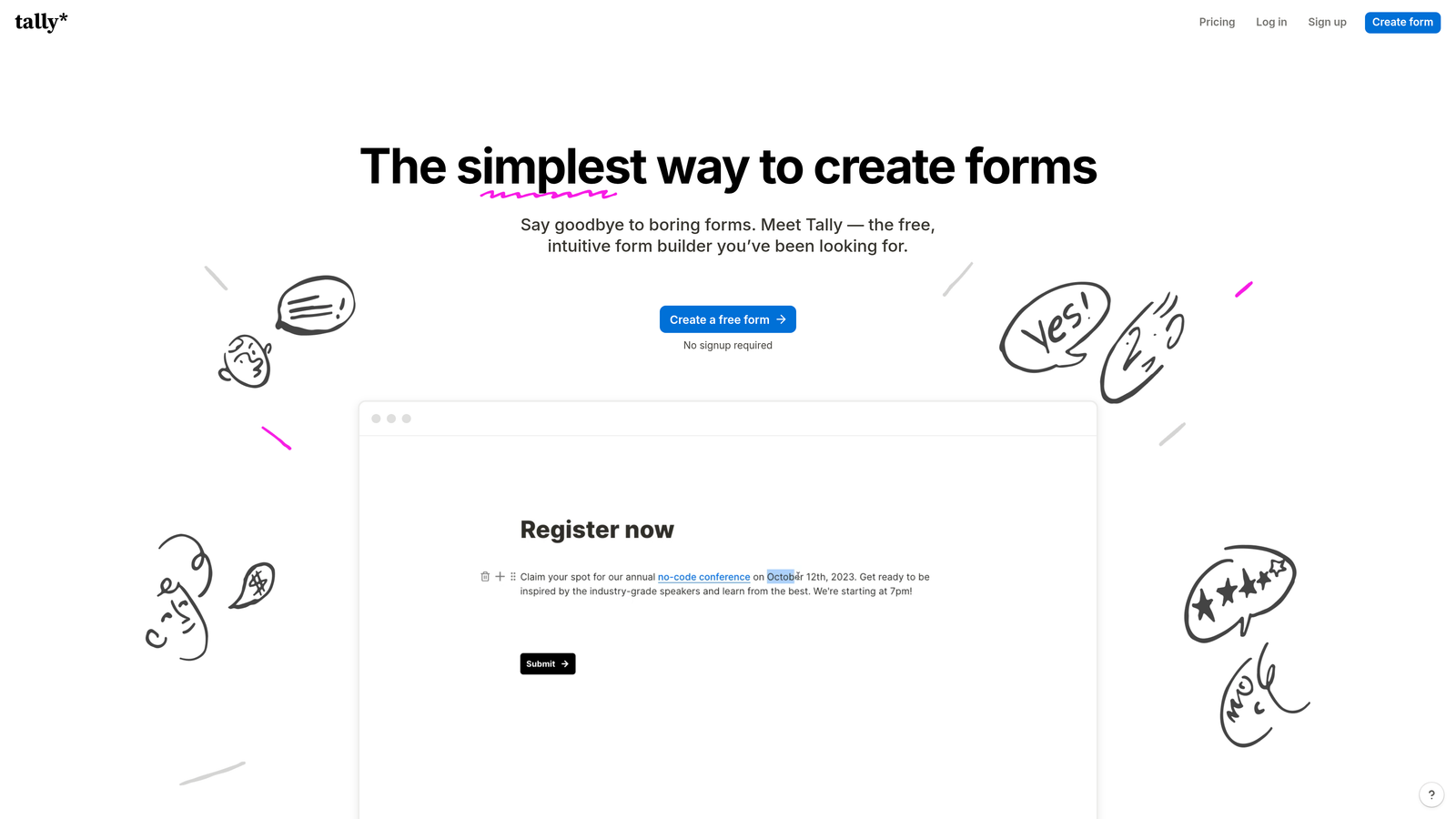
Tally is a Notion-inspired form builder with unlimited responses on paid plans, built for teams that want simplicity and scale without complex pricing structures.
Where This Tool Shines
Tally's appeal is its combination of a genuinely fast editing experience and a pricing model that doesn't penalize you for volume. The block-based editor feels immediately familiar to anyone who uses Notion, which means most team members can build and publish forms without training or a learning curve. For scaling teams that need to spin up forms quickly across multiple projects or campaigns, that accessibility is a real operational advantage.
Unlimited responses on paid plans is a meaningful differentiator for high-volume use cases. Many enterprise teams run into per-submission pricing walls with other platforms as their form programs scale. Tally removes that friction entirely, though it's worth noting that the platform is less mature on deep enterprise compliance features compared to Jotform or Formstack.
Key Features
Notion-Style Block Editor: Intuitive, block-based form building with virtually no learning curve for teams already familiar with modern productivity tools.
Unlimited Responses on Paid Plans: No per-submission pricing penalties, making it well-suited for high-volume form programs.
Conditional Logic and Multi-Page Forms: Core logic features for building dynamic, multi-step form experiences.
Native Integrations: Connects directly with Notion, Google Sheets, Airtable, and Zapier for flexible data routing.
Custom Domains and White-Label Options: Pro plan includes custom domain support and white-labeling for branded form experiences.
Best For
Growing SaaS teams, product teams, and scaling organizations that need a fast, flexible form builder with generous limits and a low operational overhead. Less suited for enterprises with strict compliance requirements in regulated industries.
Pricing
Free plan available with core functionality. Pro plan starts at $29/month with unlimited responses and advanced features.
Which Tool Is the Right Fit for Your Enterprise?
Each platform on this list solves a distinct enterprise problem, so the right choice depends heavily on what your team actually needs from a form solution.
If lead qualification and conversion optimization are your primary drivers, Orbit AI is the standout choice. Its AI-native qualification layer means your forms don't just collect leads — they score and prioritize them in real time, without external CRM logic. That's a meaningful advantage for SaaS and B2B teams where lead quality determines pipeline health.
For enterprises that need end-to-end process automation with document generation and e-signature, Formstack is the most complete workflow platform on the list. Jotform is the strongest all-rounder for regulated industries, with the broadest compliance coverage and integration depth. Typeform wins on form experience quality, making it the natural choice for marketing teams prioritizing engagement and completion rates.
If your team needs content-rich, flexible form pages with built-in payments or scheduling, Paperform is a strong fit. And for scaling teams that want simplicity, fast deployment, and no per-submission pricing friction, Tally delivers excellent value.
For high-growth teams ready to move beyond basic data collection and into intelligent lead qualification, Orbit AI is purpose-built for exactly that challenge. Transform your lead generation with AI-powered forms that qualify prospects automatically while delivering the modern, conversion-optimized experience your team needs. Start building free forms today and see how intelligent form design can elevate your conversion strategy.


