

Not all leads are created equal, and manually sorting through form submissions to figure out who deserves your sales team's attention is a genuine productivity killer. Every minute spent triaging low-intent contacts is a minute not spent closing high-value deals.
AI-powered lead qualification platforms solve this at the source. Instead of collecting raw form data and scoring it later in a CRM, these tools embed qualification logic directly into the form experience, so your pipeline is already filtered by the time a lead hits your inbox. The best platforms in this space combine smart routing, conditional logic, and AI-driven scoring with conversion-optimized form design.
This guide covers the top platforms for AI-powered lead qualification in 2026, evaluated on qualification logic, ease of use, integrations, and overall value for growth-focused teams. Whether you're scaling a SaaS pipeline or trying to stop chasing cold leads, one of these tools is built for you.
1. Orbit AI
Best for: High-growth SaaS and marketing teams that need AI-driven qualification built directly into the form flow.
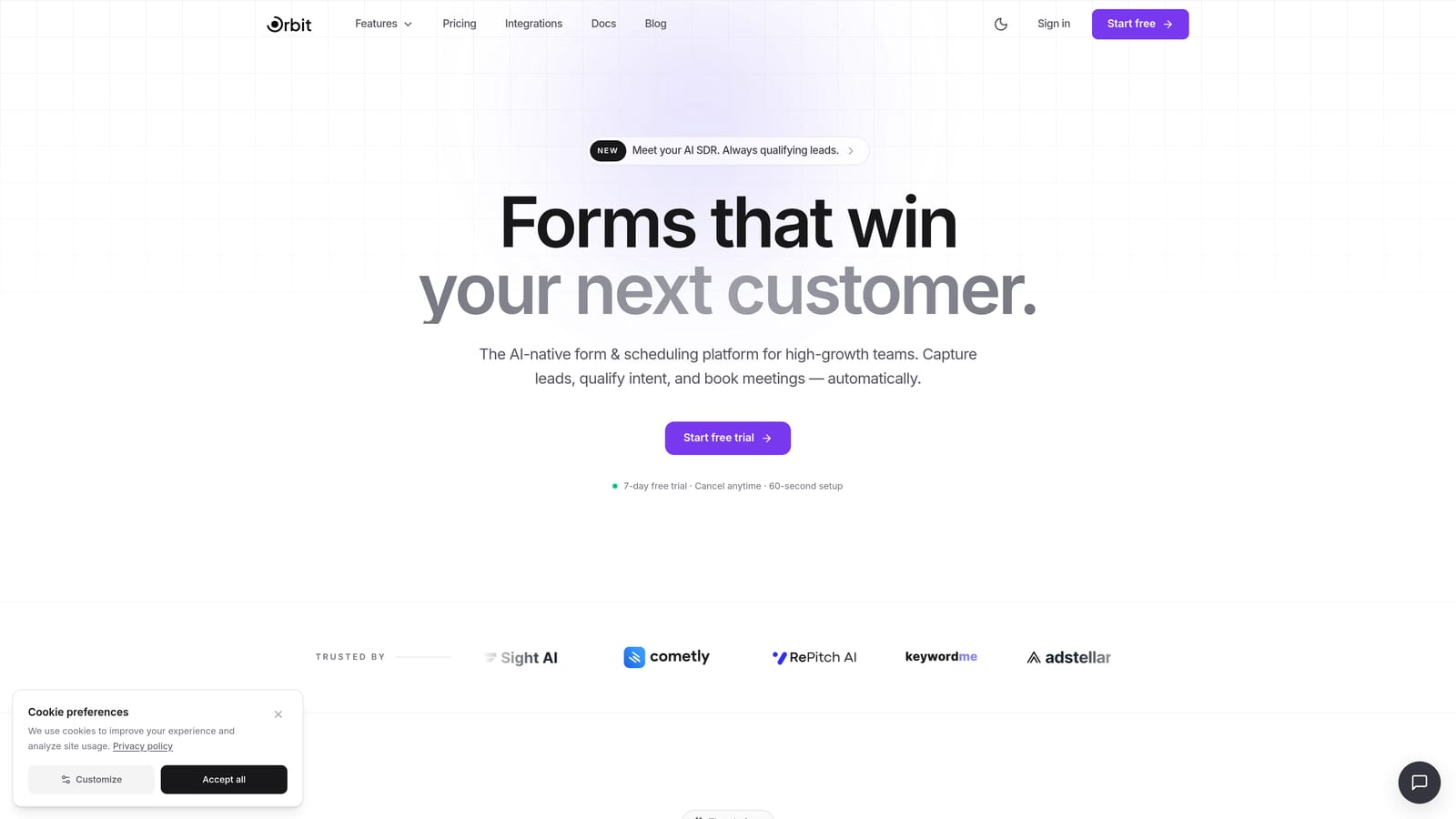
Orbit AI is an AI-powered form builder designed from the ground up for lead qualification, not just lead capture.
Where This Tool Shines
Most form builders treat qualification as an afterthought, something you bolt on through a CRM integration after the submission lands. Orbit AI flips that model. Qualification logic lives inside the form itself, so by the time a prospect hits submit, they've already been scored, segmented, and routed to the right place.
This matters for high-growth teams because speed-to-lead is everything. When a high-intent prospect fills out your form at 9pm, Orbit AI's intelligent routing can trigger the right sales sequence immediately, without waiting for a human to review the submission in the morning.
Key Features
AI-Powered Lead Scoring: Scores leads automatically based on form responses, so your sales team sees a prioritized pipeline from the moment a form is submitted.
Intelligent Lead Routing: Routes qualified leads to the right sales rep or nurture sequence based on scoring rules you define, reducing manual handoffs.
Conversion-Optimized Templates: Beautifully designed form templates built specifically for high-growth demand gen workflows, not generic data collection.
Conditional Logic and Smart Skip Logic: Personalizes the form experience for each respondent, asking relevant questions and skipping irrelevant ones to reduce drop-off.
Demand Gen Workflow Design: The entire platform is architected around the needs of marketing and sales teams focused on pipeline quality, not just submission volume.
Best For
Orbit AI is the strongest fit for SaaS companies, B2B marketing teams, and demand generation specialists who need qualification to happen at the point of capture. If your team is tired of manually sorting leads or relying on CRM scoring that happens too late in the process, this is the platform built specifically for that problem.
Pricing
Visit orbitforms.ai for current pricing plans. The platform is designed to scale with high-growth teams, so options exist across different team sizes and usage levels.
2. Typeform
Best for: Teams prioritizing a frictionless, conversational lead capture experience with strong CRM integrations.
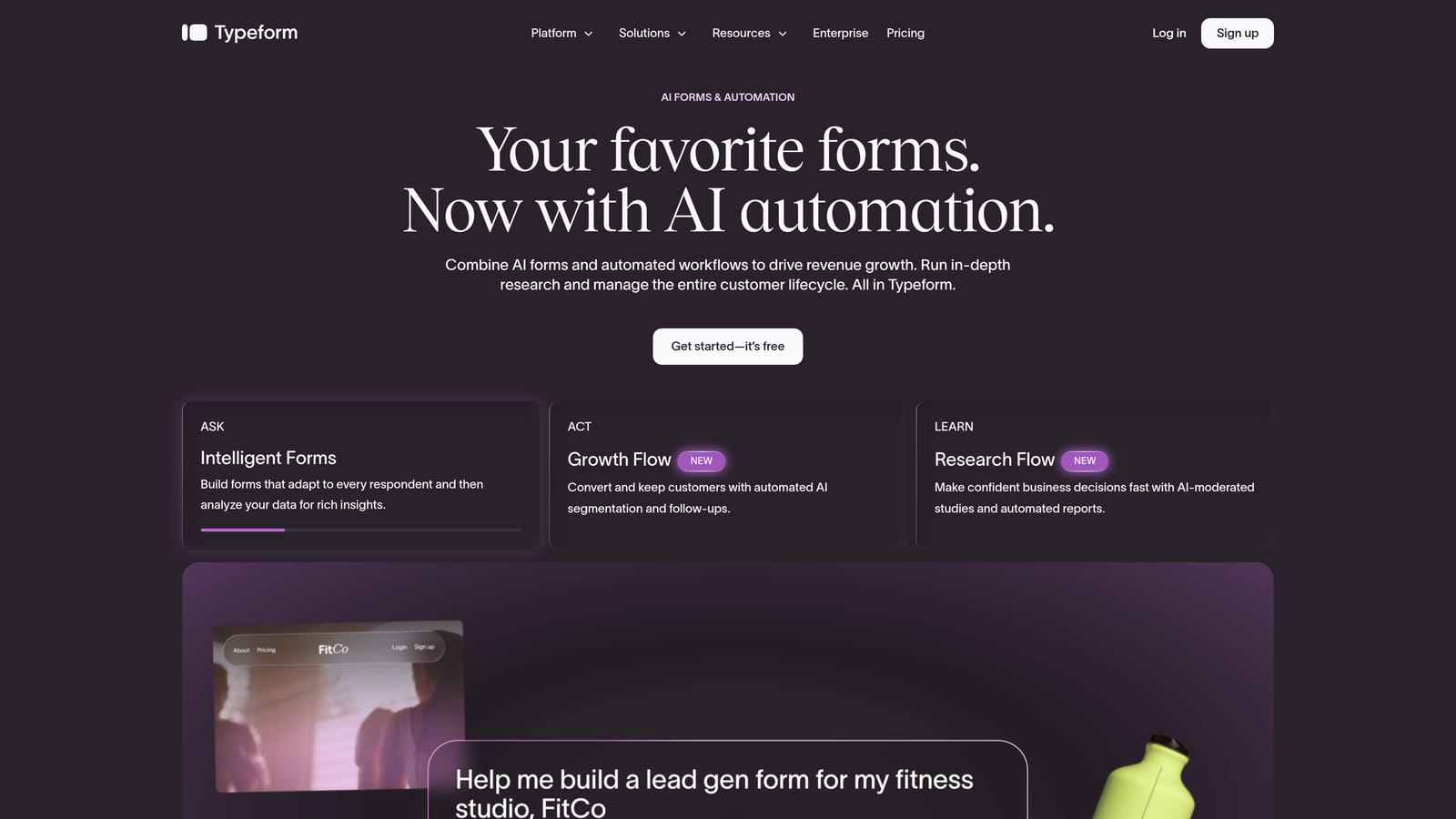
Typeform is a well-established conversational form builder known for its one-question-at-a-time interface that reduces cognitive load and improves completion rates.
Where This Tool Shines
Typeform's core strength is the experience it creates for the person filling out the form. By presenting one question at a time, it feels less like a form and more like a conversation, which typically reduces abandonment on longer qualification surveys. For teams running top-of-funnel campaigns where first impressions matter, this UX advantage is real.
The trade-off is that Typeform isn't purpose-built for lead qualification. Its scoring and routing capabilities rely on third-party integrations rather than native AI logic, which adds complexity for teams that need sophisticated qualification workflows out of the box.
Key Features
Conversational One-Question UX: Presents questions sequentially to reduce friction and keep respondents engaged through longer forms.
Logic Jumps and Conditional Branching: Routes respondents through different question paths based on their answers, enabling basic qualification filtering.
Native CRM Integrations: Connects directly with HubSpot, Salesforce, and Zapier for syncing lead data into your existing tech stack.
Hidden Fields: Pre-populates lead data from URL parameters, useful for enriching submissions with campaign or source information.
Brand Customization: Strong visual customization options for aligning forms with your brand identity and campaign aesthetics.
Best For
Typeform works well for marketing teams that prioritize form completion rates and brand experience, and are comfortable using CRM-side tools or Zapier automations to handle the actual lead scoring. Less ideal for teams that need native AI qualification without additional integration work.
Pricing
A free plan is available. Paid plans start at approximately $25/month, though advanced logic features are gated behind higher tiers. Verify current pricing at typeform.com.
3. Jotform
Best for: Teams managing high submission volumes who need broad integrations and workflow automation alongside lead capture.
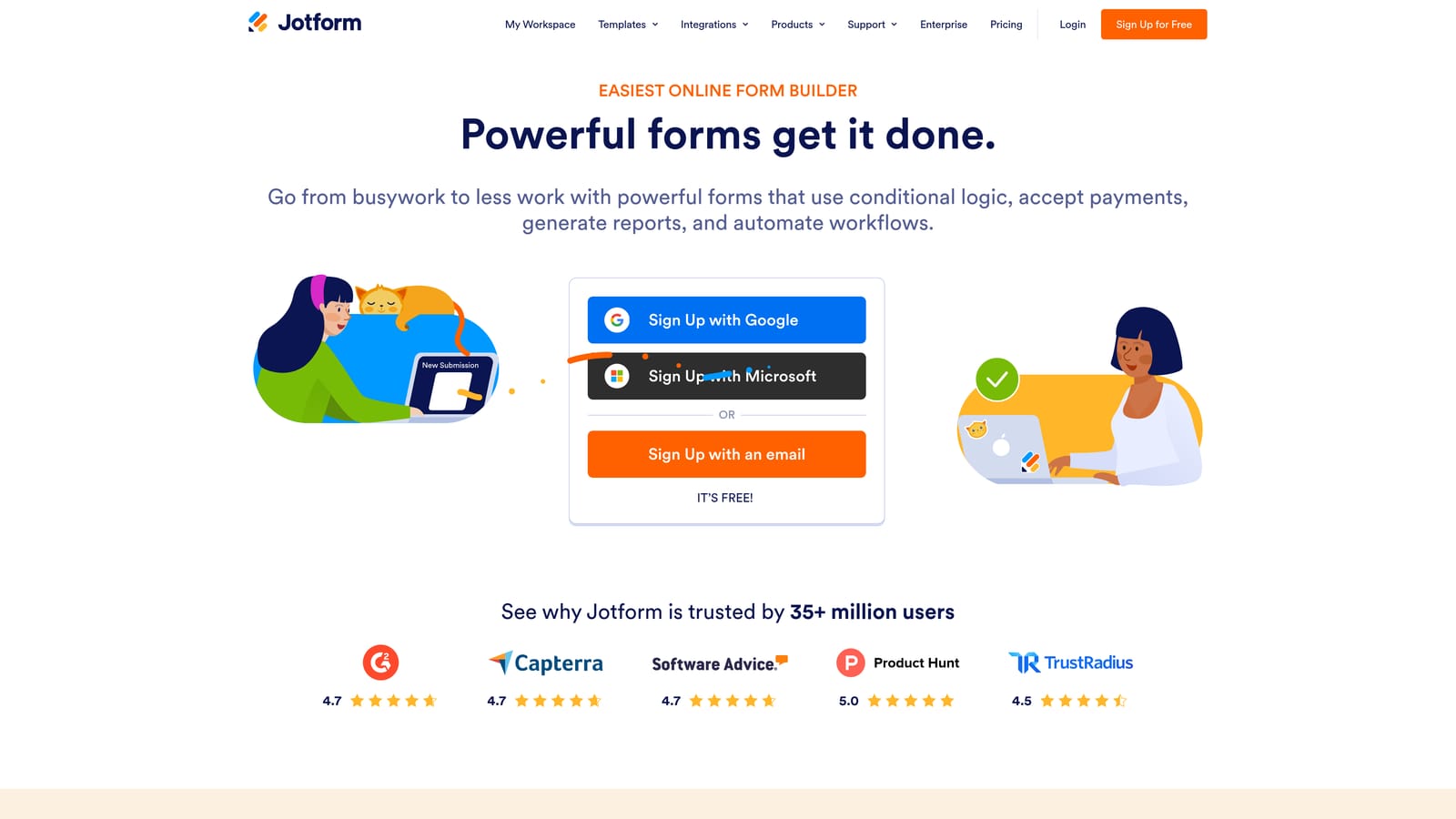
Jotform is one of the most feature-rich form platforms available, with an enormous template library and extensive workflow automation capabilities.
Where This Tool Shines
Jotform's sheer breadth is its defining characteristic. With over 10,000 templates and integrations spanning hundreds of tools, it's the platform you reach for when you need to connect form data to almost anything in your tech stack. For organizations running multiple lead gen programs across different teams and regions, that flexibility has real operational value.
Where it's less specialized is in pure AI-driven lead qualification. Jotform offers conditional logic and some basic scoring capabilities, but the platform's design philosophy is broader operational efficiency rather than focused qualification intelligence. Teams with sophisticated scoring needs often find themselves relying on downstream CRM tools to do the heavy lifting.
Key Features
10,000+ Form Templates: Includes a wide range of lead generation focused designs, so you're rarely starting from scratch.
Conditional Logic and Branching: Allows form paths to adapt based on respondent answers, enabling basic qualification filtering within the form.
Workflow Automation and Approval Routing: Moves submissions through multi-step internal processes, useful for teams with complex lead handling requirements.
CRM and Marketing Tool Integrations: Connects with a wide range of CRMs, email platforms, and marketing tools for syncing lead data downstream.
Multi-Page Forms and Payment Collection: Supports complex, multi-step form experiences and can handle payment processing alongside lead capture.
Best For
Jotform suits teams that need a versatile, high-volume form solution with strong operational automation. It's a particularly good fit for organizations that already have robust CRM-side qualification logic and need a reliable front-end capture tool with broad integration support.
Pricing
A free plan is available. Paid plans start at approximately $34/month and scale with submission volume. Verify current pricing at jotform.com.
4. Paperform
Best for: Marketing teams building campaign-specific lead capture pages without developer support.
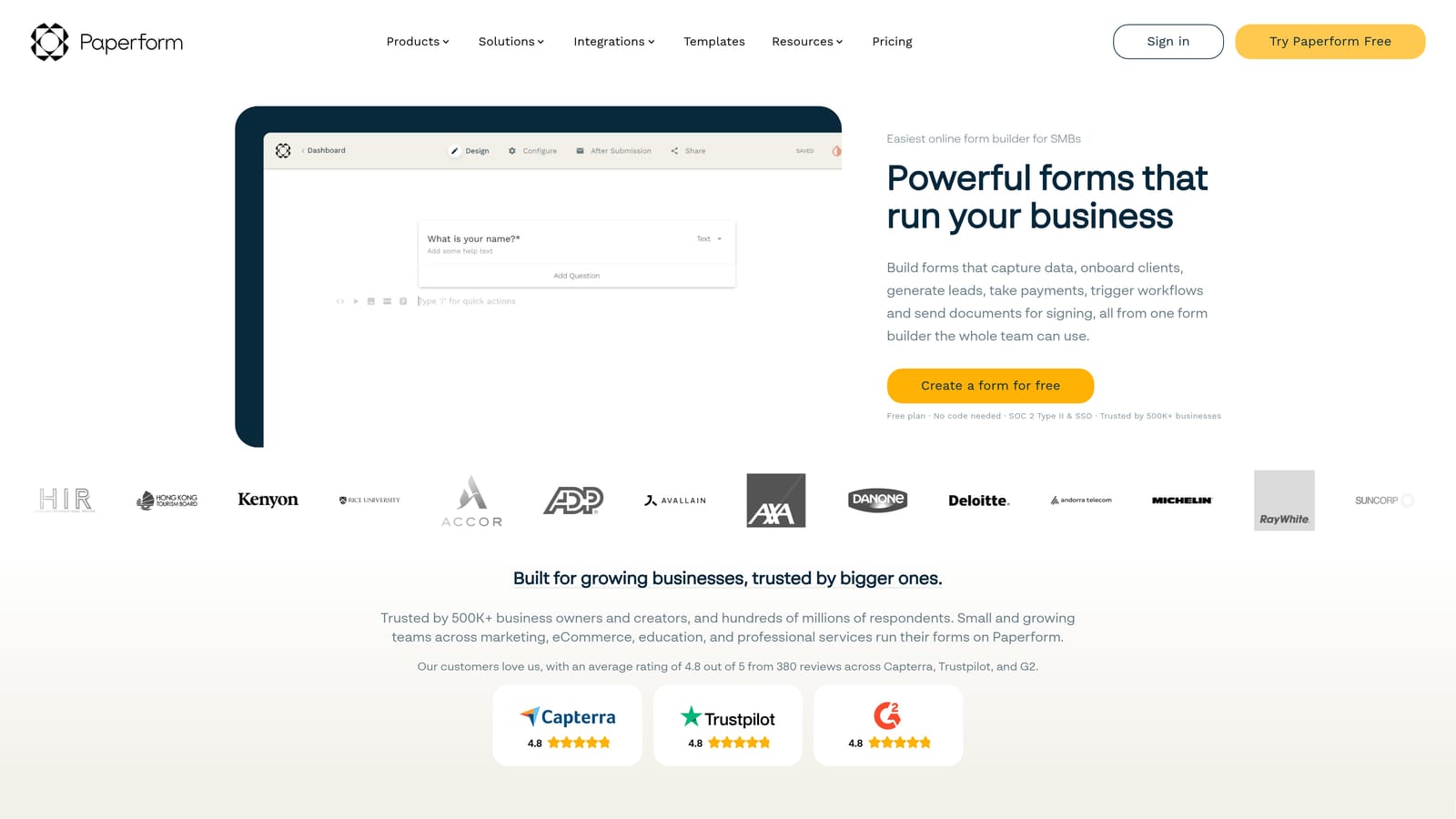
Paperform blends form building with landing page-style design flexibility, making it a strong choice for campaign-driven lead capture.
Where This Tool Shines
Paperform's distinguishing feature is how it handles design. Unlike traditional form builders that output a structured grid of fields, Paperform lets you weave questions into rich, editorial-style pages with text, images, and video alongside the form elements. The result feels more like a dedicated landing page than a data collection form, which can work well for campaign-specific contexts where brand presentation matters.
On the qualification side, Paperform offers conditional logic and calculation fields, but the logic is rule-based rather than AI-driven. Teams that need sophisticated automated scoring will still need to handle that downstream. Where Paperform earns its place is in making the capture experience itself more compelling and brand-consistent.
Key Features
Landing Page-Style Form Design: Combines text, images, and video with form fields for a richer, more engaging lead capture experience.
Conditional Logic and Calculation Fields: Supports branching paths and calculated outputs, enabling basic qualification filtering and dynamic pricing displays.
Product and Service Selection: Allows respondents to browse and select offerings within the form itself, useful for solution-specific lead capture.
Zapier and Native Integrations: Connects to common marketing and CRM tools for routing lead data into existing workflows.
Custom Domain Support: Lets you host forms on your own domain for a fully branded experience without exposing a third-party URL.
Best For
Paperform is well-suited for marketing teams running campaign-specific lead capture where visual presentation is a priority. It's a particularly good fit for teams without developer resources who need to build polished, standalone lead pages quickly.
Pricing
Plans start at approximately $24/month. Verify current pricing at paperform.co.
5. Formstack
Best for: Enterprise and regulated-industry teams that need compliant lead data collection with workflow automation.
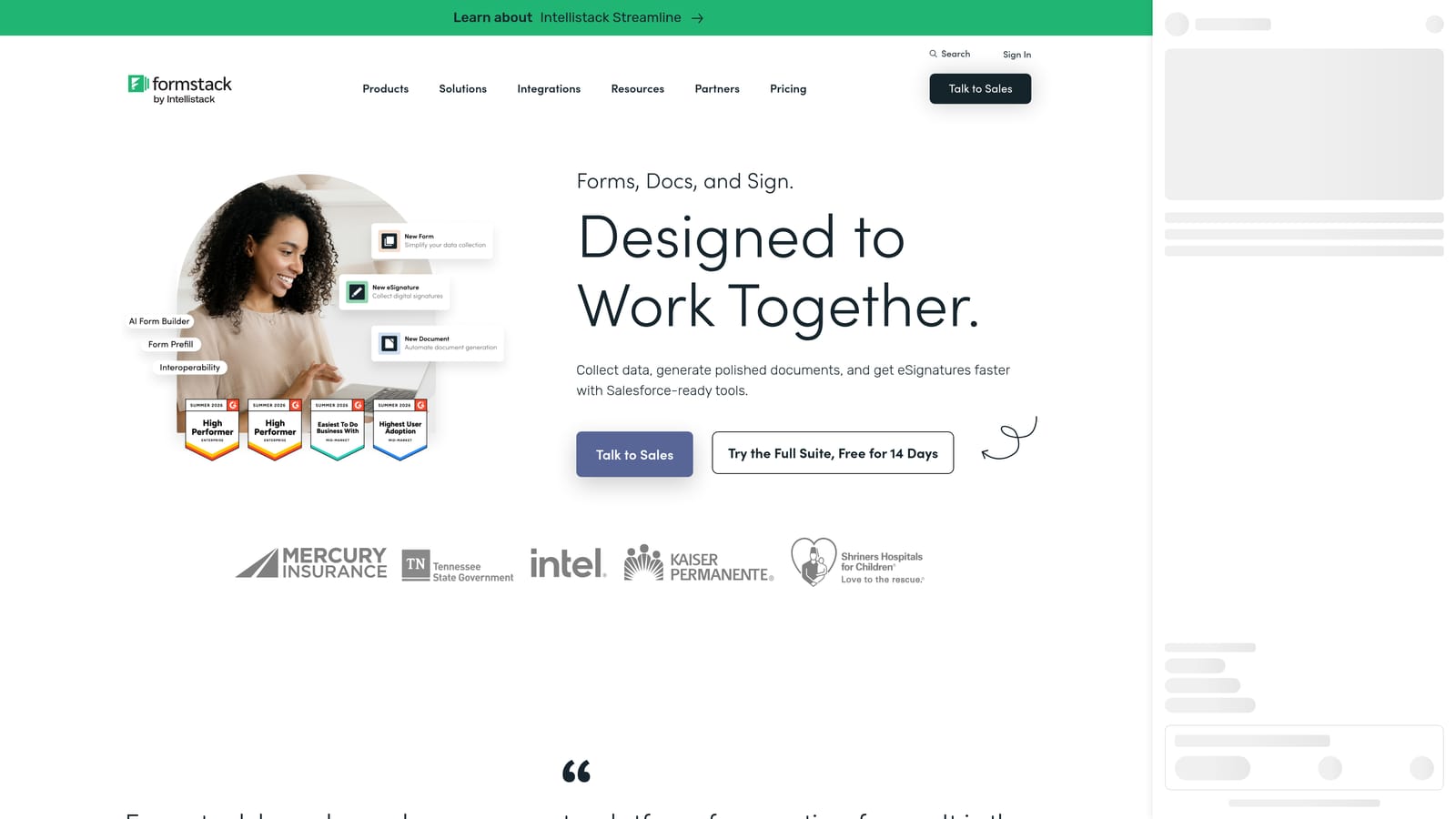
Formstack is an enterprise-grade form and workflow platform built with compliance and operational control as core priorities.
Where This Tool Shines
For teams operating in regulated industries such as healthcare, financial services, or legal, compliance isn't a nice-to-have. It's a hard requirement. Formstack's HIPAA, GDPR, and SOC 2 credentials make it one of the few form platforms that enterprise procurement and legal teams will actually approve without a lengthy security review.
Beyond compliance, Formstack's document generation capabilities are genuinely useful for teams that need to produce contracts, proposals, or data summaries directly from form submissions. The trade-off is that the platform's focus on operational efficiency and compliance means it's not optimized for the kind of conversion-first, AI-driven qualification that growth-focused teams typically need.
Key Features
HIPAA, GDPR, and SOC 2 Compliance: Meets the security and privacy requirements of regulated industries, making it enterprise procurement-ready.
Conditional Logic and Data Routing: Routes form data to different destinations or triggers different workflows based on submission content.
Document Generation: Creates formatted documents directly from form submissions, reducing manual administrative work.
Multi-Step Approval Workflows: Moves submissions through internal review and approval processes with configurable routing rules.
Enterprise SSO and Access Controls: Supports single sign-on and granular user permissions for large team environments.
Best For
Formstack is the right choice for mid-market and enterprise organizations in regulated industries where data security and compliance are non-negotiable. Less suited for early-stage or growth-stage teams whose primary need is conversion optimization and AI-driven lead scoring.
Pricing
Plans start at approximately $83/month, with enterprise pricing available for larger deployments. Verify current pricing at formstack.com.
6. Tally
Best for: Early-stage startups and solo operators testing lead generation concepts without upfront cost.
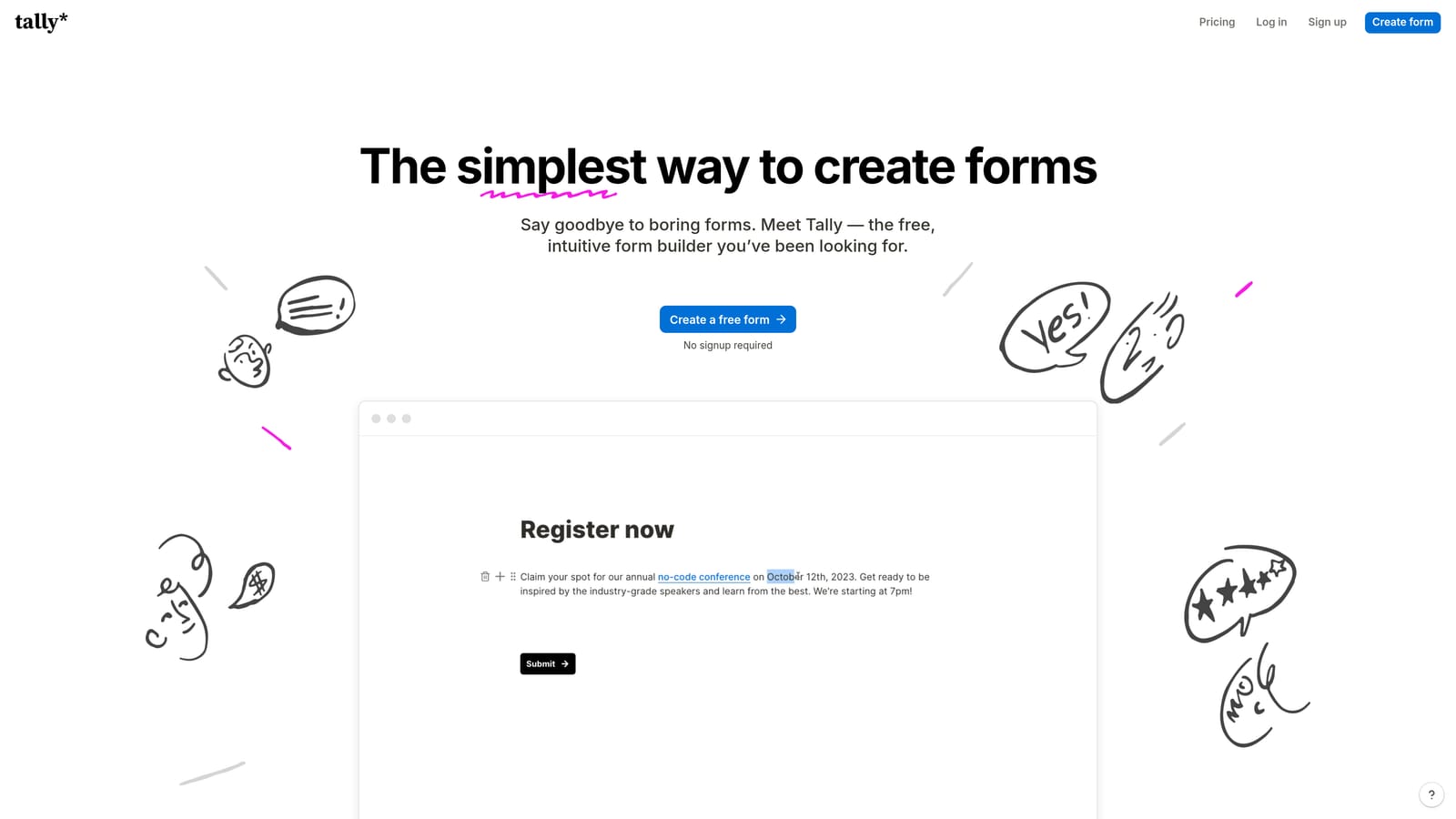
Tally is a free-first form builder with a clean, block-based editor and an unusually generous free tier that includes unlimited forms and submissions.
Where This Tool Shines
Tally's appeal is straightforward: it removes the cost barrier entirely for teams at the earliest stages of building a lead generation motion. The Notion-inspired editor has a low learning curve, and the ability to create unlimited forms with unlimited submissions on the free plan makes it easy to experiment with different lead capture approaches without committing budget.
The honest limitation is that Tally isn't built for sophisticated qualification. There's no native AI scoring, and the integration options, while functional through Zapier, are more limited than what you'd find on enterprise-tier platforms. For teams that have validated their lead gen approach and are ready to scale with intelligent qualification, Tally will likely become a constraint before long.
Key Features
Unlimited Forms and Submissions on Free Plan: No submission caps or form limits on the free tier, making it genuinely useful for early-stage testing.
Clean Block-Based Editor: Notion-style editing interface that most users can pick up without training or documentation.
Conditional Logic: Supports basic form branching so you can create simple qualification paths based on respondent answers.
Embeddable Forms: Offers popup, inline, and full-page embedding options for flexible placement across your site.
Zapier Integration: Connects to other tools in your stack for routing lead data downstream, though native integrations are more limited than larger platforms.
Best For
Tally is ideal for startups, solo founders, and small teams that need to get a lead capture form live quickly and cheaply. Once your team is ready to layer in AI-driven qualification and more sophisticated routing, you'll likely want to graduate to a platform purpose-built for that use case.
Pricing
Free plan includes unlimited forms and submissions. The Pro plan is approximately $29/month. Verify current pricing at tally.so.
Which Platform Is Right for Your Team?
The right tool depends on where your team is in its growth journey and what you actually need qualification to do for you.
If AI-powered qualification at the point of capture is your primary requirement, Orbit AI is the only platform on this list built specifically for that problem. Qualification logic lives inside the form flow itself, not in a CRM integration you configure after the fact. For high-growth SaaS and B2B marketing teams, that distinction matters enormously when speed-to-lead and pipeline quality are the metrics that drive revenue.
For teams where conversational form UX is the top priority, Typeform delivers a polished experience that keeps completion rates high, though you'll need to handle scoring downstream. If you're managing high submission volumes with complex internal workflows, Jotform's breadth and automation capabilities make it a strong operational choice. For campaign-specific lead capture pages with a strong visual identity, Paperform's landing page-style design flexibility is hard to beat.
Enterprise teams in regulated industries should look closely at Formstack, where compliance credentials and document generation capabilities justify the higher price point. And if you're at the earliest stage of testing a lead gen concept with no budget to commit, Tally's free tier gives you a real starting point with no strings attached.
The pattern is clear: as your qualification requirements grow more sophisticated, you need a platform that treats scoring and routing as first-class features rather than add-ons. Transform your lead generation with AI-powered forms that qualify prospects automatically while delivering the modern, conversion-optimized experience your high-growth team needs. Start building free forms today and see how intelligent form design can elevate your conversion strategy.


