

When your lead data lives in seven different places—form submissions in one tool, email engagement in another, call notes in a spreadsheet, and CRM records that never quite sync—you're not just disorganized. You're losing deals. Sales reps waste hours hunting for context before calls. Marketing can't accurately attribute conversions. And hot leads slip through cracks because nobody saw the full picture.
The solution isn't another data dump into your CRM. It's building a connected system where lead intelligence flows automatically between tools, giving every team member instant access to the complete story. Here are nine tools that solve the scattered data problem in different ways—from unified form platforms to data orchestration engines.
1. Orbit AI
Best for: High-growth teams preventing data scatter at the source with intelligent lead capture
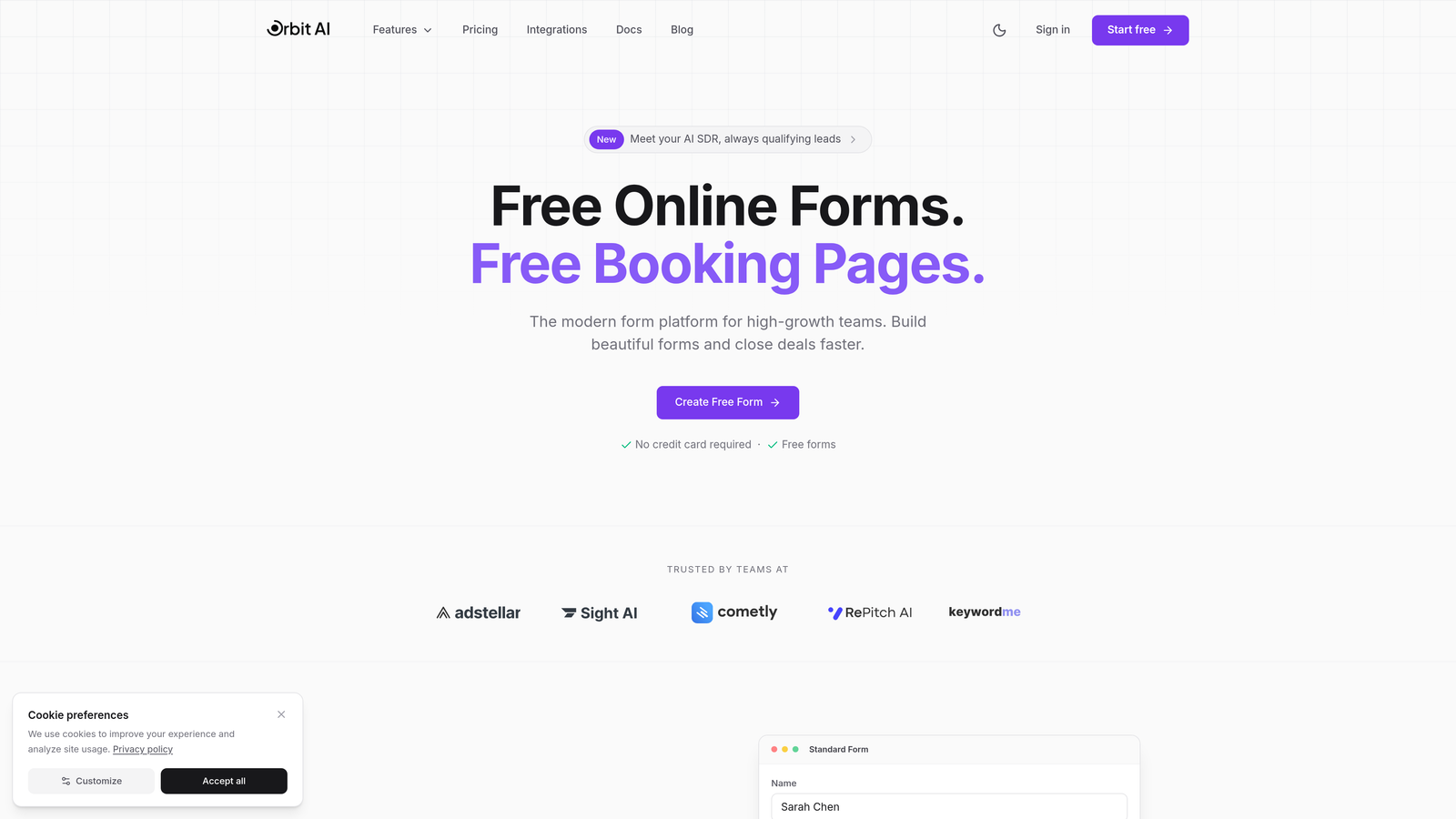
Orbit AI is an AI-powered form builder that captures, enriches, and routes leads automatically before data scattering even begins.
Where This Tool Shines
Most scattered data problems start at the capture point. When leads fill out forms that dump raw data into disconnected systems, you're building fragmentation into your process from day one. Orbit AI solves this upstream by qualifying leads during submission and routing enriched data exactly where it needs to go.
The platform's AI analyzes responses in real-time, scores lead quality, and triggers different workflows based on fit. A high-intent enterprise lead gets routed to sales with Slack notifications and CRM enrichment. A nurture-stage prospect flows into marketing automation with proper segmentation tags already applied.
Key Features
AI-Powered Lead Qualification: Intelligent scoring and routing during form submission prevents manual triage and ensures hot leads reach sales immediately.
Native Integrations: Direct connections to CRMs, Slack, and data tools mean enriched lead information flows automatically without middleware complexity.
Workflow Automation: Build conditional logic that routes different lead types to appropriate teams with context-rich notifications.
Built-in Analytics: Track conversion rates and lead quality metrics without stitching together data from multiple sources.
Modern Form Design: Conversion-optimized forms that match your brand while capturing the data you actually need.
Best For
High-growth teams tired of leads entering their system as scattered fragments across disconnected tools. Particularly valuable if your current forms dump raw data into one place while behavioral signals, enrichment data, and qualification scores live elsewhere. Companies serious about preventing data fragmentation rather than constantly cleaning it up after the fact.
Pricing
Free tier available for teams getting started. Paid plans begin at $29/month with advanced features for lead qualification, routing automation, and deeper integrations.
2. Clay
Best for: Deep lead enrichment and research automation across 75+ data sources
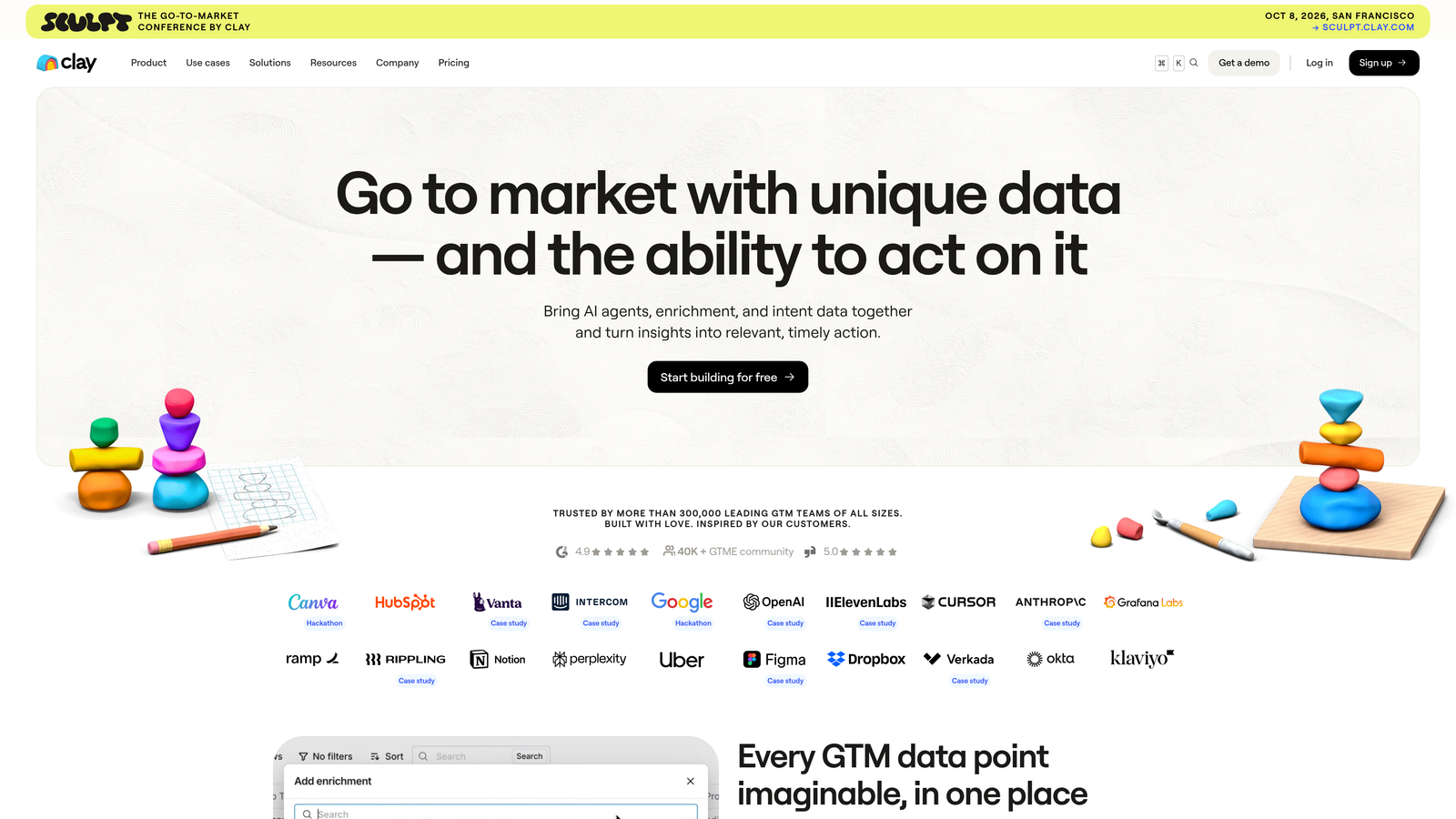
Clay is a data enrichment and prospecting platform that pulls lead information from dozens of sources into unified, actionable profiles.
Where This Tool Shines
Clay excels at the enrichment layer of scattered data problems. You might know a lead's email and company name, but job title lives in one database, technographic data in another, and intent signals in a third. Clay's waterfall enrichment tries multiple data providers sequentially until it finds what you need.
The platform's AI research agent can gather custom data points that traditional enrichment tools miss. Need to know if a prospect's company recently raised funding? The AI searches news sources, press releases, and databases to find that signal automatically.
Key Features
Waterfall Enrichment: Automatically tries multiple data providers in sequence to maximize coverage while minimizing costs.
AI Research Agent: Custom data gathering for unique business needs that standard enrichment APIs don't cover.
CRM Sync: Push enriched lead data back to Salesforce, HubSpot, or other CRMs to eliminate manual data entry.
Automated Outreach: Trigger personalized sequences based on enriched data points for higher response rates.
Spreadsheet Interface: Familiar grid layout makes it easy for non-technical users to build complex enrichment workflows.
Best For
Sales and marketing teams doing high-volume prospecting who need complete lead profiles without manually checking multiple data sources. Companies with sophisticated lead scoring models that require dozens of data points per prospect. Teams willing to invest time building enrichment workflows that run automatically once configured.
Pricing
Free tier with limited enrichment credits to test the platform. Paid plans start at $149/month with higher credit limits and advanced features.
3. Segment
Best for: Enterprise teams building customer data infrastructure from the ground up
Segment is a customer data platform that collects, unifies, and routes data from every touchpoint to your entire tool stack.
Where This Tool Shines
Segment takes an infrastructure-first approach to scattered data. Instead of connecting each source to each destination individually, you instrument Segment once and route data to hundreds of tools simultaneously. When a lead converts on your website, that event flows to your analytics tool, CRM, email platform, and data warehouse in real-time.
The platform's identity resolution connects anonymous website visitors to known leads across devices and sessions. That prospect who browsed your pricing page on mobile yesterday and filled out a form on desktop today becomes one unified profile, not two disconnected data points.
Key Features
Single API Collection: Instrument tracking once and send data to 400+ destinations without writing custom integrations for each tool.
Real-Time Routing: Events flow to destinations immediately, ensuring every tool has current data for time-sensitive workflows.
Identity Resolution: Merge anonymous and known user activity across devices into unified customer profiles.
Privacy Controls: Manage consent, data governance, and compliance requirements from a central interface.
Schema Validation: Enforce data quality standards before events reach downstream tools to prevent garbage data propagation.
Best For
Mid-market and enterprise companies building serious customer data infrastructure who need bulletproof reliability and real-time capabilities. Teams with engineering resources to implement tracking properly and maintain data governance. Organizations where data quality and compliance are non-negotiable requirements.
Pricing
Free tier available for early-stage startups with limited event volume. Team plan starts at $120/month, with enterprise pricing based on scale and feature requirements.
4. HubSpot Operations Hub
Best for: HubSpot customers needing data sync and automation across their tech stack
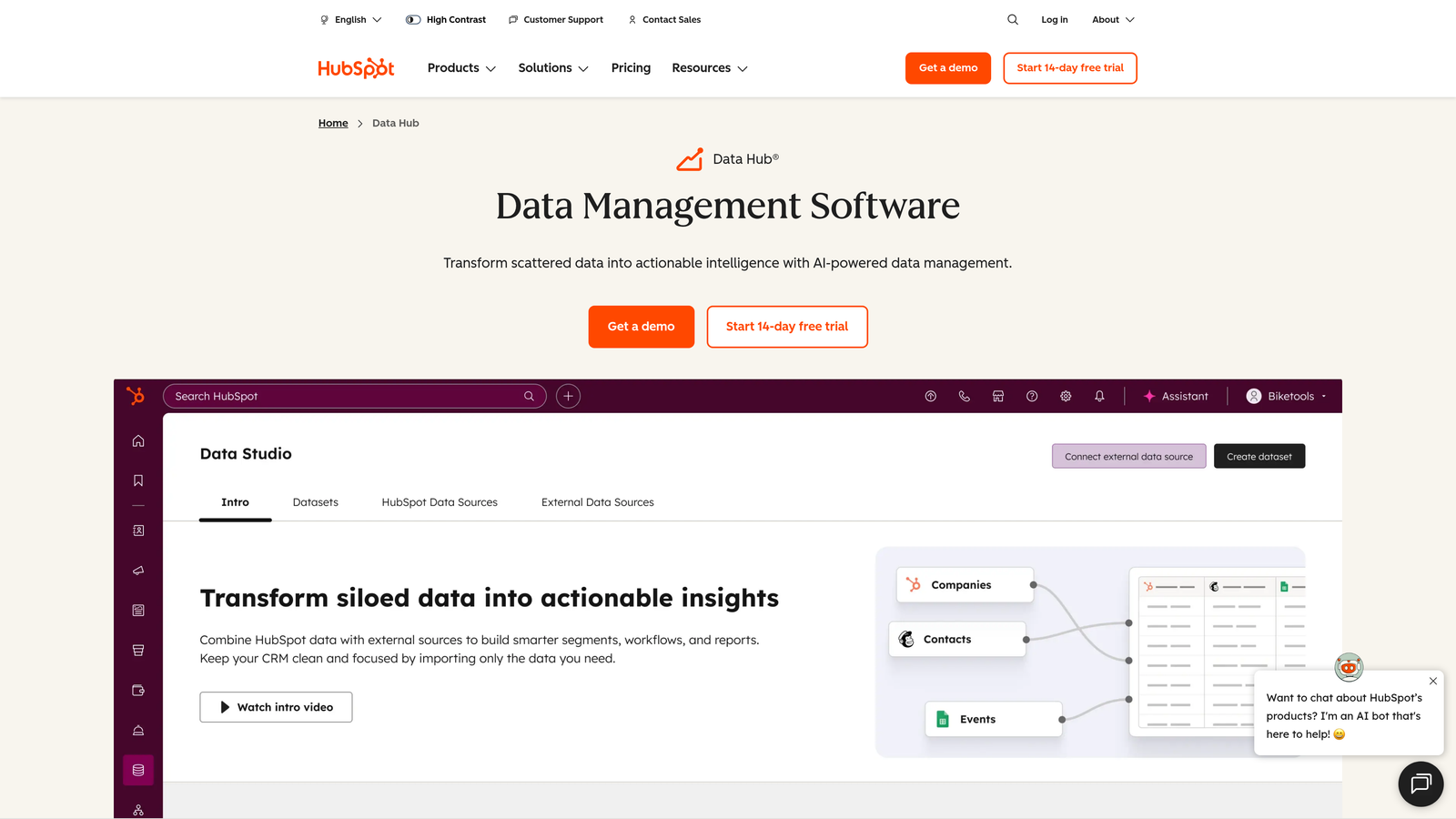
HubSpot Operations Hub is a data sync and automation layer that connects, cleans, and automates data across tools for HubSpot users.
Where This Tool Shines
If you're already in the HubSpot ecosystem, Operations Hub provides the connective tissue between HubSpot and everything else. Bi-directional sync means data flows both ways—leads from external forms appear in HubSpot CRM, while HubSpot engagement data enriches records in your data warehouse or analytics tools.
The platform's data quality automation handles the unglamorous but critical work of deduplication, field formatting, and standardization. When leads enter from multiple sources with inconsistent company name formats, automated rules clean and merge records before sales sees them.
Key Features
Bi-Directional Sync: Connect 100+ third-party apps with two-way data flow to keep all systems current.
Data Quality Automation: Automated deduplication, formatting rules, and field standardization prevent messy data from accumulating.
Programmable Automation: Write custom JavaScript or Python code for complex workflows that visual builders can't handle.
Datasets: Build custom reports combining data from multiple HubSpot objects for unified analytics.
Field Mapping: Visual interface for mapping fields between HubSpot and external tools without writing code.
Best For
Companies already using HubSpot CRM or Marketing Hub who need to connect it with the rest of their tech stack. Teams that want pre-built integrations with common business tools rather than building custom connections. Organizations where data quality issues like duplicates and formatting inconsistencies create ongoing problems.
Pricing
Free tools available with limited functionality. Starter plan begins at $20/month per seat, with Professional and Enterprise tiers for advanced features and higher sync volumes.
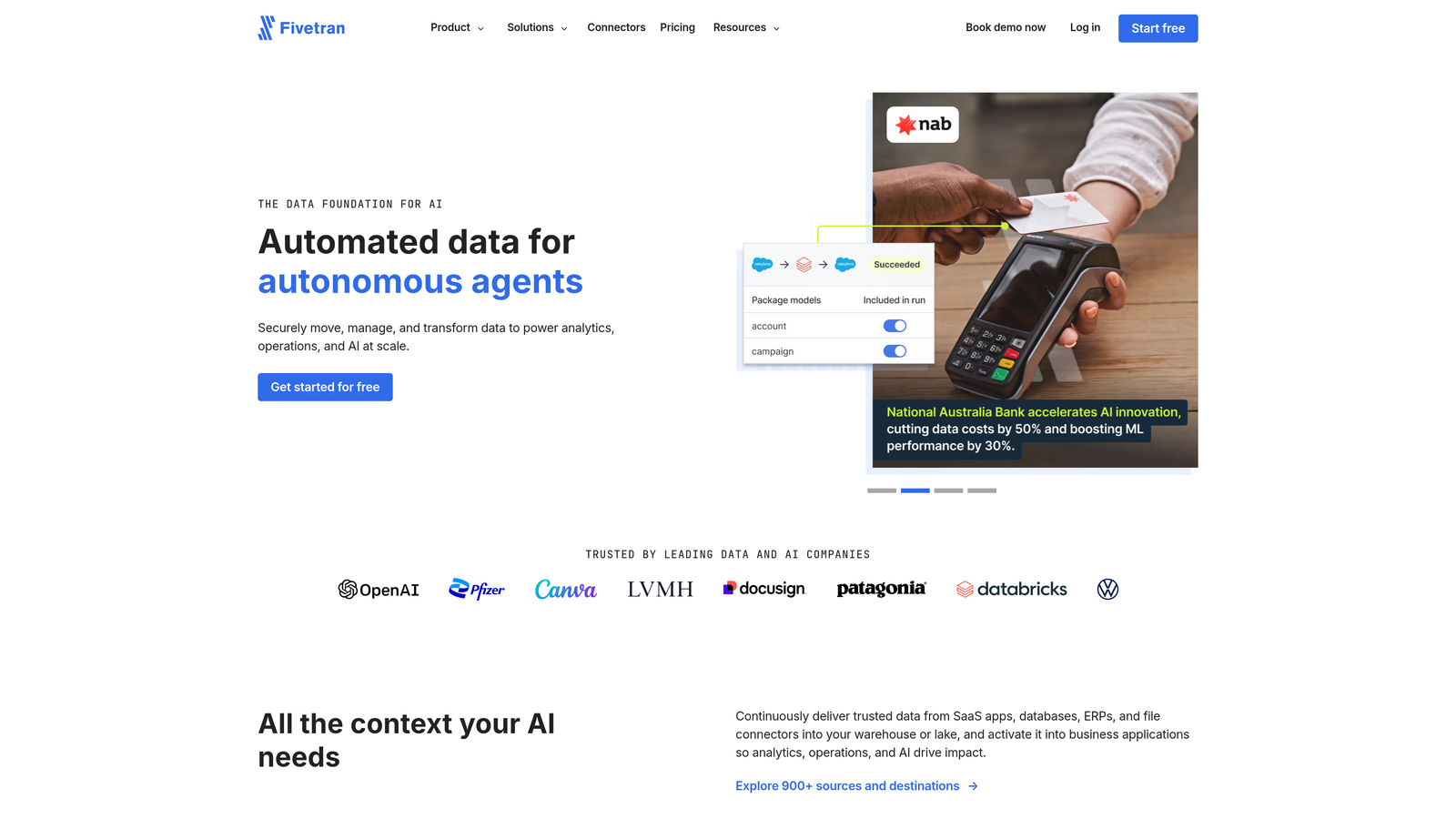
5. Fivetran
Best for: Automated data pipelines centralizing information from 500+ sources into your warehouse
Fivetran is an automated data pipeline platform that moves data from hundreds of sources into your data warehouse with zero maintenance.
Where This Tool Shines
Fivetran treats your data warehouse as the single source of truth and builds automated pipelines to get everything there. Instead of syncing data between operational tools directly, you centralize it in Snowflake, BigQuery, or Redshift where analytics teams can work with complete datasets.
The platform handles schema changes automatically. When your CRM adds a new field or an API endpoint changes structure, Fivetran detects it and updates your warehouse schema without breaking pipelines or requiring manual intervention.
Key Features
Pre-Built Connectors: 500+ data source connectors maintained by Fivetran engineers, not your team.
Automatic Schema Migration: Detects and handles source schema changes without breaking pipelines or losing data.
Incremental Updates: Syncs only changed data for efficient processing and lower warehouse costs.
dbt Integration: Native support for data transformation workflows using dbt models.
Monitoring Alerts: Proactive notifications when pipelines fail or data quality issues emerge.
Best For
Data-mature companies with dedicated analytics teams and a data warehouse already in place. Organizations where analysts and data scientists need reliable access to complete datasets from across the business. Teams tired of maintaining brittle custom ETL scripts that break whenever source systems change.
Pricing
Free tier available for limited data volumes. Usage-based pricing starts at $1 per credit with volume discounts for larger deployments.
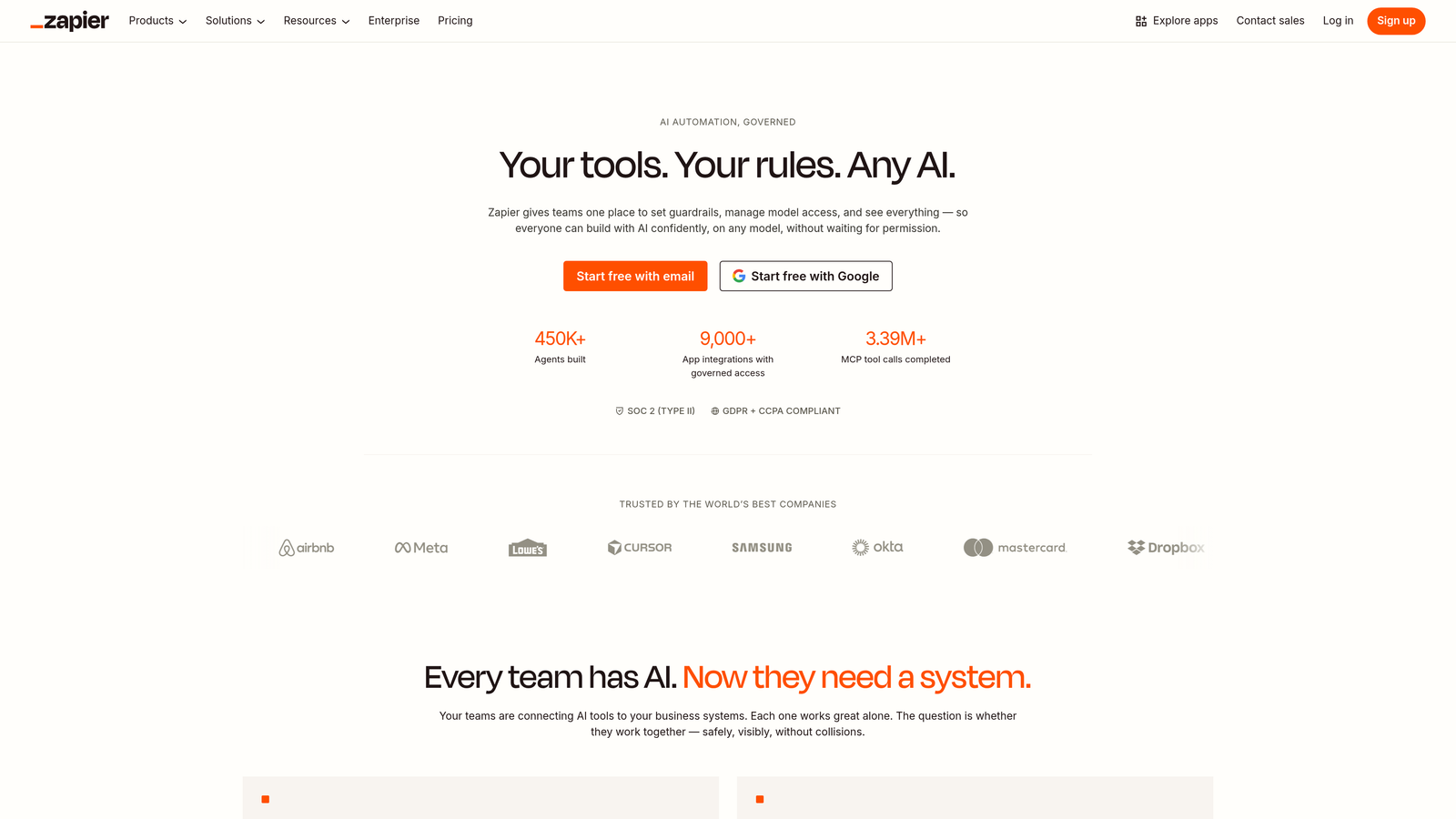
6. Zapier
Best for: Quick no-code automation wins connecting existing tools without engineering resources
Zapier is a no-code automation platform connecting 6,000+ apps with trigger-based workflows for rapid data routing.
Where This Tool Shines
Zapier excels at solving scattered data problems quickly without technical resources. When your form tool doesn't talk to your CRM, or email engagement data needs to flow into Slack, you can build a Zap in minutes rather than waiting weeks for engineering to build a custom integration.
The platform's accessibility means non-technical team members can solve their own data routing problems. Marketing can build workflows connecting ad platforms to spreadsheets. Sales can automate lead handoffs between tools. Customer success can route support tickets based on enrichment data.
Key Features
6,000+ App Integrations: Pre-built connections to virtually every business tool you're already using.
Multi-Step Workflows: Chain multiple actions together with conditional logic for sophisticated automations.
Filters and Formatters: Transform data on the fly to match destination tool requirements without custom code.
Tables: Simple database functionality for storing and retrieving data within Zapier workflows.
Paths: Conditional branching that routes data differently based on lead attributes or trigger conditions.
Best For
Teams that need quick wins solving data routing problems without waiting for engineering resources. Non-technical users comfortable with visual workflow builders. Companies with straightforward integration needs that don't require complex transformation logic or high-volume processing.
Pricing
Free tier includes 100 tasks per month for basic automations. Starter plan begins at $29.99/month with higher task limits and premium app access.
7. Census
Best for: Reverse ETL syncing warehouse data back to operational tools and ad platforms
Census is a reverse ETL platform that syncs unified data from your warehouse back to CRMs, ad platforms, and operational tools.
Where This Tool Shines
Census solves the "last mile" problem for warehouse-first data strategies. You've centralized all your lead data in Snowflake or BigQuery, but sales reps work in Salesforce and marketers build audiences in Facebook Ads Manager. Census syncs enriched, unified data from your warehouse back to the tools where teams actually work.
The platform's no-code audience builder lets marketers create sophisticated segments using warehouse data without writing SQL. Define a high-intent lead segment based on product usage, firmographic data, and engagement signals, then sync it directly to ad platforms for targeted campaigns.
Key Features
Reverse ETL: Sync data from warehouse to 200+ operational tools where business users need it.
No-Code Audience Builder: Visual interface for marketers to create complex segments without SQL knowledge.
Real-Time and Scheduled Syncs: Choose between immediate updates or batch processing based on use case requirements.
Entity Resolution: Match warehouse records to destination tool identities for accurate data syncing.
Sync Observability: Detailed logs and monitoring for troubleshooting sync issues and ensuring data quality.
Best For
Companies with warehouse-first data strategies who need to operationalize that data in CRMs and marketing tools. Data teams supporting marketing and sales users who need self-service access to warehouse data. Organizations where the warehouse contains the most complete, accurate view of leads and customers.
Pricing
Free tier available for startups and small teams. Paid plans start at $800/month with pricing scaling based on sync volume and destination count.
8. Clearbit (Breeze Intelligence)
Best for: B2B lead enrichment and website visitor identification for sales intelligence
Clearbit is a B2B data enrichment platform that adds 100+ data points to leads and identifies anonymous website visitors.
Where This Tool Shines
Clearbit specializes in B2B enrichment that sales teams actually use. When a lead fills out a minimal form with just email and company, Clearbit instantly appends job title, seniority, department, company size, industry, tech stack, and dozens of other attributes. That scattered context sales needs for effective outreach gets added automatically.
The platform's Reveal product identifies companies visiting your website before they fill out forms. See which accounts are browsing pricing pages or product documentation, then route those signals to sales for timely outreach while intent is high.
Key Features
Real-Time Enrichment: Add 100+ B2B data attributes to leads instantly as they convert on your website or enter your CRM.
Website Visitor Identification: Identify companies browsing your site to surface buying intent before form submission.
Form Shortening: Ask for minimal information upfront, then enrich automatically to reduce form friction and increase conversion rates.
Intent Data: Surface buying signals based on content consumption patterns and engagement behavior.
CRM Integration: Native connections to major CRMs for automatic enrichment of new and existing records.
Best For
B2B sales teams who need complete lead context for effective outreach and prioritization. Marketing teams optimizing for conversion rates by shortening forms while still capturing necessary data. Account-based marketing programs that require firmographic and technographic intelligence for targeting and personalization.
Pricing
Custom pricing based on enrichment volume and feature requirements. Contact sales for quotes tailored to your use case and scale.
9. Tray.io
Best for: Enterprise integration platform for complex, high-volume data workflows at scale
Tray.io is an enterprise integration platform for building sophisticated, high-volume data workflows across complex tech stacks.
Where This Tool Shines
Tray.io handles enterprise-grade complexity that simpler tools can't touch. When you need to sync millions of records daily, implement sophisticated error handling and retry logic, or build workflows with dozens of conditional branches, Tray provides the power and reliability required.
The platform's universal connector can integrate with any API, even proprietary internal systems without pre-built integrations. That legacy database holding critical customer data or the custom-built tool your engineering team maintains can connect to modern cloud platforms through Tray's flexible connector framework.
Key Features
Visual Workflow Builder: Drag-and-drop interface for complex automations that would require thousands of lines of custom code.
Universal Connector: Connect to any API or data source, including proprietary systems without pre-built integrations.
High-Volume Processing: Handle millions of records daily with enterprise-grade performance and reliability.
Enterprise Security: SOC 2, HIPAA, and GDPR compliance with advanced security controls and audit logging.
Embedded iPaaS: White-label integration capabilities for SaaS companies offering integrations to customers.
Best For
Enterprise organizations with complex tech stacks and high-volume integration requirements. Companies where data flows involve sophisticated business logic, error handling, and compliance requirements. SaaS platforms needing to offer customer-facing integrations as a product feature.
Pricing
Custom enterprise pricing based on workflow complexity, data volume, and required features. Contact sales for tailored quotes.
Making the Right Choice
The scattered lead data problem doesn't have a one-size-fits-all solution because the root causes vary by organization. Some teams scatter data at the capture point with disconnected forms. Others collect leads cleanly but can't sync information between tools. Many have data centralized in a warehouse but struggle getting it back to operational systems.
Choose Orbit AI if you want to stop data scattering at the source. When your forms capture, qualify, and route leads intelligently from day one, you prevent fragmentation rather than constantly cleaning it up. The platform works particularly well for high-growth teams where lead volume makes manual triage impossible.
Go with Clay for deep enrichment and research automation. If your scattered data problem is missing context rather than disconnected systems, Clay's waterfall enrichment and AI research agent fill those gaps comprehensively.
Pick Segment or Fivetran if you're building enterprise data infrastructure. Segment excels at real-time event streaming to operational tools. Fivetran specializes in batch loading complete datasets into warehouses. Both solve scattered data through centralized collection and distribution.
Use Zapier for quick wins connecting existing tools without engineering resources. When you need a solution this week rather than this quarter, Zapier's no-code approach delivers results fast.
Consider HubSpot Operations Hub if you're already in that ecosystem. The native integration and bi-directional sync capabilities make it the natural choice for HubSpot users expanding their tech stack.
The key insight: the best solution depends on where your data problem starts. If scattered data originates from disconnected capture points, fix it upstream with unified forms. If it's a sync problem between existing tools, middleware solutions work well. If you need a single source of truth for analytics, warehouse-first approaches make sense.
Many high-growth teams ultimately need a combination. Unified capture for new leads prevents scattering at the source. Sync tools connect existing systems that can't be replaced immediately. And warehouse infrastructure provides the analytical foundation for data-driven decision making.
Transform your lead generation with AI-powered forms that qualify prospects automatically while delivering the modern, conversion-optimized experience your high-growth team needs. Start building free forms today and see how intelligent form design can elevate your conversion strategy.


