

Whether you're managing university enrollment, private school applications, or program admissions, the right form builder can transform a chaotic process into a streamlined experience. The best admissions forms do more than collect data—they qualify applicants, reduce administrative burden, and create a professional first impression that sets the tone for the entire enrollment journey.
We evaluated dozens of platforms based on conditional logic capabilities, document upload handling, integration options, and ease of use for admissions teams. Here are the top tools that stand out for building effective application forms in 2026.
1. Orbit AI
Best for: Admissions teams who want AI-powered applicant qualification and modern, conversion-optimized forms
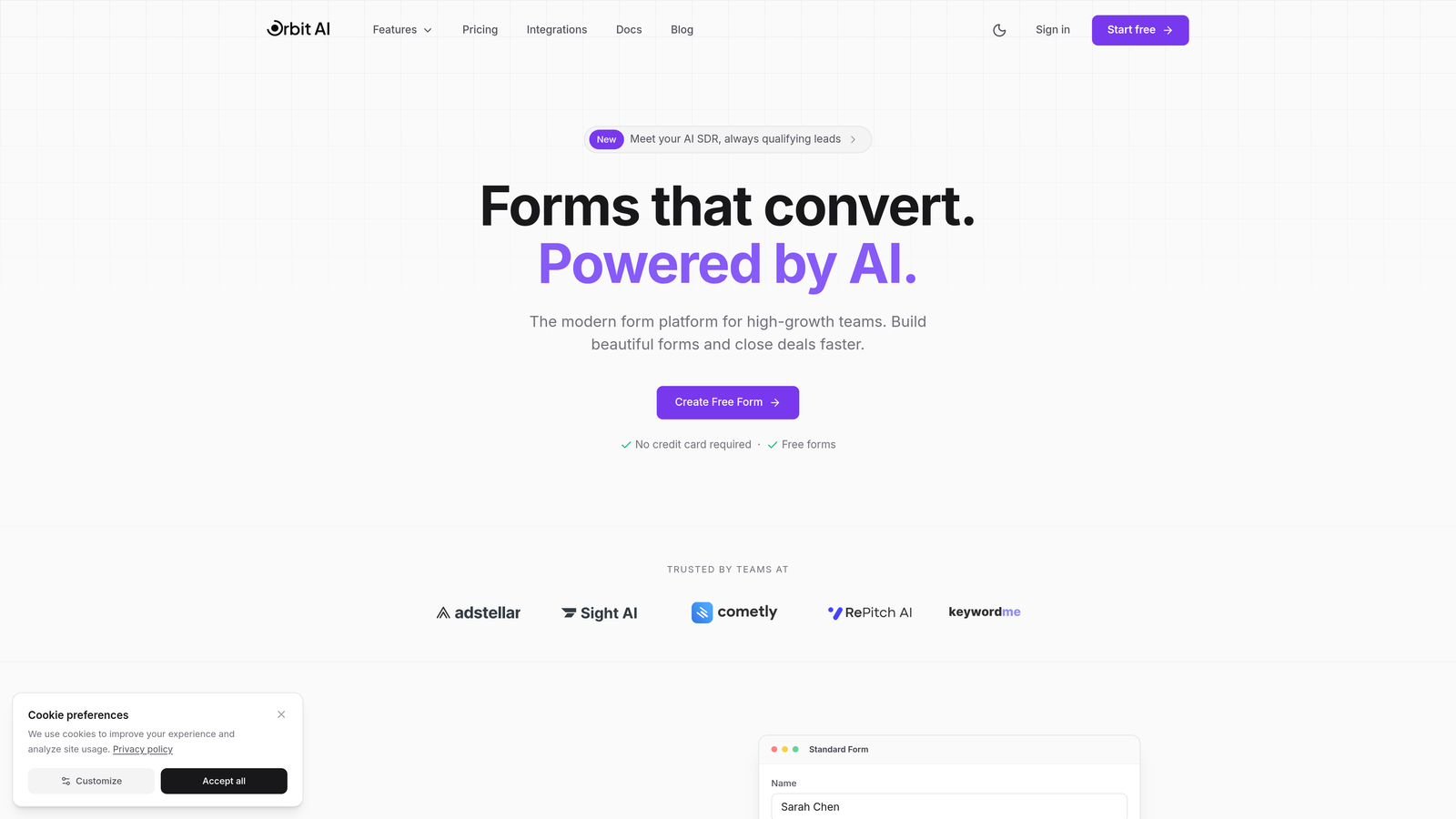
Orbit AI is an AI-powered form builder platform designed for high-growth teams who need intelligent automation combined with beautiful form design.
Where This Tool Shines
What sets Orbit AI apart is its ability to automatically qualify and score applicants as they submit their forms. Instead of manually reviewing every application to determine fit, the platform uses AI to assess responses and prioritize candidates who meet your criteria.
The forms themselves are designed with conversion in mind. Think clean, modern interfaces that work seamlessly across devices—crucial when applicants might be filling out forms on their phones between classes or during their commute.
Key Features
AI-Powered Applicant Qualification: Automatically scores and routes applications based on your criteria, saving hours of manual review time.
Conditional Logic That Adapts: Forms adjust questions in real-time based on applicant responses, creating personalized experiences for different programs or tracks.
Seamless CRM Integration: Connects with your existing student information systems and workflow tools to keep everything synchronized.
Modern Form Design: Conversion-optimized templates that maintain your brand while maximizing completion rates.
Built-in Analytics: Track submission rates, completion times, and applicant quality metrics to continuously improve your process.
Best For
Orbit AI works particularly well for competitive programs receiving high application volumes, institutions looking to reduce manual screening time, and admissions teams who want to provide a modern applicant experience while maintaining rigorous evaluation standards.
Pricing
Free tier available for getting started; paid plans begin at $29/month with advanced features for growing admissions programs.
2. Typeform
Best for: Creating engaging, conversational application experiences with one-question-at-a-time format
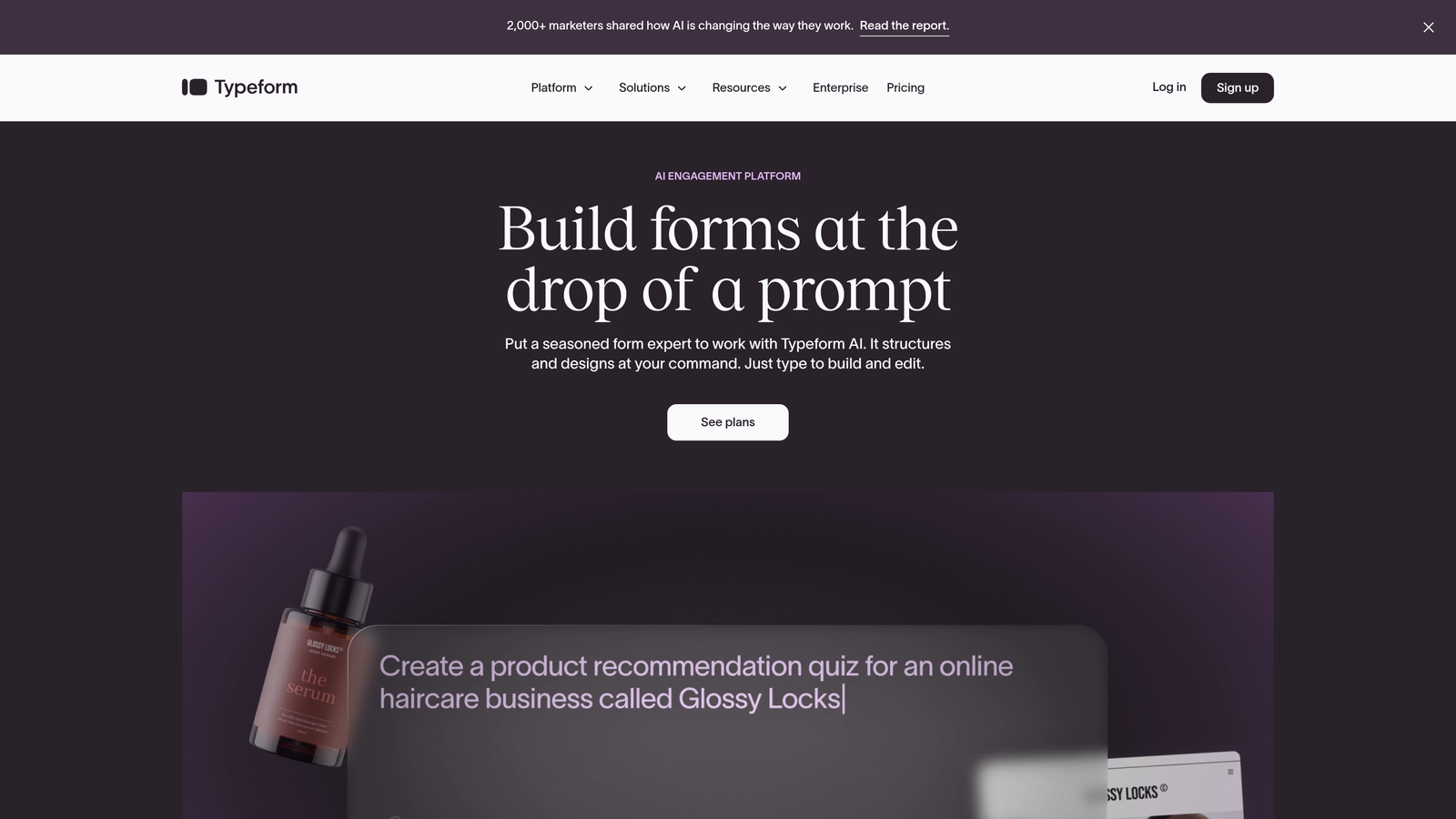
Typeform is a conversational form builder known for transforming traditional applications into interactive experiences.
Where This Tool Shines
Typeform's signature approach displays one question at a time, making long applications feel less overwhelming. Instead of confronting applicants with a dense page of fields, they answer questions in a natural flow that feels more like a conversation than an interrogation.
The platform excels at creating visually appealing forms that reflect your institution's brand. If first impressions matter to your admissions strategy, Typeform delivers forms that applicants actually enjoy completing.
Key Features
Conversational One-Question Format: Reduces cognitive load by presenting questions sequentially, improving completion rates for lengthy applications.
Beautiful Mobile-Responsive Designs: Forms automatically adapt to any screen size while maintaining visual appeal.
Logic Jumps and Branching: Route applicants through different question paths based on their program choice or qualifications.
File Upload Capabilities: Collect transcripts, essays, and supporting documents directly within the form flow.
Popular Tool Integrations: Connect with email platforms, CRMs, and student information systems to automate follow-up.
Best For
Typeform suits institutions prioritizing applicant experience, programs with moderate application volumes, and schools wanting to differentiate themselves with modern, engaging forms that stand out from traditional PDF applications.
Pricing
Free tier available with basic features; Basic plan starts at $25/month for increased responses and additional features.
3. JotForm
Best for: Institutions needing extensive templates and robust file handling with compliance options
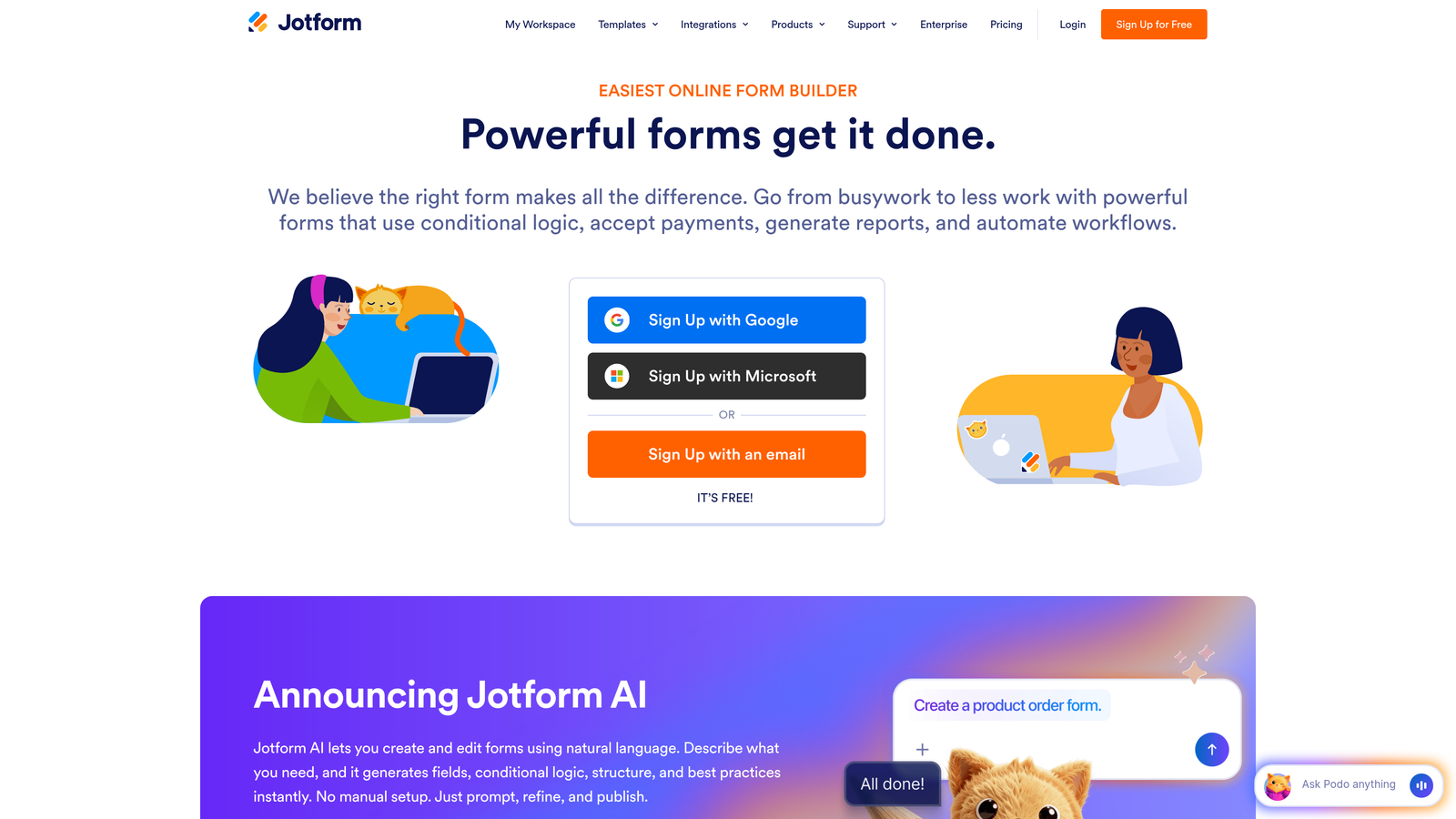
JotForm is a versatile form builder offering thousands of templates, including education-specific options for admissions and enrollment.
Where This Tool Shines
JotForm's massive template library means you can launch an admissions form in minutes rather than hours. Their education templates cover everything from undergraduate applications to continuing education enrollment, giving you a solid starting point that you can customize.
The platform handles document-heavy applications particularly well. When applicants need to submit transcripts, recommendation letters, essays, and portfolios, JotForm's file management keeps everything organized and accessible to your review team.
Key Features
10,000+ Form Templates: Pre-built education forms that you can customize instead of building from scratch.
Robust File Upload and Storage: Collect and organize large files with generous storage limits on paid plans.
Payment Collection Integration: Process application fees directly within the form for programs that charge for submission.
PDF Form Generation: Automatically generate PDF versions of submissions for record-keeping and printing.
HIPAA and FERPA Compliance: Available on higher-tier plans for institutions handling sensitive applicant data.
Best For
JotForm works well for schools needing quick deployment with minimal setup, institutions requiring extensive file uploads, and organizations that must maintain strict compliance with education data regulations.
Pricing
Free tier available with JotForm branding; Bronze plan starts at $34/month for increased submissions and storage.
4. Google Forms
Best for: Budget-conscious institutions already using Google Workspace ecosystem
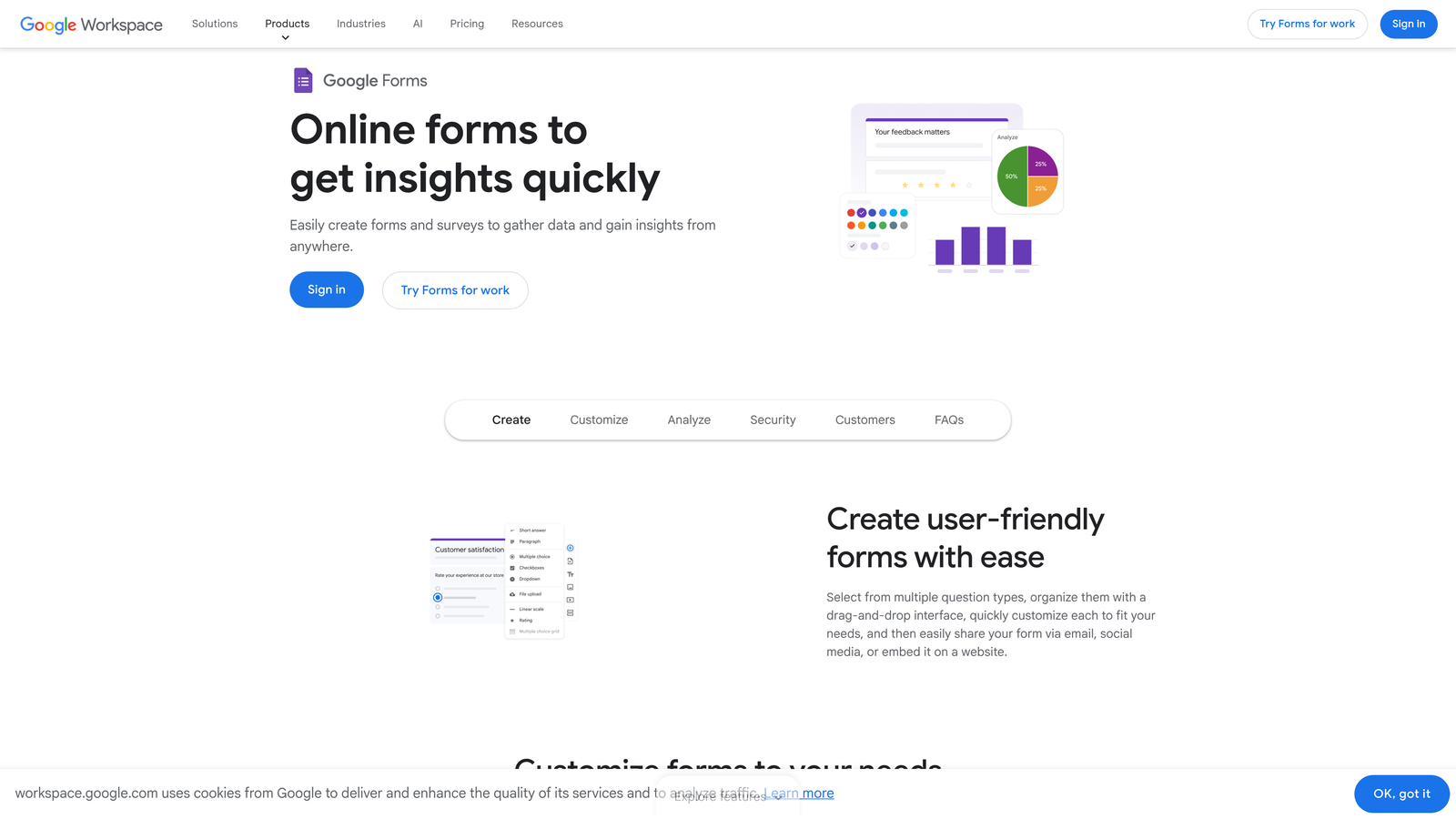
Google Forms is a free, straightforward form builder that integrates seamlessly with Google's suite of productivity tools.
Where This Tool Shines
Google Forms removes cost as a barrier entirely. For smaller programs, new initiatives, or schools with tight budgets, it provides a functional admissions form solution without any subscription fees.
The real power emerges when your institution already uses Google Workspace. Submissions flow directly into Google Sheets for sorting and analysis, files upload to Google Drive with organized folders, and your entire admissions team can collaborate in real-time without additional software.
Key Features
Completely Free: No hidden costs, no limits on responses, no premium tiers required for basic functionality.
Direct Google Sheets Integration: Submissions automatically populate spreadsheets for easy sorting, filtering, and analysis.
Real-Time Collaboration: Multiple team members can edit forms simultaneously and access responses instantly.
Basic Conditional Logic: Show or hide questions based on previous answers to create program-specific application paths.
Simple File Upload Support: Collect documents that automatically organize in Google Drive folders.
Best For
Google Forms serves small programs with limited budgets, schools already invested in Google Workspace, and institutions needing simple applications without complex branching or advanced automation.
Pricing
Completely free with any Google account.
5. Cognito Forms
Best for: Complex applications requiring advanced conditional logic and multi-page organization
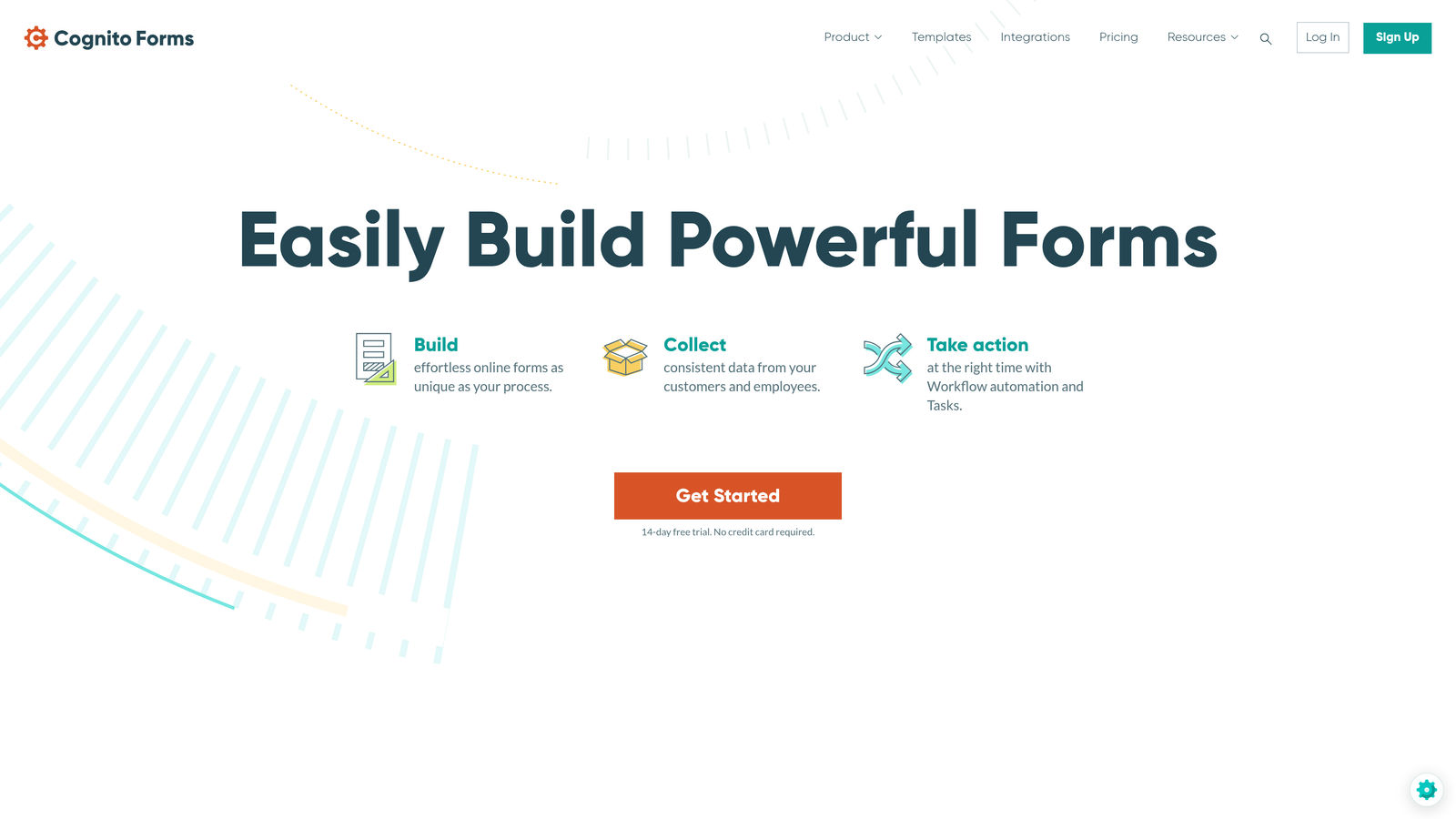
Cognito Forms is a powerful form builder with sophisticated conditional logic and calculation capabilities suited for detailed admissions applications.
Where This Tool Shines
Cognito Forms handles complexity without becoming complicated. When your application needs to calculate GPA from multiple courses, adjust questions based on residency status and program choice simultaneously, or collect information for multiple family members in one submission, Cognito Forms manages these scenarios elegantly.
The multi-page capability lets you break lengthy applications into logical sections—personal information, academic history, program-specific questions, supporting documents—making the process feel more manageable for applicants while keeping your data organized.
Key Features
Advanced Conditional Logic: Create complex rules that show, hide, or require fields based on multiple conditions working together.
Built-in Calculations: Automatically compute GPAs, scores, or eligibility criteria as applicants complete forms.
Multi-Page Form Support: Organize long applications into sections with progress indicators to improve completion rates.
Repeating Sections: Allow applicants to add multiple entries for things like previous schools attended or family members.
Data Encryption and Compliance: Protect sensitive applicant information with encryption and compliance features.
Best For
Cognito Forms excels for graduate programs with detailed requirements, institutions collecting financial aid information, and applications that need to calculate eligibility or scores automatically based on applicant responses.
Pricing
Free tier available for basic needs; Pro plan starts at $15/month for advanced features and increased submissions.
6. Formstack
Best for: Enterprise institutions needing workflow automation and approval routing
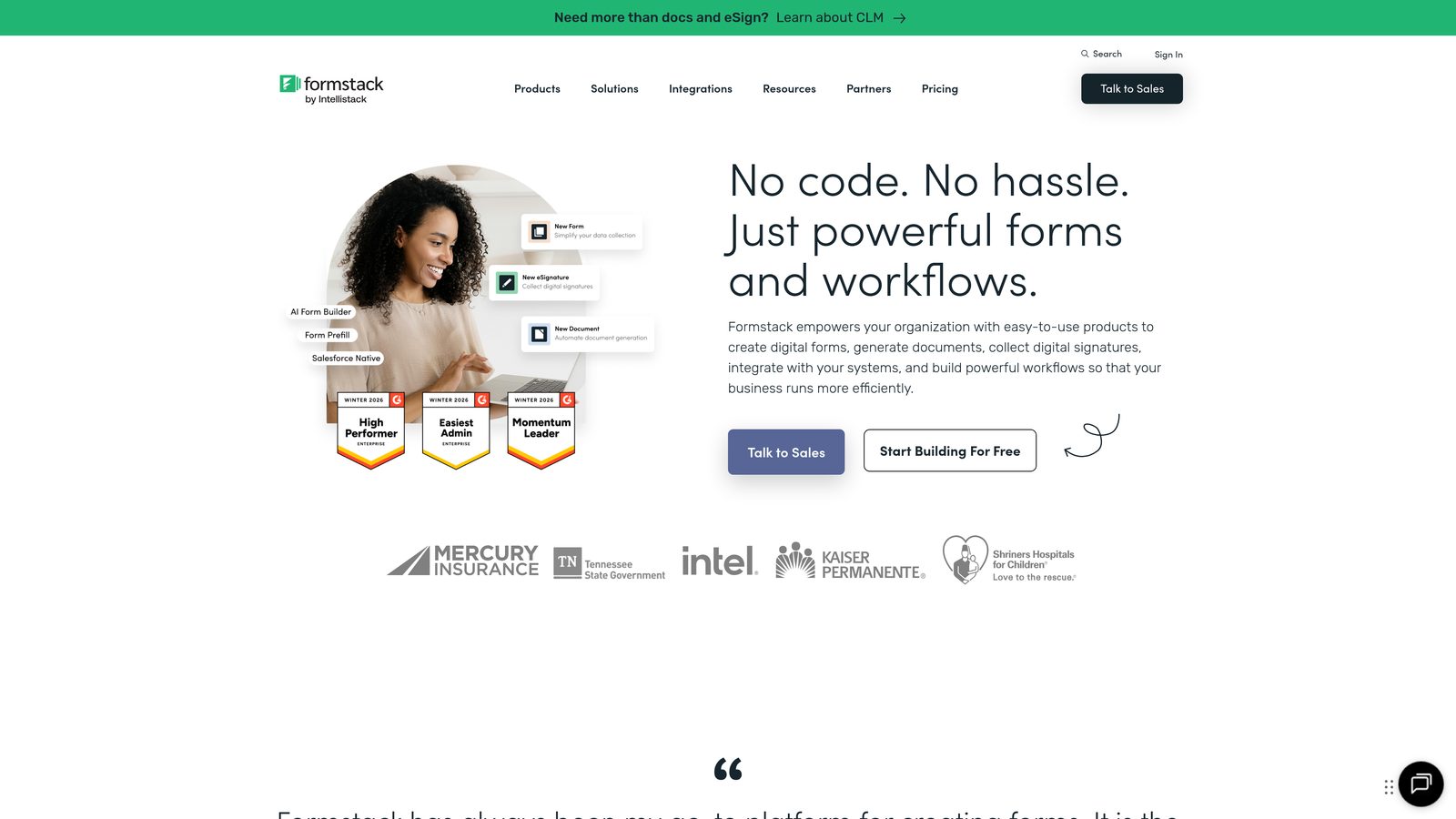
Formstack is an enterprise-grade form builder with built-in workflow automation and comprehensive compliance features.
Where This Tool Shines
Formstack doesn't just collect applications—it manages the entire review workflow. Applications can automatically route to specific reviewers based on program, department, or applicant characteristics. Approval chains ensure applications move through your process without manual intervention or emails asking "who's reviewing this one?"
For institutions dealing with strict compliance requirements, Formstack provides HIPAA, FERPA, and GDPR compliance features built into the platform. You're not bolting on security as an afterthought; it's foundational to how the system operates.
Key Features
Workflow Automation and Approval Routing: Automatically assign applications to reviewers and track approval status through multi-stage processes.
Document Generation: Create acceptance letters, financial aid summaries, or other documents directly from submission data.
HIPAA, FERPA, and GDPR Compliance: Built-in compliance features for institutions handling sensitive applicant information.
Advanced Analytics and Reporting: Track application metrics, reviewer performance, and process bottlenecks with detailed dashboards.
SSO and Enterprise Security: Integrate with institutional authentication systems and maintain enterprise-grade security standards.
Best For
Formstack serves large universities with complex review processes, healthcare or law programs requiring strict compliance, and institutions wanting to automate manual administrative tasks in their admissions workflow.
Pricing
Plans start at $50/month; enterprise features require higher-tier plans with custom pricing.
7. Submittable
Best for: Scholarship programs and grants requiring collaborative review and complete lifecycle management
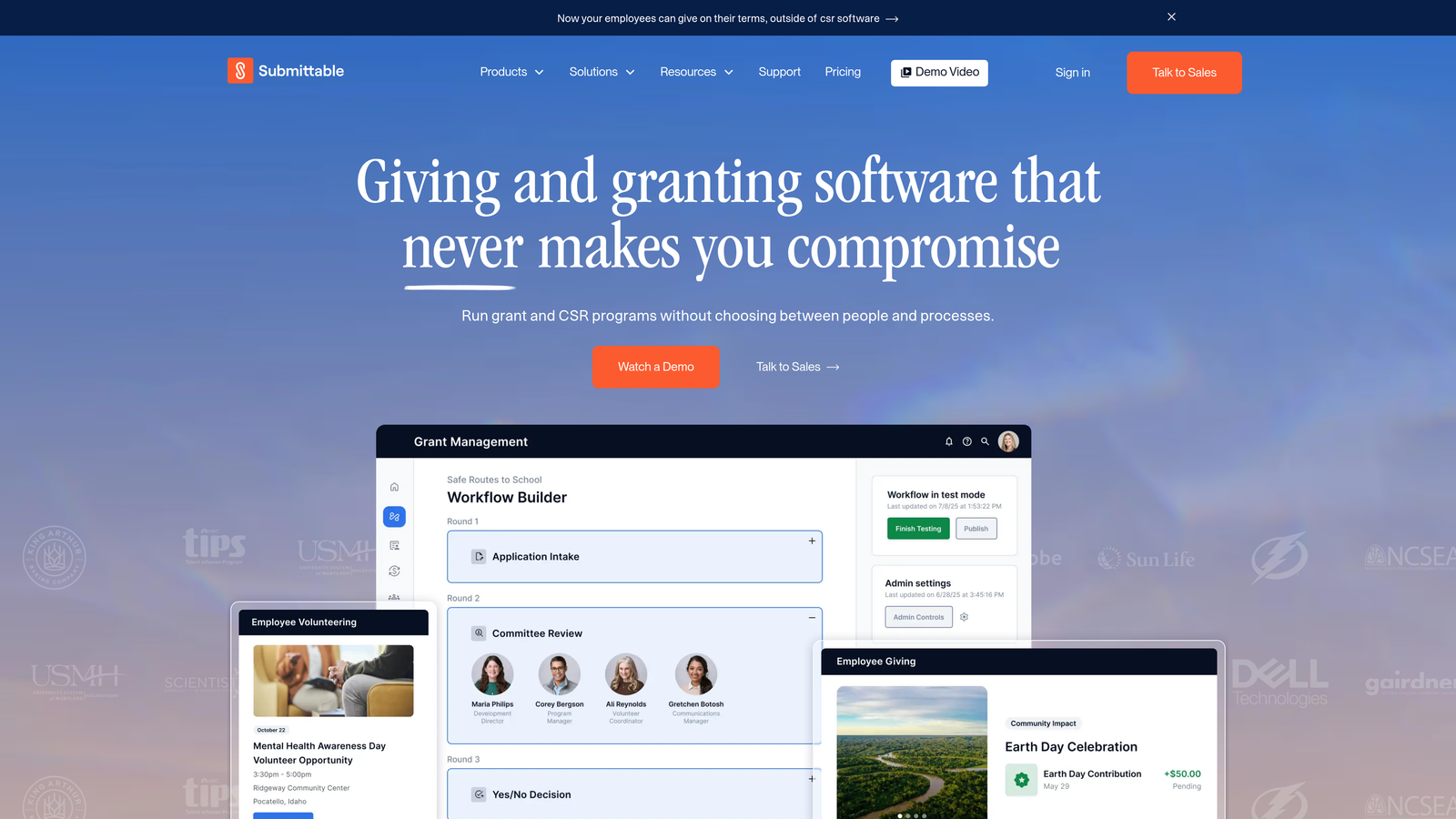
Submittable is a purpose-built platform for managing applications, scholarships, and grants with reviewer collaboration tools.
Where This Tool Shines
Submittable was designed specifically for competitive selection processes. While general form builders adapted to handle admissions, Submittable started with the scholarship and grant use case, building features that admissions teams actually need for collaborative evaluation.
The reviewer assignment system lets you distribute applications across your committee, track who's reviewed what, and collect scores or feedback in a structured way. No more spreadsheets tracking review status or email chains discussing candidates—everything happens in one platform.
Key Features
End-to-End Application Management: Handle everything from initial submission through final decision and applicant notification in one system.
Reviewer Assignment and Scoring: Distribute applications to reviewers, collect structured feedback, and aggregate scores automatically.
Collaborative Evaluation Tools: Enable committee members to discuss applications, flag standouts, and make group decisions efficiently.
Applicant Communication Portal: Send status updates, request additional materials, and communicate decisions through a branded portal.
Scholarship and Grant Management: Track award disbursements, renewal requirements, and recipient reporting in addition to initial selection.
Best For
Submittable excels for competitive scholarship programs, fellowship selections, grant-based admissions, and any process requiring structured committee review with ongoing recipient management.
Pricing
Custom pricing based on application volume and features needed; typically starts around $5,000 annually for institutional programs.
8. SurveyMonkey Apply
Best for: Large universities needing enterprise-scale application management with comprehensive reporting
SurveyMonkey Apply is an enterprise application management platform designed for large-scale admissions programs.
Where This Tool Shines
SurveyMonkey Apply handles volume that would overwhelm simpler platforms. When you're processing thousands of applications across multiple programs, schools, and campuses, you need infrastructure that won't buckle under load or lose data in the chaos.
The reporting capabilities give admissions leadership the insights they need to make strategic decisions. Track application trends across demographics, programs, and time periods. Identify where applicants drop off in your process. Measure reviewer productivity and consistency. These aren't nice-to-have features—they're essential for running admissions as a data-informed operation.
Key Features
Full Application Lifecycle Management: Manage every stage from initial inquiry through enrollment decision and beyond.
Multi-Stage Review Workflows: Configure complex review processes with multiple rounds, different reviewer types, and conditional advancement.
Advanced Reporting and Analytics: Generate detailed reports on applicant demographics, program trends, and operational efficiency.
Applicant Portal and Communication: Provide applicants with a branded portal to check status, submit additional materials, and receive updates.
Enterprise-Grade Security: Meet institutional security requirements with robust data protection and access controls.
Best For
SurveyMonkey Apply serves major universities with thousands of annual applications, multi-campus systems needing centralized management, and institutions requiring detailed analytics for strategic enrollment planning.
Pricing
Custom enterprise pricing based on application volume, number of programs, and required features.
9. Paperform
Best for: Creating visually distinctive, heavily branded applications with document-style editing
Paperform is a flexible form builder that combines document-style editing with powerful form features.
Where This Tool Shines
Paperform lets you design forms that look like actual documents rather than typical web forms. If your institution's brand is a key differentiator, or if you're creating applications for creative programs where visual presentation matters, Paperform gives you design freedom that other platforms constrain.
The editing experience feels like working in a document editor. You type, format, and arrange content naturally, then add form fields where you need them. This approach makes it easy for non-technical admissions staff to create and update forms without waiting for IT support.
Key Features
Document-Style Form Editing: Build forms by typing and formatting like a document, making creation intuitive for non-technical users.
Extensive Customization and Branding: Control every visual aspect to match your institution's brand guidelines precisely.
Conditional Logic and Calculations: Create dynamic forms that adapt based on applicant responses or calculate scores automatically.
File Uploads and E-Signatures: Collect supporting documents and capture digital signatures for consent forms or agreements.
Payment and Booking Integration: Process application fees or schedule interview slots directly within the form.
Best For
Paperform works well for art and design programs where visual presentation matters, boutique institutions emphasizing brand experience, and schools wanting forms that feel custom-built rather than template-based.
Pricing
Essentials plan starts at $24/month; higher tiers available for increased submissions and advanced features.
Making the Right Choice
Choosing the right admissions form builder depends on your institution's specific needs and constraints. For AI-powered qualification that automatically scores and prioritizes applicants while delivering modern form experiences, Orbit AI offers intelligent automation that saves admissions teams significant time on manual review.
Budget-conscious schools or those already invested in Google Workspace should start with Google Forms—it's free and functional for straightforward applications. When you need extensive customization options and compliance features, JotForm or Cognito Forms provide robust capabilities without enterprise-level costs.
Scholarship programs and competitive fellowships will benefit from Submittable's purpose-built collaborative review features. Large universities processing thousands of applications need the infrastructure and reporting capabilities that SurveyMonkey Apply delivers at scale.
Start by identifying your biggest pain point. Is it applicant volume overwhelming your review team? Manual data entry eating up staff time? Lack of visibility into where applications stall in your process? Poor applicant experience leading to incomplete submissions? Your primary challenge should guide your platform selection.
The right form builder transforms admissions from an administrative burden into a strategic enrollment tool. Start building free forms today and see how intelligent form design can elevate your admissions process while qualifying applicants automatically.


