

When a high-intent lead fills out a form on your site, every minute it sits unassigned is revenue walking out the door. Automated lead assignment software eliminates that gap, routing leads to the right rep, team, or workflow the moment they convert, based on rules you define.
Whether you're assigning by territory, deal size, industry, or rep capacity, the right tool can dramatically tighten your sales cycle and improve conversion rates. This guide covers the best options available in 2026, with a focus on tools that connect lead capture directly to lead routing, because the best assignment logic starts the moment a prospect hits "submit."
We've evaluated each tool on ease of setup, routing flexibility, CRM integrations, and how well it serves high-growth SaaS and B2B teams. Here are the top automated lead assignment software tools worth your attention.
1. Orbit AI
Best for: High-growth SaaS teams that want lead capture, qualification, and routing in a single platform.
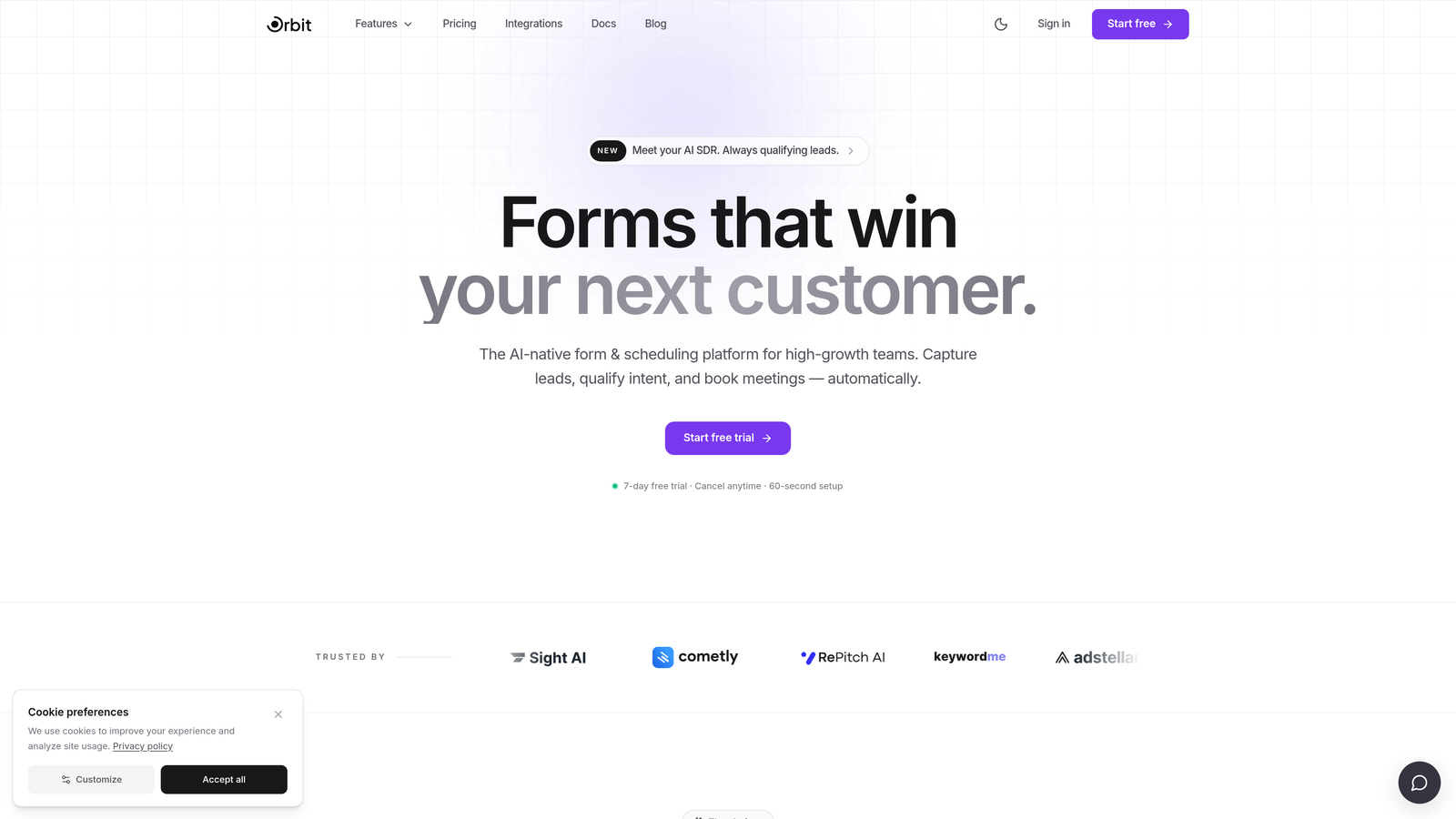
Orbit AI is an AI-powered form builder with built-in lead qualification and conditional routing logic, designed to compress the capture-to-assignment pipeline into one seamless workflow.
Where This Tool Shines
Most teams piece together their lead assignment stack using a form builder, a Zapier chain, and a CRM rule. Every handoff in that chain is a potential point of delay or data loss. Orbit AI's key differentiator is that qualification and routing logic live inside the form platform itself, not bolted on through third-party automation.
At the moment a prospect submits a form, Orbit AI's AI layer scores and qualifies that lead before it ever touches a CRM. High-intent submissions can be routed immediately to the right rep or workflow, while lower-quality leads are handled separately. For teams where speed-to-lead is a competitive advantage, this architecture is genuinely meaningful.
Key Features
AI-Powered Lead Qualification: Scores and segments leads at the point of form submission, before any downstream handoff occurs.
Conditional Routing Logic: Built directly into the form workflow, routing decisions happen in real time without requiring a third-party automation layer.
Conversion-Optimized Form Design: Modern, branded form UX designed to maximize submission quality, not just volume.
Real-Time Lead Scoring: Prioritizes high-intent submissions so sales reps focus on the leads most likely to convert.
CRM and Webhook Integrations: Connects to downstream CRMs and tools for handoffs once the initial qualification and routing step is complete.
Best For
Orbit AI is the strongest fit for high-growth SaaS and B2B teams that are tired of stitching together form tools, Zapier workflows, and CRM rules. If your team's conversion rate depends on how fast and accurately leads get to the right rep, having qualification and routing at the point of capture is a genuine operational advantage over integration-dependent alternatives.
Pricing
Check orbitforms.ai for current pricing and plan details, as plans are updated regularly to reflect new features.
2. Typeform
Best for: Teams prioritizing top-of-funnel form UX with downstream CRM assignment via integrations.
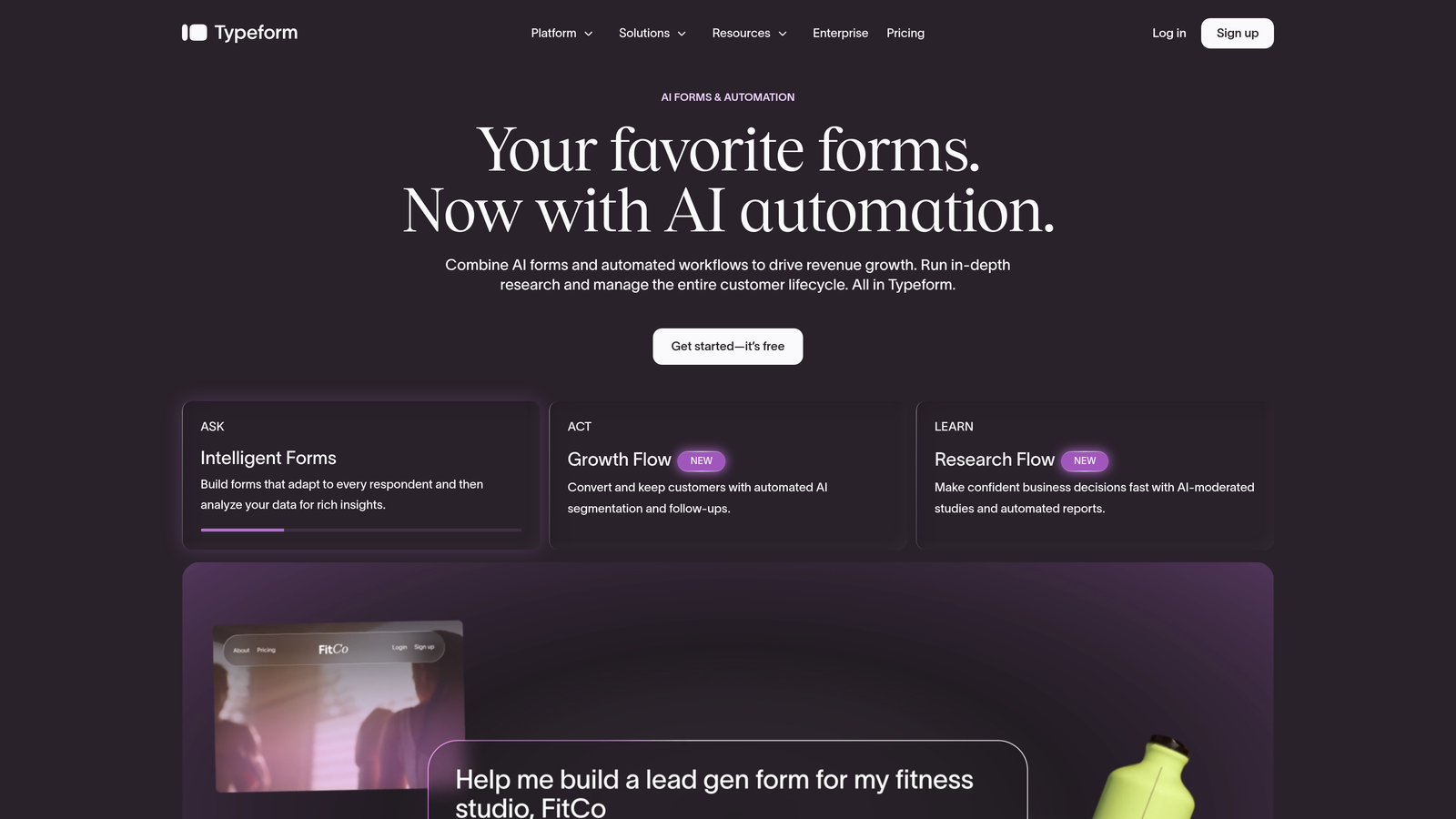
Typeform is a conversational form builder with conditional logic and broad integration support for downstream lead assignment.
Where This Tool Shines
Typeform's one-question-at-a-time interface is genuinely engaging, and its completion rates reflect that. For teams where form experience is a brand priority, Typeform delivers a polished, on-brand submission flow that lighter tools can't match.
Its Logic Jump feature lets you build conditional question paths based on how respondents answer, which means you can segment leads by intent, company size, or product interest before they hit your CRM. The actual assignment step happens downstream through integrations with HubSpot, Salesforce, or Zapier, so Typeform functions as a strong capture layer rather than a native routing engine.
Key Features
Logic Jump: Conditional question paths that adapt the form experience based on individual responses, enabling pre-CRM segmentation.
Native CRM Integrations: Direct connections to HubSpot, Salesforce, and Slack for passing lead data downstream.
Zapier and Make Support: Enables custom assignment workflows for teams with specific routing requirements.
Polished Form UX: Branded, visually rich forms with image and video support that consistently drive high completion rates.
Engagement-Focused Design: Video and image-rich form options for teams that want to make the submission experience feel less transactional.
Best For
Typeform is a great fit for marketing teams that care deeply about form UX and are comfortable handling lead assignment through HubSpot, Salesforce, or a Zapier workflow. It's less suited for teams that need native, real-time routing logic without additional automation layers.
Pricing
Free plan available; paid plans from approximately $25/month. Verify current pricing at typeform.com.
3. Jotform
Best for: Operations teams needing multi-step, conditional approval and routing workflows without a dedicated CRM.
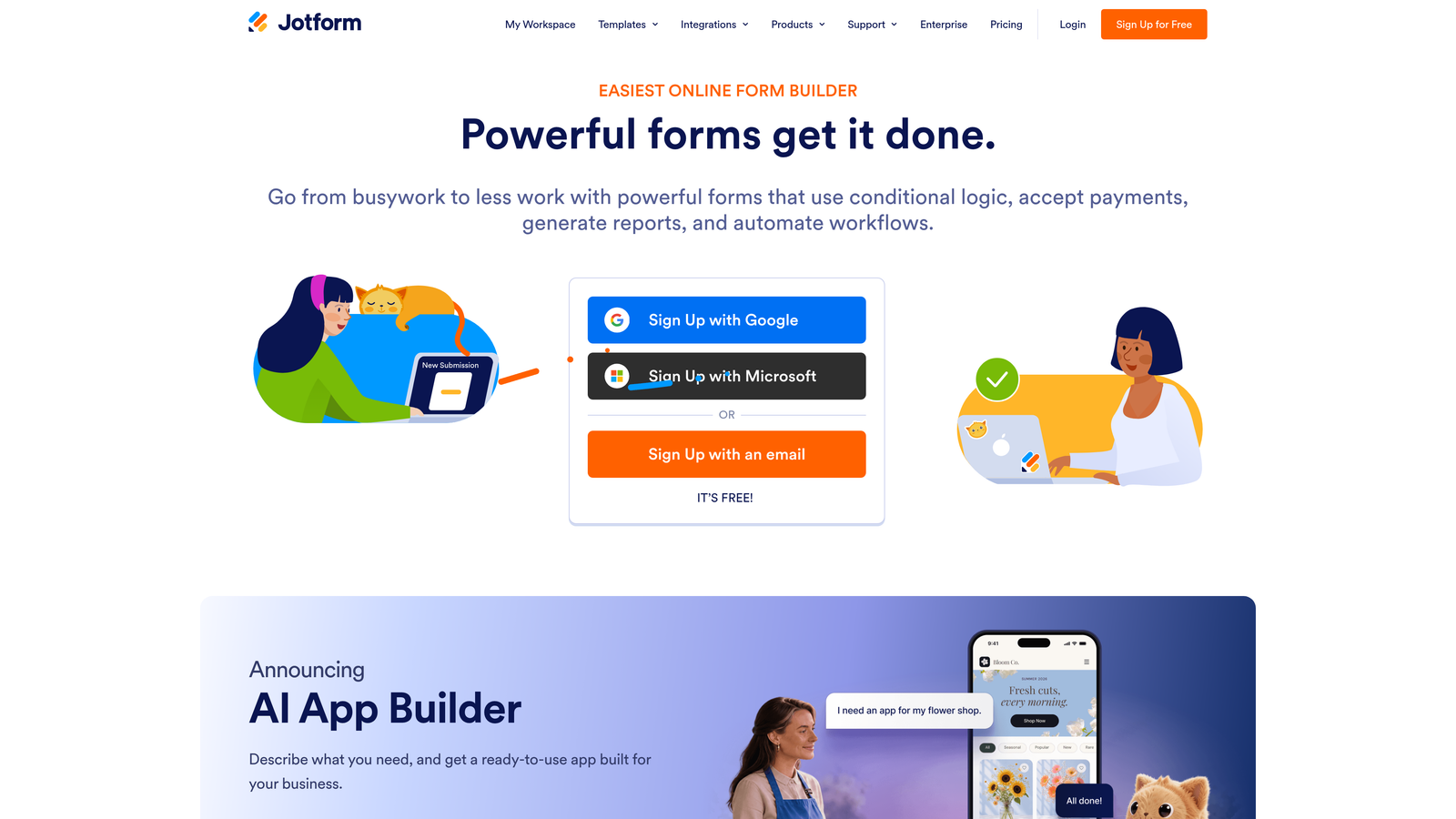
Jotform is a feature-rich form builder with a native workflow and approvals system for multi-step lead routing.
Where This Tool Shines
Jotform punches above its weight when it comes to operational depth. Its Approvals feature allows you to build multi-step routing chains with conditional branches, so a lead from a specific industry or deal size can be automatically forwarded to the appropriate team member without any manual intervention.
For teams that don't have a mature CRM setup but still need structured lead handoffs, Jotform Tables provides a centralized place to manage and track lead data. The combination of form builder, workflow routing, and data management in one platform makes it a surprisingly capable option for mid-sized teams with complex internal processes.
Key Features
Jotform Approvals: Multi-step, conditional routing chains that automatically forward leads based on form response values.
Automated Email Notifications: Instant alerts to assigned reps or teams the moment a relevant form is submitted.
Jotform Tables: Centralized lead data management with filtering and collaboration features built in.
500+ Integrations: Connects to Salesforce, HubSpot, Pipedrive, and hundreds of other tools for downstream CRM handoffs.
Extensive Template Library: Hundreds of pre-built form templates for fast deployment across industries and use cases.
Best For
Jotform is well suited for operations or sales ops teams that need genuine workflow depth, conditional routing, and a centralized data layer, without the cost or complexity of an enterprise platform. It's a strong middle-ground option for growing B2B teams.
Pricing
Free plan available; paid plans from approximately $34/month. Verify current pricing at jotform.com.
4. Formstack
Best for: Enterprise teams with complex, multi-department routing needs and deep Salesforce dependency.
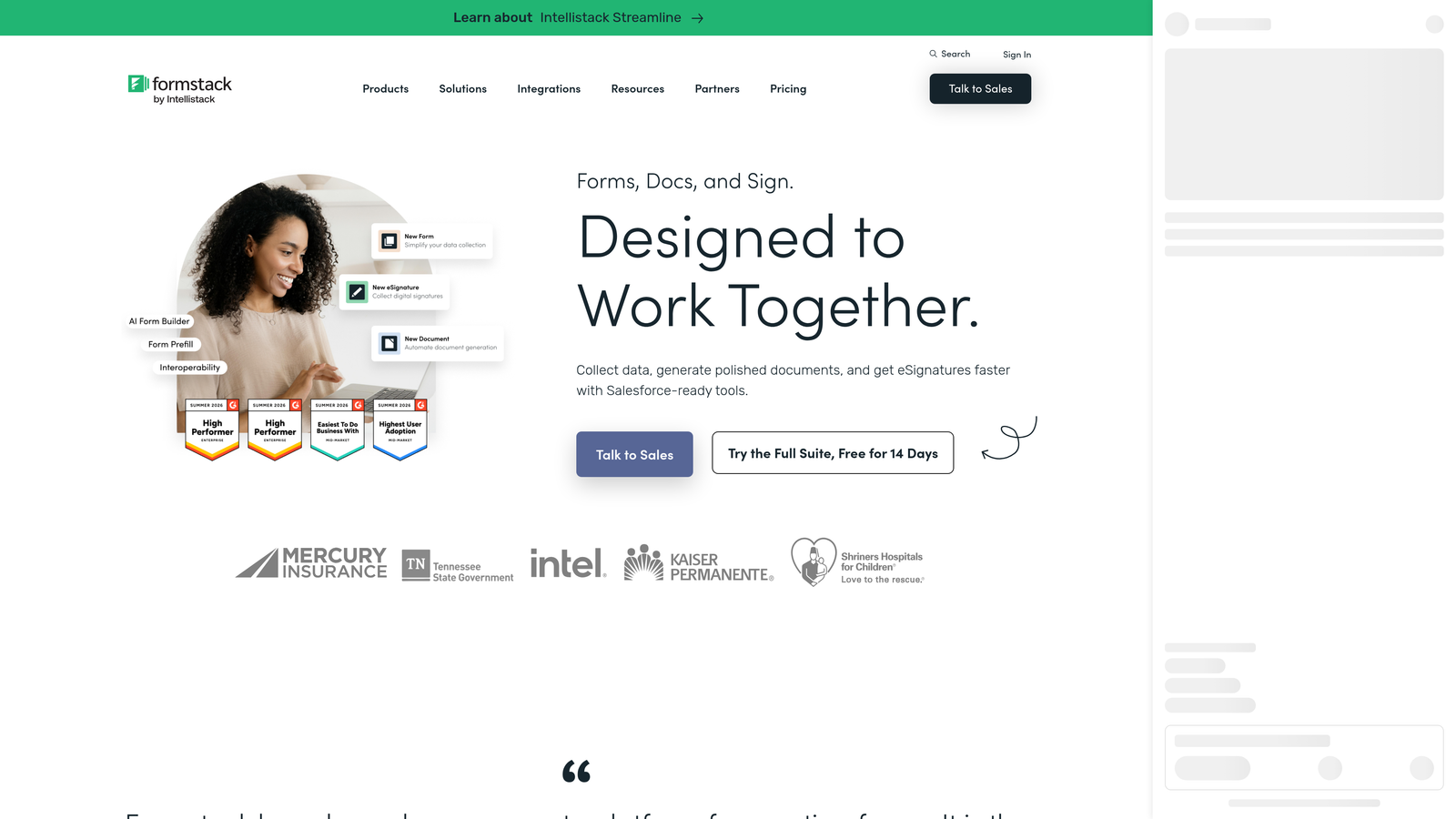
Formstack is an enterprise-grade form and workflow platform with deep Salesforce integration and complex approval routing capabilities.
Where This Tool Shines
Formstack is the most enterprise-oriented tool on this list. Where other platforms offer routing as a feature, Formstack Workflows treats it as a core product, enabling multi-department approval chains, conditional routing based on form field values, and document generation tied to submissions.
Its native Salesforce integration is a genuine differentiator for teams already operating in that ecosystem. Leads captured via Formstack can be assigned directly within Salesforce without an intermediary automation layer, which reduces latency and keeps data clean. For regulated industries, HIPAA-compliant data handling adds a layer of compliance coverage that lighter tools don't provide.
Key Features
Formstack Workflows: Multi-department approval and routing chains for complex, conditional lead handoffs across teams.
Native Salesforce Integration: Direct CRM lead assignment without relying on Zapier or webhook intermediaries.
Conditional Routing: Rules-based routing triggered by specific form field values, such as deal size or product interest.
HIPAA-Compliant Data Handling: Suitable for healthcare, finance, and other regulated industries with strict data requirements.
Document Generation: Automatically generates documents tied to form submissions, useful for contracts, proposals, and onboarding flows.
Best For
Formstack is the right call for enterprise sales and revenue operations teams with complex routing requirements, multiple departments involved in lead handling, and a Salesforce-centric tech stack. Its pricing reflects its enterprise positioning, so smaller teams should evaluate whether they need this level of depth.
Pricing
Forms plans from approximately $83/month; Workflows is an add-on. Verify current pricing at formstack.com.
5. Paperform
Best for: Small-to-mid teams wanting flexible, no-code lead capture with clean after-submission automation.
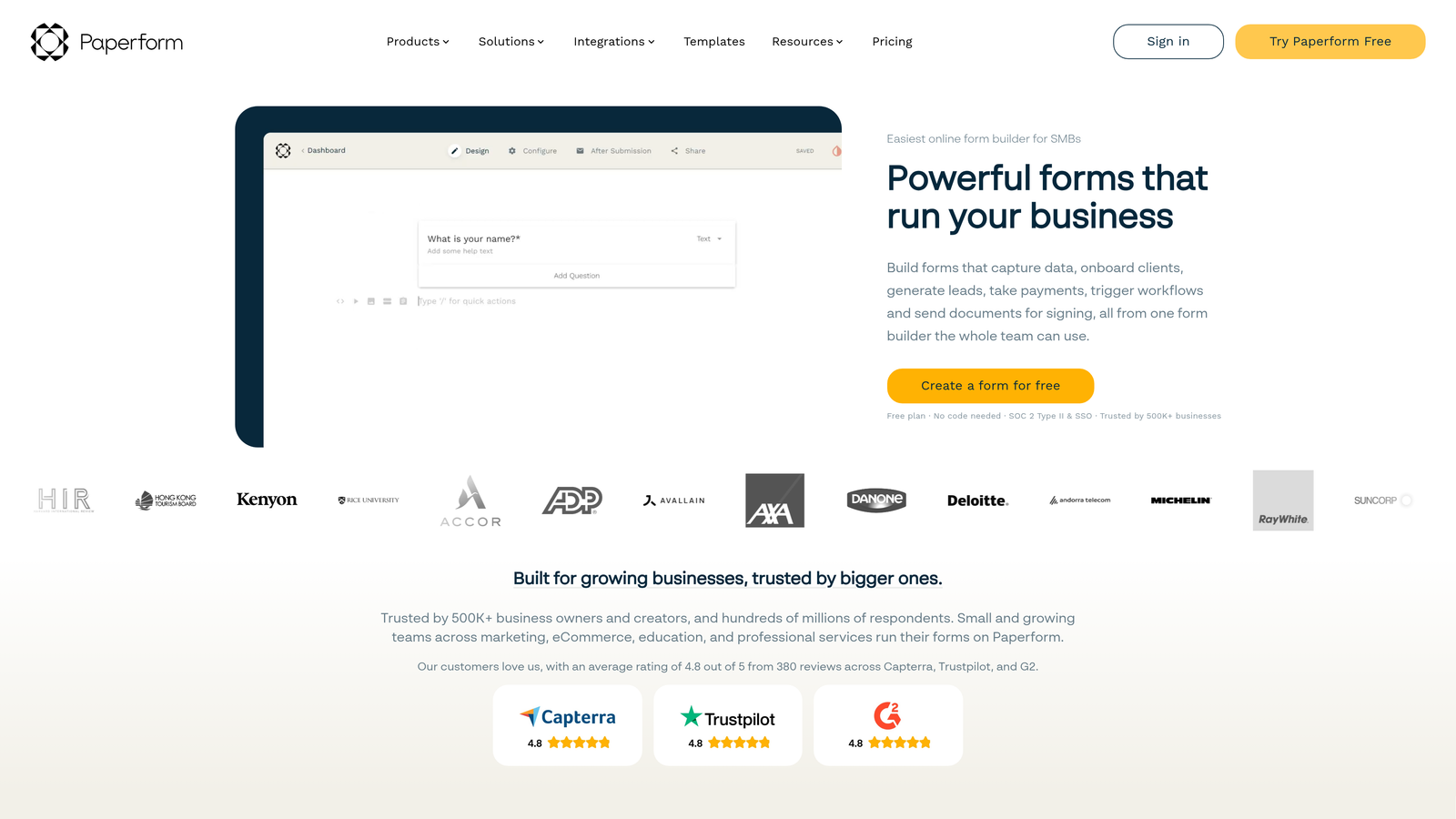
Paperform is a flexible, document-style form builder with after-submission automation for triggering lead routing workflows.
Where This Tool Shines
Paperform's document-style editor makes it easy to build forms that feel less like forms and more like landing pages. The design flexibility is genuine, and no design skills are required to produce something that looks polished and on-brand.
Where Paperform earns its place in a lead assignment context is its "After Submission" actions. You can configure conditional redirects, email routing, and webhook triggers that fire immediately when a form is submitted, initiating downstream assignment workflows in Zapier, Make, or HubSpot. It's not a native routing engine, but for teams with straightforward routing needs and a preference for clean no-code tooling, it covers the essentials without overcomplicating the setup.
Key Features
After Submission Actions: Conditional redirects, automated emails, and webhook triggers that fire at the moment of form submission.
Native Integrations: Direct connections to HubSpot, Mailchimp, and Zapier for initiating assignment workflows.
Conditional Logic: Personalized form paths based on respondent answers, enabling pre-submission segmentation.
Document-Style Editor: Clean, flexible form design with no design skills required, supporting both lead capture and payment forms.
Product and Payment Support: Handles e-commerce and payment collection alongside lead capture in a single form.
Best For
Paperform is a natural fit for small-to-mid-sized teams that want a clean, flexible form builder with enough automation capability to handle basic lead routing, without the overhead of an enterprise platform or the complexity of a multi-tool Zapier stack.
Pricing
Plans from approximately $24/month. Verify current pricing at paperform.co.
6. Tally
Best for: Early-stage teams or solo operators needing fast, free lead capture with basic forwarding via Zapier or Notion.
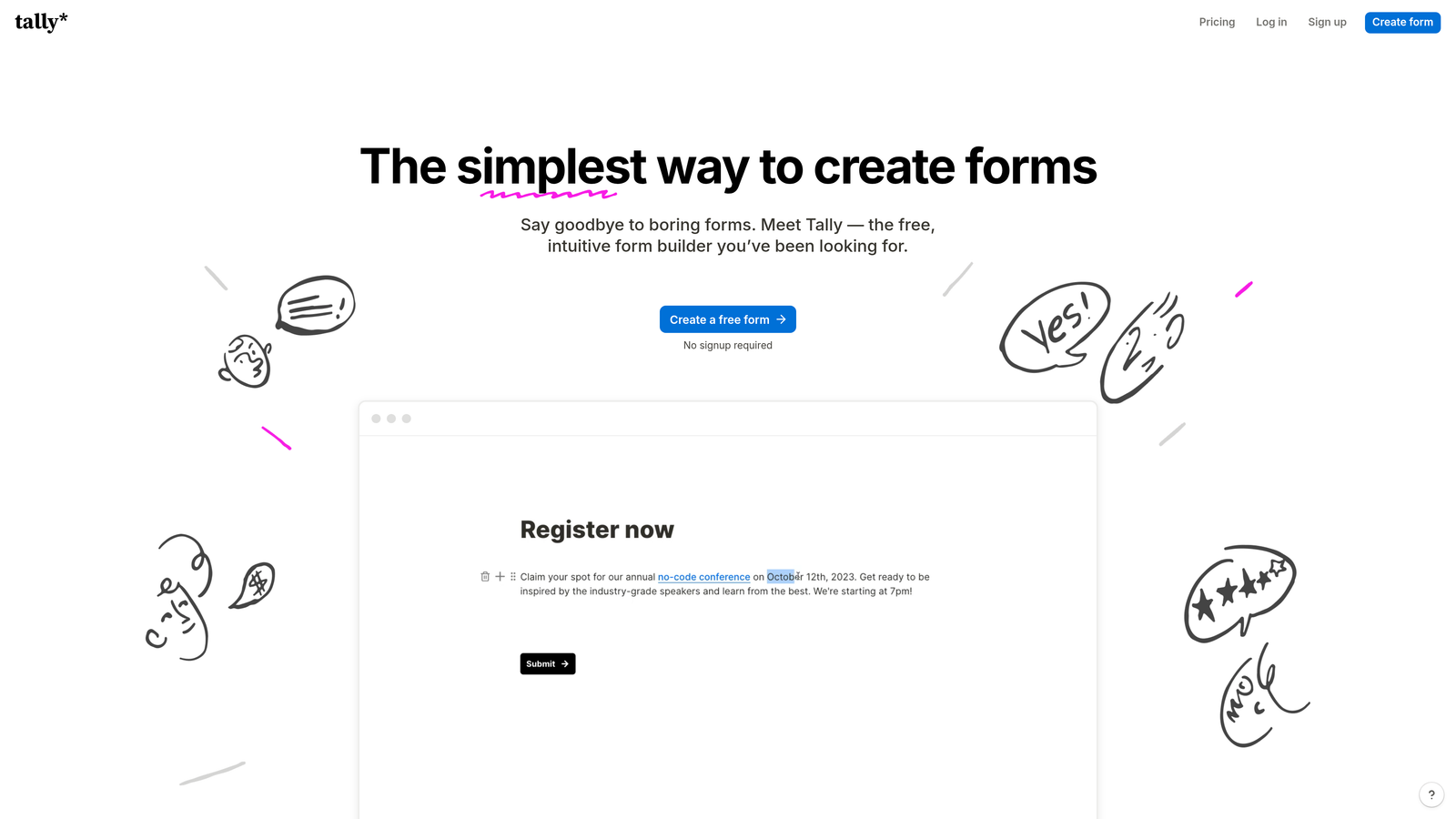
Tally is a lightweight, free-first form builder that connects to Zapier, Make, and Notion for simple lead forwarding and assignment workflows.
Where This Tool Shines
Tally is the fastest tool on this list to get up and running. Its free tier is genuinely generous, offering unlimited forms and unlimited responses without the artificial limits that other free plans impose. For a solo founder or early-stage team that just needs leads captured and forwarded somewhere useful, Tally removes all the friction.
The tradeoff is depth. Tally has no native routing or approval workflows. Lead assignment is entirely dependent on what you build in Zapier, Make, or Notion on the other side of the form. For teams with basic needs, that's a reasonable setup. For teams with territory-based routing, rep capacity rules, or multi-step approval requirements, Tally will hit its ceiling quickly.
Key Features
Generous Free Tier: Unlimited forms and responses at no cost, making it genuinely usable without a paid plan for early-stage teams.
Zapier and Make Integration: Routes form submissions to CRMs, Slack channels, or spreadsheets through external automation workflows.
Notion Integration: Sends lead data directly into Notion databases for teams that use Notion as their operational hub.
Conditional Logic: Basic branching logic for personalized form paths without requiring a paid plan.
Embed-Anywhere Support: Clean embed options for websites, landing pages, and link sharing across channels.
Best For
Tally is the right tool for early-stage startups, solo operators, or internal teams that need a fast, free way to capture leads and forward them to a Slack channel, spreadsheet, or Notion database. Teams with more sophisticated routing requirements will need to look further up this list.
Pricing
Free plan available; Tally Pro from approximately $29/month. Verify current pricing at tally.so.
Which Tool Is Right for Your Team?
The right automated lead assignment software depends almost entirely on where your biggest friction lives. Here's a quick way to think through the decision.
If your team is losing time between form submission and the first sales touch, the problem is likely your capture-to-assignment pipeline. Orbit AI is the strongest fit here, because qualification and routing logic happen at the point of capture, not after a chain of integrations fires. For high-growth SaaS and B2B teams where speed-to-lead matters, that architectural difference is significant.
If you're a Salesforce-first enterprise team with complex, multi-department routing requirements, Formstack offers the depth and native CRM connectivity to handle that without compromise. It's the most expensive option on this list, but for the right team, it earns it.
If your priority is form UX and brand experience, with assignment handled downstream by your CRM, Typeform or Jotform are both strong choices. Jotform edges ahead for teams that need operational workflow depth; Typeform wins on polish and engagement.
For smaller teams or those just getting started, Paperform offers a clean no-code setup with enough automation to handle basic routing, while Tally is the fastest path to capturing and forwarding leads for free.
Whichever tool you choose, the goal is the same: get the right lead to the right person as fast as possible. Start building free forms today with Orbit AI and see how AI-powered qualification and built-in routing logic can close the gap between form submission and first contact, without adding another tool to your stack.


