

Conditional logic transforms a static form into a smart, adaptive experience. Instead of forcing every respondent through the same sequence of questions, a well-built conditional form shows only what's relevant, hides what isn't, and routes people based on what they actually say. For high-growth teams, that difference is meaningful: shorter forms tend to get completed more often, and leads that arrive pre-qualified save your team the manual sorting work that slows down pipeline.
The challenge is that not every form builder handles conditional logic equally well. Some bury it behind clunky rule editors. Others limit branching depth on lower-tier plans or charge a premium just to unlock basic show/hide functionality. A few tools go further, connecting conditional paths to lead scoring, workflow automation, or document generation.
This guide covers the top conditional logic form builders, evaluated specifically on branching depth, usability, pricing transparency, and fit for lead generation and conversion-focused teams. Here's how they compare.
1. Orbit AI
Best for: B2B and SaaS teams that want AI-powered lead qualification built into their forms
Orbit AI is an AI-powered form builder with smart conditional branching and built-in lead qualification designed for high-growth teams.

Where This Tool Shines
Most conditional logic tools operate on a simple rule: if answer equals X, show field Y. Orbit AI goes a layer deeper. Rather than just showing or hiding fields, it interprets response patterns to assign lead scores and route prospects automatically, meaning your form is doing qualification work that would otherwise require a sales rep or a manual review process.
The design experience is also worth noting. Orbit AI is built with conversion optimization in mind, so the forms look modern and polished without requiring design work on your end. For B2B teams running lead gen campaigns, that matters: a form that looks trustworthy and loads cleanly is part of the conversion equation.
Key Features
AI-Driven Lead Qualification: Goes beyond show/hide logic to interpret answer patterns and score or route leads automatically.
Smart Branching: Conditional paths adapt based on how respondents answer, creating a personalized flow without complex rule-building on your end.
Built-In Lead Scoring: Scores are tied directly to conditional paths, so high-value prospects are flagged before they hit your CRM.
Conversion-Optimized Design: Clean, modern UI designed to reduce friction and improve form completion rates.
B2B and SaaS Workflow Fit: Built specifically for lead generation use cases, not adapted from a generic form builder.
Best For
Orbit AI is the strongest fit for SaaS companies, agencies, and B2B teams that want their forms to do more than collect data. If you're running lead qualification flows, product recommendation quizzes, or dynamic onboarding forms and you want intelligence built into the branching logic, this is the tool built for that job.
Pricing
Visit orbitforms.ai for current plan pricing. Pricing details are updated directly on the site.
2. Typeform
Best for: Teams that want branching logic delivered through a conversational, one-question-at-a-time experience
Typeform is a conversational form builder known for its polished one-question-at-a-time format with native logic jump functionality.

Where This Tool Shines
Typeform's biggest strength is how invisible the branching feels to respondents. Because questions appear one at a time in a flowing conversational sequence, logic jumps don't feel like redirects. They feel like a natural conversation. For brand-sensitive use cases like customer surveys, NPS flows, or lead capture on a marketing site, that experience quality is a genuine differentiator.
The tradeoff is that conditional logic depth can feel limited on lower-tier plans, and pricing scales with response volume, which can add up quickly for high-traffic campaigns. For teams prioritizing UX over complex branching rules, Typeform is often a top choice.
Key Features
Logic Jumps: Branch based on answer choices, number ranges, or text inputs across any question type.
Conversational Format: One-question-at-a-time design makes branching feel seamless rather than mechanical.
Design and Branding: Strong customization options for fonts, colors, backgrounds, and imagery.
Integrations: Native connections to HubSpot, Salesforce, Zapier, and other tools in the modern marketing stack.
Rich Media Answer Types: Supports video and image-based answer options for more engaging forms.
Best For
Typeform works well for marketing teams that prioritize respondent experience and brand presentation. It's a strong pick for lead capture forms, customer research, and product feedback flows where the quality of the interaction matters as much as the data collected.
Pricing
A free tier is available with limited responses. Paid plans start at a monthly fee that scales with response volume. Verify current pricing at typeform.com.
3. Jotform
Best for: Teams that need granular, multi-condition branching logic without writing a single line of code
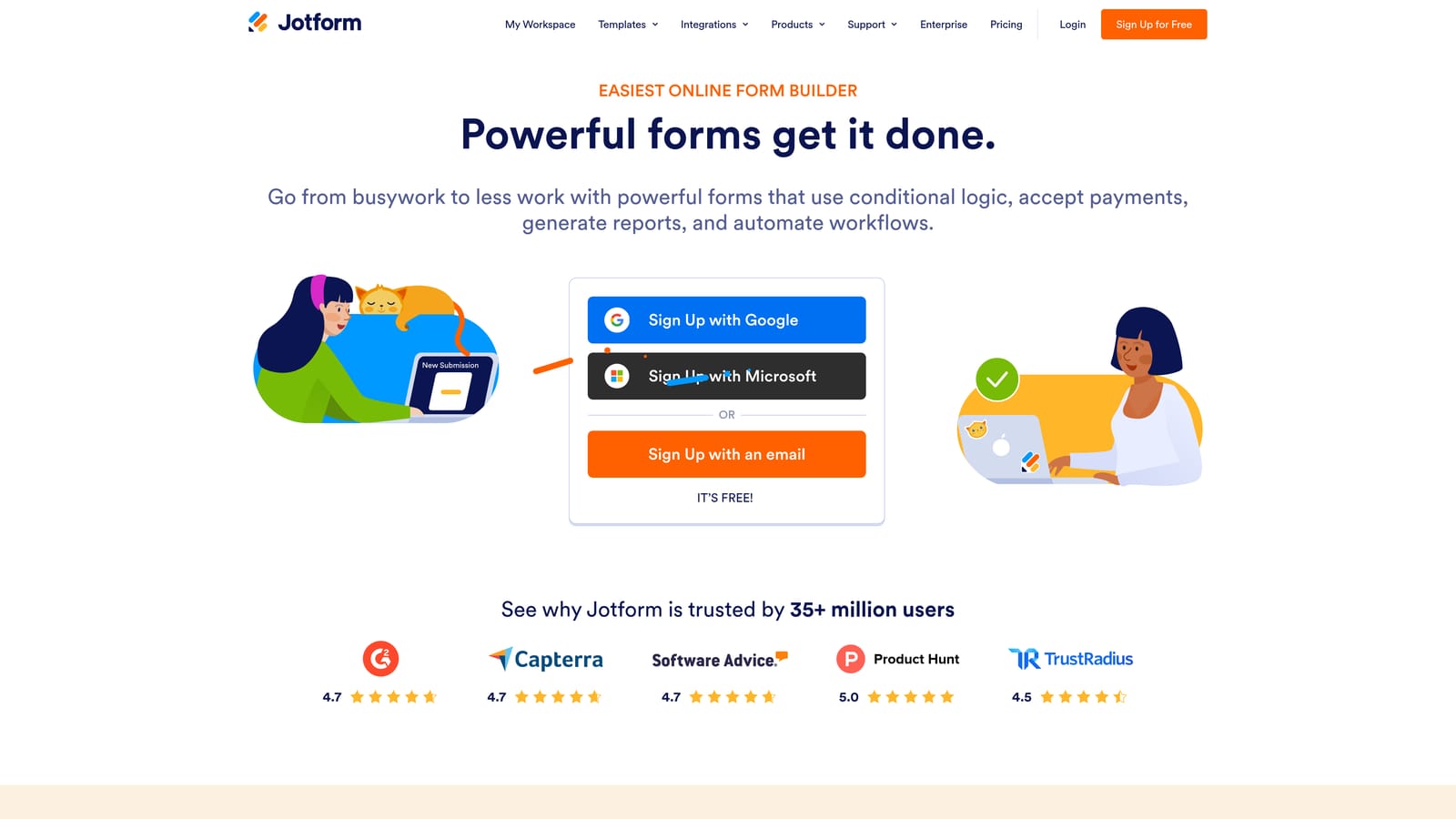
Jotform is a feature-rich form builder with one of the most comprehensive conditional logic engines available in the no-code category.
Where This Tool Shines
Where most form builders give you simple if/then rules, Jotform gives you AND/OR logic combinations, field calculations, page branching, and conditional email routing. That level of granularity is unusual at this price point. For teams building complex operational forms, like multi-department intake flows or approval routing processes, Jotform's logic engine handles scenarios that would break simpler tools.
The template library is another practical advantage. Jotform offers thousands of pre-built forms, many of which already include conditional logic structures you can adapt rather than build from scratch. That significantly reduces setup time for common use cases.
Key Features
AND/OR Multi-Condition Logic: Combine multiple conditions using AND or OR operators for precise branching control.
Page Branching and Calculations: Route respondents to different form pages and perform calculations based on conditional inputs.
Conditional Email Routing: Automatically send notifications to different team members based on form responses.
Approval Workflows: Build multi-step approval chains triggered by conditional logic outcomes.
HIPAA-Compliant Plans: Available for healthcare and regulated industry use cases.
Best For
Jotform is ideal for operations teams, HR departments, healthcare organizations, and any team that needs complex conditional workflows without a developer. If your use case involves routing, approvals, or multi-condition logic, Jotform is one of the strongest options in this list.
Pricing
A free tier is available with form and submission limits. Paid plans are offered at multiple price points. Verify current pricing at jotform.com.
4. Paperform
Best for: Teams that need conditional logic across forms, payments, and booking calendars in a single tool
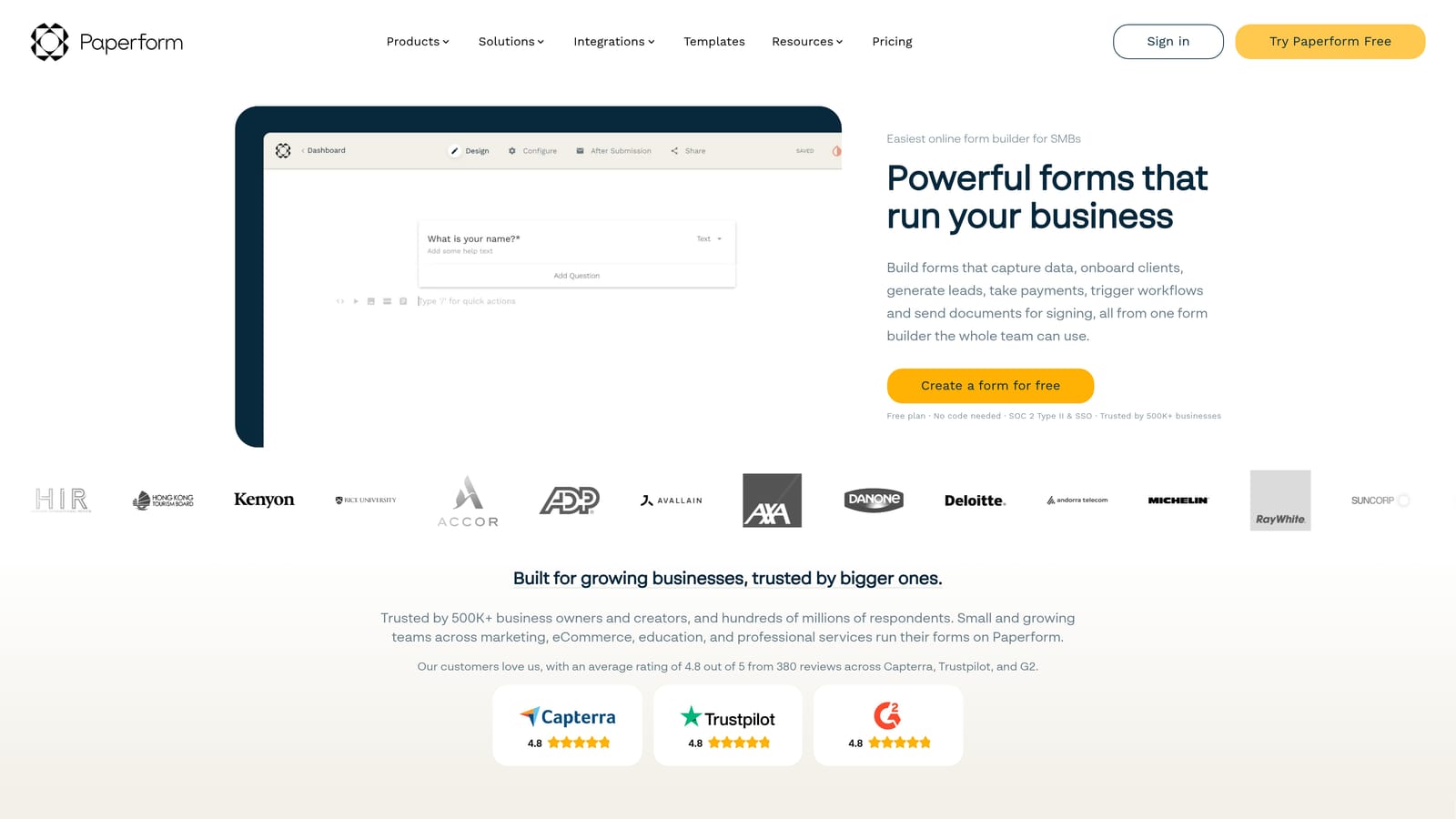
Paperform is a flexible form builder that combines conditional logic with built-in payment processing, appointment scheduling, and freeform page layouts.
Where This Tool Shines
Paperform's differentiator is scope. Conditional logic in most tools applies to form fields. In Paperform, it applies to pricing rules, booking calendars, product displays, and calculated outputs. You can build a form that shows a pricing tier based on a previous selection, then triggers a booking calendar only if a specific condition is met. That kind of cross-element logic is rare in a single tool.
The freeform layout is also worth highlighting. Unlike traditional form builders that constrain you to a vertical field-by-field structure, Paperform lets you design more like a landing page, mixing text, images, and form fields freely. For product recommendation flows or service intake pages, that flexibility produces more polished results.
Key Features
Cross-Element Conditional Logic: Apply conditions across form fields, pricing rules, and booking calendars in one unified flow.
Freeform Layout: Design forms more like landing pages, without being locked into a traditional vertical structure.
Built-In Payments and Scheduling: Native payment processing and appointment booking without third-party integrations.
Calculation Fields: Fields that compute values dynamically based on conditional inputs.
Custom Domain Support: Available on paid plans for branded form URLs.
Best For
Paperform is a strong fit for service businesses, consultants, and product-led teams that need a single tool to handle intake, pricing, and scheduling. It's particularly useful when your form needs to function more like a mini-application than a simple data collection form.
Pricing
No permanent free tier is available, but a trial is offered. Verify current plan pricing at paperform.co.
5. Tally
Best for: Budget-conscious teams and individuals who want conditional logic without paying for it
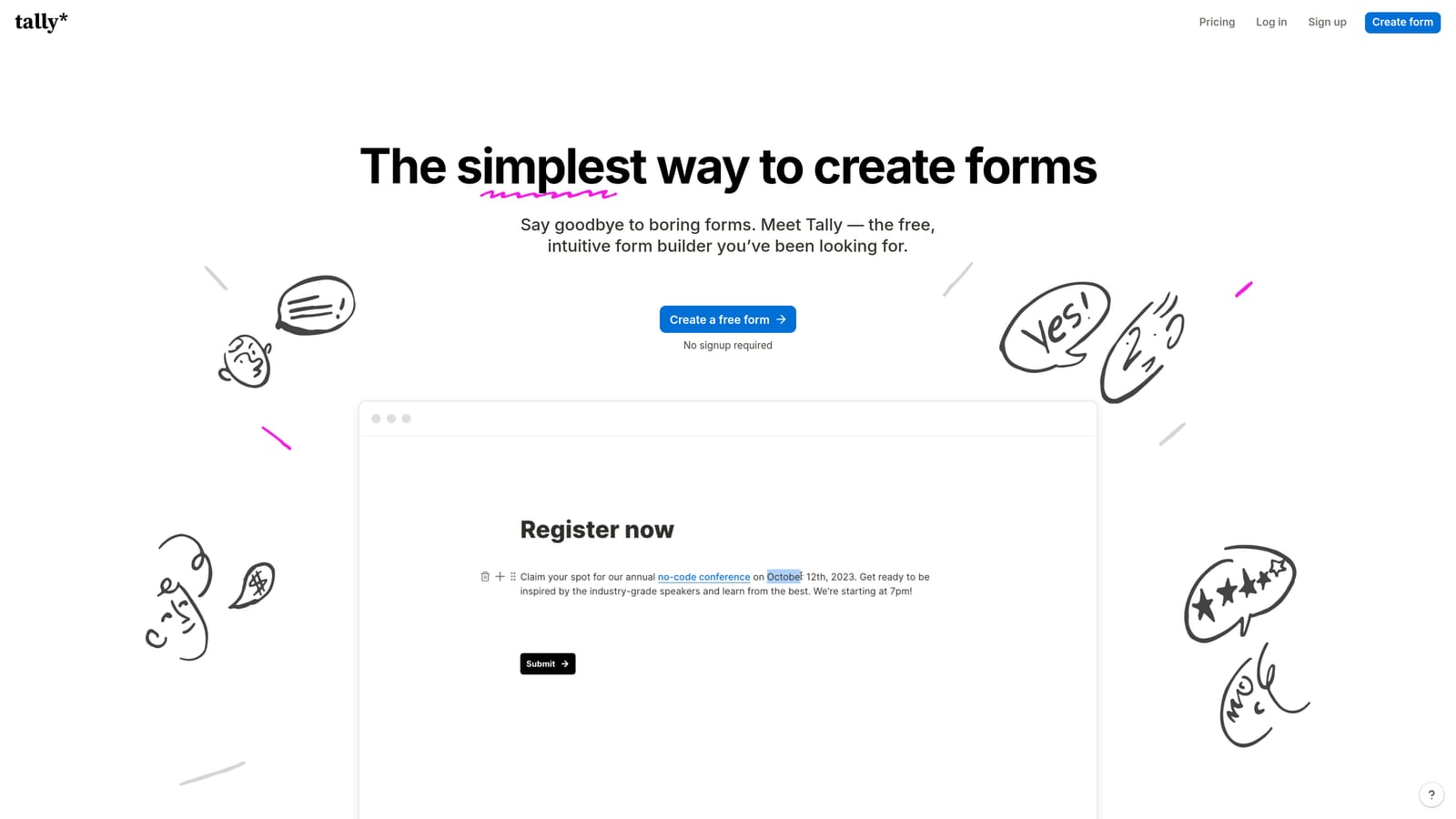
Tally is a Notion-style block-based form builder that includes conditional branching logic on its free plan, which is genuinely unusual in this category.
Where This Tool Shines
The headline feature for Tally is straightforward: conditional logic is available on the free plan. For most form builders, branching is a paid feature. Tally flips that, making it one of the most accessible entry points for teams that need dynamic forms but aren't ready to commit to a paid subscription. Combined with unlimited forms and unlimited responses on the free tier, it's a compelling option for early-stage teams or side projects.
The editing experience feels familiar to anyone who uses Notion. The block-based interface is intuitive and fast to work with. The conditional logic itself is simpler than what Jotform or Orbit AI offer, but for straightforward branching scenarios, it gets the job done without a learning curve.
Key Features
Free Conditional Logic: Branching and logic jumps are available on the free plan, not gated behind a paywall.
Block-Based Editor: Notion-style interface that's fast to learn and easy to navigate.
Native Notion Integration: Responses can flow directly into a Notion database.
Zapier and Make Connections: Connect to broader automation workflows without upgrading.
Unlimited Free Tier: No caps on forms or responses on the free plan.
Best For
Tally is the right pick for freelancers, early-stage startups, and small teams that need functional conditional logic without a budget for software. It's also a good fit for teams already working heavily in Notion who want native form integration.
Pricing
Free plan includes conditional logic with no response limits. A Pro plan with additional features is available. Verify current pricing at tally.so.
6. Formstack
Best for: Enterprise teams that need conditional logic connected to document generation, e-signatures, and compliance workflows
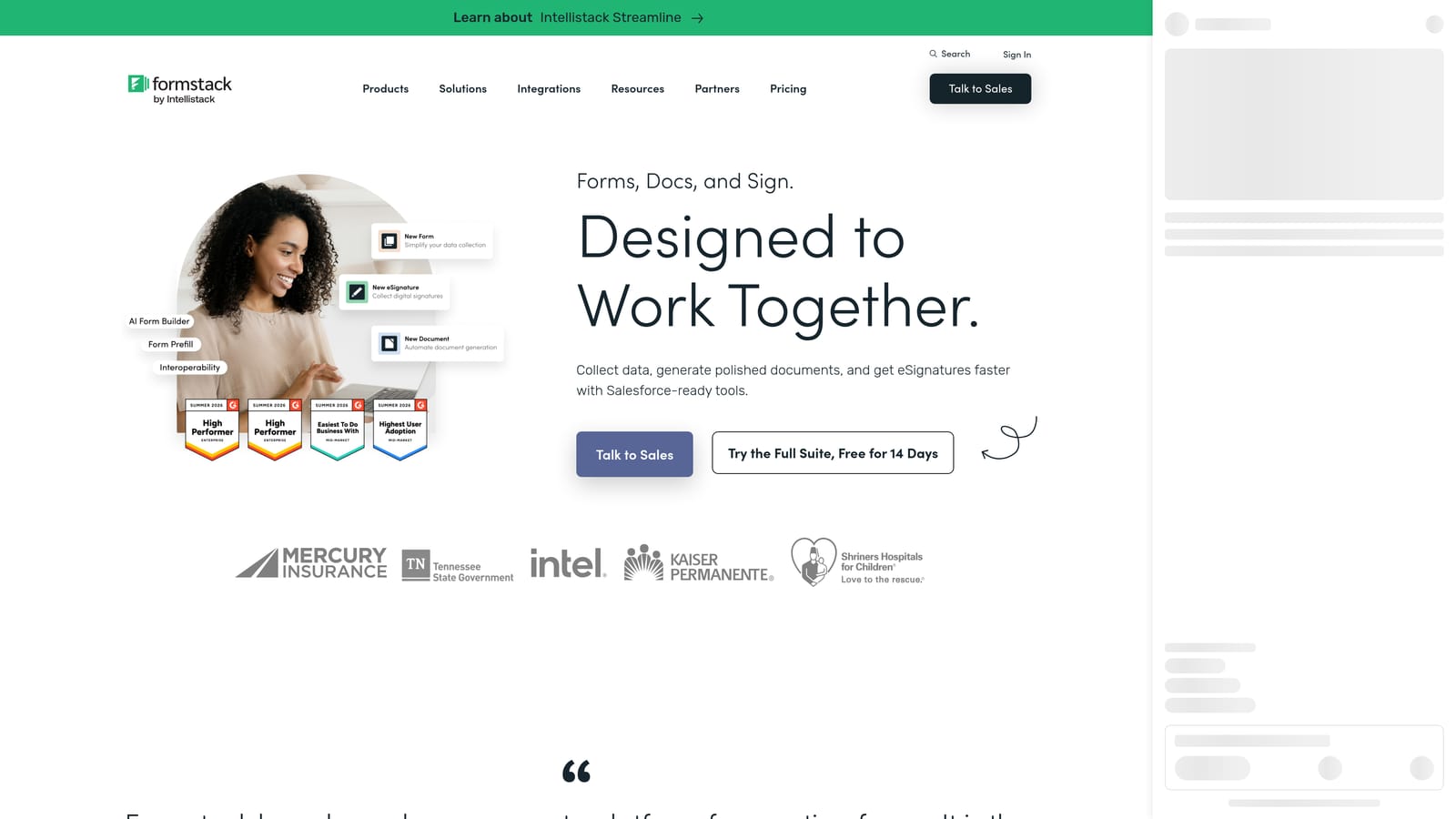
Formstack is an enterprise form and workflow platform where conditional logic integrates across a broader suite of tools including document generation and electronic signatures.
Where This Tool Shines
Formstack operates at a different level of complexity than the other tools on this list. Conditional logic here isn't just about which fields appear. It's about what happens downstream: which document gets auto-generated, which approval chain gets triggered, which e-signature request gets sent. For enterprise teams managing regulated processes, that end-to-end workflow automation is the core value proposition.
Compliance features are built in rather than bolted on. HIPAA and GDPR considerations are addressed at the platform level, and enterprise SSO and advanced user permissions make it viable for large organizations with strict access control requirements. This is a tool for teams that have outgrown lighter-weight form builders and need something that integrates with enterprise infrastructure.
Key Features
Workflow-Integrated Conditional Logic: Branching triggers multi-step approval workflows, not just field visibility changes.
Document Auto-Generation: Conditional responses automatically populate and generate PDFs through Formstack Documents.
E-Signature Triggers: Conditional paths can initiate e-signature requests based on form outcomes.
Compliance Infrastructure: HIPAA and GDPR compliance features built into the platform.
Enterprise Access Controls: SSO support and advanced user permission management for large teams.
Best For
Formstack is designed for enterprise teams in regulated industries: healthcare, legal, financial services, and large organizations that need conditional logic to connect with document workflows, compliance requirements, and approval chains. It's not the right fit for small teams or simple lead gen use cases.
Pricing
Business and enterprise pricing tiers are available. Verify current pricing at formstack.com.
Which Conditional Logic Form Builder Is Right for You?
Conditional logic isn't just a UX nicety. It's a conversion lever. Forms that adapt to respondents collect better data, reduce drop-off, and deliver leads that are already partially qualified. The right tool depends on what you're trying to accomplish.
For lead qualification and AI-powered routing: Orbit AI is the standout choice. It's the only tool on this list built specifically around the idea that your form should be doing qualification work, not just collecting answers. The combination of smart branching and built-in lead scoring makes it the strongest fit for SaaS and B2B teams running active lead generation campaigns.
For conversational UX and brand-forward experiences: Typeform delivers the most polished respondent experience. If your form is customer-facing and presentation matters as much as data quality, Typeform's one-question-at-a-time format makes branching feel natural rather than mechanical.
For complex multi-condition logic without code: Jotform offers the deepest conditional logic engine in the no-code category. AND/OR combinations, page branching, and conditional email routing make it ideal for operational forms, intake workflows, and multi-department routing.
For forms that also handle payments and bookings: Paperform is the right pick when your form needs to do more than capture data. The cross-element conditional logic across fields, pricing, and scheduling is a genuine differentiator for service-based businesses.
For budget-conscious teams: Tally gives you functional conditional logic on a free plan with no response caps. For early-stage teams or simple branching use cases, it's hard to beat the value.
For enterprise workflow automation: Formstack is the choice when conditional logic needs to trigger document generation, e-signatures, and approval chains at scale, particularly in regulated industries.
If your focus is lead generation and you want your forms to qualify prospects automatically while delivering a modern, conversion-optimized experience, Start building free forms today with Orbit AI and see what intelligent conditional logic can do for your pipeline.


