

Enterprise lead generation software is one of the biggest line items in a modern revenue team's tech stack, and pricing can range from a few hundred dollars a month to six-figure annual contracts. The challenge isn't just finding a tool that works; it's finding one that delivers ROI at the right price point for your organization.
Whether you're a scaling startup entering the enterprise space or a large organization looking to consolidate tools and cut costs, understanding what you're actually paying for matters. Below, we break down nine leading enterprise lead generation platforms, comparing their core strengths, ideal use cases, and what they'll actually cost you.
1. Orbit AI
Best for: High-growth teams that want AI-powered lead qualification built directly into the form experience.
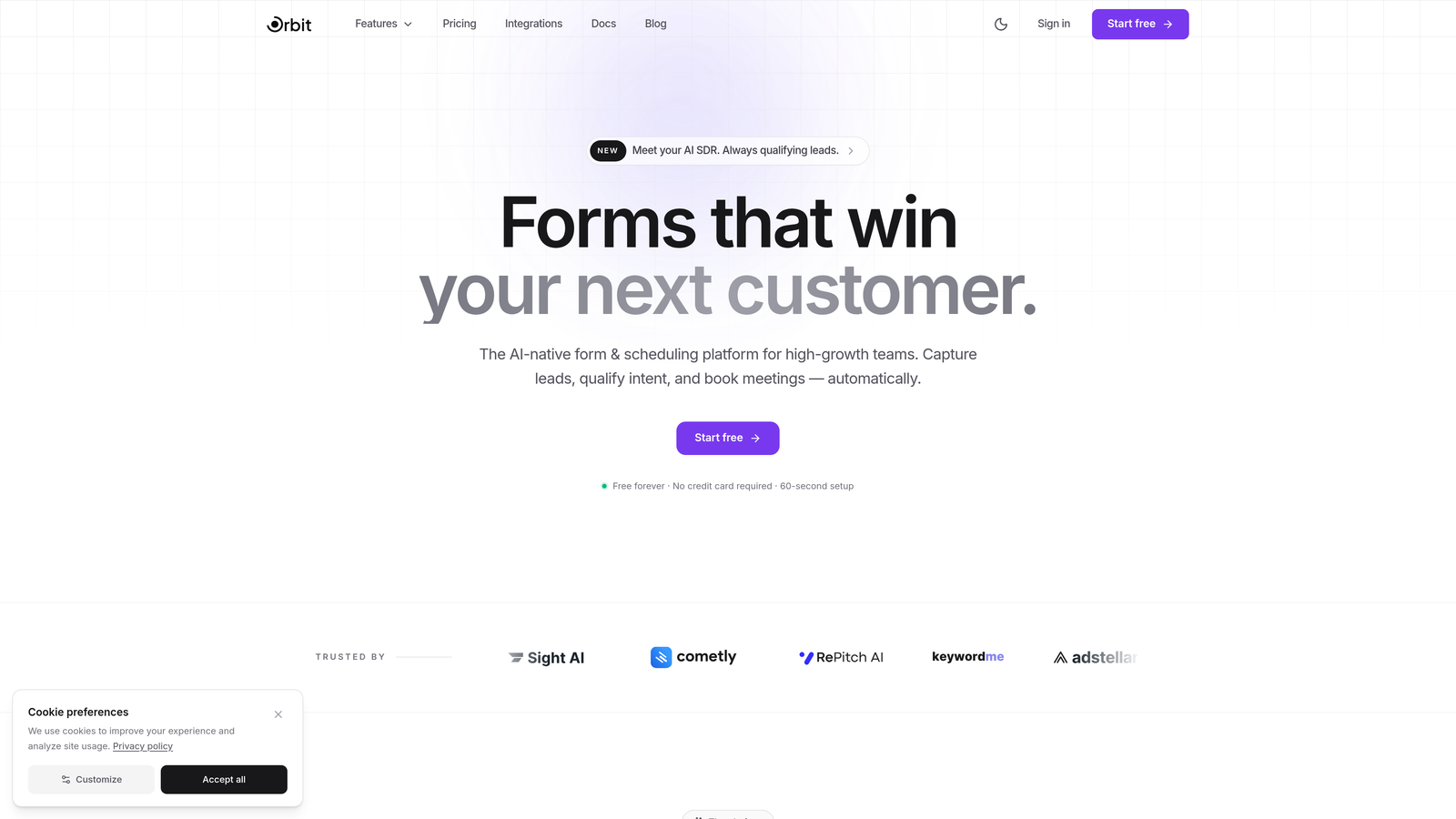
Orbit AI is an AI-powered form builder platform that combines conversion-optimized design with intelligent lead qualification, helping teams capture and score leads without the overhead of a traditional marketing automation suite.
Where This Tool Shines
Most enterprise lead generation tools treat forms as a data collection afterthought. Orbit AI flips that model by embedding lead intelligence directly into the form experience itself. The result is a leaner, faster path from visitor to qualified lead, without requiring a separate scoring engine or complex workflow configuration.
For high-growth teams that need to move quickly, this approach removes a significant layer of implementation complexity. You get AI-driven lead qualification and beautiful, conversion-focused design in a single platform, rather than stitching together a form tool, a scoring system, and a CRM routing layer separately.
Key Features
AI-Powered Lead Scoring: Lead qualification is built directly into the form experience, scoring prospects as they engage rather than after submission.
Conversational Multi-Step Forms: The form builder is designed around conversion principles, using multi-step flows that reduce friction and improve completion rates.
Intelligent Field Suggestions: The platform adapts to user behavior in real time, surfacing relevant fields based on how respondents interact with the form.
CRM Integrations: Seamless lead routing to your CRM ensures qualified leads reach the right sales rep without manual intervention.
Code-Free Design: Modern, polished form design is accessible without engineering resources, which matters when speed is a competitive advantage.
Best For
Orbit AI is a strong fit for scaling SaaS companies, demand generation teams, and growth-focused organizations that want enterprise-grade lead qualification without committing to a six-figure marketing automation platform. It's particularly well-suited for teams that prioritize conversion rate optimization alongside lead quality.
Pricing
Transparent pricing tiers are available on the Orbit AI website. Costs are significantly lower than traditional enterprise marketing automation platforms, making it an accessible option for teams at multiple growth stages.
2. HubSpot Marketing Hub Enterprise
Best for: Organizations that want an all-in-one marketing, CRM, and lead generation ecosystem under one roof.
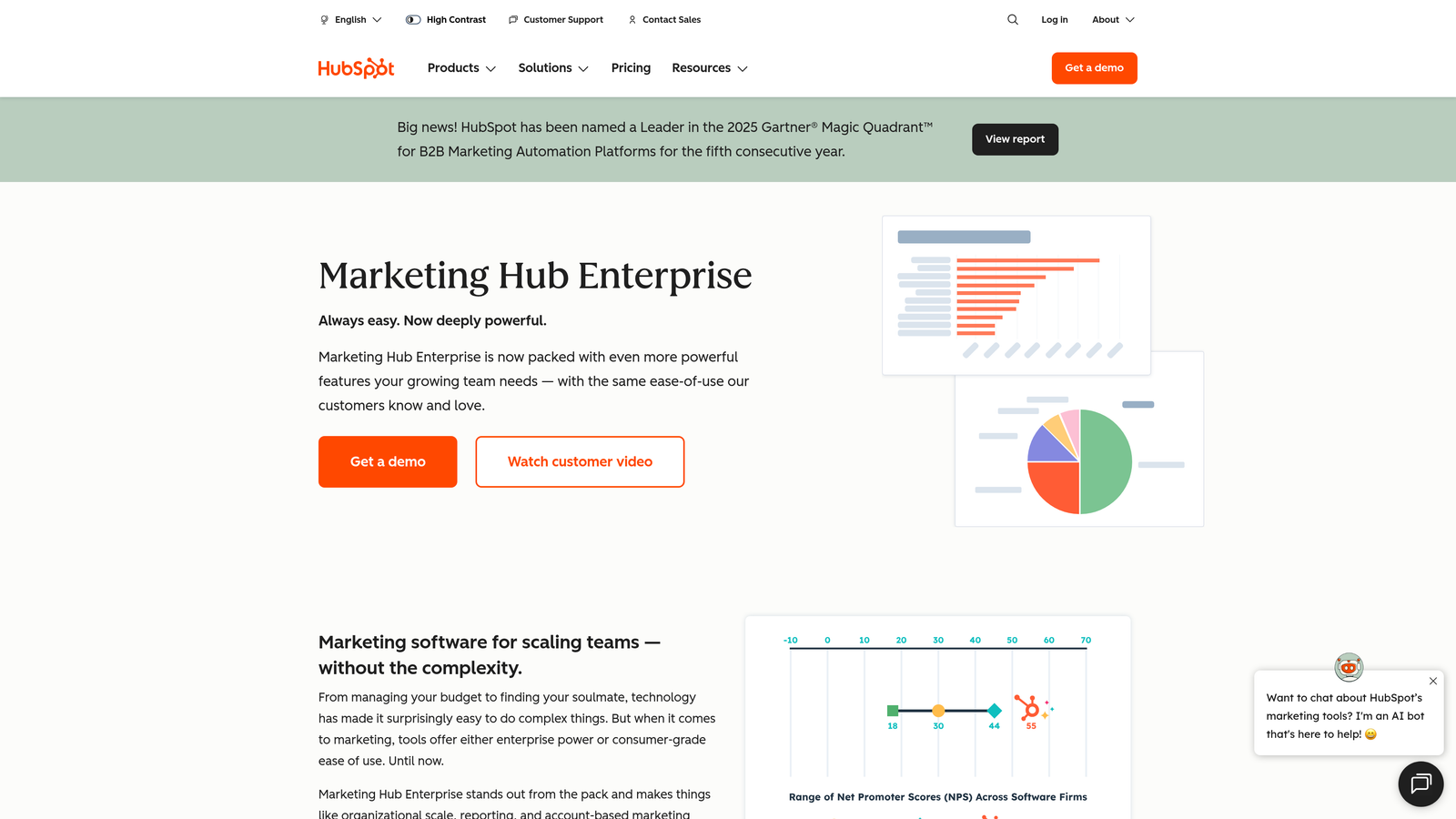
HubSpot Marketing Hub Enterprise is a comprehensive marketing automation platform that combines lead generation, email marketing, CRM, analytics, and campaign management in a single, deeply integrated environment.
Where This Tool Shines
HubSpot's biggest advantage is cohesion. When your forms, CRM, email sequences, lead scoring, and reporting all live in one platform, you eliminate the data fragmentation that plagues multi-tool stacks. For teams that have historically struggled with attribution or lead handoff between marketing and sales, this unified model solves a real operational problem.
The tradeoff is cost and complexity. Marketing Hub Enterprise is a serious investment, and getting full value out of it typically requires dedicated HubSpot administrators and a meaningful onboarding investment. Teams that only need a portion of the platform's capabilities may find themselves paying for features they never deploy.
Key Features
All-in-One Marketing Automation: Native CRM integration means lead data flows seamlessly between marketing and sales without third-party connectors.
Advanced Lead Scoring: Behavioral and demographic scoring models help prioritize leads based on engagement signals across multiple channels.
Custom Reporting and Revenue Attribution: Multi-touch attribution reporting connects marketing activity directly to closed revenue.
Adaptive Testing and Smart Content: Personalization features allow teams to serve different content to different audience segments without custom development.
Extensive App Marketplace: Hundreds of native integrations cover most enterprise tech stack requirements.
Best For
Mid-market to enterprise companies that want a single platform to manage their entire marketing and lead generation operation. Particularly strong for organizations already using HubSpot CRM or Sales Hub, where the ecosystem value compounds significantly.
Pricing
Marketing Hub Enterprise starts at $3,600 per month billed annually. Additional costs apply for onboarding, extra contacts beyond the base tier, and premium add-ons. Total cost of ownership can climb substantially at scale.
3. Salesforce Marketing Cloud Account Engagement (Pardot)
Best for: Sales-driven B2B organizations already invested in the Salesforce ecosystem.
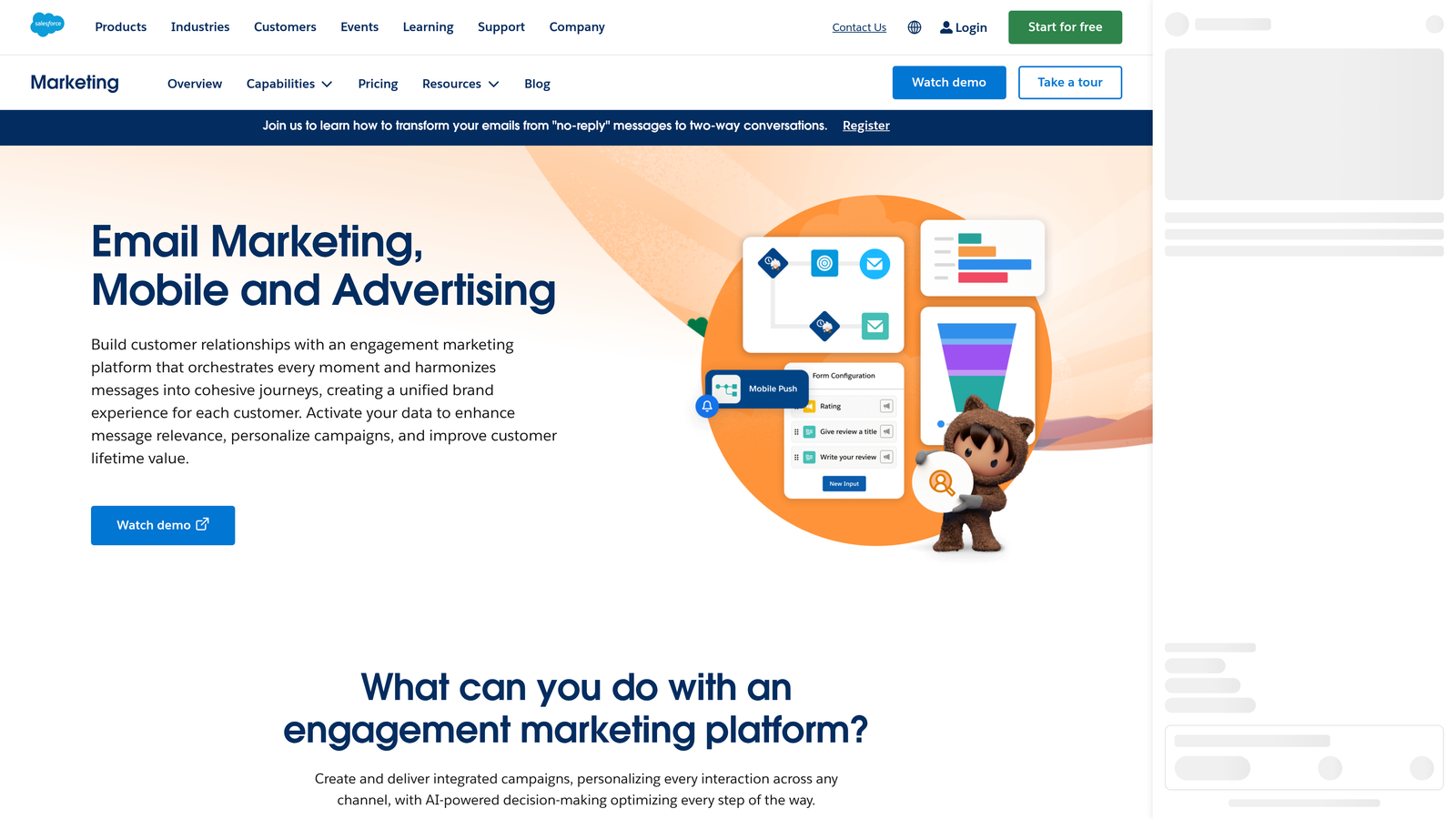
Salesforce Marketing Cloud Account Engagement (formerly Pardot) is a B2B marketing automation platform built around native Salesforce CRM integration, offering lead scoring, nurturing, and advanced analytics for complex sales cycles.
Where This Tool Shines
If your sales team lives in Salesforce, Account Engagement's bi-directional CRM sync is a genuine differentiator. Lead data, activity history, and scoring signals flow between marketing and sales in real time, which reduces the latency that often causes high-intent leads to go cold before a rep follows up.
Einstein AI adds a layer of predictive intelligence to scoring and behavior analysis, though realizing the full value of these features typically requires clean data and a well-configured Salesforce instance. For organizations without that foundation, the learning curve is steep.
Key Features
Native Salesforce Integration: Bi-directional sync ensures marketing and sales always work from the same lead data without manual reconciliation.
Einstein AI Scoring: AI-powered lead and behavior scoring surfaces the highest-priority prospects automatically.
Engagement Studio: Visual nurture program builder for creating sophisticated, multi-step lead development sequences.
Multi-Touch Attribution: B2B analytics connect campaign activity to pipeline and revenue outcomes.
Account-Based Marketing: ABM capabilities allow teams to coordinate outreach at the account level, not just the contact level.
Best For
Enterprise B2B teams with existing Salesforce infrastructure and complex, multi-touch sales cycles. Less compelling for organizations that don't already use Salesforce CRM, given the dependency on that ecosystem.
Pricing
The Growth tier starts at approximately $1,250 per month. Plus and Advanced tiers scale significantly higher. A separate Salesforce CRM license is required, which adds to the total cost of ownership.
4. Marketo Engage (Adobe)
Best for: Large enterprises running complex, multi-channel lead generation programs at significant scale.
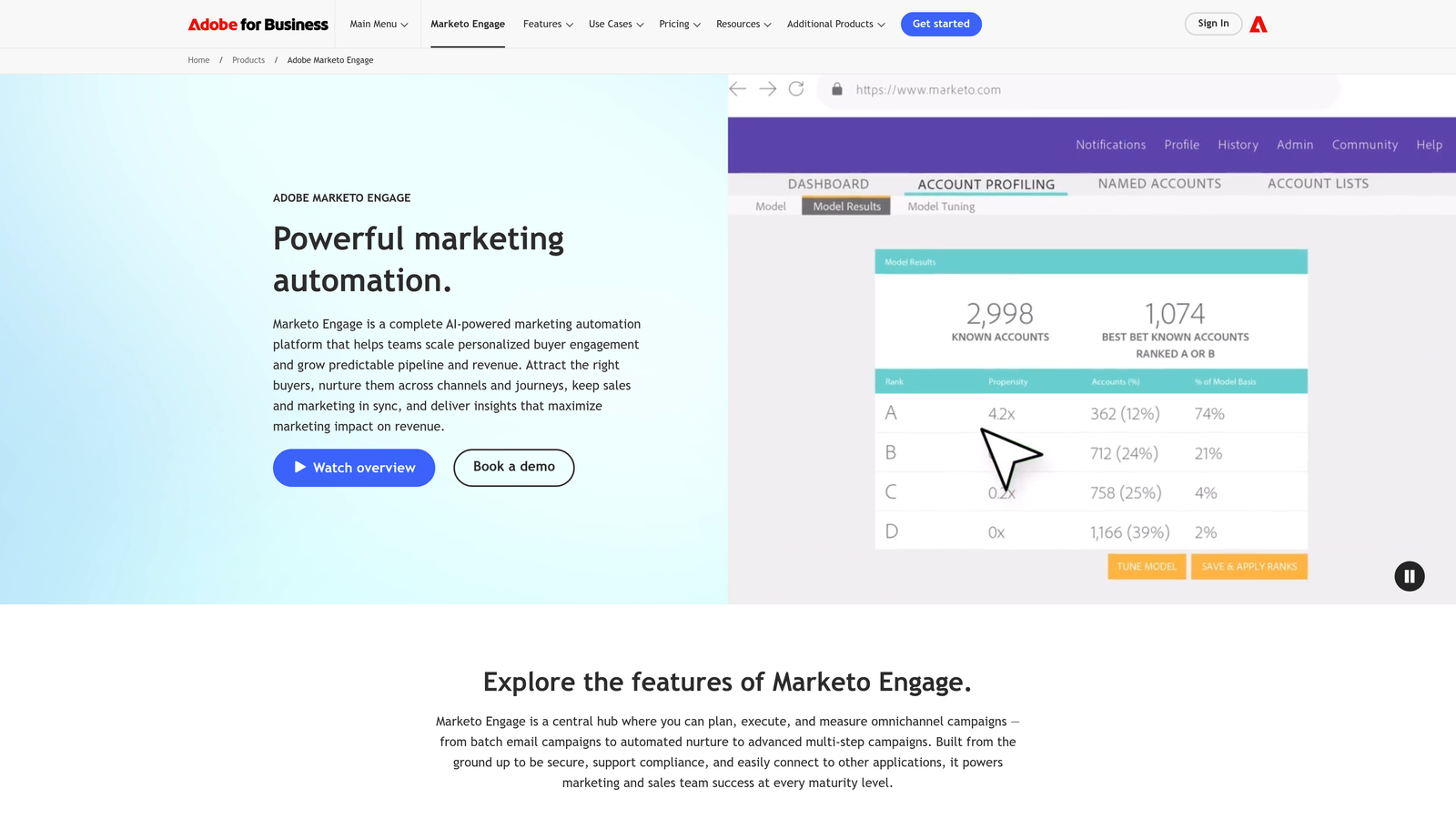
Marketo Engage is an enterprise-grade marketing automation platform designed for orchestrating sophisticated, multi-channel campaigns with advanced scoring, segmentation, and attribution capabilities.
Where This Tool Shines
Marketo's strength is depth. For enterprise teams managing large databases, complex nurture programs across multiple channels, and sophisticated revenue attribution requirements, it offers a level of configurability that few platforms match. Its integration with Adobe Experience Cloud also makes it a natural fit for organizations already running Adobe's broader digital experience stack.
That depth comes with real implementation weight. Marketo is not a platform you deploy and run without dedicated resources. Most enterprise implementations require a combination of internal Marketo specialists and external consulting support, and the total cost of ownership extends well beyond the license fee.
Key Features
Multi-Channel Campaign Orchestration: Coordinate lead generation and nurturing across email, web, social, events, and paid channels from a single platform.
Behavioral and Predictive Lead Scoring: Advanced scoring models incorporate both explicit data and behavioral signals to prioritize leads.
Advanced Segmentation: Granular audience segmentation enables highly personalized outreach at scale.
Revenue Cycle Analytics: Attribution modeling connects marketing programs directly to pipeline and closed revenue.
Adobe Experience Cloud Integration: Deep connectivity with Adobe's broader ecosystem for organizations already invested in that stack.
Best For
Large enterprises with dedicated marketing operations teams, complex multi-channel programs, and the budget and resources to fully implement and manage the platform. Not recommended for teams without dedicated Marketo expertise on staff.
Pricing
Custom pricing only. Contracts typically start in the $50,000-plus per year range depending on database size and feature tier. Implementation and consulting costs often add significantly to the total investment.
5. ZoomInfo
Best for: Outbound-focused sales and marketing teams that need high-quality B2B contact data at scale.
ZoomInfo is a B2B data and intelligence platform that combines one of the largest contact databases in the market with buyer intent signals and engagement tools for outbound lead generation.
Where This Tool Shines
ZoomInfo's core value is data quality and coverage. For teams running outbound sequences, the ability to identify decision-makers, verify contact information, and layer in intent signals can meaningfully improve the efficiency of prospecting efforts. The platform's buyer intent data adds a layer of timing intelligence, helping teams prioritize outreach toward accounts that are actively researching relevant solutions.
The platform has expanded beyond a pure data provider into a broader sales intelligence suite, incorporating conversation intelligence and workflow automation. For organizations that want to consolidate their prospecting tools, this breadth is attractive, though each added module increases cost.
Key Features
B2B Contact and Company Database: Extensive database of verified contacts and company profiles for prospecting and list building.
Buyer Intent Data: Intent signals and website visitor identification help teams prioritize accounts showing active buying behavior.
Conversation Intelligence: Call recording and analysis tools for coaching and capturing insights from sales conversations.
Workflow Automation: Automated outbound sequence tools for scaling prospecting efforts without proportional headcount growth.
CRM and Sales Platform Integrations: Native integrations with Salesforce, HubSpot, and other major platforms keep data synchronized.
Best For
Sales development teams, demand generation managers, and revenue operations professionals at organizations with a significant outbound motion. Particularly valuable when list quality and contact accuracy are major bottlenecks to pipeline growth.
Pricing
Custom pricing based on seats, credits, and feature modules. Enterprise plans typically start in the $15,000 to $30,000-plus range annually, with costs scaling based on usage and team size.
6. Drift (Salesloft)
Best for: Revenue teams that want to qualify and engage website visitors in real time through conversational AI.
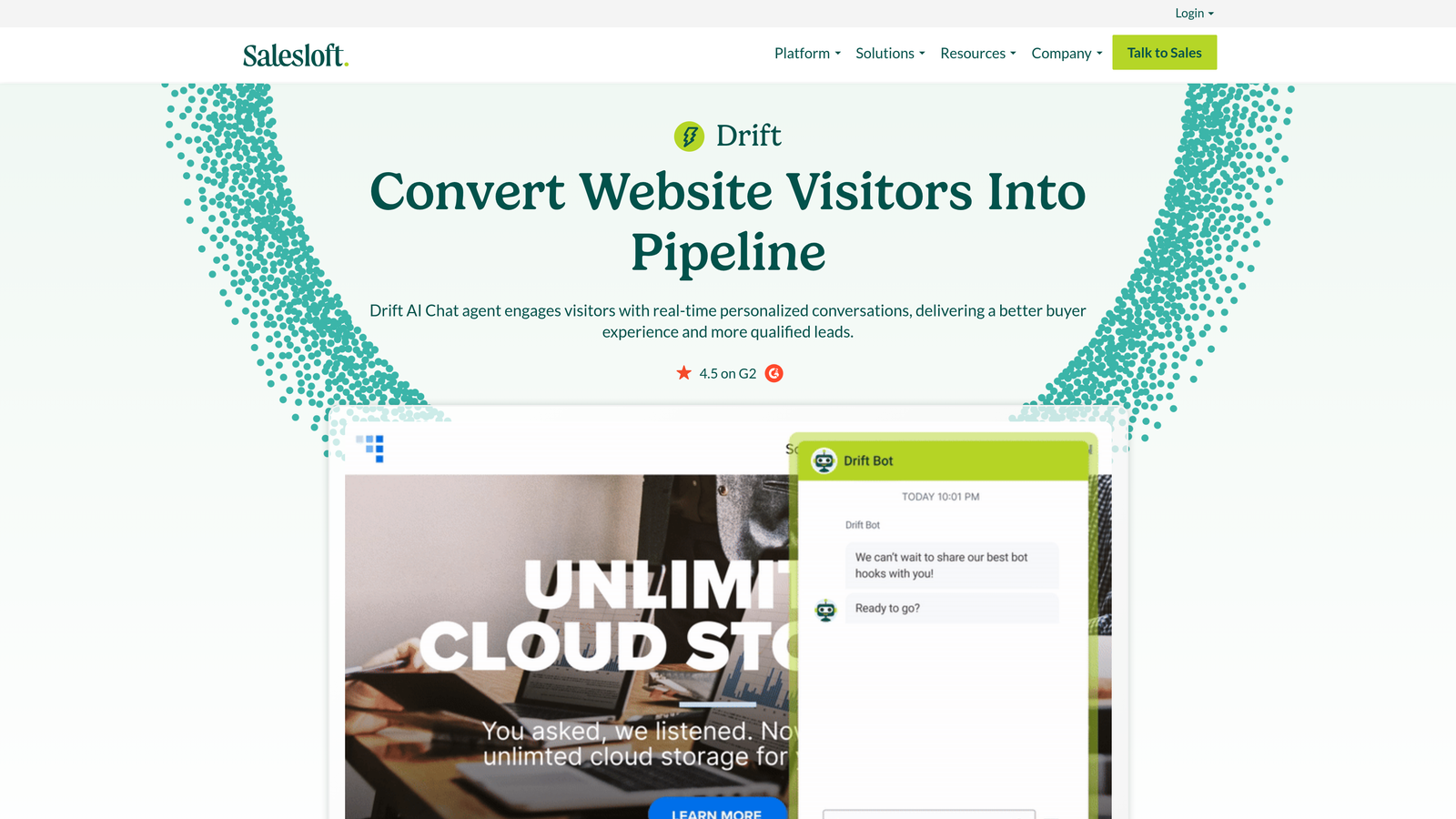
Drift is a conversational marketing and sales platform that uses AI-powered chatbots to qualify, route, and engage website visitors in real time, accelerating pipeline generation by reducing the gap between intent and conversation.
Where This Tool Shines
Drift's core insight is that the traditional form-fill-and-wait model loses high-intent buyers who expect faster engagement. By replacing static forms with dynamic conversational experiences, Drift creates opportunities to qualify and route leads while they're actively engaged on your site rather than hours or days later.
Since its acquisition by Salesloft, Drift is increasingly positioned as part of a broader sales engagement platform rather than a standalone tool. For organizations already in the Salesloft ecosystem, the integration creates a more seamless path from initial website engagement to active sales outreach.
Key Features
AI-Powered Chatbots: Intelligent bots qualify visitors, handle common questions, and route high-priority leads to available sales reps in real time.
Conversational Landing Pages: Replace static landing pages with interactive conversation flows designed to move visitors toward a meeting or demo.
Intelligent Routing: Live chat routing logic connects high-value visitors to the right sales rep based on account data and engagement signals.
Meeting Scheduling: Integrated calendar booking within chat flows removes friction from the demo request process.
CRM and MAP Integrations: Connects with Salesforce, HubSpot, and marketing automation platforms to keep lead data synchronized.
Best For
Enterprise B2B companies with significant website traffic and a sales team available to engage in real-time conversations. Most effective when combined with account-based targeting to prioritize high-value visitor interactions.
Pricing
Now part of the Salesloft platform with custom enterprise pricing. Historically, premium Drift tiers started around $2,500 per month before the acquisition. Current pricing requires direct contact with the Salesloft sales team.
7. Demandbase
Best for: Enterprise teams running account-based marketing programs targeting high-value accounts.
Demandbase is an account-based marketing platform that combines advertising, intent data, and account identification to help enterprise teams identify, target, and convert high-value accounts across the buying journey.
Where This Tool Shines
Demandbase operates at the account level rather than the individual contact level, which aligns well with how enterprise buying decisions actually happen. By combining intent signals with account identification and ABM advertising, it helps teams concentrate budget and effort on the accounts most likely to convert, rather than generating broad lead volume that may not fit the ideal customer profile.
The platform's engagement scoring and "Engagement Minutes" metric provide a different lens on account health than traditional lead scoring, giving sales teams a more holistic view of where target accounts are in the buying process.
Key Features
Account Identification and Intent Signals: Identifies which target accounts are actively researching your solution category and tracks their engagement signals.
ABM Advertising: Account-level ad targeting ensures budget is concentrated on the accounts that matter most to your pipeline goals.
Engagement Scoring: Proprietary scoring methodology that aggregates account-level engagement across channels to surface the highest-priority opportunities.
Website Personalization: Delivers personalized on-site experiences based on the visiting account's industry, size, and buying stage.
CRM and MAP Integrations: Unified account views across Salesforce, HubSpot, Marketo, and other platforms in your stack.
Best For
Enterprise and mid-market B2B organizations with defined target account lists, longer sales cycles, and the budget to run coordinated ABM programs across advertising, sales, and marketing channels.
Pricing
Custom pricing only. Annual contracts typically start in the $30,000 to $100,000-plus range depending on modules selected, data volume, and account list size.
8. Clearbit (HubSpot)
Best for: Teams that want to enrich lead data in real time and reduce form friction at the point of conversion.
Clearbit is a real-time data enrichment and lead intelligence platform that enhances lead capture by automatically appending firmographic and technographic data to form submissions, reducing the fields prospects need to fill out while improving data quality.
Where This Tool Shines
Clearbit's core value proposition is elegantly simple: ask less, know more. By enriching leads at the moment of conversion with company size, industry, technology stack, and other firmographic data, it allows teams to shorten forms significantly without sacrificing the data needed for scoring and routing. Shorter forms generally convert better, making this a direct lever on conversion rate optimization.
Following its acquisition by HubSpot, Clearbit's capabilities are increasingly bundled within HubSpot's platform, which simplifies procurement for existing HubSpot customers but changes the standalone value proposition for teams outside that ecosystem.
Key Features
Real-Time Data Enrichment: Automatically appends company and contact data to form submissions as they happen, without requiring prospects to provide it manually.
Form Shortening: Progressive data appending allows teams to collect only essential fields while filling in the rest from Clearbit's database.
Website Visitor De-Anonymization: Identifies companies visiting your website even when they haven't converted, creating outbound opportunities from inbound traffic.
Dynamic Audience Building: Enriched data powers more precise segmentation for targeted campaigns and personalization.
Native HubSpot Integration: Deeply integrated within the HubSpot ecosystem following the acquisition.
Best For
HubSpot customers looking to improve lead data quality and reduce form friction. Also valuable for any team where form completion rates are a known bottleneck and data enrichment would meaningfully improve lead scoring accuracy.
Pricing
Now bundled within HubSpot's ecosystem. Standalone pricing from before the acquisition is no longer the primary model. Current availability and pricing should be confirmed directly with HubSpot.
9. 6sense
Best for: Enterprise revenue teams that want to identify and prioritize in-market accounts before they raise their hand.
6sense is an AI-powered revenue intelligence platform that uses predictive analytics to identify accounts actively in a buying cycle, helping enterprise teams prioritize their lead generation efforts toward prospects with the highest likelihood of converting.
Where This Tool Shines
6sense's differentiating concept is "dark funnel" visibility: the ability to surface buying intent from anonymous research activity that happens before a prospect ever fills out a form or engages with your brand directly. For enterprise sales cycles where the buying process begins long before any vendor contact, this intelligence can create a meaningful first-mover advantage.
The platform's AI-driven account prioritization helps revenue teams focus their most valuable resource (sales rep time) on the accounts most likely to convert, rather than distributing effort evenly across a broad target list. The tradeoff is significant investment and implementation complexity, which makes it most appropriate for organizations with mature revenue operations functions.
Key Features
Predictive Buying Stage Identification: AI models classify target accounts by buying stage, helping teams time outreach to match where accounts are in their decision process.
Dark Funnel Visibility: Surfaces anonymous research activity from target accounts across third-party sites, review platforms, and other external sources.
AI-Driven Account Prioritization: Continuously updated scoring models surface the highest-priority accounts for sales and marketing action.
Multi-Channel Campaign Orchestration: Coordinates advertising, email, and sales outreach based on account buying stage signals.
CRM, MAP, and Ad Platform Integrations: Connects with Salesforce, HubSpot, Marketo, and major advertising platforms to activate intelligence across the full stack.
Best For
Large enterprise B2B organizations with established revenue operations teams, significant target account lists, and the budget to invest in a sophisticated predictive intelligence platform. Most effective when integrated with a mature CRM and marketing automation infrastructure.
Pricing
Custom pricing only. Annual contracts typically fall in the $50,000 to $120,000-plus range depending on data volume, modules, and organizational size. Pricing varies significantly based on configuration.
Picking the Right Platform for Your Growth Stage
The honest truth about enterprise lead generation software is that the most expensive platform is rarely the right one for every organization. The right choice depends on where you are in your growth journey, what your existing tech stack looks like, and whether you have the internal resources to actually deploy what you're buying.
Here's a practical framework for thinking through the decision.
If you're a high-growth team that needs fast, intelligent lead capture without enterprise-level overhead: Orbit AI is the natural starting point. It delivers AI-powered lead qualification and conversion-optimized form design at a fraction of the cost of a full marketing automation suite, which matters when speed and capital efficiency are both priorities.
If you're building a unified marketing and sales ecosystem and want everything in one platform: HubSpot Marketing Hub Enterprise is the most cohesive option, though the investment is substantial and scales quickly with contact volume.
If your sales team runs on Salesforce and B2B sales cycles are your primary motion: Salesforce Account Engagement is the logical choice for its native integration depth, provided you're already committed to the Salesforce ecosystem.
If you're running a sophisticated ABM program targeting enterprise accounts: Demandbase and 6sense are both purpose-built for account-level intelligence, with 6sense adding predictive buying stage identification for teams that want to get ahead of intent signals before competitors do.
If outbound prospecting and contact data quality are your core bottleneck: ZoomInfo addresses that problem more directly than any other platform on this list.
One pattern worth noting: many organizations end up paying for multiple platforms in this category simultaneously, which drives total cost of ownership far beyond any single line item. Before adding another tool, it's worth auditing whether your current stack is being fully utilized and whether a more focused, purpose-built solution might deliver better results with less complexity.
For teams that want to start with a high-impact, low-overhead approach to lead qualification, start building free forms today with Orbit AI and see how intelligent form design can elevate your conversion strategy without the weight of a full enterprise platform contract.


