

If your forms aren't converting, guessing won't fix them — testing will. Form A/B testing platforms let you run controlled experiments on everything from field order and button copy to form length and layout, so you can make data-backed decisions instead of assumptions. For high-growth teams, even a small lift in form conversion can translate to a significant increase in qualified leads.
This roundup covers the best form A/B testing platforms available in 2026, evaluated on testing depth, ease of use, analytics quality, and how well each tool integrates into a modern lead generation stack. Whether you're optimizing a contact form, a multi-step lead capture flow, or a full landing page form, there's a tool on this list built for your workflow.
1. Orbit AI
Best for: High-growth teams that want native form testing and AI-powered lead qualification in one platform.
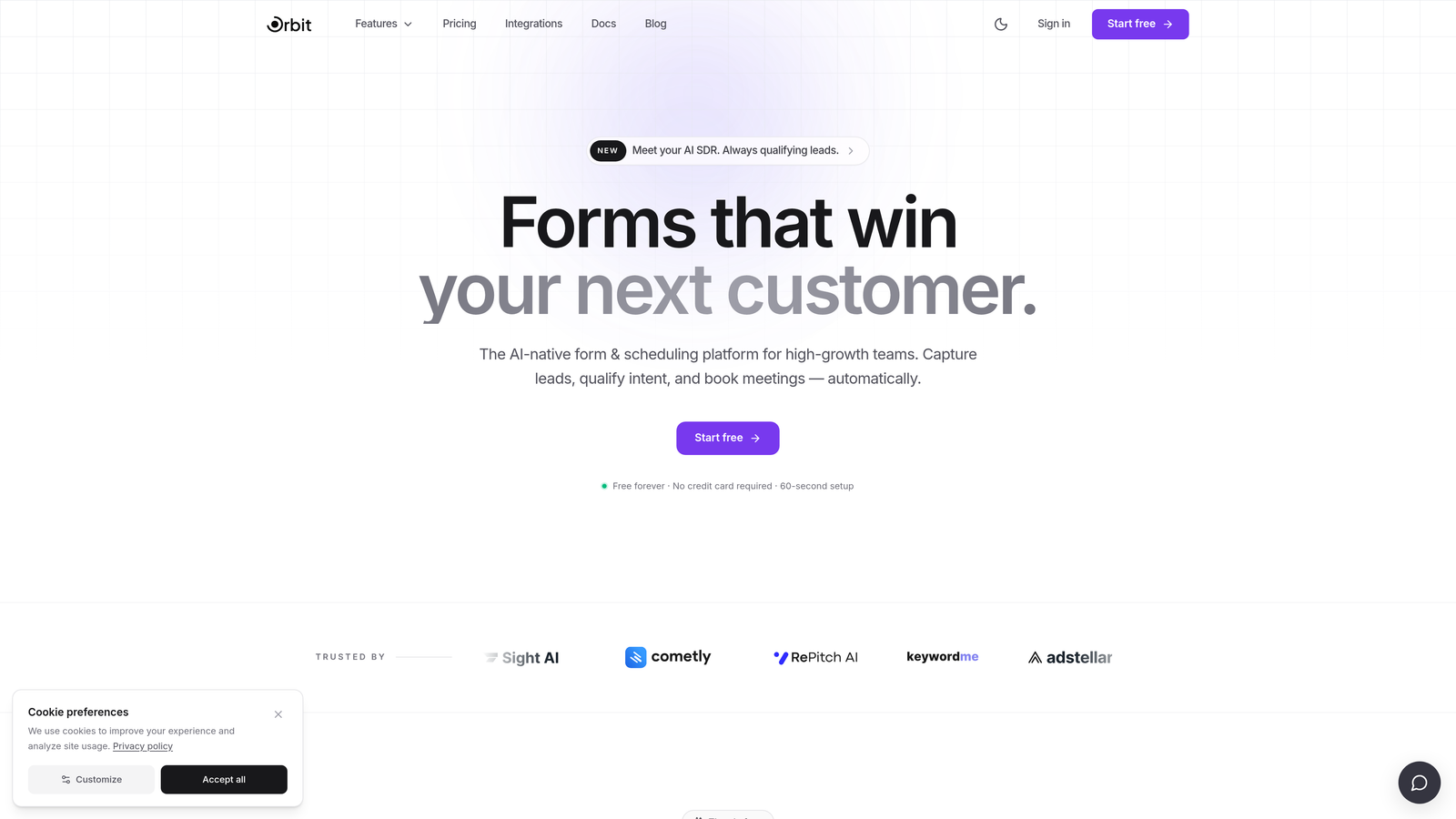
Orbit AI is an AI-powered form builder with built-in A/B testing and lead qualification scoring, designed specifically for conversion-focused teams.
Where This Tool Shines
Most teams running form A/B tests have to stitch together a form builder, a testing tool, and a lead scoring system. Orbit AI collapses all three into a single platform. You can create variants, run tests, and score incoming leads without leaving the tool or managing third-party integrations.
The AI-powered lead qualification layer is a genuine differentiator. Rather than just tracking whether someone submitted a form, Orbit AI scores the quality of each submission automatically. That means your test results aren't just measuring volume — they're measuring which variant drives better leads.
Key Features
Built-in A/B Testing: Create and run form variants natively without connecting a third-party testing tool.
AI Lead Qualification: Submissions are automatically scored for lead quality, so you can optimize for conversion quality, not just conversion volume.
Conversion-Optimized Templates: Pre-built form templates designed with high-growth lead generation workflows in mind.
Real-Time Analytics: Track completion rates, field-level drop-off, and lead quality scores as data comes in.
Drag-and-Drop Builder: Build multi-step forms with conditional logic using a modern visual editor — no developer required.
Best For
B2B SaaS teams and growth marketers who want a purpose-built form testing platform rather than a general CRO tool. Particularly strong for teams where lead quality matters as much as lead volume — the AI scoring layer makes it easy to see which variants attract the right prospects.
Pricing
Paid plans available. Visit orbitforms.ai for current pricing details.
2. Convert.com
Best for: Teams migrating from deprecated testing tools who need a privacy-compliant, dedicated A/B testing platform.
Convert.com is a privacy-focused A/B testing platform that has become a popular destination for teams previously using Google Optimize, which was sunset in September 2023.
Where This Tool Shines
Convert.com positions itself as a serious alternative to enterprise testing platforms at a more accessible price point. Its visual editor makes it straightforward to set up form element tests without writing code, and its GA4 integration means you can align experiments with the audience segments and goals you've already defined in your analytics setup.
Privacy compliance is a first-class feature here, not an afterthought. For teams operating under GDPR or CCPA requirements, Convert.com's architecture and consent handling are built with compliance in mind from the ground up.
Key Features
Visual Editor: Set up form and page element tests without touching code using a point-and-click interface.
GA4 Integration: Connect experiments to your existing Google Analytics 4 audiences and conversion goals.
Multivariate Testing: Test multiple variables across form sections and full pages simultaneously.
Privacy Compliance: Built-in GDPR and CCPA compliance features for teams with regulatory requirements.
Flat-Rate Pricing: Transparent pricing model that doesn't scale unpredictably with traffic volume.
Best For
Marketing teams and CRO practitioners who want a dedicated testing platform with strong privacy controls and a straightforward pricing model. A natural fit for teams that outgrew free tools and want something more robust without enterprise-level costs.
Pricing
Starts at approximately $199/month. Check Convert.com for current plan details.
3. VWO (Visual Website Optimizer)
Best for: CRO teams that want form analytics, heatmaps, and A/B testing under one roof.
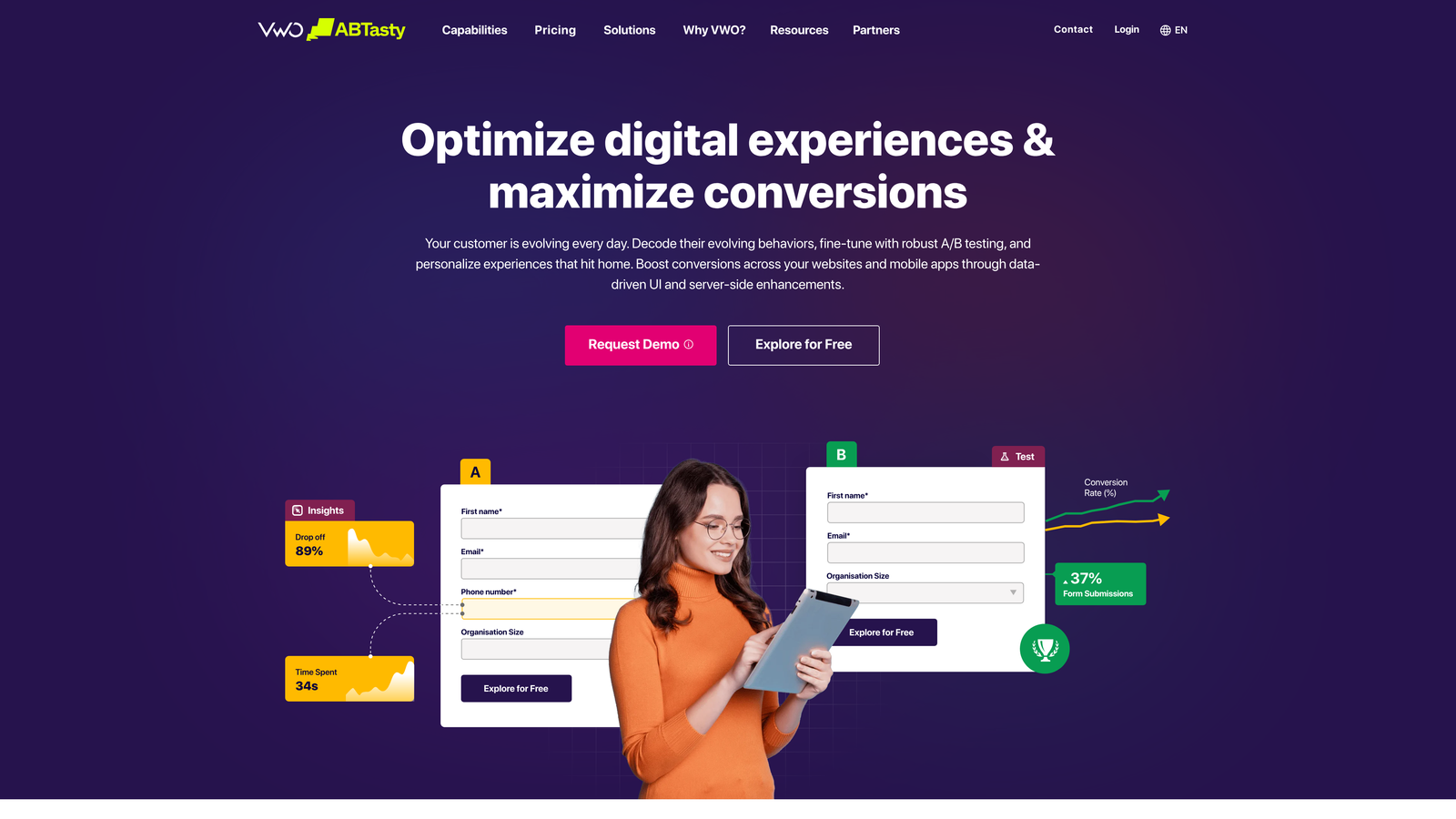
VWO is a full-suite experimentation platform with a dedicated form analytics module, heatmaps, session recordings, and both visual and code-based test editors.
Where This Tool Shines
VWO's form analytics module is one of its most compelling features for teams focused on lead generation. Rather than treating a form as a black box that either converts or doesn't, VWO tracks field-level interactions — showing you exactly where users hesitate, backtrack, or abandon. That kind of granularity makes it much easier to form a hypothesis before running a test.
The combination of quantitative A/B test data with qualitative heatmaps and session recordings gives CRO teams a more complete picture. You can see that a variant performed better and then watch session recordings to understand why.
Key Features
Form Analytics Module: Field-level tracking shows interaction patterns, hesitation, and drop-off points across your forms.
A/B and Multivariate Testing: Run experiments using either the visual editor or a code editor for more complex setups.
Heatmaps and Session Recordings: Add qualitative context to quantitative test results.
Advanced Segmentation: Target experiments to specific audience segments based on behavioral and demographic data.
Statistical Models: Choose between Bayesian and frequentist approaches depending on your team's methodology preference.
Best For
Dedicated CRO teams and growth-stage companies that want a comprehensive experimentation platform with deep form-specific analytics. Best suited for teams with the bandwidth to act on detailed behavioral data.
Pricing
Pricing is based on monthly tracked users. Contact VWO directly for a quote tailored to your traffic volume.
4. Unbounce
Best for: Paid media teams running landing page campaigns who want A/B testing and AI traffic routing built in.
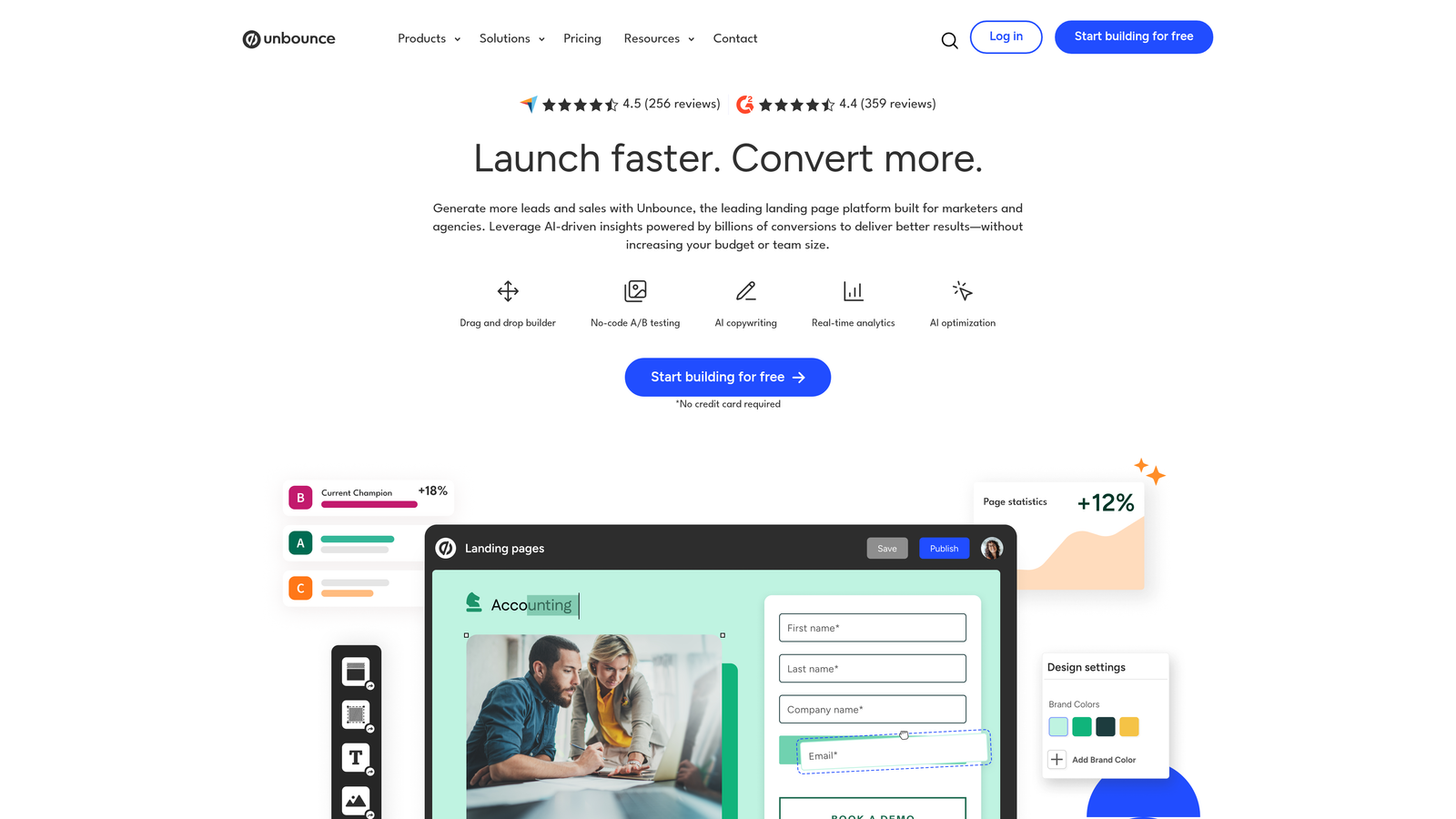
Unbounce is a landing page builder with native A/B testing and a machine learning feature called Smart Traffic that automatically routes visitors to the variant most likely to convert for them.
Where This Tool Shines
Unbounce is purpose-built for the paid media workflow: build a landing page with a form, create variants, drive traffic, and let the platform optimize. Smart Traffic is the standout feature — rather than waiting for a statistically significant winner and then switching all traffic, it continuously routes individual visitors to their best-fit variant based on their attributes.
For teams running Google Ads or Meta campaigns where every click costs money, that kind of dynamic optimization can make a meaningful difference in campaign efficiency without requiring manual intervention.
Key Features
Smart Traffic: AI-powered visitor routing sends each user to the variant most likely to convert for their specific profile.
Native A/B Testing: Testing is built directly into the landing page and form creation workflow.
Drag-and-Drop Builder: Conversion-focused templates and a visual editor make it fast to build and iterate on pages.
CRM and Email Integrations: Connects with major marketing platforms for seamless lead handoff.
Real-Time Conversion Analytics: Monitor performance across variants as campaigns run.
Best For
Performance marketing teams and agencies managing paid campaigns who want a tightly integrated landing page, form, and testing workflow. Less suited for teams testing forms embedded in existing website pages.
Pricing
Starts at $99/month on the Build plan. Check Unbounce for current pricing and plan details.
5. Optimizely
Best for: Enterprise teams running large-scale, rigorous experimentation programs across web, mobile, and server-side.
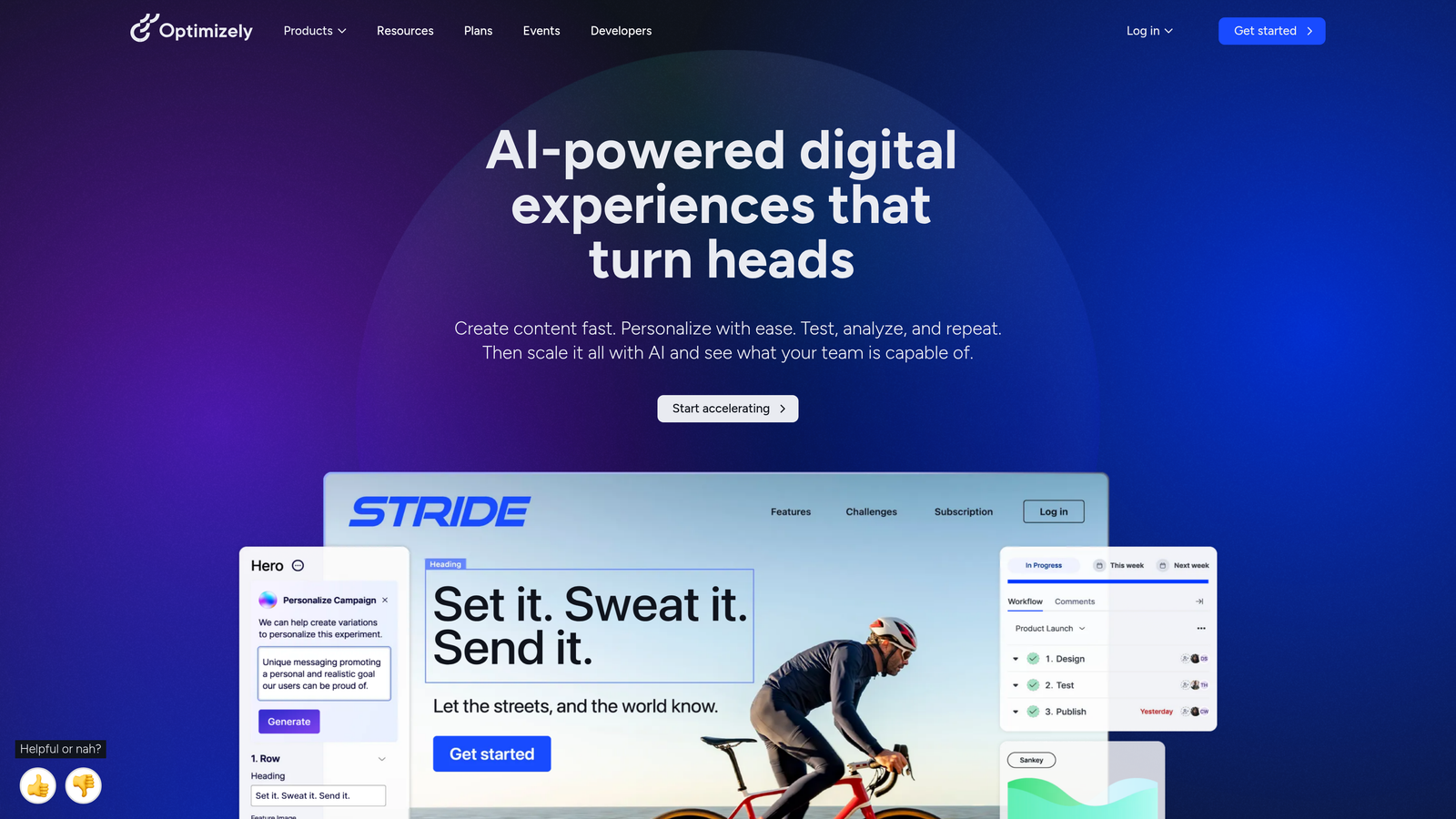
Optimizely is one of the most recognized names in experimentation, known for its Stats Engine and its ability to support sophisticated A/B testing programs at scale.
Where This Tool Shines
Optimizely's Stats Engine is a genuine technical differentiator. It uses sequential testing methodology, which means you can check results in real time without inflating false positive rates — a common pitfall when teams "peek" at experiment data before it reaches statistical significance. For organizations where testing rigor matters, this is a significant advantage.
Beyond forms, Optimizely supports full-stack experimentation across web, mobile apps, and server-side logic. Teams with dedicated experimentation functions can run coordinated programs that span the entire user journey, not just individual form elements.
Key Features
Stats Engine: Sequential testing methodology enables real-time result monitoring without compromising statistical validity.
Full-Stack and Web Experimentation: Run tests across forms, pages, apps, and back-end logic from one platform.
Behavioral and Firmographic Segmentation: Target experiments to highly specific audience segments.
Feature Flagging: Control feature rollouts alongside A/B tests for coordinated product and marketing experiments.
Robust Reporting: Detailed experiment history and reporting for teams that need to document and share results across the organization.
Best For
Enterprise organizations and scale-ups with dedicated experimentation teams, data scientists, or engineering support. The platform's depth is a strength for sophisticated programs but may be more than smaller teams need.
Pricing
Enterprise pricing model. Contact Optimizely directly for a custom quote.
6. AB Tasty
Best for: Mid-market teams that want A/B testing, personalization, and feature management in a single platform.
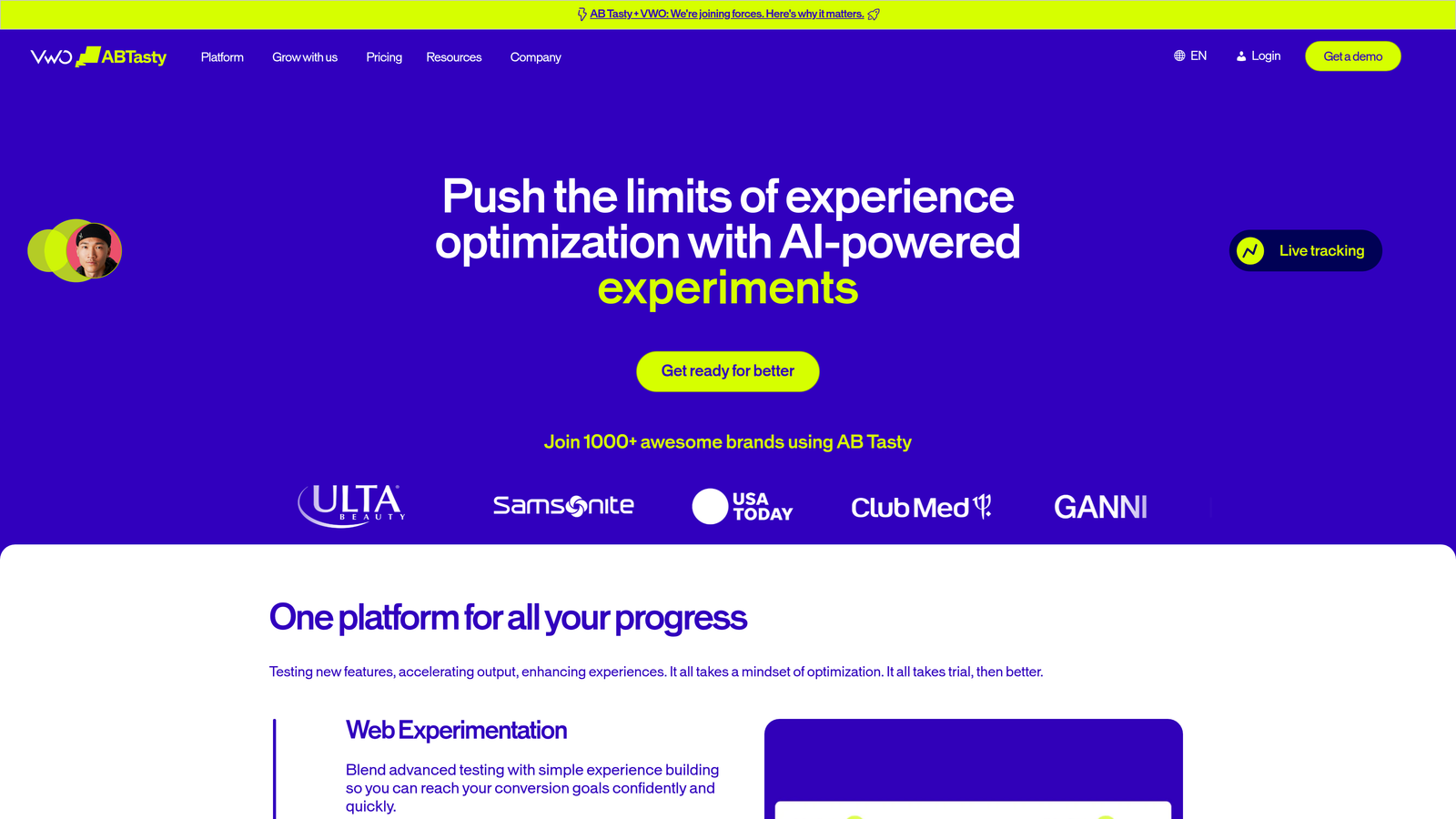
AB Tasty is a CRO platform that combines A/B testing, behavioral personalization, and feature flagging — positioned between the accessibility of lightweight tools and the complexity of full enterprise platforms.
Where This Tool Shines
AB Tasty's combination of testing and personalization in one tool is its main draw. You can run an A/B test on a form element and simultaneously serve a personalized variant to a specific audience segment — without needing two separate platforms. The pre-built widget library also speeds up test creation considerably for teams that don't want to build every test from scratch.
The visual editor keeps most test setup accessible to marketers without developer support, while the feature flagging capability gives product and engineering teams a reason to be in the platform too, making it easier to align experimentation efforts across functions.
Key Features
Visual Editor: No-code test setup for form and page elements, accessible to non-technical marketers.
Behavioral Targeting: Deliver personalized form experiences to specific audience segments alongside standard A/B tests.
Feature Flagging: Manage controlled feature rollouts within the same platform as your A/B testing program.
Widget Library: Pre-built test elements accelerate experiment creation without starting from zero.
Analytics and CRM Integrations: Connects with major analytics platforms and CRM tools for end-to-end tracking.
Best For
Growing companies and mid-market teams that want more than a basic A/B testing tool but aren't ready for full enterprise platforms. Particularly useful when personalization and testing need to live in the same workflow.
Pricing
Pricing available on request. Contact AB Tasty directly for a quote.
7. Hotjar (Experiments)
Best for: Teams that want to combine A/B test results with heatmaps and session recordings to understand the "why" behind user behavior.
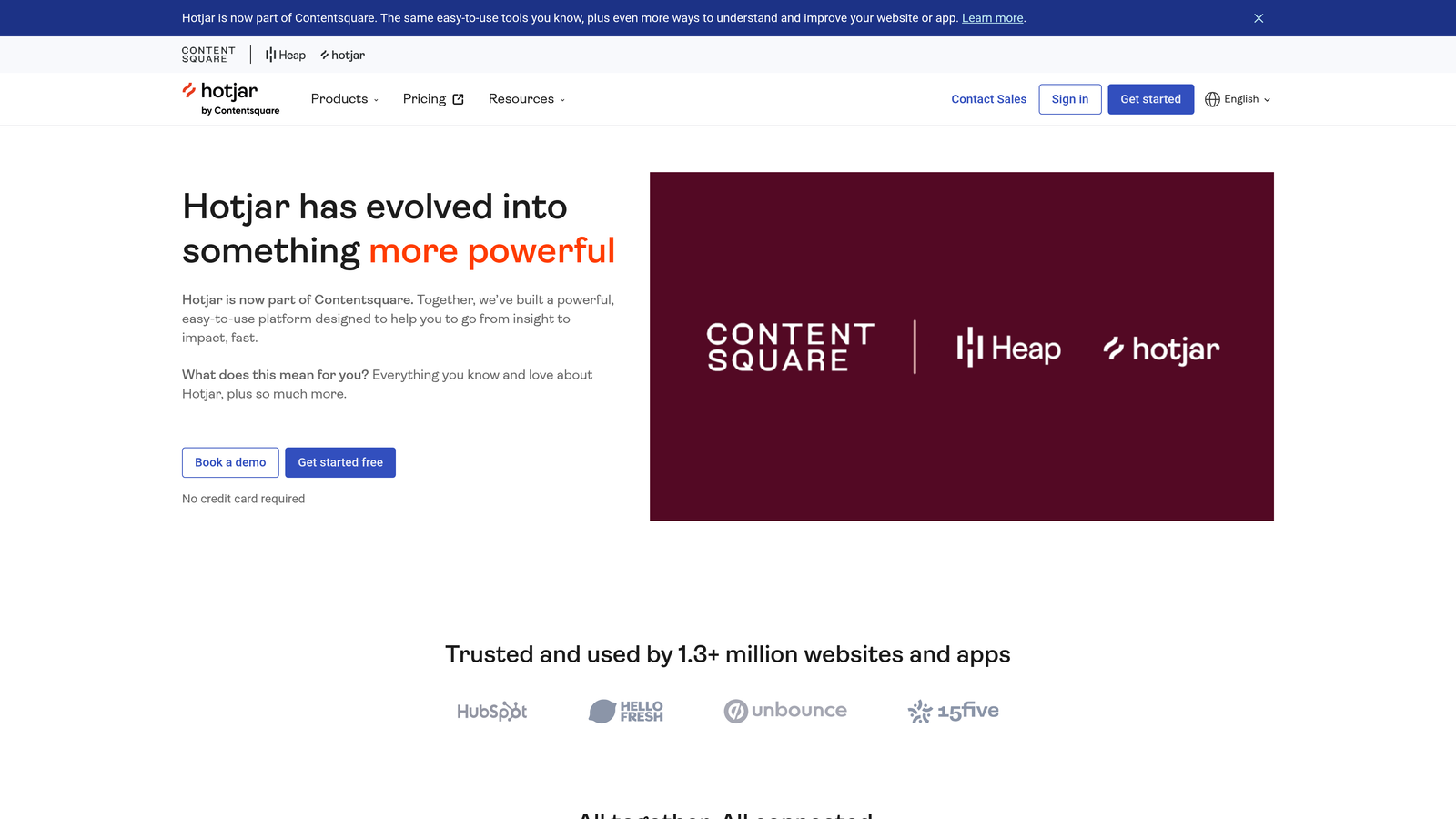
Hotjar is best known for its behavioral analytics suite, and its Experiments feature adds A/B testing to an existing stack of heatmaps, session recordings, and feedback surveys.
Where This Tool Shines
The pairing of quantitative test results with qualitative behavioral data is Hotjar's most compelling angle. When a variant wins, you don't just know it performed better — you can watch session recordings of users interacting with it, see heatmaps showing where attention concentrated, and read feedback survey responses collected during the test. That context is hard to get from a standalone testing tool.
For teams that are new to form A/B testing, Hotjar's relatively simple setup lowers the barrier to getting started. Basic tests don't require developer involvement, making it practical for smaller marketing teams without dedicated engineering support.
Key Features
Integrated A/B Testing: Run form and page experiments directly within the Hotjar platform alongside existing behavioral tools.
Heatmaps per Variant: See exactly where users click, scroll, and focus on each version of your form.
Session Recordings: Watch real user interactions with each variant to identify friction points qualitatively.
Funnel Analysis: Identify where users drop off across multi-step form flows.
Feedback Surveys: Collect qualitative responses alongside test data for richer insight into user intent.
Best For
Small to mid-sized teams that already use Hotjar for behavioral analytics and want to add A/B testing without adopting a separate platform. Ideal for teams that prioritize understanding user behavior over running large-scale multivariate experiments.
Pricing
Free plan available. Paid plans start at $32/month. Check Hotjar for current plan details.
8. Typeform
Best for: Teams using conversational forms who want per-question analytics to iteratively improve completion rates.
Typeform is a conversational form platform with detailed per-question completion analytics that enable structured form optimization, even without a traditional built-in A/B testing module.
Where This Tool Shines
Typeform's per-question drop-off analytics are genuinely useful for form optimization. Rather than knowing only that someone abandoned your form, you can see exactly which question caused it. That level of specificity makes it much easier to prioritize what to change before running a test.
For teams that want to run proper split tests, the common approach is to create duplicate forms and split traffic using UTM parameters or routing logic in tools like Zapier. It's not as seamless as native A/B testing, but it works well enough for teams whose primary need is conversational form optimization rather than full-scale experimentation.
Key Features
Per-Question Drop-Off Analytics: See exactly where users abandon your form at the individual question level.
Logic Jumps: Route users through different question flows based on their responses, enabling segment-specific experiences.
Engagement Metrics: Track time spent per question and overall completion rates beyond simple submission counts.
UTM-Based Traffic Splitting: Run A/B tests by creating duplicate forms and splitting traffic via UTM parameters or automation tools.
CRM and Analytics Integrations: Connect form responses to downstream tools for full-funnel lead tracking.
Best For
Teams already committed to the conversational form format who want to optimize question-by-question rather than run traditional page-level experiments. Best suited for B2B qualification flows, surveys, and onboarding sequences where engagement quality matters.
Pricing
Free plan available. Paid plans start at $25/month. Check Typeform for current pricing.
Which Platform Is Right for Your Team?
The best form A/B testing platform depends on what you're actually trying to optimize and how much testing infrastructure you're ready to manage.
If you're a B2B SaaS team focused on lead quality as much as lead volume, Orbit AI is the strongest starting point. The combination of native form testing, AI lead qualification, and real-time analytics means you're optimizing for the outcomes that actually matter to your pipeline — not just raw submission counts.
For solo marketers and small teams running paid campaigns, Unbounce offers the most streamlined path from landing page to form to test. The Smart Traffic feature removes a lot of the manual decision-making that slows down smaller teams.
If your organization has a dedicated CRO or experimentation function, VWO and Optimizely are the platforms built for that level of rigor. VWO is the better fit for teams that want form-specific analytics alongside testing; Optimizely is the choice for enterprise programs that span the full product and marketing stack.
Teams that care deeply about understanding user behavior — not just which variant won — should look closely at Hotjar Experiments. The ability to pair test results with session recordings and heatmaps is a genuine advantage when you're trying to build intuition about your audience, not just declare a winner.
For teams already invested in conversational forms, Typeform's per-question analytics provide a practical optimization loop even without traditional A/B testing. And for teams prioritizing privacy compliance or migrating from deprecated tools, Convert.com offers a solid, transparent alternative.
The bottom line: start with the tool that matches your current workflow and team size, then expand from there. The best testing platform is the one your team will actually use consistently.
Transform your lead generation with AI-powered forms that qualify prospects automatically while delivering the modern, conversion-optimized experience your high-growth team needs. Start building free forms today and see how intelligent form design can elevate your conversion strategy.


