

Demand generation lives or dies by your ability to capture, qualify, and route leads at scale. The form sitting between your campaign traffic and your CRM is doing more work than most teams realize, and the wrong tool turns high-intent visitors into lost opportunities.
The best form builders for demand generation go beyond basic field collection. They qualify leads in real time, adapt to user responses, integrate cleanly with your marketing stack, and give your team the data needed to prioritize follow-up. Whether you're running paid campaigns, gating content, or building multi-step nurture flows, the right platform can meaningfully improve pipeline quality.
This guide covers six form builders worth considering for demand generation in 2026, evaluated on lead qualification capabilities, conversion optimization features, integrations, and ease of use for growth-focused teams. Orbit AI leads the list because it's purpose-built for exactly this use case, but every tool here has genuine strengths worth understanding.
1. Orbit AI
Best for: High-growth B2B and SaaS teams who need forms that actively qualify pipeline
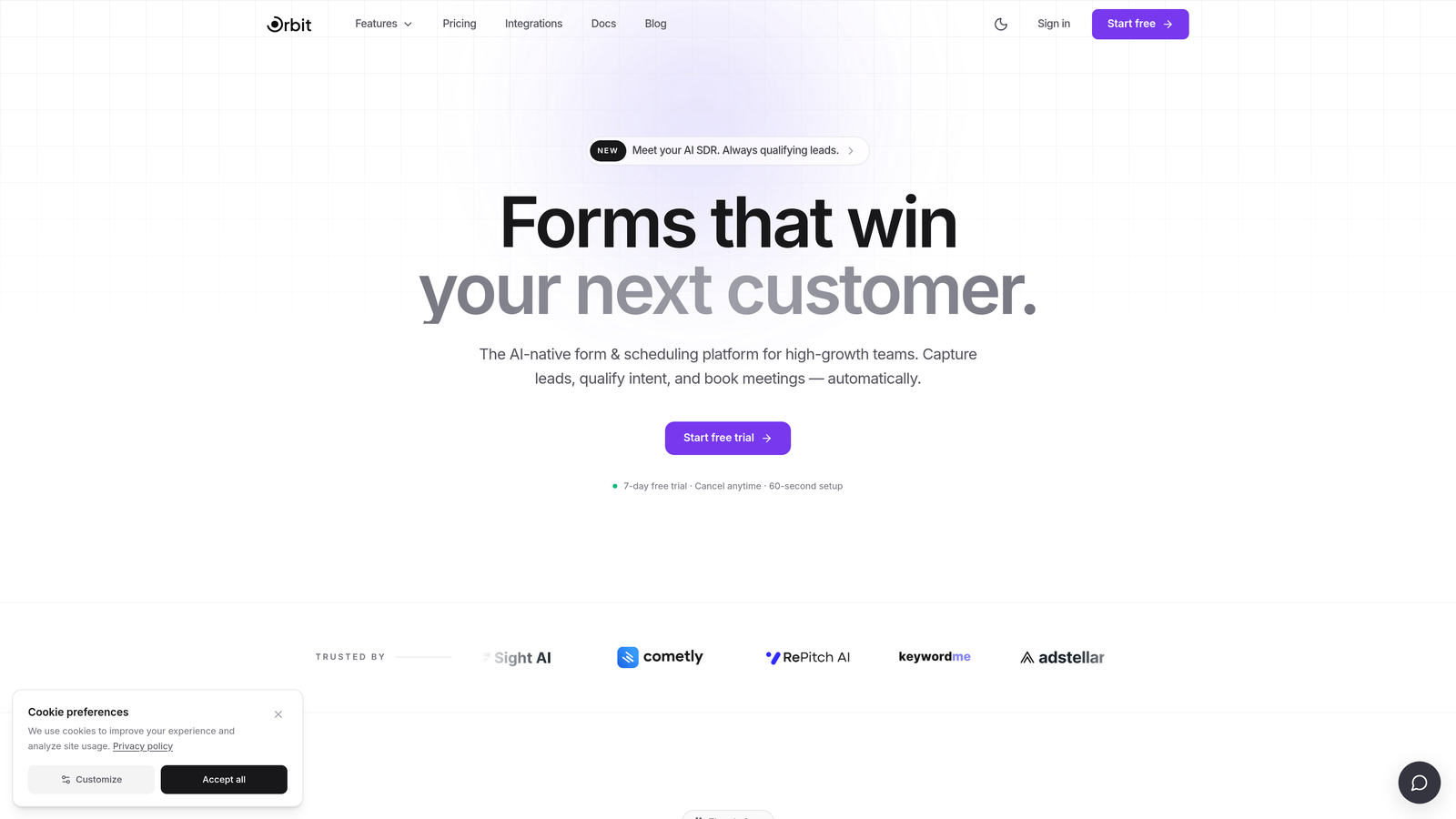
Orbit AI is an AI-powered form builder purpose-built for lead qualification and conversion optimization, designed for teams who need forms that do more than collect data.
Where This Tool Shines
Most form builders treat qualification as a post-submission problem, something you handle in your CRM after the lead has already been routed. Orbit AI flips that model by evaluating lead quality signals during the form completion itself. That means your team gets cleaner pipeline from the start, not a pile of unscored submissions to sort through later.
The platform is also built with conversion performance in mind from the ground up. Forms are modern, brand-consistent, and designed to reduce friction without sacrificing the qualification depth that demand gen teams actually need. It's a rare combination: intelligent lead filtering wrapped in a genuinely beautiful experience.
Key Features
AI-Powered Lead Qualification: Evaluates lead quality in real time during form completion, enabling smarter routing decisions before a submission ever hits your CRM.
Conversion-Optimized Design: Modern, brand-consistent form UI built to maximize completion rates across gated content, demo requests, and campaign landing pages.
Conditional Logic and Dynamic Field Routing: Forms adapt based on user responses, creating a personalized path that improves both experience and data quality.
Demand Gen Use Case Coverage: Built specifically for gated content, demo requests, contact forms, and campaign landing pages — not a general-purpose tool retrofitted for lead gen.
CRM and Marketing Automation Integrations: Clean lead handoff to your existing stack, so qualified leads move through your funnel without manual intervention.
Best For
Orbit AI is the strongest fit for B2B SaaS and high-growth marketing teams who want qualification to happen at the form level, not after the fact. If pipeline quality is a bigger priority than raw lead volume, this is the tool built around that exact problem.
Pricing
Visit orbitforms.ai for current pricing and plan details. A free starting option is available for teams ready to explore the platform.
2. Typeform
Best for: Conversational lead capture where completion rate and brand experience are top priorities
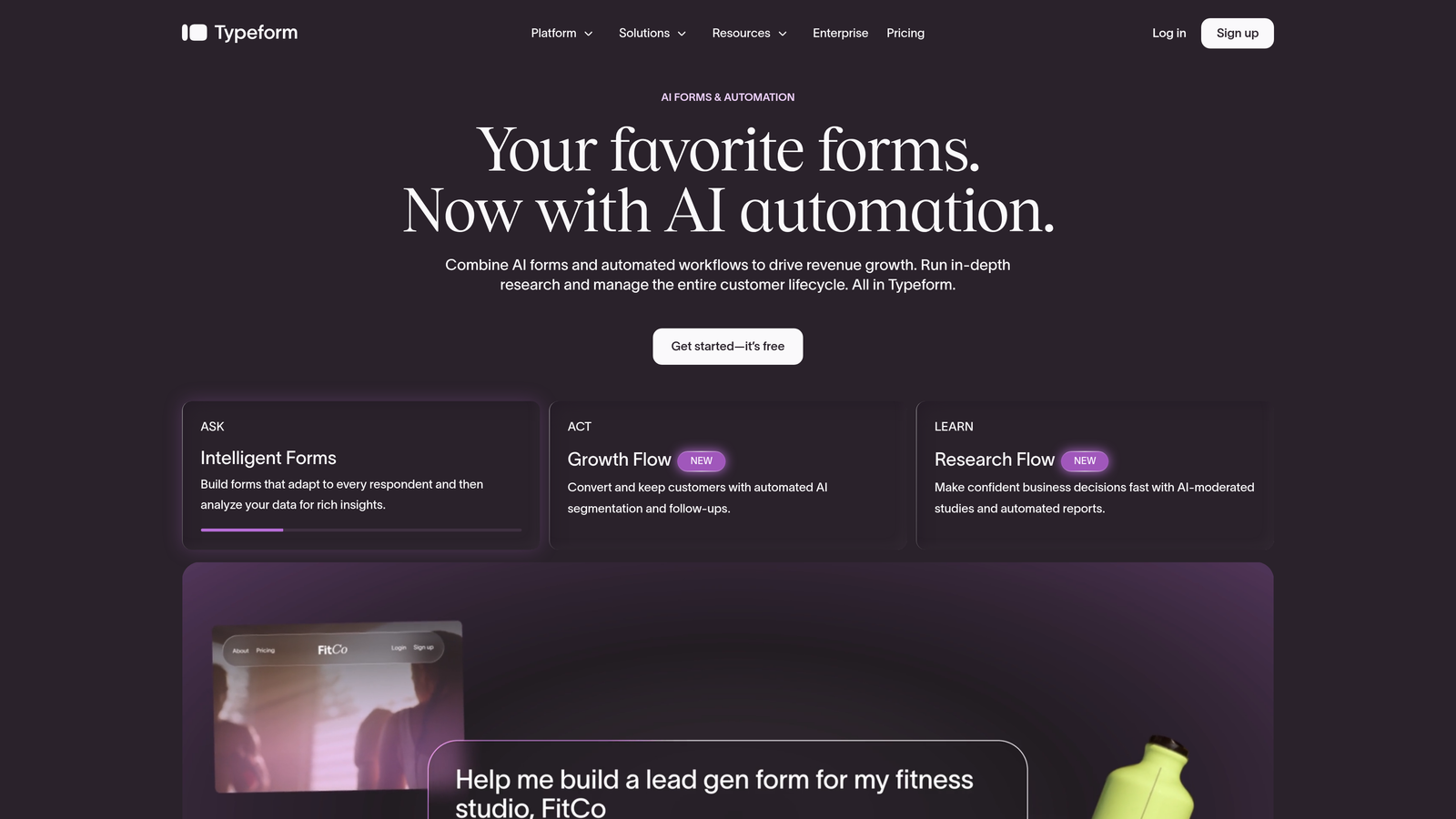
Typeform is a conversational form platform known for its one-question-at-a-time format and polished, brand-friendly design.
Where This Tool Shines
Typeform's signature format, presenting one question at a time rather than a full form grid, creates a more engaging experience for respondents. For longer lead gen forms where fatigue is a real drop-off risk, this approach keeps users moving through to completion.
The visual customization options are genuinely strong. Marketers can match forms to brand guidelines without engineering support, which matters when you're running multiple campaigns with different creative treatments. It's a polished tool for teams where the form experience is part of the brand story.
Key Features
Conversational Single-Question Flow: Reduces form abandonment by presenting questions sequentially rather than all at once.
Visual Customization and Brand Theming: Extensive control over colors, fonts, and imagery to match campaign creative.
Logic Jumps: Conditional question paths that adapt based on prior answers, enabling basic segmentation at the form level.
Native CRM Integrations: Connects with HubSpot, Salesforce, Mailchimp, and other major platforms via native connectors and Zapier.
Video and Image Embedding: Supports richer lead gen experiences by embedding media directly within the form flow.
Best For
Typeform works well for demand gen teams running gated content campaigns or longer qualification surveys where a frictionless, visually polished experience is the priority. It's less focused on AI-driven qualification and more on creating an engaging form journey.
Pricing
Free plan available. Paid plans start at approximately $25/month billed annually, with pricing scaling based on monthly response volume.
3. Jotform
Best for: Marketing ops teams who need broad template variety and deep native integrations
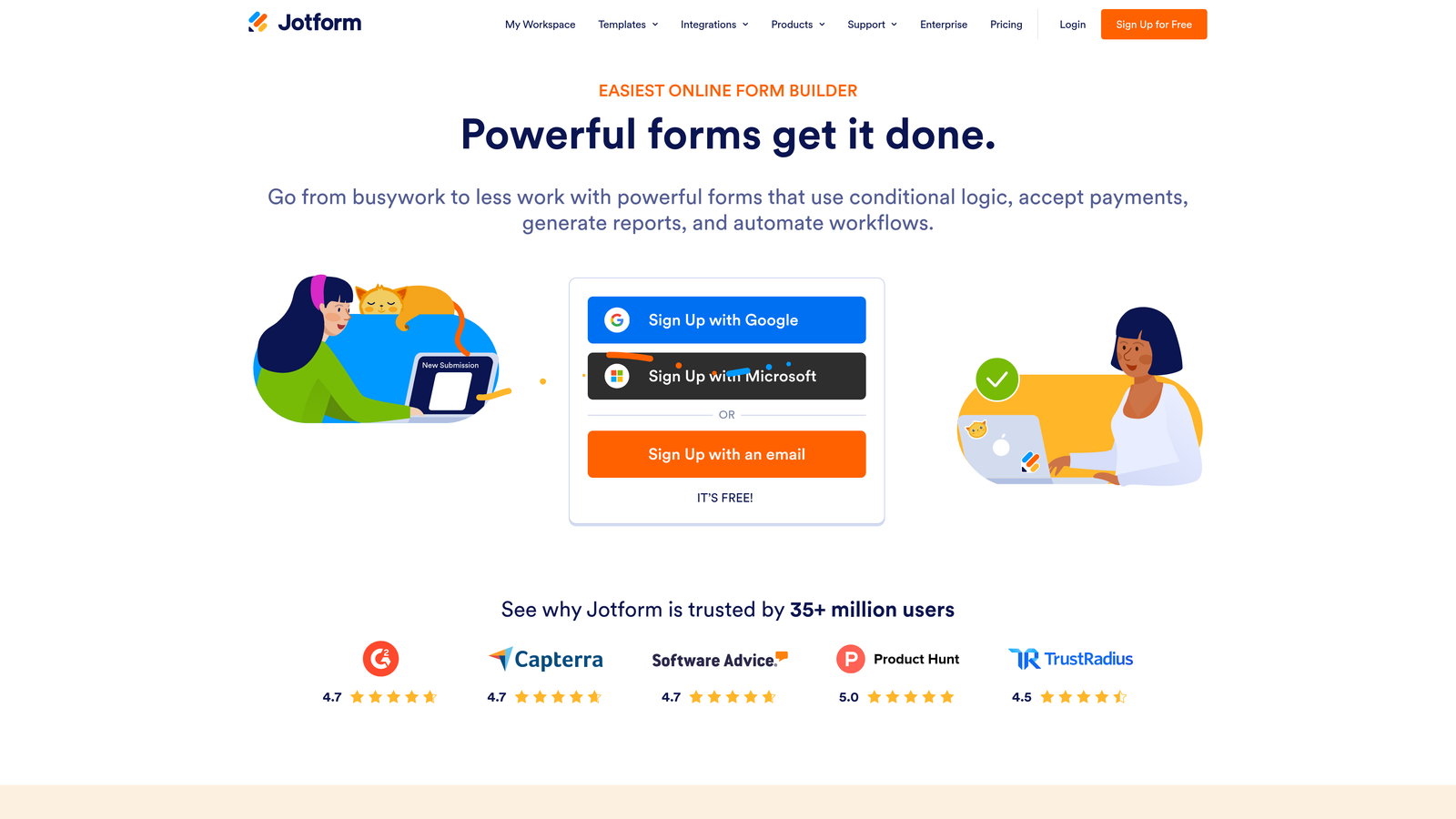
Jotform is a highly versatile form builder with one of the largest template libraries available and broad native integrations across CRMs, payment tools, and marketing platforms.
Where This Tool Shines
If your demand gen team manages a high volume of different form types across multiple campaigns and use cases, Jotform's template library is hard to beat. Thousands of pre-built templates mean you can deploy a new form quickly without starting from scratch, which matters when your team is running fast.
The integration depth is also a genuine strength. Jotform connects natively with a wide range of CRMs and marketing automation platforms, making it a reliable choice for marketing ops teams who need forms to fit into an existing, complex stack without a lot of custom work.
Key Features
Extensive Template Library: Thousands of pre-built templates covering a wide range of demand gen use cases for rapid deployment.
Conditional Logic and Multi-Page Forms: Supports dynamic form paths, calculation fields, and multi-step flows for more sophisticated lead capture.
Native CRM Integrations: Connects with Salesforce, HubSpot, ActiveCampaign, and more than 150 other tools out of the box.
Form Analytics and Conversion Tracking: Built-in reporting to monitor form performance without relying entirely on external analytics tools.
Robust Free Tier: A generous free plan makes it accessible for teams testing forms before committing to a paid tier.
Best For
Jotform is a strong fit for marketing operations teams managing diverse form needs across multiple campaigns or business units. It's particularly useful when integration breadth and template variety matter more than cutting-edge AI qualification features.
Pricing
Free plan available. Paid plans start at approximately $34/month billed annually, scaling with submission volume and feature access.
4. Paperform
Best for: Campaign-specific lead capture that needs to function as a branded landing page
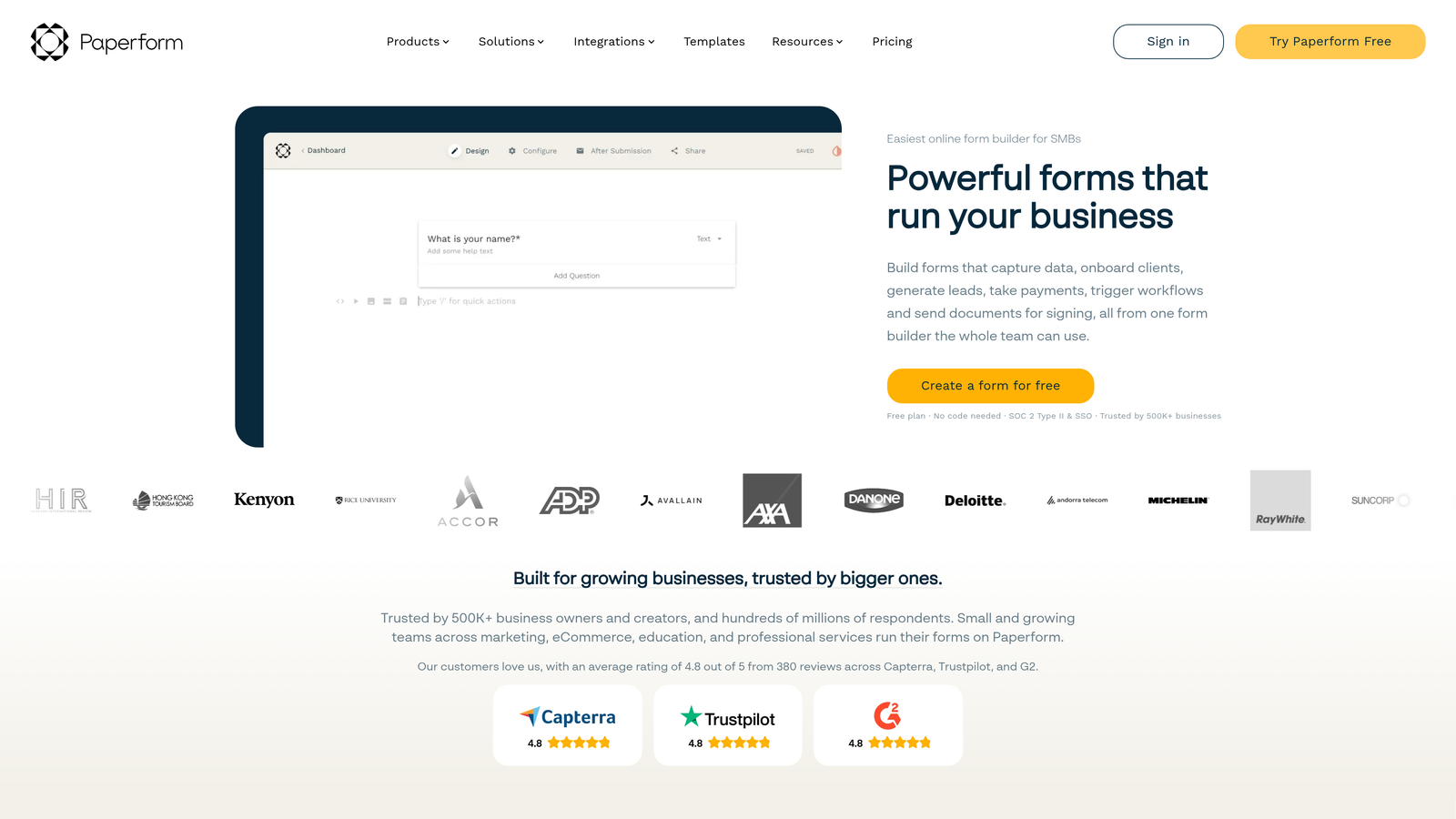
Paperform is a form builder with a document-style editor that lets marketers create rich, branded form pages, blending form functionality with landing page-style content in a single tool.
Where This Tool Shines
Paperform's document-style editor is genuinely different from the typical form builder experience. You build forms inside a rich text environment, which means you can weave in context, imagery, and copy alongside your form fields. The result feels less like a form and more like a branded content page that happens to collect information.
For demand gen teams running campaigns where a dedicated landing page isn't available, or where a standalone form page needs to carry more persuasive weight, Paperform fills that gap well. It's a smart option when you need the form to do double duty as both conversion asset and content.
Key Features
Document-Style Editor: Build form pages with embedded text, images, and media for a landing page-quality experience without a separate page builder.
Conditional Logic and Calculation Fields: Dynamic form experiences that adapt based on user inputs, supporting more nuanced lead qualification paths.
Product and Pricing Fields: Useful for qualifying leads by interest or intent, particularly for SaaS teams offering tiered products or services.
CRM and Marketing Tool Integrations: Connects with major platforms via native connectors and Zapier for reliable lead handoff.
Custom Domain Support: Campaign-specific form pages can live on your own domain, maintaining brand consistency across the full funnel.
Best For
Paperform is a strong choice for growth marketers who want a form that also functions as a mini landing page, particularly for campaigns where design quality and contextual content can meaningfully influence conversion.
Pricing
Plans start at approximately $24/month billed annually. No free plan, but a trial is available for teams who want to test before committing.
5. Formstack
Best for: Enterprise revenue operations and marketing teams with complex routing and compliance requirements
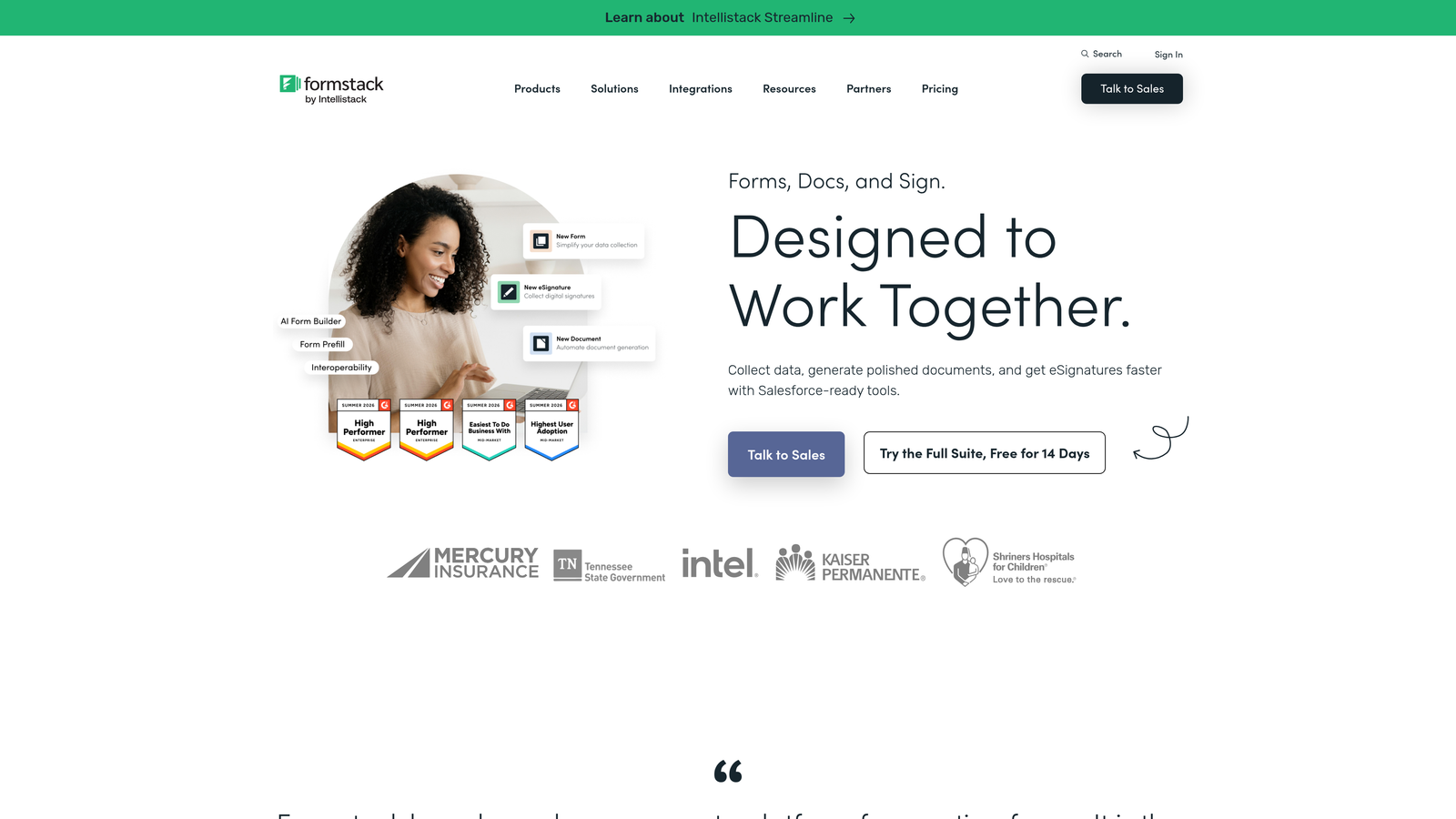
Formstack is an enterprise-grade form and workflow automation platform with advanced conditional logic, approval workflows, compliance controls, and document generation capabilities.
Where This Tool Shines
Formstack operates at a different level of complexity than most form builders on this list. Where other tools focus on the form itself, Formstack extends into workflow automation, multi-step approvals, and document generation. For enterprise demand gen teams where a submitted lead triggers a chain of internal processes, that depth is genuinely valuable.
The compliance capabilities are also a meaningful differentiator for teams in regulated industries. HIPAA and GDPR-oriented controls, data encryption, and access management make Formstack a viable option in environments where security and compliance requirements would rule out lighter-weight tools.
Key Features
Advanced Conditional Logic and Approval Workflows: Multi-step routing and approval processes for complex lead handling beyond basic CRM handoff.
Compliance Controls: HIPAA and GDPR-oriented features, data encryption, and access controls suited to enterprise security requirements.
Document Generation and E-Signature: Extends beyond lead capture into downstream workflow automation, including contract and document creation.
Deep Salesforce Integration: Field mapping and workflow triggers for tight alignment between form submissions and CRM processes.
Enterprise Access Controls: Role-based permissions and security settings appropriate for large teams managing sensitive lead data.
Best For
Formstack is best suited to enterprise marketing and revenue operations teams who need forms to sit inside a broader workflow automation system, particularly in regulated industries where compliance is non-negotiable.
Pricing
Enterprise pricing; plans typically start in the $83+/month range billed annually. Contact Formstack directly for current pricing based on your team's requirements.
6. Tally
Best for: Early-stage teams and startups who need fast, flexible forms without upfront cost
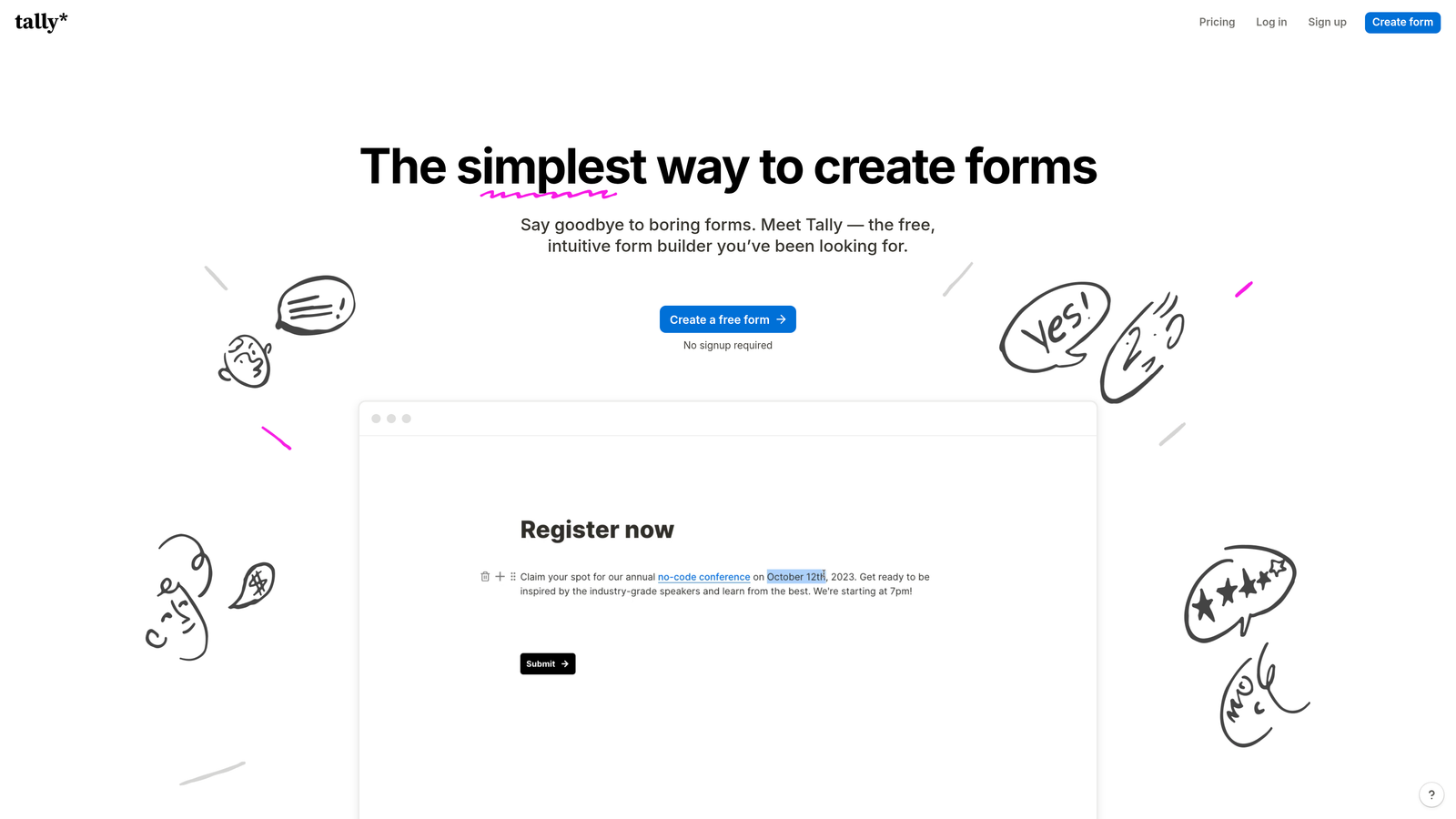
Tally is a lightweight, Notion-inspired form builder with a fast editing experience and a generous free plan that includes no submission limits on the free tier.
Where This Tool Shines
Tally's biggest selling point is how quickly you can go from nothing to a live form. The block-based editor will feel immediately familiar to anyone who uses Notion, which means almost zero learning curve for startup marketing teams. You can build, embed, and share a form in minutes without touching a settings panel.
The free plan is unusually generous. Unlimited forms and unlimited submissions on the free tier make Tally a realistic option for lean teams running early-stage demand gen campaigns who can't justify a paid form tool yet. It's not the deepest qualification platform, but for speed and cost efficiency, it's hard to argue with.
Key Features
Notion-Style Block Editor: Fast, intuitive form creation with a familiar editing experience that requires minimal onboarding.
Unlimited Free Tier: No submission caps and no form limits on the free plan, making it genuinely useful for early-stage teams.
Conditional Logic and Hidden Fields: Basic personalization and segmentation capabilities for more targeted form experiences.
Flexible Embedding: Works cleanly in websites, Notion pages, and campaign landing pages without complicated setup.
Growing Integration Ecosystem: Native connectors and Zapier support for connecting to CRMs and marketing tools, with the ecosystem expanding over time.
Best For
Tally is the right call for startup marketing teams and individual growth marketers who need to move fast, keep costs low, and don't yet require AI qualification or enterprise-grade integrations. It's also a solid option for one-off campaign forms where simplicity is the priority.
Pricing
Free plan with unlimited forms and submissions. Tally Pro is approximately $29/month billed annually, unlocking advanced features including custom domains, file uploads, and priority support.
Which Tool Is Right for Your Demand Gen Stack?
The right form builder depends almost entirely on what your team is optimizing for. Here's a quick way to think through the decision.
If your primary goal is qualifying leads at the form level before they hit your CRM, Orbit AI is the strongest fit. It's the only tool on this list purpose-built around AI-powered qualification for high-growth B2B and SaaS teams, and it combines that intelligence with conversion-optimized design that doesn't sacrifice completion rates.
If a conversational, brand-polished experience is your top priority, Typeform remains a solid choice for gated content and longer qualification flows. For teams managing high form volume across many use cases, Jotform's template library and integration depth make it a reliable workhorse. When you need a form that doubles as a campaign landing page, Paperform's document-style editor fills that gap well.
Enterprise teams with complex routing, approval workflows, and compliance requirements will find Formstack better aligned with their operational reality. And for early-stage teams who need to move fast without a budget commitment, Tally offers a genuinely useful free tier that doesn't feel like a stripped-down trial.
The underlying question for any demand gen team is this: do you want qualification to happen at the form, or after it? If the answer is at the form, that narrows the field considerably.
Transform your lead generation with AI-powered forms that qualify prospects automatically while delivering the modern, conversion-optimized experience your high-growth team needs. Start building free forms today and see how intelligent form design can elevate your conversion strategy.


