

Choosing the right form builder when you're a startup means balancing capability against cost, and the pricing models across the market vary wildly. Some tools charge per response, others per seat, and a few lock core features behind expensive tiers that make no sense for early-stage teams.
This guide breaks down the best form builders with startup-friendly pricing, covering what you actually get at each tier, where the hidden costs tend to appear, and which tool makes the most sense depending on your growth stage. Whether you're capturing leads, qualifying prospects, or running customer surveys, pricing shouldn't be the thing that holds your forms back.
We've evaluated each tool on value at entry-level tiers, scalability as you grow, and the features that matter most for conversion-focused teams. If you're also exploring how to improve lead quality through your forms, our guide on how to improve lead quality is a useful companion read.
1. Orbit AI
Best for: High-growth B2B and SaaS startups that treat forms as a lead qualification engine
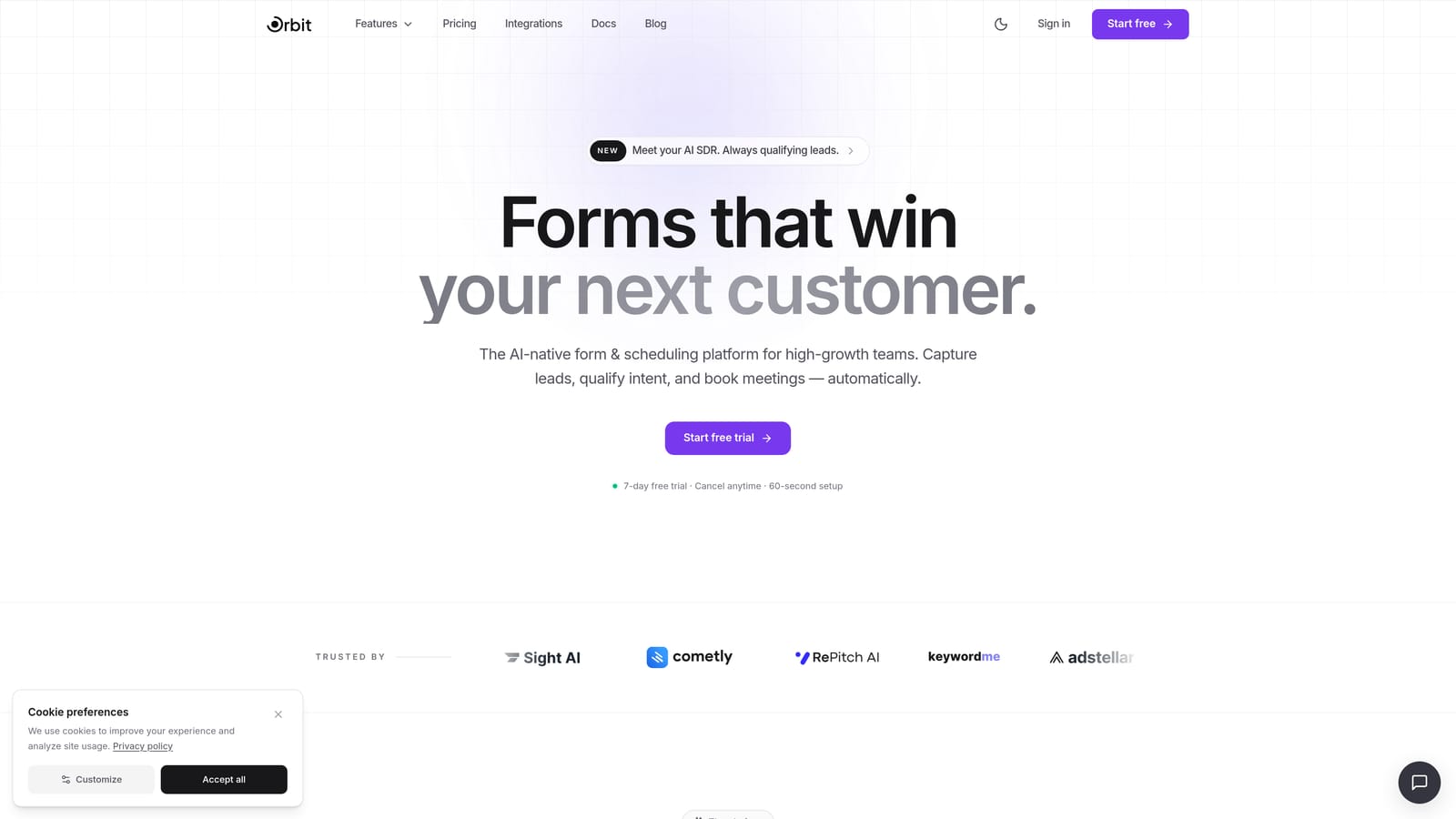
Orbit AI is an AI-powered form builder built specifically for conversion-focused teams who care as much about lead quality as lead volume.
Where This Tool Shines
Most form builders collect data and hand it off. Orbit AI is different because the intelligence happens inside the form itself. Lead qualification isn't a post-submission report you dig into later — it's built into the experience, scoring and filtering prospects as they engage.
For SaaS startups where a single high-quality lead can be worth more than dozens of low-intent signups, this distinction matters. The interface is modern and polished, which means your forms don't look like an afterthought next to your product or landing page.
Key Features
AI-Powered Lead Qualification: Scores and qualifies leads directly within the form experience, before the submission even hits your CRM.
Conversion-Optimized Templates: Beautiful, modern form designs built to reduce friction and improve completion rates from the first interaction.
Lead Scoring: Prioritizes pipeline quality over raw volume, helping growth teams focus on prospects most likely to convert.
Built for B2B SaaS Workflows: Designed around the needs of high-growth teams, not generic data collection use cases.
Growth Channel Mindset: Treats forms as an active part of your acquisition funnel, not just a passive intake mechanism.
Best For
Orbit AI is the strongest fit for B2B SaaS startups and PLG teams where lead quality is a priority. If your sales team is spending time chasing low-intent leads, or if your current forms aren't doing any qualification work, this is where Orbit AI earns its place in your stack.
Pricing
Orbit AI offers startup and growth pricing tiers designed for scaling teams. Visit orbitforms.ai for current plan details and to explore the free tier.
2. Tally
Best for: Pre-revenue or bootstrapped startups that need unlimited forms without spending anything
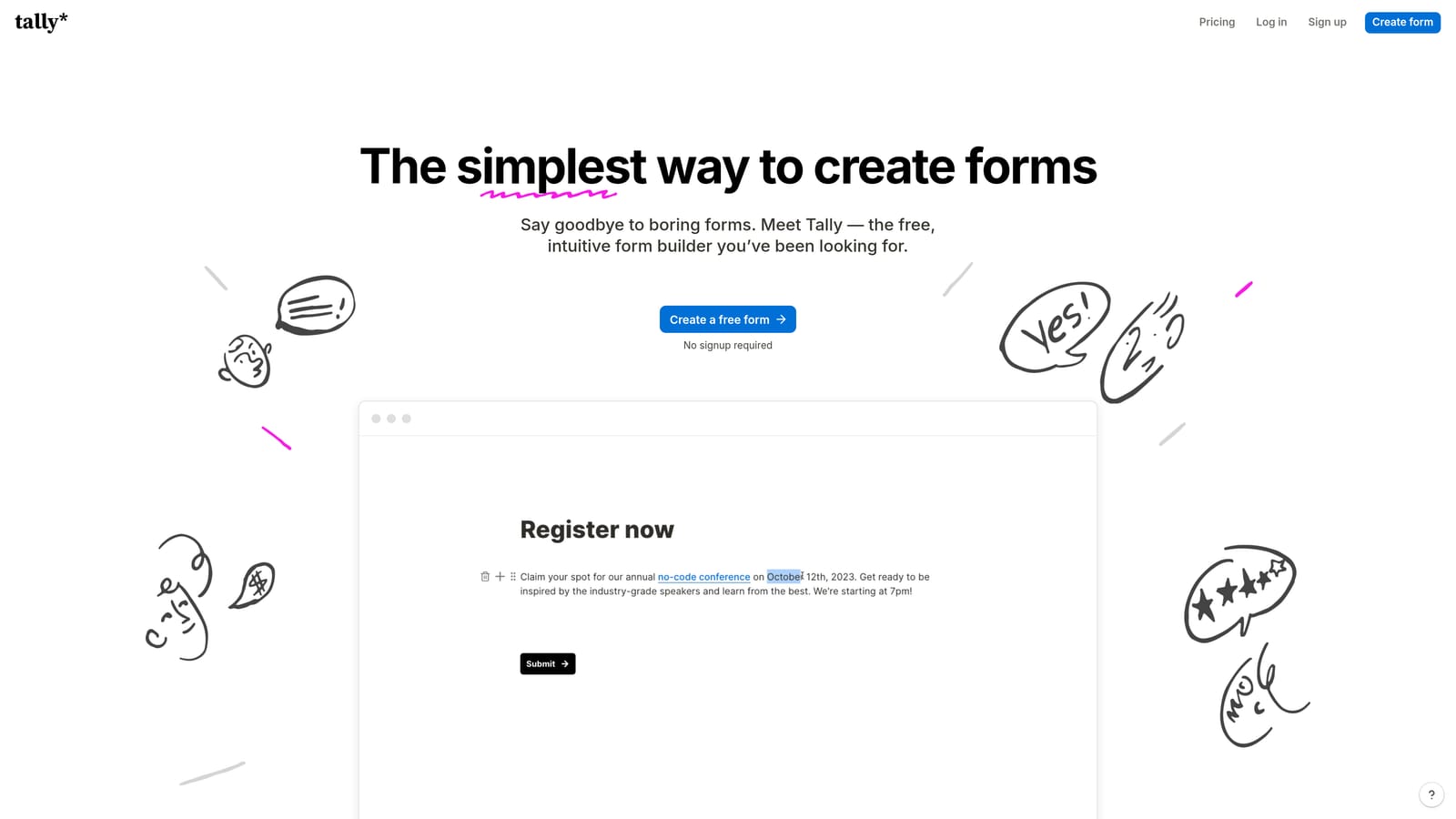
Tally is a Notion-style form builder with one of the most genuinely generous free tiers available anywhere in the market.
Where This Tool Shines
The headline feature is hard to argue with: unlimited forms and unlimited responses on the free plan. For startups in the earliest stages, this removes the ceiling that makes other free tiers feel like traps. You can run as many surveys, intake forms, or lead capture forms as you need without watching a response counter tick toward a paywall.
The editor feels familiar if your team lives in Notion. It's block-based, fast to learn, and doesn't require any technical setup. That low friction matters when you're moving quickly and don't want to spend an afternoon configuring a form tool.
Key Features
Unlimited Forms and Responses on Free Plan: No response caps, no form limits — the free tier is genuinely usable at scale.
Notion-Style Block Editor: Intuitive interface with a fast learning curve for teams already using modern productivity tools.
Conditional Logic: Available on both free and paid tiers, so you don't need to upgrade just to add branching logic.
Custom Domains and Branding Removal: Available on the paid Pro plan for teams that need white-label presentation.
Integrations: Connects with Notion, Google Sheets, Zapier, and other common startup tools.
Best For
Tally is the go-to choice for bootstrapped founders, pre-revenue teams, or any startup that needs solid form functionality without a budget. It's also a strong pick for internal forms, research surveys, or any use case where response volume is unpredictable.
Pricing
Free plan available with unlimited forms and responses. The Pro plan adds features like custom domains and branding removal. Check tally.so for current pricing.
3. Typeform
Best for: Consumer-facing or PLG startups that want a polished, conversational form experience
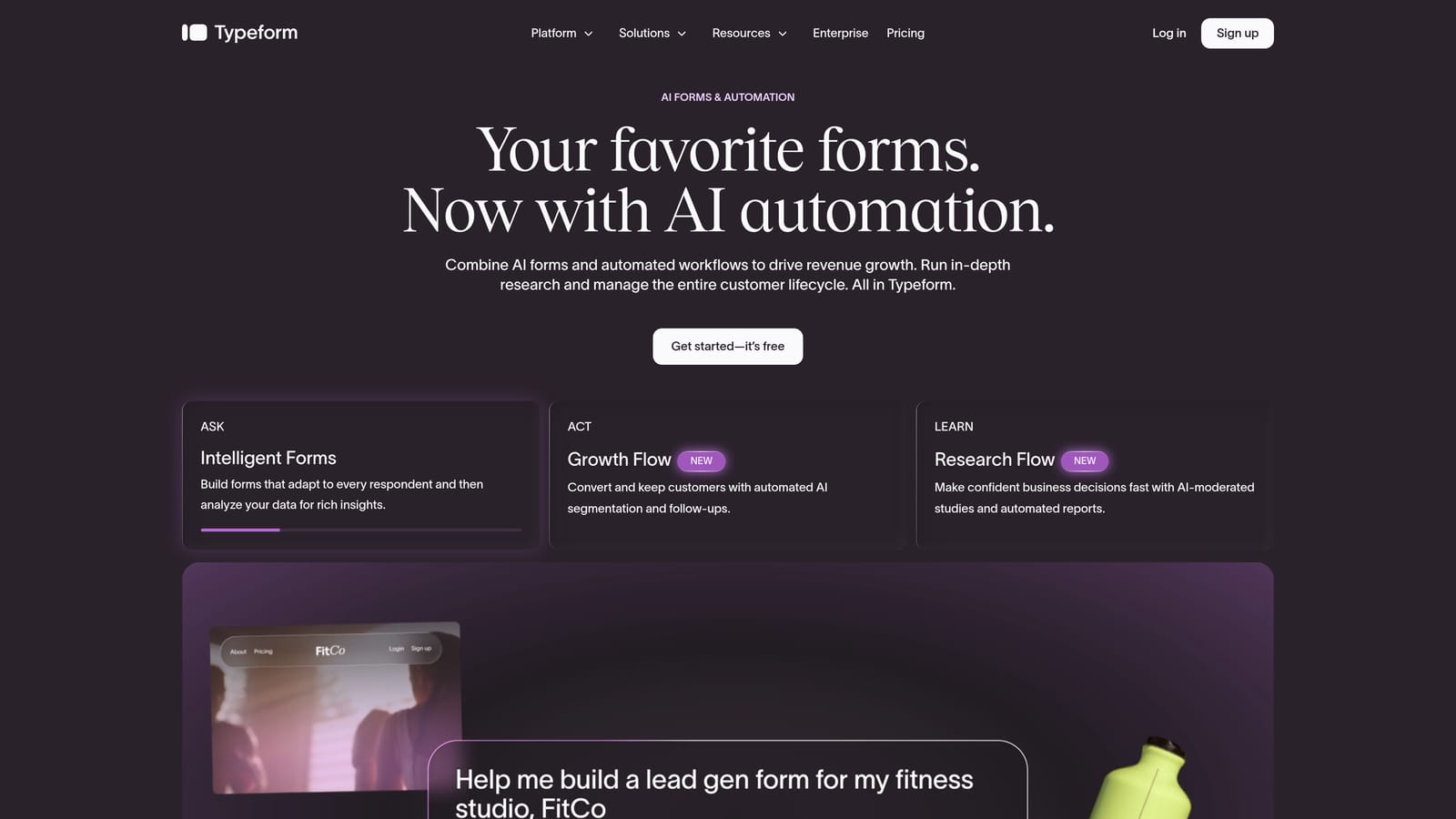
Typeform is a conversational form builder known for its one-question-at-a-time format, which tends to improve completion rates on longer forms.
Where This Tool Shines
Typeform's UX approach is genuinely distinctive. By presenting one question at a time, it reduces the visual overwhelm that causes respondents to abandon traditional multi-field forms. For onboarding flows, customer research, or brand-forward lead capture, this format can make a real difference in how users experience your form.
The design quality is strong out of the box, which matters for PLG startups where the form is often the first real interaction a prospect has with your product. That said, the per-response pricing model on lower tiers is worth watching carefully as your traffic scales.
Key Features
Conversational One-Question-at-a-Time UX: Reduces form abandonment by presenting questions progressively rather than all at once.
Logic Jumps and Conditional Branching: Personalizes the form path based on previous answers.
Strong Design Quality: Polished templates and visual customization that reflects well on your brand.
CRM Integrations: Connects with HubSpot, Salesforce, Slack, and other major platforms.
Video and Image Embedding: Supports rich media within form questions for more engaging experiences.
Best For
Typeform works well for consumer-facing startups, PLG teams, and any use case where brand presentation and completion rate are priorities. It's less ideal for teams with high response volumes on tight budgets, where the per-response pricing model can add up quickly.
Pricing
Free plan available with response and form limits. Basic, Plus, and Business paid tiers unlock more responses and advanced features. Check typeform.com for current pricing and response caps by tier.
4. Paperform
Best for: Startups that want to consolidate forms, payments, and scheduling into one tool
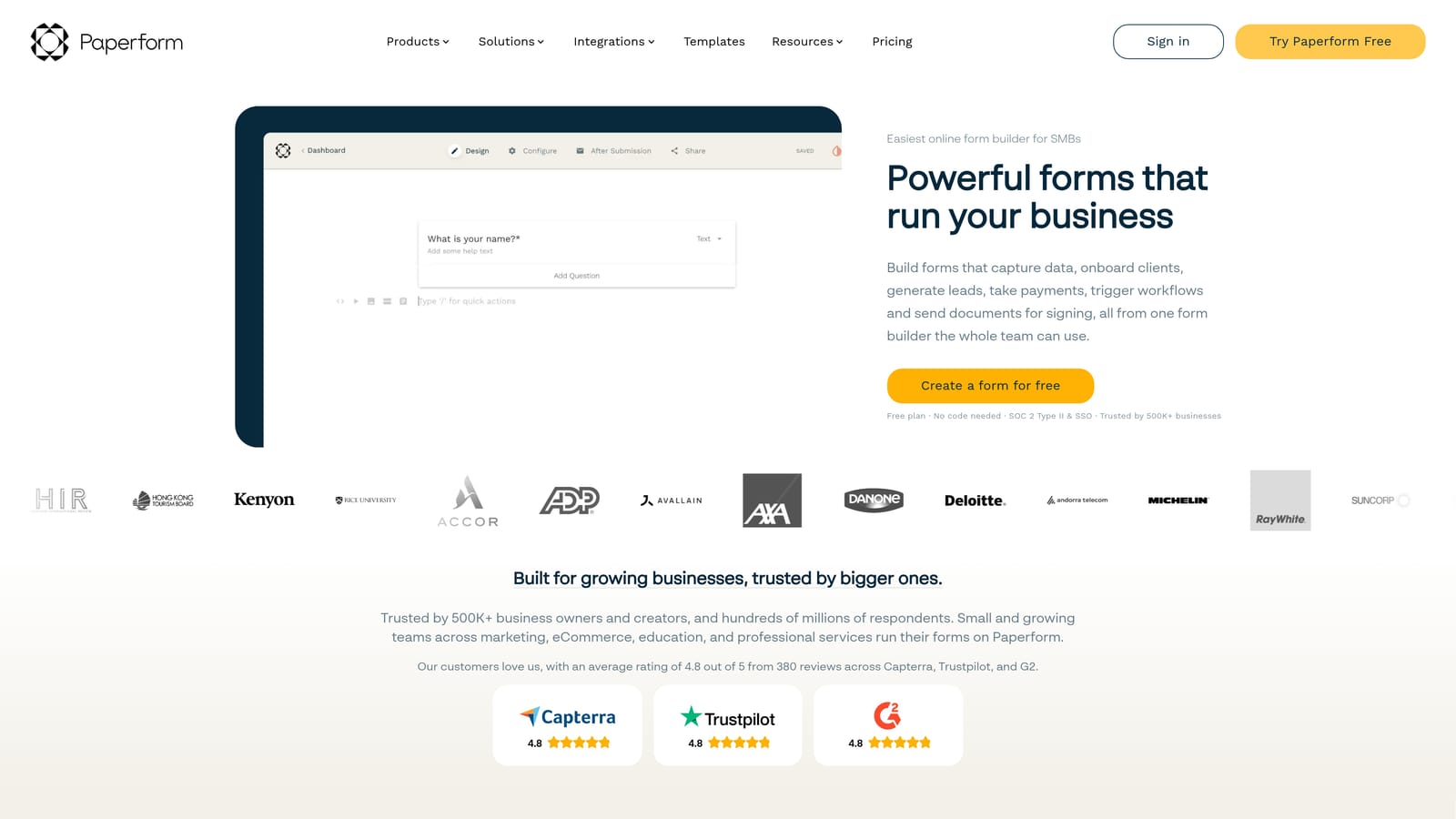
Paperform is a document-style form builder that blends forms with rich content, payments, and scheduling in a single platform.
Where This Tool Shines
Paperform's document-style editor makes forms feel more like landing pages than traditional input fields. You can mix text, images, and form elements freely, which gives you a lot of creative control without needing a separate page builder. For startups that want a single tool to handle intake, booking, and payment collection, the consolidation value is real.
The tradeoff is that Paperform has no free tier. It starts at a paid plan, which makes it a harder sell for pre-revenue teams. But for startups that have moved past the bootstrapped phase and want to reduce tool sprawl, the all-in-one approach can justify the cost.
Key Features
Document-Style Editor: Forms feel like branded landing pages, not generic data entry screens.
Native Stripe Payment Integration: Collect payments directly through your form without a separate tool.
Scheduling and Booking: Built-in appointment booking capabilities alongside form submissions.
Conditional Logic and Calculations: Supports complex branching and dynamic field calculations.
Product Listings: Includes field types for e-commerce-style product selection within forms.
Best For
Paperform suits startups that need forms to do more than collect data — specifically teams that want to combine intake, scheduling, and payment collection without managing multiple tools. Best for teams past the pre-revenue stage with a clear budget for tooling.
Pricing
No free tier. Essentials, Pro, and Agency paid plans are available. Check paperform.co for current pricing across tiers.
5. Jotform
Best for: Startups with complex operational form needs across HR, onboarding, or intake workflows
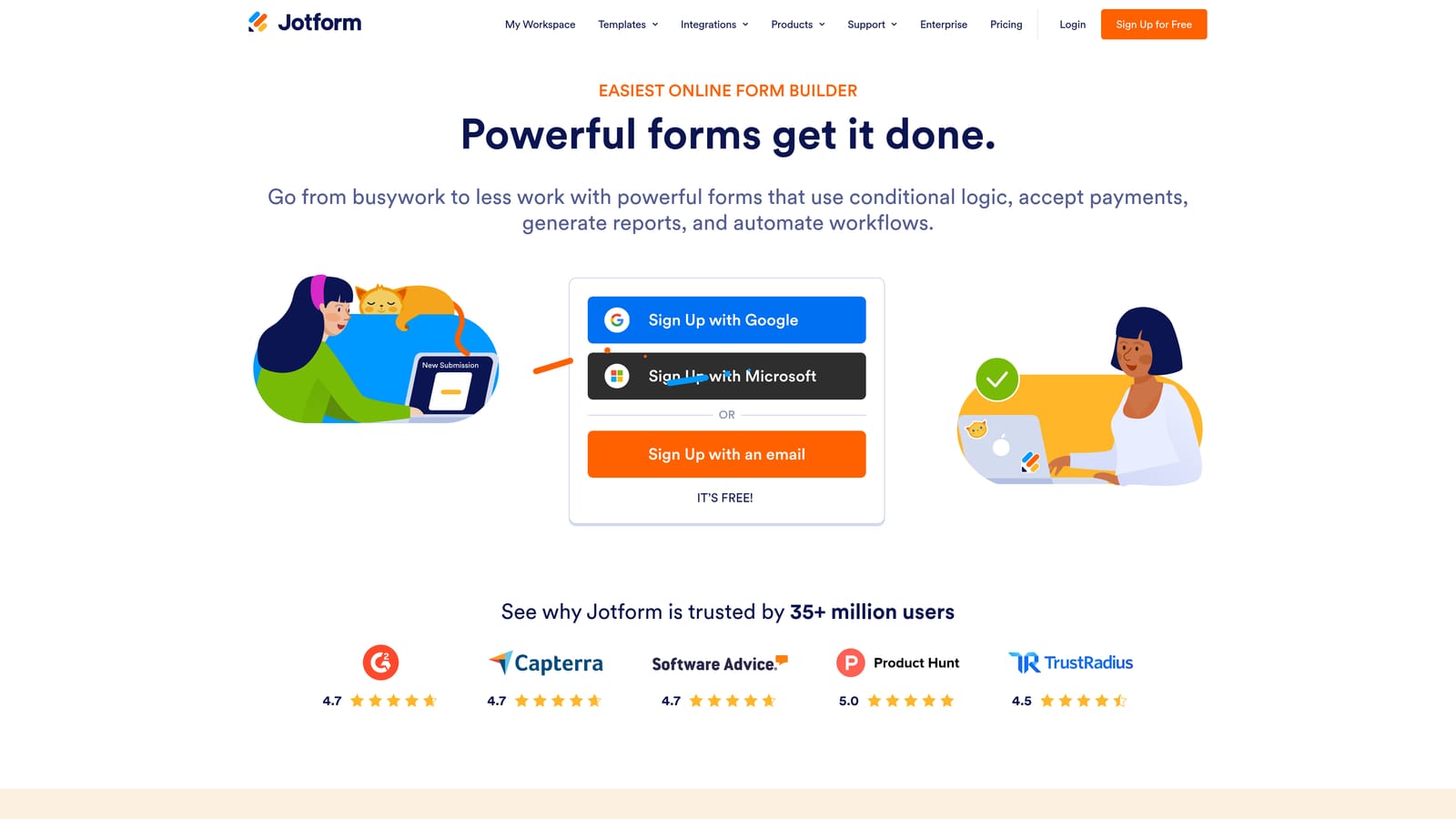
Jotform is one of the most feature-rich form builders available, with thousands of templates and strong workflow capabilities at accessible price points.
Where This Tool Shines
Jotform's depth is its defining characteristic. The template library alone covers an enormous range of use cases, which means you can often find a starting point that's close to what you need rather than building from scratch. For startups running multiple types of forms across different departments, having everything in one place with a consistent workflow is genuinely useful.
The free plan includes limited monthly submissions and storage, which works for low-volume needs. Paid tiers scale up submission limits and unlock more advanced features, making Jotform a reasonable long-term choice if your form usage grows in complexity rather than just volume.
Key Features
Extensive Template Library: Thousands of pre-built templates across virtually every use case imaginable.
Payment Integrations: Connects with Stripe, PayPal, Square, and other major payment processors natively.
Advanced Workflow Automation: Approval routing, notifications, and multi-step workflows built in.
HIPAA-Compliant Plans: Available at higher tiers for startups in healthcare or regulated adjacent industries.
Extensive Integration Library: Broad connectivity with third-party tools across CRM, storage, and communication platforms.
Best For
Jotform is best for operations-heavy startups that need forms to support internal workflows, not just external lead capture. HR onboarding, client intake, approval processes, and multi-department form management are all strong use cases. Also worth considering for startups in healthcare or compliance-sensitive industries.
Pricing
Free plan available with submission limits. Bronze, Silver, Gold, and Enterprise paid tiers scale up from there. Check jotform.com for current pricing and submission limits by tier.
6. Formstack
Best for: Startups in regulated industries where compliance is a hard requirement, not a nice-to-have
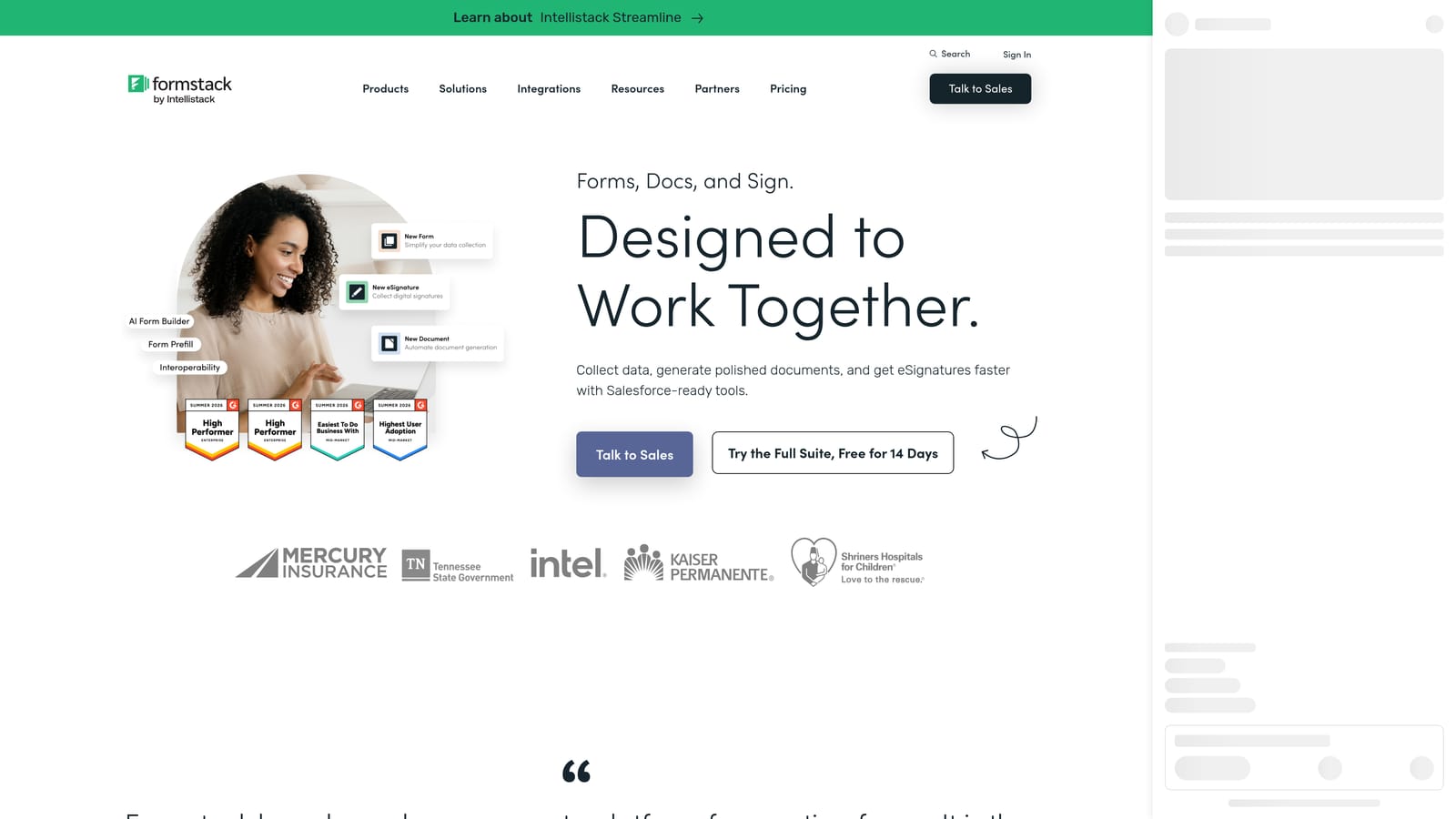
Formstack is an enterprise-leaning form and workflow platform with strong compliance capabilities and document generation features.
Where This Tool Shines
Formstack is built for environments where data handling requirements are non-negotiable. HIPAA, GDPR, and SOC 2 compliance capabilities are core to the platform, not add-ons you bolt on later. For startups in healthcare, legal, fintech, or any regulated space, having compliance baked in from day one removes a significant category of risk.
The workflow automation and document generation features also set it apart from most form builders. If your forms need to trigger approval chains, generate contracts, or feed into operational processes with audit trails, Formstack handles that natively. The tradeoff is a higher price point that puts it out of reach for many early-stage teams.
Key Features
Compliance Capabilities: HIPAA, GDPR, and SOC 2 support built into the platform for regulated industry requirements.
Workflow Automation and Approval Routing: Multi-step workflows with conditional routing for complex operational processes.
Document Generation: Creates documents automatically from form submission data.
Advanced Conditional Logic: Sophisticated branching and field logic for complex form structures.
Audit Trails and Data Security Controls: Detailed logging and access controls for compliance documentation.
Best For
Formstack is the right call for startups in regulated industries where compliance isn't optional. Healthcare, legal, and fintech startups that need HIPAA or SOC 2 coverage will find the investment justified. For general-purpose startup use cases without compliance requirements, the price-to-value ratio is harder to defend at early stages.
Pricing
Forms-only and full platform plans are available, with a higher price point than most alternatives in this list. Check formstack.com for current plan details.
Which Tool Fits Your Startup Stage
The right form builder depends less on which tool has the most features and more on where your startup is right now and what you need forms to actually do for you.
Here's a quick way to think through it by stage and use case:
Pre-revenue or bootstrapped teams: Start with Tally. The unlimited free tier removes every pricing concern while you figure out what your forms actually need to do. You can always migrate later.
Brand-conscious PLG or consumer-facing teams: Typeform's conversational format and strong design quality make it a natural fit when first impressions matter and completion rates are a priority. Just keep an eye on response limits as traffic grows.
Teams that want forms plus payments plus scheduling: Paperform consolidates multiple tools into one, which can simplify your stack considerably once you have a budget for tooling.
Operations-heavy startups with complex internal form needs: Jotform's depth, template library, and workflow automation make it the strongest choice for HR, onboarding, intake, and multi-department use cases.
Startups in regulated industries: Formstack's compliance capabilities are worth the premium if HIPAA, GDPR, or SOC 2 coverage is a hard requirement for your business.
Teams prioritizing lead quality and conversion optimization: Orbit AI is built for this specific problem. If your forms are a core part of your acquisition funnel and you need AI-powered qualification happening inside the form itself, not just in a downstream report, Orbit AI is the tool designed for that outcome.
One last thing worth noting across all of these tools: response caps, branding removal, and advanced integrations are the most common sources of unexpected cost increases as you scale. Always evaluate the tier above your current needs before committing, so you understand exactly what scaling will cost before it becomes urgent.
Transform your lead generation with AI-powered forms that qualify prospects automatically while delivering the modern, conversion-optimized experience your high-growth team needs. Start building free forms today and see how intelligent form design can elevate your conversion strategy.


