

Inbound lead generation lives or dies on your ability to capture, qualify, and route leads before they lose interest. The right tools do that work automatically, turning anonymous visitors into pipeline without your team lifting a finger on every submission.
The market is crowded, and most tools were built for a different era of marketing. This list focuses on form-based and conversion-focused platforms that high-growth SaaS teams are actually using in 2026: tools that go beyond basic data collection to qualify leads, personalize experiences, and connect seamlessly with your CRM and automation stack.
We evaluated each tool on ease of setup, lead qualification capabilities, design flexibility, integration depth, and pricing transparency. Whether you're capturing your first 100 leads or optimizing a funnel converting thousands per month, there's a right fit here.
1. Orbit AI
Best for: High-growth SaaS teams that need AI-powered lead qualification built directly into their forms.
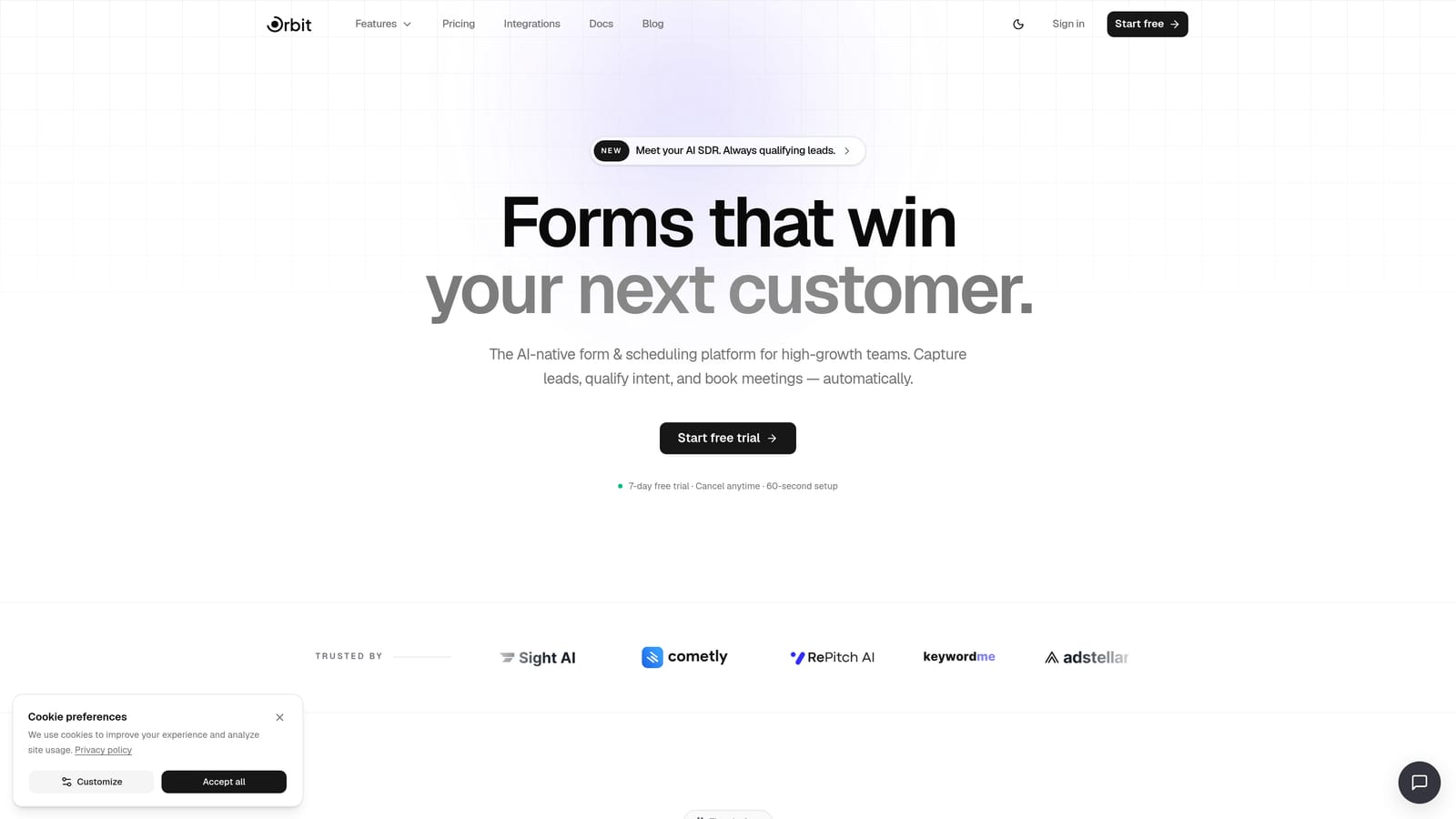
Orbit AI is an AI-powered form builder designed to qualify leads at the point of capture, not after the fact inside a CRM.
Where This Tool Shines
Most form builders hand you a spreadsheet of submissions and leave the qualification work to your team. Orbit AI takes a different approach: its built-in AI scores and routes leads automatically based on the answers they provide, so your sales team sees only the opportunities that matter. That shift from passive collection to active qualification is what separates it from the rest of this list.
Beyond qualification, Orbit AI is built with conversion in mind. The templates are genuinely well-designed, multi-step form support reduces abandonment by breaking long forms into digestible steps, and the native scheduler, sequences, and contact management features mean you can act on a lead the moment they convert without jumping between tools.
Key Features
AI Lead Qualification: Scores and routes leads automatically based on form responses, so high-intent prospects surface immediately without manual review.
Conversion-Optimized Templates: Beautifully designed, branded form templates built specifically to maximize completion rates.
Multi-Step Form Support: Breaks longer lead capture flows into sequential steps, reducing drop-off on complex qualification forms.
Native Contact Management and Sequences: Manage leads, send follow-up sequences, and schedule meetings directly within the platform without a separate CRM for early-stage workflows.
Analytics Dashboard: Tracks form performance and conversion rates so you can identify drop-off points and optimize continuously.
Best For
Orbit AI is the strongest fit for SaaS marketing and sales teams that want lead qualification to happen automatically at the form level. If your current process involves manually reviewing every submission to decide who's worth following up with, this platform is designed to eliminate that bottleneck entirely.
Pricing
Visit orbitforms.ai/pricing for current plan details. A free tier is available to get started without a credit card.
2. Typeform
Best for: Teams prioritizing conversational UX and branded form experiences that feel like a natural dialogue.
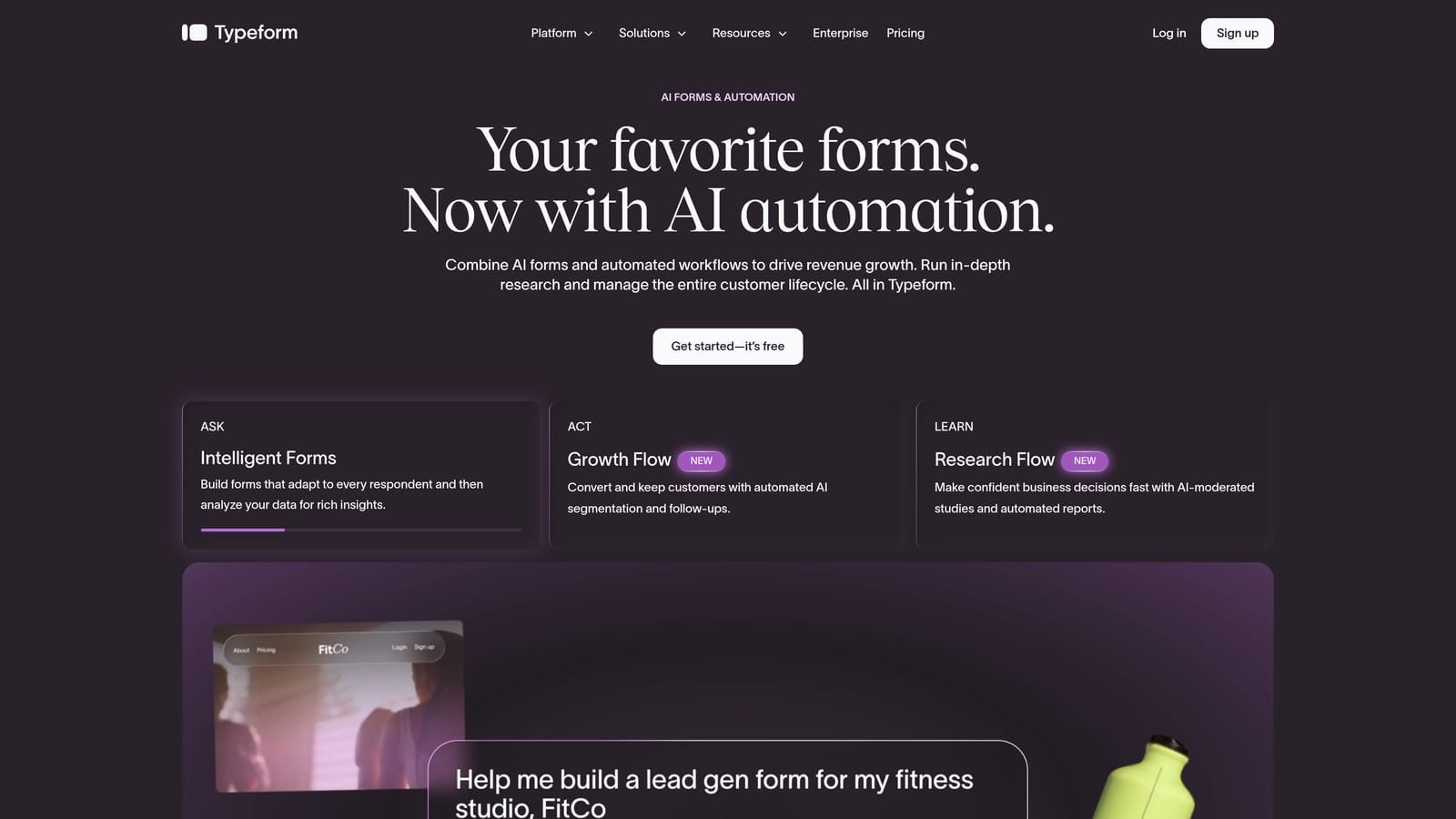
Typeform is a conversational form platform known for its one-question-at-a-time interface that transforms lead capture into an engaging, low-friction experience.
Where This Tool Shines
Typeform's core insight is that traditional forms feel like paperwork. By presenting one question at a time, the platform dramatically reduces the cognitive load on respondents, which tends to improve completion rates on longer lead capture flows. It's particularly effective when brand experience matters and you want the form itself to feel like part of a polished customer journey.
The conditional logic and branching capabilities let you build personalized paths through a form, so a prospect who identifies as an enterprise buyer sees different follow-up questions than a small business owner. That personalization happens without any code, making it accessible to marketing teams working without developer support.
Key Features
Conversational Single-Question Format: Presents one field at a time to reduce overwhelm and improve form completion rates.
Conditional Logic and Branching: Creates personalized form paths based on how respondents answer earlier questions.
Native CRM Integrations: Connects directly with HubSpot, Salesforce, Slack, and Zapier for automated lead routing.
Video and Image Embedding: Allows rich media within form questions to add context or reinforce brand storytelling.
Response Analytics: Tracks completion rates and drop-off points to guide form optimization efforts.
Best For
Typeform suits marketing teams that value form aesthetics and conversational UX above all else. It works well for mid-market SaaS companies with established CRM workflows, though teams that need native lead scoring will need to build that logic through integrations rather than relying on the platform itself.
Pricing
A free plan is available with limited responses. Paid plans start at approximately $25/month. Note that higher-tier plans price per response, which can add up quickly at scale. Verify current pricing at typeform.com.
3. Tally
Best for: Early-stage startups and lean teams that need a capable, no-cost form builder with no submission limits.
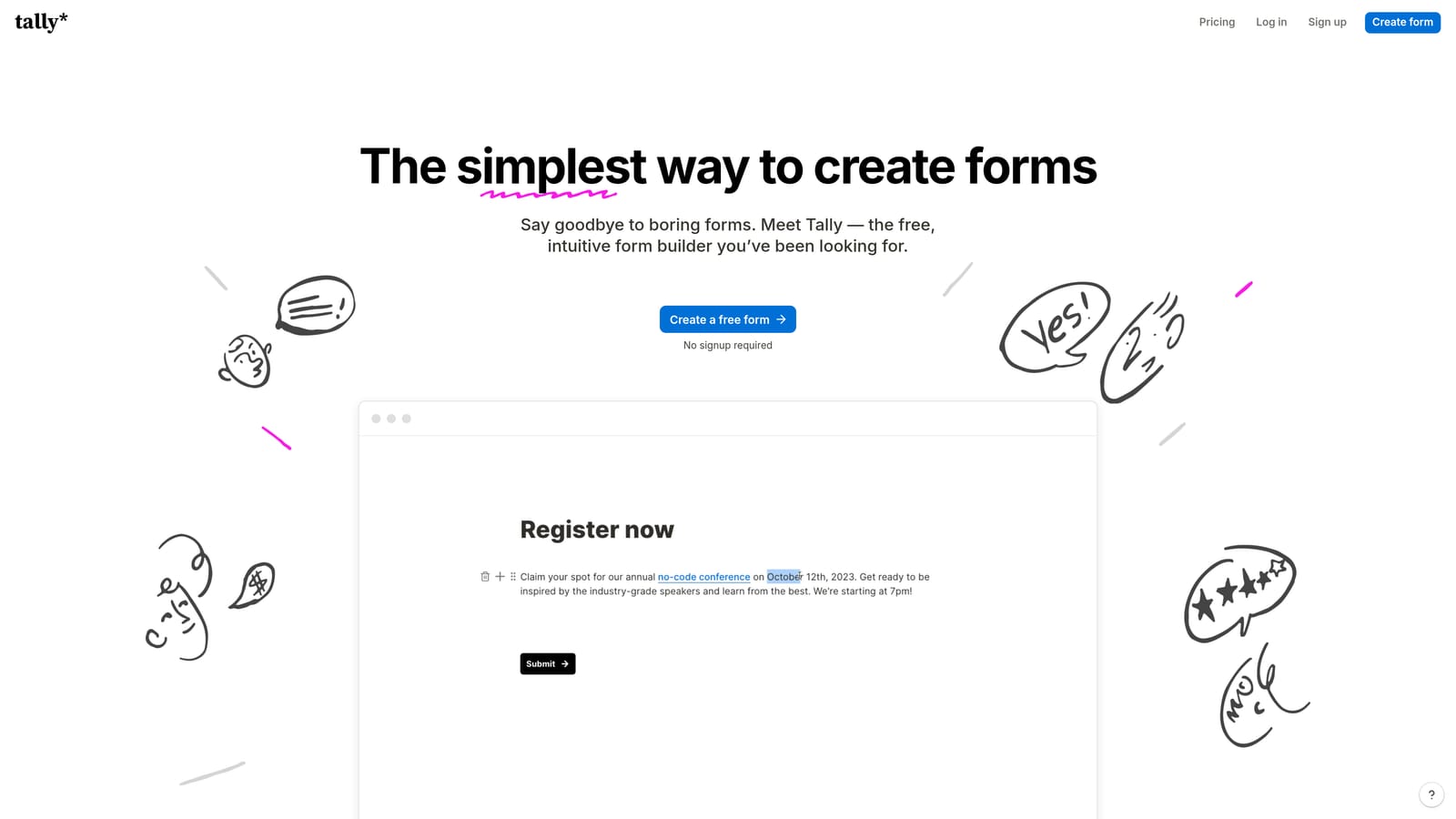
Tally is a free-first form builder with a clean, Notion-inspired editor that removes the friction of getting a form live quickly.
Where This Tool Shines
Tally's biggest differentiator is its free tier: unlimited submissions with no per-response pricing and no artificial caps designed to push you into a paid plan. For bootstrapped teams or early-stage companies still figuring out their lead capture strategy, that's a meaningful advantage. You can iterate on forms freely without watching a submission counter tick up.
The block-based editor will feel immediately familiar to anyone who uses Notion. Building a form is intuitive and fast, and the support for conditional logic, file uploads, and calculations means you're not giving up meaningful functionality just because you're on the free plan. Where Tally falls short is design flexibility and the absence of any native lead qualification features.
Key Features
Unlimited Free Submissions: No submission limits on the free plan, making it genuinely usable without a paid upgrade for most early-stage use cases.
Block-Based Editor: Intuitive Notion-style interface that makes building forms fast and approachable for non-technical users.
Conditional Logic and Calculations: Supports branching paths, file uploads, and calculated fields even on the free tier.
Zapier and Make Integrations: Connects to your existing automation stack to route submissions where they need to go.
Custom Branding on Paid Plans: Custom domains and form branding are available on Tally Pro for teams that need a more polished presentation.
Best For
Tally is the right call for pre-Series A teams, indie hackers, and anyone who needs to get lead capture running today without a budget conversation. It's less suited to teams that need design sophistication or built-in qualification logic.
Pricing
Free tier with unlimited submissions. Tally Pro starts at approximately $29/month for custom branding and advanced features. Verify current pricing at tally.so.
4. Paperform
Best for: Teams that want forms that look and feel like branded landing pages, with rich content embedded alongside lead capture fields.
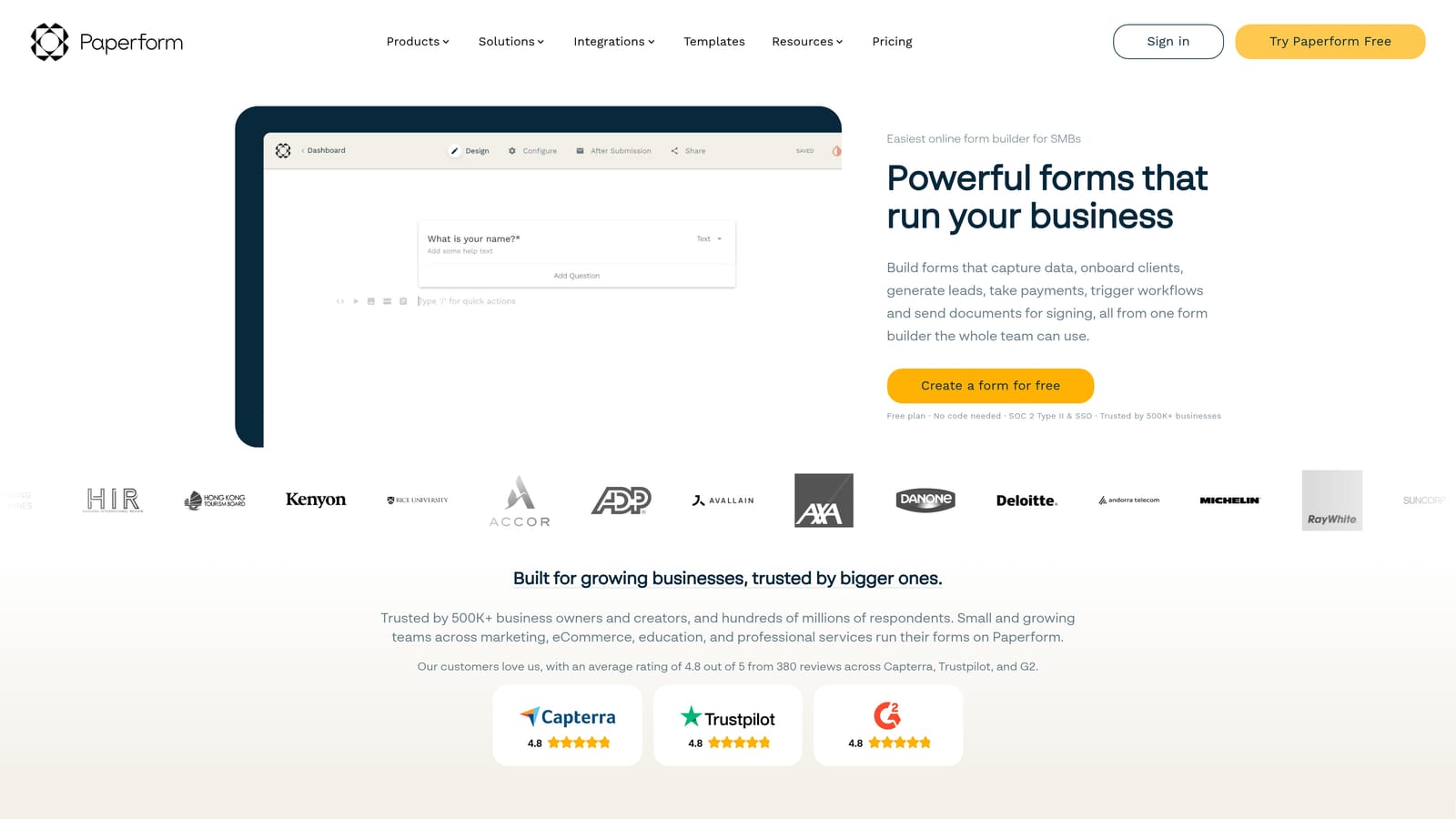
Paperform is a hybrid form builder and mini landing page creator that lets you weave text, images, video, and product content directly into the form experience.
Where This Tool Shines
Paperform occupies a unique position in this category: it's less a traditional form tool and more a lightweight content-plus-capture environment. You can write explanatory copy, embed a demo video, and then ask a qualifying question, all within a single scrollable experience. For service businesses, agencies, and teams where context-setting before the ask matters, that flexibility is genuinely useful.
The payment integrations with Stripe, PayPal, and Braintree also make Paperform a strong choice for teams that want to combine lead capture with transactional moments, such as paid discovery calls, workshop registrations, or product pre-orders. It handles those hybrid use cases more elegantly than most pure-play form tools.
Key Features
Rich Content Editor: Combines form fields with text, images, and video in a single scrollable page experience.
Conditional Logic and Dynamic Fields: Shows or hides fields based on previous answers to create personalized capture flows.
Payment Integrations: Native connections to Stripe, PayPal, and Braintree for transactional form experiences.
Custom Branding and Domains: Full control over visual identity and URL structure for a seamless brand experience.
Integration Library: Connects with Zapier, Slack, Mailchimp, and other tools to automate post-submission workflows.
Best For
Paperform works well for agencies, coaches, consultants, and SaaS teams running high-touch acquisition flows where the form needs to do some selling before asking for information. It's less focused on lead scoring or qualification automation.
Pricing
Plans start at approximately $29/month. There is no permanent free tier, though a trial is typically available. Verify current pricing at paperform.co.
5. Jotform
Best for: Enterprise and mid-market teams that need a proven, template-rich platform with compliance features and approval workflows.
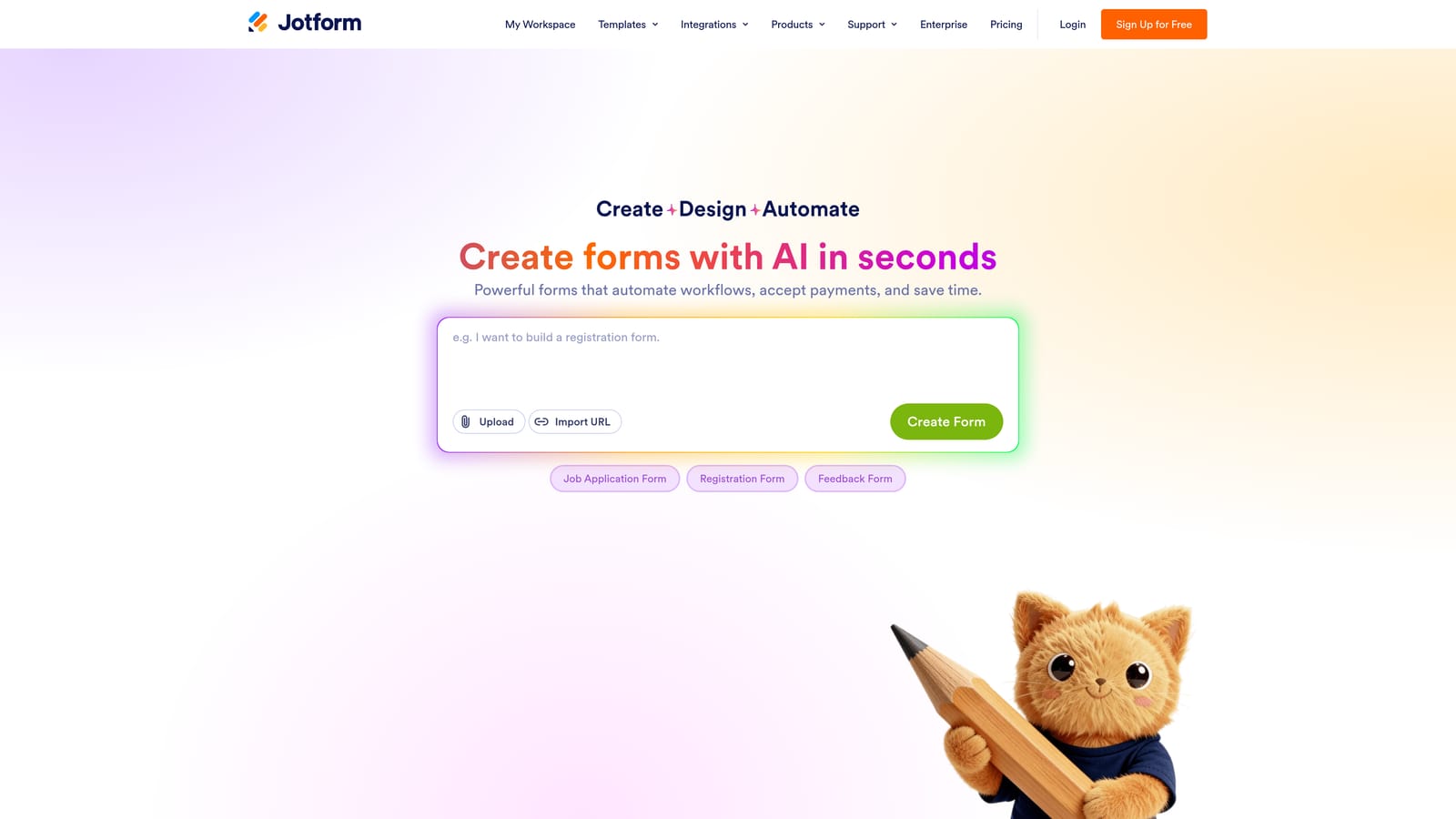
Jotform is one of the most established form platforms available, with an extensive template library, multi-user collaboration, and compliance capabilities built for regulated industries.
Where This Tool Shines
Jotform's depth is its defining characteristic. With more than 10,000 form templates spanning virtually every use case imaginable, teams can get a professional form live in minutes without starting from scratch. That breadth is especially valuable for larger organizations where different departments have wildly different form needs, from HR intake forms to marketing lead capture to customer support requests.
The approval workflows and multi-user collaboration features make Jotform a practical choice for teams where form submissions need to move through internal review processes before anyone acts on them. Add HIPAA-compliant plans for healthcare-adjacent use cases and built-in e-signature support, and you have a platform that can serve enterprise operations with complex compliance requirements.
Key Features
10,000+ Templates: An extensive library covering nearly every industry and use case, reducing setup time significantly.
Approval Workflows: Routes form submissions through configurable internal review and approval processes.
HIPAA-Compliant Plans: Dedicated compliance features for healthcare and regulated industry use cases.
E-Signature and Payment Collection: Handles signatures and transactions natively without additional tools.
Enterprise Integrations: Native connections to Salesforce, HubSpot, Google Workspace, and a wide range of other platforms.
Best For
Jotform is the right choice for enterprise teams, regulated industries, or organizations that need a single platform to handle diverse form use cases across multiple departments. Teams with simple, conversion-focused lead capture needs may find it more feature-heavy than necessary.
Pricing
A free plan is available with usage limits. Paid plans start at approximately $34/month. Enterprise pricing is available for high-volume and compliance-heavy requirements. Verify current pricing at jotform.com.
6. Formstack
Best for: Enterprise sales ops and operations teams where a form submission kicks off a multi-step document and approval workflow.
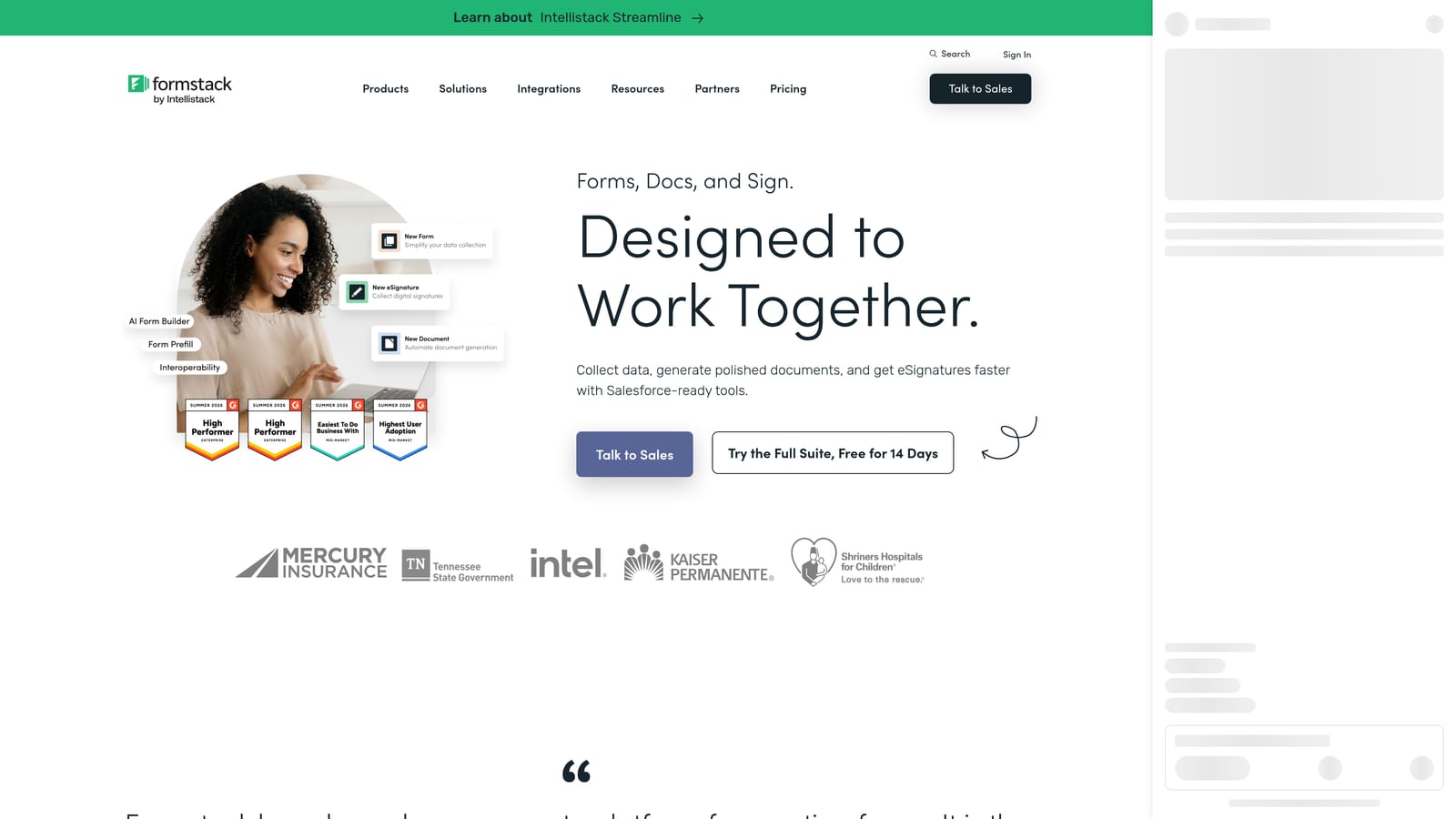
Formstack is an enterprise form and workflow suite that pairs lead capture with native document generation and e-signature capabilities in a unified platform.
Where This Tool Shines
Formstack is built for organizations where "capturing a lead" is just the first step in a longer operational chain. Its Forms, Documents, and Sign products work together natively, meaning a completed intake form can automatically populate a proposal document and route it for signature, all without leaving the platform or relying on fragile Zapier chains. That end-to-end capability is genuinely rare in this category.
The native Salesforce integration is also a standout feature for enterprise sales teams. Rather than syncing data through a third-party connector, Formstack's Salesforce connection is deep enough to support CRM-connected lead workflows where form data maps directly to the right objects and fields. For organizations where Salesforce is the system of record, that matters.
Key Features
Unified Forms, Documents, and Sign Suite: Connects lead capture to document generation and e-signature in a single platform without third-party connectors.
Native Salesforce Integration: Deep CRM connectivity that maps form data directly to Salesforce objects for accurate, automated lead workflows.
Advanced Conditional Logic: Supports complex field calculations and branching logic for sophisticated enterprise form requirements.
Data Encryption and Compliance: Enterprise-grade security features and compliance tools for regulated industries and security-conscious buyers.
Approval Routing and Workflow Automation: Configurable multi-step approval workflows that automate what happens after a form is submitted.
Best For
Formstack is purpose-built for enterprise sales operations, legal teams, and organizations where form submissions trigger document-heavy processes. It's a significant investment relative to other tools on this list, so it earns its place when the workflow automation and document generation capabilities are genuinely needed.
Pricing
The Forms plan starts at approximately $83/month. Suite pricing for the combined Forms, Documents, and Sign products varies by configuration. Verify current pricing at formstack.com.
Which Tool Is Right for Your Team?
The honest answer is that the best inbound lead generation tool depends entirely on where your biggest bottleneck sits today.
If your team is manually reviewing every form submission to decide who's worth following up with, that's a qualification problem. Orbit AI is built specifically to eliminate that bottleneck, with AI-powered scoring and routing that works at the point of capture rather than downstream in your CRM. It's the strongest fit for SaaS teams that want their forms to do real qualification work, not just collect data.
If conversational UX and brand experience are your top priorities, Typeform delivers a polished, dialogue-style form experience that tends to perform well with engaged audiences. For bootstrapped teams who need capable forms without a budget, Tally's unlimited free tier is hard to argue with. If your forms need to feel like landing pages with embedded context and rich content, Paperform fills that niche elegantly.
For larger organizations with complex operational needs, the choice comes down to scale and workflow. Jotform's template depth and compliance features make it a practical choice for enterprise teams with diverse use cases across departments. Formstack earns its higher price point when form submissions need to trigger document generation and multi-step approval workflows natively.
The common thread across every high-performing inbound lead strategy in 2026 is speed and intelligence: capturing intent, qualifying it instantly, and routing it to the right person before the window closes. The tools that do that automatically are the ones worth building around.
Ready to put AI-powered qualification at the center of your lead capture strategy? Start building free forms today and see how intelligent form design can transform your inbound pipeline from passive collection to active conversion.


