

Lead capture is the engine behind every B2B SaaS pipeline. But most form tools were built for generic use cases, not the specific demands of SaaS go-to-market teams where lead quality matters as much as volume, and where a poorly timed or poorly designed form can cost you a high-intent prospect forever.
The tools on this list go beyond basic form collection. They help you qualify, route, enrich, and convert leads at scale, whether you're optimizing a self-serve signup flow, gating a product demo request, or running intent-based outbound. Selection criteria included native lead qualification capabilities, CRM and sales stack integrations, conversion-focused design, and fit for high-growth SaaS teams.
Here are the top lead capture tools built for B2B SaaS in 2026.
1. Orbit AI
Best for: B2B SaaS teams that want AI-powered lead qualification built directly into the form experience.
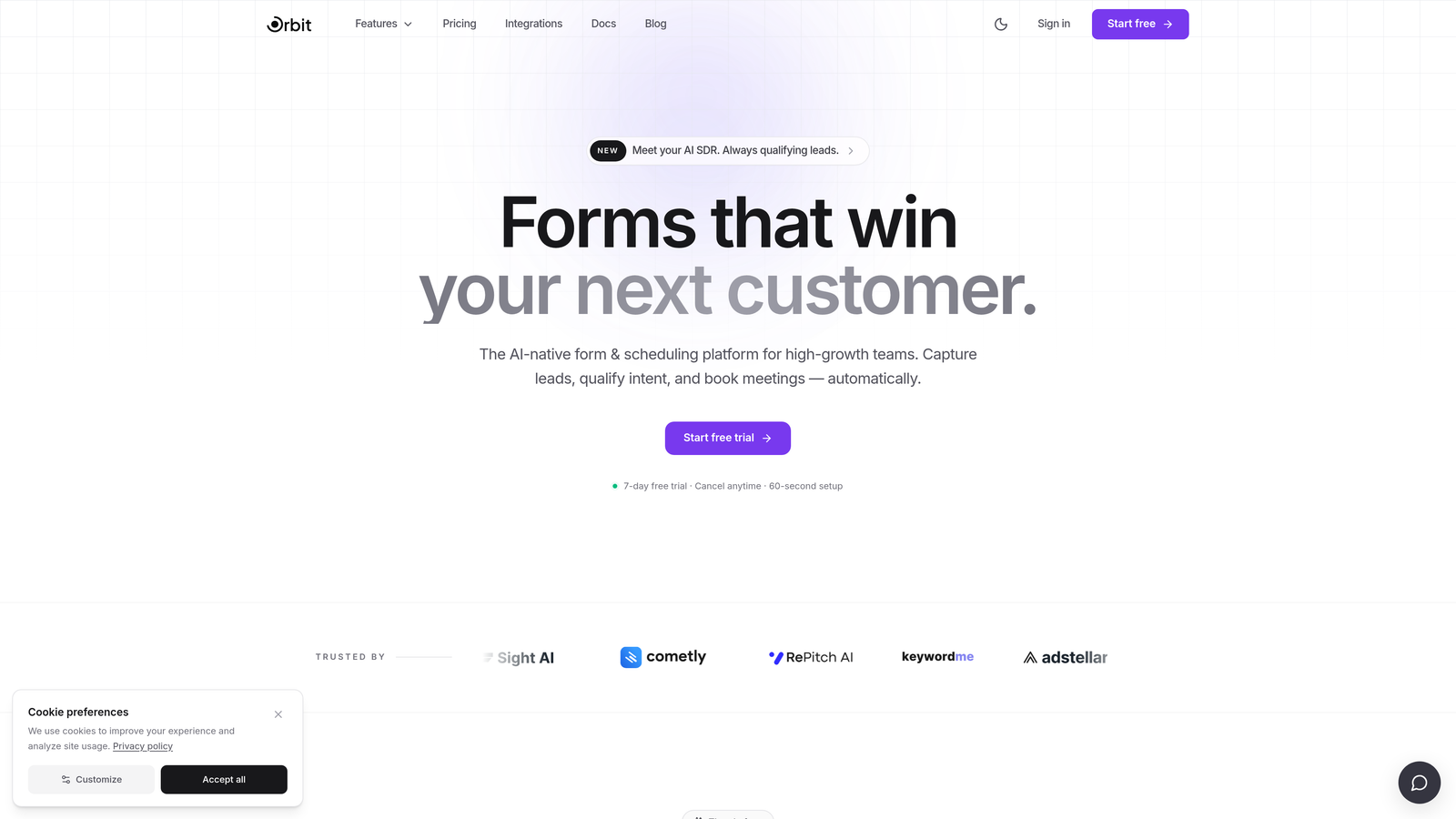
Orbit AI is an AI-powered form builder platform designed specifically for high-growth SaaS teams who need conversion-optimized forms with built-in lead qualification.
Where This Tool Shines
Most form tools collect submissions and hand them off to your CRM for someone else to sort through. Orbit AI flips that model by qualifying leads at the point of capture. The AI evaluates responses in real time, so your sales team receives leads that are already scored and segmented rather than a raw pile of submissions to manually triage.
The platform is built with SaaS brand standards in mind. You get clean, modern form design that doesn't require a developer to customize, which matters when your forms are the first touchpoint a high-intent buyer has with your product experience.
Key Features
AI-Powered Lead Qualification: Evaluates and qualifies submissions at the moment of form completion, reducing manual SDR triage downstream.
Conversion-Optimized Form Design: Purpose-built templates and layouts designed to maximize completion rates for SaaS use cases like demo requests and trial signups.
Conditional Logic and Dynamic Fields: Tailors the form experience based on previous answers, so each prospect sees a relevant, personalized flow rather than a one-size-fits-all questionnaire.
Modern UI Without Custom Dev: Clean, brand-consistent design that matches SaaS aesthetics out of the box, no engineering resources required.
CRM and Sales Tool Integrations: Routes qualified leads automatically to your CRM and sales engagement stack, keeping handoff friction low.
Best For
SaaS marketing and revenue teams that want lead qualification to happen before a lead hits the CRM, not after. Particularly well-suited for demo request flows, trial signup gates, and any high-intent capture point where lead quality directly impacts pipeline efficiency.
Pricing
Check orbitforms.ai for current pricing and plan details, including any free tier or trial options.
2. HubSpot Forms
Best for: SaaS teams already running on HubSpot CRM who want native form-to-pipeline automation without extra tools.
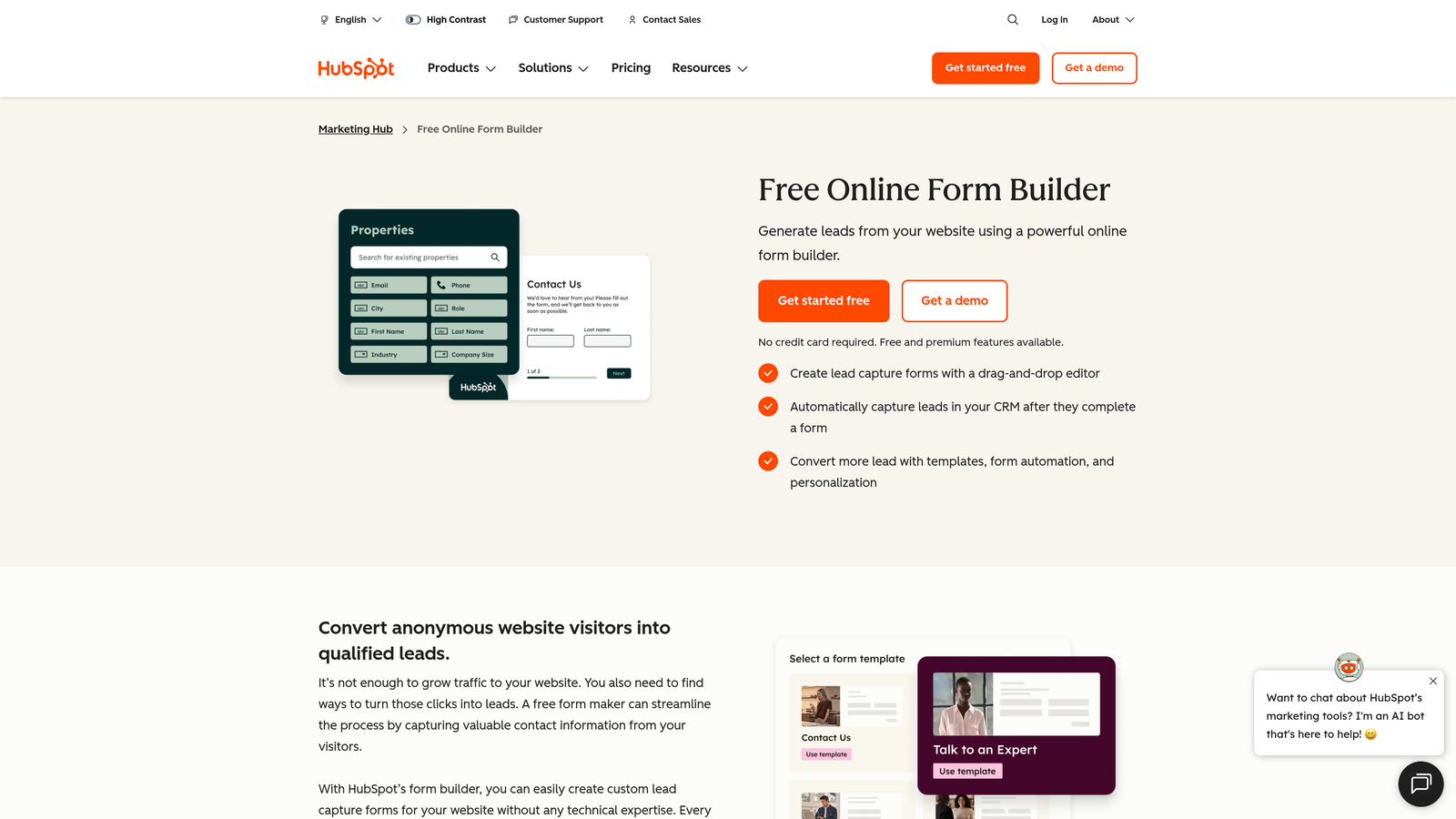
HubSpot Forms is a CRM-native form builder that syncs every submission directly into HubSpot's contact database with full attribution and workflow automation.
Where This Tool Shines
The real advantage here is the zero-gap integration with HubSpot CRM. Every form submission becomes a contact record instantly, complete with source attribution, lifecycle stage, and any existing contact data already in your database. For teams that live in HubSpot, this eliminates the sync delays and field-mapping headaches that come with third-party form tools.
Progressive profiling is another standout feature. Smart fields hide questions that HubSpot already has answers to, so returning visitors see shorter forms rather than being asked for information you already collected. This improves the experience for repeat visitors while gradually enriching your contact records over time.
Key Features
Native CRM Sync: Every submission becomes a HubSpot contact record immediately, with no integration layer or manual import required.
Smart Fields and Progressive Profiling: Hides already-known fields for returning contacts, reducing form length and improving completion rates.
Workflow Automation Triggers: Submission events can trigger automated email sequences, task assignments, internal notifications, and lifecycle stage changes.
Embedded and Standalone Options: Deploy forms inline on your website or as standalone pages depending on your campaign needs.
Free Tier Available: Accessible within HubSpot's free CRM, making it a low-barrier starting point for early-stage SaaS teams.
Best For
Mid-market and growth-stage SaaS teams that are already committed to HubSpot as their CRM and marketing automation platform. Less compelling if you're running a different CRM stack, since the native integration advantage disappears.
Pricing
Free with HubSpot CRM. Advanced features are tied to Marketing Hub paid plans. Verify current pricing at hubspot.com.
3. Typeform
Best for: Teams that want a conversational, high-completion form experience for top-of-funnel lead capture and surveys.
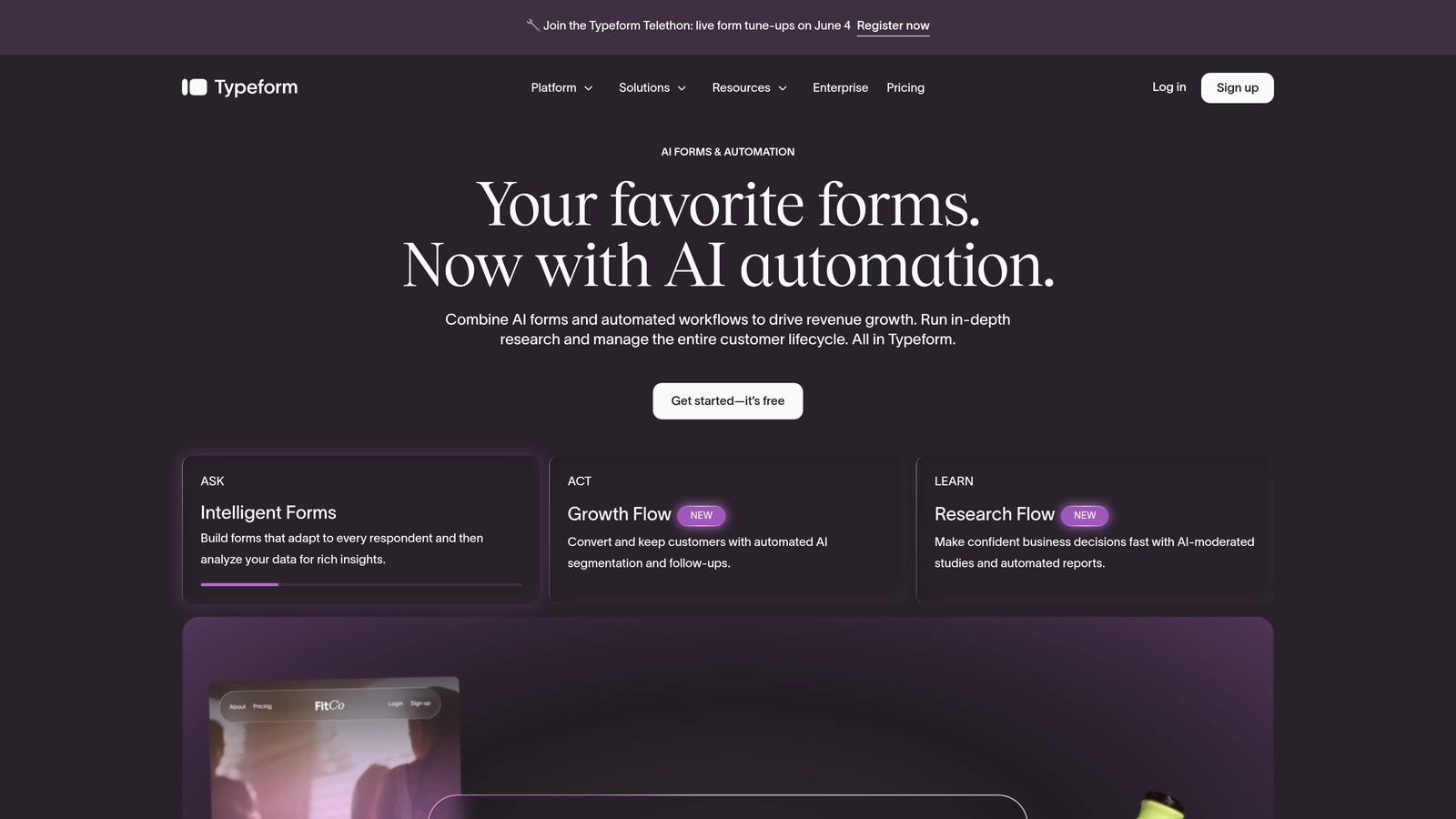
Typeform is a conversational form builder known for its one-question-at-a-time format that reduces cognitive load and tends to improve completion rates compared to traditional multi-field forms.
Where This Tool Shines
Typeform's core insight is that presenting one question at a time feels less overwhelming than staring at a full page of fields. The result is a form experience that feels more like a conversation than a data collection exercise, which can meaningfully reduce drop-off on longer qualification flows where you're asking more than three or four questions.
The logic jump system lets you branch question paths based on previous answers, so a prospect who identifies as an enterprise buyer sees different follow-up questions than someone at a startup. This kind of dynamic routing makes Typeform useful for qualification-heavy flows without making every respondent answer irrelevant questions.
Key Features
Conversational One-Question UX: Presents questions sequentially to reduce cognitive load and form abandonment.
Logic Jumps: Personalizes question paths based on previous answers, enabling branched qualification flows without complex coding.
Broad Integration Ecosystem: Connects to CRMs, marketing tools, and automation platforms via native connectors and Zapier.
Embedded Media Support: Supports video and image embedding for richer, more engaging form experiences.
Drop-off Analytics: Shows where respondents abandon the form, helping you identify and fix friction points in your flow.
Best For
SaaS marketing teams running content-gated offers, product feedback surveys, or top-of-funnel qualification flows where a polished, conversational experience matters. Less suited for teams that need deep CRM-native automation or AI-powered qualification out of the box.
Pricing
Free tier available. Paid plans start from approximately $25 per month. Verify current pricing at typeform.com.
4. Clearbit (Breeze Intelligence)
Best for: SaaS teams that want to shorten forms while capturing richer lead data through automatic enrichment.
Breeze Intelligence (formerly Clearbit, now part of HubSpot) is a data enrichment platform that automatically augments form submissions with firmographic and technographic data.
Where This Tool Shines
The core problem Breeze Intelligence solves is the trade-off between form length and data quality. Long forms kill conversion. Short forms leave your sales team without the context they need to prioritize. Breeze Intelligence breaks that trade-off by letting you ask fewer questions while automatically filling in company size, industry, tech stack, revenue range, and more from its data layer.
For ABM-focused SaaS teams, the anonymous visitor identification capability is particularly valuable. Even when a prospect never submits a form, Breeze Intelligence can identify the company behind the visit and push that signal to your CRM or SDR workflow for proactive outreach.
Key Features
Automatic Form Enrichment: Fills missing data fields with firmographic and technographic intelligence at the moment of submission.
Shorter Form Enablement: Reduces required fields by filling gaps programmatically, improving completion rates without sacrificing data quality.
Anonymous Visitor Identification: Identifies company-level website visitors who never submit a form, creating outbound opportunities from inbound intent signals.
Native HubSpot Integration: Operates natively within HubSpot CRM as an add-on, keeping enriched data in your existing system of record.
ICP Prioritization: Helps sales teams prioritize leads based on fit signals without manual research or data append workflows.
Best For
HubSpot-based SaaS teams running ICP-driven demand generation or ABM programs who want richer lead data without adding form fields or manual enrichment steps to their process.
Pricing
Available as a HubSpot Breeze Intelligence add-on. Verify current pricing at hubspot.com.
5. Chili Piper
Best for: Sales-led SaaS teams that want to convert inbound form submissions into booked meetings instantly.
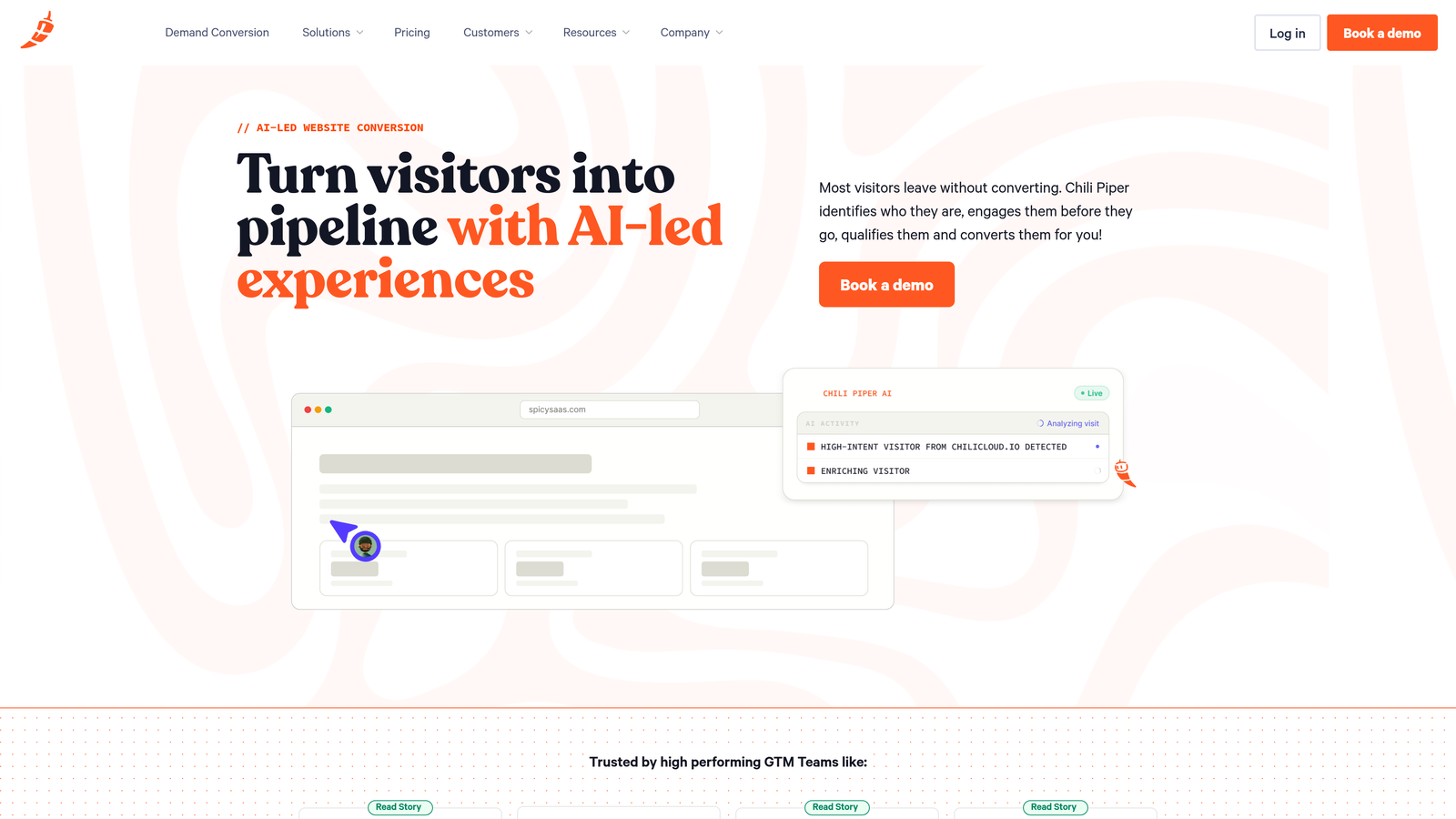
Chili Piper is an inbound lead routing and scheduling platform that converts form submissions into booked sales meetings in real time, reducing the gap between intent and first contact.
Where This Tool Shines
The moment between a prospect submitting a demo request form and actually speaking to a sales rep is one of the highest-risk points in the B2B SaaS funnel. Chili Piper compresses that gap by embedding instant meeting booking directly into the post-submission experience. Instead of receiving a "we'll be in touch" confirmation, prospects can book a slot with the right rep immediately.
The routing logic is sophisticated enough to handle real-world sales team complexity: territory-based assignment, round-robin distribution, account ownership rules, and rep availability all factor into which calendar gets offered. This matters for teams with larger sales organizations where "send it to whoever is free" isn't a viable routing strategy.
Key Features
Instant Post-Form Booking: Embeds calendar scheduling directly into the post-submission flow so prospects book meetings without a follow-up email chain.
Rules-Based Lead Routing: Assigns leads to the right rep automatically based on territory, company size, industry, or custom criteria.
Round-Robin and Territory Distribution: Supports multiple routing models to match your sales team's structure and coverage model.
CRM Integrations: Connects with Salesforce, HubSpot, and other major CRMs to keep meeting data and contact records in sync.
Reduced Time-to-First-Meeting: Removes the scheduling back-and-forth that typically delays inbound demo request follow-up.
Best For
Sales-led SaaS companies with active inbound demo request flows and sales teams large enough to require structured routing rules. Less critical for very early-stage teams where routing complexity is minimal.
Pricing
Per-seat pricing model. Verify current plans and pricing at chilipiper.com.
6. Unbounce
Best for: Paid acquisition teams that need rapid landing page iteration with embedded lead capture and AI-powered traffic optimization.
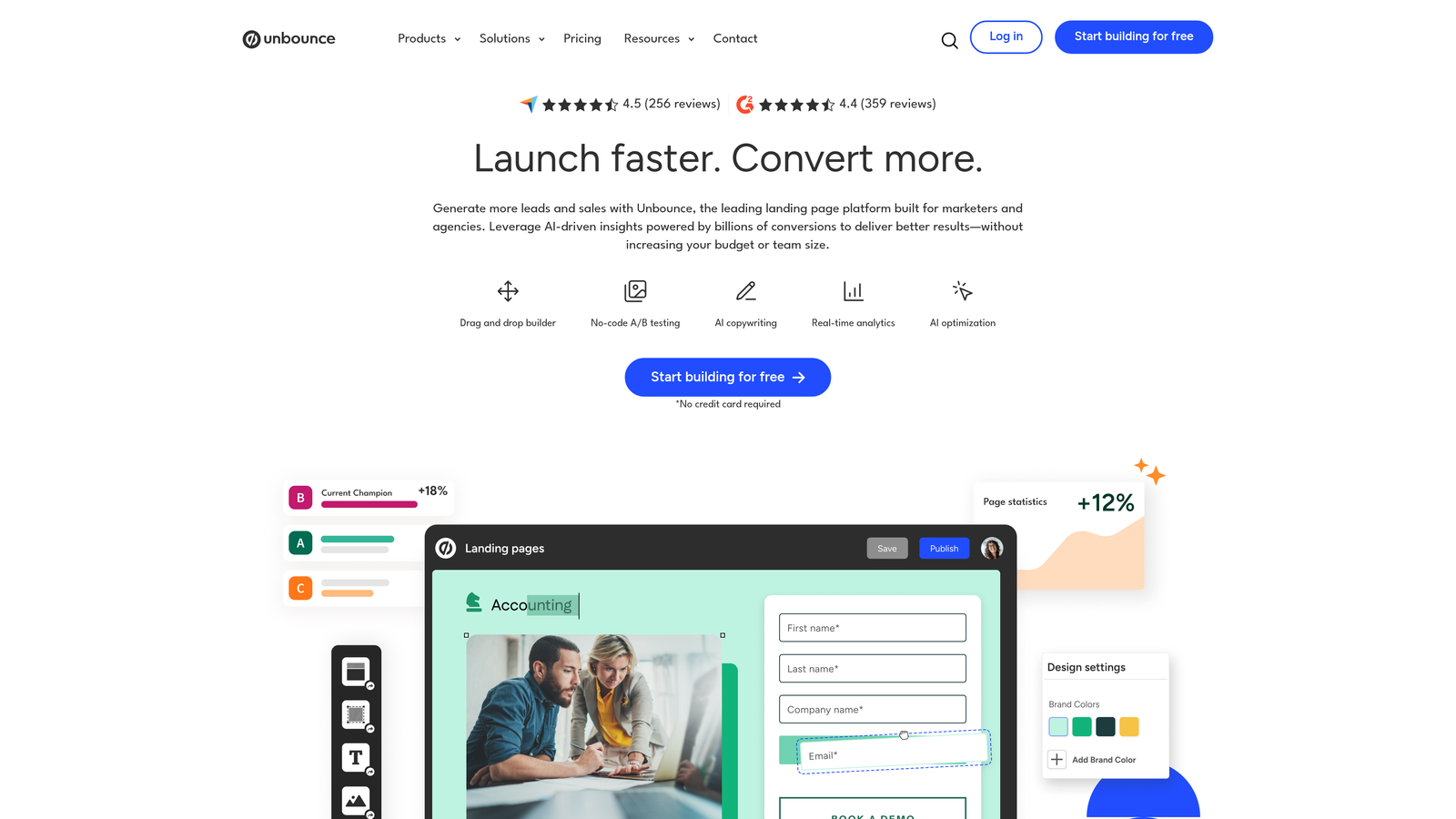
Unbounce is a landing page builder with embedded lead capture forms, A/B testing, and an AI-powered traffic optimization feature designed for conversion-focused paid campaigns.
Where This Tool Shines
Unbounce is built for speed and experimentation. Marketing teams running paid search or paid social campaigns can spin up, test, and iterate landing pages without waiting on engineering resources. The drag-and-drop builder handles both page layout and form creation in one environment, which reduces the tool-switching friction that slows down campaign iteration.
The Smart Traffic feature is worth highlighting for SaaS teams running multiple variants. Rather than splitting traffic evenly across A/B variants and waiting for statistical significance, Smart Traffic uses machine learning to dynamically route visitors to the variant most likely to convert for their profile. This can accelerate the optimization cycle on high-traffic campaigns.
Key Features
Drag-and-Drop Page and Form Builder: Creates landing pages and embedded forms in one tool without engineering involvement.
Smart Traffic AI: Automatically routes visitors to the highest-converting page variant based on visitor attributes.
A/B and Multivariate Testing: Built-in testing infrastructure for systematic conversion rate optimization.
SaaS-Focused Templates: Library of conversion-focused templates suited to common SaaS landing page patterns like demo requests and free trial signups.
CRM and Marketing Tool Integrations: Connects with HubSpot, Salesforce, Mailchimp, and other tools to pass lead data downstream.
Best For
SaaS growth and demand generation teams running paid acquisition campaigns who need to move fast on landing page creation and optimization without developer dependency.
Pricing
Subscription-based. Verify current pricing and plan details at unbounce.com.
7. Mutiny
Best for: Enterprise SaaS teams running ABM programs who want to personalize landing pages and CTAs based on visitor firmographics.
Mutiny is a website personalization platform that dynamically tailors landing pages, CTAs, and form messaging based on visitor company data for ABM-driven SaaS go-to-market teams.
Where This Tool Shines
Generic landing pages convert worse than personalized ones for high-value B2B targets. Mutiny solves this by letting you show different headlines, copy, social proof, and CTAs to different visitor segments, all without building separate pages for each. A financial services company visiting your pricing page can see industry-specific messaging while a tech company sees something tailored to their context.
The no-code editor is a meaningful advantage here. ABM personalization has historically required engineering involvement to implement, which creates a bottleneck that limits how many segments a team can actually personalize for. Mutiny shifts that capability to marketing, enabling faster iteration across more account segments.
Key Features
Firmographic-Based Personalization: Dynamically changes page content, CTAs, and messaging based on visitor company, industry, or segment.
No-Code Editor: Allows marketing teams to build and deploy personalized experiences without engineering resources.
Visitor Identification Integration: Connects with Clearbit/Breeze Intelligence to identify visitors in real time and trigger personalization rules.
ABM-Specific Design: Built specifically for B2B and enterprise SaaS teams running named account programs.
Segment-Level Analytics: Measures the lift from personalization by segment so you can quantify which audiences respond best to tailored experiences.
Best For
Enterprise SaaS marketing teams running account-based programs targeting named accounts or specific industry verticals, where generic messaging creates meaningful conversion drag.
Pricing
Enterprise pricing model. Verify current plans at mutinyhq.com.
8. Leadfeeder (Dealfront)
Best for: SaaS SDR teams that want to identify and act on high-intent website visitors who never submit a form.
Dealfront (formerly Leadfeeder) is a B2B website visitor identification tool that reveals which companies are visiting your site even when they never complete a form submission.
Where This Tool Shines
The uncomfortable truth about most B2B SaaS websites is that the majority of high-intent visitors leave without ever submitting a form. Dealfront addresses this by identifying the companies behind those anonymous visits using IP intelligence and firmographic matching, turning passive traffic into actionable outbound signals for your SDR team.
The behavioral data layer adds another dimension. Dealfront shows not just which company visited, but which pages they viewed, how long they spent, and how many times they returned. A prospect who visited your pricing page three times in a week is sending a clear intent signal, even without a form submission. That context makes SDR outreach more timely and more relevant.
Key Features
Company-Level Visitor Identification: Identifies which companies are visiting your site without requiring form submission, using IP intelligence.
Page-Level Behavioral Data: Shows which pages were viewed and for how long, providing intent context for outreach prioritization.
ICP Filtering and Segmentation: Filters identified visitors by company size, industry, location, and other ICP criteria to surface the most relevant accounts.
CRM and Sales Tool Push: Sends identified accounts to CRM or sales engagement platforms for SDR follow-up without manual data entry.
Freemium Access: Free tier makes it accessible for early-stage SaaS teams that want to start capturing intent signals before committing to a paid plan.
Best For
SaaS SDR and demand generation teams that want to supplement form-based lead capture with intent-based outbound triggers, particularly those running ICP-focused outreach programs.
Pricing
Freemium model with paid tiers based on number of identified companies. Verify current pricing at dealfront.com.
9. Intercom
Best for: PLG SaaS teams that want chat-based lead capture and bot qualification without requiring a traditional form submission.
Intercom is a customer messaging platform that enables chat-based lead capture, automated bot qualification, and instant routing, offering a form-free path to pipeline for high-traffic SaaS products.
Where This Tool Shines
For product-led growth SaaS companies, the lead capture moment often happens inside the product or on a high-traffic marketing site where a static form feels out of place. Intercom's bot-driven qualification flow meets prospects in the context they're already in: a chat window that feels native to the product experience rather than a form interrupting their browsing.
The qualification bot can ask the same questions a form would ask, but in a conversational format that feels lower-friction for many visitors. More importantly, it can hand off to a live sales rep instantly for high-intent signals, collapsing the time between a prospect expressing interest and actually speaking to someone on your team.
Key Features
Automated Qualification Bots: Engages visitors with conversational questions and routes based on answers, replacing or supplementing traditional form flows.
Live Chat and Bot Handoff: Escalates high-intent conversations to live reps in real time without losing the thread of the conversation.
In-App Lead Capture: Captures and qualifies users during product trials or freemium usage, making it particularly powerful for PLG motions.
CRM and Slack Integrations: Passes qualified leads and conversation context to Salesforce, HubSpot, Slack, and other tools for seamless handoff.
Unified Inbox: Consolidates inbound conversations from sales and support into a single workspace so nothing falls through the cracks.
Best For
PLG SaaS teams with high website or in-app traffic where conversational capture fits the product experience better than a static form, and where instant rep handoff for high-intent prospects is a priority.
Pricing
Per-seat and usage-based pricing. Verify current plans at intercom.com.
Which Tool Fits Your GTM Motion
The right lead capture tool depends less on feature lists and more on how your team actually goes to market. Here's a quick way to think through the decision.
If you're running a sales-led motion with demo request flows: Start with Orbit AI for qualification at the point of capture, pair it with Chili Piper to convert submissions into booked meetings instantly, and layer in Breeze Intelligence if you want to enrich submissions with firmographic data without lengthening your forms.
If you're running a product-led growth motion: Intercom's in-app chat and bot qualification is built for exactly this context. Combine it with Dealfront to capture intent signals from visitors who explore your marketing site but never reach the signup flow.
If you're running an ABM or enterprise motion: Mutiny handles the personalization layer at the landing page and CTA level. Dealfront surfaces the anonymous account visits. And Orbit AI or HubSpot Forms handles the actual submission capture once a named account is ready to engage.
If you're scaling paid acquisition: Unbounce gives you the page iteration speed you need, with A/B testing and Smart Traffic built in. Feed those submissions into HubSpot Forms or Orbit AI for downstream qualification and routing.
Most high-growth SaaS teams end up combining two or three tools across these categories rather than relying on a single platform. The form builder handles capture and qualification. The enrichment layer fills in firmographic context. The routing tool bridges the gap to sales. That stack, when it works well together, is what separates teams with efficient pipelines from teams drowning in unqualified leads.
If you're looking for a starting point that handles qualification natively without requiring a full stack out of the gate, Start building free forms today with Orbit AI and see how AI-powered qualification at the point of capture changes what arrives in your CRM.


