

Lead capture software has evolved well beyond basic web forms. Today's high-growth teams need platforms that not only collect contact information but automatically qualify, route, and act on leads the moment they submit — without manual intervention slowing down the pipeline. The right tool can mean the difference between a hot lead converted and a missed opportunity lost to a slower competitor.
This guide covers the best lead capture software with built-in automation for teams serious about conversion optimization. We evaluated each platform on form flexibility, automation depth, lead qualification capabilities, native integrations, and pricing transparency. Whether you're a SaaS startup running paid acquisition campaigns or a scaling B2B team managing high-volume inbound, there's a right fit here for you.
If your current forms aren't performing before you switch tools, check out our guide on lead capture forms not converting to diagnose what's going wrong first.
1. Orbit AI
Best for: SaaS and B2B teams that need AI-powered lead qualification built directly into the form layer.
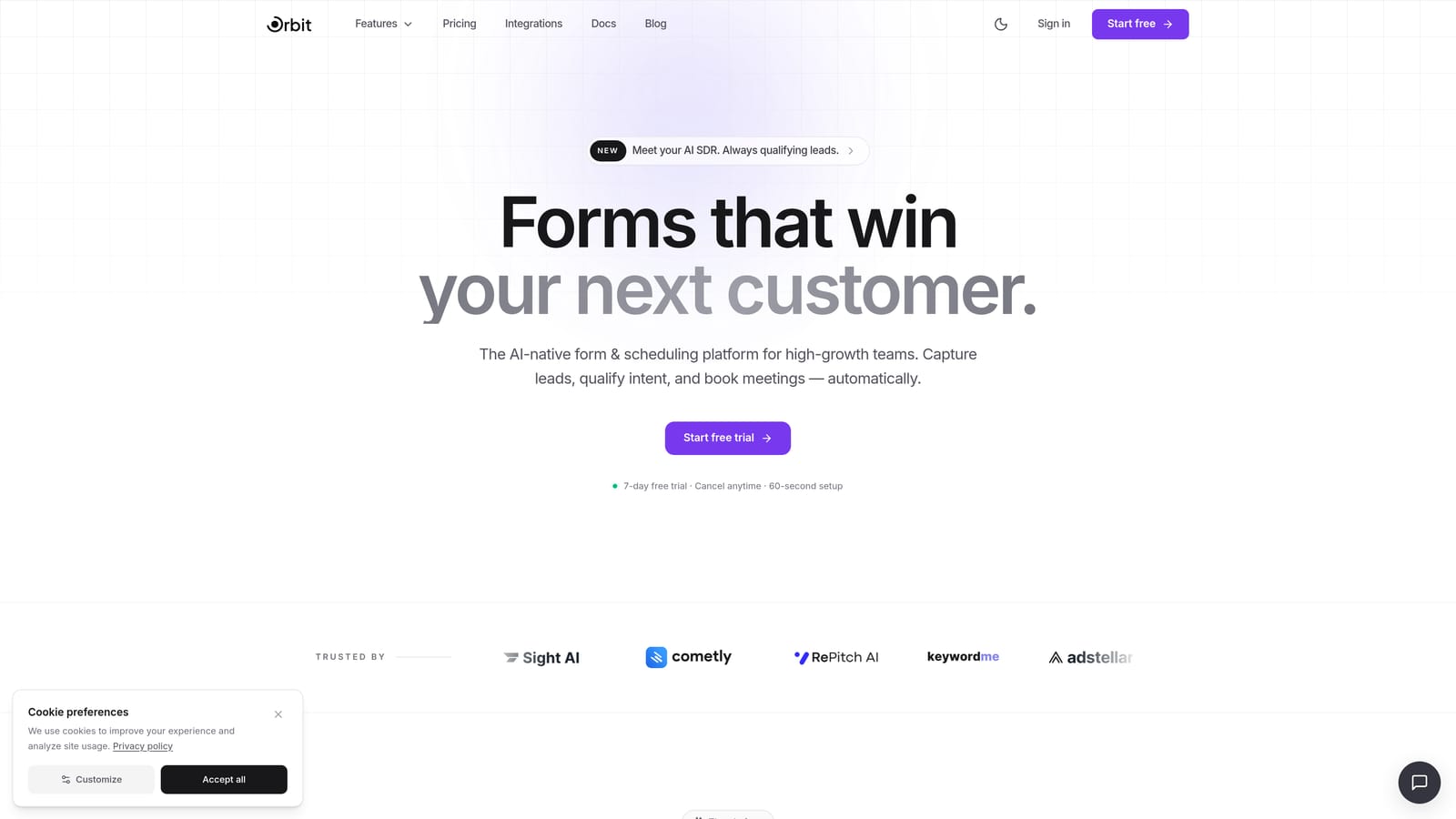
Orbit AI is an AI-powered form builder with native lead qualification designed for high-growth SaaS and B2B teams.
Where This Tool Shines
Most lead capture tools collect data and then hand it off to a CRM or scoring tool downstream. Orbit AI takes a fundamentally different approach: qualification happens at the form layer itself, before a lead ever touches your CRM. That means faster routing, less manual review, and fewer leads slipping through the cracks during the handoff.
The platform is also built with conversion optimization in mind from the ground up. Forms are modern, brandable, and designed to reduce friction — because a form that doesn't get completed is a form that doesn't generate leads, no matter how sophisticated the automation behind it.
Key Features
AI-Powered Lead Qualification: Scores and qualifies leads based on form responses, enabling immediate routing decisions without waiting for CRM enrichment.
Conversion-Optimized Templates: Modern, brandable form designs built to maximize completion rates across landing pages and paid acquisition flows.
Conditional Logic: Smart branching personalizes the form experience based on prior answers, creating a more relevant path for each respondent.
Automated Lead Routing and Notifications: Routes leads and triggers alerts based on qualification scores, so your sales team reaches out while intent is still high.
SaaS-Focused Workflow Design: Built specifically for high-growth team workflows, not retrofitted from a generic form tool.
Best For
Orbit AI is the strongest fit for SaaS companies and B2B teams running high-volume inbound or paid acquisition campaigns where lead quality matters as much as lead volume. If your team is tired of manually triaging form submissions or waiting for CRM scoring to kick in, this is built for you.
Pricing
Visit orbitforms.ai for current pricing plans. The platform is designed to scale with high-growth teams at various stages.
2. Typeform
Best for: Marketing teams that prioritize form completion rates through a conversational, human-feeling experience.
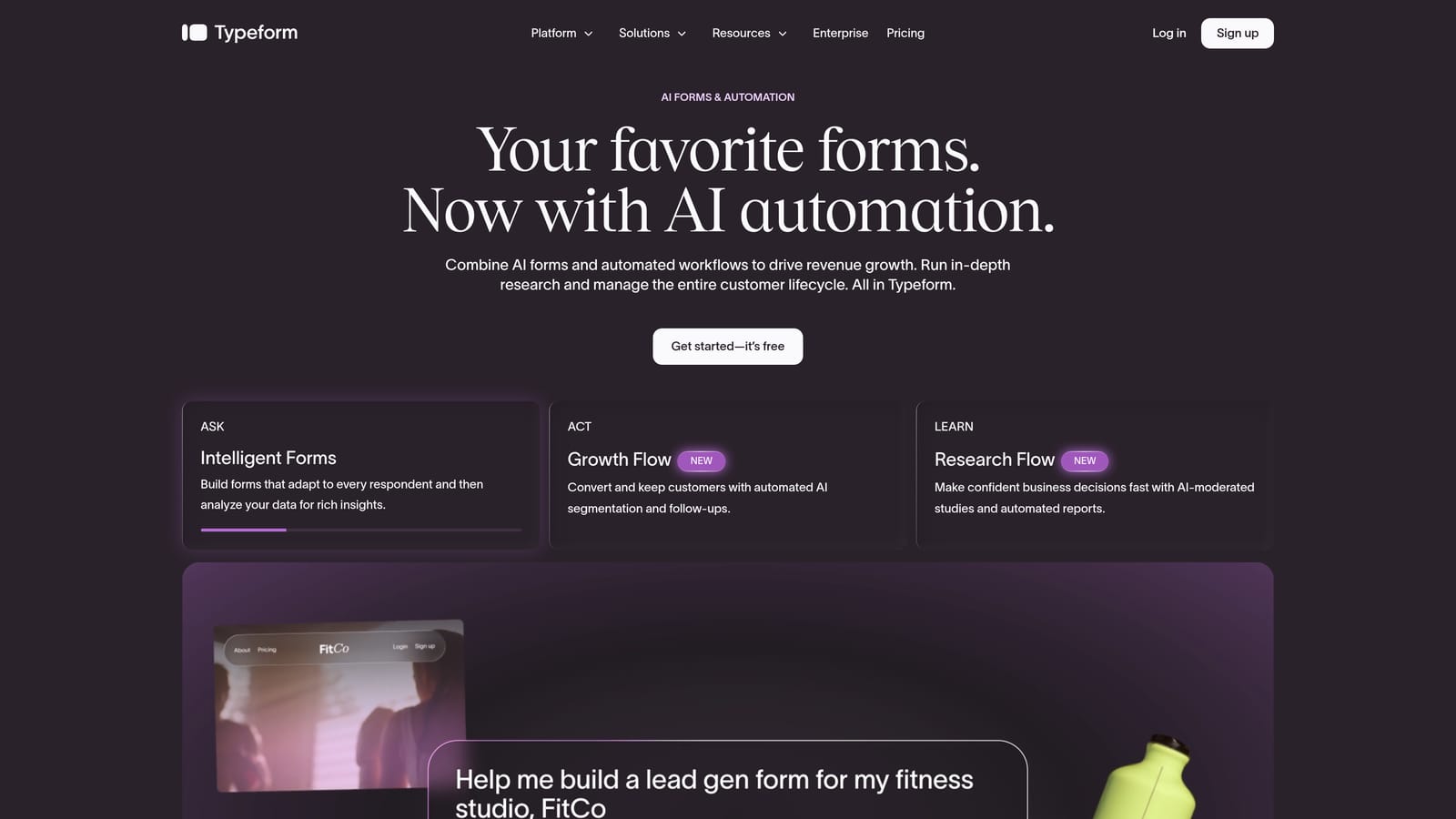
Typeform is a conversational form builder known for its one-question-at-a-time interface and strong brand recognition among marketing teams.
Where This Tool Shines
Typeform's core insight is that traditional multi-field forms feel like homework. By presenting one question at a time in a clean, full-screen interface, it creates a more engaging experience that typically drives higher completion rates than conventional forms. For lead capture at the top of the funnel, that completion rate difference matters.
The trade-off is that Typeform's automation capabilities rely heavily on integrations rather than native workflow tools. You'll be leaning on Zapier or native CRM connections to do the heavy lifting on routing and follow-up, which adds complexity for teams that want everything in one place. If you're evaluating Typeform for an enterprise context, our post on the best Typeform alternative for enterprises is worth a read.
Key Features
Conversational One-Question Format: Presents fields sequentially for a more engaging, lower-friction experience that supports higher completion rates.
Logic Jumps: Conditional branching that routes respondents through different question paths based on their answers.
Native CRM Integrations: Connects directly with HubSpot, Salesforce, and Slack for lead data handoff without middleware.
Webhook and Zapier Support: Enables automation workflows with hundreds of downstream tools for teams with existing tech stacks.
Rich Media Embeds: Supports video and image embedding within forms to create more immersive lead capture experiences.
Best For
Typeform works well for marketing teams focused on top-of-funnel lead capture, brand surveys, and product feedback collection where the conversational experience is a priority. It's less suited for teams that need deep native automation or AI-powered qualification without additional tooling.
Pricing
Free tier available. Paid plans start at approximately $25/month. Verify current pricing at typeform.com as plans evolve.
3. Jotform
Best for: Multi-department teams that need high-volume form management with built-in approval workflows and broad template coverage.
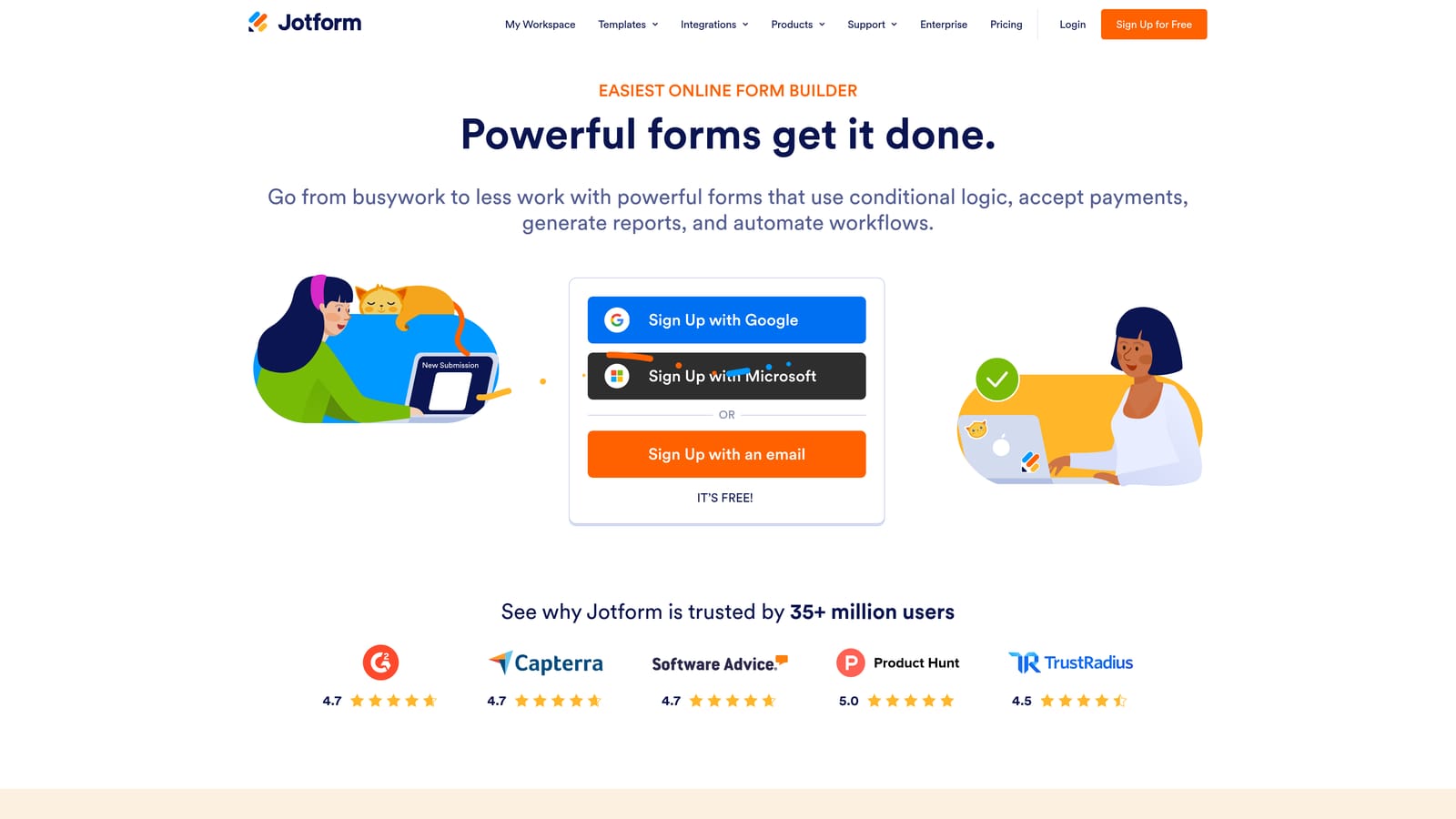
Jotform is a feature-rich form platform with robust workflow automation, an extensive template library, and multi-step approval capabilities for complex lead capture operations.
Where This Tool Shines
Jotform's depth is its defining strength. With over 10,000 templates and 150+ native integrations, it covers virtually every form use case imaginable. For teams managing lead capture across multiple departments or product lines, the breadth of options and the ability to standardize form workflows across an organization is genuinely useful.
Jotform Workflows adds multi-step approval and routing automation that goes beyond what most form tools offer natively. If your lead capture process involves internal review steps before a lead reaches sales, or if you're operating in a regulated environment that requires HIPAA-compliant data handling, Jotform has those bases covered.
Key Features
Jotform Workflows: Multi-step approval and routing automation built natively into the platform, enabling complex lead handoff logic without third-party tools.
10,000+ Templates: Extensive template library spanning industries and use cases, reducing time-to-launch for new form initiatives.
150+ Native Integrations: Connects with Salesforce, HubSpot, and a wide range of CRM, payment, and productivity tools.
HIPAA-Compliant Plans: Available for healthcare and regulated industries that need compliant data collection at scale.
Conditional Email Notifications: Automated follow-up and routing notifications triggered by specific form responses.
Best For
Jotform is a strong fit for larger organizations managing forms across multiple teams, or for businesses in regulated industries that need compliance features alongside automation. Smaller teams may find the feature set more than they need.
Pricing
Free tier available. Paid plans start at approximately $34/month. Verify current pricing at jotform.com.
4. Paperform
Best for: SMBs and service businesses that want lead capture, payments, and scheduling in a single platform without Zapier dependencies.
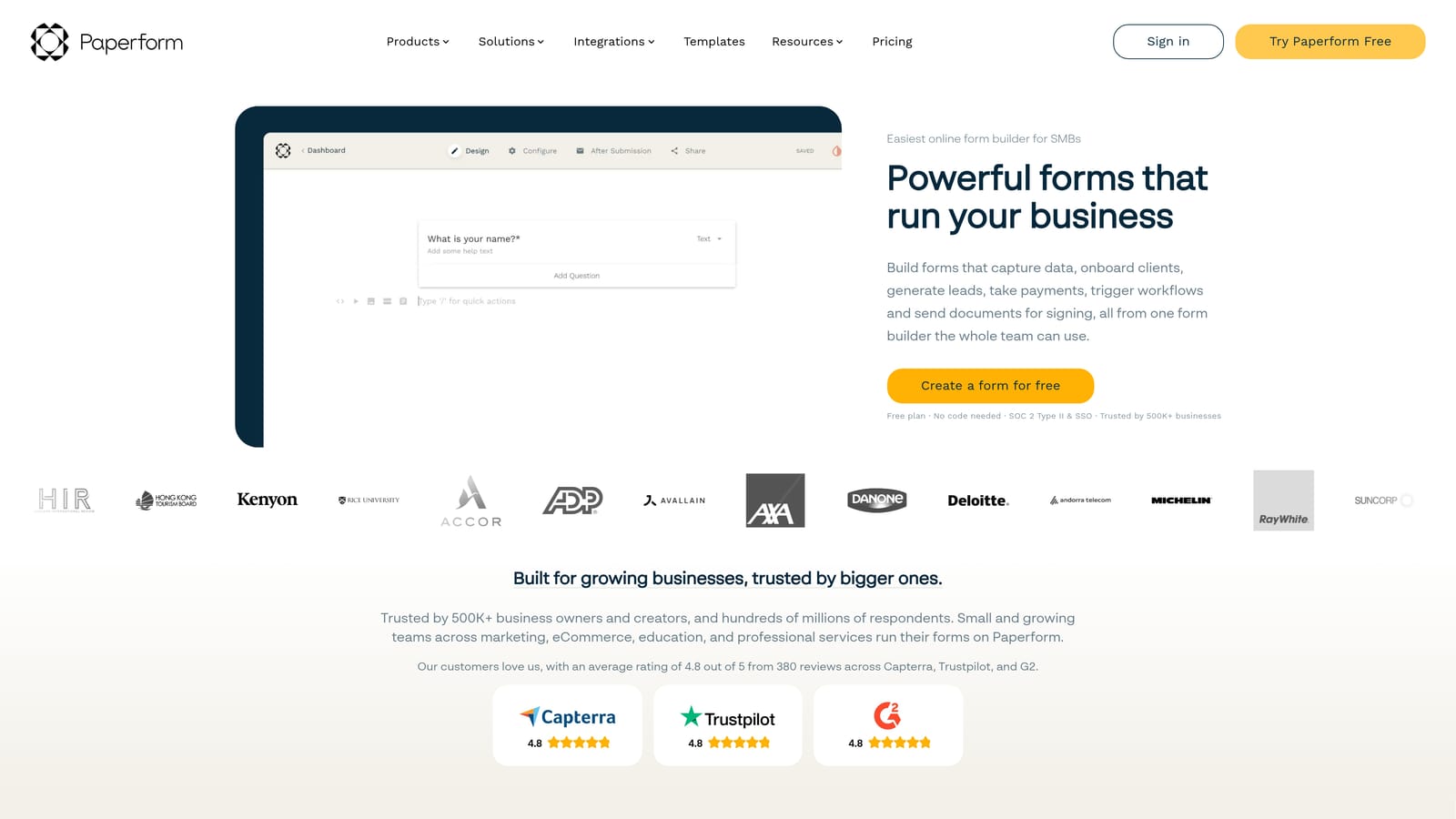
Paperform is a flexible form builder that combines lead capture with native payment processing, scheduling, and post-submission automation rules in one place.
Where This Tool Shines
Paperform's "After Submission" automation rules are a genuine differentiator. Most form tools require you to connect Zapier or a similar middleware tool to trigger post-submission actions. Paperform handles redirects, email sends, and integrations natively — which simplifies the tech stack considerably for teams that don't want to manage multiple automation layers.
The design flexibility is also notable. Forms in Paperform can be styled to look more like landing pages than traditional form fields, which helps with conversion for teams running standalone form-as-landing-page campaigns. For SaaS teams specifically, our post on Paperform alternatives for SaaS outlines where the platform's limitations tend to show up as teams scale.
Key Features
Native Payment Processing: Stripe and PayPal integrations built directly into forms — no third-party checkout tool required.
After Submission Automation Rules: Trigger redirects, emails, and integrations post-submission without requiring Zapier or Make.
Landing Page-Style Design: High visual flexibility that lets forms function as standalone conversion pages rather than embedded widgets.
Scheduling and Booking: Native appointment booking capabilities within forms, useful for service-based lead capture flows.
Conditional Logic and Answer Piping: Personalizes the form experience and carries previous answers forward into later questions.
Best For
Paperform is best suited for SMBs, service businesses, and consultants who need an all-in-one tool combining lead capture, payments, and scheduling. It's less optimized for high-growth SaaS teams focused on lead qualification and CRM-centric workflows.
Pricing
Plans start at approximately $24/month. Verify current pricing at paperform.co.
5. Tally
Best for: Lean teams and startups that need fast, unlimited lead capture with a generous free tier and minimal setup overhead.
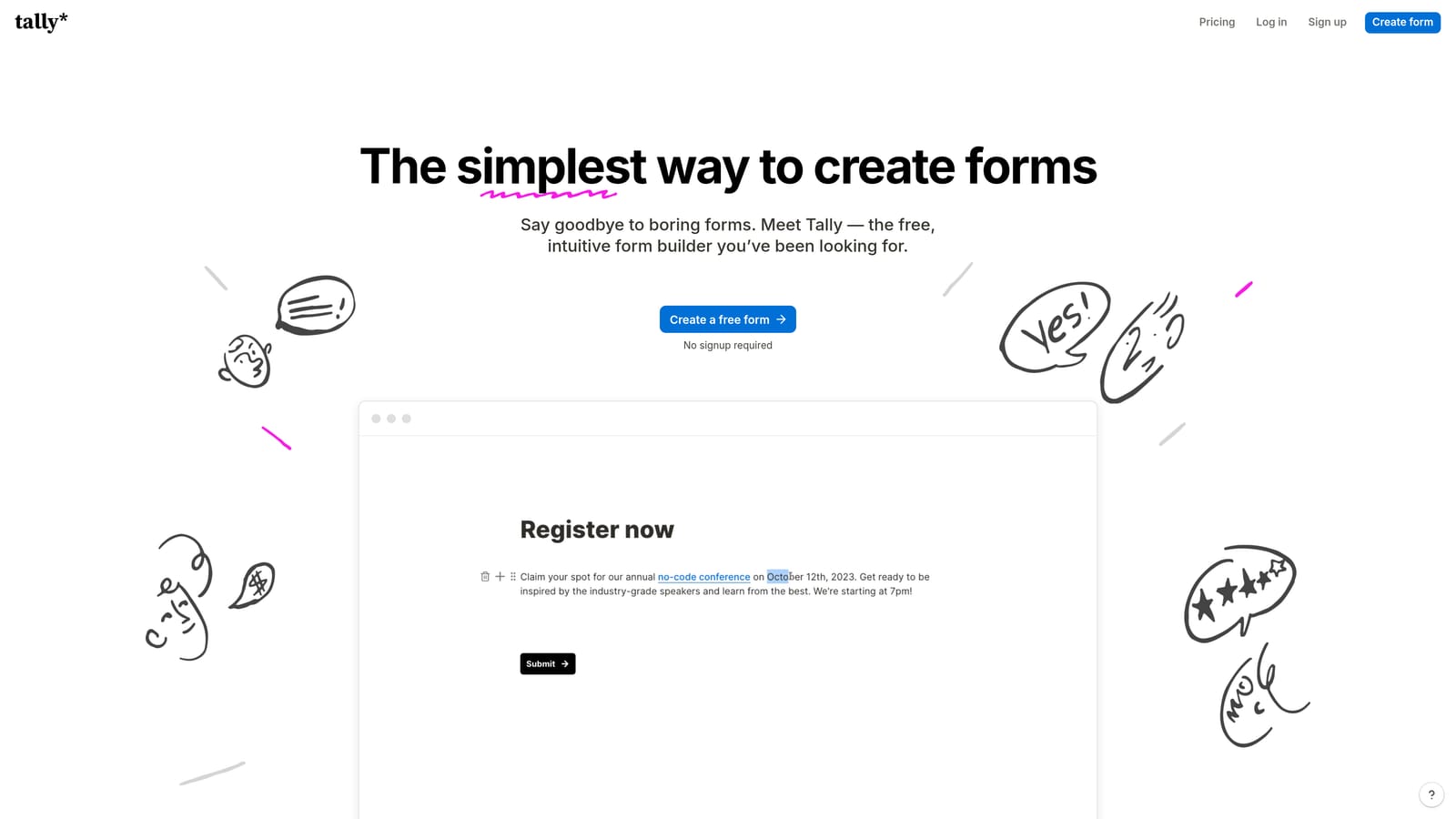
Tally is a lightweight, Notion-inspired form builder with unlimited forms and submissions on the free plan, making it a compelling starting point for teams watching their tooling budget.
Where This Tool Shines
Tally's free tier is genuinely generous by industry standards. Unlimited forms and unlimited submissions without a paid plan is a real differentiator for early-stage teams or lean marketing operations that need to capture leads without committing to monthly software costs. The block-based editor will feel immediately familiar to anyone who uses Notion, which shortens the learning curve considerably.
The honest limitation is that Tally's automation relies on Zapier, Make, or webhooks rather than native workflow tools. For teams that already have an automation stack in place, that's fine. For teams that don't, it adds a layer of complexity. If you're evaluating Tally and wondering what a more feature-rich alternative looks like, our post on Tally form alternatives with better features covers the gap well.
Key Features
Unlimited Free Forms and Submissions: No submission caps or form limits on the free plan — a genuine rarity in this category.
Block-Based Editor: Notion-style form creation that makes building and editing forms fast and intuitive for teams already in the Notion ecosystem.
Conditional Logic and Answer Piping: Supports branching and dynamic question personalization based on prior responses.
Zapier, Make, and Webhook Support: Connects to automation platforms for lead routing, CRM sync, and notifications.
Flexible Embedding: Embeds cleanly in websites, Notion pages, and web apps without complex configuration.
Best For
Tally is the right choice for early-stage startups, solo operators, and lean teams that need fast lead capture without a budget commitment. It's not designed for teams that need native lead qualification, complex approval workflows, or enterprise-grade compliance features.
Pricing
Free tier available with unlimited forms and submissions. Pro plan starts at approximately $29/month. Verify current pricing at tally.so.
6. Formstack
Best for: Enterprise teams and regulated industries that need compliance-ready forms with document generation and deep Salesforce integration.
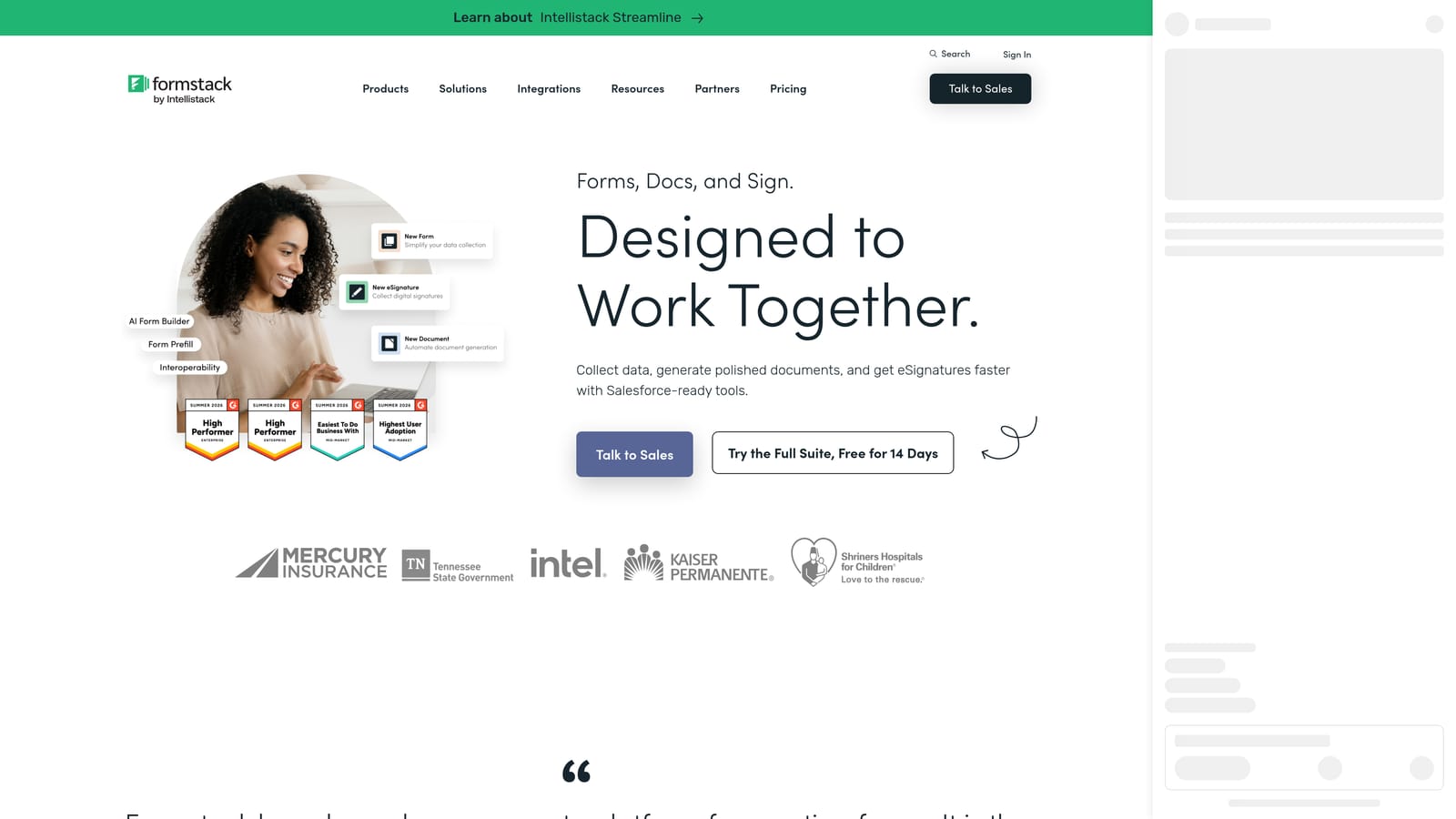
Formstack is an enterprise-grade form and workflow automation platform built for organizations with strict compliance requirements and complex data workflows.
Where This Tool Shines
Formstack occupies a distinct position in this category: it's built for organizations where compliance isn't optional. HIPAA and GDPR compliance are built into the platform, not bolted on as an add-on tier. For healthcare organizations, financial services firms, and enterprise sales teams operating in regulated environments, that matters significantly.
The Formstack Documents integration adds a capability most form tools don't have at all: automatically generating documents from form submissions. Think contracts, intake packets, or proposal drafts that populate from lead data. Combined with e-signature capabilities via Formstack Sign, it creates an end-to-end workflow that goes well beyond lead capture into full document lifecycle management.
Key Features
HIPAA and GDPR Compliance: Built-in compliance controls for regulated industries, not available as an afterthought.
Formstack Documents: Automatically generates populated documents from form submission data, enabling contract and packet automation.
Approval Workflows and Conditional Routing: Multi-step internal routing and approval chains for complex lead handling processes.
Deep Salesforce Integration: Enterprise-grade CRM sync with Salesforce, popular with large sales and healthcare organizations.
E-Signature via Formstack Sign: Collects legally binding signatures as part of the form and document workflow.
Best For
Formstack is the right fit for enterprise teams in healthcare, finance, and other regulated sectors where compliance, document generation, and Salesforce depth are non-negotiable. It's significantly more expensive and complex than other tools on this list, which makes it a poor fit for small teams or pure-play lead generation use cases.
Pricing
Forms plan starts at approximately $83/month. Verify current pricing at formstack.com.
Which Tool Is Right for Your Team?
The honest answer is that the best lead capture software with automation depends entirely on where your bottleneck actually sits. Here's a quick breakdown by team type to help you cut through the noise.
If you're a SaaS or B2B team focused on lead quality and conversion rate, Orbit AI is the strongest fit. Qualification at the form layer means faster routing, less manual review, and fewer leads lost in the handoff. It's purpose-built for the workflows high-growth teams actually run.
If you're a marketing team prioritizing form completion rates and you already have a CRM and automation stack in place, Typeform's conversational experience is worth the trade-off in native automation depth.
If you're a larger organization managing forms across multiple departments or operating in a regulated industry, Jotform's breadth and HIPAA-compliant plans make it a practical choice. Formstack is the right call if you need enterprise compliance plus document generation and deep Salesforce integration.
If you're an SMB or service business that wants payments, scheduling, and lead capture in one tool without building a Zapier stack, Paperform handles that combination cleanly. And if you're an early-stage team watching your budget, Tally's unlimited free tier is a legitimate starting point before you need more sophisticated qualification logic.
The biggest shift in lead capture in 2026 is the move from passive collection to active qualification. Forms that simply gather data and hand it off are leaving conversion on the table. The tools that score, route, and act on leads at the moment of submission are the ones that give high-growth teams a genuine edge.
Transform your lead generation with AI-powered forms that qualify prospects automatically while delivering the modern, conversion-optimized experience your high-growth team needs. Start building free forms today and see how intelligent form design can elevate your conversion strategy.
Want to go deeper on conversion strategy? Explore our posts on why lead capture forms stop converting and the best Typeform alternative for enterprise teams for more context on building a lead capture system that actually performs.


