

Every minute you wait to follow up with a new lead, your odds of converting them drop. The first vendor to respond wins a disproportionate share of deals, yet most teams still rely on manual processes that introduce hours of delay. The right lead response time tools eliminate that gap by automating qualification, routing, and follow-up the moment a lead submits a form or signals intent.
This list covers the best tools for reducing lead response time in 2026, with a focus on platforms that high-growth SaaS and B2B teams actually use. We evaluated each tool on speed of lead capture, automation depth, ease of setup, and how well it integrates into a modern GTM stack. Whether you're optimizing your intake forms, automating follow-up sequences, or routing leads to the right rep instantly, there's a solution here for your team.
1. Orbit AI
Best for: High-growth SaaS and B2B teams that need AI-powered lead qualification at the point of capture.
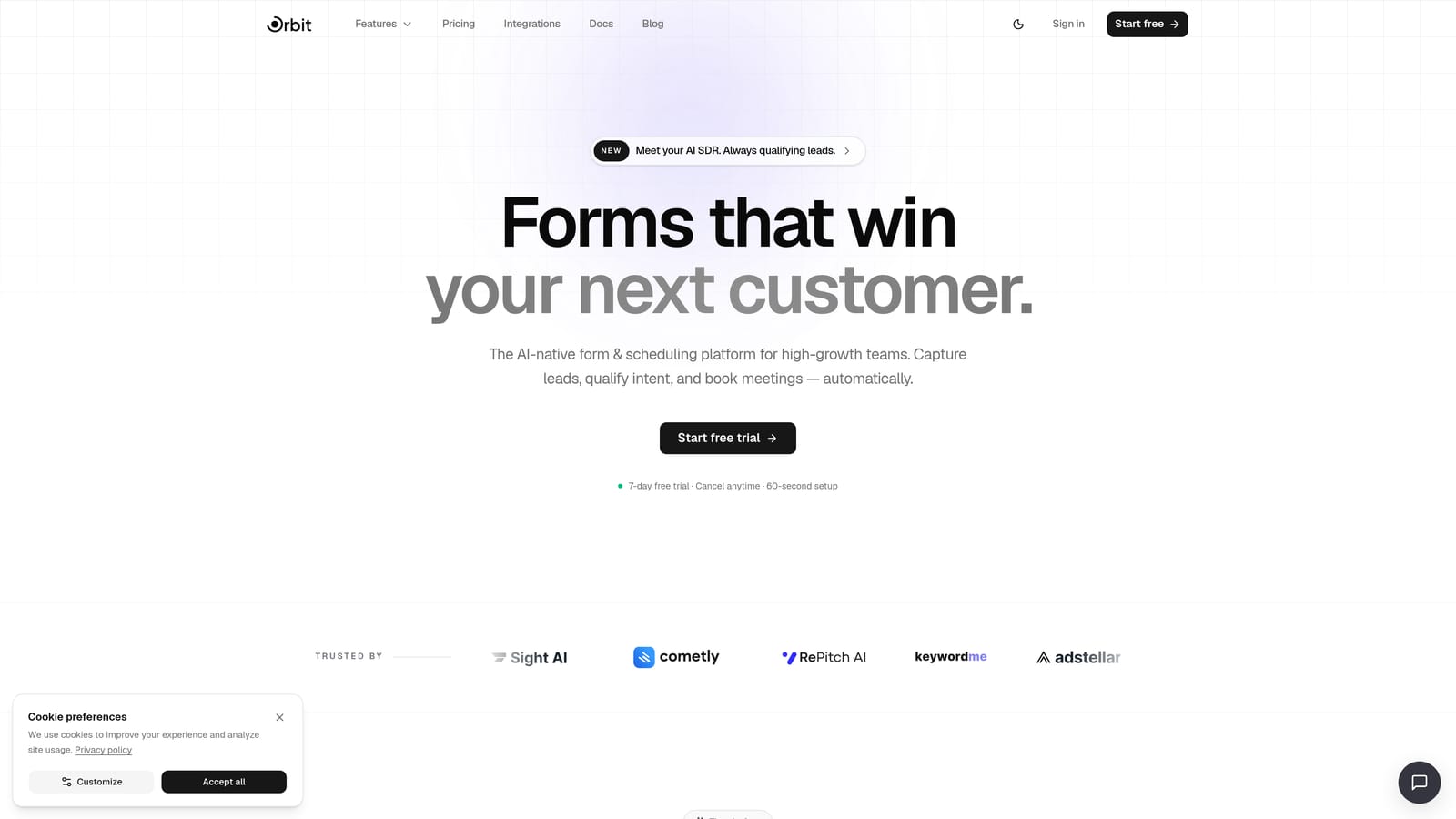
Orbit AI is an AI-powered form builder with built-in lead qualification, routing, and follow-up automation designed for high-growth teams.
Where This Tool Shines
Most form builders capture a lead and stop there. Orbit AI goes several steps further: it qualifies the lead in real time, scores it, and routes it to the right rep before it ever touches your CRM manually. That compression of the qualification-to-contact window is the core reason it earns the top spot on this list.
The AI agents built into the platform can engage leads conversationally at the moment of submission, gathering context that static forms simply can't. For teams where speed-to-qualified-contact is a revenue metric, this is a meaningful differentiator.
Key Features
AI Lead Qualification: Qualifies leads at the moment of form submission, eliminating manual triage entirely.
Automated Follow-Up Sequences: Triggers personalized follow-up instantly on capture, with no manual handoff required.
Smart Routing: Routes leads to the right rep or team automatically based on lead attributes like company size, industry, or intent signals.
Conversion-Optimized Form Design: Built-in analytics and design tools focused on maximizing form completion and lead quality.
Conversational AI Agents: Engages and qualifies leads through a conversational experience, capturing richer context than a standard form.
Best For
Orbit AI is the strongest fit for SaaS companies, B2B sales teams, and growth-focused operators who need more than a form builder. If your team is actively measuring lead response time as a KPI and wants qualification to happen before a rep even opens their inbox, this is built for that workflow.
Pricing
Check orbitforms.ai/pricing for current plans. A free starting point is available for teams that want to explore the platform before committing.
2. Typeform
Best for: Teams that want higher form completion rates through a polished, conversational experience.
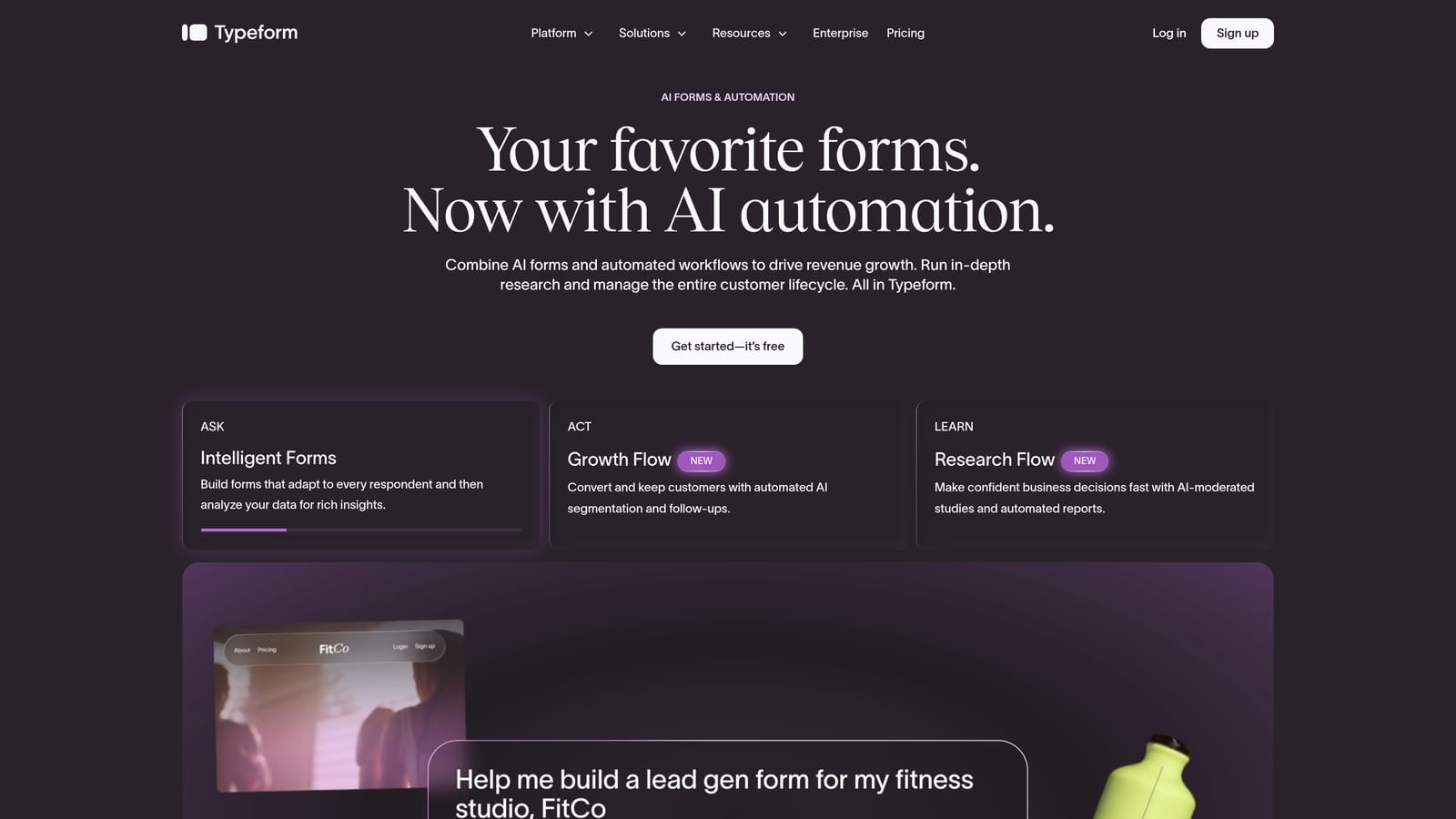
Typeform is a conversational form builder known for its one-question-at-a-time format that increases completion rates and captures richer lead data.
Where This Tool Shines
Typeform's signature UX, presenting one question at a time, tends to reduce the friction that kills completion rates on traditional multi-field forms. For teams running top-of-funnel campaigns where lead volume depends on form conversion, that UX difference can matter.
Its integration depth with HubSpot, Salesforce, and Zapier means that once a lead submits, it can flow directly into your CRM or trigger an automated sequence without manual intervention. The routing is downstream rather than native, but it works reliably for most modern GTM stacks.
Key Features
Conversational One-Question UX: Reduces form abandonment by presenting questions sequentially in a clean, engaging format.
Logic Jumps: Creates dynamic, personalized form paths based on how respondents answer earlier questions.
CRM Integrations: Native connections with HubSpot, Salesforce, and Zapier for fast lead routing post-submission.
Rich Media Embeds: Supports video and image embeds to create more engaging form experiences.
Analytics Dashboard: Tracks completion rates and drop-off points to help optimize form performance over time.
Best For
Typeform works well for marketing teams running inbound campaigns, SaaS companies capturing demo requests, and anyone who wants a visually polished form experience. It's less suited for teams that need AI qualification or complex routing logic built directly into the form layer.
Pricing
A free plan is available. Paid plans start from approximately $25/month. Check typeform.com for current pricing and plan details.
3. Jotform
Best for: Teams managing high form volumes across multiple use cases who need breadth and flexibility.
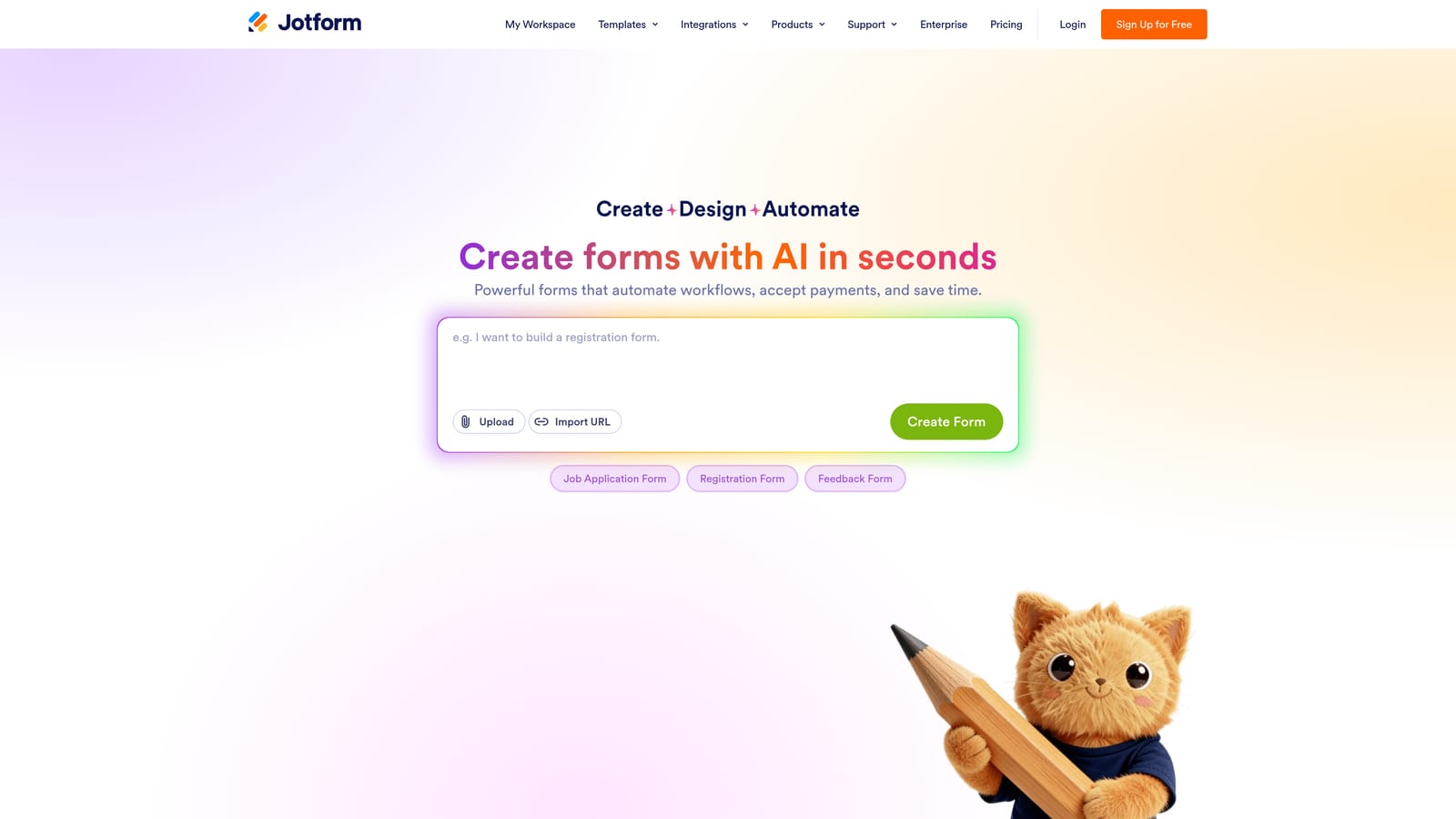
Jotform is a feature-rich form builder with an extensive template library and broad integration support for teams managing high form volumes.
Where This Tool Shines
Jotform's library of over 10,000 templates means that for almost any lead capture scenario, there's a starting point ready to customize. Teams that need to deploy forms quickly across different departments or campaigns will find that speed of setup genuinely useful.
Its conditional logic and multi-page form support make it capable of handling more complex qualification flows, and its integration with 150-plus apps means leads can be pushed to the right destination automatically. For teams in regulated industries, HIPAA-compliant forms on higher tiers add meaningful coverage.
Key Features
10,000+ Templates: Covers nearly every use case, dramatically reducing time-to-deploy for new forms.
Conditional Logic: Supports multi-page forms and branching logic for more nuanced lead qualification flows.
150+ Native Integrations: Connects directly with Salesforce, HubSpot, and a wide range of marketing and CRM tools.
Automated Email Notifications: Sends instant alerts on submission to keep response times tight.
HIPAA-Compliant Forms: Available on higher tiers for teams in healthcare or other regulated industries.
Best For
Jotform suits operations teams, agencies managing multiple clients, and businesses that need a reliable, broad-purpose form tool. It's a strong choice when volume and variety of forms matter more than AI-native qualification.
Pricing
A free plan is available. Paid plans start from approximately $34/month. Check jotform.com for current pricing tiers.
4. Formstack
Best for: Mid-market and enterprise teams with complex routing, compliance, and document generation requirements.
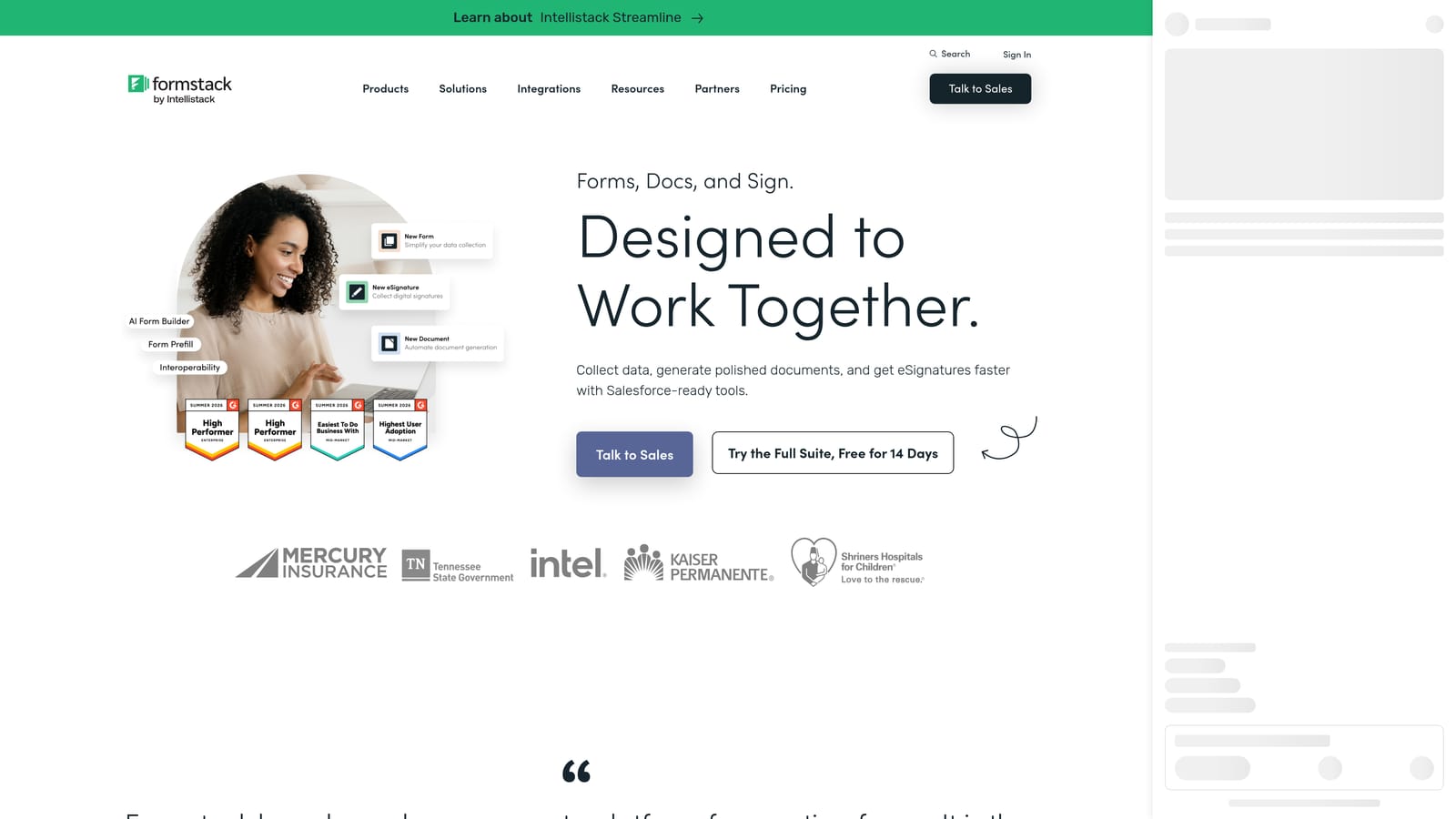
Formstack is an enterprise-grade form and workflow automation platform designed for teams with complex routing, compliance, and document generation needs.
Where This Tool Shines
Where most form builders hand off to external automation tools, Formstack builds workflow automation directly into the platform. That means leads can move through approval steps, handoff sequences, or compliance checkpoints without requiring a separate tool in the stack.
Its Salesforce native app is a genuine differentiator for enterprise teams already deep in that ecosystem. Rather than syncing data through a middleware layer, Formstack operates directly within Salesforce, reducing latency and the risk of sync errors that slow down lead response.
Key Features
Advanced Conditional Logic: Enables precise branching and routing based on lead attributes captured in the form.
Built-In Workflow Automation: Moves leads through approval or handoff steps without requiring external automation tools.
Document Generation: Automatically generates documents from form submissions, useful for proposals, contracts, and onboarding.
HIPAA and SOC 2 Compliance: Meets regulatory requirements for teams in healthcare, finance, and other regulated sectors.
Salesforce Native App: Integrates directly within Salesforce for seamless CRM data flow and faster lead handoff.
Best For
Formstack is best suited for enterprise sales teams, operations leaders, and compliance-heavy industries where routing complexity and regulatory requirements rule out lighter-weight tools. It's not the right fit for lean teams looking for quick setup and low overhead.
Pricing
Paid plans only, typically positioned for mid-market and enterprise budgets. Check formstack.com for current pricing details.
5. Paperform
Best for: Teams that want to combine lead capture, payments, and scheduling in a single, design-forward tool.
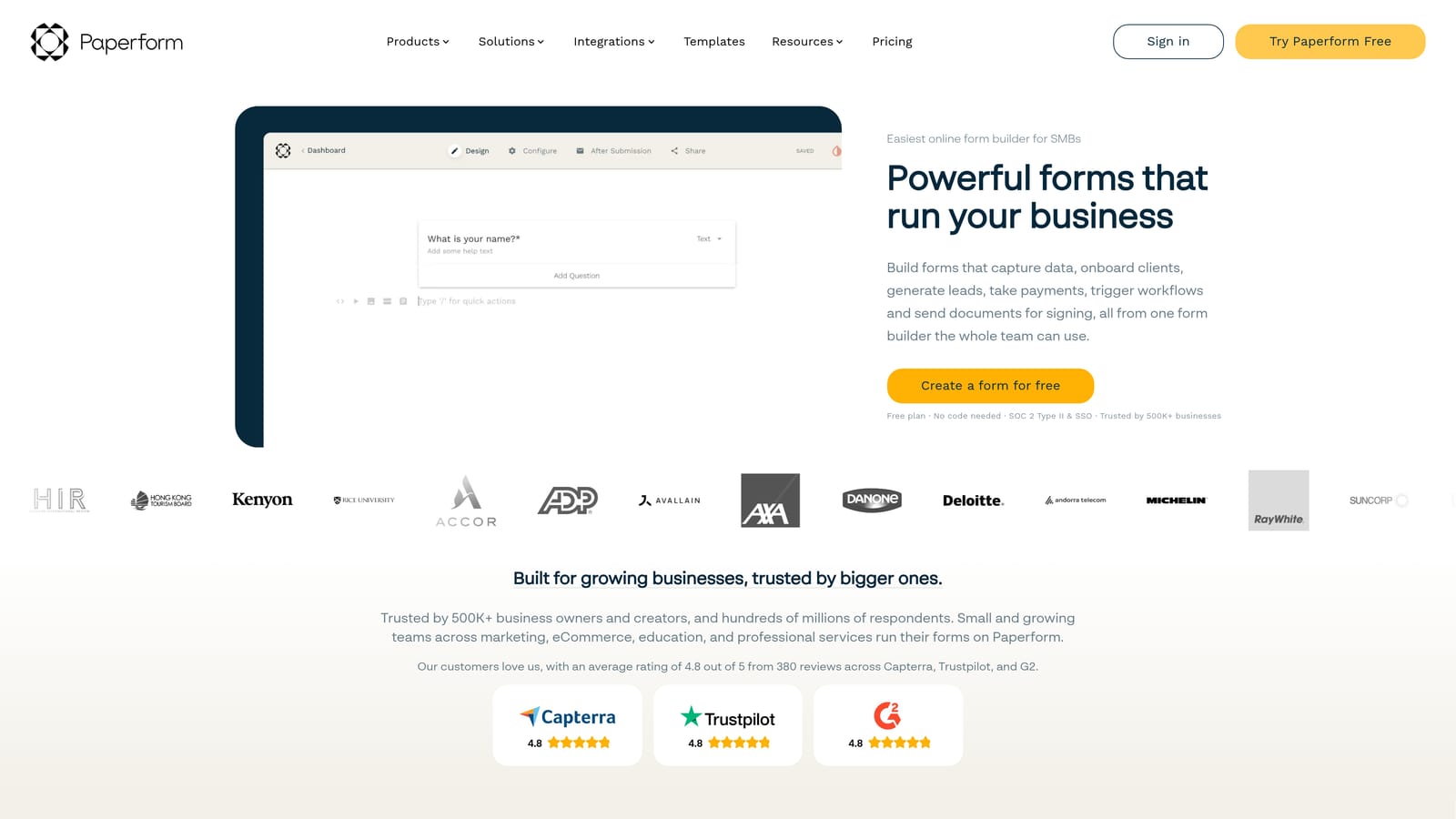
Paperform is a flexible, design-forward form builder that combines lead capture, payments, and appointment scheduling in a single platform.
Where This Tool Shines
Paperform's all-in-one approach is its clearest advantage. Instead of stitching together a form tool, a payment processor, and a scheduling app, teams can handle all three from one platform. For service businesses or SaaS teams offering demos with booking, that consolidation reduces both setup time and the number of tools to maintain.
The rich text and media embedding options give Paperform a design quality that most form builders don't match at this price point. Forms can feel closer to landing pages, which tends to support stronger conversion on high-intent offers.
Key Features
All-in-One Platform: Handles forms, payments, and appointment scheduling without requiring additional tools.
Rich Text and Media Embedding: Supports high-quality form design with images, video, and formatted content built in.
Conditional Logic: Personalizes form paths based on respondent answers for more relevant lead capture experiences.
Native Integrations: Connects with Zapier, Slack, and major CRMs for automated lead routing post-submission.
Built-In Analytics: Tracks form performance and conversion rates directly within the platform.
Best For
Paperform is a strong fit for small-to-mid-size teams, consultants, and SaaS companies that want a polished, multi-purpose tool without managing a complex stack. It works especially well when lead capture is paired with booking or payment steps in the same flow.
Pricing
Plans start from approximately $24/month. Check paperform.co for current pricing and plan details.
6. Tally
Best for: Startups and lean teams that need fast, free form creation with minimal setup overhead.
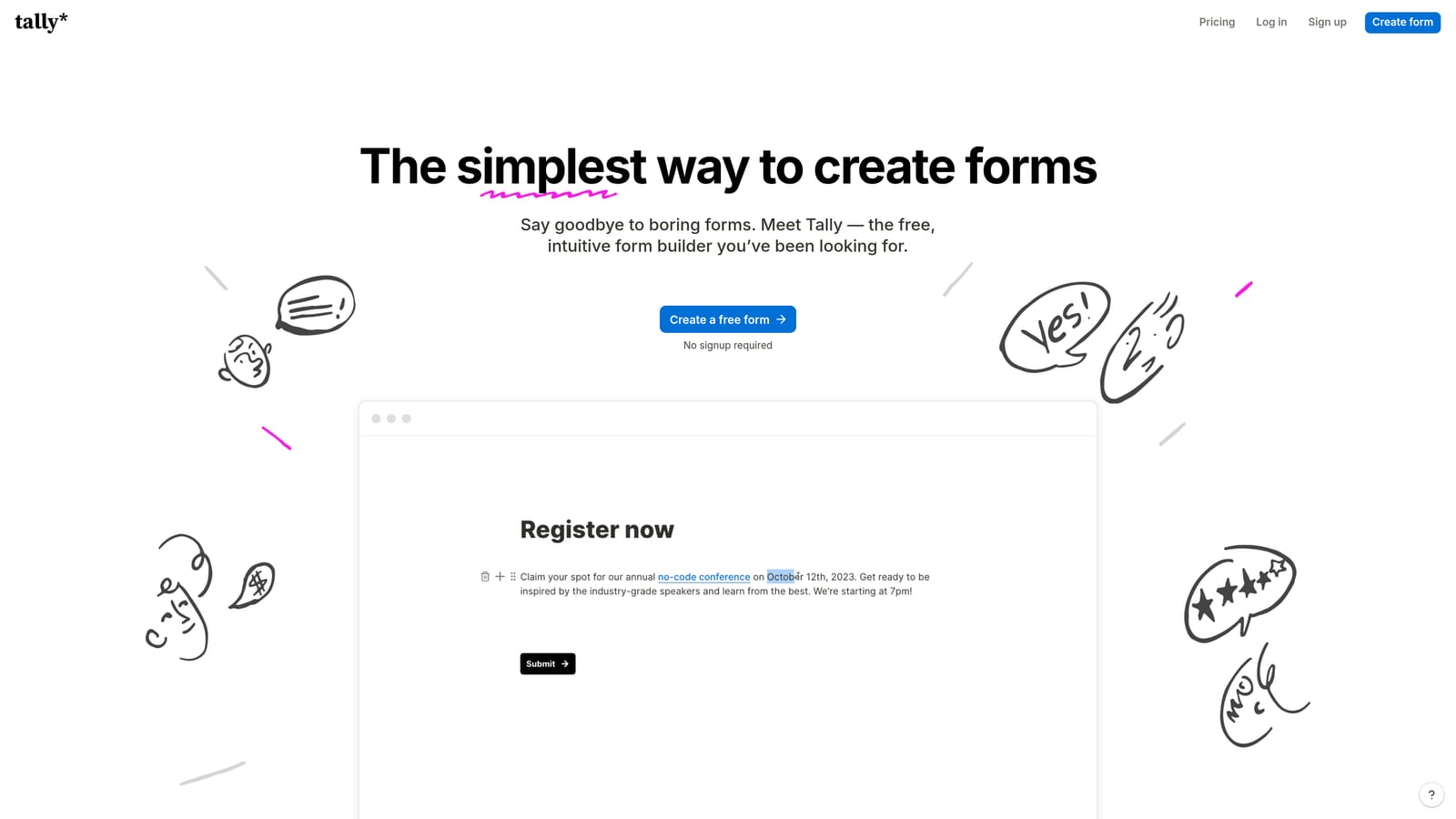
Tally is a lightweight, Notion-style form builder offering fast, free form creation ideal for startups and lean teams moving quickly.
Where This Tool Shines
Tally's editor feels immediately familiar to anyone who has used Notion, which means the learning curve is close to zero. Teams can go from idea to published form in minutes, not hours. For early-stage companies or teams running experiments, that speed of deployment is genuinely valuable.
Its free plan is unusually generous, offering unlimited forms and unlimited responses without branding restrictions on the form itself. For teams that need to capture leads without committing budget to a tool, Tally offers more than most free tiers in this category.
Key Features
Notion-Like Editor: Extremely fast to learn and build with, reducing time-to-deploy for non-technical users.
Generous Free Plan: Unlimited forms and unlimited responses on the free tier, with no artificial caps on lead volume.
Conditional Logic on Free Tier: Supports multi-step forms and branching logic without requiring a paid upgrade.
Zapier Integration: Connects to CRMs and notification tools for automated lead routing after submission.
No-Branding Embed: Paid plan removes Tally branding for teams embedding forms on their own properties.
Best For
Tally is ideal for early-stage startups, solo operators, and internal teams that need fast, functional forms without budget overhead. It's less suited for teams that need AI qualification, advanced routing logic, or deep CRM integration built natively into the form layer.
Pricing
Free plan available. Tally Pro starts from approximately $29/month. Check tally.so for current pricing details.
Which Tool Is Right for Your Team?
The right lead response time tool depends on where your biggest bottleneck actually lives. If leads are sitting in a queue waiting for manual qualification, a smarter intake layer solves the problem. If qualified leads are falling through because follow-up is slow, you need automation that triggers the moment a form is submitted.
Here's a quick breakdown by use case:
For AI qualification at the point of capture: Orbit AI is the clear choice. It qualifies, scores, and routes leads before they ever reach a rep's inbox, compressing the time between intent and contact more than any other tool on this list.
For high-converting conversational forms: Typeform's one-question-at-a-time UX consistently outperforms traditional multi-field layouts for completion rates.
For volume and template variety: Jotform's library and integration breadth make it the most flexible option for teams managing many different form types.
For enterprise routing and compliance: Formstack handles the complexity that lighter tools can't, especially inside Salesforce-heavy stacks.
For all-in-one simplicity: Paperform combines capture, payment, and scheduling in one place, ideal for teams that want fewer tools.
For fast, free deployment: Tally gets you live in minutes with a generous free plan that doesn't expire.
If your team is serious about reducing lead response time and wants qualification to happen automatically at the point of capture, start with Orbit AI. Start building free forms today and see how AI-powered lead qualification can tighten your funnel from the very first touchpoint. The lead generation form template is a fast starting point for any team ready to move.


