

When a qualified lead fills out your form, every minute of delay costs you. The research on lead response time is clear: speed matters enormously, and the teams that reach out first win more deals. Automated lead distribution tools eliminate the manual handoff bottleneck, routing leads to the right sales rep instantly based on rules you define.
But not all tools handle this the same way. Some focus purely on routing logic, others combine qualification with distribution, and a few are built specifically for high-growth teams that need both speed and intelligence. The right choice depends on where your qualification happens, how complex your routing rules are, and what CRM you're already using.
This list covers the top automated lead distribution tools in 2026, evaluated on routing sophistication, qualification capabilities, CRM integrations, and ease of setup. Whether you're a lean SaaS team routing inbound form submissions or an enterprise managing territory-based assignment, there's a right tool here for your workflow.
1. Orbit AI
Best for: High-growth SaaS and B2B teams that want qualification built into the form experience
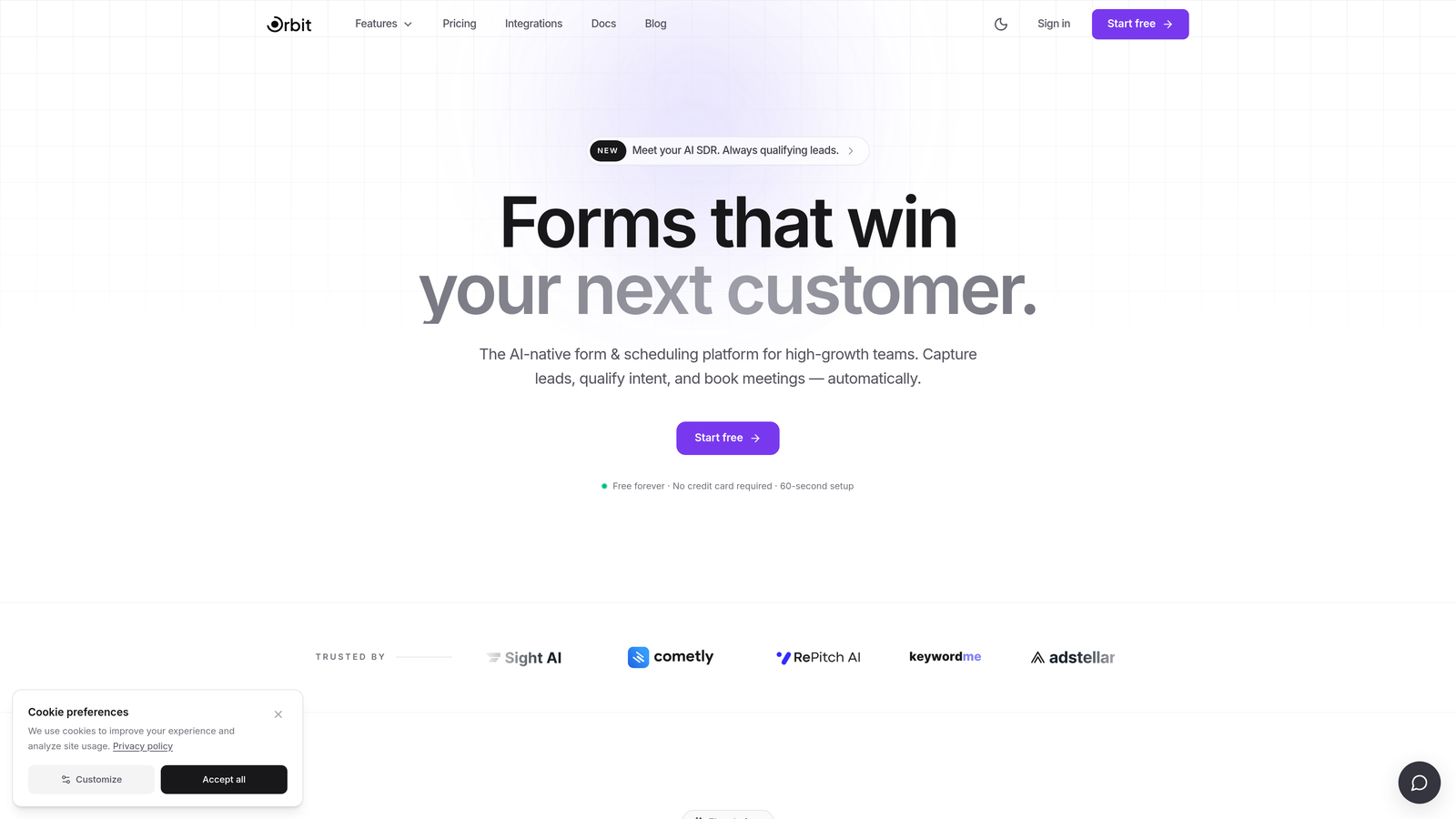
Orbit AI is an AI-powered form builder with built-in lead qualification and routing logic, designed to score and qualify leads before they ever enter your CRM.
Where This Tool Shines
Most lead distribution tools start working after a lead hits your CRM. Orbit AI moves that process upstream, embedding qualification logic directly into the form experience. By the time a lead is submitted, it's already been scored and tagged based on responses, which means your routing rules can act on richer data from the very first moment.
This approach is particularly valuable for high-growth SaaS teams managing inbound volume. Instead of routing every submission equally and letting sales reps sort through noise, Orbit AI ensures that what reaches your CRM is already pre-qualified, prioritized, and ready for the right rep.
Key Features
AI-Powered Lead Qualification: Qualification logic is embedded in the form itself, scoring leads based on their responses before submission reaches your CRM.
Conditional Routing Logic: Route leads based on form responses and lead scores, directing high-value prospects to senior reps and lower-fit leads to nurture workflows automatically.
Conversion-Optimized Multi-Step Forms: Form design is built for conversion, with modern multi-step experiences that reduce friction and improve completion rates.
CRM and Sales Tool Integrations: Connects with downstream CRM and sales tools so qualified, routed leads flow directly into your existing workflows.
Built for High-Growth Teams: The platform is designed around the speed and scale needs of B2B SaaS teams, not legacy enterprise complexity.
Best For
SaaS companies and B2B teams that generate significant inbound form volume and want qualification to happen before leads enter their CRM. Particularly strong for teams tired of routing unqualified leads and wasting rep time on poor-fit prospects.
Pricing
Visit orbitforms.ai for current pricing plans. Free options are available to get started.
2. LeanData
Best for: Enterprise RevOps teams running complex territory and account-based routing in Salesforce
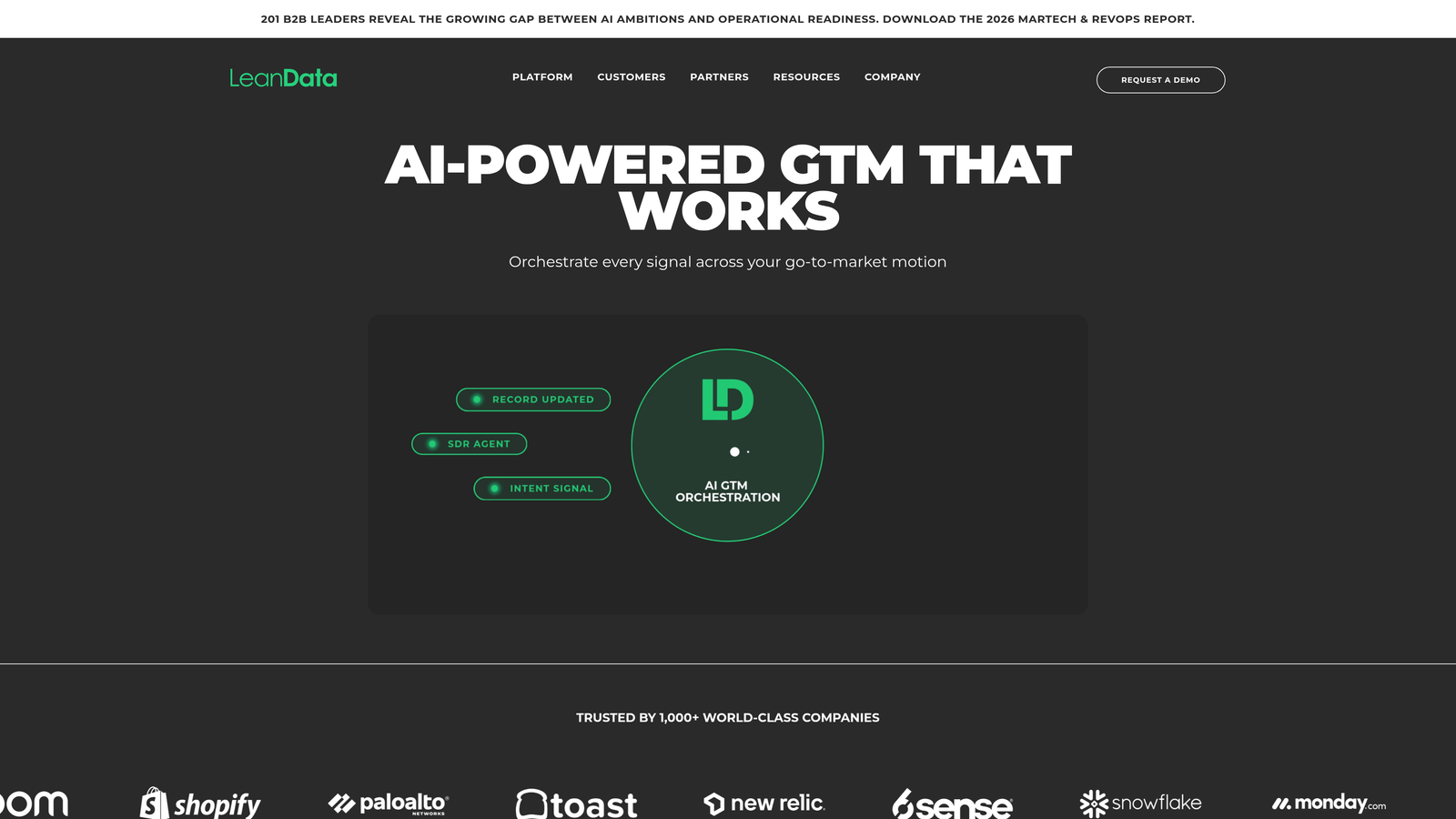
LeanData is an enterprise-grade lead routing platform with a visual flowchart builder and deep Salesforce integration for complex revenue operations workflows.
Where This Tool Shines
LeanData's visual routing flowchart is its standout feature. You can map out intricate routing logic, including account-based matching, territory assignment, and round-robin distribution, using a drag-and-drop interface that makes complex rules easier to manage and audit.
For organizations where leads need to be matched to existing accounts before assignment, LeanData's lead-to-account matching is particularly powerful. It prevents leads from slipping through the cracks when a known contact submits a new form from a different email or domain.
Key Features
Visual Drag-and-Drop Routing Flowcharts: Build and visualize complex routing logic without writing code, making it easier for RevOps teams to manage and update rules.
Account-Based Matching: Automatically matches incoming leads to existing accounts, ensuring the right account owner receives the lead.
Deep Salesforce Native Integration: Built to operate natively within Salesforce, with access to all your CRM data for routing decisions.
Lead-to-Account Matching: Prevents duplicate effort by identifying when a new lead belongs to an account already in your system.
Routing Analytics and Audit Trails: Detailed reporting on routing decisions so you can troubleshoot, optimize, and prove compliance with territory rules.
Best For
Mid-market and enterprise B2B companies with complex Salesforce environments, multiple territories, and RevOps teams that need granular control and visibility over routing logic.
Pricing
Enterprise pricing applies. Contact LeanData directly at leandata.com for a quote tailored to your team size and complexity.
3. Chili Piper
Best for: B2B SaaS teams that want to route form submissions directly to a rep's calendar in real time
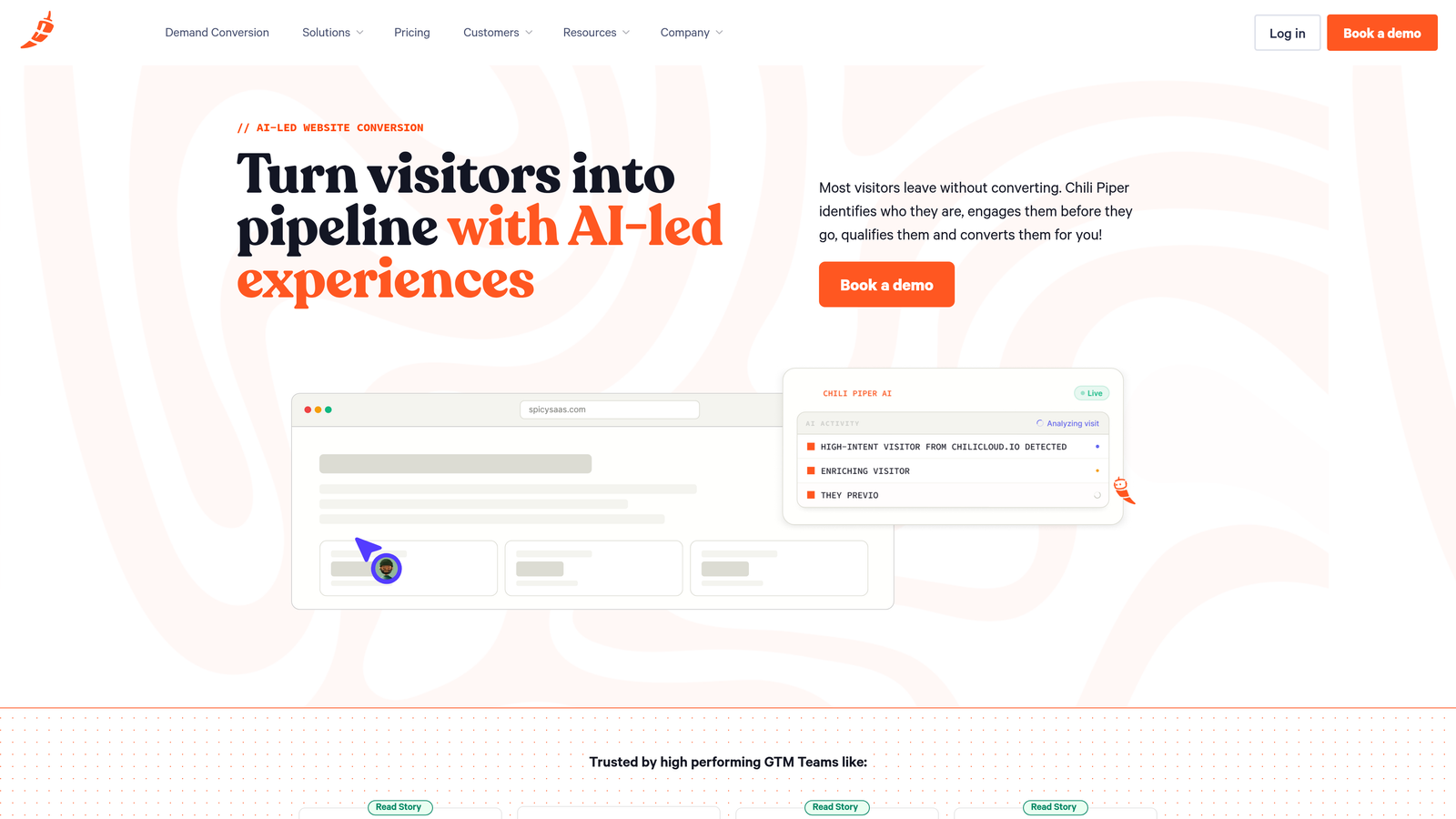
Chili Piper is an inbound lead conversion platform that routes form submissions to the right sales rep and books a meeting immediately, removing the back-and-forth from the handoff entirely.
Where This Tool Shines
Chili Piper's core value is collapsing the gap between "lead submits form" and "meeting is booked." The Instant Booker product presents a calendar directly after form submission, routing the prospect to the right rep based on your defined rules and letting them book a slot in seconds.
This is especially effective for demo request flows where speed-to-meeting is the primary metric. Rather than routing a lead to a CRM and waiting for a rep to follow up, Chili Piper locks in the meeting while the prospect's intent is at its peak.
Key Features
Instant Booker: Presents a meeting scheduling interface immediately after form submission, capturing intent while it's highest.
Rule-Based Routing: Assigns leads to specific reps or teams based on form data, territory, account ownership, or custom criteria.
Round-Robin and Availability-Aware Assignment: Distributes leads fairly across reps while respecting calendar availability.
CRM Integrations: Connects with Salesforce, HubSpot, and Marketo to sync lead data and routing outcomes.
Distro Product: A broader lead distribution workflow product for teams that need routing beyond just scheduling.
Best For
B2B SaaS teams with a demo-request or inbound sales motion where converting form submissions to booked meetings quickly is the primary goal.
Pricing
Instant Booker starts at approximately $22.50/user/month. Verify current pricing at chilipiper.com, as pricing structures have evolved.
4. HubSpot (Workflows + Lead Rotation)
Best for: Teams already on HubSpot that want native lead routing without adding another tool
HubSpot includes workflow-based lead rotation and assignment rules natively within its CRM, making it a practical option for teams already invested in the platform.

Where This Tool Shines
If your team is already running on HubSpot, there's a strong case for using its built-in routing capabilities before adding a dedicated tool. HubSpot Workflows allow you to set up round-robin lead rotation, property-based assignment, and conditional logic using the same interface you're already using for email automation and pipeline management.
The advantage here is consolidation. Your routing logic lives alongside your contact data, deal stages, and marketing workflows, which makes it easier to build rules that respond to the full picture of a lead's behavior, not just their form submission.
Key Features
Native Round-Robin Lead Rotation: Distribute leads evenly across your sales team using HubSpot Workflows without additional software.
Property-Based Assignment Rules: Route leads based on territory, deal size, lead source, or any custom contact property in your CRM.
No Additional Tool Cost: Routing capabilities are included in your existing HubSpot subscription, not an add-on.
Unified with CRM Data: Routing decisions can reference any contact, deal, or company data already in HubSpot.
Professional and Enterprise Tiers: Full workflow automation is available on HubSpot Professional and above.
Best For
Teams that are already on HubSpot Professional or Enterprise and want a simple, consolidated routing setup without introducing new vendors or integrations.
Pricing
Included in HubSpot Professional (starting at $800/month) and Enterprise ($3,600/month) plans. No additional cost for routing features specifically.
5. Salesforce Lead Assignment Rules
Best for: Enterprises already on Salesforce that need criteria-based routing without a third-party tool
Salesforce's built-in lead assignment engine routes leads to users or queues based on criteria including territory, lead source, industry, and custom field values, all without leaving the CRM.
Where This Tool Shines
Salesforce Lead Assignment Rules are the default starting point for any Salesforce-native organization. They're deeply integrated with every other Salesforce data object, which means you can build routing logic that references account ownership, territory hierarchies, custom fields, and more without any external dependencies.
For organizations with established Salesforce configurations, using native assignment rules keeps routing logic centralized and auditable. The tradeoff is that the setup interface is more manual than visual tools like LeanData, but for straightforward criteria-based routing, it's often sufficient.
Key Features
Criteria-Based Assignment Rules: Route leads based on any combination of field values, including territory, industry, company size, or lead source.
Queue-Based Routing: Assign leads to shared queues for team-level distribution, where reps self-select or managers assign from the queue.
Native CRM Integration: Routing logic has full access to all Salesforce data objects with no sync delays or API dependencies.
Web-to-Lead and API Support: Works with leads captured via Salesforce's Web-to-Lead forms or submitted via API from external tools.
Escalation Rules: Automatically escalate unworked leads after a defined time period to prevent leads from going cold in the queue.
Best For
Enterprises with established Salesforce environments that need reliable, criteria-based routing without adding new tools. Best suited for teams with a Salesforce admin who can manage rule configuration.
Pricing
Included in Salesforce Sales Cloud. Plans start at $25/user/month, though most enterprise deployments are on higher tiers.
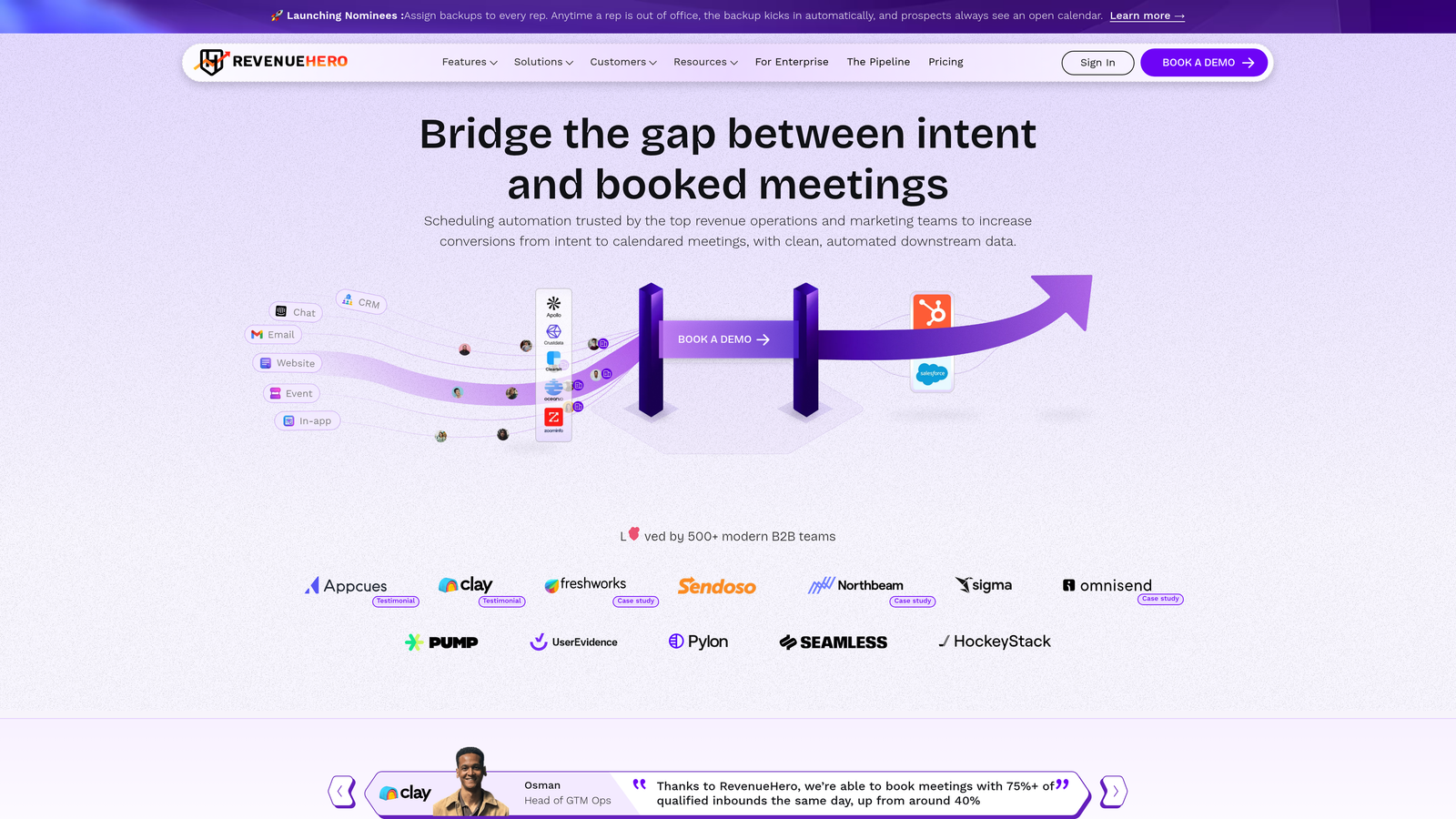
6. RevenueHero
Best for: Inbound B2B teams that want qualification-aware routing combined with immediate meeting scheduling
RevenueHero is an inbound routing and scheduling platform that qualifies leads from form submissions and routes them to the right rep with an immediate meeting booking option.
Where This Tool Shines
RevenueHero sits in a similar space to Chili Piper but with a stronger emphasis on qualification-aware routing. Rather than simply routing based on territory or round-robin, RevenueHero uses the answers from your form to determine which rep or team is the right fit before presenting the scheduling option.
This makes it particularly useful for teams with multiple product lines, customer segments, or rep specializations. The routing decision is smarter because it's informed by what the prospect actually told you about their needs, not just where they're located.
Key Features
Qualification-Aware Routing: Routes leads based on form answers, ensuring prospects reach the rep best suited to their specific situation.
Instant Meeting Scheduling: Presents a booking interface immediately after qualification, capturing intent at the moment of highest engagement.
CRM-Synced Rep Routing: Integrates with HubSpot and Salesforce to respect existing account ownership and territory assignments.
Round-Robin Logic: Distributes leads fairly across available reps within qualified routing pools.
Routing Analytics: Reports on routing outcomes and conversion rates so you can identify where leads are dropping off.
Best For
B2B SaaS and services teams with multiple rep specializations or customer segments who want routing logic that responds to what prospects say, not just where they come from.
Pricing
Contact RevenueHero for current pricing at revenuehero.io. Pricing is not publicly listed and varies by team size.
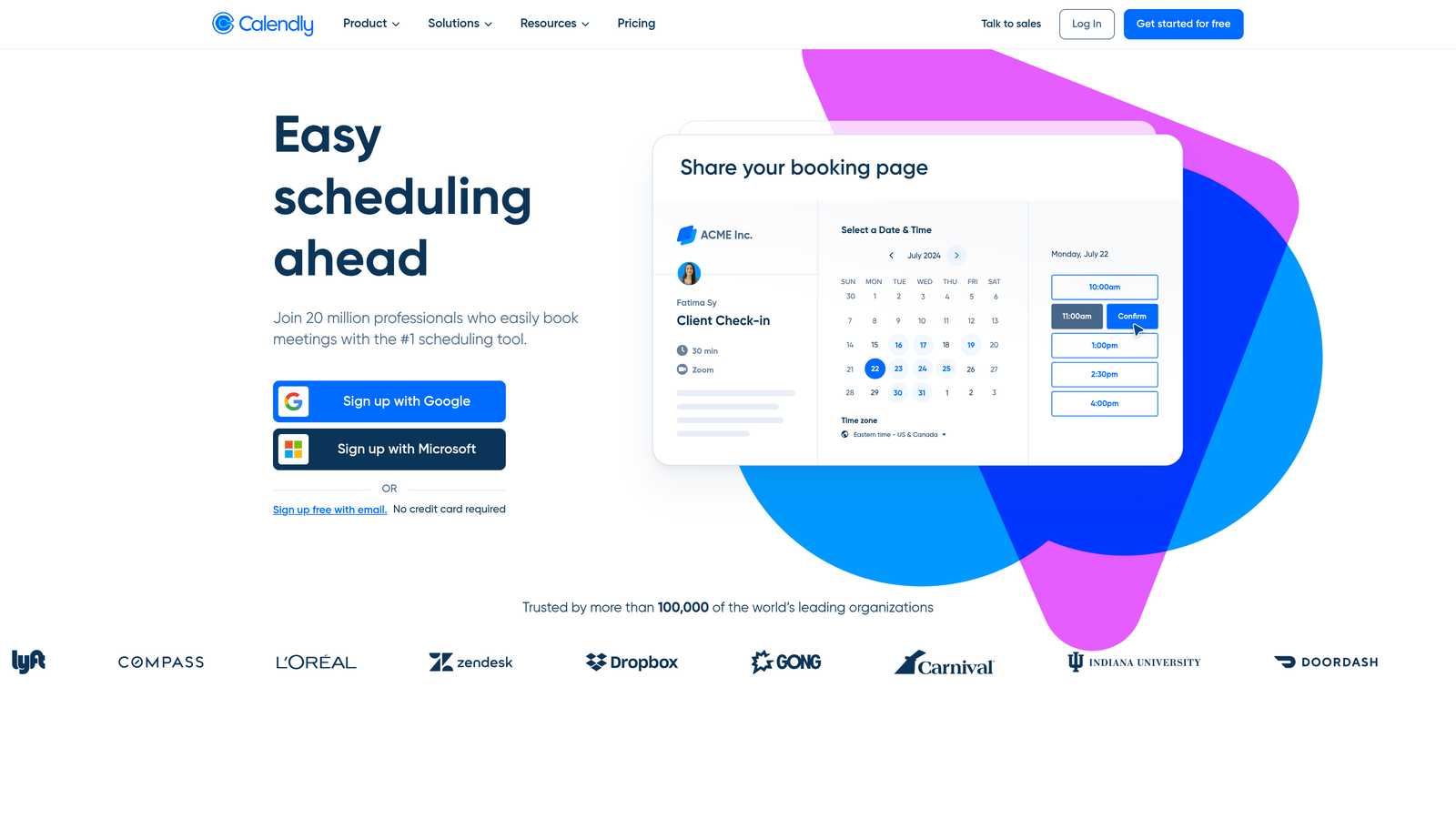
7. Calendly (Routing Forms)
Best for: Teams that want simple, no-code routing from qualifying questions to the right meeting type
Calendly's routing forms let you ask qualifying questions and direct prospects to the right meeting type or team member, with a no-code setup that takes minutes to configure.
Where This Tool Shines
Calendly Routing Forms are the lightweight option in this category. If your routing logic is relatively straightforward, such as routing enterprise prospects to an account executive and SMB prospects to a product specialist, Calendly handles this well without requiring a dedicated RevOps platform.
The biggest advantage is simplicity. If your team is already using Calendly for scheduling, adding routing forms doesn't introduce a new tool or a new vendor relationship. It extends what you already have with minimal configuration overhead.
Key Features
Conditional Routing: Route prospects to different hosts, event types, or teams based on their answers to qualifying questions.
No-Code Visual Builder: Set up routing logic with a visual interface that requires no technical knowledge to configure or update.
Flexible Routing Targets: Direct prospects to specific individuals, round-robin pools, or different meeting types depending on their responses.
CRM Integrations: Syncs with Salesforce, HubSpot, and Marketo to pass lead data and routing outcomes into your CRM.
Native Scheduling Workflow: Routing flows directly into Calendly's scheduling experience, keeping the prospect journey seamless.
Best For
Teams already on Calendly that need basic routing without complex rules. Also a good fit for smaller teams or early-stage companies that don't yet need enterprise-grade routing logic.
Pricing
Routing Forms are available on the Teams plan at $16/user/month and above. Verify current plan availability at calendly.com.
8. Zapier (Automated Lead Routing Workflows)
Best for: Teams with non-standard tech stacks that need custom routing logic across disconnected tools
Zapier is a no-code automation platform that connects your lead sources to CRMs, Slack, email, and rep tools, enabling custom routing logic across virtually any tech stack.
Where This Tool Shines
Zapier isn't a dedicated lead distribution tool, but it's one of the most flexible options on this list. If your lead sources, CRM, and rep communication tools don't natively talk to each other, Zapier fills the gaps with conditional logic that can approximate sophisticated routing without writing a single line of code.
It's particularly useful for teams in transition, such as those between CRM platforms, or for startups that haven't standardized their stack yet. You can build routing workflows that evolve as your tools change, without being locked into a single platform's logic.
Key Features
7,000+ App Connections: Connect virtually any lead source, CRM, communication tool, or sales platform in a single workflow.
Filters and Paths: Apply conditional logic to route leads differently based on field values, scores, or source data.
Round-Robin Routing: Build round-robin distribution using Zapier Tables or integrations with third-party rotation tools.
Instant Rep Notifications: Trigger Slack messages, emails, or SMS alerts to the assigned rep the moment a lead is routed.
No Engineering Required: Most routing workflows can be built and maintained by a non-technical operator.
Best For
Teams with non-standard or evolving tech stacks, early-stage companies that need flexible routing before committing to a dedicated platform, or organizations bridging gaps between tools that don't integrate natively.
Pricing
Free plan available with limited tasks. Paid plans start at $19.99/month and scale with task volume. See current pricing at zapier.com.
9. Distribution Engine (by NC Squared)
Best for: Large Salesforce-native sales teams that need workload-balanced, capacity-aware lead distribution
Distribution Engine is a Salesforce-native AppExchange app built for advanced round-robin and capacity-based lead distribution, designed for large sales teams where rep workload and availability directly affect routing quality.
Where This Tool Shines
Standard round-robin routing treats all reps as equal at all times. Distribution Engine goes further by factoring in rep capacity, working hours, and out-of-office status before making an assignment. This means leads don't pile up on reps who are at capacity or unavailable, which is a real problem in large sales organizations that operate across time zones.
Because it's built natively on Salesforce, Distribution Engine works directly with your existing Salesforce data, including leads, contacts, cases, and custom objects, without requiring external syncs or middleware.
Key Features
Workload-Balanced Round-Robin: Distributes leads based on current rep workload, not just turn order, preventing overload on high-performing reps.
Working Hours and Out-of-Office Logic: Respects rep schedules so leads aren't routed to unavailable team members.
Capacity Limits: Set maximum lead counts per rep to prevent any single rep from being overwhelmed during high-volume periods.
Detailed Distribution Reporting: Track distribution fairness and rep assignment history directly inside Salesforce.
Multi-Object Support: Works across leads, contacts, cases, and custom Salesforce objects, not just standard lead records.
Best For
Large B2B sales teams on Salesforce with complex scheduling needs, multiple time zones, or high inbound volume where capacity-aware routing meaningfully affects rep performance and lead conversion.
Pricing
Contact NC Squared directly for pricing at nc2.co. Pricing varies based on team size and Salesforce edition.
Which Tool Is Right for Your Team
The best automated lead distribution tool depends on where your biggest bottleneck actually lives. Here's a quick guide to finding your fit.
If your problem starts at the form level, with too many unqualified leads entering your CRM and wasting rep time, Orbit AI addresses this at the source. Qualification and routing logic embedded in the form experience means your CRM receives cleaner, pre-scored leads from the start. It's the right choice for high-growth SaaS teams that want speed and intelligence working together.
If you're running a complex Salesforce environment with territory hierarchies and account-based routing, LeanData or Distribution Engine are purpose-built for that level of sophistication. LeanData excels at visual routing logic and account matching; Distribution Engine adds capacity-aware round-robin for large teams.
If your primary goal is converting form submissions to booked meetings as fast as possible, Chili Piper and RevenueHero both deliver on that front, with RevenueHero offering a stronger qualification layer before the scheduling step.
For teams already on HubSpot or Salesforce that want native routing without adding new vendors, the built-in tools are often enough to start. And for teams with non-standard stacks or rapidly evolving workflows, Zapier provides the flexibility to build routing logic that fits your current reality.
The common thread across all of these tools is that faster, smarter lead distribution starts with better data at the point of capture. If you want to see what qualification-first distribution looks like in practice, start building free forms today with Orbit AI and experience how intelligent form design can transform what reaches your sales team.


