

JotForm is a capable form builder, but it wasn't designed with high-growth teams in mind. As your team scales its lead generation, client intake, or data collection workflows, you may find yourself hitting walls: clunky collaboration features, limited AI capabilities, or a UI that feels dated compared to modern alternatives.
This list covers the best JotForm alternatives for teams in 2026, whether you're optimizing for conversion rates, lead qualification, team collaboration, or design flexibility. Each tool has been evaluated on ease of use, team-friendly features, integrations, and value for growing businesses.
If you're also exploring options beyond JotForm specifically, our guide on the best online form builder options covers the broader landscape. And if you want to maximize results from whichever tool you choose, check out our breakdown of how to increase form submissions.
1. Orbit AI
Best for: High-growth B2B teams that need AI-powered lead qualification alongside form collection
Orbit AI is an AI-powered form builder built specifically for teams that care about lead quality, not just lead volume.
Where This Tool Shines
Most form builders stop at collecting responses. Orbit AI goes a step further by scoring and filtering leads in real time based on how respondents answer your form questions. For B2B SaaS and marketing teams dealing with high volumes of inbound leads, this means your sales team can focus on the prospects most likely to convert rather than manually triaging every submission.
Beyond the AI layer, the platform is built with conversion optimization at its core. Forms are visually polished by default, which reduces the friction that kills completion rates. If your current forms look like they were built in 2015, the difference is immediately noticeable.
Key Features
AI-Powered Lead Qualification: Scores and filters leads automatically based on form responses, so your team knows who to contact first.
Conversion-Optimized Design: Modern, polished UI out of the box, without needing a designer to make your forms look professional.
Conditional Logic: Dynamic form flows that adapt based on user responses, creating a personalized experience for each respondent.
Team Collaboration: Built with team workflows in mind, making it easy for multiple stakeholders to manage forms and review leads together.
CRM and Marketing Integrations: Connects with the tools your growth stack already relies on, keeping lead data flowing where it needs to go.
Best For
Orbit AI is the strongest fit for B2B SaaS companies, marketing teams, and growth-focused businesses that receive meaningful inbound lead volume and need to prioritize follow-up intelligently. If lead quality is a bigger problem than lead quantity for your team, this is the tool to evaluate first.
Pricing
Visit orbitforms.ai for current pricing details and free trial options.
2. Typeform
Best for: Teams that prioritize branded, conversational form experiences with high completion rates
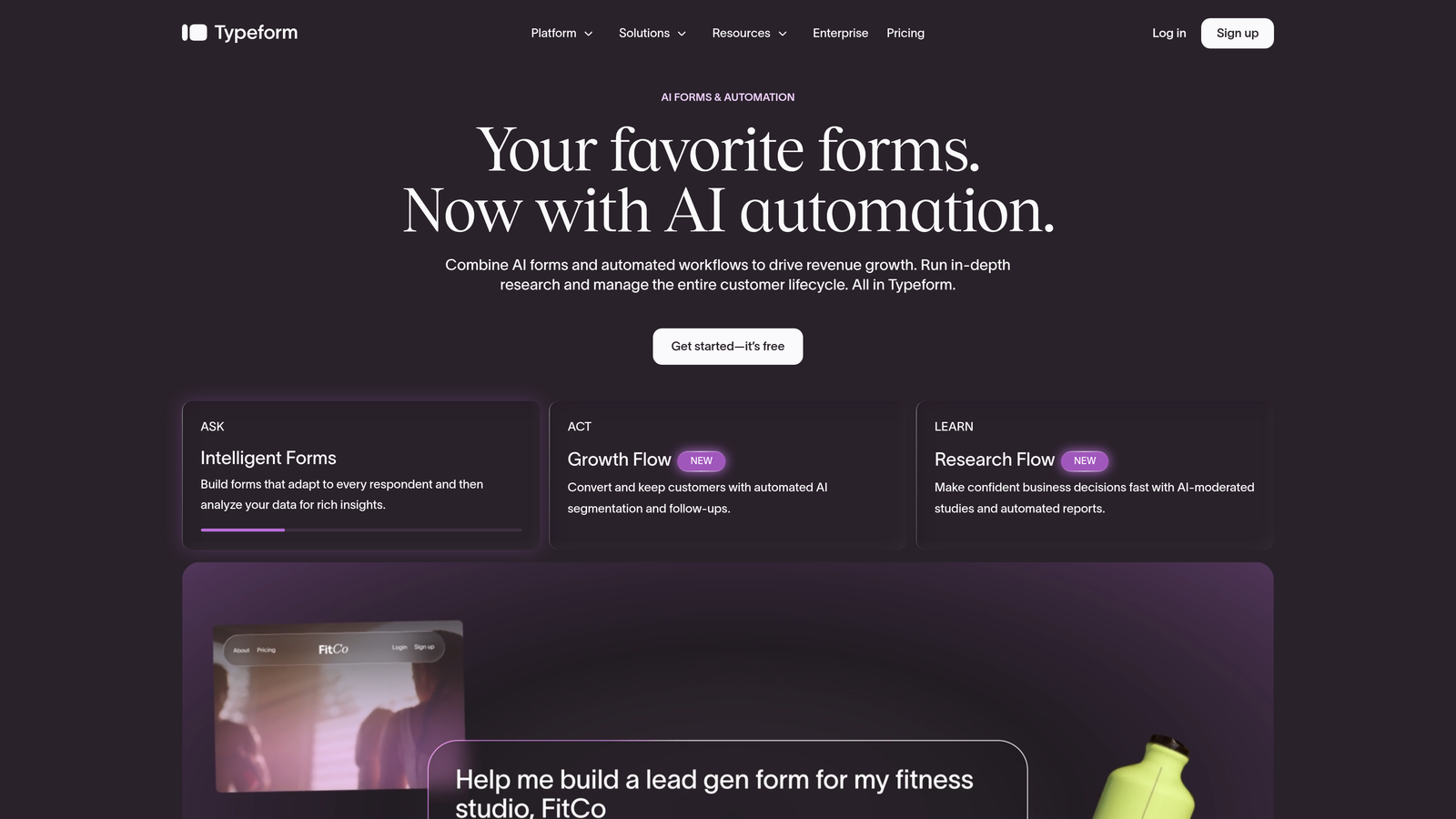
Typeform is a conversational form builder that pioneered the one-question-at-a-time format, and it remains one of the most design-forward options available.
Where This Tool Shines
Typeform's core strength is its ability to make forms feel like conversations rather than bureaucratic data entry. The one-question-at-a-time format keeps respondents engaged, which tends to improve completion rates on longer forms compared to traditional multi-field layouts.
For teams with strong brand identity, Typeform's customization options are genuinely impressive. You can match fonts, colors, and imagery to your brand with enough precision that the form feels like a natural extension of your website or product experience. If you're comparing options in this space, our Typeform alternatives guide explores how it stacks up against other tools.
Key Features
Conversational Format: One-question-at-a-time presentation reduces cognitive load and keeps respondents moving through the form.
Brand Customization: Highly flexible design controls for fonts, colors, backgrounds, and imagery.
Logic Jumps: Conditional paths that route respondents through different questions based on their answers.
Integration Ecosystem: Connects with a wide range of CRMs, email platforms, and productivity tools.
Built-In Analytics: Response tracking and drop-off analysis to help teams identify where respondents lose interest.
Best For
Typeform works well for marketing teams running surveys, lead capture campaigns, or customer research where brand experience matters and form length is a concern. It's less suited for teams that need AI-driven lead scoring or complex enterprise workflow automation.
Pricing
A free plan is available with limitations. Paid plans start at a monthly fee. Check typeform.com for current pricing tiers.
3. Paperform
Best for: Teams that want forms to feel like polished landing pages with rich embedded content
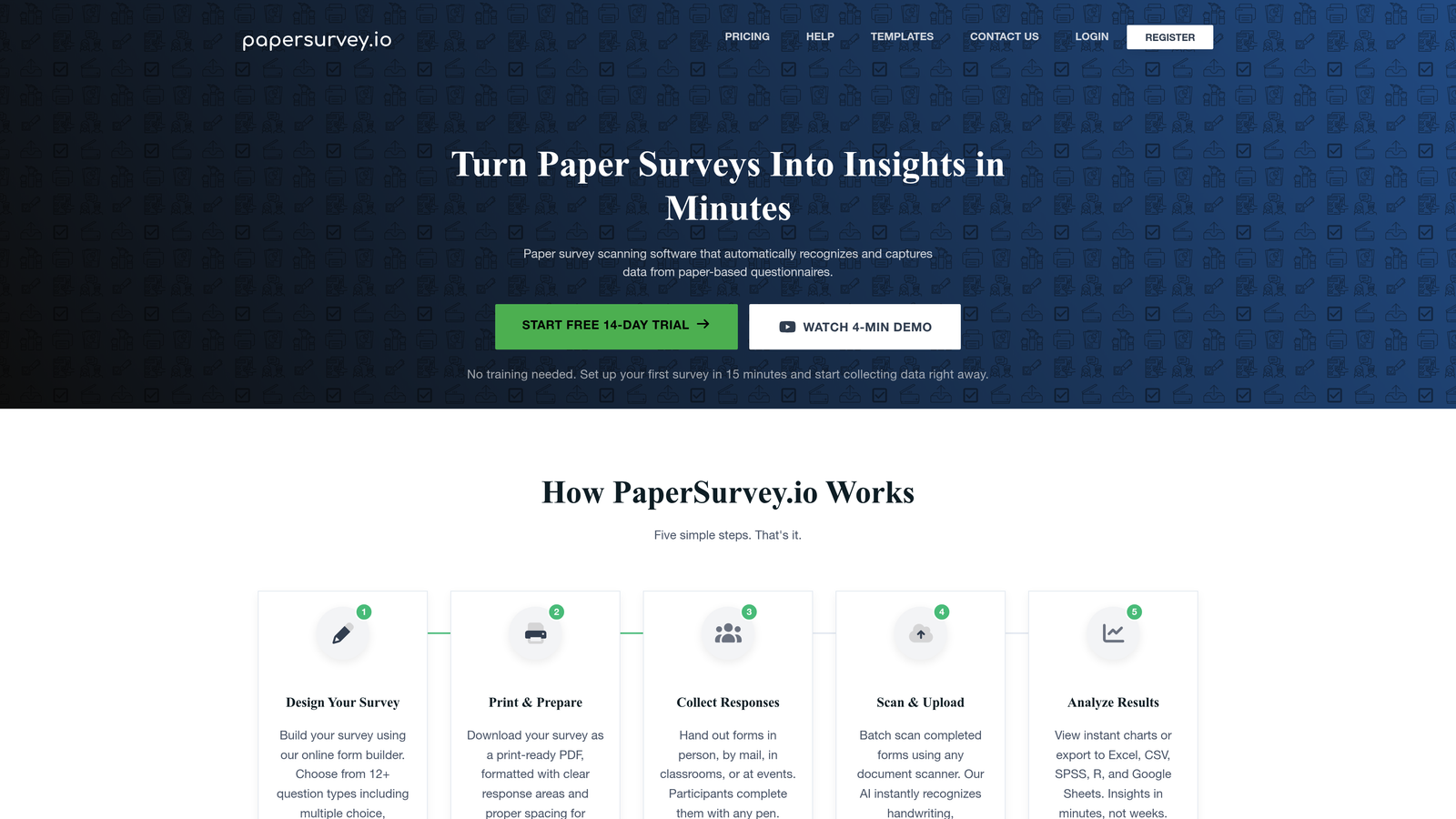
Paperform is a flexible form builder that lets teams combine rich media content with form fields, creating experiences that sit somewhere between a landing page and a traditional form.
Where This Tool Shines
Paperform's document-style editor is its most distinctive quality. You can embed text, images, and video directly alongside your form fields, which means a single Paperform page can serve as both your content and your conversion mechanism. For teams running product demos, intake forms with detailed instructions, or quiz-style lead magnets, this approach removes the need to maintain a separate landing page.
It also handles use cases that most form builders don't touch natively: payment collection, appointment bookings, and scored quizzes are all built in. For small teams with diverse operational needs, this versatility reduces the number of tools required.
Key Features
Document-Style Editor: Embed text, images, and video directly alongside form fields for a content-rich experience.
Payments and Bookings: Native support for collecting payments and scheduling appointments without third-party tools.
Calculation Fields: Automatically compute values based on form inputs, useful for pricing calculators or scoring logic.
Custom Domains: Host forms on your own domain for a seamless brand experience.
Integration Support: Native integrations plus Zapier connections cover a wide range of tools.
Best For
Paperform is a strong choice for small to mid-sized teams that need a versatile tool covering forms, payments, bookings, and quizzes without juggling multiple platforms. It suits teams with design-conscious workflows who want their forms to look like real content pages.
Pricing
Paperform operates on paid plans only, with no free tier. Check paperform.io for current pricing details.
4. Tally
Best for: Teams and startups that need a capable, no-cost form builder with a clean, intuitive editor
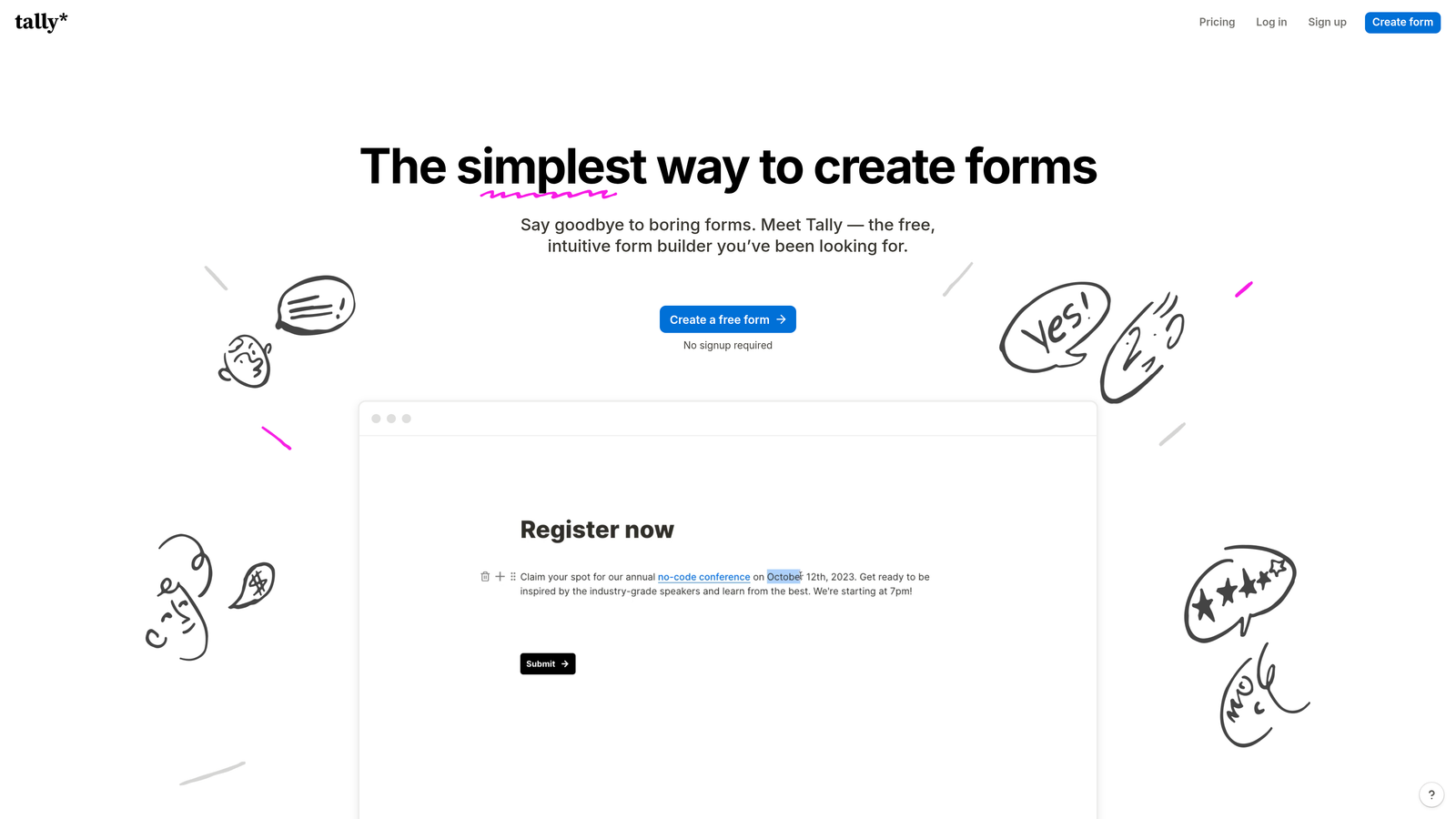
Tally is a Notion-inspired form builder with one of the most generous free plans in the market: unlimited forms and unlimited responses at no cost.
Where This Tool Shines
Tally's free tier is genuinely remarkable compared to most competitors, which impose strict response caps or feature limitations that push you toward paid plans quickly. For early-stage teams, internal operations, or anyone running frequent surveys without a dedicated forms budget, Tally removes the financial friction entirely.
The block-based editor will feel immediately familiar to anyone who uses Notion. Building a form is as simple as typing and selecting block types, which lowers the learning curve significantly for non-technical team members. The result is a tool that gets out of the way and lets you focus on the form itself.
Key Features
Unlimited Free Plan: No caps on forms or responses, making it genuinely useful at zero cost.
Notion-Like Editor: Block-based building experience that's intuitive for teams already familiar with Notion.
Conditional Logic: Route respondents through different paths based on their answers, available on the free tier.
Hidden Fields: Pass contextual data into forms for tracking and personalization purposes.
Embed Flexibility: Easily embeds into websites and Notion pages for seamless integration into existing workflows.
Best For
Tally is ideal for early-stage startups, internal teams managing HR or operations forms, and anyone who needs a reliable tool without budget commitment. It's less suited for teams that need advanced lead qualification, deep CRM integrations, or enterprise-grade permissions.
Pricing
Free plan available with core features. A Pro plan unlocks custom branding and advanced functionality. Check tally.so for current Pro pricing.
5. Formstack
Best for: Enterprise teams in regulated industries that need workflow automation beyond basic form collection
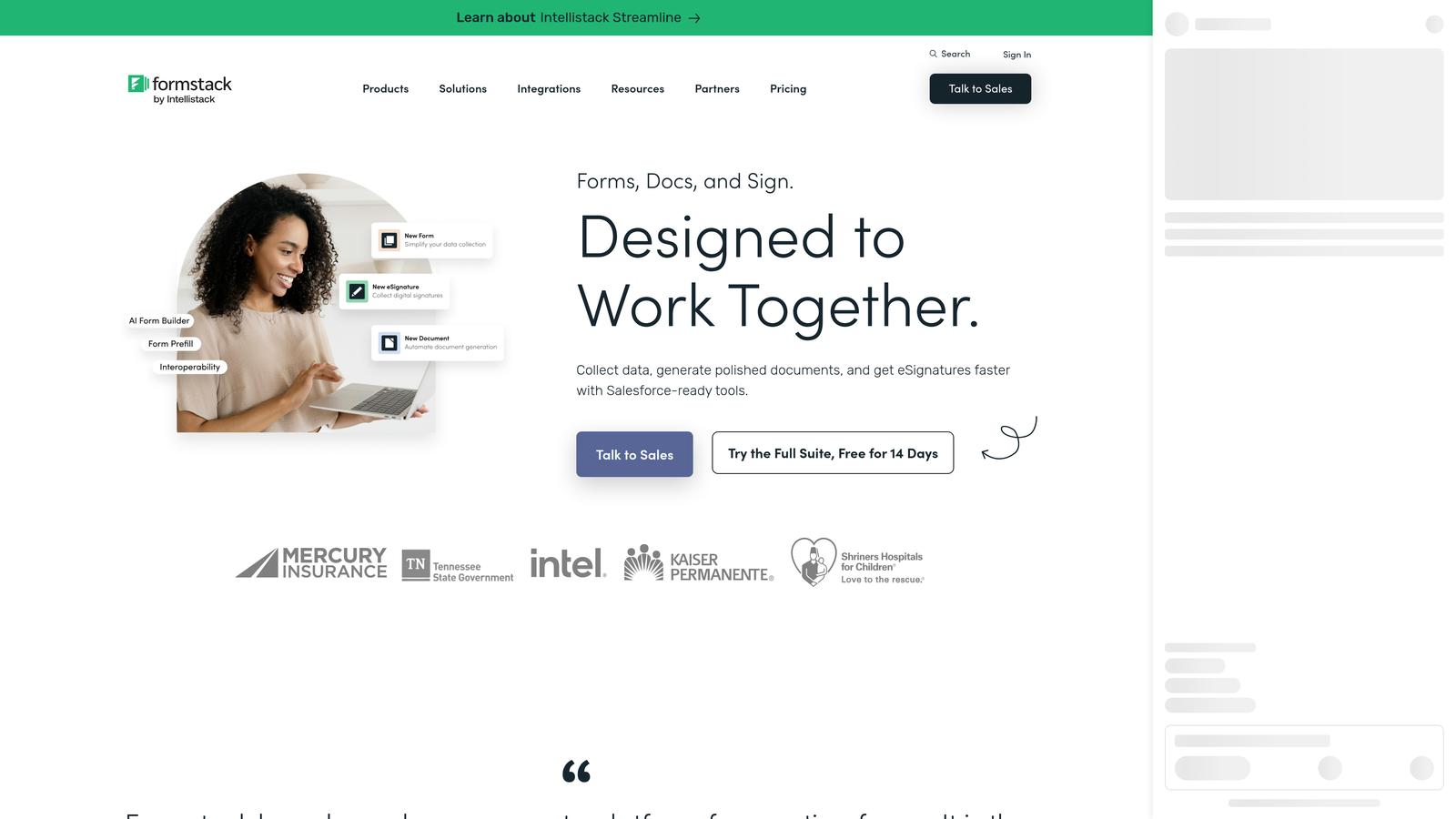
Formstack is an enterprise-grade platform that extends well beyond form building into document generation, e-signatures, and multi-step approval workflows.
Where This Tool Shines
Formstack is built for organizations where form submission is just the beginning of a longer process. Once a form is submitted, Formstack can trigger document generation, route approvals to the right stakeholders, collect e-signatures, and update connected systems automatically. For teams in healthcare, finance, or legal, where compliance and process integrity matter, this end-to-end capability is difficult to replicate with lighter tools.
The platform's HIPAA-compliant data handling makes it one of the few form tools genuinely appropriate for healthcare teams collecting patient or client information. The combination of compliance infrastructure and workflow depth puts it in a different category from most alternatives on this list.
Key Features
Workflow Automation: Multi-step approval routing that moves submissions through defined processes automatically.
Document Generation: Auto-populate documents from form data, reducing manual data transfer and errors.
E-Signature Support: Collect legally binding signatures as part of a form or document workflow.
HIPAA Compliance: Data handling infrastructure suitable for regulated industries including healthcare.
Enterprise Permissions: Granular team access controls and role-based permissions for larger organizations.
Best For
Formstack is the right choice for mid-market and enterprise teams in regulated industries or those managing complex, multi-step operational workflows. If your primary need is a simple lead capture form, it's likely more platform than you need.
Pricing
Formstack operates on enterprise pricing tiers. Check formstack.com for current plans and pricing details.
Which Tool Is Right for Your Team?
Each of these tools solves a real problem, but they're built for different teams with different priorities. Here's a quick way to think about the decision.
If your team's biggest challenge is lead quality and you're dealing with high inbound volume, Orbit AI is the standout choice. The built-in AI qualification layer means your forms do more than collect data: they help your team prioritize. For high-growth B2B teams, that distinction matters more than any other feature on this list.
If brand experience and conversational design are your primary concerns, Typeform remains one of the most polished options available. It's particularly well-suited for marketing teams running customer-facing surveys or lead capture campaigns where completion rate and brand consistency are the main KPIs.
Tally is the clear winner for teams that need a capable free tool without strings attached. Early-stage startups and internal operations teams will find it covers the basics exceptionally well at zero cost.
Paperform fits teams that want forms to double as content experiences, especially when payments or bookings are part of the workflow. And Formstack is the right call for enterprise teams in regulated industries where compliance and approval automation are non-negotiable.
For most high-growth teams evaluating JotForm alternatives, the real question is whether your forms are working as hard as your team is. Transform your lead generation with AI-powered forms that qualify prospects automatically while delivering the modern, conversion-optimized experience your high-growth team needs. Start building free forms today and see how intelligent form design can elevate your conversion strategy.


