

High-growth teams can't afford to guess what's working. Every underperforming landing page, every leaky funnel, every form that visitors abandon halfway through represents real pipeline walking out the door. The good news is that the conversion optimization landscape has matured significantly, giving teams access to powerful tools that remove the guesswork entirely.
Today's CRO stack spans everything from AI-powered form builders and behavior analytics platforms to full-scale A/B testing suites and website personalization engines. Choosing the right combination depends on where your biggest conversion gaps live.
To build this list, we evaluated tools based on ease of use, depth of analytics, integration ecosystem, pricing flexibility, and how effectively they help teams identify and fix conversion bottlenecks. One important note: this list spans multiple CRO subcategories intentionally. If you're specifically looking to improve your form conversion rates, check out our guides on how to improve form submission rates and building high-converting lead capture forms. The goal here is to help you build a stack that fits your workflow, not to push a one-size-fits-all solution.
Here are the top conversion optimization tools worth your attention in 2026.
1. Orbit AI
Best for: Lead generation teams that need conversion-optimized forms with built-in AI lead qualification
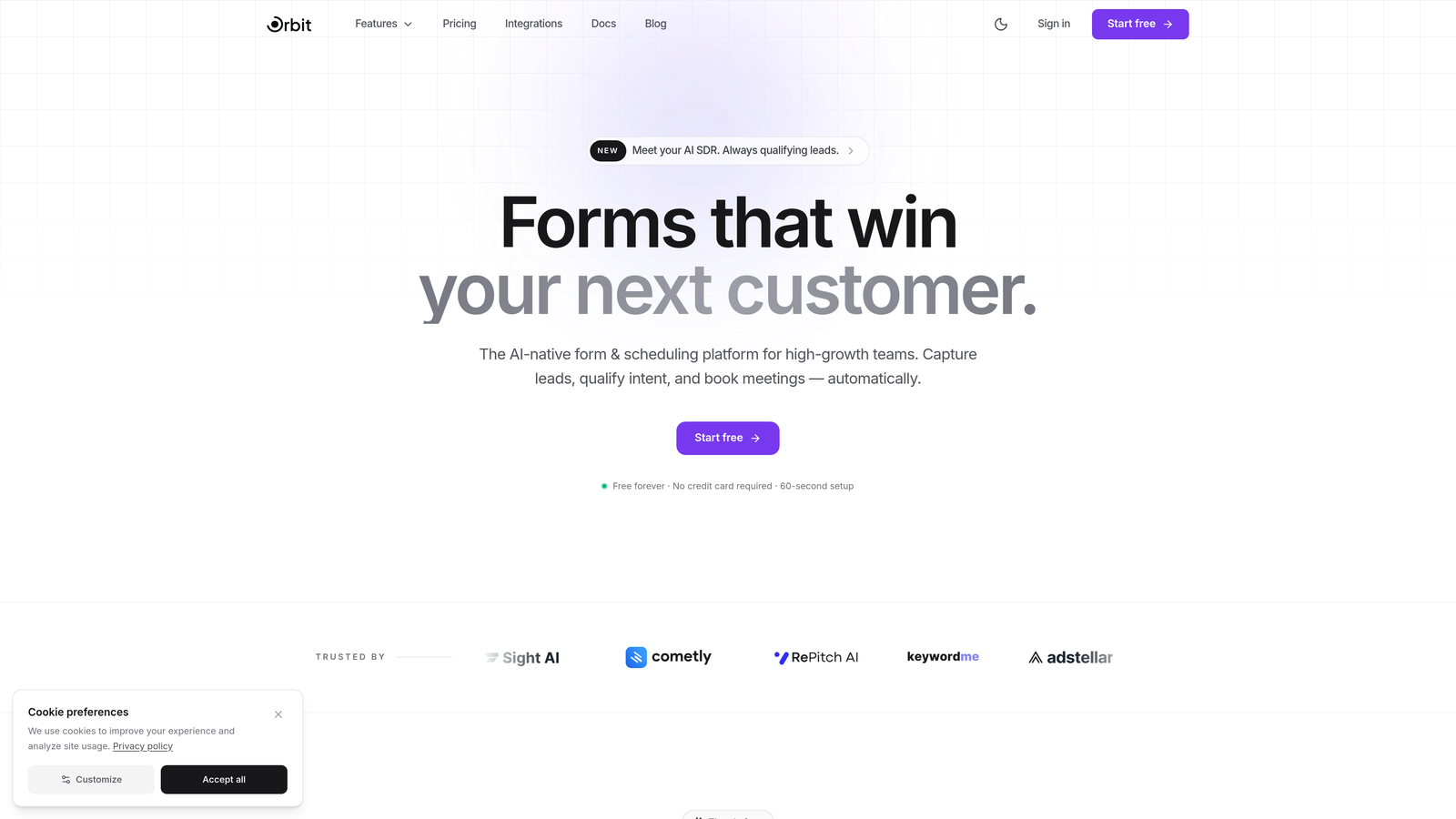
Orbit AI is an AI-powered form builder that combines beautiful, conversion-optimized form design with intelligent lead qualification, so teams capture more leads and instantly know which ones are worth pursuing.
Where This Tool Shines
Most CRO tool lists focus heavily on A/B testing and heatmaps while overlooking something fundamental: forms are often the primary conversion mechanism for lead generation. If your form experience is clunky, your testing and analytics improvements only go so far. Orbit AI addresses this gap directly by treating the form itself as a conversion asset, not just a data collection checkbox.
What sets it apart is the combination of design quality and intelligence. The forms look modern and brand-consistent, which reduces friction on its own. But the AI-powered lead qualification layer means that as prospects fill out your form, the platform is already scoring and routing them, so your sales team spends time on the right conversations from the start.
Key Features
AI-Powered Lead Qualification: Automatically scores and qualifies leads based on their responses, so high-intent prospects get flagged for immediate follow-up.
Conversion-Optimized Templates: Pre-built form templates designed specifically for high completion rates, not just visual appeal.
Conditional Logic and Smart Routing: Dynamically adjusts the form experience based on respondent answers, reducing irrelevant questions and improving completion.
Modern Brand-Matched Design: Clean, polished form aesthetics that match your brand identity and reduce the visual friction that kills conversions.
CRM and Marketing Automation Integrations: Connects with major CRMs and marketing platforms so qualified leads flow directly into your existing workflows.
Best For
Orbit AI is the right choice for high-growth SaaS teams, demand generation marketers, and any B2B organization where lead quality matters as much as lead volume. If you're running paid campaigns and need every form submission to be properly qualified before hitting your CRM, this is built for that exact use case.
Pricing
Free plan available. Paid plans vary based on usage and features. Visit orbitforms.ai for current pricing details.
2. Optimizely
Best for: Enterprise teams running sophisticated, high-volume experimentation programs across web and product
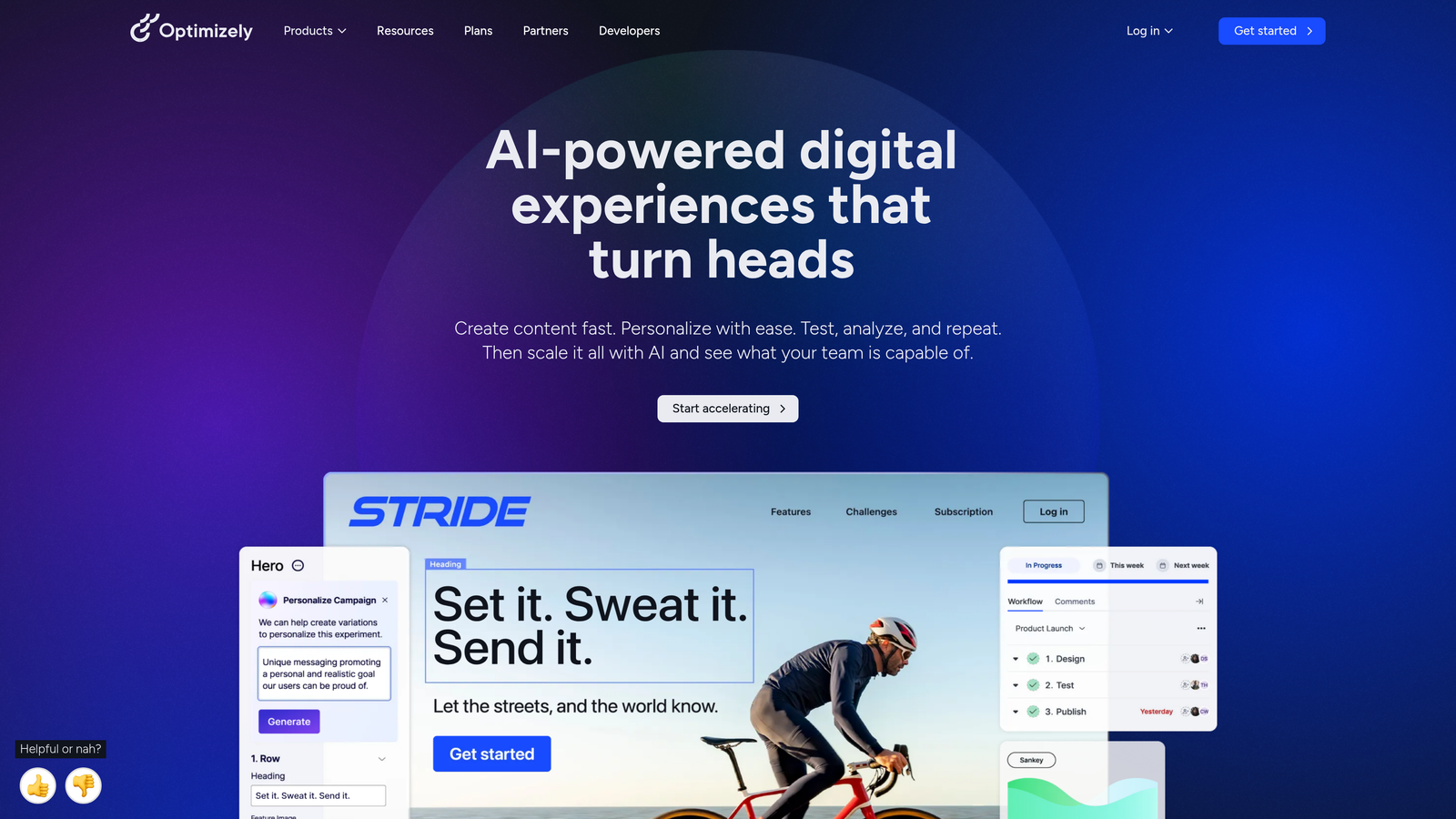
Optimizely is an enterprise experimentation platform offering A/B testing, feature flags, and server-side experiments for teams running complex optimization programs at scale.
Where This Tool Shines
Optimizely is the platform you graduate to when experimentation becomes a core business function, not just a marketing tactic. It handles both client-side and server-side testing, which means product and engineering teams can run experiments deep within the application layer, not just on landing pages.
The statistical engine is particularly strong. Multi-armed bandit support means the platform can automatically shift traffic toward winning variants during a test, rather than waiting for a manual call. For teams running dozens of concurrent experiments, that kind of automation compounds meaningfully over time.
Key Features
Full-Stack Experimentation: Supports both client-side and server-side testing, enabling experiments at every layer of your product and web experience.
Feature Flags: Control feature rollouts with precision, gradually releasing changes to specific audience segments before full deployment.
Advanced Audience Targeting: Segment test audiences by behavior, attributes, or custom data to run highly targeted experiments.
Multi-Armed Bandit Support: Automatically allocates more traffic to better-performing variants during live tests.
Content Management and Personalization: Layer in personalized content experiences alongside your experimentation program.
Best For
Optimizely is built for enterprise teams with dedicated experimentation functions, including product managers, data scientists, and growth engineers who need a platform that scales with organizational complexity. It's overkill for smaller teams but genuinely powerful at enterprise scale.
Pricing
Custom pricing. Typically starts in the mid-thousands per month for enterprise plans. Contact their sales team for a quote.
3. Hotjar
Best for: Teams that want to understand visitor behavior through visual analytics and on-site feedback
Hotjar is a behavior analytics platform that combines heatmaps, session recordings, and feedback tools to help teams understand how visitors actually interact with their site.
Where This Tool Shines
Quantitative analytics tell you what is happening; Hotjar helps you understand why. Watching a session recording of a user struggling with your navigation or abandoning a form halfway through reveals friction points that no dashboard metric would surface on its own.
The combination of visual heatmaps and direct user feedback in a single platform is particularly valuable. You can identify a page with high exit rates in your analytics, then jump into Hotjar to see exactly where users are clicking, how far they're scrolling, and what feedback they're leaving before they leave.
Key Features
Heatmaps: Click, scroll, and move maps that visually show where visitors engage and where they lose interest.
Session Recordings: Watch individual user sessions with filtering and tagging to find patterns across visits.
On-Site Feedback Widgets and Surveys: Collect qualitative feedback directly from visitors at key moments in their journey.
Funnel and Form Analytics: Identify where users drop off in multi-step funnels and which form fields cause the most abandonment.
Integrations: Connects with Google Analytics, Slack, HubSpot, and other major platforms in the marketing stack.
Best For
Hotjar works well for marketing teams, UX designers, and product managers at small to mid-sized companies who need accessible behavior analytics without heavy implementation overhead. It's approachable enough for non-technical users while still offering meaningful depth.
Pricing
Free plan available with limited sessions. Paid plans start around $40/month, scaling based on session volume and feature access.
4. VWO
Best for: Mid-market teams that want A/B testing, heatmaps, and feedback tools in a single unified platform
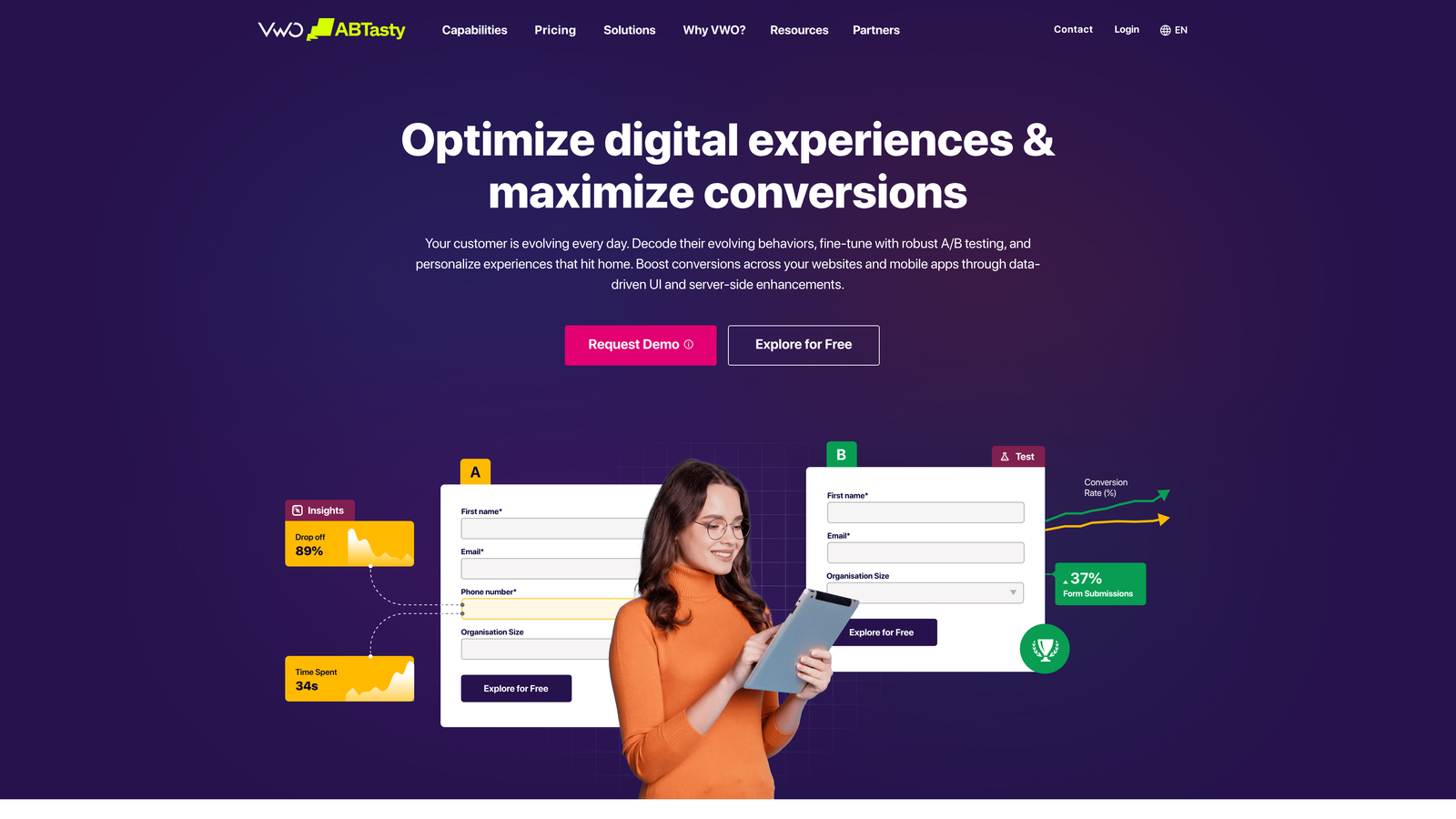
VWO is an all-in-one conversion optimization platform that bundles A/B testing, multivariate testing, heatmaps, session recordings, surveys, and personalization into a unified experience.
Where This Tool Shines
The appeal of VWO is consolidation. Instead of stitching together separate tools for testing, behavior analytics, and user feedback, you get a connected platform where insights from one module can directly inform experiments in another. That reduces both tool sprawl and the context-switching that slows optimization cycles.
The AI-powered copy suggestions for test variants are a practical addition, particularly for teams that want to run more tests but struggle with generating enough creative hypotheses. It's not a replacement for strategic thinking, but it lowers the activation energy for launching new experiments.
Key Features
A/B, Split URL, and Multivariate Testing: Flexible testing options covering everything from simple headline swaps to full page variants.
Built-in Heatmaps and Session Recordings: Visual behavior analytics integrated directly into the same platform as your testing tools.
On-Page Surveys and Form Analytics: Collect qualitative signals and track form field performance without a separate tool.
Server-Side Testing: Enables product teams to run experiments at the application level, not just the front end.
AI-Powered Copy Suggestions: Generates variant copy ideas to accelerate test hypothesis generation.
Best For
VWO is a strong fit for growth and marketing teams at mid-market companies that want to consolidate their CRO stack without sacrificing depth. It's especially useful for teams that run regular testing programs but don't have the resources to manage multiple specialized tools.
Pricing
Free starter plan available. Paid plans start around $200/month billed annually, scaling with tested users and feature tiers.
5. Unbounce
Best for: Performance marketers who need fast landing page creation with AI-powered traffic optimization
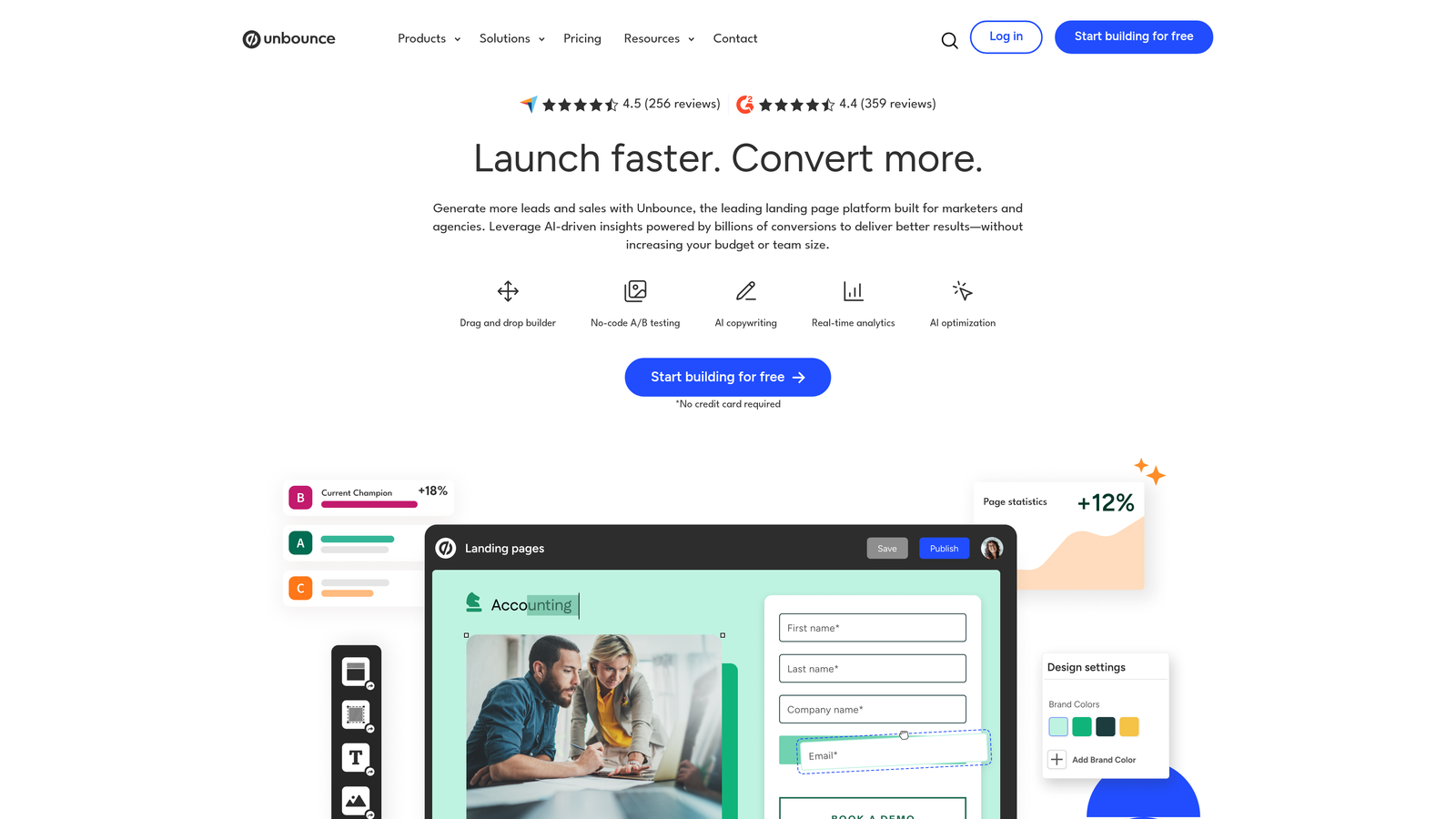
Unbounce is a landing page platform with AI-powered Smart Traffic that automatically routes visitors to the page variant most likely to convert for their specific profile.
Where This Tool Shines
Unbounce occupies a specific and valuable niche: it's built for marketers running paid campaigns who need to ship landing pages quickly and optimize them without waiting for a full A/B test to reach statistical significance. Smart Traffic does the heavy lifting by learning from incoming visitor data and automatically allocating traffic to the highest-converting variant for each visitor profile.
The dynamic text replacement feature is particularly useful for PPC campaigns. You can match the headline on your landing page to the exact keyword a visitor searched for, creating message-match continuity that typically improves conversion rates on paid traffic.
Key Features
Drag-and-Drop Landing Page Builder: Create and publish landing pages without developer involvement, with a library of conversion-focused templates.
Smart Traffic AI: Automatically sends each visitor to the variant most likely to convert based on their behavioral and contextual profile.
Smart Copy AI Assistant: Generates and suggests copy for headlines, CTAs, and page sections to speed up content creation.
Popups and Sticky Bars: Layer on-site conversion elements without needing a separate tool.
Dynamic Text Replacement: Personalizes landing page copy to match PPC ad keywords for improved message continuity.
Best For
Unbounce is purpose-built for paid media teams, demand generation marketers, and agencies managing multiple campaign landing pages. If your primary conversion challenge is campaign-level landing page performance, it's one of the most focused tools available.
Pricing
Plans start around $99/month. Smart Traffic is available on higher-tier plans. A free trial is available to test the platform before committing.
6. Crazy Egg
Best for: Smaller teams that want visual behavior insights and simple A/B testing with minimal setup
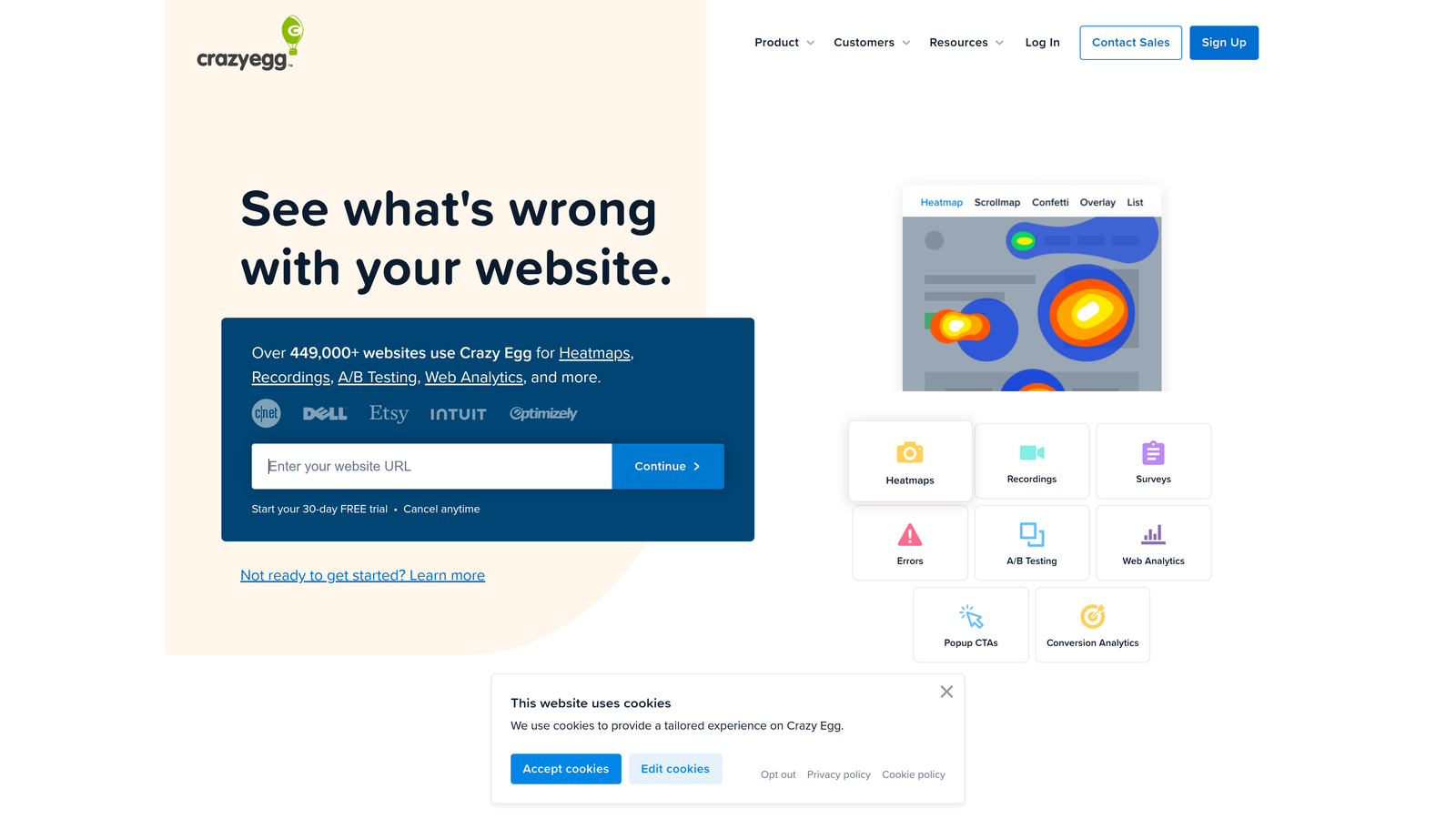
Crazy Egg is a lightweight heatmap and A/B testing tool designed for fast setup and simplicity, ideal for teams that want actionable visual insights without enterprise complexity.
Where This Tool Shines
Crazy Egg earns its place on this list through accessibility. The setup is genuinely fast, the interface is approachable for non-technical users, and the core features cover the most common behavior analytics use cases without overwhelming you with options. For teams that are just starting to build a CRO practice, that low barrier to entry matters.
The confetti report is a standout feature: it shows individual clicks color-coded by traffic source, device type, or other segments. This makes it easy to spot behavioral differences between, say, organic and paid visitors, or mobile versus desktop users, without needing to build custom segments in a separate analytics tool.
Key Features
Snapshot Heatmaps, Scrollmaps, and Confetti Reports: Visual click and scroll analytics with segmentation by traffic source, device, and more.
Session Recordings: Watch individual user sessions to identify friction points and unexpected behavior patterns.
Simple A/B Testing Editor: Run basic A/B tests through a visual editor without coding or complex setup.
Traffic Analysis and Referral Breakdowns: Understand which sources are driving your highest-quality traffic.
Quick Installation: Single script tag installation with minimal technical overhead.
Best For
Crazy Egg is well-suited for small business owners, solo marketers, and early-stage teams that want to start understanding visitor behavior quickly without investing in a more complex platform. It's also a solid supplementary tool for teams that use a heavier platform for testing but want lightweight visual analytics.
Pricing
Plans start around $29/month. A 30-day free trial is available, making it easy to evaluate before purchasing.
7. GrowthBook
Best for: Engineering-led teams that want open-source A/B testing and feature flagging without traffic-based pricing
GrowthBook is an open-source feature flagging and A/B testing platform that integrates directly with existing analytics tools, offering a compelling free alternative for teams that outgrew Google Optimize.
Where This Tool Shines
When Google Optimize sunset in September 2023, it left a large gap in the free experimentation tool market. GrowthBook stepped into that space with a genuinely capable platform that doesn't charge based on traffic volume, which is a meaningful differentiator as experiments scale. The open-source model also means you can self-host the entire platform if data sovereignty or compliance requirements demand it.
The statistical flexibility is notable. GrowthBook supports both Bayesian and frequentist approaches to experiment analysis, which means data-savvy teams can choose the methodology that fits their decision-making framework rather than being locked into one approach.
Key Features
Open-Source with Self-Hosted or Cloud Options: Full flexibility to run on your own infrastructure or use the managed cloud version.
Bayesian and Frequentist Statistical Engines: Choose your preferred statistical methodology for experiment analysis.
Feature Flags with Gradual Rollouts: Control feature releases with percentage-based rollouts and targeting rules.
Broad Analytics Integrations: Connects with GA4, Mixpanel, Snowflake, BigQuery, and other data warehouses for analysis.
No Traffic-Based Pricing: Run experiments at any scale without worrying about overage charges.
Best For
GrowthBook is ideal for engineering and product teams at startups and growth-stage companies that want serious experimentation capabilities without enterprise price tags. It's particularly strong for teams with existing data warehouse setups who want to run analysis on their own data.
Pricing
Free for self-hosted deployments. Cloud plans start at $75/month with no traffic-based pricing limits.
8. Convert
Best for: Privacy-conscious teams and agencies that need GDPR-compliant A/B testing with transparent pricing
Convert is a privacy-first A/B testing platform built for GDPR compliance, offering flicker-free experiments and straightforward pricing without traffic-based overages.
Where This Tool Shines
Convert has built its identity around two things that matter deeply to certain teams: privacy compliance and pricing transparency. The platform is GDPR, CCPA, and ePrivacy compliant by default, which removes a significant compliance burden for teams operating in regulated markets or serving European audiences. That's not a minor differentiator when the alternative involves legal review of every testing tool you adopt.
The flicker-free testing implementation is also worth highlighting. Many A/B testing tools cause a visible "flash" where the original page loads briefly before the test variant appears. Convert's fast snippet loading minimizes this, which matters for both user experience and test validity since flicker can influence user behavior in ways that contaminate results.
Key Features
Privacy Compliance by Default: GDPR, CCPA, and ePrivacy compliant out of the box, with no additional configuration required.
Flicker-Free Testing: Fast snippet loading minimizes visual flicker during experiment delivery for cleaner test results.
No Data Sampling: Full data accuracy on experiment results without the statistical distortions that sampling introduces.
Multi-Domain and Multi-Account Support: Manage experiments across multiple domains and client accounts, making it agency-friendly.
SmartInsert Personalization: Deliver personalized on-site experiences alongside your testing program.
Best For
Convert is a strong fit for agencies managing multiple client accounts, in-house teams at companies with strict privacy requirements, and any organization where GDPR compliance is a non-negotiable. The transparent pricing model also makes it easier to budget predictably as testing volume grows.
Pricing
Plans start around $299/month with generous tested-user limits included. No traffic-based overage charges.
9. Mutiny
Best for: B2B teams running account-based marketing programs that want personalized web experiences without engineering resources
Mutiny is a B2B website personalization platform that uses firmographic and intent data to tailor website experiences for target accounts, with no engineering required.
Where This Tool Shines
Mutiny solves a specific and high-value problem: your website shows the same generic experience to a Fortune 500 enterprise prospect and a two-person startup, even though those visitors have completely different needs, objections, and buying contexts. Mutiny lets you tailor headlines, CTAs, social proof, and page content based on who the visitor actually is, using firmographic data like company size, industry, and revenue.
The intent data integrations with platforms like Bombora, 6sense, and G2 add another layer. You can personalize experiences not just based on who a company is, but based on what they're actively researching, which creates relevance at exactly the right moment in the buying cycle.
Key Features
Account-Based Personalization: Tailor website content based on visitor firmographics including company size, industry, and revenue band.
Intent Data Integration: Connects with Bombora, 6sense, and G2 to layer buying intent signals into personalization rules.
No-Code Visual Editor: Customize page experiences through a point-and-click editor without developer involvement.
AI-Powered Audience Suggestions: The platform recommends high-impact audience segments and personalization playbooks based on your traffic patterns.
Revenue Attribution and Conversion Lift Reporting: Measure the actual pipeline impact of personalization efforts, not just click-through rates.
Best For
Mutiny is built for B2B marketing teams at mid-market and enterprise companies running account-based marketing programs. If you have a defined ICP and significant traffic from target accounts, the personalization ROI can be substantial.
Pricing
Custom pricing. Typically positioned for mid-market and enterprise B2B teams. Contact Mutiny directly for a quote based on your traffic volume and use case.
10. FullStory
Best for: Product and growth teams that need deep digital experience intelligence with AI-powered frustration signal detection
FullStory is a digital experience intelligence platform that auto-captures every user interaction and uses AI to surface frustration signals, conversion blockers, and optimization opportunities.
Where This Tool Shines
FullStory's autocapture approach is what distinguishes it from most behavior analytics tools. Rather than requiring you to manually tag events or define what to track in advance, it records every click, scroll, tap, and interaction automatically. This means you can go back and analyze behavior patterns around events you didn't even know to look for when you first installed the tool.
The frustration signal detection is particularly powerful for conversion optimization. FullStory automatically identifies rage clicks, dead clicks, and error clicks across your entire site, surfacing the moments where users are visibly struggling. These signals often point directly to conversion blockers that would take weeks to discover through traditional analytics.
Key Features
Autocapture: Records every user interaction automatically without manual event tagging, creating a complete retroactive data history.
Frustration Signal Detection: AI-powered identification of rage clicks, dead clicks, and error clicks that indicate user friction.
Session Replay with Searchable Timelines: Find and filter specific sessions based on any captured event or behavioral pattern.
Conversion Funnel Analysis: Identify drop-off points across multi-step funnels with diagnostic tools to understand why users are leaving.
Broad Integrations: Connects with Slack, Jira, Segment, and major analytics platforms for cross-tool workflow integration.
Best For
FullStory is best suited for product teams, UX researchers, and growth engineers at companies with complex digital products who need to understand user behavior at a granular level. It's particularly valuable when you're troubleshooting conversion issues in product-led growth funnels where the experience extends well beyond a simple landing page.
Pricing
Free plan available with limited session capture. Paid plans are custom-priced based on session volume and team size. Contact FullStory for enterprise pricing.
Picking the Right Tool for Your Growth Stage
The honest answer is that most high-growth teams need tools from more than one category here. A complete CRO stack typically combines behavior analytics to understand what's happening, testing tools to validate improvements, and conversion-focused assets like landing pages and forms to capture the demand you're generating.
If you're early-stage and building your first CRO practice, start with behavior analytics. Hotjar or Crazy Egg will surface the most obvious friction points quickly, and you can layer in testing tools once you have enough traffic to run meaningful experiments.
If you're mid-market and running a structured optimization program, VWO or Convert give you testing depth with built-in analytics, while GrowthBook is worth serious consideration if your team has engineering resources and wants to avoid traffic-based pricing.
For enterprise teams with dedicated experimentation functions, Optimizely is the category leader. And if you're running ABM programs, Mutiny addresses a personalization gap that most testing tools simply don't touch.
One area that often gets overlooked in CRO conversations: your forms. For most B2B and SaaS teams, forms are the primary conversion mechanism, and optimizing them deserves the same rigor as optimizing landing pages. That's the specific gap Orbit AI addresses, combining form design quality with AI-powered lead qualification so you're not just capturing more submissions but capturing the right ones.
Start building free forms today and see how intelligent form design can elevate your conversion strategy. When your forms qualify leads automatically and deliver a modern, frictionless experience, every other investment in your CRO stack works harder.


