

You're driving traffic to your landing pages. Visitors are arriving. But the conversions? They're not keeping pace. This gap between traffic and revenue is one of the most frustrating challenges in growth marketing, and it rarely has a single cause.
The good news is that the right tools can help you diagnose exactly what's going wrong, test fixes systematically, and remove the friction standing between a visitor and a completed form, a booked demo, or a purchase. The tools below cover the full spectrum of landing page optimization: AI-powered form building and lead qualification, behavior analytics, A/B and multivariate testing, personalization, and privacy-first experimentation.
Selection criteria for this list: ease of use, depth of integration with common marketing stacks, genuine impact on conversion workflows, and value specifically for high-growth teams. Some tools focus on a single conversion element like forms or CTAs, while others offer full-stack optimization suites. Knowing which category you need first is half the battle. If you're still figuring out where your forms are losing people, it's worth reading about how to improve form conversion rates before diving into the tools themselves.
1. Orbit AI
Best for: Teams that want AI-powered form building with real-time lead qualification on landing pages.
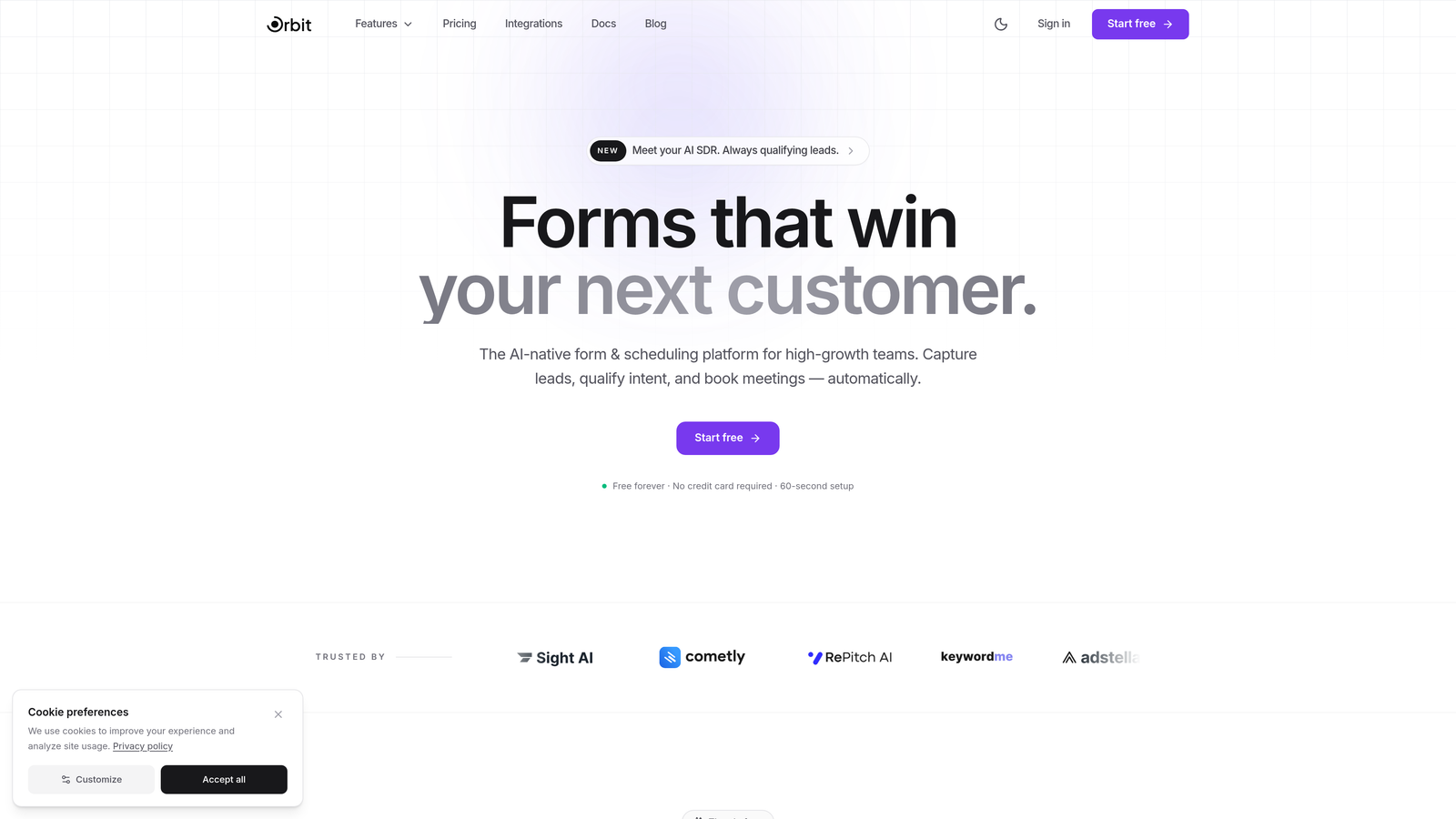
Orbit AI is an AI-powered form builder platform built specifically to turn landing page traffic into qualified pipeline, not just raw submissions.
Where This Tool Shines
Most form builders are passive. They collect data and hand it off. Orbit AI takes a different approach: it actively qualifies leads in real time as they move through the form, scoring and routing them based on the answers they give. This means your sales team receives leads that are already prioritized, not a flat list of everyone who clicked submit.
The platform is also designed with conversion aesthetics in mind. Forms built in Orbit AI look like they belong on a high-converting landing page, not like an afterthought bolted onto the bottom of one. If you're exploring the broader case for conversational, low-friction form experiences, the benefits of conversational landing pages are worth understanding before you start building.
Key Features
AI-Powered Lead Qualification: Scores and routes leads in real time based on form responses, so high-intent prospects are flagged immediately.
Conversion-Optimized Templates: Pre-built form templates designed specifically for landing page contexts, not generic contact forms.
Progressive Disclosure: Shows questions incrementally to reduce perceived effort and increase form completion rates.
CRM and Marketing Automation Integrations: Connects seamlessly with major CRMs and automation platforms to keep your workflow uninterrupted.
Modern Form Design: Clean, beautiful form aesthetics that match the visual standards of high-performing landing pages.
Best For
High-growth SaaS teams, demand generation marketers, and B2B companies running paid campaigns who need to capture leads efficiently without sacrificing quality. Particularly valuable if your current forms generate volume but your sales team is spending too much time disqualifying poor-fit leads.
Pricing
Free plan available for getting started. Paid plans unlock advanced AI qualification features and deeper integrations, with pricing scaled to team needs.
2. Unbounce
Best for: Marketing teams that want to build, test, and optimize landing pages without relying on developers.
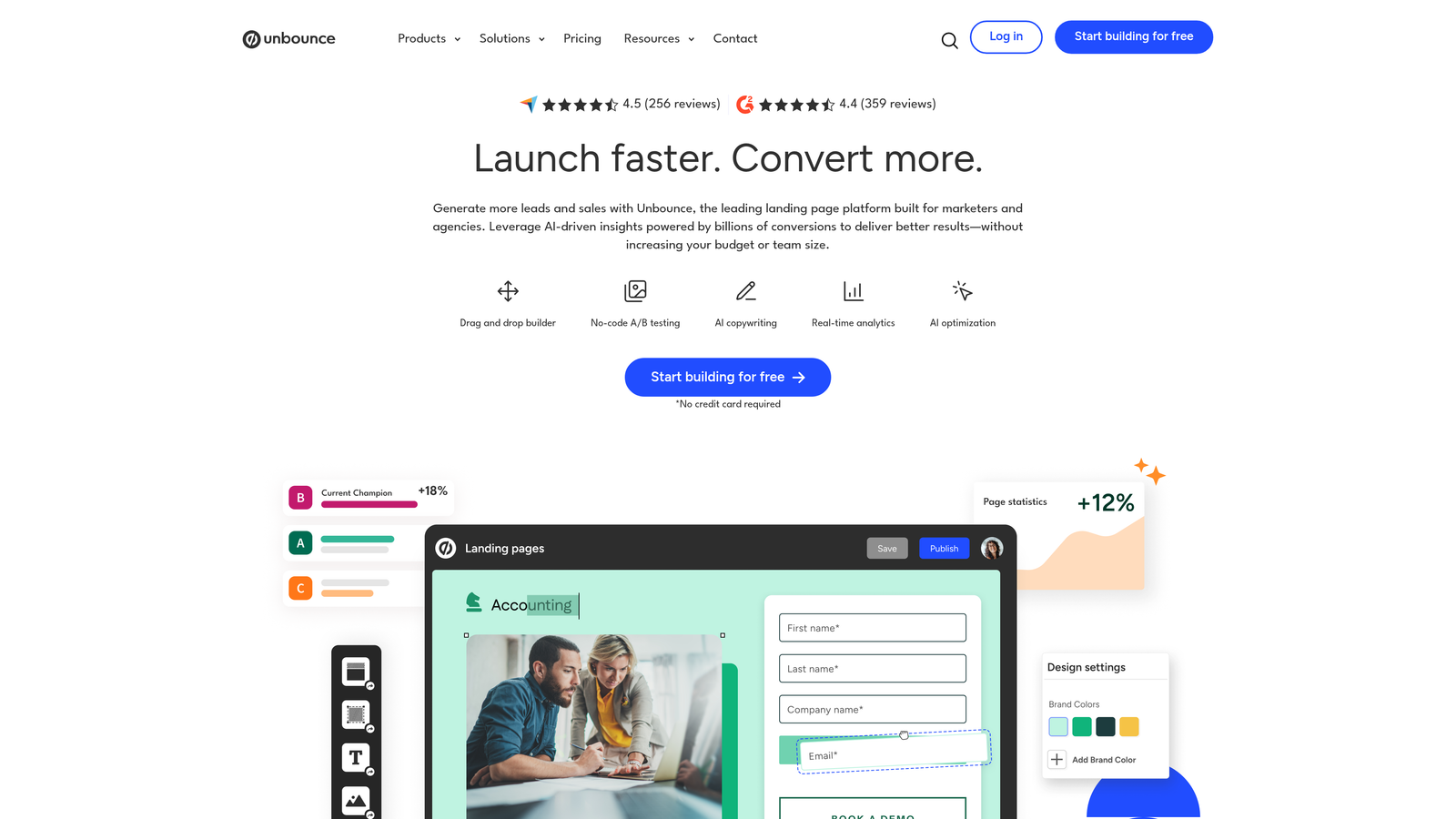
Unbounce is a landing page builder with a built-in AI traffic optimization layer that removes much of the manual work from A/B testing.
Where This Tool Shines
Unbounce's Smart Traffic feature is genuinely useful for teams that don't have the patience or traffic volume for traditional A/B tests to reach significance. Instead of splitting traffic 50/50 and waiting weeks, Smart Traffic learns visitor attributes and routes each person to the variant most likely to convert for them. It's a meaningful shift from testing to optimization.
The platform also handles the full landing page lifecycle: build, personalize, test, and iterate. Dynamic text replacement is particularly useful for PPC teams trying to maintain message match between ads and landing pages without creating dozens of manual variants.
Key Features
Smart Traffic AI: Automatically routes visitors to the highest-converting variant based on their attributes, without waiting for statistical significance.
Drag-and-Drop Builder: 100+ templates and a flexible editor that requires no coding knowledge.
Smart Copy: AI-assisted copywriting tool for generating and testing landing page headlines and body copy.
Dynamic Text Replacement: Automatically matches landing page copy to the search terms or ad copy that brought the visitor in.
Pop-ups and Sticky Bars: Secondary conversion paths for capturing visitors who aren't ready to convert on the main CTA.
Best For
Performance marketing teams running paid campaigns who need fast page creation, message matching, and automated optimization without a developer bottleneck. Also works well for agencies managing multiple client campaigns.
Pricing
Build plan starts around $99/month. Higher tiers unlock Smart Traffic and more advanced features. Annual billing reduces the cost.
3. Hotjar
Best for: Understanding the "why" behind visitor behavior before committing to a testing strategy.
Hotjar is a behavior analytics platform that shows you exactly how visitors interact with your landing pages through visual data and direct feedback.
Where This Tool Shines
Hotjar fills the diagnostic gap that quantitative analytics tools leave open. Your GA4 data might tell you that 70% of visitors leave without converting, but it won't tell you that they're all rage-clicking a button that doesn't work on mobile. Hotjar's session recordings and frustration signal filters surface that kind of insight quickly.
The on-page survey and feedback widget functionality is underrated. Being able to ask visitors a single question at the moment they're about to leave, or right after they convert, generates qualitative data that shapes smarter hypotheses for your A/B tests.
Key Features
Heatmaps: Click, scroll, and move heatmaps that show where attention is focused and where it drops off.
Session Recordings: Full playback of individual visitor sessions, filterable by frustration signals like rage clicks and U-turns.
On-Page Surveys: Targeted questions triggered by behavior (exit intent, scroll depth, time on page) to capture visitor sentiment.
Form Analytics: Shows exactly which fields cause drop-off and where visitors abandon your forms.
Funnel Analysis: Maps the conversion path and identifies the biggest drop-off points between steps.
Best For
Any team running landing page optimization that wants to build evidence-based hypotheses before testing. Hotjar is often the first tool teams reach for when conversion rates drop unexpectedly and they need to understand why.
Pricing
Free plan covers up to 35 daily sessions. Paid plans start around $32/month and scale with session volume and feature depth.
4. VWO
Best for: Growth and product teams running a mature experimentation program that needs both testing and behavior analytics in one platform.
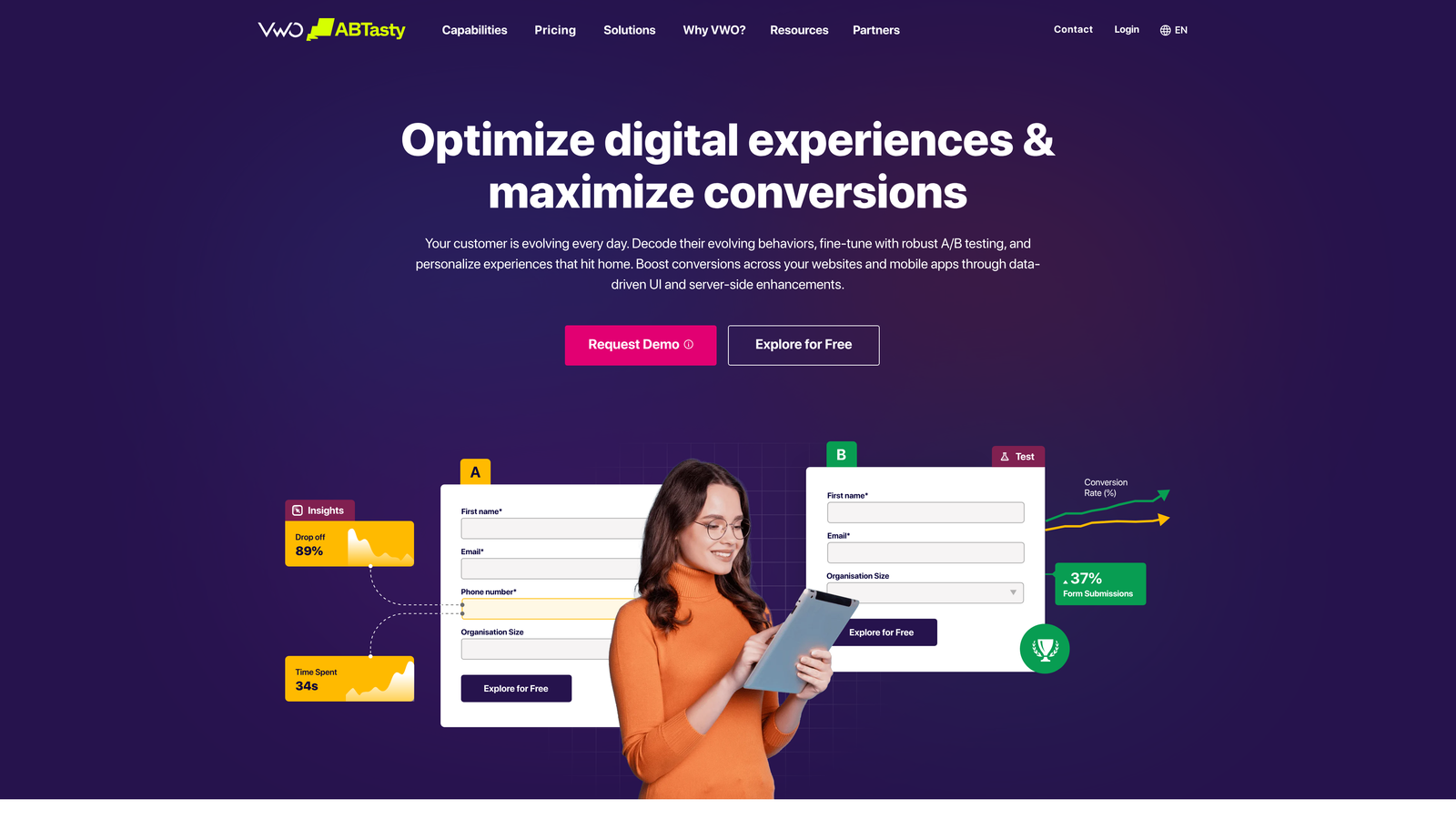
VWO is a full-stack experimentation platform that covers A/B testing, multivariate testing, server-side experiments, and built-in behavior analytics under one roof.
Where This Tool Shines
VWO's strength is its breadth. Teams often start with its visual editor for simple A/B tests and gradually expand into server-side testing and personalization campaigns as their program matures. Having heatmaps and session recordings built into the same platform as your testing tools means your observation and experimentation data live in the same place, which makes analysis more coherent.
The Bayesian statistics engine is worth noting for teams that have been burned by false positives from traditional frequentist testing. It tends to produce faster, more reliable results, especially when traffic volumes are moderate rather than massive.
Key Features
Visual Editor: Create A/B and multivariate tests without writing code, directly on your live page.
Server-Side Testing: Run deeper technical experiments on checkout flows, pricing pages, and dynamic content.
Built-In Heatmaps and Recordings: Behavior analytics without needing a separate tool subscription.
Bayesian Statistics Engine: Faster, more reliable test results with built-in handling of peeking and false positives.
Personalization Campaigns: Serve different experiences to different visitor segments based on behavioral and demographic attributes.
Best For
Mid-market and growth-stage teams running regular experiments who want a consolidated platform rather than stitching together separate tools for testing and analytics.
Pricing
Free starter plan available for basic testing. Growth plans start around $357/month, scaling with traffic and feature requirements.
5. Optimizely
Best for: Enterprise organizations running sophisticated, multi-team experimentation programs across web and product.
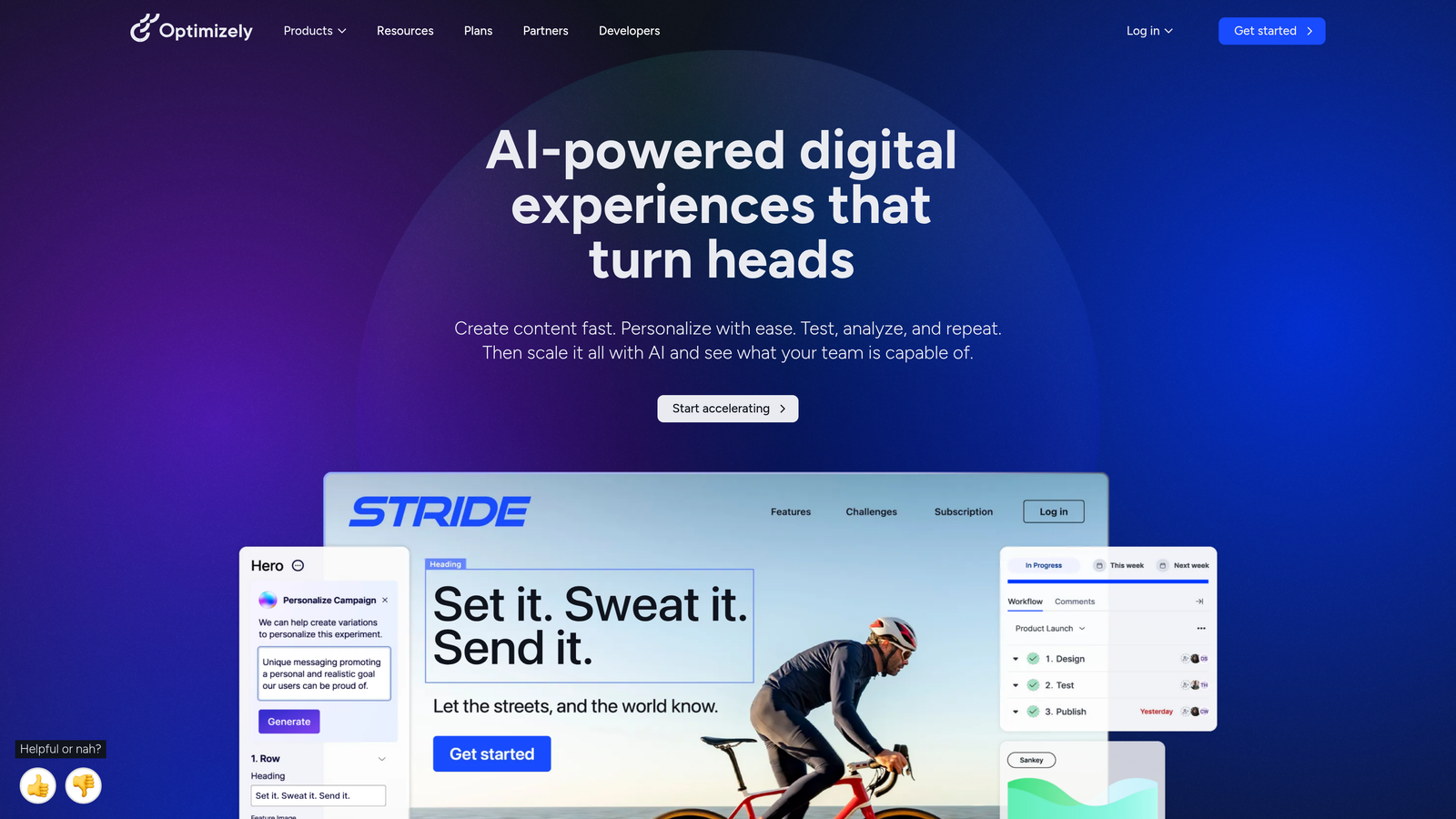
Optimizely is an enterprise digital experience platform that unifies web experimentation, feature flagging, and content personalization at scale.
Where This Tool Shines
Optimizely is built for organizations where experimentation is a company-wide discipline, not a marketing side project. Its Stats Accelerator feature dynamically reallocates traffic toward winning variants during a live test, which shortens the time to confident results without compromising statistical integrity.
The integration between feature flags and experimentation is particularly valuable for product-led growth teams. You can tie a landing page experiment directly to a feature rollout, ensuring that what visitors see on the page matches what they experience inside the product.
Key Features
Unified Web and Feature Experimentation: Run landing page A/B tests and product feature experiments from the same platform.
Stats Accelerator: Dynamically shifts traffic to winning variants to reach significance faster.
Advanced Audience Targeting: Segment experiments by behavior, firmographics, campaign source, and custom attributes.
Feature Flags: Progressively roll out new experiences tied directly to experiment data.
Robust API and SDK Support: Developer-friendly architecture for complex, custom experiment setups.
Best For
Enterprise marketing and product teams with dedicated experimentation resources, significant traffic volumes, and the need for governance, collaboration, and audit trails across a large organization.
Pricing
Custom pricing only. Typically suited for mid-market to enterprise budgets. Best to contact their sales team for a quote based on your traffic and use case.
6. Crazy Egg
Best for: Smaller teams and solo marketers who want fast visual insights and simple A/B testing without a steep learning curve.
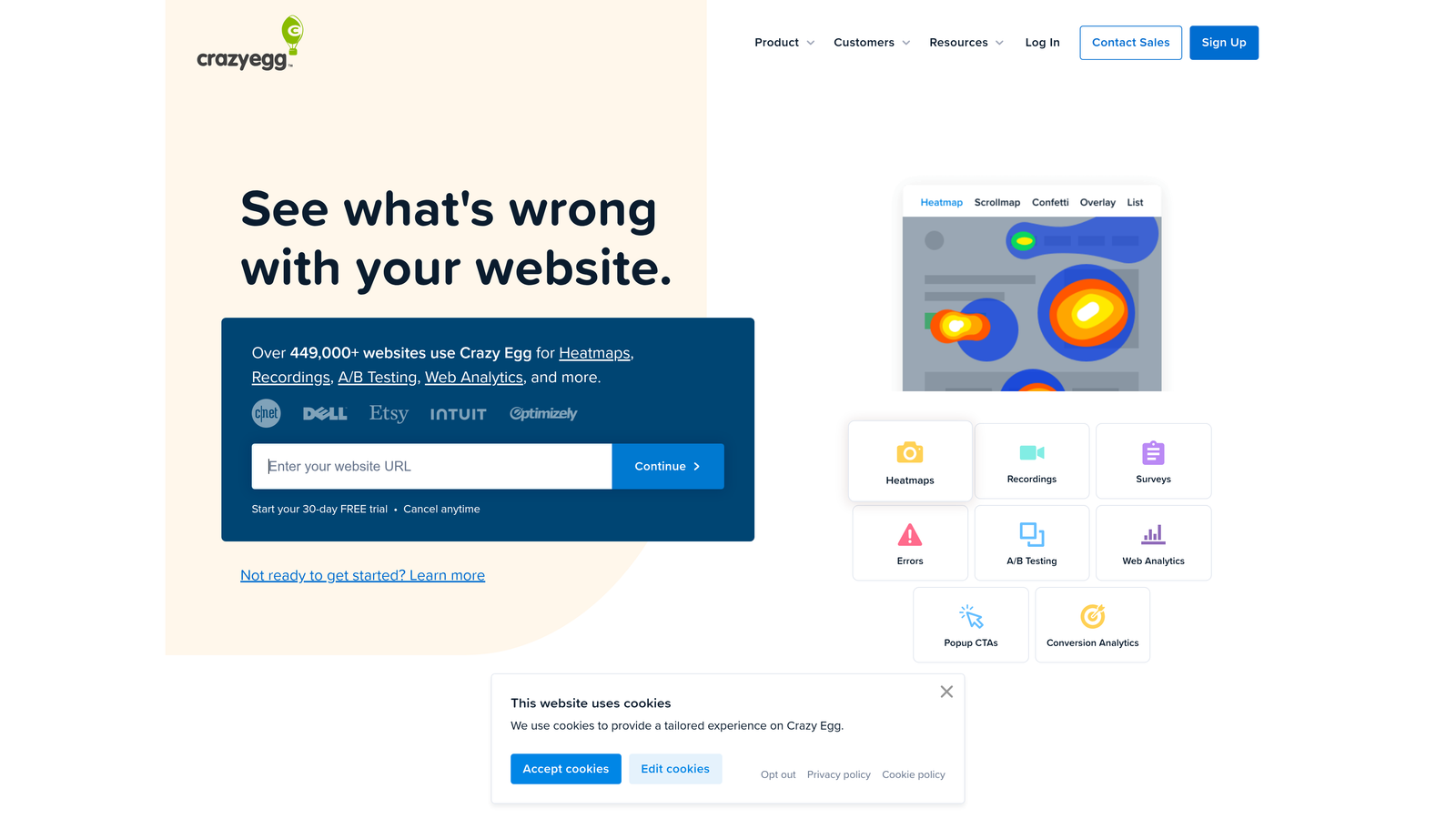
Crazy Egg is a lightweight visual analytics and testing tool that delivers heatmaps, session recordings, and a simple A/B editor at an accessible price point.
Where This Tool Shines
Crazy Egg's value proposition is simplicity and speed. You can install the tracking snippet, set up a heatmap snapshot, and have visual data within hours. For teams that don't need the depth of Hotjar or the full testing infrastructure of VWO, Crazy Egg provides exactly enough to make informed decisions without overwhelming the user.
The confetti report is a unique feature worth calling out. It overlays click data segmented by traffic source, device type, or referral, so you can see whether paid traffic visitors are clicking differently than organic visitors on the same page.
Key Features
Heatmaps and Scroll Maps: Visual overlays showing where visitors click, how far they scroll, and where attention concentrates.
Confetti Reports: Click data segmented by traffic source, device, and other attributes for more granular analysis.
Session Recordings: Individual visitor replays with error tracking to catch technical issues.
Built-In A/B Testing Editor: Simple visual editor for running quick page experiments without a separate testing platform.
Traffic Analysis: Referral source breakdowns and point-in-time page snapshots for tracking changes over time.
Best For
Small marketing teams, freelancers, and early-stage companies that want actionable visual data and basic testing capability without committing to a complex or expensive platform.
Pricing
Plans start around $29/month, with a 30-day free trial available. One of the more affordable options in the behavior analytics category.
7. Instapage
Best for: Advertising teams that need 1:1 ad-to-page personalization and collaborative landing page workflows.
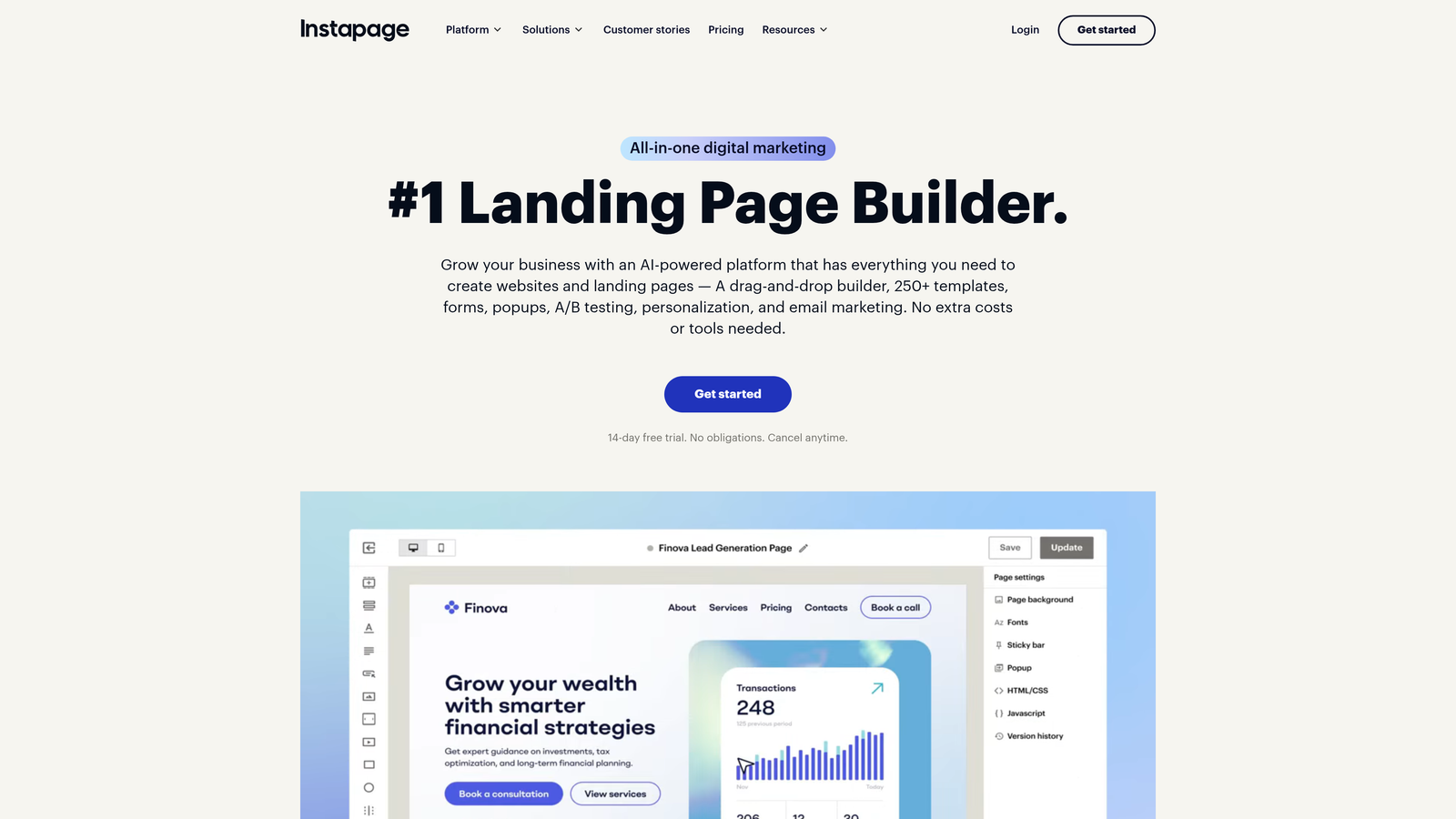
Instapage is a post-click optimization platform designed specifically for teams running paid advertising at scale, with a focus on personalization and team collaboration.
Where This Tool Shines
Instapage's AdMap feature is its standout differentiator. It lets you visually connect every ad in a campaign to a corresponding personalized landing page, making 1:1 message matching manageable even when you're running dozens of ad groups. For paid search and paid social teams, the message match between ad and landing page is one of the highest-leverage conversion improvements available.
The real-time visual collaboration tools are also genuinely useful for agencies and in-house teams working with multiple stakeholders. Clients can leave feedback directly on the page canvas, which cuts down on the back-and-forth that usually slows down landing page iteration.
Key Features
AdMap: Visual mapping of every ad to its corresponding personalized post-click landing page.
Real-Time Collaboration: Stakeholders can comment and review directly on the page canvas, streamlining approval workflows.
Server-Side A/B Testing: Built-in testing with analytics, without the flicker issues of client-side implementations.
AMP Landing Page Support: Accelerated mobile pages for faster load times on mobile campaigns.
Dynamic Text Replacement: Audience-level personalization based on ad parameters, location, or custom data.
Best For
Paid advertising teams and agencies managing high-volume campaigns where message match and personalization at scale are the primary conversion levers.
Pricing
Build plan starts around $99/month. Advanced personalization and collaboration features are available at higher tiers. Annual billing available.
8. GA4 Ecosystem Testing (Post-Google Optimize)
Best for: Teams already invested in the Google ecosystem looking for low-cost or free testing options that leverage their existing GA4 data.
Google Analytics 4 itself is not a testing tool, but since Google Optimize's sunset in September 2023, it has become the anchor point for teams building a testing stack within the Google ecosystem.
Where This Tool Shines
The practical reality for many teams is that GA4 is already their source of truth for conversion data. Third-party testing tools like AB Tasty and Kameleoon have built native GA4 integrations, allowing you to use GA4 audiences as experiment targeting criteria and send experiment data back into GA4 for unified reporting. This keeps your analytics stack coherent without requiring a full platform migration.
For teams with limited budgets or those just starting their experimentation journey, GA4's event-based measurement model combined with a lightweight testing tool represents one of the most accessible entry points into structured conversion optimization.
Key Features
GA4 Audience Integration: Use existing GA4 audiences as targeting criteria for experiments run in connected third-party tools.
Event-Based Measurement: Modern conversion tracking model that aligns with how contemporary landing pages and SPAs actually work.
Google Ads Connection: Campaign-level optimization data flows between GA4 and Google Ads for closed-loop measurement.
Third-Party Connectors: Platforms like AB Tasty and Kameleoon plug into GA4 data for targeting and reporting.
Free Entry Point: GA4 itself is free, making the incremental cost of adding a testing layer relatively low.
Best For
Teams running Google Ads campaigns, organizations already standardized on GA4, and budget-conscious teams who want structured testing without committing to a premium standalone platform immediately.
Pricing
GA4 is free. Third-party testing tools that integrate with GA4 vary widely in cost, from free tiers to several hundred dollars per month depending on traffic volume and features.
9. Convert
Best for: Teams operating under strict data privacy regulations who need reliable A/B testing without compliance risk.
Convert is a privacy-first A/B testing platform built for organizations where GDPR, CCPA, and ePrivacy compliance are non-negotiable requirements, not afterthoughts.
Where This Tool Shines
Convert's architecture is fundamentally different from most testing platforms in one important way: it does not store personal data by default. For teams in regulated industries or operating across European markets, this removes a significant compliance burden that can otherwise slow down or block experimentation programs entirely.
The SmartInsert technology addresses one of the most common technical complaints about A/B testing tools: page flicker. When tests load slowly, visitors briefly see the original version before the variant appears, which contaminates results and creates a poor user experience. Convert's approach to test deployment is designed to eliminate this problem.
Key Features
Privacy-Compliant by Design: GDPR, CCPA, and ePrivacy compliant architecture with no personal data storage by default.
SmartInsert Technology: Flicker-free test loading that prevents visitors from seeing the original variant before the test version loads.
Cookieless Testing Options: Supports experimentation workflows that don't rely on third-party cookies.
Advanced Targeting Conditions: Weather-based, day-parting, and custom JavaScript conditions for highly specific experiment targeting.
Deep Analytics Integrations: Native connections to GA4, Heap, Mixpanel, and other analytics platforms for unified reporting.
Best For
SaaS companies, fintech teams, healthcare technology platforms, and any organization operating under strict data regulations that want a robust testing program without the compliance overhead of less privacy-conscious tools.
Pricing
Starts around $99/month, scaling based on the number of tested visitors. Transparent pricing model relative to many competitors in the experimentation space.
10. Mutiny
Best for: B2B teams running account-based marketing who want to personalize landing page content for target accounts without engineering resources.
Mutiny is an AI-powered B2B personalization platform that dynamically tailors landing page content based on firmographic and intent data from visiting accounts.
Where This Tool Shines
Mutiny addresses a very specific and high-value problem: the same landing page messaging rarely resonates equally with a Series A startup and a Fortune 500 enterprise, even if they're both in your target market. Mutiny uses firmographic data from sources like Clearbit and 6sense to identify who's visiting your page and serve them a version of the content that speaks directly to their company size, industry, or stage.
The no-code editor is genuinely no-code. Marketing teams can create and publish personalized page experiences without filing engineering tickets, which removes one of the biggest practical barriers to running personalization at scale in B2B organizations.
Key Features
Firmographic Personalization: Uses Clearbit and 6sense data to identify visiting accounts and serve tailored content based on company attributes.
No-Code Visual Editor: Create and publish personalized landing page experiences without developer involvement.
AI Content Suggestions: AI-generated copy recommendations for different audience segments to speed up personalization creation.
Account-Level Analytics: Shows which segments and target accounts are converting, not just aggregate traffic metrics.
ABM Platform Integrations: Connects with Salesforce, HubSpot, and major ABM platforms to tie personalization data back to pipeline.
Best For
B2B SaaS companies, enterprise sales teams, and demand generation marketers running account-based programs who want to increase landing page relevance for high-value accounts without a heavy engineering lift.
Pricing
Custom pricing only. Designed for B2B teams with established ABM strategies and the traffic volume to make personalization worthwhile. Contact their team for a tailored quote.
Which Tool Is Right for Your Stack?
The tools on this list don't compete with each other as much as they complement each other. The most effective conversion optimization stacks in 2026 are composable: a behavior analytics tool layered with a testing platform, combined with a form or lead qualification tool that captures and qualifies the traffic you're working so hard to convert.
Here's a quick way to think about the decision:
For form-level conversion optimization: Start with Orbit AI. If your landing page forms are generating volume but not quality, or if completion rates are lower than they should be, AI-powered qualification and progressive disclosure address both problems simultaneously.
For full-page building and testing: Unbounce is the strongest choice for most growth teams. Instapage is the better fit if you're running high-volume paid campaigns and need 1:1 ad-to-page personalization.
For behavior diagnostics: Hotjar for teams that want depth and qualitative feedback. Crazy Egg for teams that want speed and simplicity at a lower price point.
For enterprise experimentation: Optimizely for large organizations with dedicated experimentation teams. VWO for mid-market teams that want a consolidated testing and analytics platform without enterprise complexity.
For privacy-first testing: Convert is the clear choice for teams operating under GDPR, CCPA, or similar regulations where personal data handling is a genuine constraint.
For B2B account-based personalization: Mutiny is purpose-built for this use case and has no real equivalent at the same level of no-code accessibility.
One final recommendation: start with diagnosis before jumping to testing. It's tempting to immediately set up A/B tests, but if you don't know why visitors aren't converting, you're guessing at solutions. Use behavior analytics to build a hypothesis, then test it. If you want to go deeper on the qualification side of the equation, the guides on lead scoring best practices and how to qualify leads with forms are good next reads.
If your landing page forms are the bottleneck, the most direct path forward is improving both the experience and the quality of what you capture. Start building free forms today with Orbit AI and see how intelligent form design and real-time lead qualification can close the gap between your traffic and your pipeline.


