

When a lead fills out your form, do you actually know what drove them there? Most teams can tell you how many submissions they got, but not which campaign, channel, or touchpoint deserves the credit. That's the gap form attribution tracking software closes.
The right tool connects your form submissions to real marketing data: UTM parameters, referral sources, ad campaigns, and multi-touch journeys. For high-growth teams running paid ads, SEO, and outbound simultaneously, this visibility is the difference between scaling what works and burning budget on what doesn't.
This list covers the top tools for form attribution tracking in 2026, evaluated on attribution depth, form flexibility, integration ecosystem, and ease of use for lean teams. Whether you're building smarter lead qualification flows or trying to prove ROI on a specific channel, there's an option here for your stack. For complementary strategies, see our guides on how to improve lead quality and lead scoring best practices.
1. Orbit AI
Best for: High-growth SaaS and marketing teams wanting attribution data plus AI-powered lead qualification in one platform.
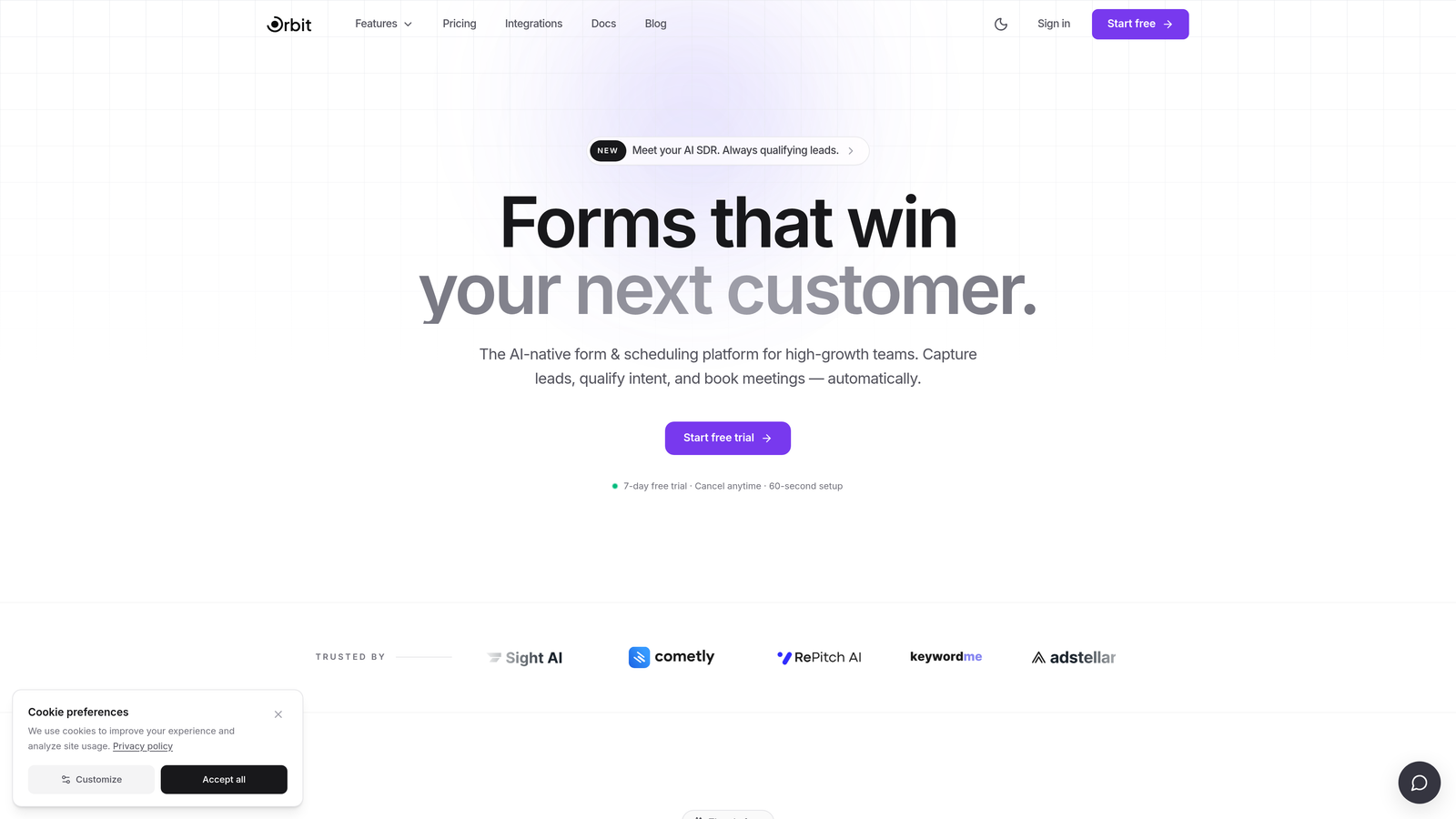
Orbit AI is an AI-powered form builder that combines native attribution tracking with real-time lead qualification, built specifically for conversion-focused teams.
Where This Tool Shines
Most form tools treat attribution as an afterthought: you set up hidden fields, hope the UTM data passes through correctly, and then piece together the picture in a separate analytics tool. Orbit AI takes a different approach by surfacing attribution data and lead quality signals in the same dashboard, so you're not just seeing where a lead came from but also how qualified they are.
That combination is genuinely useful for teams running multiple acquisition channels. Instead of toggling between your CRM, your analytics platform, and your form tool to understand which campaigns are generating your best leads, you get that picture in one place.
Key Features
Native UTM and Referral Capture: Automatically captures UTM parameters and referral source data on every submission without requiring manual hidden field configuration.
AI-Powered Lead Qualification: Scores leads in real time based on form responses, so your sales team sees attribution context alongside lead quality signals immediately.
Conversion-Optimized Design: Modern, clean form UI designed to maximize completion rates, not just collect data.
Unified Attribution Dashboard: Attribution data and lead scores surface together, reducing the need to cross-reference multiple tools.
Built for High-Growth Teams: Workflow and feature set tailored to SaaS and marketing teams scaling multiple channels simultaneously.
Best For
Orbit AI is the strongest fit for SaaS marketing teams and growth-focused organizations that want to close the loop between campaign performance and lead quality, without stitching together multiple tools. If you're running paid acquisition and need to know not just which channel converts but which channel converts well, this is the tool built for that question.
Pricing
Visit orbitforms.ai for current pricing plans. A free starting option is available for teams wanting to explore the platform before committing.
2. Typeform
Best for: Teams prioritizing form completion rates with UTM capture passed downstream via integrations.
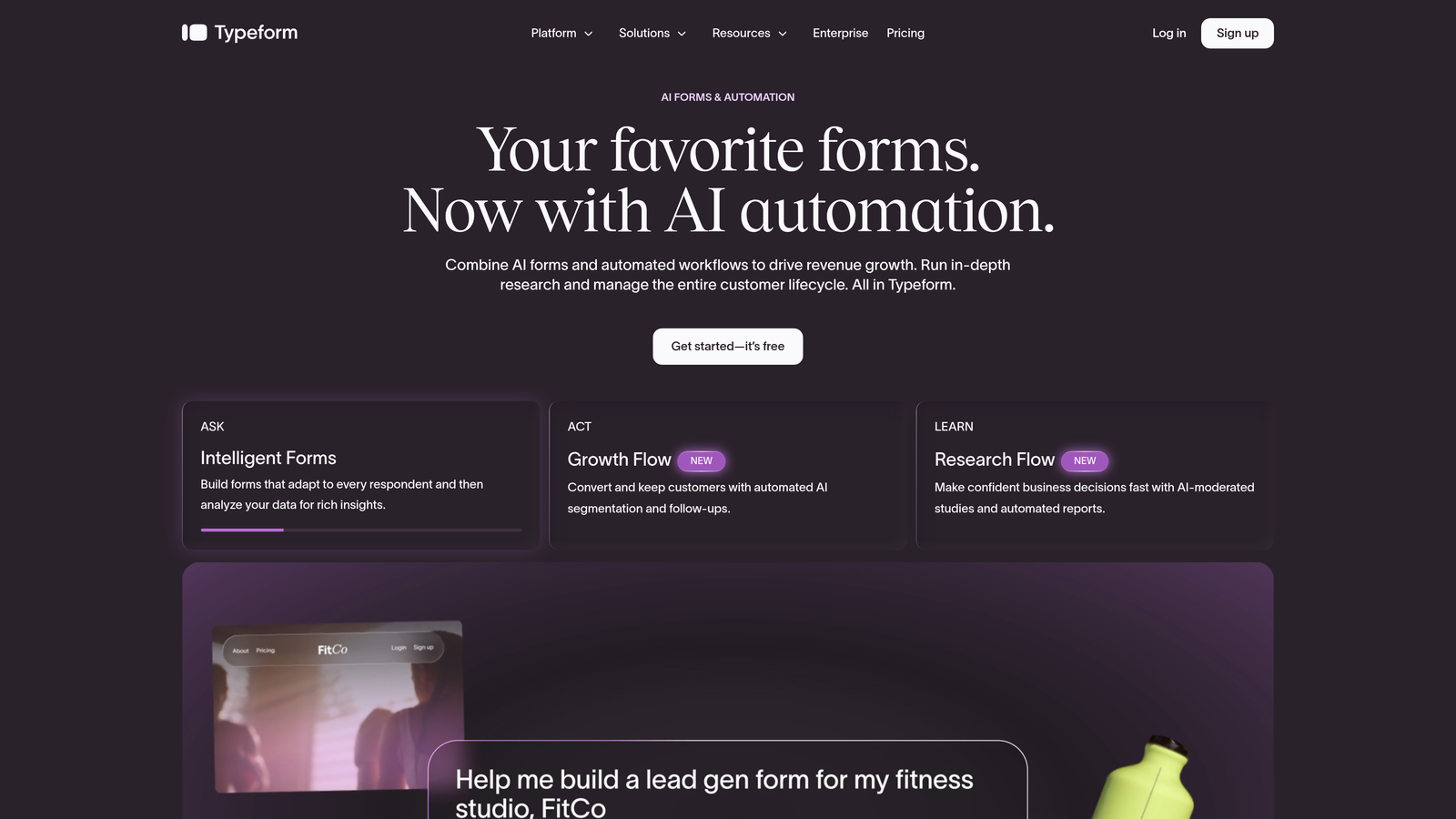
Typeform is a conversational form builder known for its one-question-at-a-time format and high completion rates, with hidden field support for UTM tracking.
Where This Tool Shines
Typeform's biggest strength is the form experience itself. The conversational format tends to feel less like a form and more like a dialogue, which can meaningfully improve completion rates on longer surveys or qualification flows. For teams where form abandonment is the primary problem, that UX investment pays off.
On the attribution side, Typeform relies on hidden fields pre-populated from URL parameters. The data captures correctly when configured, but you'll need a connected CRM or analytics tool to actually analyze source performance. Typeform doesn't have a native attribution reporting layer.
Key Features
Hidden Fields with URL Parameter Pre-Fill: Capture UTM source, medium, campaign, and other parameters by pre-populating hidden fields from the URL.
Conversational Format: One-question-at-a-time structure designed to reduce form fatigue and improve completion rates.
Native Integrations: Connects directly to HubSpot, Salesforce, Slack, and other platforms for passing attribution data downstream.
Logic Jumps: Conditional routing based on responses enables personalized form paths without complex coding.
Basic Response Analytics: In-platform reporting covers submission counts and response breakdowns, though not channel-level attribution analysis.
Best For
Typeform works well for teams that already have a CRM or analytics platform handling attribution analysis and just need a form tool that captures UTM data reliably and delivers a polished respondent experience. Less ideal if you want attribution insights without building a separate reporting workflow.
Pricing
Free tier available. Paid plans start at approximately $25/month. Verify current pricing at typeform.com.
3. Jotform
Best for: Teams needing extensive integrations to route attribution data into multiple platforms simultaneously.
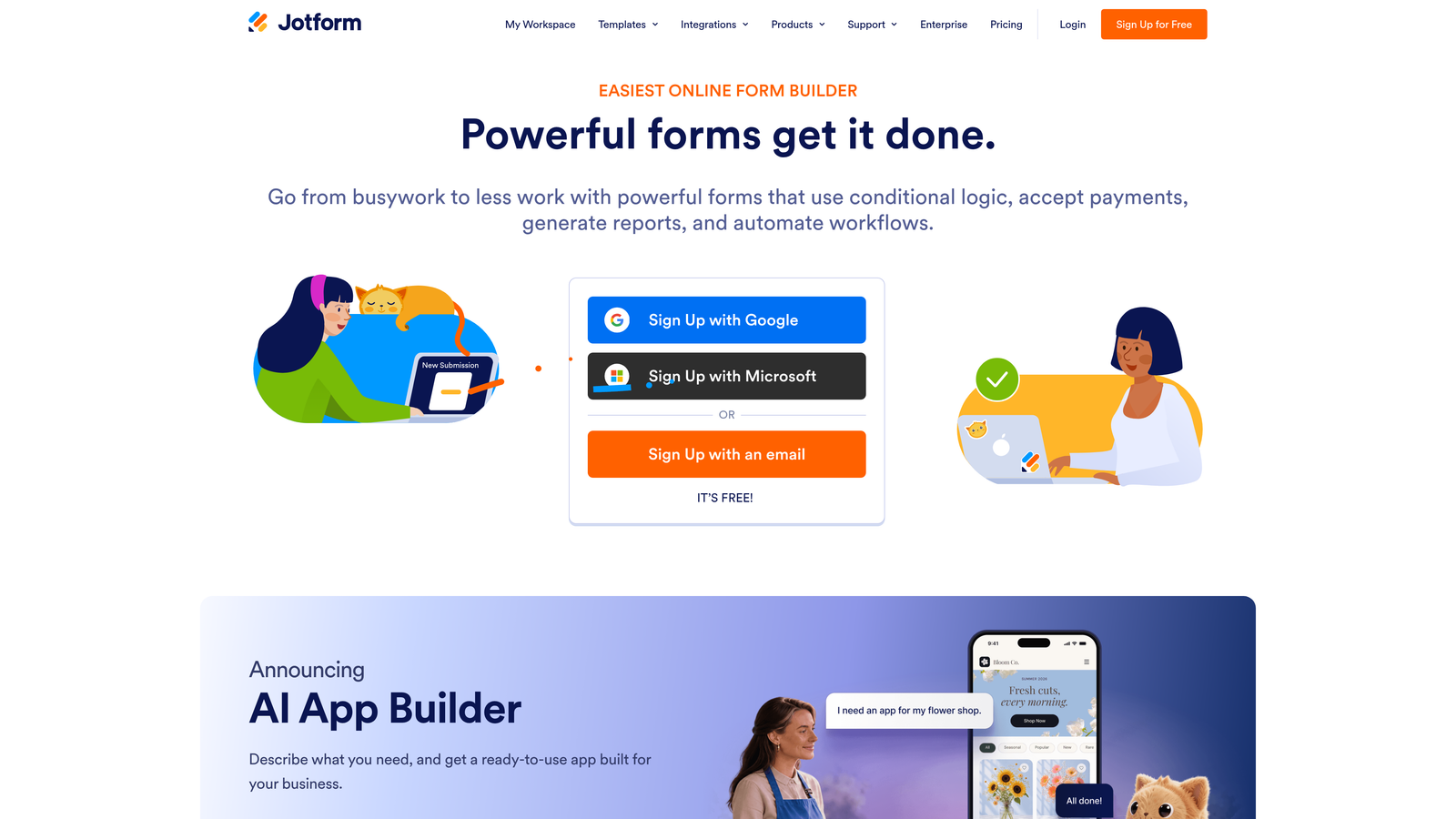
Jotform is a feature-rich form builder with a large native integration library and URL parameter support for capturing and distributing attribution data across your stack.
Where This Tool Shines
Jotform's real advantage is breadth. With over 100 native integrations, it's well-suited for teams that need form submission data, including attribution fields, flowing into multiple destinations at once: a CRM, a spreadsheet, an email platform, and a Slack channel, all from a single submission trigger.
Jotform also includes a Form Analytics feature that provides basic traffic source and submission data. It won't replace a dedicated attribution platform, but it gives teams a starting point for understanding where form traffic is coming from without leaving the tool entirely.
Key Features
Hidden Fields with URL Parameter Pre-Fill: Capture UTM parameters by mapping URL query strings to hidden form fields on setup.
100+ Native Integrations: Route attribution data to CRMs, spreadsheets, email platforms, and more without requiring middleware.
Jotform Analytics: Built-in reporting on form views, submissions, and basic traffic source data.
Conditional Logic and Multi-Page Forms: Build complex, branching form flows for qualification or research use cases.
HIPAA-Compliant Plans: Available for teams in regulated industries that need compliant data handling.
Best For
Jotform is a strong choice for operations or RevOps teams managing complex data routing requirements across a multi-tool stack. It's also a practical option for organizations in regulated industries that need compliance alongside attribution functionality.
Pricing
Free tier available. Paid plans vary by feature level. Verify current pricing at jotform.com.
4. Formstack
Best for: Mid-market and enterprise teams wanting native UTM tracking with built-in conversion analytics and compliance options.
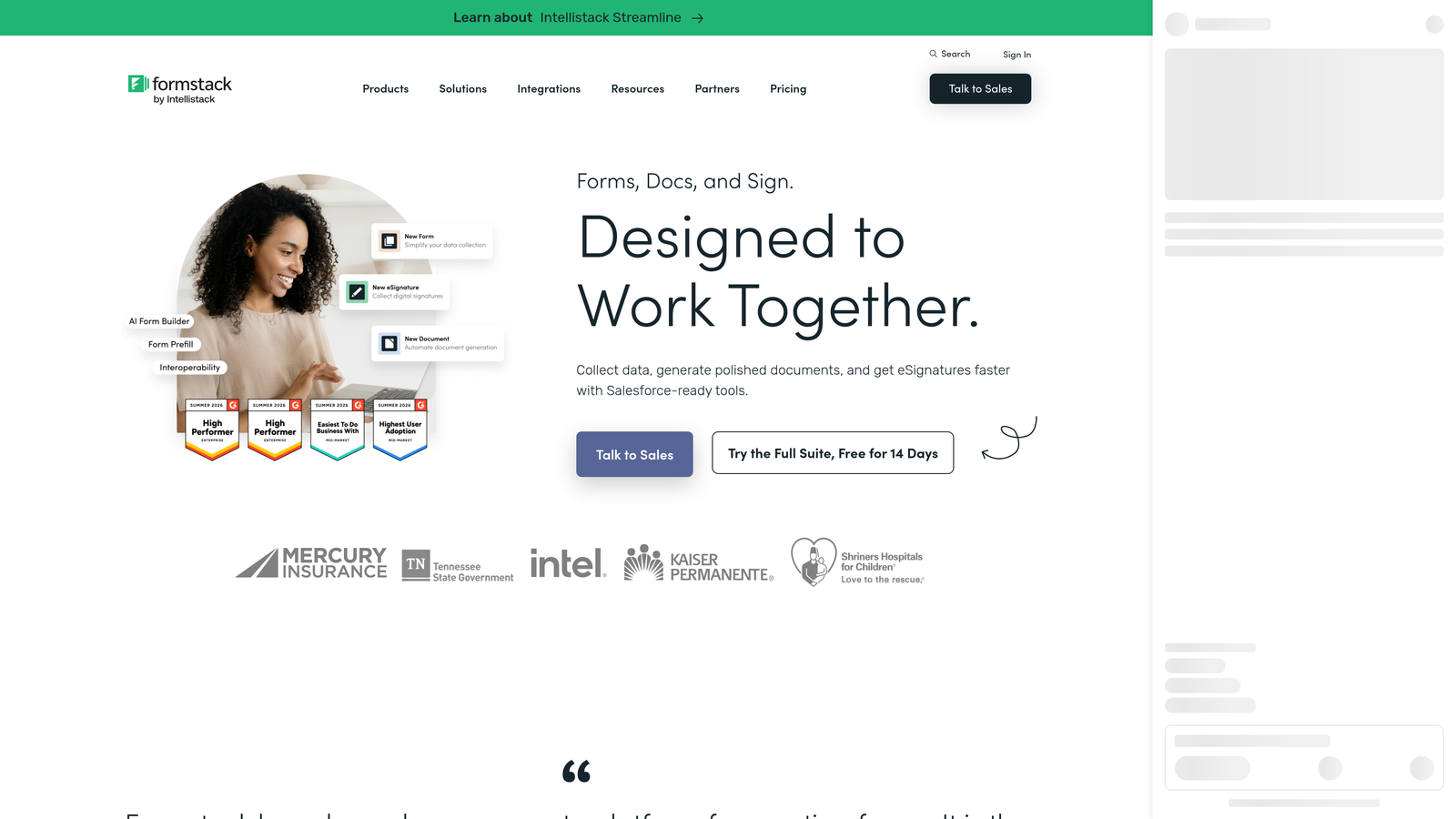
Formstack is an enterprise-grade form platform with native UTM tracking, a dedicated conversion analytics layer, and advanced workflow automation built for RevOps and marketing teams.
Where This Tool Shines
Formstack sits at a different level of the market than most tools on this list. Where other form builders treat attribution as a feature, Formstack builds it into a more complete reporting layer. The conversion analytics dashboard shows funnel performance by traffic source, giving marketing and RevOps teams a clearer picture of which channels are driving form completions without relying entirely on external tools.
The workflow automation capabilities also stand out. Approval routing, multi-step workflows, and document generation make Formstack useful beyond simple lead capture, particularly for teams running complex internal processes alongside external-facing forms.
Key Features
Native UTM Parameter Tracking: Captures source, medium, campaign, and ad data with built-in conversion reporting tied to those parameters.
Hidden Fields for Attribution Data: Standard hidden field support for capturing any URL parameter alongside UTM fields.
Conversion Analytics Dashboard: Funnel performance reporting segmented by traffic source, built into the platform.
Advanced Workflow Automation: Approval routing, conditional workflows, and document generation for complex operational use cases.
HIPAA and GDPR Compliance: Compliance options available for regulated industries and international teams.
Best For
Formstack is best suited to mid-market and enterprise teams with more complex attribution reporting needs and the budget to match. It's a strong fit for organizations where forms feed into regulated workflows or where RevOps teams need consolidated funnel visibility without building a custom reporting layer.
Pricing
Higher price point targeting mid-market and enterprise buyers. Verify current plans at formstack.com.
5. Paperform
Best for: Small to mid-sized teams wanting design flexibility with built-in submission analytics and UTM capture.
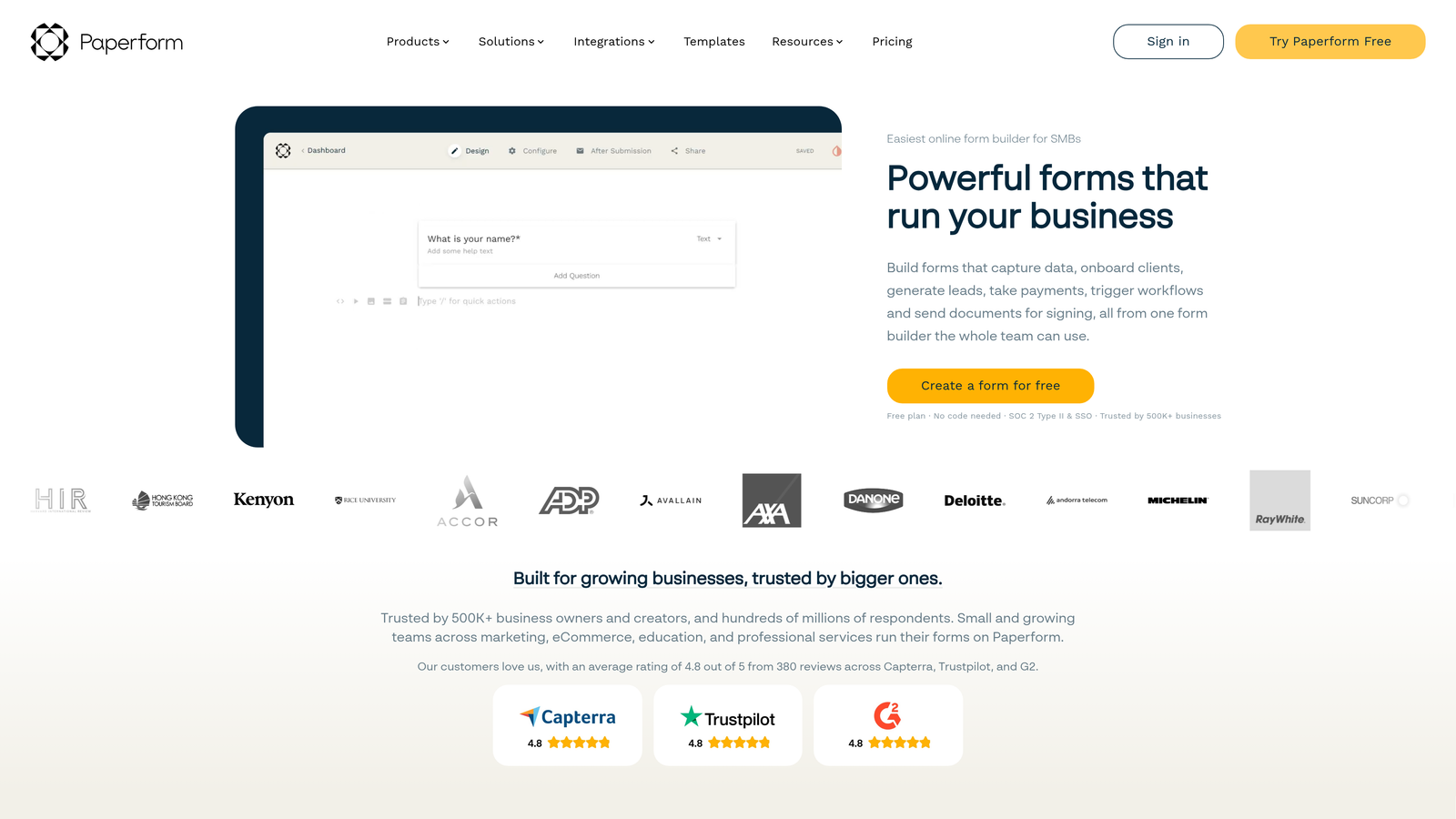
Paperform is a flexible form and landing page builder with hidden field UTM capture, built-in conversion analytics, and a document-style editor for highly customized designs.
Where This Tool Shines
Paperform occupies an interesting middle ground: it's more design-flexible than most form tools, with a document-style editor that lets you build forms that look closer to landing pages than traditional form fields. For teams where brand presentation matters on the form itself, that flexibility is genuinely useful.
The built-in analytics covering views, completions, and conversion rates give small teams a reasonable attribution starting point without needing to connect an external analytics tool for basic performance data. It's not deep channel-level attribution, but it covers the fundamentals well.
Key Features
Hidden Fields with URL Parameter Pre-Fill: Captures UTM parameters and referral source data from URL query strings into hidden fields.
Built-In Submission Analytics: Tracks views, completions, and conversion rates natively, without requiring a third-party analytics connection for basic reporting.
Document-Style Editor: Highly customizable form and page layouts that go beyond typical form builder constraints.
Payment Collection: Built-in payment and product fields for teams using forms in e-commerce or service booking contexts.
Conditional Logic and Calculation Fields: Supports branching paths and dynamic calculations within forms.
Best For
Paperform works well for small to mid-sized marketing teams, consultants, and service businesses that want more design control than standard form tools offer, with enough built-in analytics to track attribution basics without a complex integration setup.
Pricing
No permanent free tier. Paid plans start at approximately $24/month. Verify current pricing at paperform.co.
6. Tally
Best for: Early-stage teams and developers wanting lightweight UTM capture with a generous free tier and minimal setup overhead.
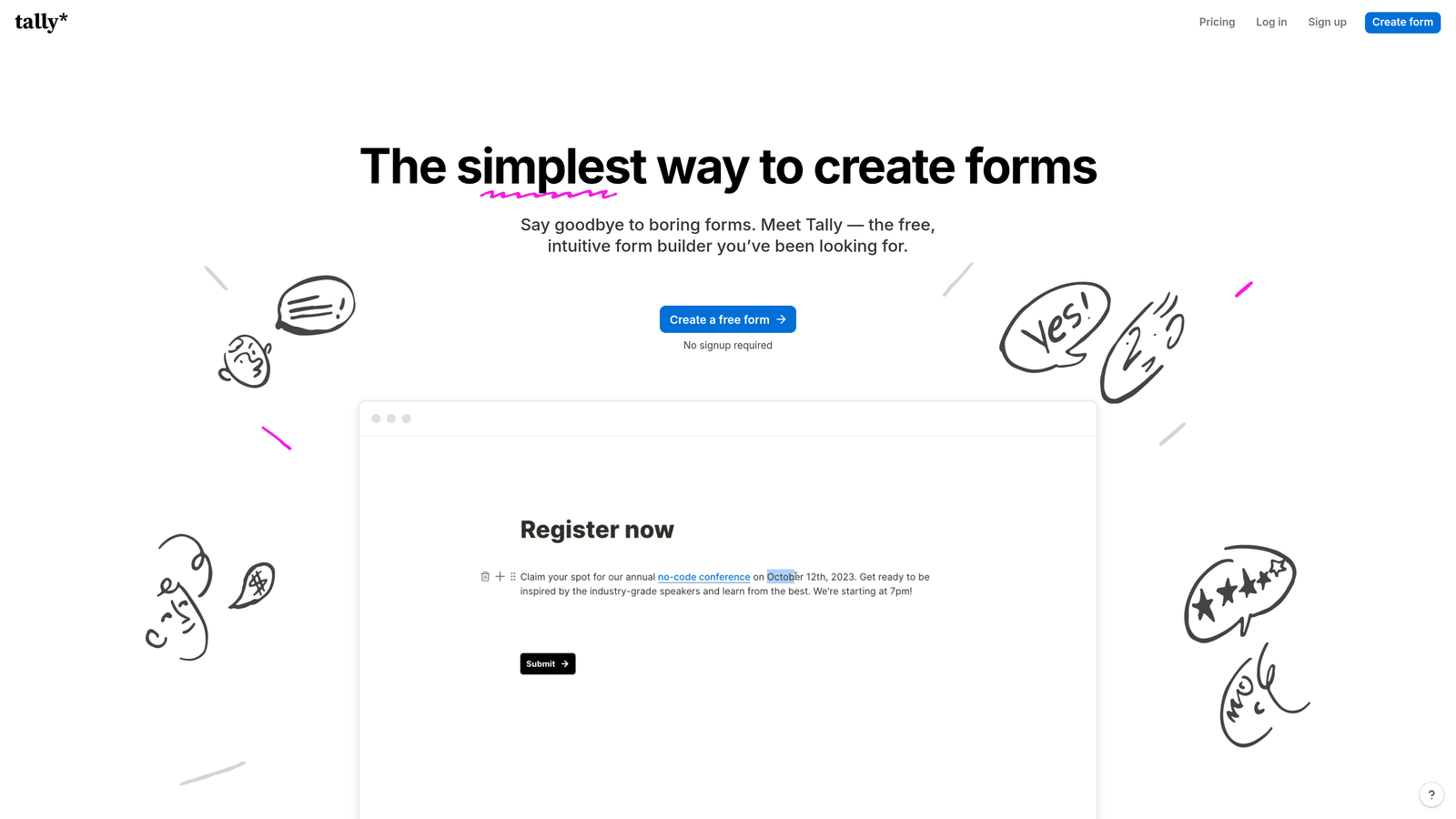
Tally is a minimalist, free-first form builder with hidden field UTM capture, webhook and Zapier support for downstream data routing, and a Notion-like editor for fast form creation.
Where This Tool Shines
Tally's appeal is simplicity and cost. The free tier is genuinely generous: unlimited forms, unlimited submissions, and hidden field support for UTM capture without needing to upgrade. For early-stage teams or developers building lightweight lead capture flows, that's a hard value proposition to argue with.
The Notion-style block editor makes form creation fast and intuitive, particularly for teams already comfortable in that kind of interface. Attribution data passes to downstream tools via webhooks or Zapier, so the capture layer works, even if the analysis happens elsewhere.
Key Features
Hidden Fields for URL Parameter Capture: Captures UTM parameters and other URL query strings via hidden fields on the free plan.
Webhook and Zapier Support: Routes attribution data to CRMs, spreadsheets, and other tools without native integrations.
Notion-Like Block Editor: Fast, intuitive form creation for teams familiar with block-based editing interfaces.
Unlimited Forms and Submissions on Free Tier: No submission caps or form limits on the free plan, which is unusual in this category.
Embed-Friendly: Minimal branding on the free tier makes embeds cleaner than many free-plan competitors.
Best For
Tally is the right choice for early-stage startups, solo marketers, or developers who need UTM capture without budget or complexity. It's a lightweight attribution layer rather than a full attribution platform, so teams that need reporting and analysis within the tool will need to look elsewhere.
Pricing
Generous free tier with no form or submission limits. Tally Pro available for advanced features. Verify current pricing at tally.so.
Which Tool Is Right for Your Team?
The best form attribution tracking tool depends less on which has the most features and more on where attribution fits in your existing workflow.
If you want attribution data and lead quality signals in one place without building a multi-tool stack, Orbit AI is the strongest starting point. The combination of native UTM capture and AI-powered lead qualification means you're not just tracking where leads come from but understanding which sources drive your best leads. That's a meaningful distinction for teams making budget decisions across paid, organic, and outbound channels.
For teams where the form experience itself is the priority, Typeform delivers the best completion-rate-focused UX, with attribution data flowing downstream through integrations. If you need extensive data routing across a complex stack, Jotform's integration library is hard to beat. Formstack is the right call for mid-market and enterprise teams that need built-in conversion analytics and compliance options. Paperform hits a sweet spot for small teams wanting design flexibility with basic built-in reporting. And Tally remains the go-to for early-stage teams or developers who need lightweight UTM capture at zero cost.
The common thread across all of them: attribution tracking starts at the form. If your form isn't capturing source data on every submission, no downstream tool can reconstruct it. Getting that foundation right is the first step.
Ready to combine attribution tracking with intelligent lead qualification? Start building free forms today and see how Orbit AI's AI-powered approach can give your team the conversion clarity it needs to scale what actually works.


