

Not all form builders are created equal, especially when lead capture is the goal. A generic contact form might collect submissions, but a purpose-built lead capture form qualifies prospects, routes them intelligently, and feeds your CRM without friction. That gap between passive data collection and active lead qualification is exactly where funnels leak.
This guide covers the best form builders evaluated specifically for lead capture performance: how well they qualify leads, how easily they integrate with your sales stack, and how much control you get over the experience. Whether you're a SaaS team running high-volume inbound or a growth marketer optimizing every touchpoint, there's a tool here built for your workflow.
We've assessed each platform on form flexibility, lead qualification features, CRM and automation integrations, design quality, and pricing transparency. Orbit AI is our product and leads the list, but we've been honest about where each tool genuinely shines.
1. Orbit AI
Best for: High-growth SaaS teams that need AI-powered lead qualification built directly into the form experience.
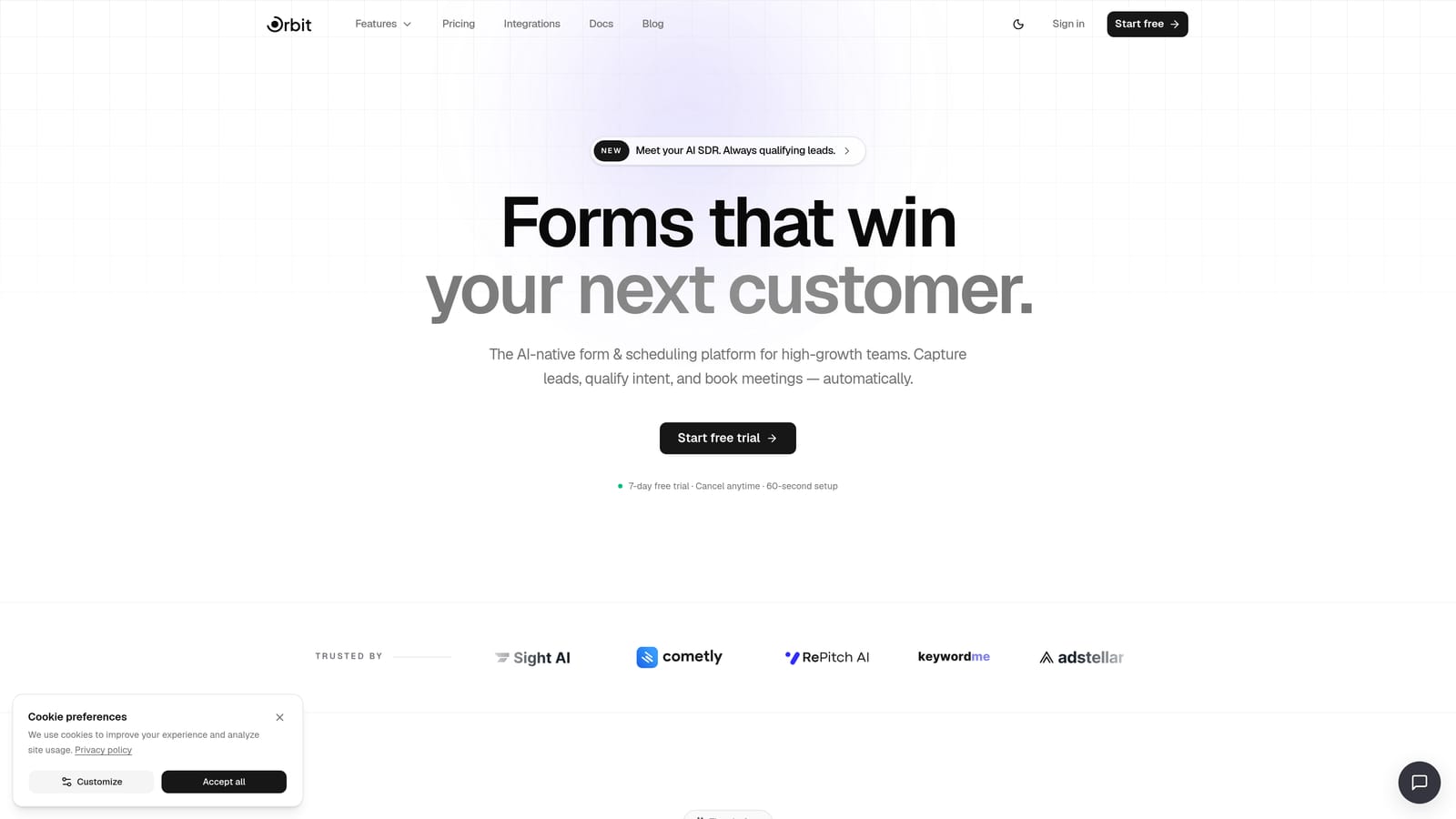
Orbit AI is an AI-native form builder designed from the ground up for lead capture and qualification, not just data collection.
Where This Tool Shines
The core distinction with Orbit AI is that the form itself becomes a qualification layer. Instead of collecting raw submissions and routing them to a separate scoring tool, Orbit AI's AI agents evaluate responses in real time, score leads, and route them based on the criteria you define. The form isn't plugged into your funnel. It is the funnel.
For teams where lead quality matters as much as lead volume, this architecture makes a meaningful difference. You're not chasing unqualified submissions through a downstream process. You're filtering and routing at the point of capture, which is where it actually matters.
Key Features
AI Lead Qualification Agents: AI agents score and route leads in real time based on their responses, removing the need for manual triage or external scoring tools.
Conversion-Optimized Design: Modern, customizable UI built with completion rates in mind, so your forms look and feel like a premium product experience.
Built-in Workflows and Sequences: Automated follow-up sequences trigger immediately after form completion, keeping leads warm without manual intervention.
Native Contacts Management: CRM-style lead tracking built directly into the platform, so smaller teams don't need a separate CRM to manage captured leads.
Analytics Dashboard: Track form performance, drop-off points, and conversion rates in one place, giving you the data to iterate quickly.
Scheduler Integration: Qualified leads can book a demo directly from the form completion screen, collapsing the time between interest and conversation.
Best For
Orbit AI is the strongest fit for SaaS teams and growth marketers who need lead qualification to happen at the form level rather than after the fact. If your team is managing high inbound volume and lead quality is a constant friction point, this is the tool built specifically for that problem.
Pricing
Visit orbitforms.ai/pricing for current plan details. Pricing is structured around team size and feature access.
2. Typeform
Best for: Teams that prioritize completion rates and want a polished, conversational form experience.
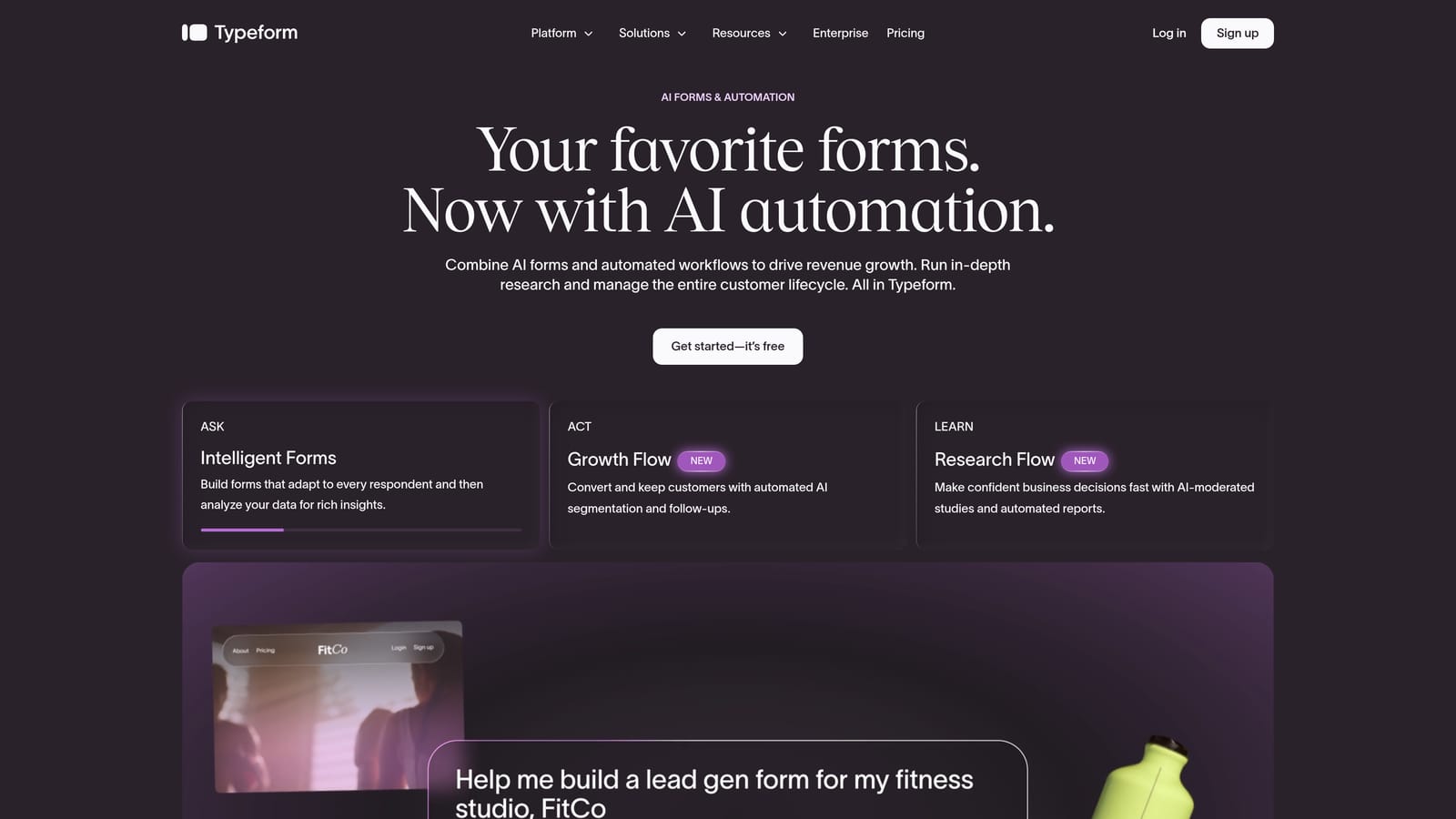
Typeform is a conversational form builder known for its one-question-at-a-time interface that makes filling out a form feel more like a dialogue than a data entry task.
Where This Tool Shines
Typeform's biggest strength is the experience it creates for the person filling out the form. The progressive disclosure format, showing one question at a time, reduces cognitive load and tends to improve completion rates compared to traditional long-form layouts. For lead capture scenarios where you're asking several qualifying questions, this matters.
The design quality is consistently high out of the box, and the platform has strong brand recognition among SaaS and marketing teams. If your goal is a lead capture form that feels premium without extensive custom design work, Typeform delivers reliably.
Key Features
Conversational One-Question UI: Progressive question reveal reduces abandonment and creates a more engaging experience for respondents.
Logic Branching: Conditional jumps based on responses allow you to create personalized question paths for different prospect segments.
CRM Integrations: Native connections to HubSpot, Salesforce, and Slack, plus broad Zapier support for other tools in your stack.
Hidden Fields: Pass UTM parameters and tracking data through the form to maintain attribution across your funnel.
Media Embedding: Add video and images within questions to enrich the form experience and provide context where needed.
Best For
Typeform works well for marketing teams focused on top-of-funnel lead capture where form experience and completion rates are the priority. Teams that need native AI lead scoring will need to layer in external tools, as qualification logic isn't built into the platform itself.
Pricing
A free tier is available with limited responses. Paid plans start at approximately $25/month. Verify current pricing at typeform.com/pricing.
3. Jotform
Best for: Teams that need broad integration coverage and diverse form types alongside lead capture.
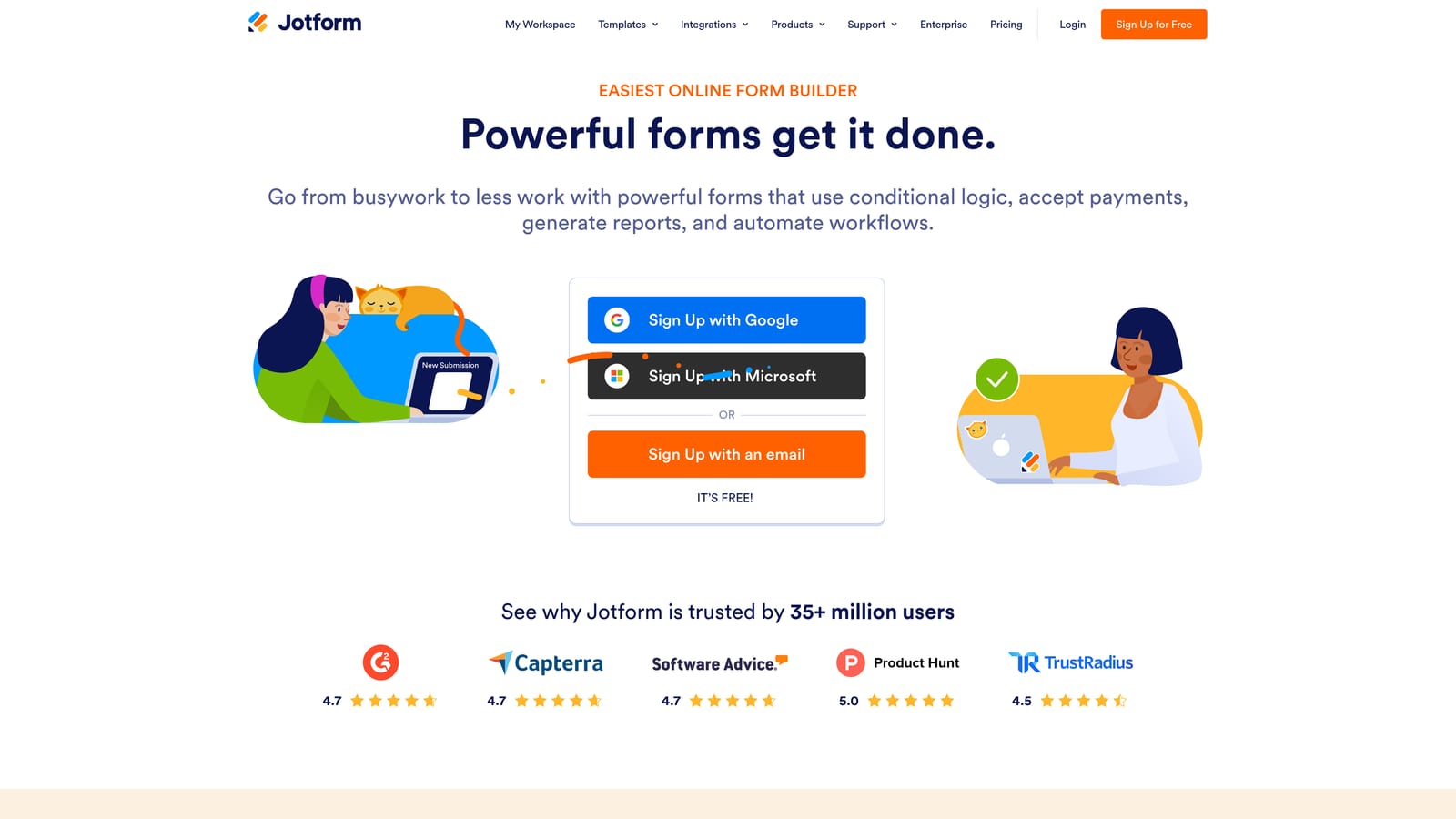
Jotform is a feature-rich, general-purpose form builder with one of the broadest integration ecosystems available, suitable for organizations managing multiple form use cases at once.
Where This Tool Shines
Jotform's depth is its defining characteristic. With over 150 native integrations, an extensive template library, and support for field types ranging from e-signatures to payment processing, it's a platform that can handle nearly any data collection requirement in a single tool. For teams that run lead capture forms alongside contract forms, payment forms, and internal request forms, consolidating on Jotform makes operational sense.
The conditional logic capabilities are solid, and the team collaboration features make it practical for multi-user environments where different departments manage their own forms. It's not the most visually refined platform on this list, but it compensates with raw capability.
Key Features
150+ Native Integrations: Connect directly to Salesforce, HubSpot, payment processors, and a wide range of other tools without relying on Zapier.
Extensive Template Library: Hundreds of pre-built templates covering lead capture, registration, surveys, and more, reducing setup time significantly.
Advanced Conditional Logic: Build complex question paths and calculation fields to personalize the form experience based on responses.
Diverse Field Types: E-signature, file upload, and payment fields sit alongside standard lead capture fields in a single form builder.
Team Collaboration: Multi-user form management with role-based access, useful for larger teams or agencies managing forms across clients.
Best For
Jotform suits mid-size teams and agencies that need one platform to handle many different form types. It's a practical choice when lead capture is one of several use cases rather than the primary focus. Teams specifically optimizing for lead qualification will find the interface less streamlined than purpose-built alternatives.
Pricing
A free tier is available with limited monthly submissions. Paid plans start at approximately $34/month. Verify current pricing at jotform.com/pricing.
4. Paperform
Best for: Marketers who want a form and landing page in one, with rich content embedded alongside lead fields.
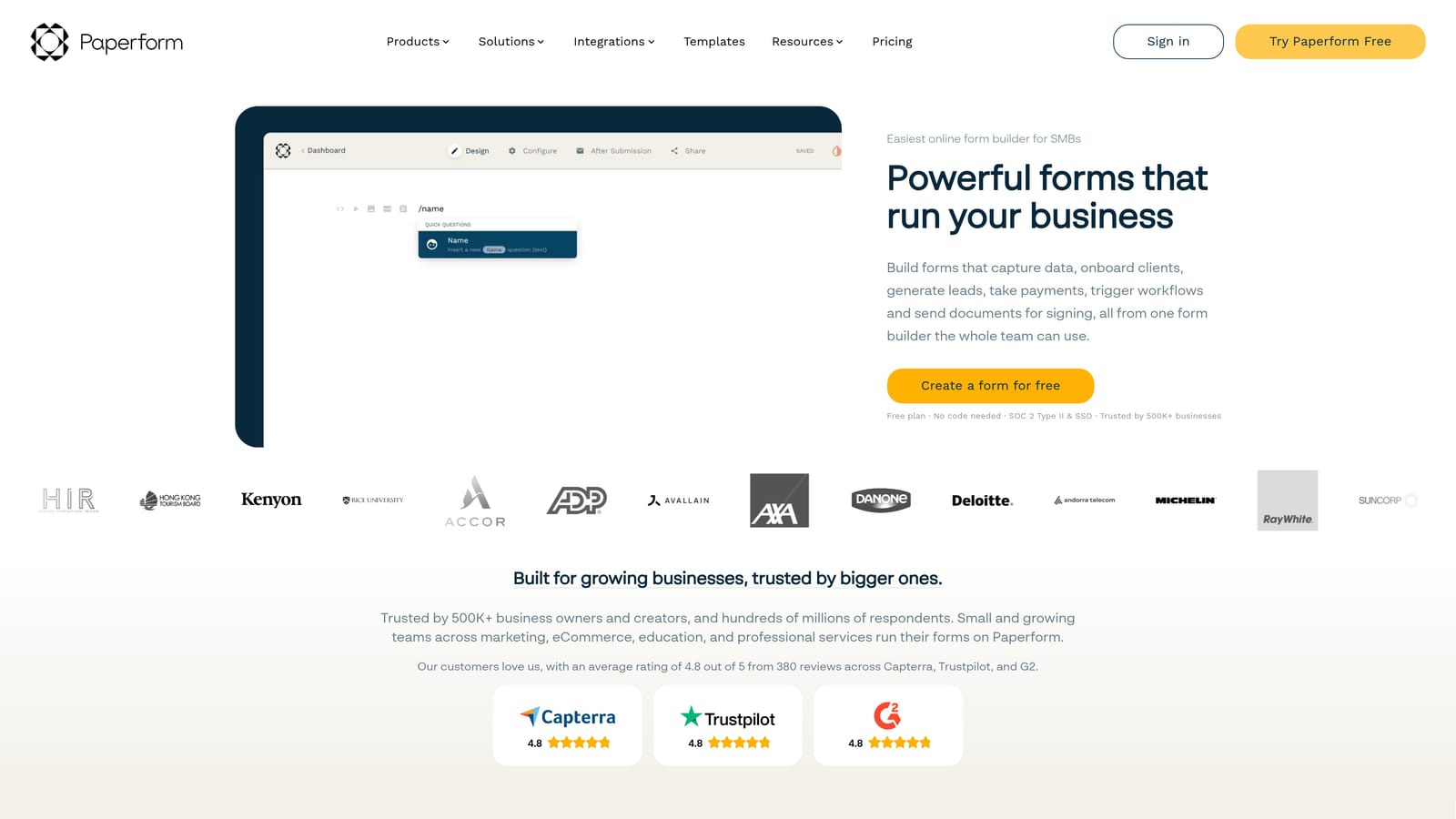
Paperform is a form builder that treats each form as a mini landing page, letting you embed text blocks, images, and video directly alongside form fields for a more immersive capture experience.
Where This Tool Shines
Paperform occupies an interesting space between a form builder and a lightweight landing page tool. Because you can freely mix rich content with form fields, it's well suited for lead capture scenarios where context matters: explaining an offer, walking through a process, or setting expectations before asking for information. The form becomes part of the narrative rather than a separate step at the bottom of a page.
Design flexibility is genuinely strong here. Custom fonts, colors, backgrounds, and layouts give marketers meaningful control over brand presentation without needing a developer. For teams without dedicated landing page infrastructure, Paperform can fill that gap effectively.
Key Features
Rich Content Blocks: Embed text, images, and video directly within the form to create context around your questions and improve lead quality.
Advanced Branding Controls: Customize fonts, colors, backgrounds, and layouts to match your brand without touching code.
Conditional Logic: Personalize question paths based on responses, creating a more relevant experience for different prospect types.
Payment Integration: Combine lead capture with transactions in a single form, useful for webinar registrations, consultations, or gated content.
Zapier and Make Integration: Connect to CRMs and automation tools through third-party connectors for flexible workflow building.
Best For
Paperform is a strong fit for content marketers and demand generation teams who want a visually rich lead capture experience without building a separate landing page. Teams that need native AI qualification or deep CRM integration will need to supplement with other tools.
Pricing
No permanent free tier is available. Plans start at approximately $24/month. Verify current pricing at paperform.co/pricing.
5. Tally
Best for: Early-stage teams and solo founders who need functional lead capture without a subscription commitment.
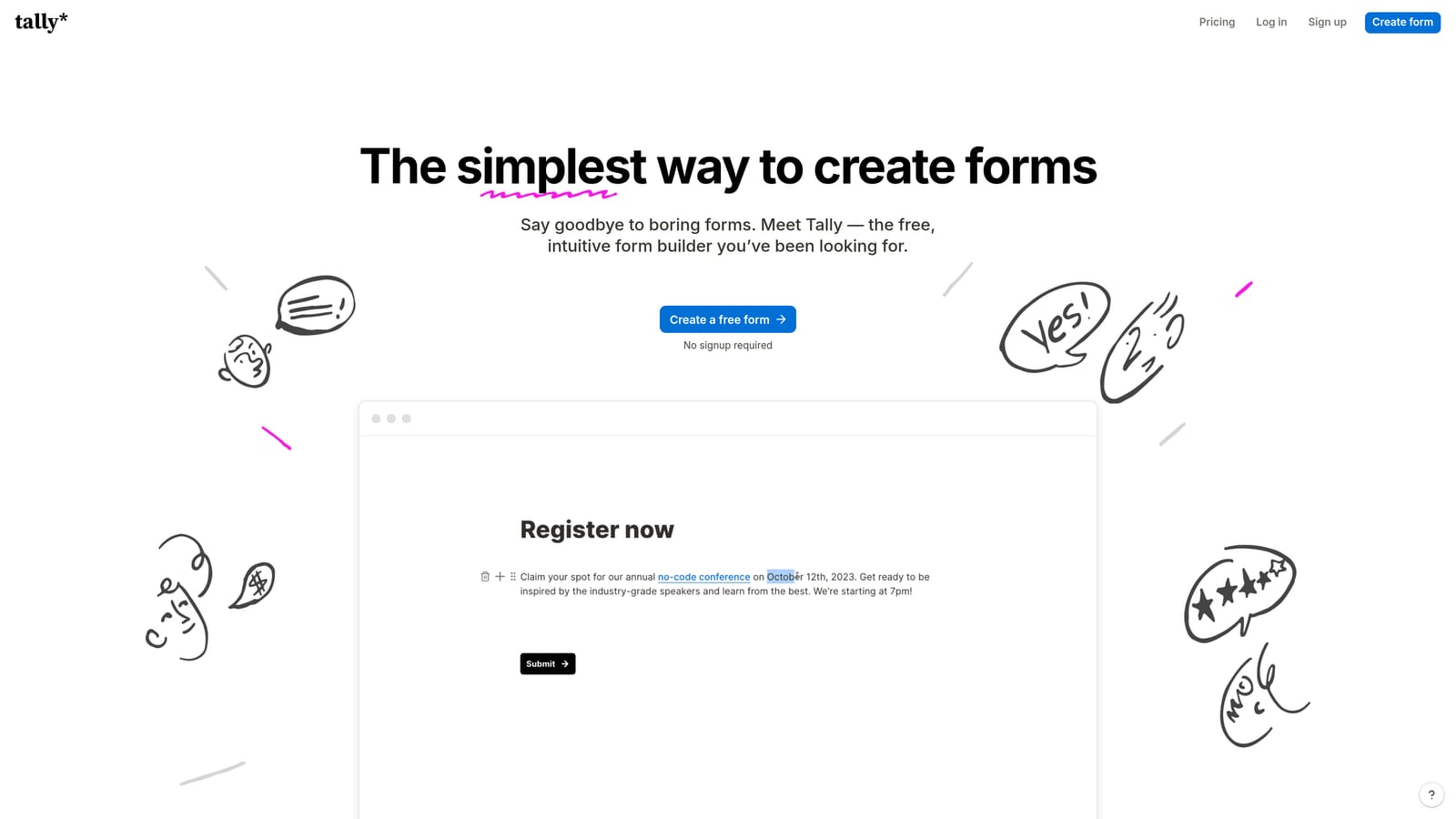
Tally is a clean, Notion-inspired form builder with a genuinely generous free tier that makes it accessible to teams at the earliest stages of building their lead capture infrastructure.
Where This Tool Shines
Tally's free plan is the most accessible on this list. Unlimited forms and unlimited submissions at no cost is a meaningful offer for bootstrapped teams or founders validating a product before investing in paid tooling. The Notion-like block editor is intuitive for anyone already comfortable in that ecosystem, and the clean aesthetic means forms look polished without much configuration.
The embed flexibility is also worth noting. Tally forms drop into websites, Notion pages, Webflow sites, and other environments without friction, which matters for teams that want lead capture integrated into existing content rather than hosted separately.
Key Features
Unlimited Free Tier: Unlimited forms and unlimited submissions on the free plan, with no submission caps that force an upgrade for basic usage.
Notion-Like Block Editor: Intuitive drag-and-drop form building that feels familiar to teams already working in Notion-style environments.
Logic Branching and Hidden Fields: Available on free and paid tiers, enabling conditional paths and UTM tracking without a subscription.
Zapier and Make Integration: Connect to external CRMs and automation tools for lead routing and follow-up workflows.
Flexible Embedding: Embed forms across websites, Notion pages, Webflow builds, and more with minimal setup.
Best For
Tally is the right call for early-stage startups, solo founders, and lean teams that need working lead capture forms quickly and without upfront cost. Teams scaling toward higher volume or needing native CRM integrations and lead scoring will likely outgrow the free tier and find the paid features less specialized than alternatives on this list.
Pricing
Core features are available free with no submission limits. Pro plans start at approximately $29/month. Verify current pricing at tally.so/pricing.
6. Formstack
Best for: Enterprise teams in regulated industries that need compliance-grade data collection alongside lead capture.
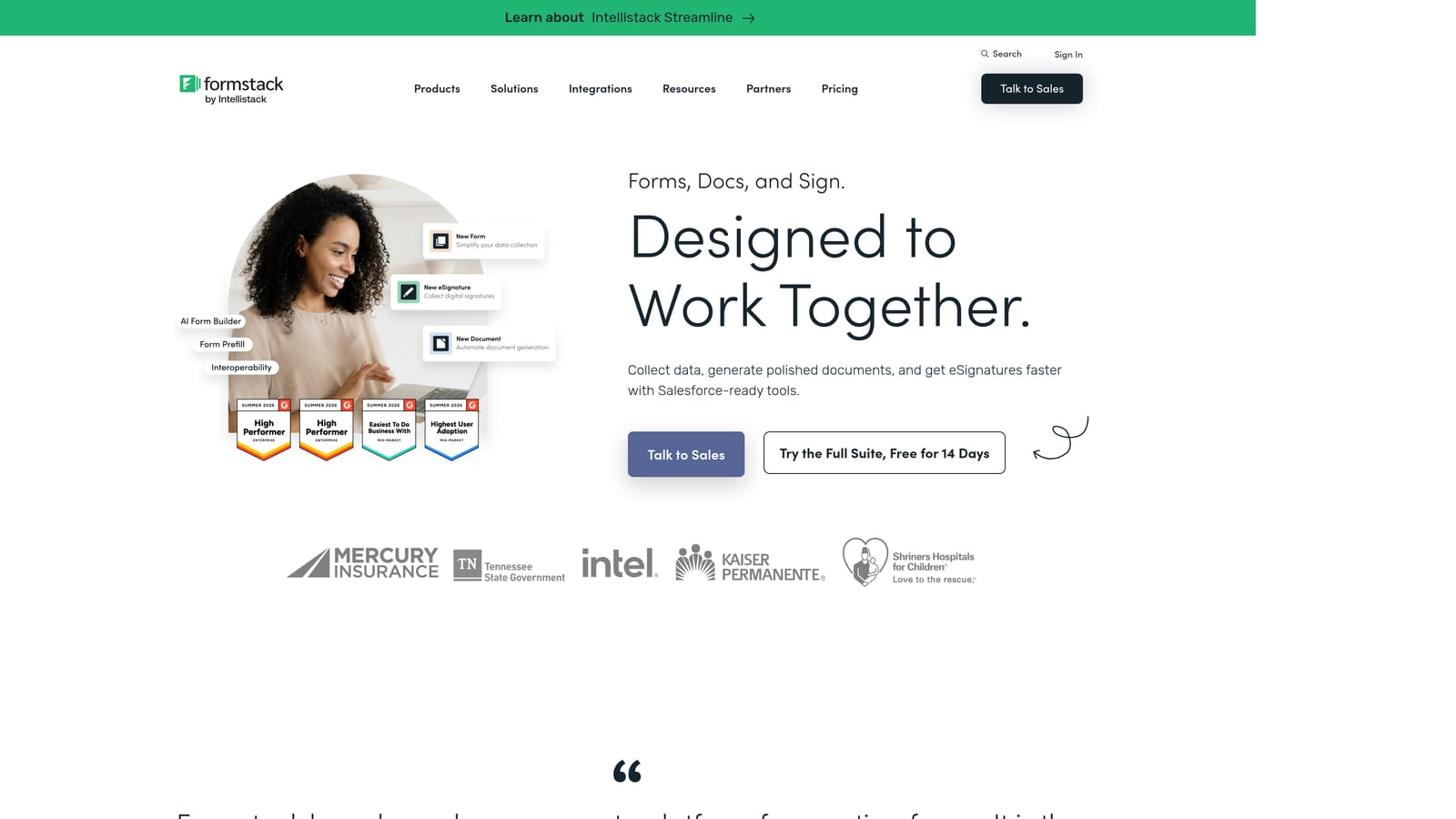
Formstack is an enterprise-grade data collection platform combining forms, documents, e-signatures, and workflow automation for organizations where compliance is non-negotiable.
Where This Tool Shines
Formstack's differentiation is compliance and process depth. For organizations operating in healthcare, finance, legal, or other regulated industries, the platform's HIPAA, GDPR, and SOC 2 credentials remove a significant barrier to using web forms for lead capture and data collection. Most form builders on this list aren't built for that environment.
The native Salesforce integration is also notably deep, with field mapping and object creation that goes beyond what most form-to-CRM connections offer. For enterprise sales teams where Salesforce data integrity is critical, that level of integration fidelity matters.
Key Features
Compliance Certifications: HIPAA, GDPR, and SOC 2 compliance built into the platform, enabling lead capture in regulated industries without additional tooling.
Deep Salesforce Integration: Native field mapping and object creation in Salesforce, not just a basic data push, for teams where CRM data quality is essential.
Advanced Conditional Logic: Multi-step approval workflows and branching logic for complex lead routing and internal process automation.
Document Generation and E-Signatures: Combine lead capture forms with document workflows and signature collection in a single platform.
CRM Prefill: Populate forms with existing CRM or database data, reducing friction for returning prospects or existing customers.
Best For
Formstack is the right choice for enterprise teams in regulated industries where compliance credentials are a hard requirement. For lean growth teams or SaaS companies optimizing for speed and conversion, the pricing and complexity will likely feel like more than needed.
Pricing
Platform plans start at approximately $99/month. Verify current pricing at formstack.com/pricing.
Choosing the Right Tool for Your Lead Capture Goals
The right form builder depends almost entirely on where lead qualification sits in your workflow. If you're still routing raw submissions to a separate scoring process, you're adding friction and losing time. The best tools on this list either eliminate that step or make it significantly easier to manage.
Here's a quick way to think through the decision:
If lead qualification is your primary bottleneck: Orbit AI is built specifically for this. The AI agents score and route leads at the point of capture, which removes an entire downstream process from your workflow.
If form completion rates are your biggest concern: Typeform's conversational interface is the strongest option for reducing abandonment across multi-question lead forms.
If you're running multiple form types across your organization: Jotform's breadth of integrations and field types makes it a practical consolidation choice.
If you want a form that doubles as a landing page: Paperform gives marketers the most design flexibility and content richness in a single form environment.
If you're early-stage and cost is the constraint: Tally's free tier is genuinely functional, with unlimited forms and submissions at no cost.
If compliance is a hard requirement: Formstack is the only platform on this list built for regulated industries with the certifications to match.
For most high-growth SaaS teams, the gap between collecting leads and qualifying them is where the real conversion opportunity lives. A form that actively works as part of your sales funnel, rather than sitting passively at the top of it, changes what's possible downstream. Start building free forms today and see how AI-powered qualification built directly into the form experience can sharpen your conversion strategy from the first touchpoint.


