

If your forms aren't talking to your CRM, your sales stack, or your automation workflows, you're leaving qualified leads in a black hole. The disconnect between form submissions and sales tools is one of the most common and most costly friction points for high-growth teams. Data gets lost, follow-up is delayed, and revenue slips through the cracks.
Modern form builders have moved well beyond basic email notifications. The best ones offer native integrations, webhook support, Zapier connectivity, and even built-in CRM-like features that eliminate the gap entirely. This list evaluates the top form builders specifically on how well they connect with sales tools: think CRMs, email sequences, lead routing, and pipeline automation. Whether you're a startup scaling fast or an established team tightening your funnel, one of these platforms will close the integration gap for good.
1. Orbit AI
Best for: High-growth teams that want AI-powered lead qualification and sales automation without middleware.
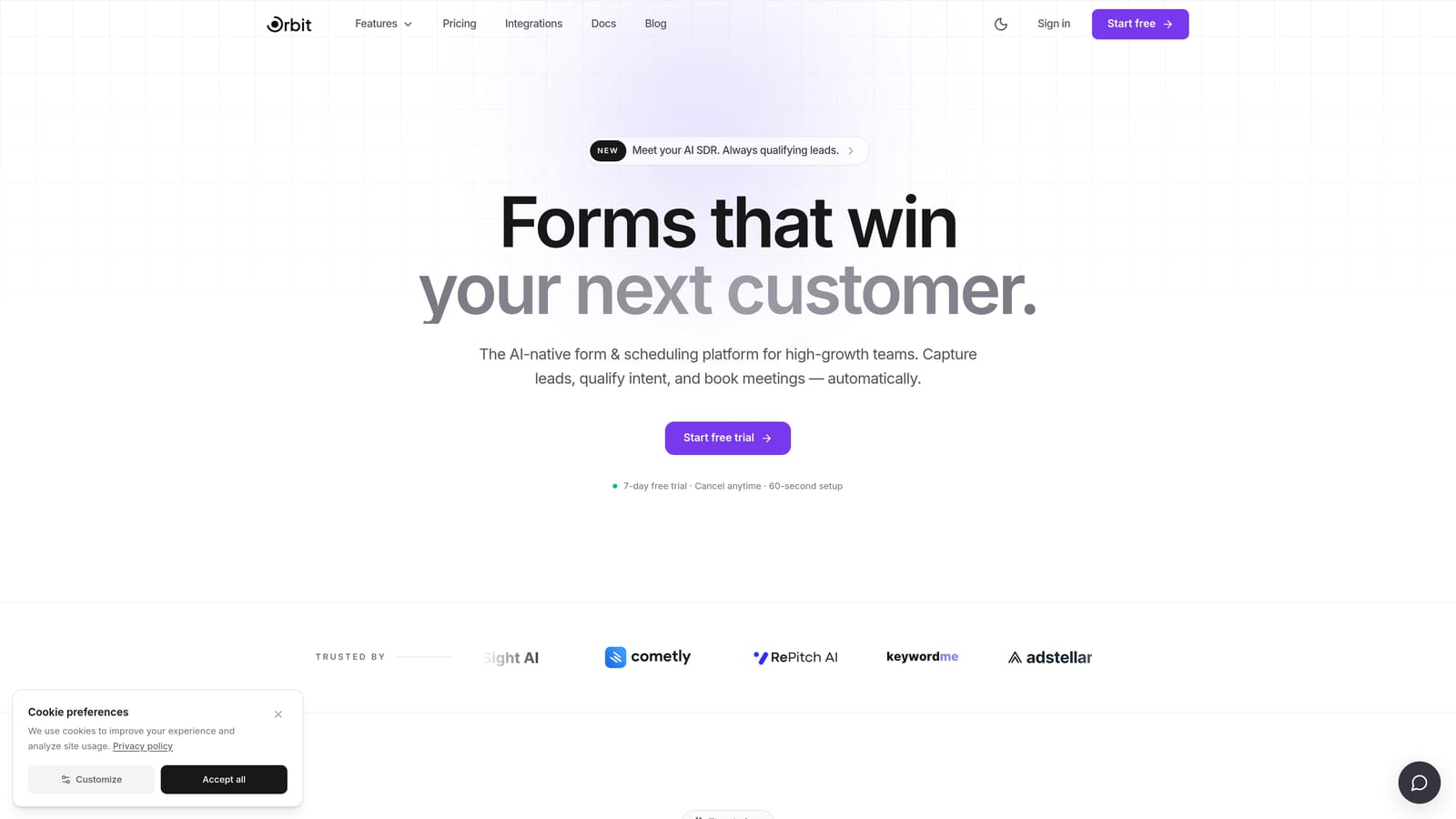
Orbit AI is an AI-powered form builder with native lead qualification, workflow automation, and sales sequences built directly into the platform.
Where This Tool Shines
Most form builders hand you a submission and leave the rest to Zapier. Orbit AI takes a different approach: it qualifies, scores, and routes leads automatically using AI agents, all without requiring a third-party automation chain. For sales teams, this means a prospect can fill out a form and trigger a personalized follow-up sequence before a rep even opens their laptop.
The real differentiator is that contacts, pipelines, workflows, and sequences all live inside the same platform as your forms. There's no brittle multi-step Zapier chain to maintain, no field mapping to debug, and no delay between submission and sales action.
Key Features
AI-Powered Lead Qualification: Automatically scores and routes submissions based on response data, so your sales team only touches high-intent leads.
Native Workflows and Sequences: Built-in automation eliminates the need for Zapier or Make to trigger sales follow-up after a form submission.
Contacts and Pipeline Management: Form submissions feed directly into a built-in contact database and pipeline view, no CRM export required.
Conversion-Optimized Form Design: Templates and design tools built specifically for lead generation, not just data collection.
AI Agents: Autonomous agents handle lead engagement, qualification conversations, and routing without manual intervention from your team.
Best For
Orbit AI is the strongest fit for high-growth SaaS teams and marketing teams that want to eliminate the form-to-CRM handoff problem entirely. If your current stack involves multiple tools just to get a lead from a form into a sequence, Orbit AI consolidates that into one platform.
Pricing
Current plans are available at orbitforms.ai/pricing. Verify details directly, as plans may have been updated.
2. Typeform
Best for: Teams that prioritize form completion rates and need solid native CRM integrations.
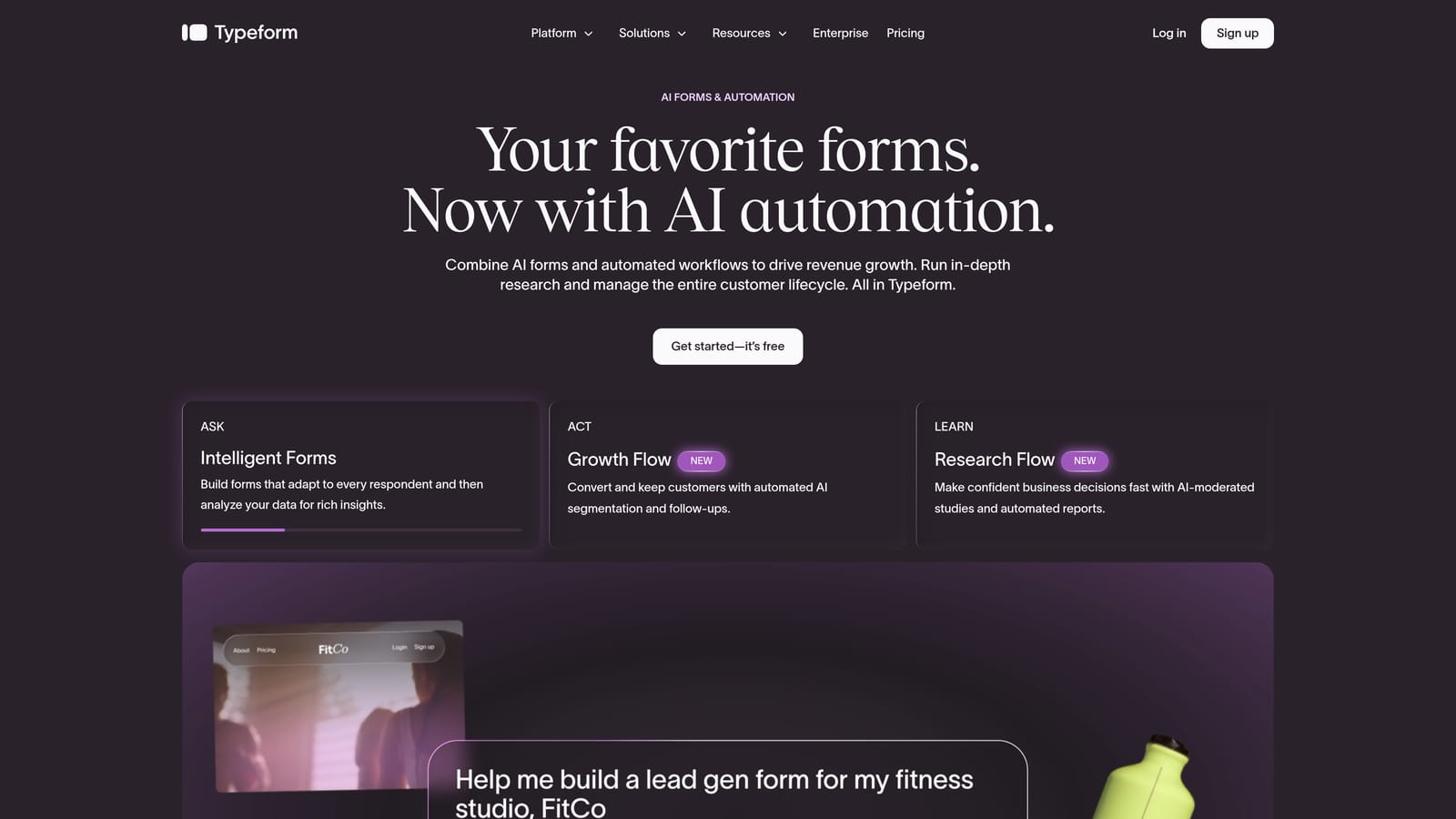
Typeform is a conversational form builder known for high completion rates and a broad integration ecosystem connecting to major CRMs and sales tools.
Where This Tool Shines
Typeform's one-question-at-a-time format genuinely changes how people experience forms. Instead of staring at a wall of fields, respondents move through a conversation-like flow that keeps them engaged. For lead capture specifically, this format tends to produce more complete and accurate data reaching your CRM.
On the integration side, Typeform connects natively with HubSpot, Salesforce, and Pipedrive, and extends further through Zapier and Make. Logic jumps allow you to route respondents conditionally based on their answers, which means your CRM can receive pre-segmented leads rather than a raw list.
Key Features
Conversational Format: One-question-at-a-time interface improves completion rates for lead generation forms.
Native CRM Integrations: Direct connectors to HubSpot, Salesforce, and Pipedrive without requiring middleware.
Logic Jumps: Conditional routing based on respondent answers allows pre-segmentation before data hits your CRM.
Zapier and Make Support: Extends automation capabilities to hundreds of additional sales and marketing tools.
Hidden Fields: Pre-populate CRM data to personalize forms and enrich submissions automatically.
Best For
Typeform works well for marketing and sales teams that want polished, high-converting lead capture forms with reliable native CRM connections. Keep in mind that some deeper CRM sync features are gated behind higher-tier plans, so verify what's available at your budget before committing.
Pricing
Free plan available; paid plans start at accessible tiers. Verify current pricing at typeform.com/pricing.
3. Jotform
Best for: Teams that need the broadest possible native integration library across CRMs, payment tools, and sales platforms.
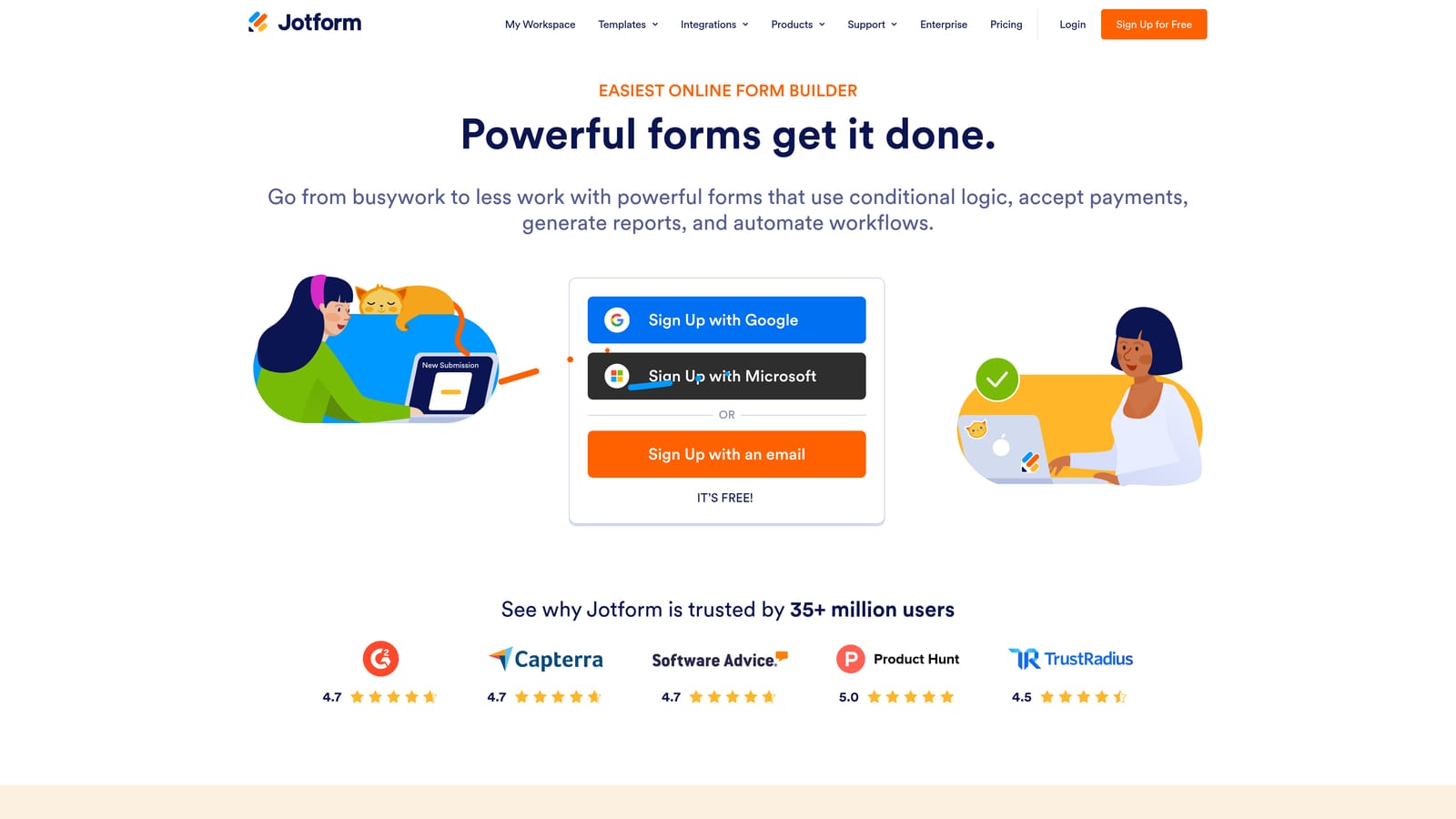
Jotform is a feature-rich form builder with one of the largest native integration libraries available, connecting directly to dozens of CRMs, sales tools, and payment processors.
Where This Tool Shines
If sheer integration breadth is your priority, Jotform is hard to beat. It connects natively with Salesforce, HubSpot, Zoho CRM, and Pipedrive, and the list extends well beyond those marquee names. For sales teams operating across multiple tools simultaneously, this means fewer workarounds and less reliance on Zapier chains.
Jotform also supports form approvals and conditional email routing, which are genuinely useful for sales workflows where a submission needs to move through multiple stakeholders before reaching a rep. The trade-off is that the interface can feel dated compared to newer tools, and complex integrations sometimes require more technical setup than expected.
Key Features
Broad Native CRM Support: Direct integrations with Salesforce, HubSpot, Zoho CRM, and Pipedrive out of the box.
Form Approvals: Multi-step approval workflows allow submissions to be reviewed and routed before reaching your CRM or sales team.
Conditional Email Routing: Route submission notifications to different team members based on form responses.
Robust Conditional Logic: Build multi-branch forms that adapt based on respondent input for more accurate lead data.
Large Template Library: Hundreds of pre-built templates for sales and lead generation use cases accelerate setup.
Best For
Jotform is a strong choice for teams with diverse CRM environments or those who need to connect forms to multiple sales tools simultaneously. It's especially useful for operations teams comfortable with some technical configuration to unlock deeper integrations.
Pricing
Free plan available; paid tiers scale with submission volume. Verify current pricing at jotform.com/pricing.
4. Formstack
Best for: Enterprise teams with complex Salesforce environments and multi-step approval workflows.
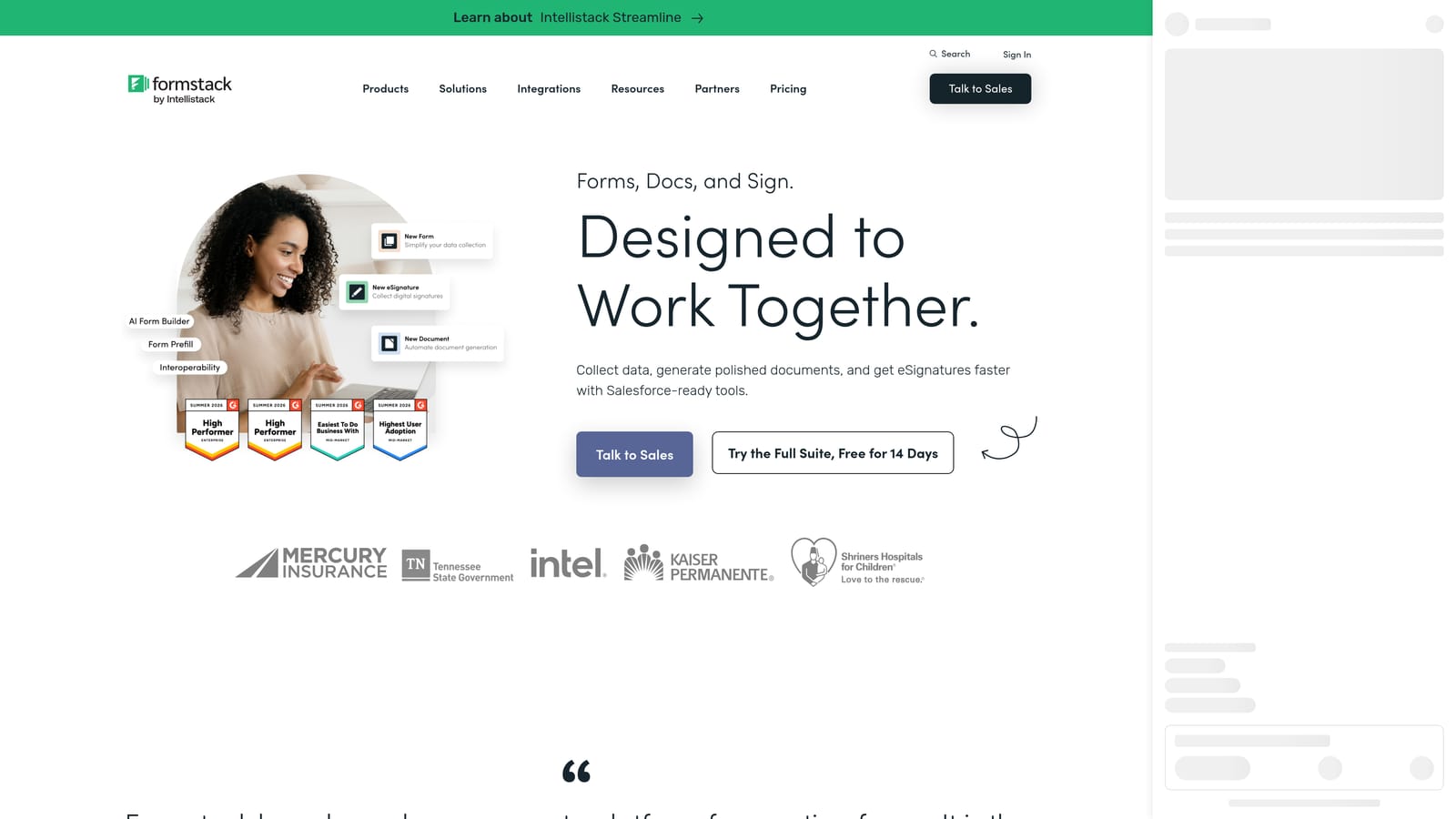
Formstack is an enterprise-grade workflow automation platform built around forms, offering advanced routing, approvals, document generation, and deep Salesforce integration.
Where This Tool Shines
Formstack positions itself as a workflow automation platform first and a form builder second. That distinction matters for enterprise sales teams. Where other tools stop at getting data into your CRM, Formstack adds document generation, e-signature capabilities, and multi-step approval routing on top of that foundation.
Its Salesforce integration is particularly deep, with bidirectional data sync that keeps records updated in both directions. For Salesforce-heavy organizations managing complex sales processes, this level of integration depth is difficult to replicate with lighter-weight tools.
Key Features
Advanced Workflow Routing: Multi-step approval flows allow complex sales processes to be automated from submission through close.
Deep Salesforce Integration: Bidirectional data sync keeps Salesforce records and form data aligned in real time.
Document Generation: Automatically generate sales documents, proposals, or contracts from form submission data.
E-Signature Capabilities: Collect signatures as part of a form-driven workflow without switching tools.
Enterprise Compliance Features: Security and compliance controls suited for regulated industries and larger organizations.
Best For
Formstack is built for enterprise teams, particularly those running Salesforce as their primary CRM. The feature depth and pricing reflect that positioning, so smaller teams or startups will likely find it more than they need.
Pricing
Higher price point than consumer-grade form tools. Best suited for enterprise budgets. Verify current pricing at formstack.com/pricing.
5. Paperform
Best for: Small teams that want forms, payments, and scheduling in a single tool with Zapier-powered CRM connections.
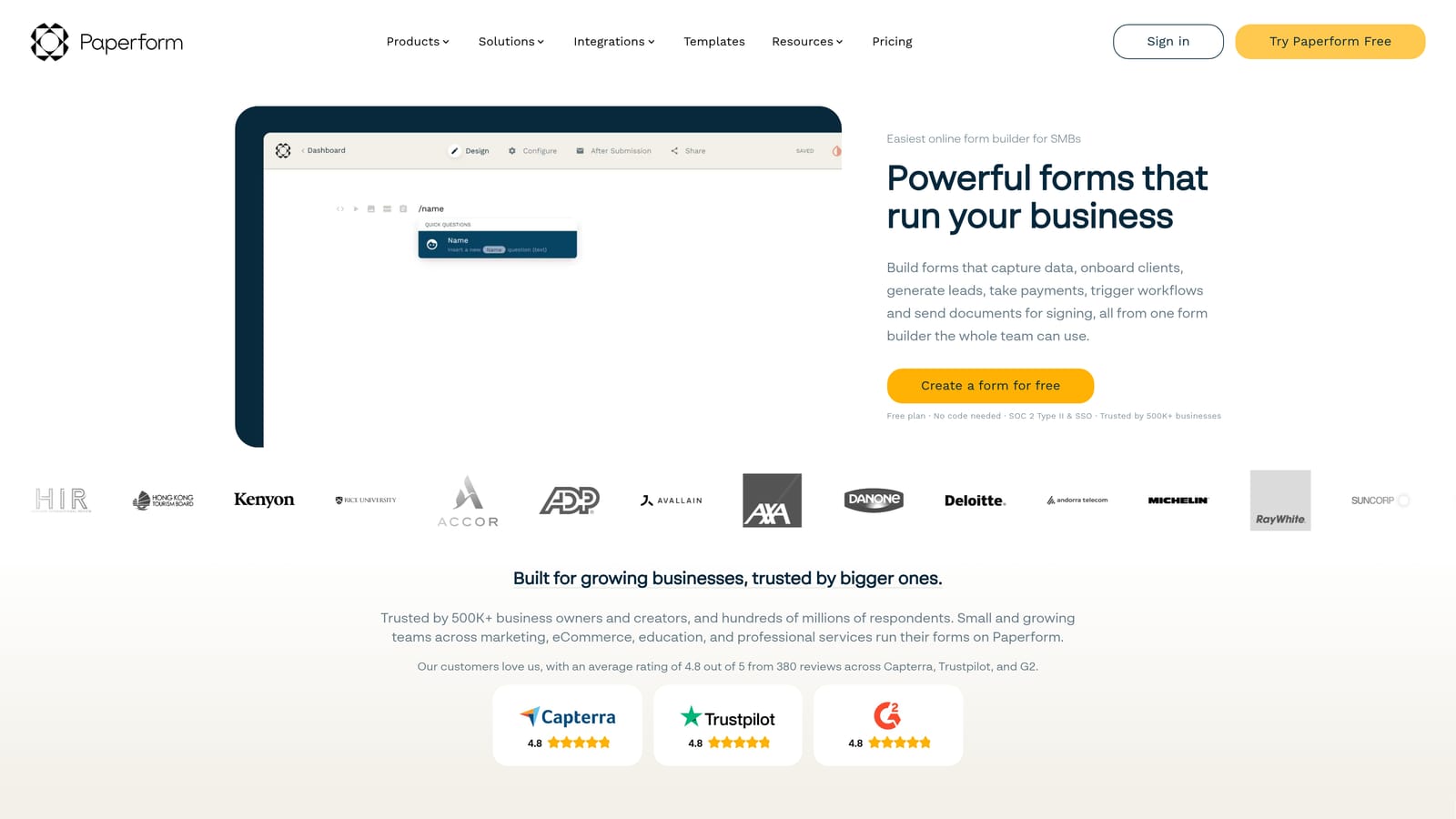
Paperform is a flexible all-in-one form builder that combines lead capture, payments, and scheduling with conditional logic and Zapier-powered CRM connections.
Where This Tool Shines
Paperform takes a different angle from most form builders by combining forms, payments, scheduling, and product pages into a single platform. For small sales teams that want to consolidate tools, this breadth is genuinely useful. A single Paperform page can capture a lead, collect a deposit, and book a discovery call simultaneously.
Conditional logic and calculated fields allow for meaningful pre-submission qualification, so the data reaching your CRM via Zapier or Make is already segmented. The design flexibility is also notable: forms can look like branded landing pages rather than generic data entry screens.
Key Features
All-in-One Functionality: Combines forms, payments, and scheduling in a single tool, reducing the number of platforms in your stack.
Conditional Logic and Calculated Fields: Pre-qualify leads based on their answers before the submission reaches your CRM.
Zapier and Make Integration: Connects to CRMs and sales tools through automation middleware for flexible workflow building.
Landing Page-Style Design: Highly customizable layouts that present forms as branded conversion experiences rather than plain forms.
Product Pages: Sell products or services directly through a form-based page, useful for sales teams with e-commerce components.
Best For
Paperform suits small to mid-size teams that want versatility without a heavy enterprise price tag. The main caveat: native CRM integrations are less extensive than Jotform or Formstack, so teams with complex CRM requirements will rely on Zapier to bridge the gap.
Pricing
No permanent free plan; paid plans available with a trial period. Verify current pricing at paperform.co/pricing.
6. Tally
Best for: Budget-conscious teams already embedded in a Zapier or Make workflow who need fast, clean form creation.
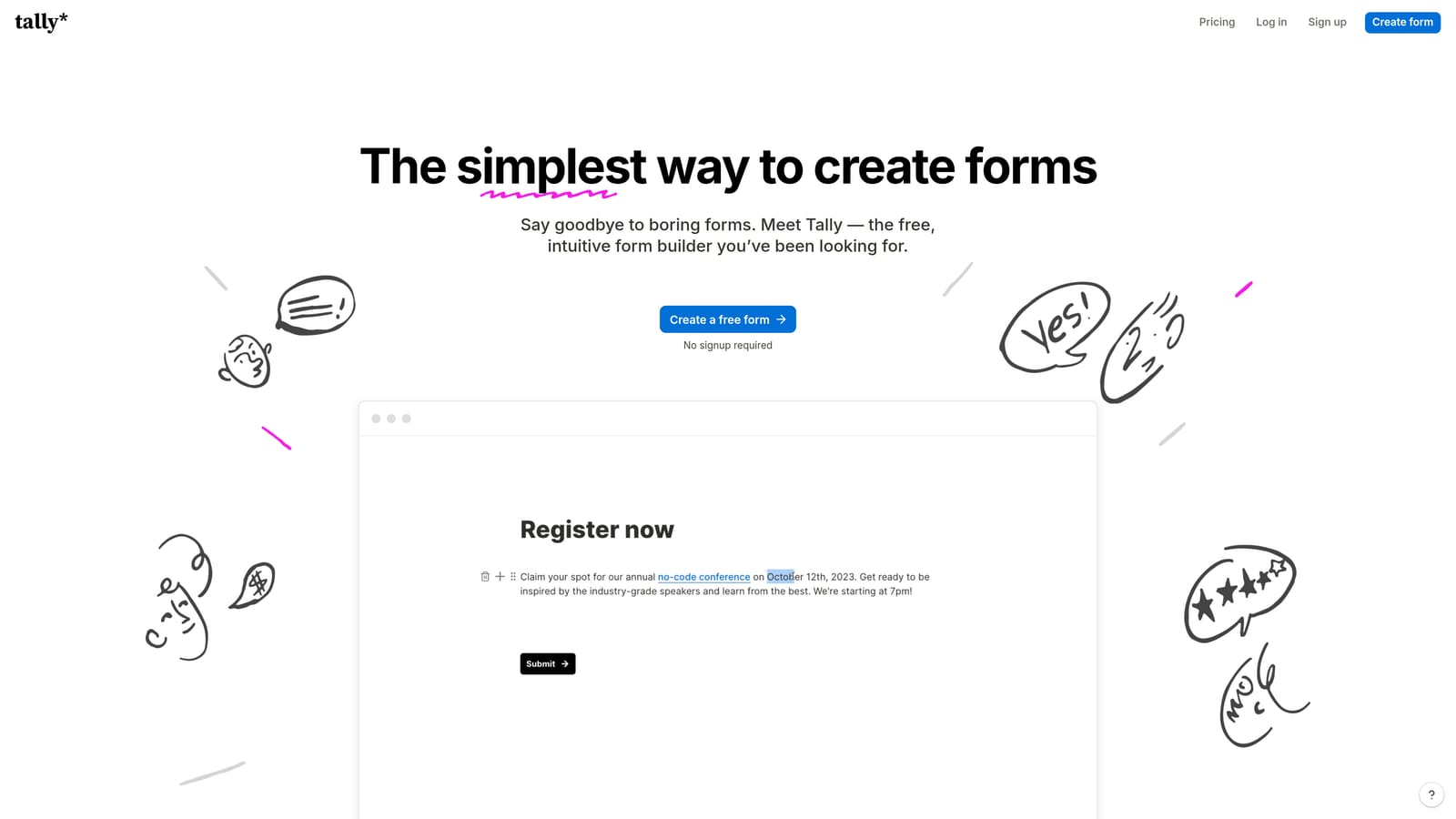
Tally is a lightweight, free-first form builder with a clean Notion-like interface that connects to sales tools primarily through Zapier, Make, and webhooks.
Where This Tool Shines
Tally earns its place on this list through sheer accessibility. Its free tier is genuinely generous, offering unlimited forms and submissions without the restrictive caps common in other free plans. For teams that already have a working Zapier or Make automation stack, Tally slots in cleanly as the form layer without adding cost or complexity.
The editor experience is fast and intuitive, borrowing the block-based feel of Notion. Building a new lead capture form takes minutes, and the embed functionality is lightweight enough that it won't slow down your landing pages.
Key Features
Generous Free Tier: Unlimited forms and submissions on the free plan, making it accessible for early-stage teams and startups.
Webhook Support: Send submission data directly to custom endpoints, enabling connections to CRMs and sales tools without middleware.
Zapier and Make Integration: Plugs into existing automation workflows for CRM connectivity and sales tool triggers.
Clean Block-Based Editor: Notion-style interface makes form creation fast and approachable for non-technical team members.
Lightweight Embeds: Fast-loading embedded forms that don't impact page performance on landing pages or websites.
Best For
Tally is the right pick for lean teams, early-stage startups, or anyone who wants a no-cost starting point for form-to-CRM connectivity. The important limitation to understand: Tally has no native CRM integrations. Every sales tool connection runs through middleware, so if your Zapier workflow breaks, your lead data stops flowing.
Pricing
Free plan available with generous limits; Pro plan unlocks advanced features. Verify current pricing at tally.so/pricing.
Which Tool Is Right for Your Sales Stack?
The right choice comes down to where your integration bottleneck actually lives and how much of the sales workflow you want your form builder to own.
If you want to eliminate middleware entirely: Orbit AI is the only tool on this list with native AI-powered lead qualification, built-in sequences, and pipeline management. There's no Zapier chain to maintain because the automation lives inside the platform itself. For high-growth teams where speed-to-lead is a competitive advantage, that architecture matters.
If native CRM breadth is your priority: Jotform connects to more CRMs out of the box than any other option here. Formstack is the stronger choice if Salesforce is your primary system and you need bidirectional sync with document generation on top.
If form experience and completion rates drive your decision: Typeform's conversational format is genuinely differentiated. Pair it with its HubSpot or Salesforce connector and you have a polished lead capture experience with solid CRM delivery.
If budget is the primary constraint: Tally's free tier is hard to argue with for teams already running Zapier workflows. Just go in knowing that every CRM connection depends on that middleware staying intact.
If you want forms plus payments plus scheduling in one place: Paperform consolidates more of the pre-sale workflow than any other tool here, with Zapier handling CRM delivery on the back end.
For high-growth teams serious about closing the gap between form submissions and sales pipeline activation, the real question isn't just which tool integrates best today. It's which platform reduces the ongoing maintenance burden while keeping leads moving fast. Transform your lead generation with AI-powered forms that qualify prospects automatically while delivering the modern, conversion-optimized experience your high-growth team needs. Start building free forms today and see how intelligent form design can elevate your conversion strategy.


