

Startups don't have the luxury of bloated sales teams or six-figure ad budgets. Every lead matters, and every tool in your stack needs to pull its weight from day one. The good news: the lead generation landscape has shifted dramatically in favor of lean, high-growth teams, with AI-powered platforms that do in minutes what used to take entire departments.
This list covers the best lead gen tools for startups in 2026, selected based on ease of setup, conversion impact, pricing accessibility, and how well they fit into a fast-moving startup workflow. Whether you're capturing leads through forms, qualifying prospects automatically, or warming up cold outreach, there's a tool here built for how startups actually operate.
One quick note: we've included Orbit AI at the top because it's our product. But we've been honest about what it does well and where other tools might be a better fit for your specific stack.
1. Orbit AI
Best for: SaaS and B2B startups that want to capture, qualify, and route leads automatically from their website
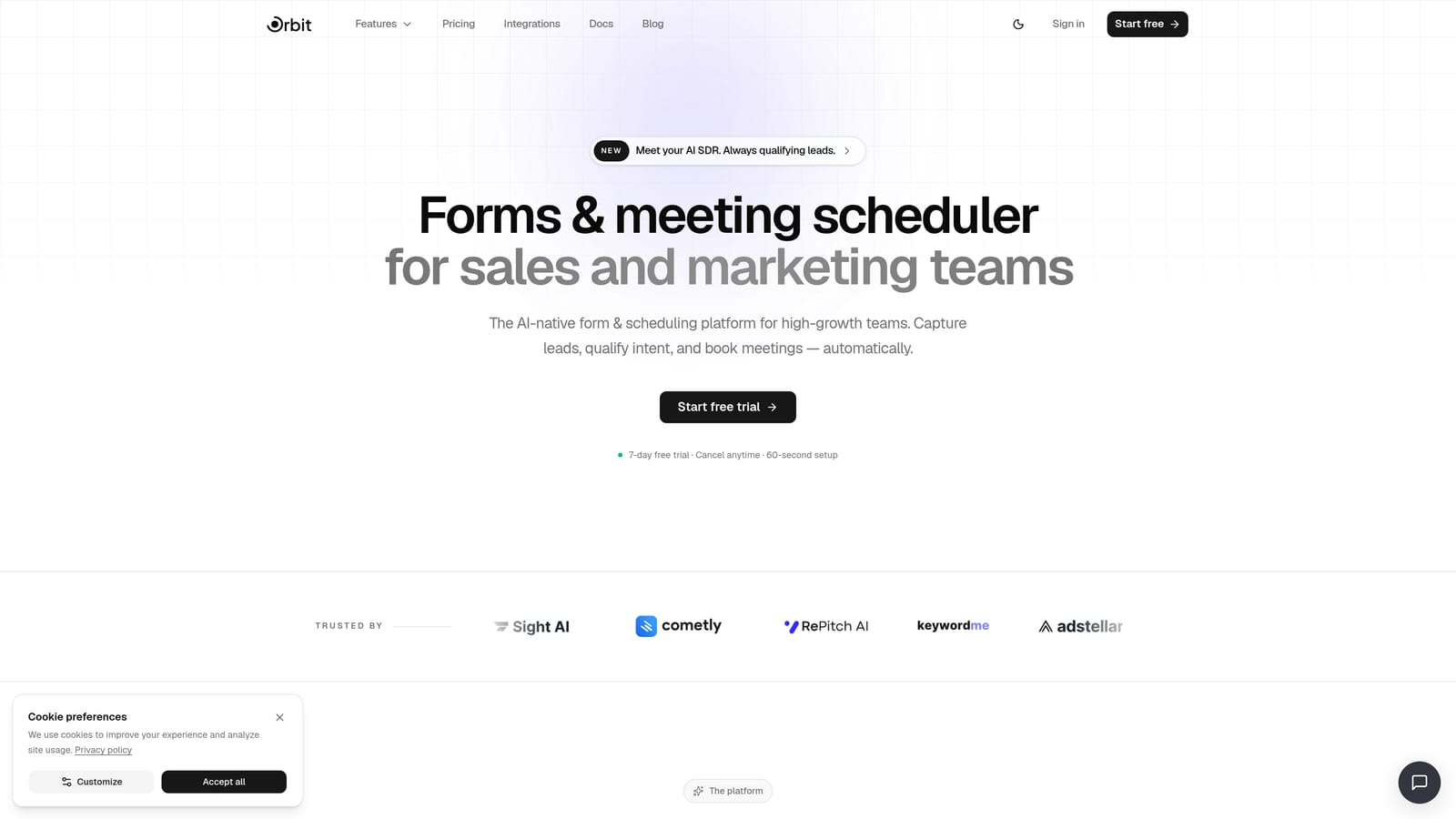
Orbit AI is an AI-powered form builder with built-in lead qualification designed for high-growth SaaS teams.
Where This Tool Shines
Most form tools stop at data collection. Orbit AI goes further by scoring and routing leads automatically based on the responses collected, so your sales team spends time on the right conversations instead of manually triaging submissions.
The platform is built with conversion optimization at its core. Templates are designed specifically for SaaS and B2B use cases, and the modern UI fits the aesthetic expectations of high-growth brands without requiring any design work on your end.
Key Features
AI Lead Qualification: Lead scoring and qualification happen directly inside the form flow, not as an afterthought in your CRM.
SaaS-Optimized Templates: Conversion-focused form templates built specifically for B2B and SaaS lead capture scenarios.
Automated Routing and Follow-Up: Leads are routed to the right rep or sequence automatically based on qualification criteria you define.
Performance Analytics: A built-in dashboard tracks form performance, completion rates, and drop-off points so you can iterate quickly.
Native CRM Integrations: Connects directly with CRMs and marketing automation tools to keep your stack in sync without manual exports.
Best For
Orbit AI is an ideal starting point for SaaS startups running inbound lead gen who want more than a basic form. If your team is tired of wading through unqualified submissions or manually routing leads to the right rep, this is built for that exact problem.
Pricing
Visit orbitforms.ai/pricing for current plan details. Free options are available to get started.
2. HubSpot
Best for: Early-stage startups that need a free, all-in-one CRM with basic lead capture and nurturing built in
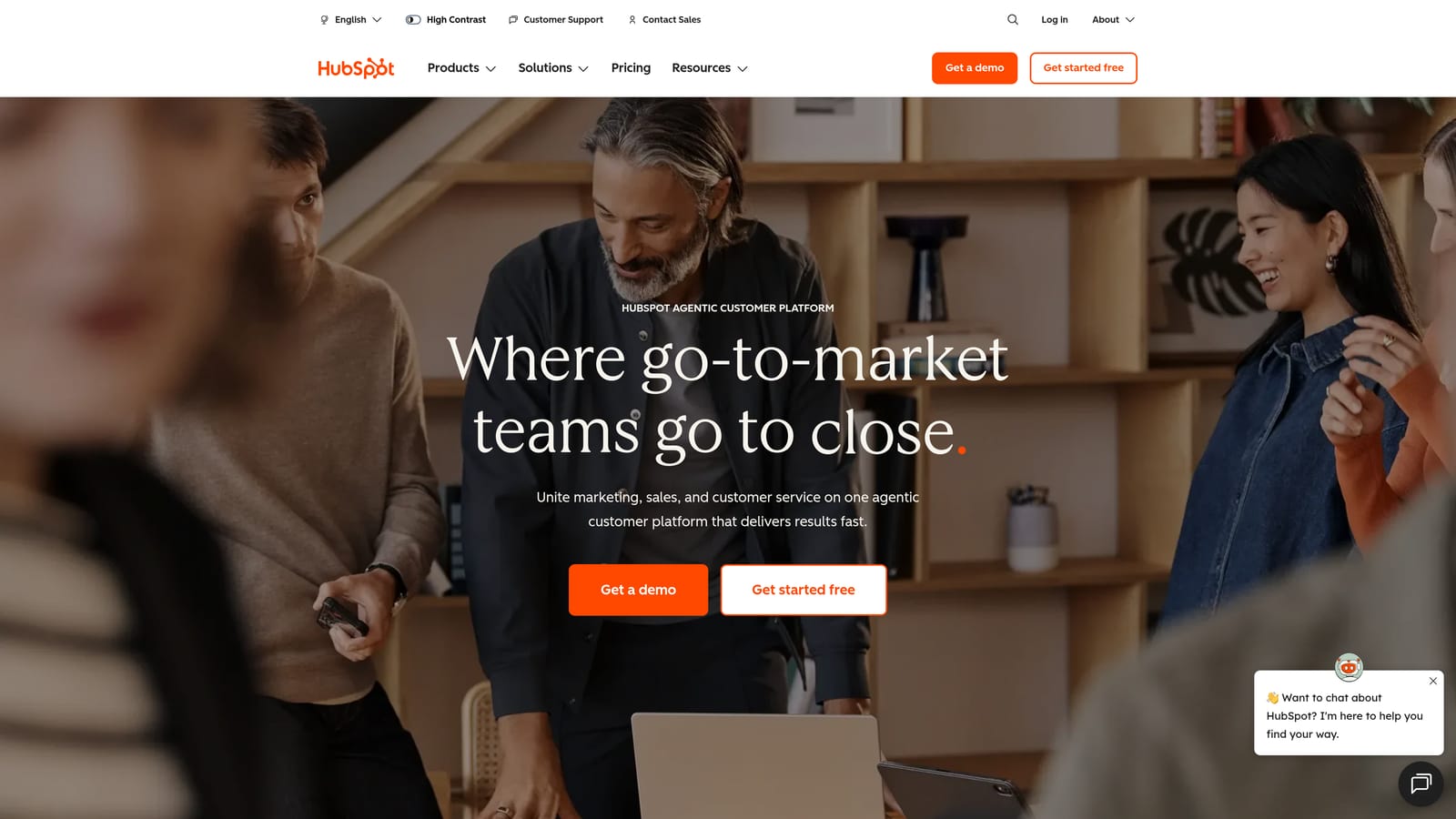
HubSpot is an all-in-one CRM platform with free tools for forms, email marketing, and pipeline management.
Where This Tool Shines
HubSpot's free tier is genuinely useful, not just a teaser. You get contact management, a form builder, basic email marketing, and pipeline tracking without spending a dollar. For a pre-revenue or early-stage startup, that breadth at zero cost is hard to beat.
The tradeoff is that HubSpot is a platform, not a specialist tool. As your needs grow, so does the price tag, and some teams find the interface heavier than what they actually need when they're just trying to move fast.
Key Features
Free CRM: Contact and deal management with no time limit on the free tier.
Form Builder and Landing Pages: Create basic lead capture forms and simple landing pages without engineering support.
Email Marketing and Workflows: Build lead nurturing sequences and automate follow-up based on contact activity.
Pipeline Dashboards: Visualize your sales pipeline and track deal progress across your team.
Best For
Startups that want a single platform to manage contacts, email, and basic lead capture without paying upfront. HubSpot works especially well if you anticipate growing into its more advanced features over time.
Pricing
Free tier available. Paid plans start at $15/month per seat for Marketing Hub, with pricing scaling significantly as you add features and contacts.
3. Apollo.io
Best for: Outbound-focused startups that need a B2B contact database combined with email sequencing in one place
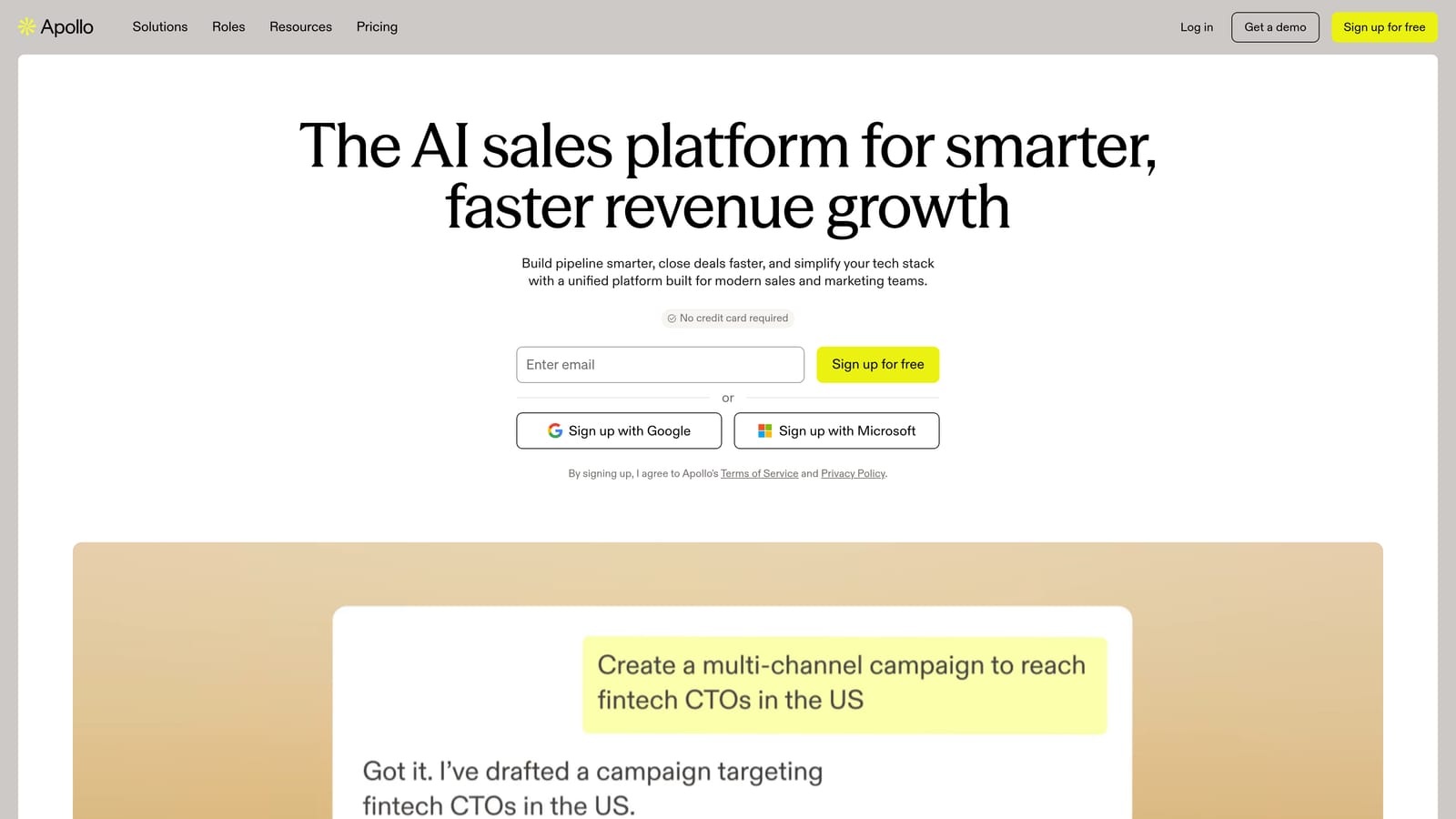
Apollo.io is a B2B prospecting and sales engagement platform that combines a large contact database with outreach automation.
Where This Tool Shines
Apollo gives you two things most outbound teams need: data and execution. You can find your ideal customer profile within the platform, build a list, and immediately drop those contacts into an email sequence without switching tools.
The Chrome extension adds a useful layer for LinkedIn-based prospecting, letting you pull contact data directly from profiles. For founder-led sales teams doing their own outbound, this kind of workflow consolidation saves meaningful time.
Key Features
B2B Contact Database: Access a large database of company and contact records filtered by industry, title, company size, and more.
Email Sequencing: Build and automate multi-step outreach sequences with task reminders built in.
CRM Enrichment: Automatically enrich and sync contact data with your existing CRM.
Chrome Extension: Prospect directly on LinkedIn and pull verified contact information without leaving the page.
Best For
Outbound-heavy startups or founders doing their own prospecting who need a combined database and sequencing tool without managing two separate subscriptions.
Pricing
Free tier available with limited credits. Paid plans start at approximately $49/month, with higher tiers unlocking more data exports and sequencing capabilities.
4. Typeform
Best for: Startups that want a polished, conversational form experience that feels less like a form and more like a dialogue
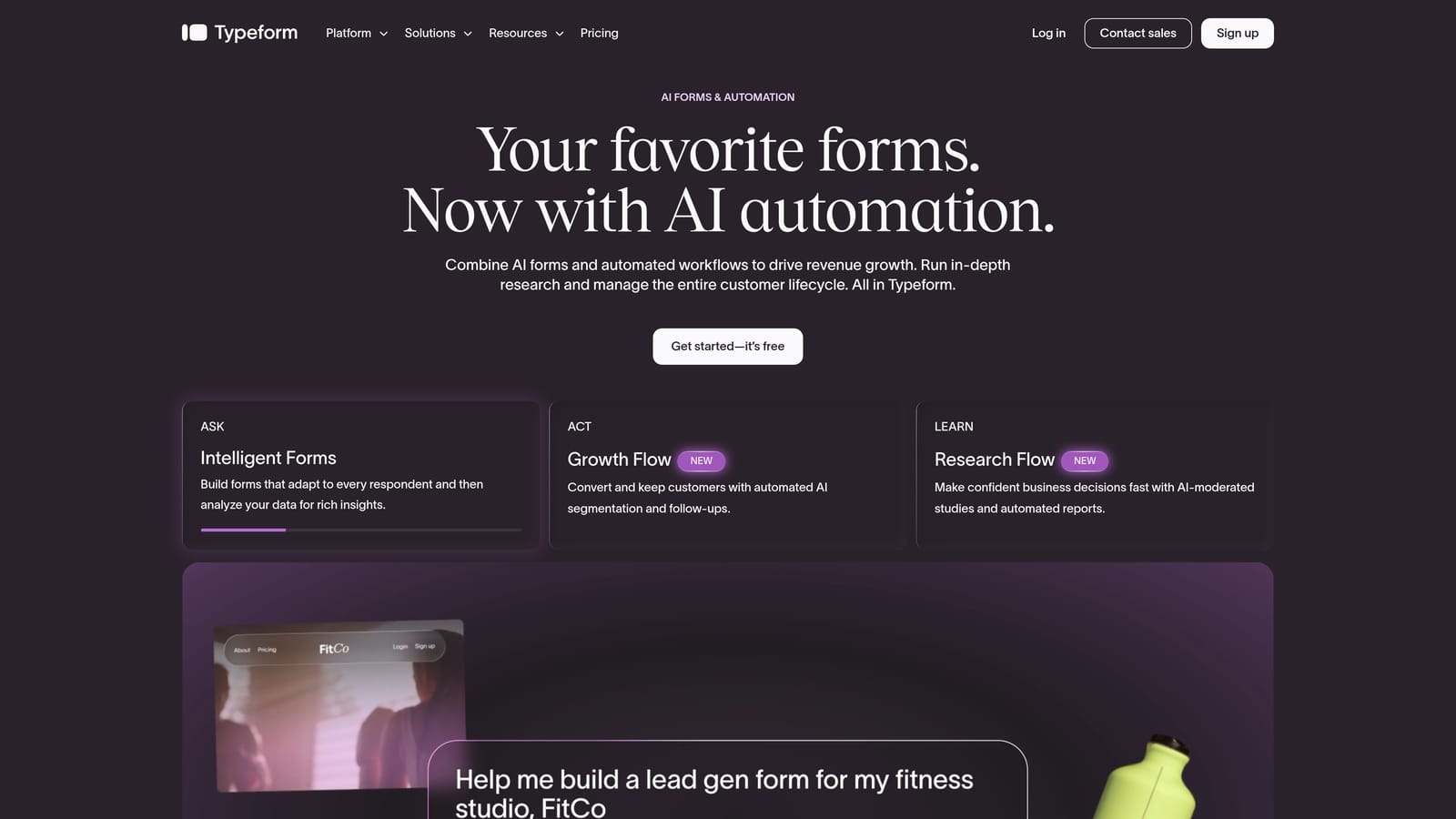
Typeform is a conversational form and survey tool known for its one-question-at-a-time format that typically improves completion rates over traditional multi-field forms.
Where This Tool Shines
Typeform's core insight is that showing someone a wall of fields is off-putting. By presenting one question at a time, the experience feels more like a conversation, which tends to keep respondents engaged longer. For lead qualification forms, demo request flows, or onboarding surveys, this format can meaningfully reduce abandonment.
It's also one of the most visually refined form tools available. If brand presentation matters to your team, Typeform's design quality sets it apart from most competitors in this category.
Key Features
Conversational UX: Single-question format that guides respondents through the form step by step.
Logic Jumps: Conditional branching lets you show or skip questions based on previous answers.
Integration Library: Connects with HubSpot, Salesforce, Zapier, and most major marketing tools.
Custom Branding: Full control over colors, fonts, and imagery to match your brand identity.
Best For
Startups prioritizing form experience and completion rates, particularly for demo requests, lead qualification surveys, or any flow where respondent drop-off is a problem.
Pricing
Free tier available. Paid plans start at $25/month, with higher tiers unlocking more responses, logic features, and integrations.
5. Lemlist
Best for: Founder-led sales teams running personalized cold outreach across email and LinkedIn simultaneously
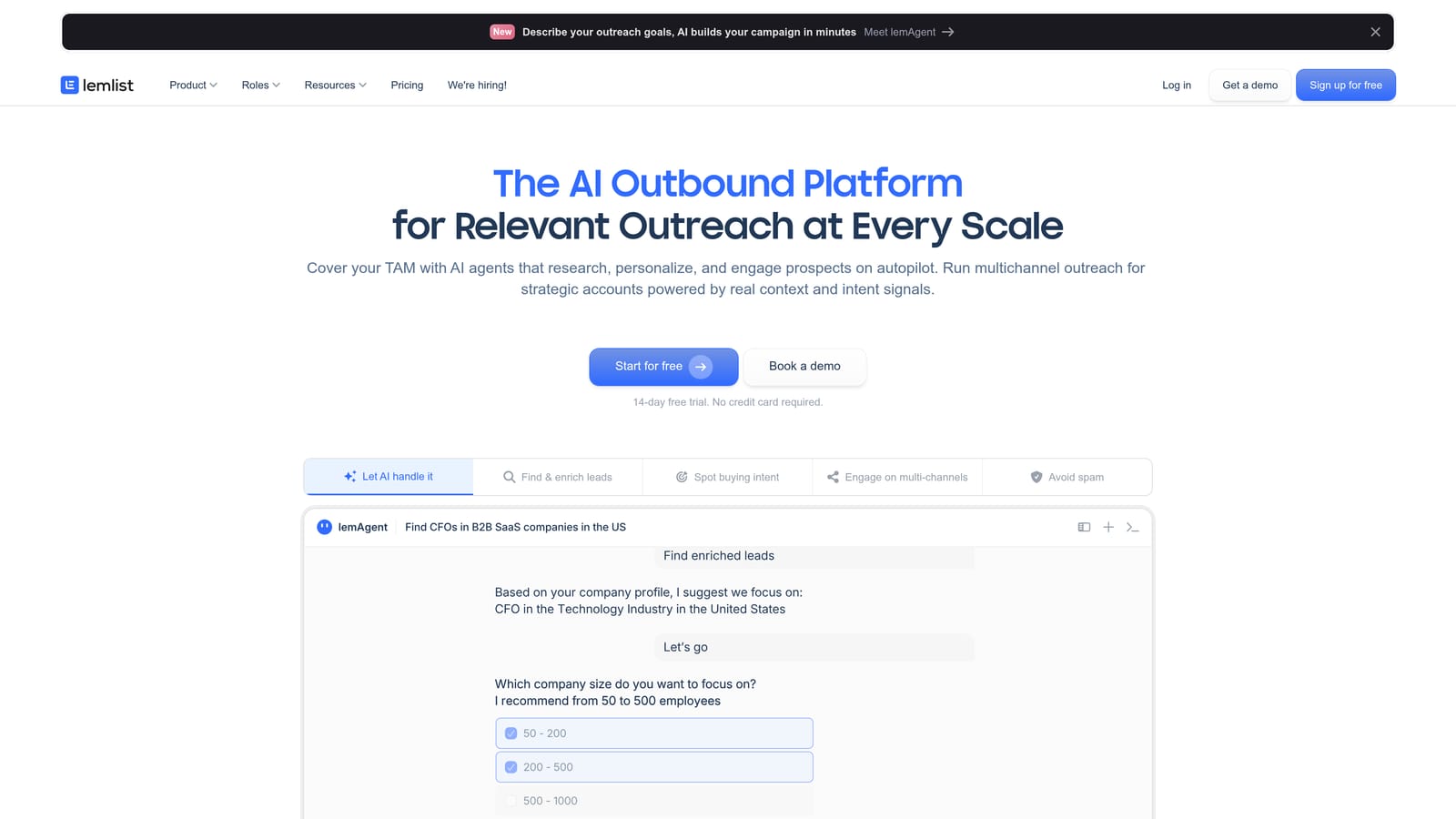
Lemlist is a cold email and multichannel outreach platform built for personalization at scale, popular with early-stage startup sales teams.
Where This Tool Shines
Lemlist's standout capability is dynamic personalization. Beyond just inserting a first name, you can include personalized images, custom variables, and even video thumbnails that make each outreach feel genuinely tailored. In a world where cold inboxes are flooded with templated sequences, that level of personalization can make a real difference in reply rates.
The multichannel sequencing, which combines email steps with LinkedIn touchpoints, is particularly useful for B2B startups targeting decision-makers who are more responsive on LinkedIn than in their inbox.
Key Features
Dynamic Personalization: Customize outreach with personalized images, videos, and text variables at scale.
Multichannel Sequences: Combine email and LinkedIn steps in a single automated sequence.
Email Warm-Up: Built-in deliverability tools to improve inbox placement before running campaigns.
A/B Testing: Test subject lines, copy variations, and call-to-action language to optimize performance.
Best For
Early-stage startups running founder-led outbound or small SDR teams that need to stand out in crowded inboxes with personalized, multichannel sequences.
Pricing
Plans start at approximately $39/month per user. Higher tiers include additional multichannel features and team collaboration tools.
6. Leadpages
Best for: Startups running paid traffic that need to deploy conversion-optimized landing pages quickly without engineering resources
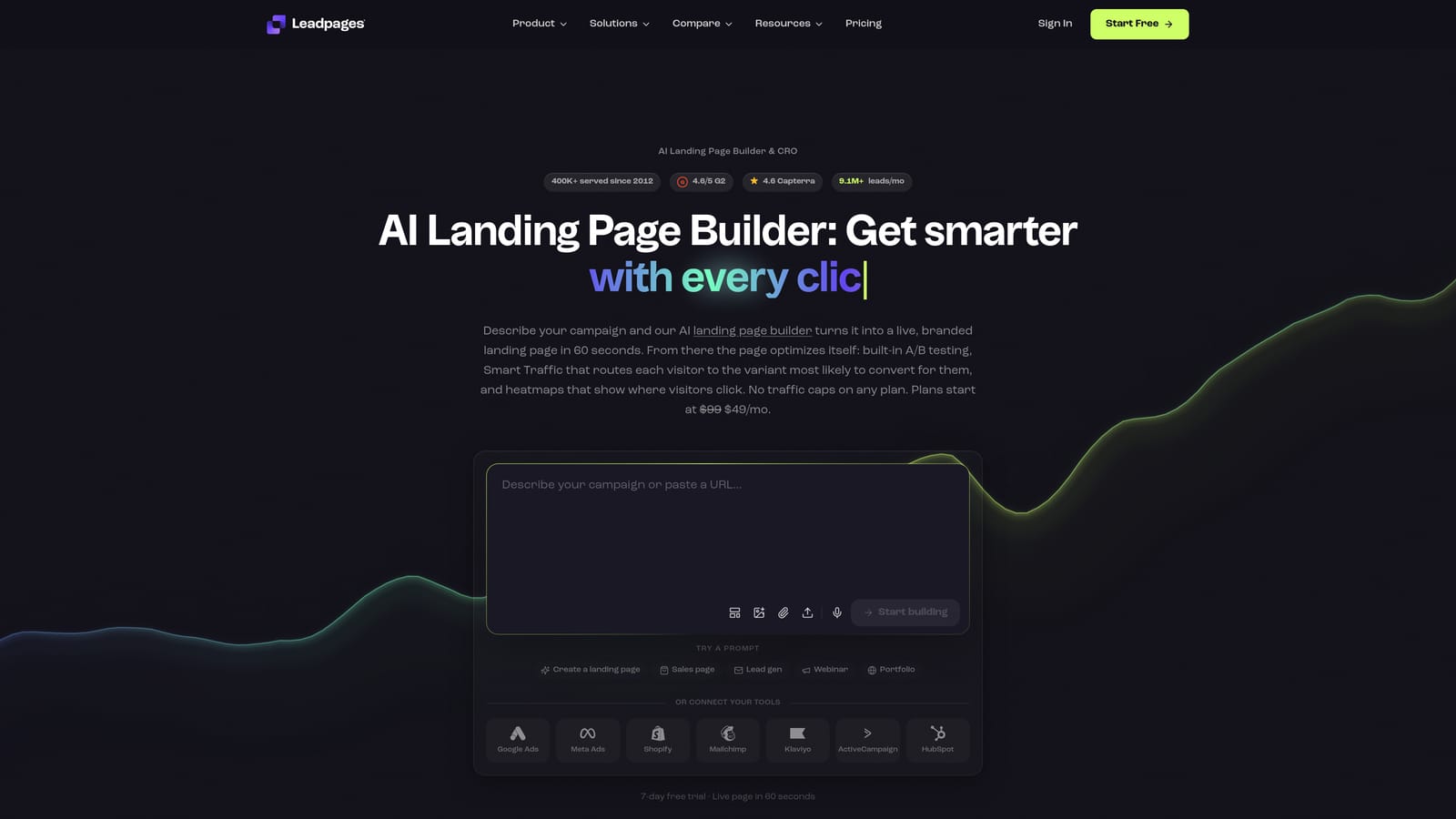
Leadpages is a landing page builder focused on conversion optimization, designed for marketers who need to move fast without touching code.
Where This Tool Shines
Leadpages is built for speed and conversion, not just aesthetics. The template library is designed around proven conversion principles, and the built-in A/B testing means you can run experiments without needing a separate tool or a data analyst to interpret results.
For startups investing in paid acquisition, the ability to spin up a dedicated landing page in hours rather than days is a genuine operational advantage. Every day a campaign runs to a weak page is money left on the table.
Key Features
Conversion-Optimized Templates: A library of landing page templates built around lead capture and conversion best practices.
A/B Testing: Built-in split testing to compare page variants without additional tools.
Lead Capture Forms and Pop-ups: Embedded forms, pop-ups, and alert bars to capture leads across your pages.
AI Conversion Tips: Real-time suggestions powered by AI to improve page elements before publishing.
Best For
Startups running paid ads on Google or Meta who need dedicated landing pages that convert, without waiting on a developer to build them.
Pricing
Plans start at approximately $37/month. All paid plans include unlimited landing pages and A/B testing capability.
7. Breeze Intelligence (formerly Clearbit)
Best for: HubSpot-native startups that want to enrich leads automatically and shorten their lead capture forms
Breeze Intelligence is a real-time B2B lead enrichment tool, now part of HubSpot, that automatically appends firmographic and intent data to leads captured via forms or CRM.
Where This Tool Shines
The core value proposition here is elegant: instead of asking prospects to fill out a long form, Breeze Intelligence fills in the gaps automatically. A visitor submits their email, and Breeze appends company size, industry, tech stack, and buyer intent signals behind the scenes. Shorter forms typically mean higher completion rates, and richer data means better lead prioritization.
The intent signal layer is particularly useful for startups trying to identify which companies are actively researching solutions like theirs, letting sales teams reach out at exactly the right moment.
Key Features
Real-Time Enrichment: Automatically appends company and contact data to form submissions as they come in.
Buyer Intent Signals: Identifies leads showing active research behavior to help prioritize outreach.
Form Shortening: Auto-fill enrichment lets you capture fewer fields while still gathering rich prospect data.
Native HubSpot Integration: Enrichment flows directly into HubSpot CRM records without any manual setup.
Best For
Startups already using HubSpot who want to improve lead data quality, shorten forms, and prioritize outreach based on intent signals rather than guesswork.
Pricing
Available as part of HubSpot plans. Enrichment operates on a credit-based model; pricing depends on volume and the HubSpot tier you're on.
8. Intercom
Best for: Product-led growth startups with significant web or in-app traffic that want to qualify and convert visitors through conversation
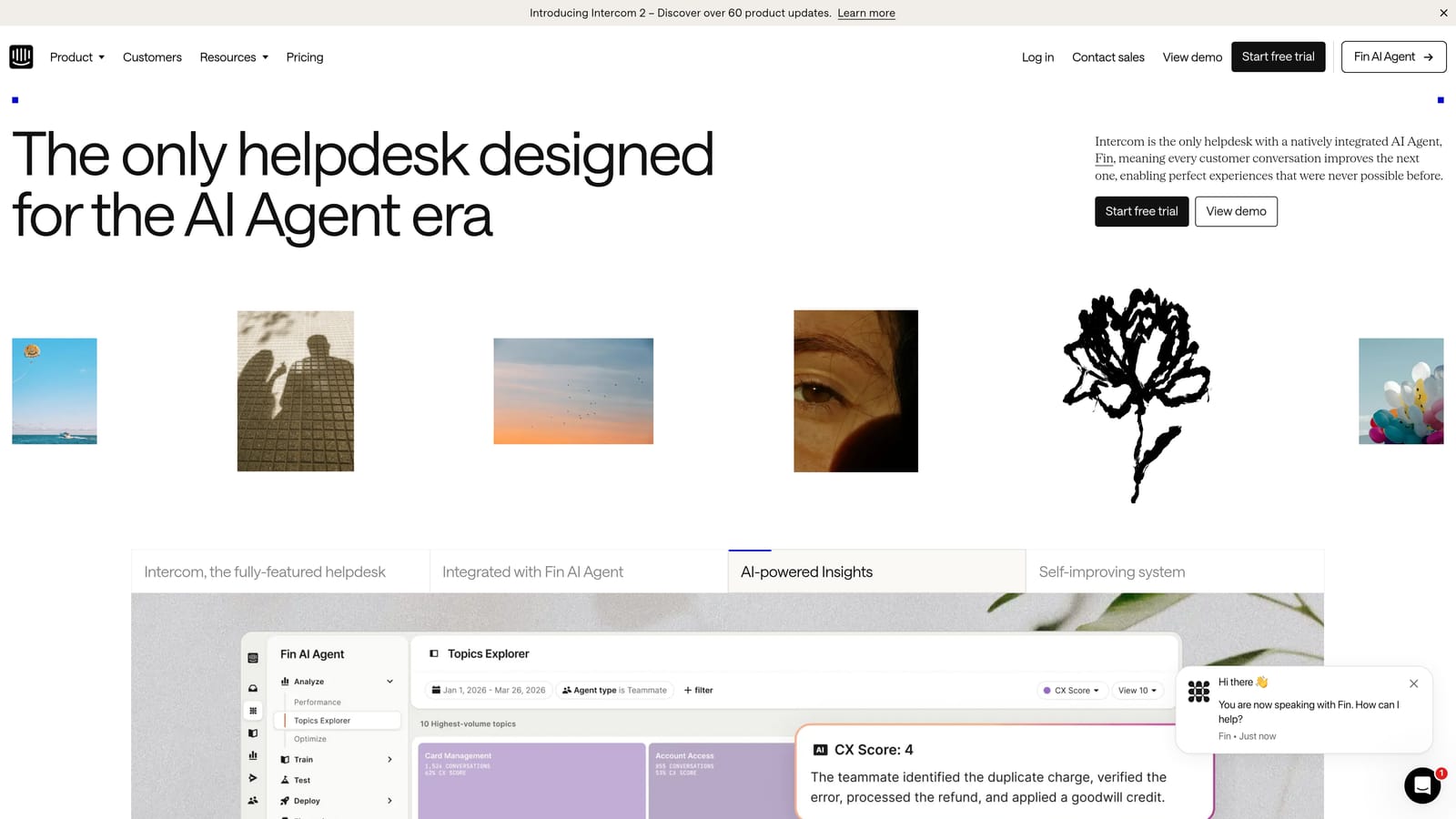
Intercom is a conversational customer platform with AI-powered chatbots that engage, qualify, and route website visitors in real time.
Where This Tool Shines
Intercom excels at the moment between someone landing on your site and deciding whether to take action. Instead of waiting for a visitor to find and fill out a form, the AI chatbot proactively engages them, asks qualifying questions, and routes them to the right path, whether that's a sales rep, a self-serve demo, or a support flow.
For PLG startups, the in-app messaging capabilities are equally valuable. You can trigger personalized messages based on user behavior inside the product, which creates natural upsell and expansion opportunities without requiring a sales rep to monitor every account.
Key Features
AI Chatbot: Engages and qualifies website visitors through automated conversation before routing to a human.
Automated Routing: Sends qualified leads to the right sales rep or support queue based on conversation outcomes.
In-App Messaging: Trigger targeted messages based on product usage behavior for PLG and expansion motions.
CRM and Helpdesk Integrations: Connects with major CRM and support tools to keep data centralized.
Best For
PLG startups or SaaS companies with high website traffic who want to qualify leads through conversation rather than static forms, and who need in-app messaging for retention and expansion.
Pricing
Plans start at approximately $39/month. Pricing scales with seat count and usage volume, so costs can grow quickly as your team expands.
9. LinkedIn Sales Navigator
Best for: B2B startups targeting specific job titles, company sizes, or industries through direct LinkedIn outreach
LinkedIn Sales Navigator is a premium LinkedIn product for B2B prospecting with advanced search filters, account tracking, and direct messaging capabilities.
Where This Tool Shines
LinkedIn is where most B2B decision-makers actually spend professional time online, and Sales Navigator gives you surgical access to that audience. The advanced filters let you build highly specific prospect lists based on job title, seniority, company size, industry, and even recent growth signals like hiring activity or funding announcements.
The account and lead alerts are an underrated feature. When a key prospect changes jobs, posts on LinkedIn, or their company hits a relevant trigger, you get notified, which creates natural, timely reasons to reach out without it feeling cold.
Key Features
Advanced ICP Filters: Search by job title, company size, industry, seniority, geography, and growth signals.
Account and Lead Alerts: Real-time notifications when prospects hit job changes, posts, or company milestones.
InMail Credits: Send direct messages to prospects outside your network with higher open rates than cold email.
CRM Sync: Native integration with Salesforce and HubSpot to keep prospect data aligned across your stack.
Best For
B2B startups targeting mid-market or enterprise accounts where reaching the right person at the right company matters more than volume, and where LinkedIn is a primary channel for decision-maker engagement.
Pricing
Core plan starts at approximately $99.99/month per user. It's one of the pricier tools on this list, so it works best when LinkedIn is a primary outbound channel rather than a secondary one.
Which Tool Is Right for Your Startup?
The honest answer is that most startups end up running two or three of these tools in combination, not just one. Here's a quick way to think about it based on your primary motion.
Inbound-focused startups should start with Orbit AI for lead capture and qualification, pair it with HubSpot for CRM and nurturing, and consider Breeze Intelligence once you want to enrich leads and shorten your forms. This stack covers the full inbound journey from first touch to qualified pipeline.
Outbound-focused startups will get the most from Apollo.io for prospecting and sequencing, Lemlist if personalization is central to your approach, and LinkedIn Sales Navigator once you're targeting specific decision-makers at named accounts.
PLG startups should look closely at Intercom for in-app and on-site qualification, combined with Orbit AI to capture and score leads from marketing pages and campaign landing pages.
Orbit AI is the natural starting point for any startup that wants to make their website work harder. The moment someone lands on your site, you have an opportunity to capture and qualify that lead automatically. Rather than sending every submission to your CRM for manual review, Orbit AI does that work for you, so your team focuses on the conversations that actually matter.
It also integrates cleanly with many of the other tools on this list, including HubSpot, so you don't have to choose between Orbit AI and the rest of your stack. You can use it as the front door and let everything else flow from there.
Start building free forms today and see how intelligent form design and built-in lead qualification can change what your lead gen stack is actually capable of.


