

Tech buyers are a different breed. They research exhaustively, compare alternatives obsessively, and can spot a generic sales pitch from a mile away. If your lead generation stack treats a senior DevOps engineer the same as a small business owner browsing a landing page, you're leaving serious pipeline on the table.
The challenge isn't just capturing leads. It's capturing the right leads, qualifying them intelligently, and routing them to the right person at the right moment. That requires tools built for sophistication, not just volume.
We evaluated platforms across every major category — form builders, outbound prospecting, conversational marketing, visitor intelligence, and full-funnel automation — to find the ones that genuinely serve high-growth tech teams. Here are the top lead generation tools worth your attention in 2026.
1. Orbit AI
Best for: Tech and SaaS teams that want AI-powered lead qualification built directly into their forms.
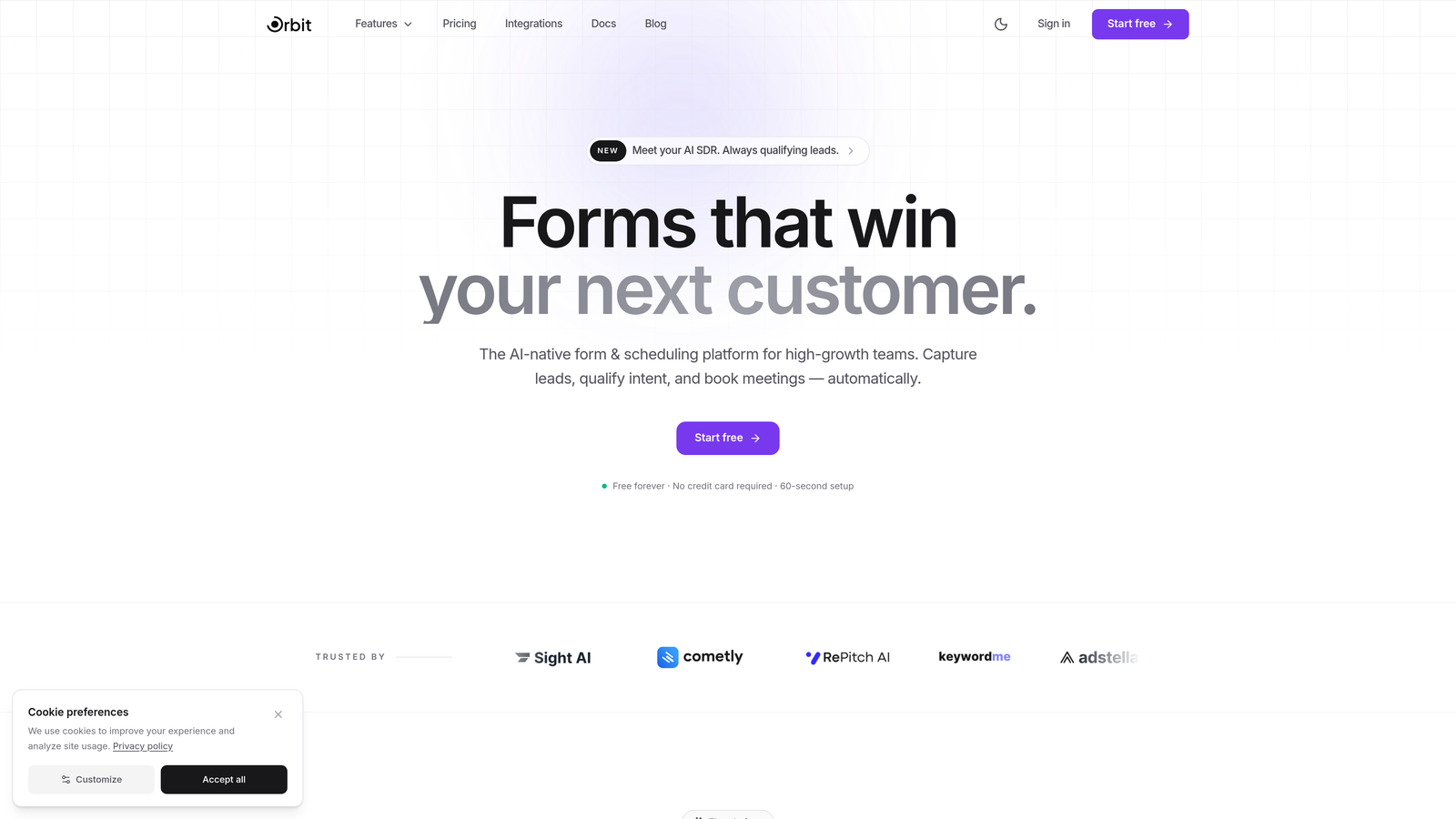
Orbit AI is an intelligent form builder platform that captures, scores, and qualifies leads in real time as prospects complete fields.
Where This Tool Shines
Most form builders are passive. They collect data and hand it off. Orbit AI takes a fundamentally different approach: its AI qualification layer works during form completion, analyzing responses and scoring leads before they ever hit your CRM. For tech companies dealing with high inbound volume, this means your sales team sees only the leads that actually match your ICP.
The form design itself is worth noting. Orbit AI's templates are built for conversion, not just aesthetics. High completion rates matter especially when your audience includes technical buyers who abandon clunky, generic-feeling forms immediately. The combination of beautiful design and intelligent qualification makes it a strong foundational layer for any lead gen stack.
Key Features
AI-Powered Lead Qualification: Scores and qualifies leads in real time as they fill out forms, so your team focuses on high-intent prospects.
Conversion-Optimized Templates: Form templates designed specifically for tech and SaaS use cases, built to maximize completion rates.
Real-Time Lead Scoring: Assigns scores dynamically based on prospect responses, giving sales instant context before outreach.
Modern Form Design: Clean, professional aesthetics that match the expectations of technical buyers and reduce form abandonment.
CRM and Automation Integrations: Connects with major CRM and marketing automation platforms to keep your stack running smoothly.
Best For
High-growth SaaS companies, developer tool vendors, and B2B tech teams that need intelligent lead capture at the top of the funnel. Particularly valuable for teams tired of manually sorting qualified leads from low-intent submissions.
Pricing
Visit orbitforms.ai for current pricing plans and available tiers.
2. Apollo.io
Best for: Outbound-focused tech sales teams that need a large, filterable B2B contact database with built-in sequencing.
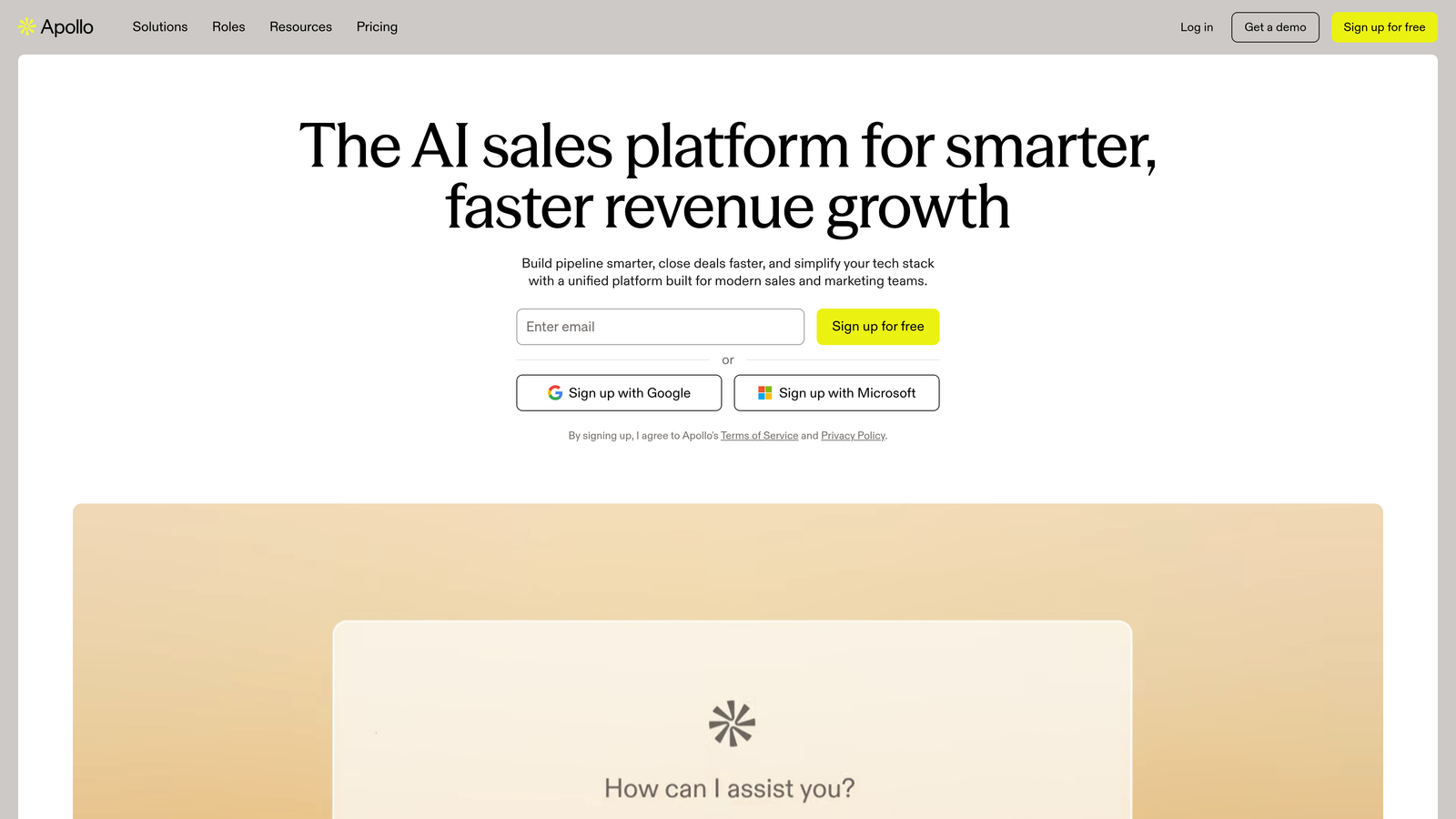
Apollo.io is an all-in-one outbound sales platform combining a massive contact database with email sequencing, dialing, and engagement tools.
Where This Tool Shines
Apollo's strength is its database depth combined with the ability to act on that data without switching tools. You can find a prospect, filter by their tech stack, and launch a personalized sequence all from one platform. That consolidation matters for lean tech sales teams that can't afford to juggle five different tools.
The technographic filtering is particularly useful for tech companies. Being able to target accounts that already use complementary tools, or competitors you're trying to displace, makes prospecting far more precise than simple firmographic targeting alone.
Key Features
275M+ Contact Database: One of the largest B2B contact databases available, with verified emails and direct phone numbers.
Email Sequencing: Built-in automated outreach workflows so you can prospect and nurture without leaving the platform.
Technographic Filtering: Target accounts by the tools they already use, company size, funding stage, and job title.
Intent Data Signals: Surfaces accounts showing active buying behavior so you can prioritize outreach timing.
Free Tier: A functional free plan makes it accessible for small teams testing outbound for the first time.
Best For
SDR teams, growth-stage tech startups, and sales-led SaaS companies running outbound campaigns. Excellent for teams that want prospecting and sequencing in a single platform without paying for separate tools.
Pricing
Free plan available; paid plans start at $49/user/month.
3. HubSpot Marketing Hub
Best for: Tech companies that want a unified inbound marketing and CRM platform with strong automation capabilities.
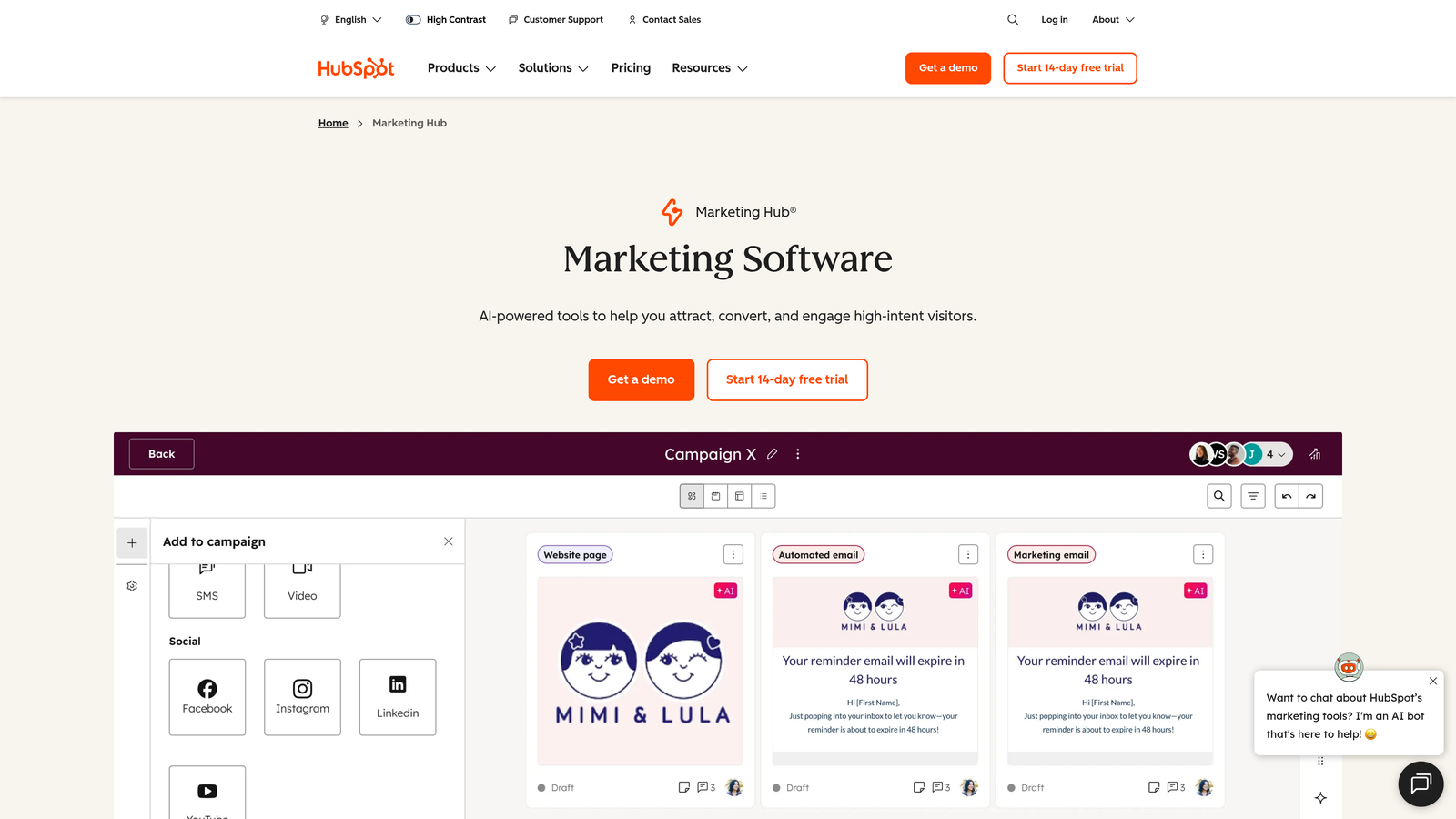
HubSpot Marketing Hub is a comprehensive inbound marketing suite covering lead capture, email marketing, landing pages, automation, and CRM in one ecosystem.
Where This Tool Shines
HubSpot's real advantage is ecosystem cohesion. When your forms, CRM, email marketing, and lead scoring all live in the same platform, you get a clean picture of how a prospect moves from first touch to closed deal. For tech companies with longer sales cycles and multiple stakeholders, that visibility is genuinely valuable.
The automation workflow builder is particularly strong for nurturing technical buyers who take weeks or months to evaluate. You can build sophisticated sequences triggered by specific behaviors, page visits, or form completions without needing developer support.
Key Features
Native Forms and Landing Pages: Built-in lead capture tools with A/B testing to optimize conversion rates continuously.
Marketing Automation: Workflow builder for multi-step lead nurturing sequences triggered by behavior and lifecycle stage.
Built-in CRM: Full contact lifecycle tracking across every touchpoint, shared with your sales team in real time.
Lead Scoring: Behavioral and demographic scoring to surface your most engaged and best-fit prospects.
App Marketplace: Hundreds of integrations covering nearly every tool in a modern tech stack.
Best For
Mid-market and enterprise tech companies that want a single platform for inbound marketing and CRM. Also strong for teams transitioning from fragmented point solutions to a more unified approach.
Pricing
Free tools available; Marketing Hub Starter from $20/month; Professional from $890/month.
4. Drift (now Salesloft)
Best for: Tech companies that want to qualify and convert high-value website visitors through conversational AI in real time.
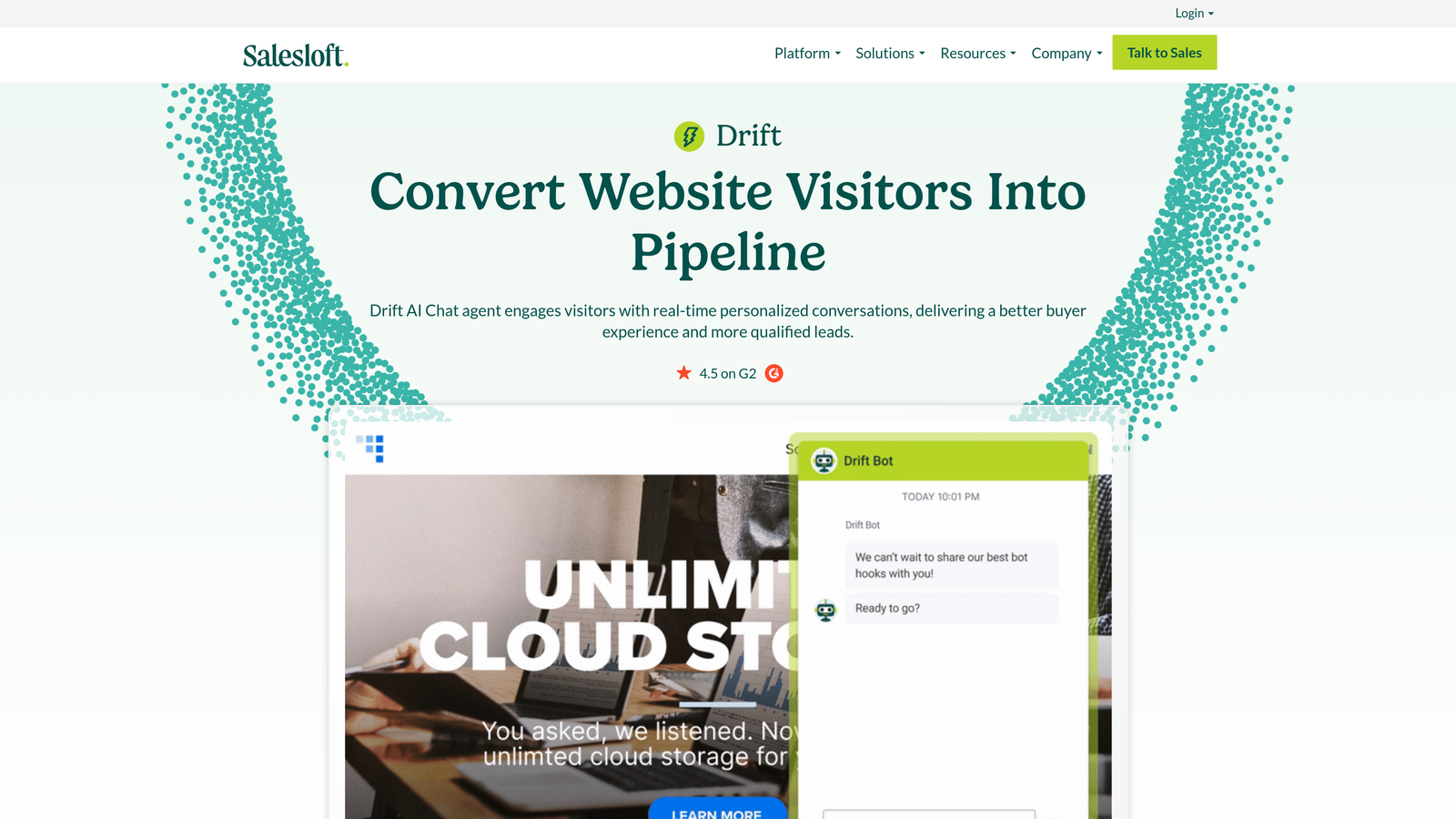
Drift is a conversational marketing platform that uses AI chatbots and live chat to engage, qualify, and route website visitors to sales without friction.
Where This Tool Shines
Drift was built on a simple insight: most website visitors leave without ever filling out a form. Conversational engagement changes that dynamic by meeting visitors where they are, in the moment, with relevant questions rather than a static form they have to hunt for. For tech companies with high-intent traffic from paid campaigns or ABM efforts, that real-time engagement can meaningfully improve conversion.
The playbook system lets you customize bot behavior based on visitor firmographics, the page they're on, and their behavior signals. A visitor from a target account hitting your enterprise pricing page gets a very different experience than a first-time visitor from organic search.
Key Features
AI Chatbots: Qualify visitors and book meetings automatically, 24/7, without requiring a live rep to be available.
Real-Time Visitor Intelligence: Surfaces firmographic data on visitors so bots and reps can personalize instantly.
Custom Playbooks: Tailored conversation flows based on visitor segment, intent signals, and page context.
Bot-to-Human Handoff: Seamlessly escalates conversations from automated qualification to a live sales rep.
CRM Integrations: Deep connections with Salesforce and HubSpot to keep your pipeline data clean and current.
Best For
Enterprise tech companies running ABM programs or paid traffic campaigns where real-time engagement with high-value visitors is critical. Also useful for SaaS teams with active sales development functions.
Pricing
Custom pricing; contact Salesloft directly for a quote.
5. Clearbit (now part of HubSpot)
Best for: Tech companies that want to enrich lead records automatically and identify anonymous website visitors at the company level.
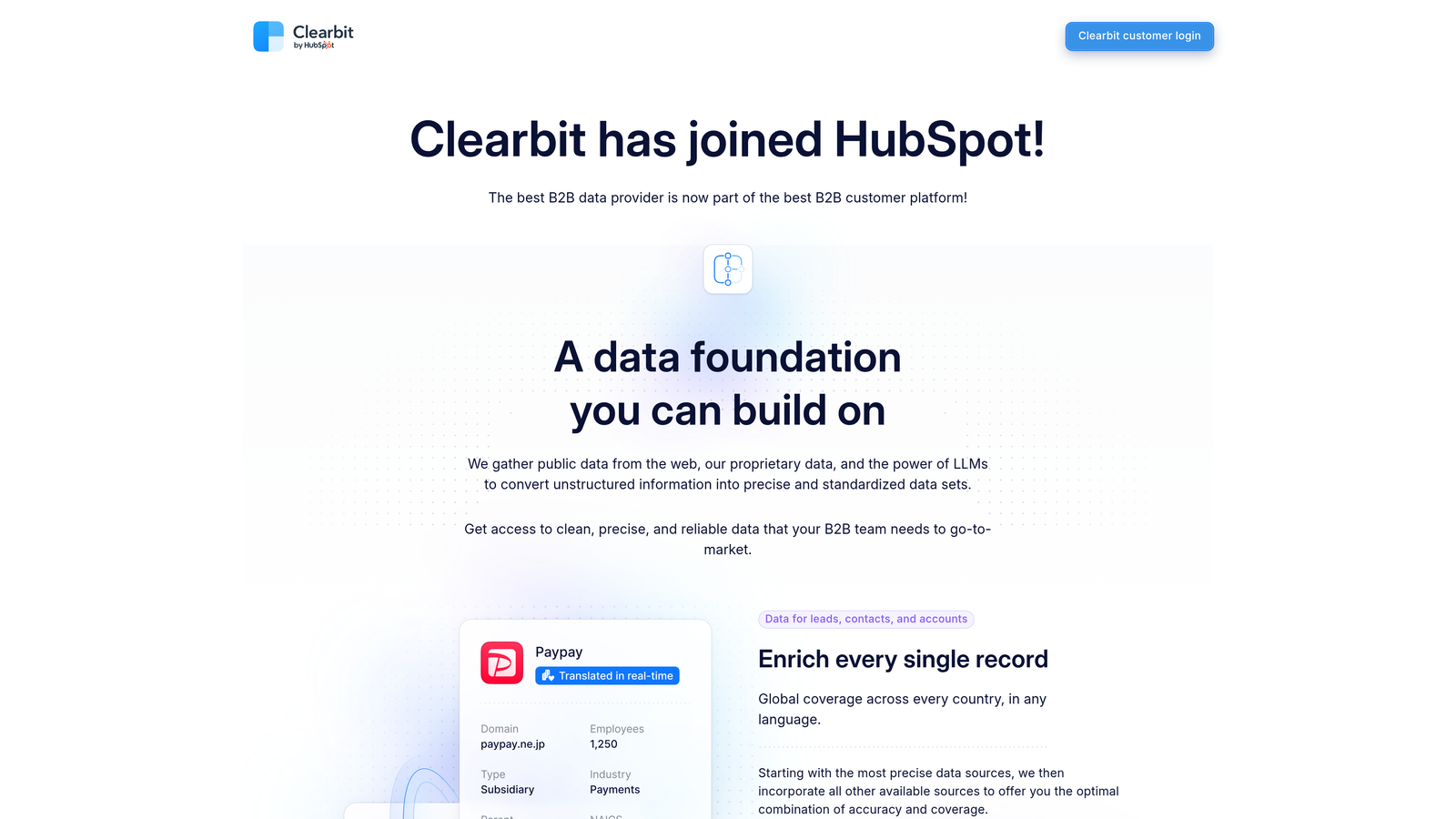
Clearbit is a data enrichment and buyer intent platform that identifies who is visiting your site and fills in the gaps in your lead records with firmographic and technographic data.
Where This Tool Shines
The core problem Clearbit solves is data poverty. Leads come in with a name and email, and your team has to manually research the rest. Clearbit automates that enrichment instantly, appending company size, industry, tech stack, funding stage, and more the moment a lead enters your system. That context changes how quickly your team can qualify and route.
Its dynamic form shortening is a particularly clever feature for tech companies. When Clearbit recognizes a visitor, it can auto-fill known fields, reducing the number of questions a prospect has to answer. Shorter forms mean higher completion rates, especially with busy technical buyers who won't tolerate unnecessary friction.
Key Features
Real-Time Data Enrichment: Automatically appends firmographic, technographic, and contact data to incoming leads.
Visitor De-Anonymization: Identifies the companies behind anonymous website traffic at the account level.
Technographic Data: Shows what tools and platforms your prospects already use, enabling more relevant outreach.
Dynamic Form Shortening: Auto-fills known fields for recognized visitors to reduce friction and improve conversion.
HubSpot Integration: Deeply integrated into the HubSpot ecosystem, making it a natural add-on for existing HubSpot users.
Best For
HubSpot users looking to enrich their lead data automatically, and tech companies running ABM or intent-based programs that need account-level intelligence on their website traffic.
Pricing
Free tier available for HubSpot users; premium plans vary by usage and data volume.
6. Leadfeeder (now Dealfront)
Best for: Tech sales teams that want to turn anonymous website traffic into named company leads without requiring visitors to fill out a form.
Dealfront (formerly Leadfeeder) is a website visitor identification tool that reveals which companies are browsing your site and scores them by buying intent.
Where This Tool Shines
The premise is compelling: most of your website visitors leave without converting, but that doesn't mean they aren't interested. Dealfront identifies the companies behind that anonymous traffic using IP-based identification, turning invisible intent into actionable sales leads. For tech companies investing in content marketing or SEO, this surfaces demand that would otherwise go completely unnoticed.
The intent scoring layer adds another dimension. Dealfront tracks visit frequency, pages viewed, and time on site to build a picture of how serious a company is about evaluating you. An account that has visited your pricing and case study pages three times in a week is a very different signal than a one-page bounce.
Key Features
IP-Based Company Identification: Reveals the companies behind anonymous website visits without requiring any form submission.
Intent Scoring: Scores accounts based on visit patterns, pages viewed, and engagement depth to prioritize follow-up.
Traffic Filtering: Automatically removes ISPs, bots, and irrelevant traffic to keep your lead feed clean.
CRM Push: Sends identified accounts directly to Salesforce, HubSpot, Pipedrive, and other CRMs.
Custom Alerts: Notifies your team when target accounts visit specific pages, enabling timely outreach.
Best For
B2B tech companies with meaningful website traffic that want to capture demand signals from accounts that haven't yet raised their hand. Particularly useful for sales teams running account-based programs.
Pricing
Free plan available; paid plans start at approximately €99/month.
7. Intercom
Best for: Product-led SaaS companies that want to generate and convert leads from both website visitors and active product users.
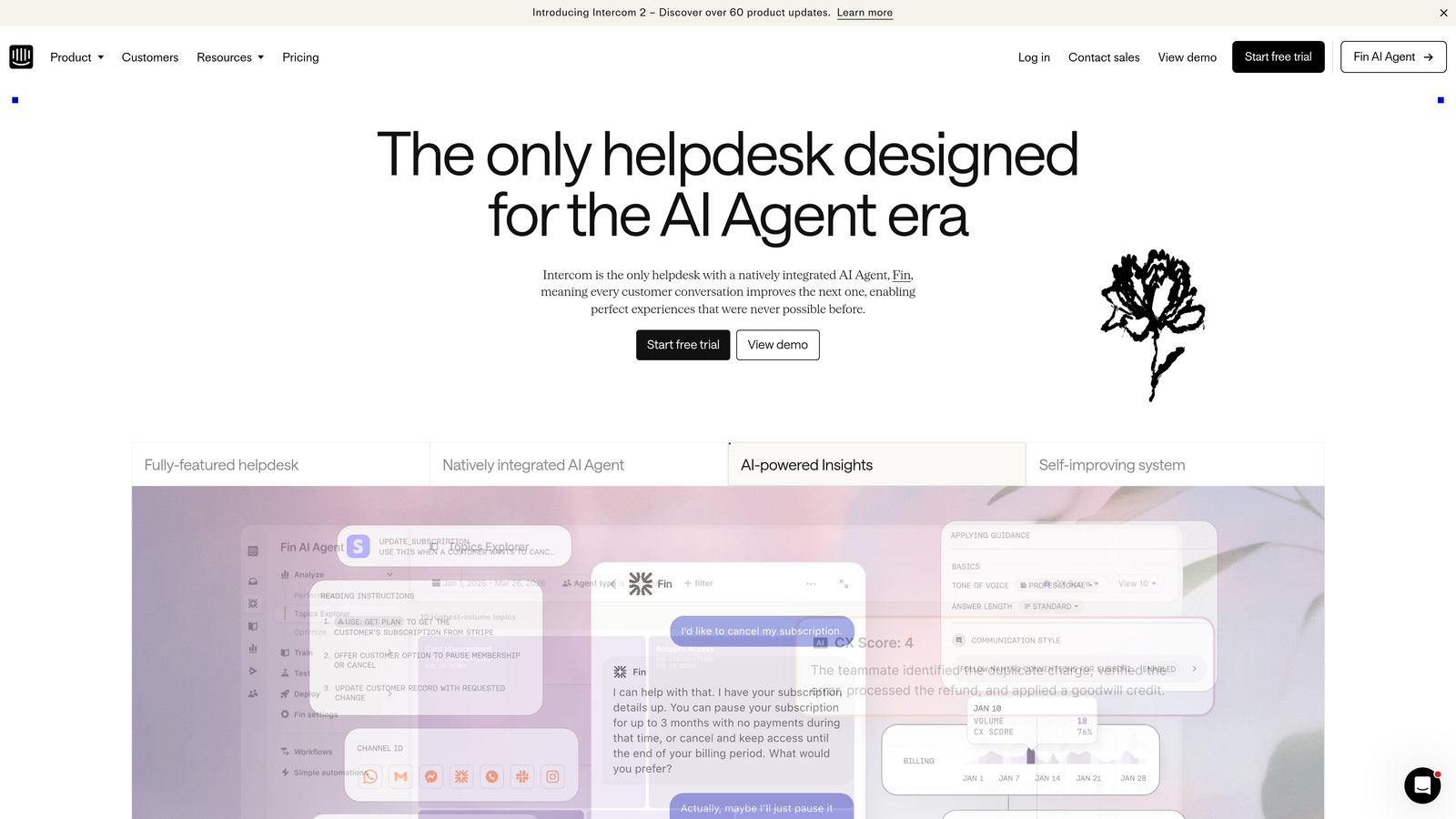
Intercom is a customer messaging platform combining live chat, AI bots, and in-app messaging to engage prospects and users at every stage of the funnel.
Where This Tool Shines
Where most lead gen tools focus exclusively on pre-signup traffic, Intercom operates across the full customer journey. That makes it especially powerful for product-led growth companies where free users are potential expansion revenue and active users are upsell targets. The in-app messaging capability creates lead generation opportunities that most tools simply can't reach.
The Fin AI agent handles a significant portion of qualification and common questions automatically, which matters for tech companies with globally distributed audiences. Prospects in different time zones get immediate, intelligent responses rather than waiting hours for a human reply.
Key Features
Fin AI Agent: Handles qualification, answers common questions, and books meetings automatically around the clock.
In-App Messaging: Reaches product users with targeted messages based on behavior, usage patterns, and attributes.
Custom Chat Flows: Triggers personalized conversation flows based on user behavior, page context, and segment.
Unified Inbox: Consolidates sales, support, and marketing conversations in a single workspace.
Product Tours: Onboarding and activation tools that help convert trial users into paying customers.
Best For
SaaS companies with a product-led growth motion, freemium models, or trial-based acquisition. Also strong for tech companies that want to unify website chat and in-app engagement in one platform.
Pricing
Starts at $39/seat/month; Fin AI agent priced per resolution.
8. ZoomInfo
Best for: Enterprise tech companies with complex sales cycles that need deep account intelligence, intent data, and large-scale prospecting capabilities.
ZoomInfo is an enterprise B2B intelligence platform with a massive proprietary contact database, buyer intent signals, and account-based marketing orchestration tools.
Where This Tool Shines
ZoomInfo operates at a scale and depth that few platforms can match. Its proprietary database includes org charts, direct dials, and verified contact data that gets refreshed continuously. For enterprise tech sales teams navigating complex buying committees with multiple decision-makers, having accurate org-level intelligence is the difference between a targeted approach and guesswork.
The intent data layer draws from content consumption signals across a broad network of B2B websites, surfacing accounts that are actively researching topics relevant to your solution. Pairing that intent data with ZoomInfo's technographic filters lets you identify accounts that both need your product and are actively in a buying cycle.
Key Features
Proprietary B2B Database: Extensive contact database with org charts, direct dials, and continuously refreshed data.
Buyer Intent Data: Identifies accounts showing active research behavior based on content consumption across the web.
Technographic Filters: Target companies by the specific technologies they currently use in their stack.
ABM Orchestration: Account-based marketing and advertising tools to coordinate multi-channel campaigns.
Workflow Automation: Automates lead routing, CRM enrichment, and handoff processes to reduce manual work.
Best For
Enterprise tech companies and larger SaaS vendors with dedicated sales development teams, complex buying processes, and the budget for a premium intelligence platform.
Pricing
Custom pricing; typically starts at $15,000+/year for teams. Best suited for organizations with established sales operations.
9. OptinMonster
Best for: Tech companies and SaaS marketers that want to maximize lead capture from existing website traffic using targeted on-site campaigns.
OptinMonster is an on-site lead capture tool specializing in popups, slide-ins, floating bars, and exit-intent overlays designed to convert more visitors into leads.
Where This Tool Shines
OptinMonster's core value is conversion rate optimization for traffic you're already paying to acquire. If you're investing in SEO, paid search, or content marketing, you want every possible lead to be captured before visitors leave. Exit-intent technology in particular catches prospects at the moment they're about to bounce, often recovering a meaningful portion of otherwise lost traffic.
The page-level targeting and display rules give you granular control over who sees what offer and when. A visitor reading a technical blog post about API security can see a relevant lead magnet, while someone on your pricing page sees a demo offer. That relevance matters for tech audiences who tune out generic, context-free popups immediately.
Key Features
Exit-Intent Technology: Detects when visitors are about to leave and triggers a targeted offer to capture them before they go.
Page-Level Targeting: Displays specific campaigns based on the page a visitor is viewing for maximum relevance.
A/B Testing: Test headlines, offers, and form designs to continuously improve conversion performance.
Drag-and-Drop Builder: Campaign creation without developer involvement, using pre-built templates as a starting point.
Platform Integrations: Connects with major email platforms and CRMs to push captured leads directly into your workflow.
Best For
Content-driven tech companies and SaaS marketers focused on converting organic and paid traffic more efficiently. A practical addition for teams that have solid traffic but want to capture more of it before visitors leave.
Pricing
Starts at $7/month billed annually; Growth plan at $49/month.
Choosing the Right Lead Gen Stack for Your Tech Company
No single tool covers every dimension of lead generation for tech companies. The most effective stacks typically layer two or three complementary platforms: a lead capture and qualification tool, a prospecting or intelligence database, and a CRM or automation platform to tie everything together.
Here's how to think about selection based on your situation:
If you're a high-growth SaaS team focused on inbound: Start with Orbit AI for intelligent lead capture and qualification, pair it with HubSpot for CRM and nurturing, and consider Clearbit for data enrichment. That combination gives you a clean, qualified pipeline without overwhelming complexity.
If you're running outbound-heavy sales development: Apollo.io gives you prospecting, sequencing, and intent data in one place. ZoomInfo is the enterprise alternative if budget allows and your team needs deeper account intelligence and org-level data.
If you're investing in product-led growth: Intercom is purpose-built for the PLG motion, combining website conversion with in-app engagement. It handles the full user journey from first visit to expansion revenue.
If you have strong website traffic but poor conversion: Dealfront surfaces the companies already evaluating you. OptinMonster captures more of the visitors who would otherwise leave without engaging. Both address the same underlying problem from different angles.
The foundational layer, though, is always lead capture and qualification. Before you can nurture, enrich, or prospect, you need a way to convert intent into a qualified lead record. That's where Orbit AI fits: an intelligent form builder that doesn't just collect information but actively qualifies it, so your pipeline reflects real buying interest from the start.
Start building free forms today and see how AI-powered lead qualification can transform what lands in your pipeline. When your forms do the qualification work automatically, your team spends less time sorting and more time selling.


