

Lead segmentation automation is no longer optional for high-growth teams. It's the difference between a pipeline full of noise and one full of qualified, ready-to-convert prospects. When leads arrive undifferentiated, your sales team wastes time chasing the wrong people while your best opportunities quietly go cold.
The right tool automatically sorts, scores, and routes incoming leads based on behavior, firmographics, or form responses, so your team focuses energy where it actually counts. Some tools embed segmentation logic at the moment of capture. Others focus on what happens after submission: routing, approvals, and CRM mapping. The best choice depends on where your biggest bottleneck lives.
This list covers the top lead segmentation automation tools available in 2026, evaluated on segmentation depth, automation capabilities, ease of setup, and fit for growth-focused teams. Whether you're capturing leads through forms, landing pages, or multi-channel campaigns, there's a tool here built for your workflow.
1. Orbit AI
Best for: High-growth B2B and SaaS teams that want lead qualification built into the form itself
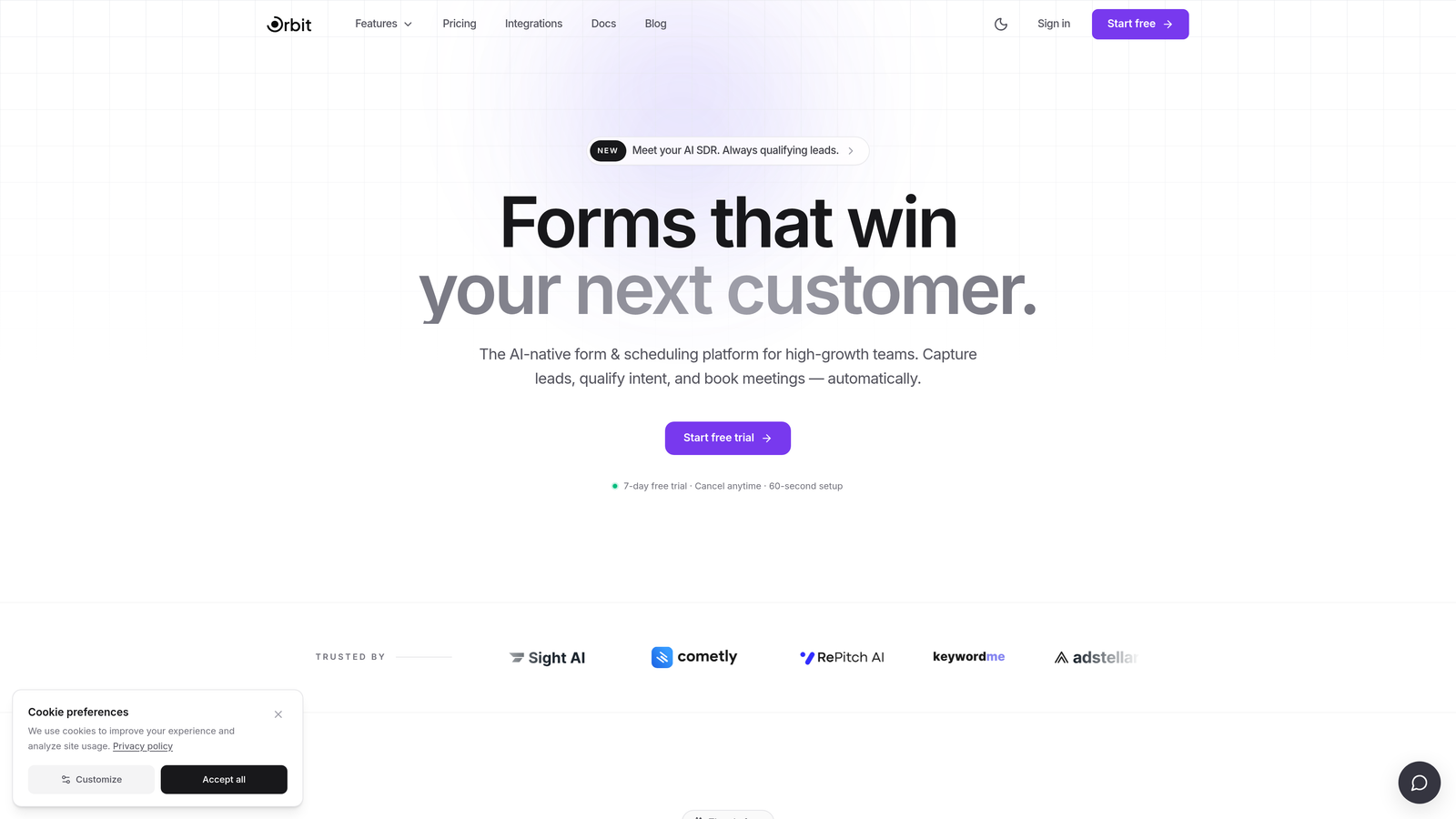
Orbit AI is an AI-powered form builder with native lead qualification capabilities, designed for teams that want segmentation to happen at the moment of capture rather than as a downstream afterthought.
Where This Tool Shines
Most form tools collect data and hand it off to other systems for scoring and routing. Orbit AI takes a different approach: the qualification logic lives inside the form experience itself. AI interprets responses in real time, scores leads automatically, and routes them before they ever hit your CRM inbox as raw, unsorted submissions.
For SaaS and B2B teams running high-volume inbound, this matters. By the time a lead reaches your sales rep, it already carries a qualification score and segment tag derived from how the respondent answered. That's a meaningful reduction in manual triage work.
Key Features
AI-Driven Lead Qualification: Interprets form responses to score and classify leads automatically, without manual rule-building for every scenario.
Conditional Logic: Adapts the form path based on respondent answers, creating a personalized experience that naturally surfaces higher-quality data.
Conversion-Optimized Templates: Modern, branded form designs built to maximize completion rates, not just collect data.
Automatic Lead Scoring and Segmentation: Assigns scores based on response patterns and routes leads into the appropriate segment without manual intervention.
CRM and Marketing Automation Integrations: Connects with downstream tools so segmented leads flow directly into the right pipelines, sequences, or rep queues.
Best For
Orbit AI is the strongest fit for B2B SaaS teams that want segmentation to start at the form level. If your current process involves collecting raw form submissions and then manually triaging them downstream, this platform is designed to eliminate that step entirely.
Pricing
Visit orbitforms.ai for current pricing plans. The platform is built for growth-stage teams, so plans are structured around conversion volume and feature depth.
2. Typeform
Best for: Teams that want respondents to self-segment through a guided, conversational experience
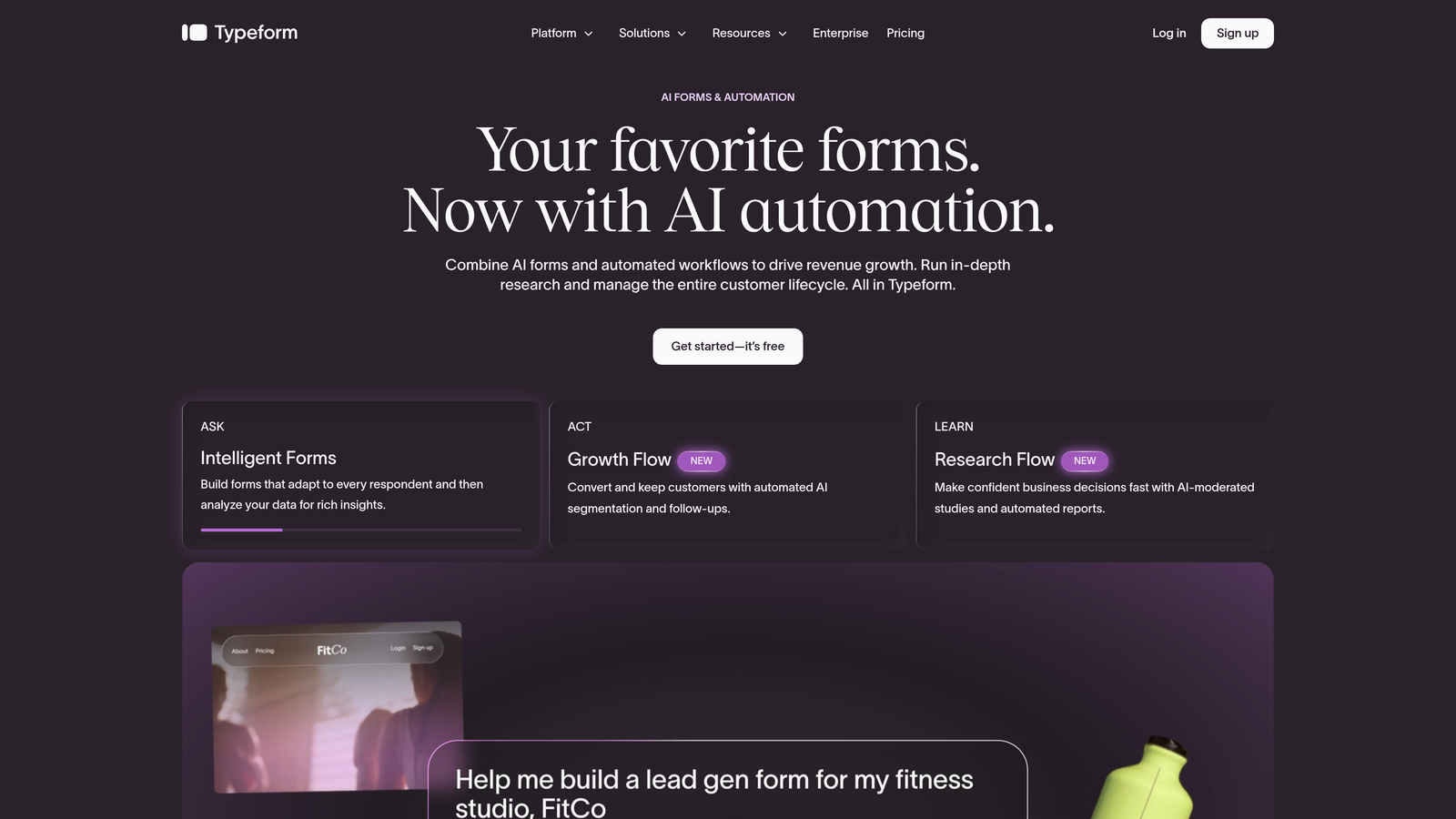
Typeform is a conversational form platform known for its one-question-at-a-time format and Logic Jump branching, ideal for creating engaging lead flows where the respondent's own answers determine the path they take.
Where This Tool Shines
Typeform's core strength is the experience it creates for the person filling out the form. The conversational format tends to improve completion rates compared to traditional multi-field forms, which means more data collected per lead. Logic Jump lets you branch the form based on prior answers, effectively letting respondents self-select into segments without realizing they're being qualified.
For teams that care about brand perception as much as data quality, Typeform delivers a polished, human-feeling interaction. The tradeoff is that segmentation logic lives in the form branching rather than in any native scoring engine, so deeper qualification typically requires connecting to a downstream CRM or automation tool.
Key Features
Logic Jump Branching: Conditional paths based on respondent answers create self-segmentation flows without complex backend setup.
Conversational Format: One question at a time reduces friction and tends to improve form completion rates.
Native Integrations: Connects directly with HubSpot, Salesforce, and Zapier for downstream routing and CRM mapping.
Hidden Fields: Pre-populate lead data from UTM parameters to enrich submissions with source and campaign context automatically.
Analytics Dashboard: Track drop-off rates and performance by segment to optimize form paths over time.
Best For
Typeform works well for marketing teams running top-of-funnel campaigns where form experience and brand feel matter. It's a strong choice when you want respondents to feel guided rather than interrogated, and when segmentation can be handled by the branching logic itself.
Pricing
A free plan is available with limited responses. Paid plans start at approximately $25/month, though you should verify current pricing at typeform.com before committing.
3. Jotform
Best for: Operations-heavy teams that need reliable form capture connected to complex downstream routing
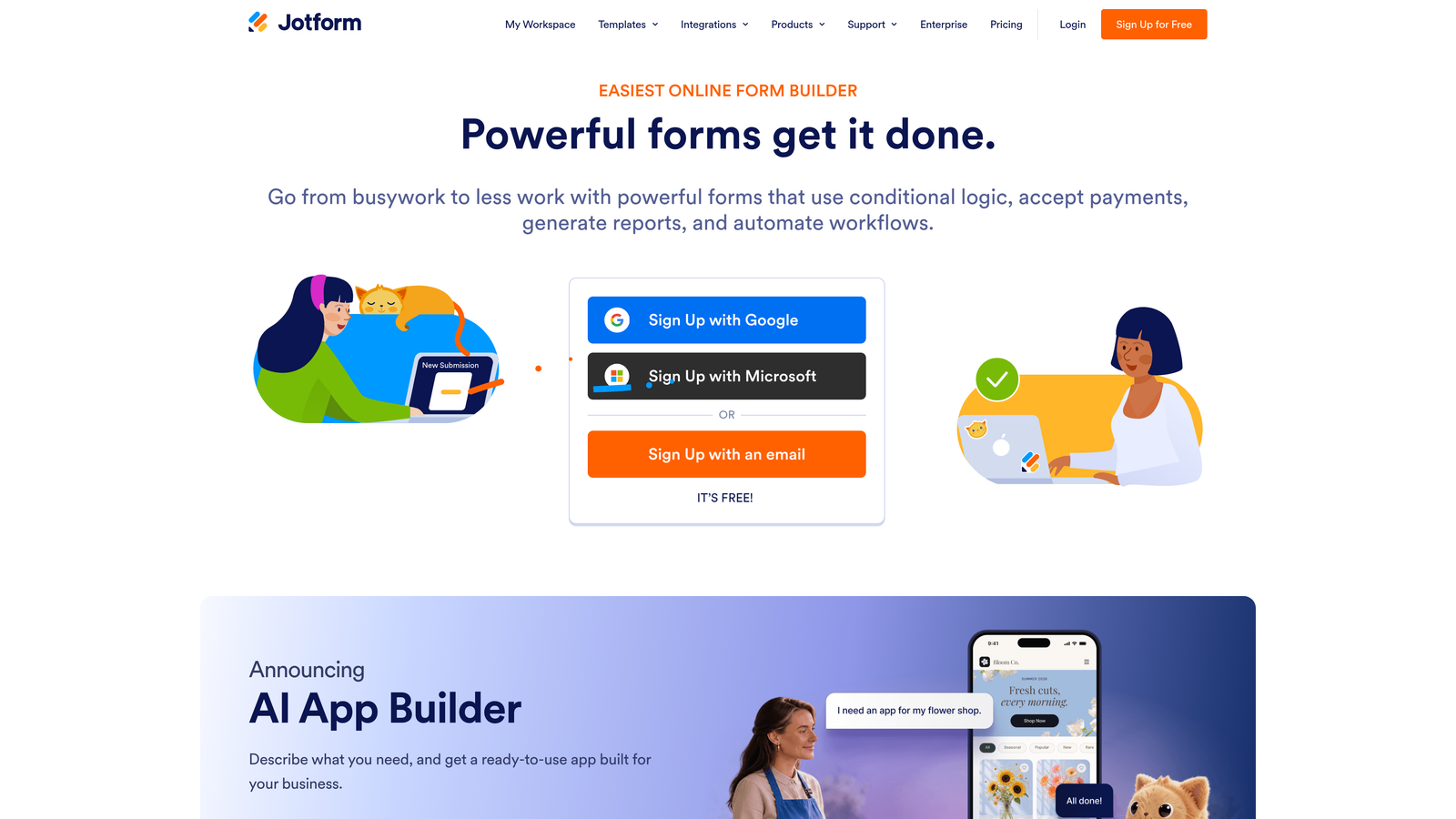
Jotform is a highly flexible form builder with extensive native integrations and workflow automation, suited for teams that prioritize what happens after submission as much as the form itself.
Where This Tool Shines
Jotform's depth is in its integration ecosystem and workflow tooling. With over 150 native integrations spanning CRM, payment, and marketing platforms, it connects to almost anything your stack already includes. The Jotform Approvals feature adds multi-step routing logic, making it possible to build lead flows that require human review, escalation, or conditional handoffs between teams.
For organizations with established tech stacks and specific routing requirements, Jotform's flexibility is a genuine advantage. It's less opinionated than some platforms, which means more configuration work upfront but greater adaptability to complex workflows.
Key Features
Conditional Logic: Dynamic field display and form branching based on prior answers for basic segmentation at the form level.
150+ Native Integrations: Connects with Salesforce, HubSpot, Mailchimp, and many other tools for downstream routing and data sync.
Jotform Approvals: Multi-step lead routing workflows with approval gates, useful for teams that need human review in the qualification process.
Large Template Library: Thousands of pre-built form templates for fast deployment across different use cases.
Submission Inbox with Filtering: Built-in tools for tagging and filtering submissions, supporting manual segmentation workflows when needed.
Best For
Jotform fits operations and RevOps teams that need a reliable, integration-rich form layer connected to complex downstream systems. It's particularly useful when lead routing involves multiple teams, approval steps, or diverse tool integrations.
Pricing
A free plan is available. Paid plans scale with submission volume, so costs increase as lead capture grows. Verify current plan details at jotform.com.
4. Paperform
Best for: Teams that want native lead scoring built directly into the form without external tools
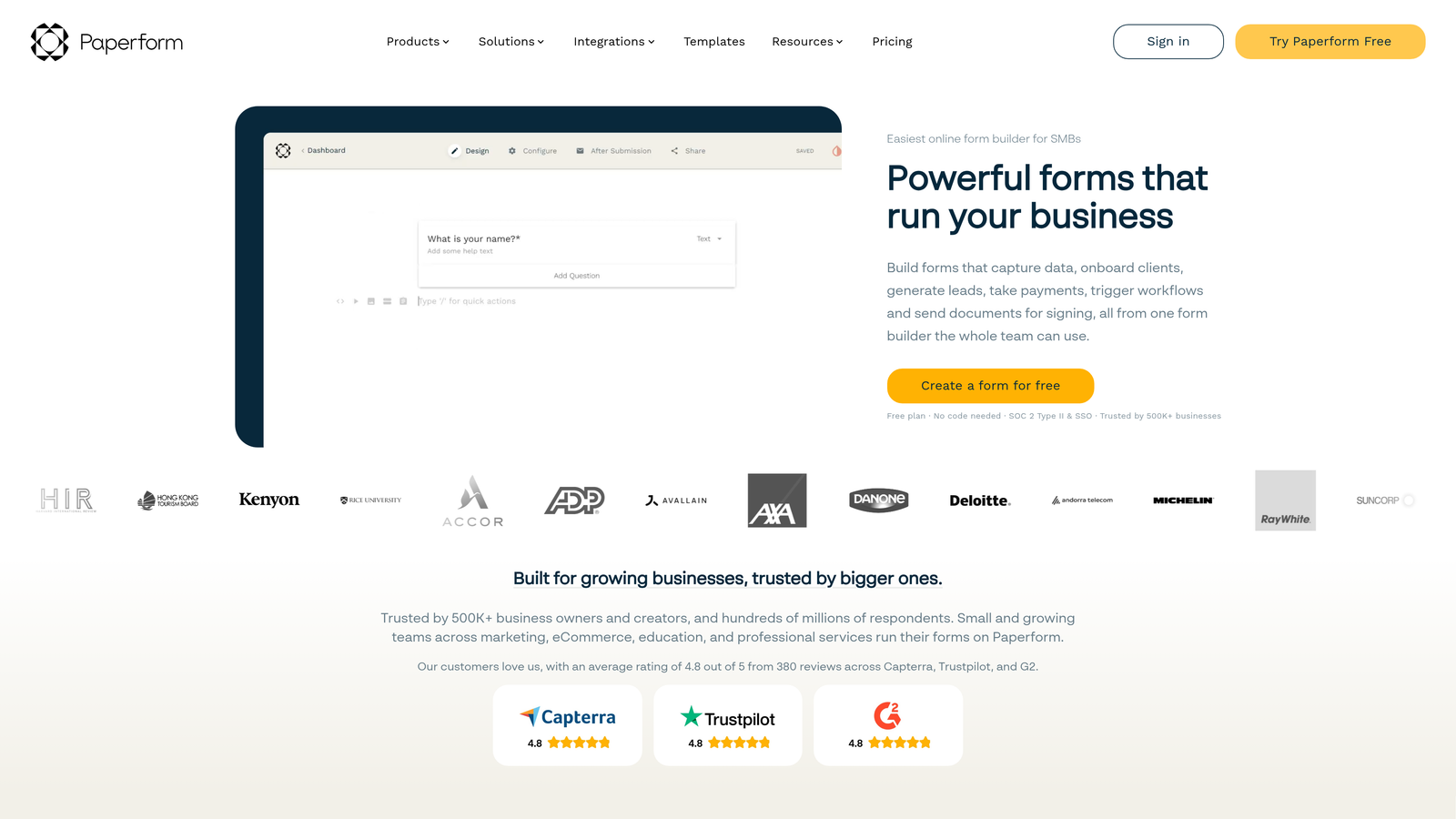
Paperform is a smart form builder with native calculation and scoring fields, enabling teams to assign point values to responses and automatically prioritize or route leads without needing a separate scoring layer.
Where This Tool Shines
Paperform's calculation fields are the standout differentiator here. You can assign numeric values to specific answer choices, accumulate a score as the respondent progresses through the form, and then use that score as a condition for branching, routing, or follow-up. It's a lightweight but effective approach to lead scoring that doesn't require a dedicated CRM or marketing automation tool to execute.
The platform also supports visually rich form design with media embedding, which makes it useful for teams that want a polished experience alongside the scoring logic. It functions more like a mini-application than a simple form, which opens up more sophisticated qualification flows.
Key Features
Built-In Calculation Fields: Assign point values to response choices and accumulate a lead score natively within the form.
Score-Based Conditional Logic: Branch form paths or trigger different follow-up actions based on score thresholds without external tools.
Visually Rich Design: Customizable templates with media embedding support for a polished, branded form experience.
Integrations: Connects with Zapier, HubSpot, and ActiveCampaign for routing scored leads into the appropriate downstream workflows.
Payment Collection: Built-in payment fields allow teams to qualify leads by purchase intent within the same form experience.
Best For
Paperform is a strong choice for teams that want to score leads at the point of capture but don't have a complex CRM scoring setup in place. It's particularly useful for smaller B2B teams or agencies that need scoring logic without the overhead of a full marketing automation platform.
Pricing
Paperform is a paid-only platform. Plans start at approximately $24/month. Verify current pricing at paperform.co before purchasing.
5. Formstack
Best for: Mid-market and enterprise teams needing multi-step routing, compliance features, and advanced segmentation logic
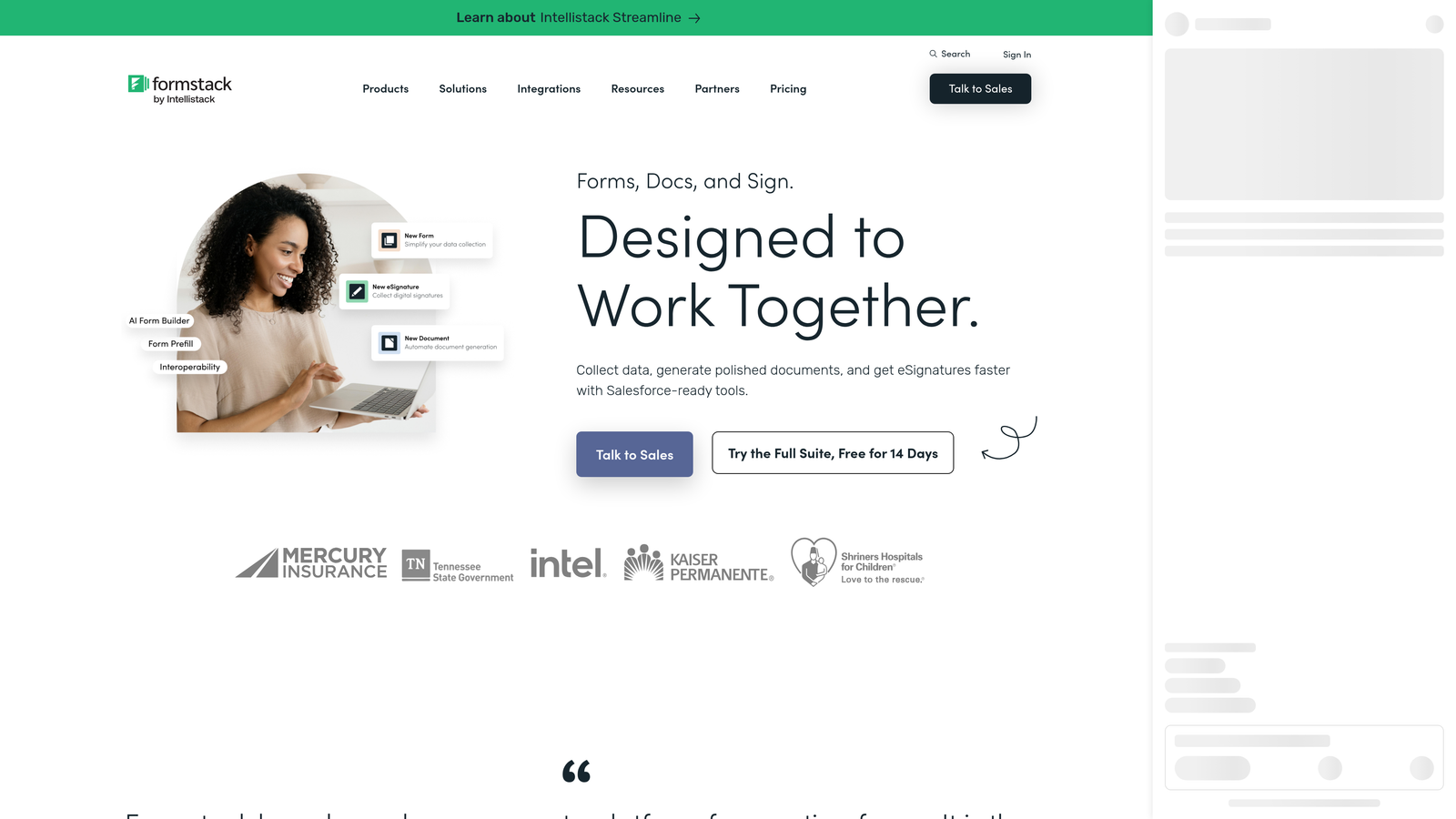
Formstack is an enterprise-grade platform combining forms, documents, and workflow automation, suited for organizations that need segmentation logic embedded in broader operational workflows with compliance requirements.
Where This Tool Shines
Formstack goes well beyond form building. It's a workflow platform that happens to start with a form. The multi-step approval and routing logic allows enterprise teams to build lead flows with conditional handoffs, escalation paths, and document generation triggered by segmentation outcomes. For regulated industries, HIPAA-compliant options make it one of the few platforms that can handle sensitive lead data without requiring additional compliance tooling.
The native Salesforce integration with field mapping is deeper than most form tools offer, making it a natural fit for organizations where Salesforce is the source of truth for lead management. If your segmentation logic needs to interact with Salesforce data in both directions, Formstack handles that with more precision than lighter-weight alternatives.
Key Features
Multi-Step Workflow Automation: Build complex approval and routing logic with conditional paths for different lead segments.
HIPAA-Compliant Options: Suitable for healthcare and other regulated industries that need compliant lead capture and routing.
Conditional Logic and Field Branching: Standard form-level segmentation with branching based on respondent answers.
Native Salesforce Integration: Deep field mapping between form submissions and Salesforce records for precise CRM routing.
Formstack Documents: Automatically generate documents triggered by segmentation outcomes, useful for contracts, proposals, or follow-up materials.
Best For
Formstack is the right choice for enterprise and mid-market teams with complex routing requirements, regulated data handling needs, or deep Salesforce dependencies. It's more platform than most small teams need, but for the right organization it consolidates several tools into one.
Pricing
Formstack carries a higher price point reflecting its enterprise feature set. Visit formstack.com to review current plan options and request a demo if needed.
6. Tally
Best for: Lean teams that need basic segmentation workflows without cost or complexity
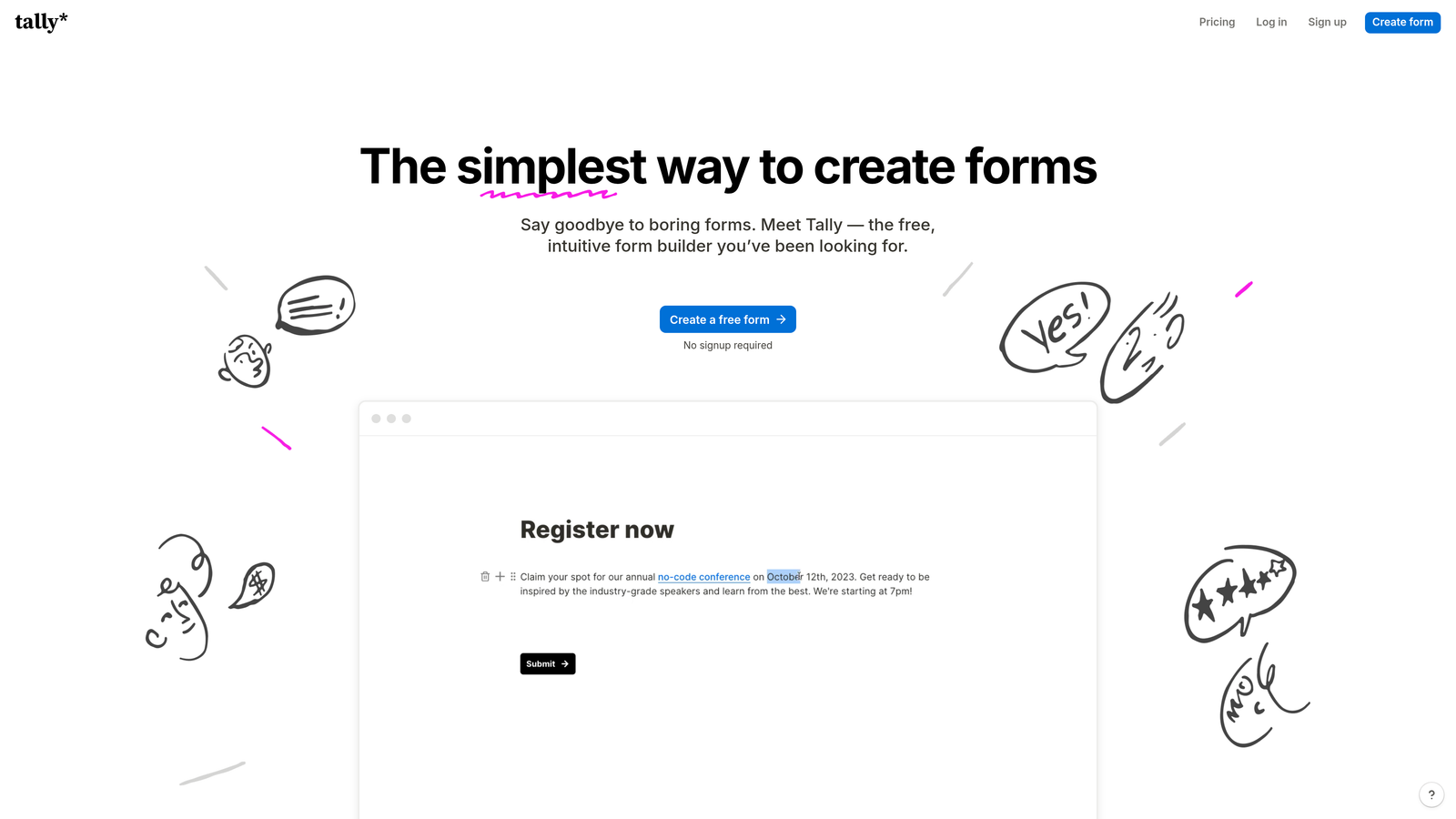
Tally is a free-first form builder with a Notion-like block editor and solid conditional logic, designed for teams that need functional segmentation workflows without the overhead of enterprise platforms.
Where This Tool Shines
Tally's free tier is genuinely generous: unlimited forms, unlimited responses, and conditional logic all available without paying anything. For early-stage teams or lean operations that need to capture and segment leads before they're ready to invest in a full platform, Tally removes the cost barrier entirely.
The block-based editor has a minimal learning curve, especially for teams already familiar with Notion. You can build a functional segmentation flow in minutes rather than hours. The tradeoff is depth: Tally doesn't offer native lead scoring or AI qualification, so more sophisticated segmentation requires routing submissions to external tools via Zapier or Make.
Key Features
Conditional Logic on Free Plan: Branch form paths based on answers without needing a paid tier, making segmentation accessible from day one.
Block-Based Editor: Notion-style interface with minimal learning curve for fast form creation and iteration.
Unlimited Forms and Responses: No submission caps on the free tier, which is rare among form platforms at this price point.
Integrations: Connects with Zapier, Make, Notion, and Google Sheets for routing and data management downstream.
Embeddable Forms: Customizable styling and embed options for placing forms directly on landing pages or websites.
Best For
Tally fits early-stage startups, solo operators, and lean marketing teams that need functional lead segmentation without budget commitment. It's also a solid option for teams that want to prototype a segmentation flow before investing in a more powerful platform.
Pricing
The free plan includes unlimited forms and responses. A Pro plan is available at approximately $29/month with additional customization and branding options. Verify current pricing at tally.so.
Choosing the Right Tool for Your Team
The best lead segmentation automation tool depends on where in your funnel the biggest gap lives, and how much complexity your team can actually support.
If you want segmentation to happen at the moment of capture, with AI interpreting responses and scoring leads before they reach your CRM, Orbit AI is built specifically for that use case. It's the strongest choice for B2B SaaS teams running high-volume inbound who want to eliminate manual triage entirely.
If your priority is a conversational, brand-forward form experience where respondents self-select into segments through guided branching, Typeform delivers that better than most. For teams that need native lead scoring inside the form without external tools, Paperform's calculation fields offer a clever lightweight solution.
Operations teams with complex downstream routing, multi-step approvals, or deep CRM dependencies will find more to work with in Jotform or Formstack. And for teams that need functional segmentation logic without any upfront cost, Tally's free tier is a legitimate starting point.
The underlying principle across all of these tools is the same: the earlier in the lead journey you apply segmentation logic, the less manual work lands on your sales and ops teams later. A form that qualifies while it captures is fundamentally more efficient than one that just collects.
If you're ready to put qualification at the center of your lead capture process, start building free forms today and see how AI-powered form design can transform the quality of leads reaching your pipeline.


